Delhi - Agra - Bhandarej - Jaipur - Mandawa - Bikaner - Gajner - Jaisalmer - Jodhpur - Rohetgarh - Deogarh - Ranakpur - Mount Abu - Udaipur - Dungarpur - Chittorgarh - Kota - Ranthambore - Bharatpur - Delhi
This 27-day Golden Triangle Tour with Rajasthan is designed as a comprehensive heritage circuit that connects Mughal landmarks, Rajput capitals, desert towns, hill retreats and wildlife reserves into one uninterrupted journey. Beginning in Delhi and Agra, the route gradually expands across the Shekhawati region, Thar Desert cities and the royal heartland of Rajasthan before reaching the lake districts and forest reserves.
Unlike shorter itineraries, this extended Rajasthan tour allows deeper immersion into architecture, rural landscapes and regional culture. The journey blends UNESCO World Heritage Sites, ancient forts, painted havelis, desert settlements and sacred temples, offering a balanced experience for travelers seeking a detailed North India cultural exploration.
Upon arrival in Delhi, you will be welcomed and transferred to your hotel. The first impressions of India often begin in this capital city where colonial architecture, Mughal monuments and modern developments coexist. After check-in, the remainder of the day is kept free so that you may rest and recover from your journey.
If your arrival time permits, an orientation drive through Lutyens’ Delhi can be arranged. Wide boulevards, India Gate and the Presidential House introduce the imperial planning that shaped modern Delhi. This relaxed beginning ensures a smooth transition into your extended Golden Triangle with Rajasthan journey.
The evening can be spent at leisure, either enjoying local cuisine at a nearby restaurant or relaxing at the hotel. Delhi’s layered history will unfold in greater detail the following day. Overnight stay in Delhi.
The day begins in Old Delhi, where the lanes of Chandni Chowk reflect centuries of trade and tradition. You will visit Jama Masjid, one of the largest mosques in India, and pass by the Red Fort’s imposing red sandstone walls. A rickshaw ride through the bustling market adds a dynamic introduction to the city’s rhythm.
Later, Raj Ghat offers a peaceful tribute to Mahatma Gandhi. Moving into New Delhi, you will see India Gate, Parliament House and Rashtrapati Bhavan, architectural symbols of the British era. These grand avenues contrast sharply with the compact streets of Old Delhi.
The afternoon includes visits to Qutub Minar and Humayun’s Tomb, both significant in shaping Indo-Islamic architecture. The blend of medieval and colonial landmarks makes Delhi an essential starting point for the Golden Triangle tour. Overnight stay in Delhi.
After breakfast, depart for Agra via expressway. The drive offers views of changing landscapes as urban sprawl gives way to rural plains. Upon arrival, check into your hotel before beginning the city exploration.
Agra Fort will be your first major visit, a massive red sandstone fortress that once served as the seat of Mughal power. Its palaces and audience halls reveal intricate marble inlay work and strategic design overlooking the Yamuna River.
In the evening, visit Mehtab Bagh for a distant sunset view of the Taj Mahal across the river. This quiet garden provides a reflective perspective before the sunrise visit scheduled the next morning. Overnight stay in Agra.
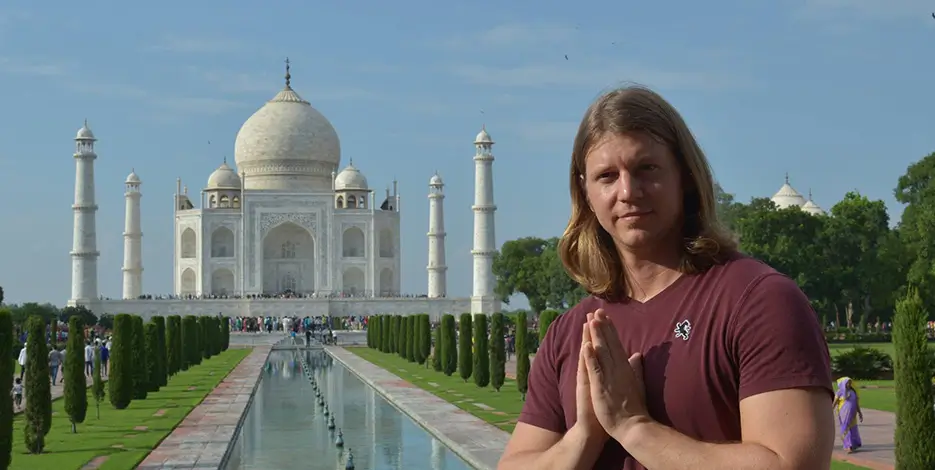
The morning begins with a sunrise visit to the Taj Mahal. The changing hues of white marble under early light highlight the craftsmanship that has made it one of the world’s most admired monuments. After breakfast, begin the journey toward Rajasthan.
En route, stop at Fatehpur Sikri, the short-lived Mughal capital built by Emperor Akbar. Its courtyards, mosques and palaces reflect a fusion of Persian and Indian architectural influences. Continue onward to Abhaneri to see Chand Baori, a geometric stepwell dating back over a thousand years.
By evening, arrive in Bhandarej, a quieter heritage town offering a glimpse into rural Rajasthan. The peaceful setting contrasts with the grand Mughal cities visited earlier. Overnight stay in Bhandarej.
After breakfast, depart for Jaipur, the capital of Rajasthan known as the Pink City. The drive introduces you to semi-arid landscapes dotted with villages and camel carts. Upon arrival, check into your hotel before beginning light exploration.
In the afternoon, visit the City Palace complex, a blend of Mughal and Rajput architecture still partly occupied by the royal family. Nearby, Jantar Mantar houses astronomical instruments that demonstrate advanced scientific knowledge from the 18th century.
The evening can be spent walking through Jaipur’s traditional bazaars. Markets such as Johri Bazaar and Bapu Bazaar are known for textiles, gemstones and handicrafts. Overnight stay in Jaipur.
The day begins with a visit to Amber Fort, situated on a hill overlooking Maota Lake. Its courtyards, Sheesh Mahal and intricate carvings showcase Rajput artistry at its finest. The ascent offers panoramic views of the surrounding hills.
A photo stop at Hawa Mahal follows, where its honeycomb façade once allowed royal women to observe street life unseen. Jal Mahal, located in the middle of Man Sagar Lake, adds another scenic highlight to the Jaipur tour.
Later, explore Albert Hall Museum and additional local attractions that reveal Jaipur’s cultural depth. The balance of fort architecture and city life makes Jaipur a cornerstone of any Golden Triangle with Rajasthan itinerary. Overnight stay in Jaipur.
Today you travel to Mandawa in the Shekhawati region, known for its painted havelis. The route takes you through rural Rajasthan, offering insight into agricultural communities and desert-edge landscapes.
Mandawa is often referred to as an open-air art gallery because of its elaborately frescoed merchant mansions. These murals depict mythological themes, colonial influences and trading history from centuries past.
The evening allows time to walk through narrow streets and admire detailed wall paintings. The quiet charm of Mandawa provides a cultural contrast to Jaipur’s royal scale. Overnight stay in Mandawa.
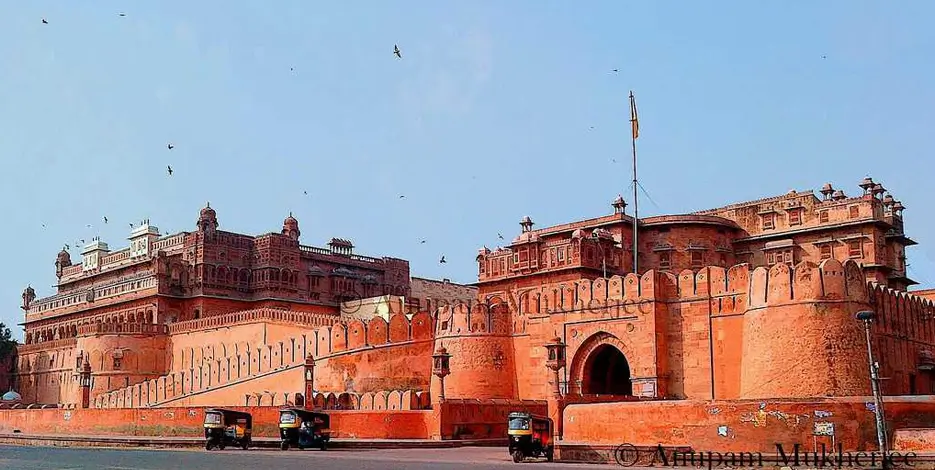
After breakfast, depart for Bikaner, a desert city historically important for trade routes. Upon arrival, visit Junagarh Fort, one of Rajasthan’s few forts not built on a hilltop. Its palaces and courtyards reflect a distinct architectural style.
The city’s old quarter reveals traditional homes and bustling markets. Bikaner is also known for camel breeding and desert traditions, which remain integral to local identity.
In the evening, you may visit the National Research Centre on Camels to learn about desert ecology and livestock conservation. Overnight stay in Bikaner.
A short drive takes you to Gajner, a peaceful lakeside retreat near Bikaner. This region once served as a royal hunting reserve for the Maharajas. The surrounding forested landscape offers a refreshing change from urban sightseeing.
Gajner Palace stands near the lake and reflects colonial-era architecture blended with Rajput design elements. The calm environment encourages relaxation and reflection during this long Rajasthan journey.
The afternoon is at leisure to enjoy the scenic surroundings or explore nearby village life. Overnight stay in Gajner.
After breakfast, depart from the tranquil lakeside setting of Gajner and begin your journey deeper into the Thar Desert. The landscape gradually becomes more arid, with scattered settlements, grazing camels and stretches of golden terrain defining the drive. This transition marks your entry into western Rajasthan’s desert culture.
Upon arrival in Jaisalmer, check into your hotel and take some time to relax. The city’s honey-colored sandstone architecture glows beautifully in the afternoon light, earning it the name “Golden City.” Even a short walk through the nearby lanes introduces you to carved balconies and intricately designed facades.
In the evening, you may visit Gadisar Lake, once the primary water source of the city. The calm waters reflect temples and shrines along its banks, offering a peaceful introduction to Jaisalmer’s historic character. Overnight stay in Jaisalmer.
The day begins with a visit to Jaisalmer Fort, one of the few living forts in the world where families still reside within its ancient walls. As you walk through its narrow alleys, you will encounter Jain temples, local homes and traditional shops that preserve medieval desert life.
Next, explore Patwon Ki Haveli and Nathmal Ki Haveli, merchant mansions known for their elaborate carvings and architectural detail. These structures demonstrate the wealth generated through trade along historic caravan routes that once connected India with Central Asia.
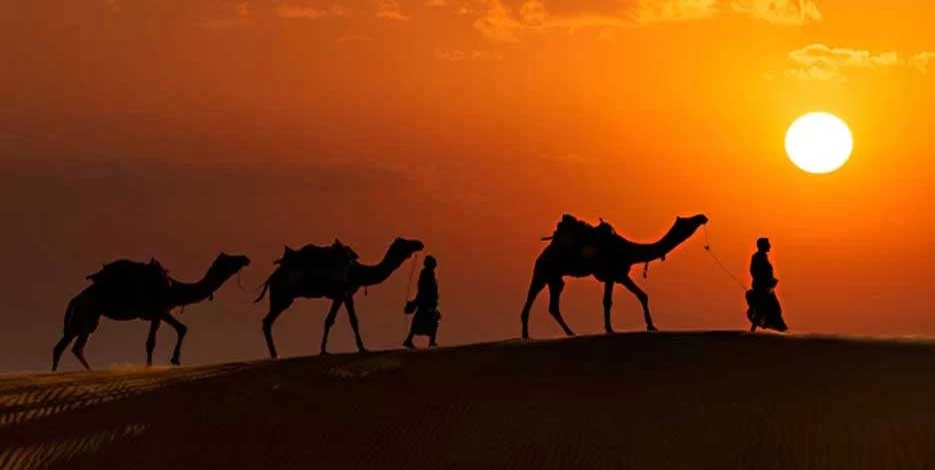
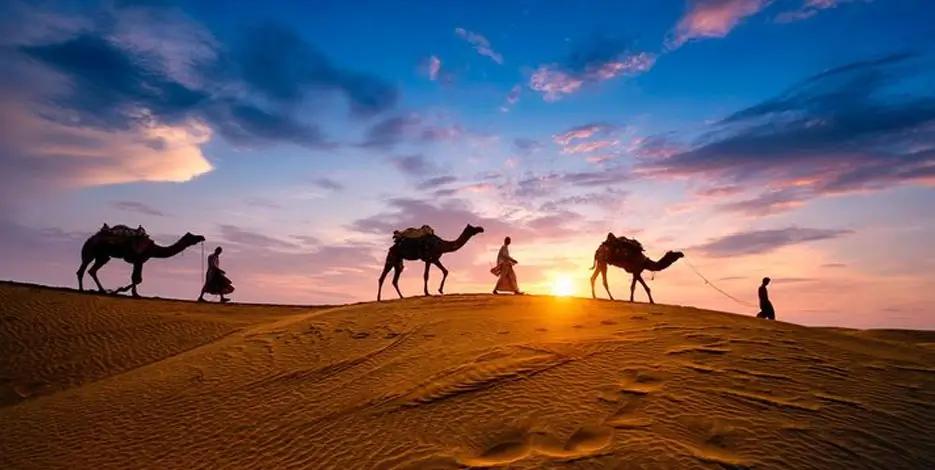
Later in the afternoon, drive to Sam Sand Dunes for a camel safari experience. As the sun sets over the desert horizon, the dunes take on warm tones, followed by a cultural program featuring folk music and dance. Overnight stay at desert camp or hotel in Jaisalmer.
After breakfast, depart Jaisalmer and drive toward Jodhpur, the Blue City of Rajasthan. The journey across desert plains reveals scattered villages and herds of livestock, offering insight into rural desert life.
Upon arrival in Jodhpur, check into your hotel before beginning an introductory walk through the old city area. Blue-painted houses clustered around the fort create a striking visual contrast against the arid landscape.
In the evening, local markets near the Clock Tower present handicrafts, spices and textiles unique to the Marwar region. The lively atmosphere provides a deeper understanding of Jodhpur’s cultural identity. Overnight stay in Jodhpur.
Today you will visit Mehrangarh Fort, one of Rajasthan’s most impressive hilltop forts. Rising dramatically above the city, its courtyards and museum galleries display royal artifacts, palanquins and weaponry from centuries past. The panoramic view from its ramparts stretches across the blue-painted neighborhoods below.
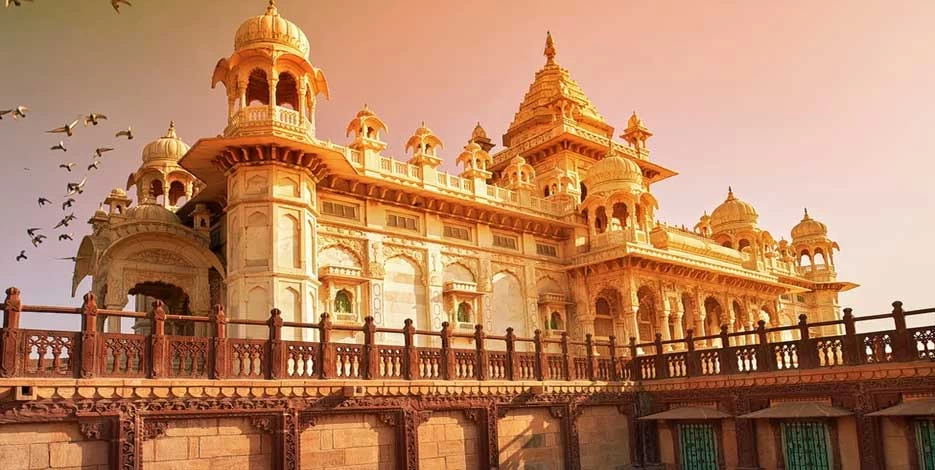
Continue to Jaswant Thada, a marble cenotaph built in memory of Maharaja Jaswant Singh II. Its peaceful gardens and intricate marble lattice work create a serene setting. Mandore Gardens, once the ancient capital of Marwar, showcases cenotaphs and temples with distinctive architecture.
Later, travel to Rohetgarh, a heritage property set in a rural environment. The quiet countryside and traditional surroundings offer a glimpse into Rajasthan’s aristocratic past and village life. Overnight stay in Rohetgarh.
After breakfast, proceed toward Deogarh, passing through scenic rural landscapes and small villages that reveal the agricultural life of Rajasthan. The drive itself becomes part of the experience as you observe traditional homes, livestock and open countryside.
Deogarh is known for its heritage palace converted into a hotel, reflecting Rajput architectural traditions with balconies and carved stone details. Upon arrival, check in and spend some time exploring the palace interiors and courtyards.
In the afternoon, a short village walk may be arranged to interact with local communities and observe daily routines. This slower pace allows for meaningful engagement beyond major tourist centers. Overnight stay in Deogarh.
Depart Deogarh after breakfast and head toward Ranakpur, located in a serene valley of the Aravalli hills. The change in terrain becomes noticeable as the desert plains give way to greener surroundings and undulating landscapes.
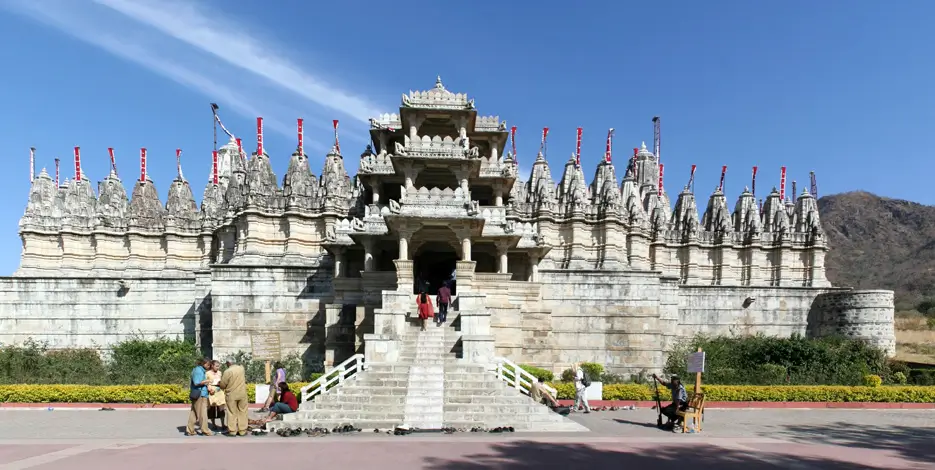
Ranakpur is renowned for its Jain Temple complex dedicated to Tirthankara Adinath. Built in the 15th century, the temple is supported by 1,444 intricately carved marble pillars, each uniquely designed. The precision and symmetry of the carvings highlight remarkable craftsmanship.
The peaceful atmosphere of the temple complex encourages quiet reflection. Surrounded by forested hills, Ranakpur provides a spiritual and architectural highlight within your extended Rajasthan journey. Overnight stay in Ranakpur.
After breakfast, continue toward Mount Abu, Rajasthan’s only hill station. As the drive progresses, the temperature becomes cooler and the vegetation denser, offering a refreshing contrast to the desert cities visited earlier.
Upon arrival, check into your hotel and relax in the hill environment. Mount Abu served as a retreat for British officials during colonial times and remains popular for its pleasant climate.
In the evening, visit Nakki Lake and enjoy a peaceful walk along its promenade. The surrounding hills and gentle breeze create a calm atmosphere distinct from Rajasthan’s desert landscapes. Overnight stay in Mount Abu.
Begin the day with a visit to the Dilwara Jain Temples, considered among the finest examples of marble temple architecture in India. The intricate carvings and sculptural detailing demonstrate exceptional artistry achieved centuries ago.
Later, explore viewpoints such as Sunset Point or Guru Shikhar, the highest peak in Rajasthan. The panoramic vistas reveal forested slopes and distant plains, highlighting the geographical diversity of the state.
The afternoon remains at leisure, allowing you to explore local markets or enjoy the natural surroundings. Mount Abu offers a restorative pause within this long Golden Triangle with Rajasthan itinerary. Overnight stay in Mount Abu.
After breakfast, depart for Udaipur, the City of Lakes. The drive through the Aravalli hills offers scenic views and gradual descent toward one of Rajasthan’s most romantic cities.
Upon arrival, check into your hotel and spend the afternoon exploring the lakeside area. Udaipur’s white palaces and waterfront ghats reflect beautifully on the waters of Lake Pichola.
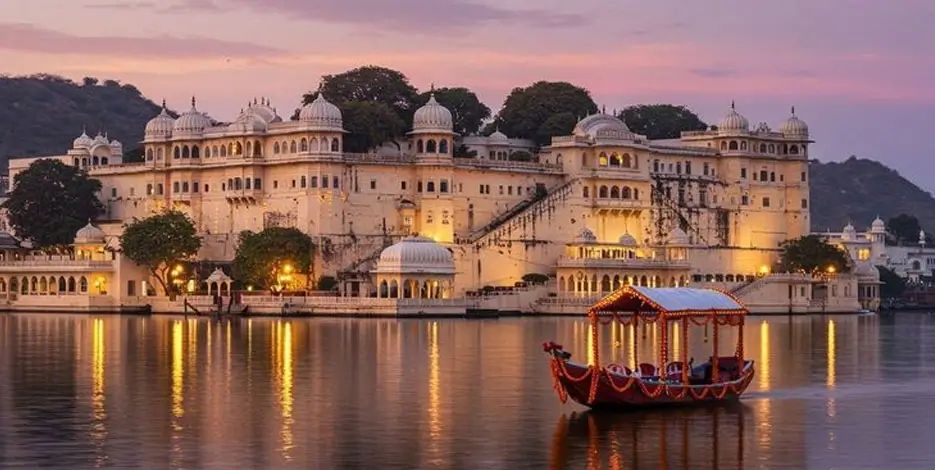
In the evening, enjoy a boat ride on Lake Pichola, passing by Jag Mandir and Lake Palace. The illuminated skyline against the hills creates a memorable introduction to Udaipur. Overnight stay in Udaipur.
The day begins with an in-depth exploration of Udaipur’s City Palace, a vast complex overlooking Lake Pichola. Built over several centuries by the rulers of Mewar, the palace reflects a fusion of Rajasthani and Mughal architectural elements. Ornate balconies, mirror work chambers and royal courtyards reveal the grandeur of one of Rajasthan’s most respected dynasties.
Continue to Jagdish Temple, a 17th-century temple dedicated to Lord Vishnu, known for its detailed carvings and towering shikhara. Later, visit Saheliyon Ki Bari, a garden built for royal ladies, featuring marble pavilions, fountains and lotus pools that highlight Rajput garden design.
In the evening, stroll through Udaipur’s old city markets where miniature paintings, silver jewelry and handicrafts are displayed in traditional shops. The relaxed atmosphere along the lake provides a memorable contrast to the desert cities visited earlier. Overnight stay in Udaipur.
After breakfast, depart for Dungarpur, a lesser-visited region of southern Rajasthan known for its tribal heritage and serene lakes. The drive takes you through rolling hills and rural settlements, offering a deeper look into the countryside.
Dungarpur is home to Udai Bilas Palace, a lakeside residence reflecting traditional Rajput architecture with carved balconies and decorative facades. Upon arrival, check into your hotel and take time to appreciate the quiet surroundings.
In the afternoon, explore the local town and its temples, gaining insight into the cultural traditions of the Bhil tribal communities that inhabit the region. The slower pace of Dungarpur allows for meaningful interaction with local life. Overnight stay in Dungarpur.
The journey continues toward Chittorgarh, a city synonymous with valor and sacrifice in Rajput history. The drive introduces expansive plains and historical settlements that once formed part of powerful kingdoms.
Upon arrival, visit Chittorgarh Fort, one of the largest forts in India and a UNESCO World Heritage Site. Its massive gates, palaces and temples tell stories of legendary rulers such as Maharana Pratap and Rani Padmini.
Explore Vijay Stambh (Victory Tower) and Kirti Stambh, both architectural landmarks within the fort complex. The site’s elevated position offers sweeping views of the surrounding countryside. Overnight stay in Chittorgarh.
After breakfast, depart for Kota, located along the Chambal River. The drive provides a transition from fort-dominated landscapes to riverine surroundings. Kota played an important role during the Mughal and Rajput periods.
Visit Kota Garh (City Palace), which houses royal chambers and exhibits showcasing miniature paintings known as Kota School art. The palace complex reflects a distinct architectural style influenced by riverfront planning.
Later, take a walk near the Chambal River or visit local gardens to observe everyday life in this historic city. The atmosphere in Kota is calmer compared to Rajasthan’s larger tourist centers. Overnight stay in Kota.
Depart Kota after breakfast and proceed toward Ranthambore National Park, one of India’s most recognized tiger reserves. The journey passes through agricultural lands before reaching forested terrain.
Upon arrival, check into your wildlife lodge or hotel. The park is known for its population of Bengal tigers, leopards and diverse bird species. The setting marks a shift from architectural exploration to natural landscapes.
In the evening, attend a briefing about safari timings and park regulations. The anticipation of spotting wildlife adds a new dimension to this Golden Triangle with Rajasthan grand circuit. Overnight stay in Ranthambore.
The day begins early with a morning jeep safari inside Ranthambore National Park. As the vehicle moves through forest trails, you may encounter deer, langurs, crocodiles and, with luck, the majestic Bengal tiger in its natural habitat.
The park’s varied terrain includes lakes, rocky outcrops and dry deciduous forests, creating ideal conditions for wildlife photography. Experienced naturalists guide the safari and share insights about the ecosystem.
In the afternoon, a second safari increases the chances of wildlife sightings. Between excursions, relax at your lodge and enjoy the peaceful forest environment. Overnight stay in Ranthambore.
After breakfast, depart for Shahpura, a heritage town known for its palaces and lakeside tranquility. The drive once again transitions from forest reserve to rural Rajasthan landscapes.
Shahpura Palace, built in the 17th century, reflects Rajput elegance with painted interiors and traditional courtyards. Upon arrival, check into your heritage accommodation and explore the property grounds.
The evening may include a quiet lakeside walk or interaction with local artisans who maintain traditional crafts. Shahpura offers a refined and peaceful conclusion to your Rajasthan exploration. Overnight stay in Shahpura.
Following breakfast, begin your return journey to Delhi. The drive marks the final long transfer of this 27-day Golden Triangle with Rajasthan journey, allowing time to reflect on the diverse landscapes covered.
Upon arrival in Delhi, check into your hotel for the final night. You may choose to revisit a favorite neighborhood, enjoy farewell dining or simply relax after the extensive itinerary.
The capital city now feels familiar, completing the circle that began nearly a month earlier. Overnight stay in Delhi.
After breakfast, transfer to the airport for your onward flight. Assistance will be provided for departure formalities.
This comprehensive Golden Triangle Tour with Rajasthan concludes with memories of Mughal architecture, desert horizons, hill retreats and wildlife encounters. The journey connects historical capitals, sacred sites and remote landscapes into one cohesive travel experience.
We promise you a holiday where everything is taken care of from the moment you land. Trusted drivers waiting for you, handpicked hotels that fit your style, personalized itineraries designed just for your family, and a dedicated team on call 24/7. All you need to do is relax, explore, and create unforgettable memories, while we take care of every detail behind the scenes.