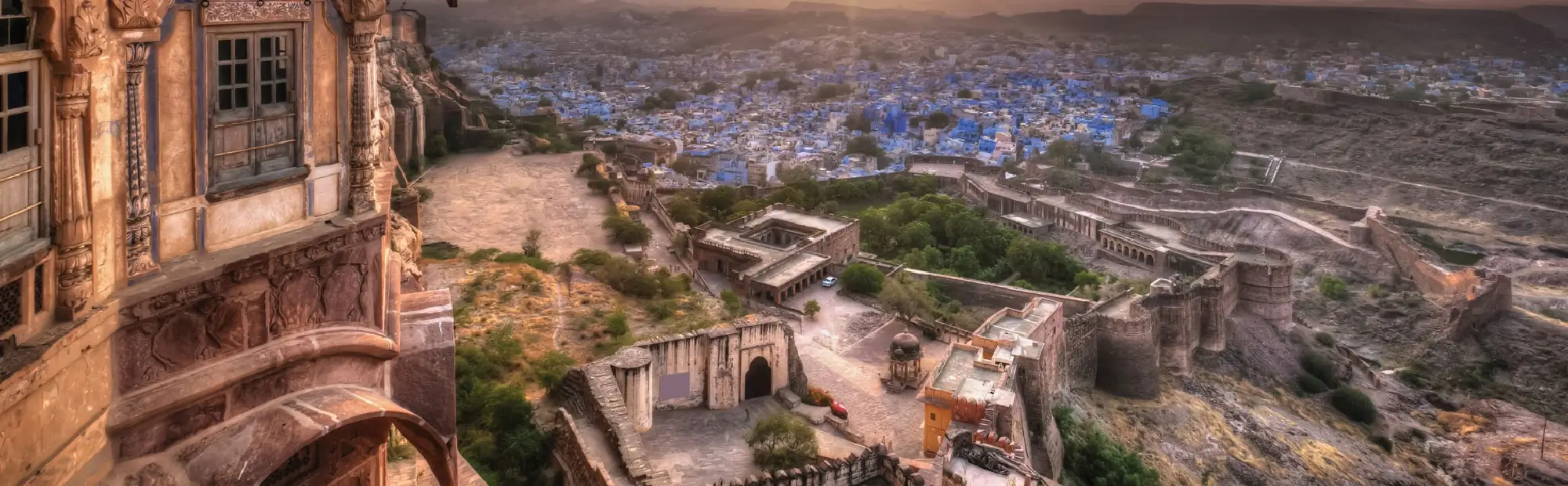
Jodhpur, famously known as the “Blue City,” is one of Rajasthan’s most striking and historically powerful destinations. Dominated by the massive Mehrangarh Fort rising above a sea of indigo-painted houses, Jodhpur presents a dramatic and unforgettable skyline. Located on the edge of the Thar Desert, the city blends desert landscapes, Rajput warrior history, and vibrant urban culture.
Founded in 1459 by Rao Jodha, Jodhpur became the capital of the Marwar kingdom. Its strategic location along ancient trade routes allowed it to prosper economically while maintaining strong military defenses. The city’s architecture reflects this balance between strength and refinement — fortified walls, ornate palaces, and intricately carved temples coexist within a compact urban layout.
For international travellers exploring Royal Rajasthan after the Golden Triangle, Jodhpur offers a powerful shift in atmosphere. Unlike the romantic lakes of Udaipur or the structured planning of Jaipur, Jodhpur feels bold and desert-driven. Its elevated fort, narrow blue lanes, and expansive desert surroundings create a visually immersive experience.
Jodhpur is particularly appealing to travellers interested in photography, architecture, and authentic street exploration. The contrast between the golden sandstone fort and the blue-painted old city below makes it one of Rajasthan’s most visually cohesive destinations.

Mehrangarh Fort, Jaswant Thada, Umaid Bhawan Palace, Clock Tower & Sardar Market, Mandore Gardens

October – March
Comfortable temperatures for fort visits and desert exploration.

1–2 Days
One to two days allow fort visits, market walks, and heritage experiences.

English, Hindi
English-speaking guides and hotel staff are widely available.
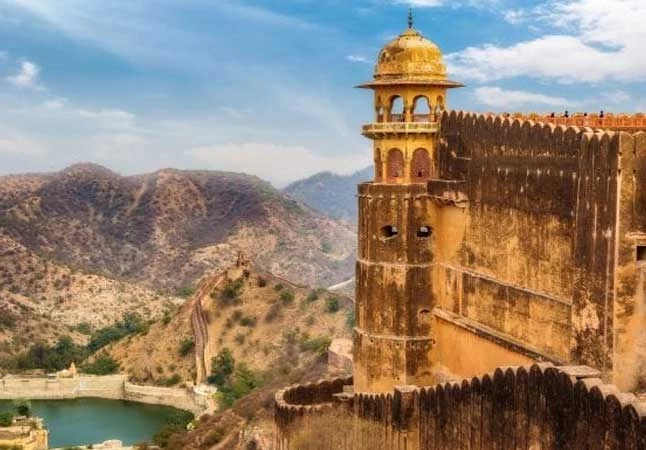
The defining landmark of Jodhpur is Mehrangarh Fort, one of the largest and most impressive forts in India. Perched 400 feet above the city, it offers sweeping views across the blue houses of the old town. The fort’s massive stone walls appear to grow directly from the rocky hill beneath, emphasizing its defensive strength.
Inside the fort, travellers encounter a series of ornate palaces featuring carved balconies, stained-glass windows, mirrored ceilings, and royal courtyards. The museum displays weapons, royal costumes, palanquins, and historical artifacts that provide insight into Marwar’s warrior heritage.
The elevated perspective from Mehrangarh is one of Jodhpur’s most memorable experiences. From the ramparts, the blue-painted houses of the old city stretch outward in every direction. Originally painted blue by Brahmin families, the color later became symbolic of the city’s identity.
Walking through Jodhpur’s old town offers a completely different atmosphere from palace interiors. Narrow lanes wind through tightly packed houses, small temples, and artisan workshops. Compared to Jaipur’s structured markets, Jodhpur feels more organic and intimate.
The blue color of the houses creates a cooling visual effect under the desert sun. Early morning or late afternoon walks provide the most comfortable temperatures and ideal light for photography.
Local markets around the Clock Tower (Ghanta Ghar) showcase spices, textiles, handicrafts, and everyday goods. The area remains active and authentic, giving visitors a glimpse into daily life beyond tourism-focused experiences.
Jodhpur’s royal influence continues into the modern era through the Umaid Bhawan Palace. Built in the 20th century during a time of drought to provide employment, the palace is one of the world’s largest private residences. Part of it operates as a luxury heritage hotel, while another section houses a museum displaying royal memorabilia.
The palace’s Art Deco style contrasts with the medieval strength of Mehrangarh Fort, showing the architectural evolution of the region.
Nearby Jaswant Thada, a white marble cenotaph built in memory of Maharaja Jaswant Singh II, offers peaceful gardens and reflective pools. It is often visited after the fort and provides quieter surroundings with panoramic views.
Jodhpur’s location near the Thar Desert adds another dimension to its appeal. The surrounding landscape becomes increasingly arid and open, giving travellers a sense of Rajasthan’s vast desert terrain.
Short excursions into rural villages or desert areas provide insight into traditional communities, pastoral lifestyles, and regional crafts. These experiences contrast strongly with palace visits and create a more rounded understanding of Rajasthan.
Jodhpur is also known for its traditional music and folk culture. Evening performances in heritage hotels often include Rajasthani folk musicians whose instruments and melodies reflect desert traditions.
Jodhpur offers a range of accommodations, from boutique heritage properties within the old city to internationally managed luxury hotels. Many restored havelis (traditional mansions) have been converted into charming guesthouses with rooftop terraces overlooking the fort.
Luxury travellers may choose palace-style properties or premium desert camps outside the city. The hospitality sector is experienced in serving international guests, with organized transfers and guided experiences readily available.
Dining options include traditional Rajasthani cuisine — such as dal baati churma and ker sangri — along with contemporary restaurants catering to global tastes.
Because Jodhpur is more compact than Jaipur, sightseeing is generally efficient. Traffic is lighter, and monuments are relatively close to one another, making exploration manageable within a limited timeframe.

Jodhpur Airport (domestic connections)

Intercity buses from Jaipur and Udaipur

Direct rail connections from Delhi and Jaipur
We promise you a holiday where everything is taken care of from the moment you land. Trusted drivers waiting for you, handpicked hotels that fit your style, personalized itineraries designed just for your family, and a dedicated team on call 24/7. All you need to do is relax, explore, and create unforgettable memories, while we take care of every detail behind the scenes.
Many houses in the old town are painted blue, originally associated with Brahmin families.
One to two days are sufficient for main attractions.
Mehrangarh Fort is the city’s most iconic landmark.
Yes, Jodhpur is generally considered safe for international visitors.
October to March offers comfortable weather.
Part of it operates as a museum; another section functions as a luxury hotel.
Yes, licensed guides are widely available.
It is popular but generally less hectic than Jaipur.
Yes, it is commonly included in Rajasthan itineraries.
Yes, desert villages and rural excursions are accessible.
Yes, the blue houses and fort views make it highly photogenic.
Options range from heritage havelis to luxury palace hotels.