Pushkar is one of Rajasthan’s most spiritually significant and culturally unique towns. Unlike the grand forts of Jodhpur or the royal palaces of Udaipur, Pushkar offers a more intimate and spiritual atmosphere. Centered around a sacred lake and surrounded by desert hills, the town blends religious tradition, laid-back cafés, and colorful markets into a compact and walkable destination.
Located approximately 3 hours from Jaipur, Pushkar has long been a pilgrimage site for Hindus due to the presence of the rare Brahma Temple, one of the few temples in India dedicated to Lord Brahma. For centuries, pilgrims have visited the sacred lake to perform rituals and ceremonies believed to purify the soul.
For international travellers, Pushkar presents a different rhythm compared to other Rajasthan cities. The pace is slower, the streets are narrower, and the atmosphere feels more personal. Many visitors appreciate Pushkar as a cultural pause between larger cities — a place to relax, observe local traditions, and explore Rajasthan from a spiritual perspective.
Pushkar is especially appealing to travellers interested in religious culture, local festivals, yoga retreats, and small-town authenticity.

Pushkar Lake, Brahma Temple, Savitri Temple, Pushkar Bazaar, Desert Camel Fair Grounds

October – March
Comfortable weather for walking and temple visits.

1 Day
One overnight stay is usually sufficient.

English, Hindi
English is widely spoken in guesthouses and cafés.
The heart of Pushkar is its sacred lake, surrounded by 52 ghats (stone steps) where pilgrims gather for prayer and ritual bathing. The lake is believed to have divine origins, and its calm waters reflect white temple spires and surrounding hills.
Visitors are welcome to observe ceremonies respectfully. Photography is restricted at certain ghats, especially during rituals. Early morning and sunset offer the most serene atmosphere, when temple bells and chanting create a reflective environment.
Unlike larger cities, Pushkar’s spiritual energy feels concentrated and intimate. Walking around the lake takes less than an hour, making it easy to explore at a relaxed pace.
The Brahma Temple is the town’s most important religious landmark. Dedicated to Lord Brahma, the creator deity in Hindu tradition, it draws pilgrims from across India. Its red spire and marble structure stand out within the small town landscape.
Pushkar’s spiritual character extends beyond this temple. Numerous smaller shrines and ashrams host meditation sessions, devotional music, and spiritual gatherings. For travellers interested in yoga or meditation, short retreats are commonly available.
Pushkar Bazaar is vibrant but manageable in scale. Unlike Jaipur’s structured commercial markets, Pushkar’s lanes are more eclectic — selling textiles, silver jewelry, leather goods, incense, and handicrafts.
The town also has a noticeable international presence. Over the years, it has attracted travellers seeking alternative experiences. As a result, cafés offer vegetarian cuisine, global dishes, and rooftop seating overlooking the lake.
Pushkar is strictly vegetarian due to its religious significance, and alcohol is prohibited within town limits. This creates a different social atmosphere compared to other Rajasthan cities.
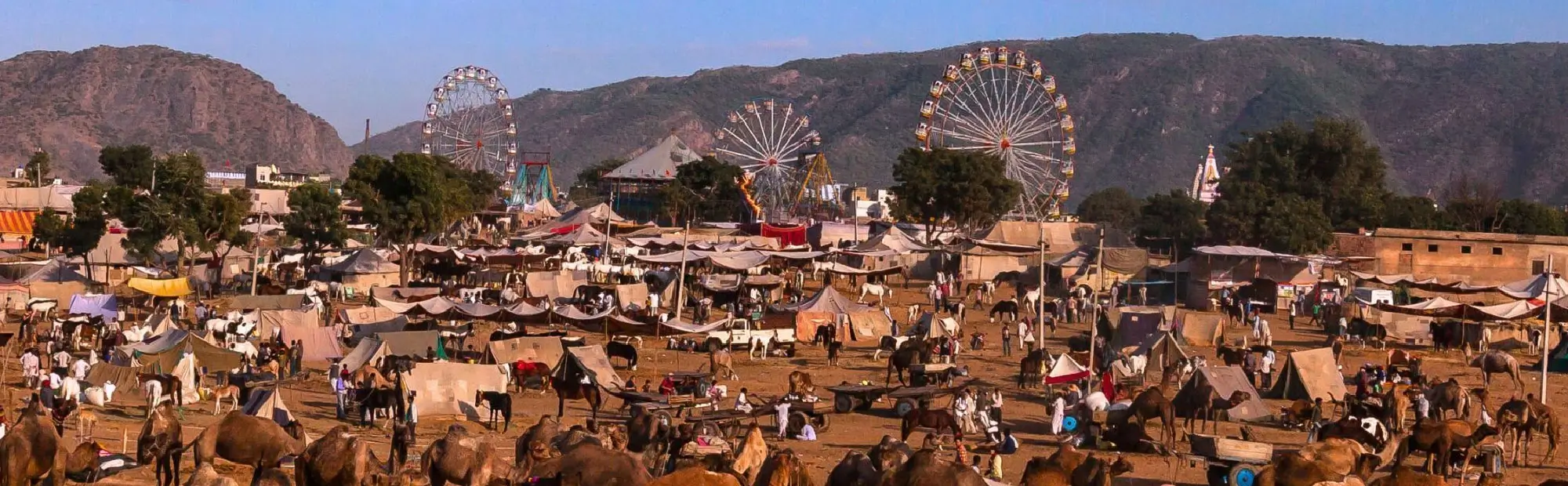
One of Pushkar’s most famous events is the annual Pushkar Camel Fair, typically held in October or November. During this time, the desert outskirts transform into a gathering ground for camel traders, performers, and rural communities.
The fair combines livestock trading with cultural performances, folk music, and traditional competitions. For photographers and cultural travellers, it offers a dynamic glimpse into Rajasthan’s rural life.
Outside festival season, the desert grounds remain quiet but still accessible for short camel rides or sunset walks.
Pushkar is surrounded by low hills, adding scenic contrast to the flat desert plains. The Savitri Temple, located on a hilltop, provides panoramic views over the lake and town below. Visitors can reach the temple via a ropeway or a short uphill hike.
The desert landscape around Pushkar becomes especially striking at sunset, when golden light spreads across sand and rocky terrain.
Pushkar offers a range of boutique guesthouses, heritage-style hotels, and mid-range properties. While it does not feature large luxury palace hotels like Udaipur, the town provides charming stays with rooftop terraces and relaxed environments.
Many properties cater specifically to international travellers, offering yoga classes, cultural workshops, and guided walking tours.
Because Pushkar is compact, most attractions are within walking distance. This makes it one of the easiest towns in Rajasthan to explore independently.

Nearest airport: Jaipur (approx. 3 hours by road)

Regular buses from Jaipur and Ajmer

Nearest railway station: Ajmer
We promise you a holiday where everything is taken care of from the moment you land. Trusted drivers waiting for you, handpicked hotels that fit your style, personalized itineraries designed just for your family, and a dedicated team on call 24/7. All you need to do is relax, explore, and create unforgettable memories, while we take care of every detail behind the scenes.
Pushkar is famous for its sacred lake and the rare Brahma Temple.
One overnight stay is usually sufficient.
Yes, it is an important Hindu pilgrimage destination.
Visitors may observe ceremonies respectfully but should follow local guidelines.
No, alcohol is prohibited due to religious significance.
An annual cultural and livestock fair attracting traders and visitors.
Yes, the town offers short yoga and meditation programs.
It is busy during the camel fair but generally calm otherwise.
Yes, especially in guesthouses and cafés.
Yes, it is commonly added as a short extension from Jaipur.
October to March offers pleasant weather.
Yes, it is considered safe and welcoming.