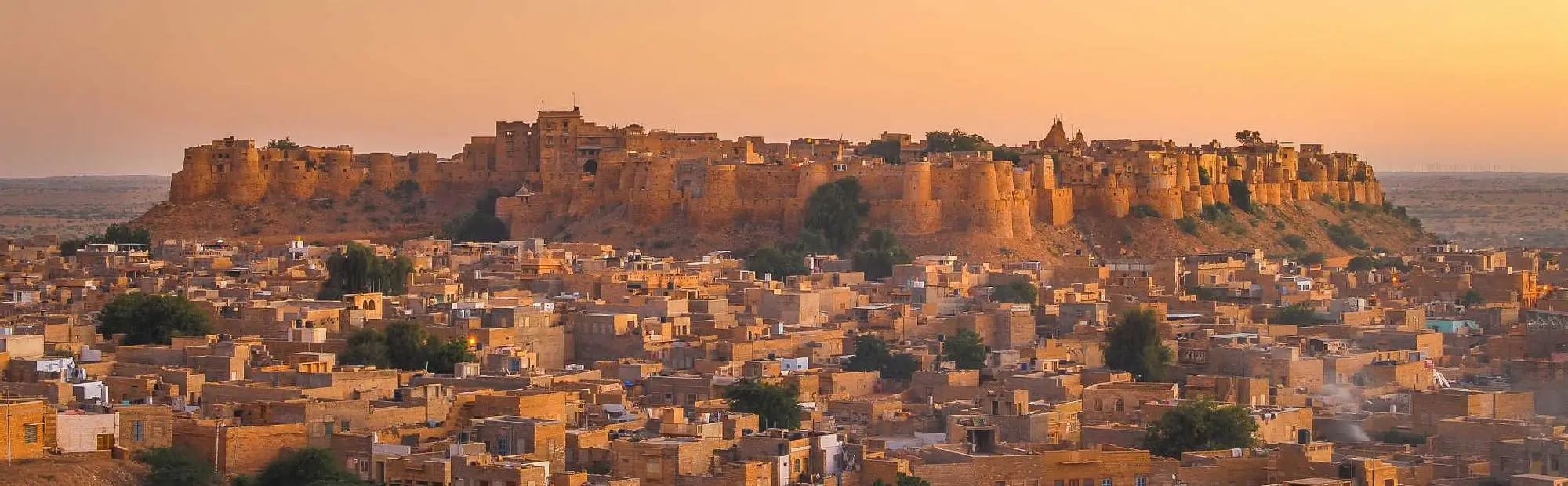
Jaisalmer, often called the “Golden City,” rises dramatically from the heart of the Thar Desert. Built from honey-colored sandstone that glows under the desert sun, the city appears almost like a mirage against the vast arid landscape. Unlike the lake palaces of Udaipur or the fortified hilltops of Jodhpur, Jaisalmer is defined by its desert setting, medieval fort architecture, and open horizons.
Founded in 1156 by Rawal Jaisal, Jaisalmer once served as an important trading post along the ancient Silk Route. Caravans carrying silk, spices, and precious goods passed through this region, bringing wealth and cultural exchange. This prosperity is still visible in the ornate merchant mansions and intricately carved façades that line the old city streets.
For international travellers exploring Royal Rajasthan, Jaisalmer offers a distinct atmosphere - quieter, more remote, and deeply connected to desert life. The journey itself becomes part of the experience, as the surrounding terrain gradually shifts into sand dunes and sparse vegetation. This sense of isolation gives Jaisalmer a unique identity within Rajasthan.
Jaisalmer is not only about monuments; it is about landscape and mood. The golden fort, narrow winding lanes, desert sunsets, and camel caravans create a cinematic environment that feels timeless.

Jaisalmer Fort, Patwon Ki Haveli, Sam Sand Dunes, Gadisar Lake, Kuldhara Village

October – March
Cooler weather makes desert excursions comfortable and enjoyable.

1–2 Days
One night in the city and one night in the desert is ideal.

English, Hindi
English-speaking guides and camp hosts are widely available.
The most iconic landmark of the city is Jaisalmer Fort, also known as Sonar Quila (Golden Fort). Unlike most forts in Rajasthan, this is a “living fort” — meaning that people still reside within its walls. Houses, temples, guesthouses, and shops operate inside the fortified complex.
Built entirely from yellow sandstone, the fort changes color throughout the day, appearing golden at sunrise and deep amber at sunset. Walking through its narrow lanes reveals carved balconies, Jain temples, and panoramic viewpoints overlooking the desert.
The fort’s defensive architecture includes massive gates and bastions designed to protect against invasions. Yet inside, the atmosphere feels intimate and residential rather than purely monumental.
Jaisalmer’s prosperity during the trading era led to the construction of elaborate merchant mansions known as havelis. Patwon Ki Haveli is the most famous among them — a collection of five intricately carved houses featuring delicate stone latticework and decorative façades.
These structures demonstrate the artistic mastery of local craftsmen. The carvings are so detailed that the sandstone appears almost lace-like in texture. Exploring these havelis provides insight into the wealth and cultural refinement of Jaisalmer’s former merchant families.
Beyond the city walls lies the vast expanse of the Thar Desert. The Sam Sand Dunes, located approximately 40 kilometers from Jaisalmer, are among the most popular spots for desert excursions.
Most travellers combine a sunset camel ride with an overnight desert camp experience. Traditional Rajasthani folk music, dance performances, and local cuisine create an immersive cultural evening under open skies. Clear desert nights offer impressive stargazing opportunities due to minimal light pollution.
Unlike urban sightseeing, the desert experience focuses on atmosphere — shifting sands, warm hues, and quiet horizons. It is often considered the highlight of a Jaisalmer visit.
Closer to the city, Gadisar Lake offers a peaceful setting framed by small temples and ghats. Historically used as a water conservation reservoir, the lake now serves as a scenic retreat from the fort’s busier lanes.
Another unique excursion is a visit to Kuldhara Village, an abandoned settlement believed to date back several centuries. Though surrounded by local legends, the site offers a glimpse into Rajasthan’s rural past and architectural simplicity.
Jaisalmer’s desert culture remains visible in traditional attire, music, and handicrafts. Mirror-work textiles, embroidered fabrics, and camel leather products are commonly sold in local markets. Compared to larger cities, shopping here feels relaxed and less commercialized.
The rhythm of life in Jaisalmer is slower. The desert climate shapes daily routines, and evenings often become social gathering times in open courtyards or rooftop terraces.
Photography enthusiasts find Jaisalmer especially rewarding. The interplay of sandstone, desert sky, and vibrant textiles creates striking visual compositions.
Accommodation options in Jaisalmer range from boutique heritage hotels within the old city to desert camps near the dunes. Many restored havelis offer rooftop views of the fort and personalized hospitality.
Desert camps vary from basic to luxury-style tented experiences with private bathrooms and curated dining setups. For international travellers, premium camps provide comfortable bedding, organized activities, and cultural performances.
Because Jaisalmer is more remote than Jaipur or Jodhpur, planning travel timing carefully is important. However, the city remains accessible and well equipped to handle tourism during peak season.

Jaisalmer Airport (limited seasonal connections)

Intercity buses from Jodhpur

Direct rail connections from Jodhpur and Jaipur
We promise you a holiday where everything is taken care of from the moment you land. Trusted drivers waiting for you, handpicked hotels that fit your style, personalized itineraries designed just for your family, and a dedicated team on call 24/7. All you need to do is relax, explore, and create unforgettable memories, while we take care of every detail behind the scenes.
Its buildings are made from yellow sandstone that glows golden in sunlight.
One to two days including a desert camp stay.
It is a living fort where people still reside inside.
Yes, organized camel safaris and camps are safe when booked with reputable operators.
October to March offers the most comfortable weather.
Yes, desert camps offer overnight stays with cultural performances.
Yes, with proper planning and moderate weather.
Yes, licensed guides are available in the city.
It is popular in peak season but generally calmer than Jaipur.
Approximately 5–6 hours by road.
Light clothing for daytime and warmer layers for desert evenings.
No, but it is a popular Rajasthan extension.