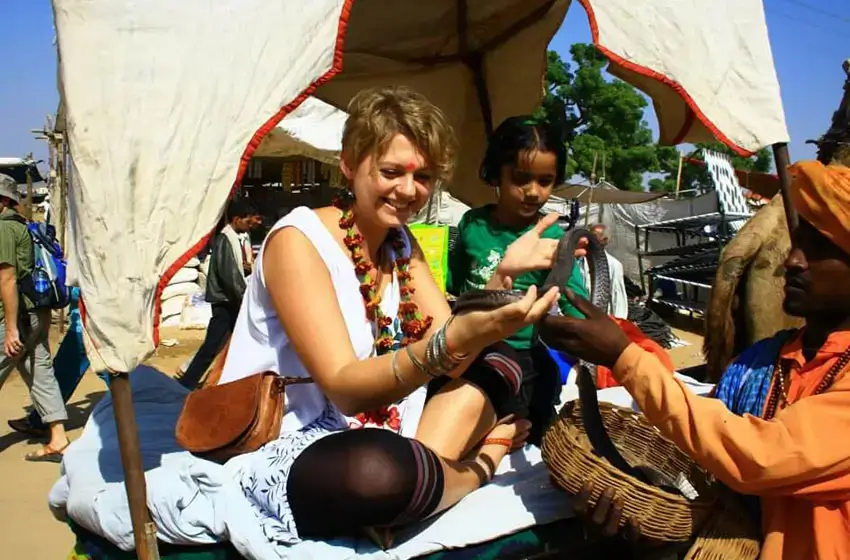
India has been on your list for years. Maybe decades. You've watched documentaries, seen the photographs, listened to friends who came back changed. And now - finally - you're doing it.
The question isn't whether to go. The question is how to go the right way.
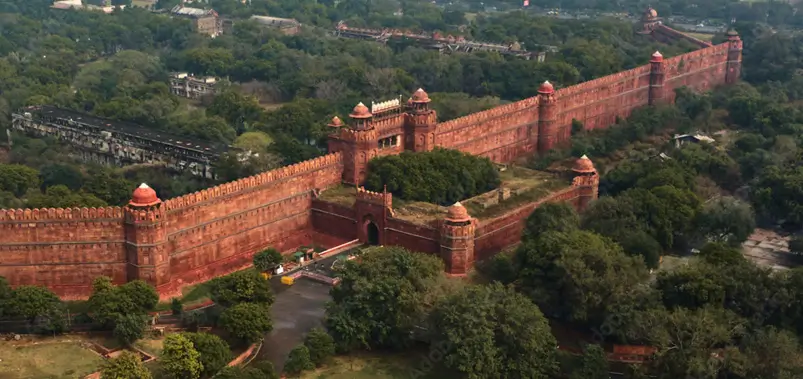
For American travelers visiting India for the first time, the Golden Triangle Tour - covering Delhi, Agra, and Jaipur - is not just the most popular starting point. It is, by a wide margin, the most rewarding introduction to this country available. In roughly seven to ten days, you experience India's Mughal grandeur, its Rajput royal heritage, its living culture, and its most iconic monument. You return home with a framework for understanding everything else India has to offer - and, almost always, a deep desire to come back.
At Golden Triangle Tours, the majority of our guests come from the United States. We have spent over two decades refining the luxury private Golden Triangle experience specifically for American travelers - understanding what surprises them, what concerns them, what moves them, and what they wish they had known before they arrived.
This is that guide.
The Golden Triangle - Delhi, Agra, and Jaipur - works for American first-timers for very specific reasons that go beyond the obvious tourist appeal:
The scale is manageable. India is a subcontinent with 28 states, 22 official languages, and enough destinations to fill a lifetime of travel. The Golden Triangle is a contained, well-connected circuit that delivers an extraordinary cross-section of Indian history and culture without overwhelming you. Three cities. Three distinct personalities. One unforgettable journey.
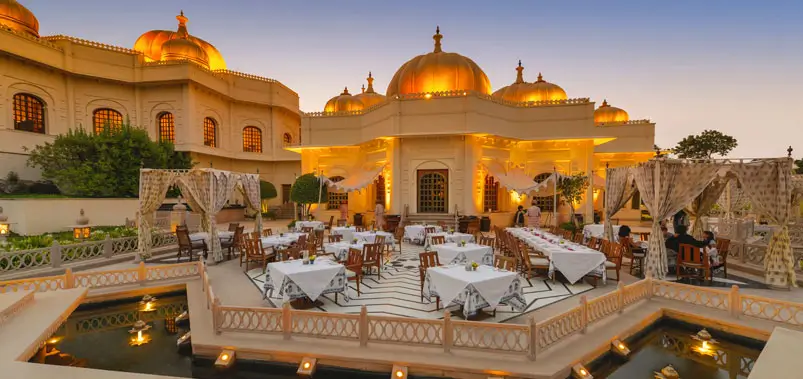
The infrastructure is excellent for luxury travel. Delhi, Agra, and Jaipur all have world-class five-star hotels, excellent airports, and well-maintained private road connections. The luxury private car experience between cities is comfortable and scenic. This is not roughing it - this is India at its most polished.
The historical depth is unmatched. As Americans, we tend to measure history in hundreds of years. India measures it in thousands. The Taj Mahal was completed in 1653 - 123 years before the Declaration of Independence. Qutub Minar in Delhi was begun in 1193. The Amber Fort in Jaipur dates to 1592. Walking through these places reshapes your sense of time in a way that is genuinely rare.
The storytelling is extraordinary. India's history is not dry or distant. It is romantic, violent, spiritual, and deeply human. The stories of Shah Jahan and Mumtaz Mahal, the Mughal emperors, the Rajput kings and queens - when told by a great private guide - are as gripping as any novel you've ever read.
Direct and Connecting Flights
As of May 2026, several strong options connect major US cities to Indira Gandhi International Airport (DEL) in New Delhi:
Air India operates direct nonstop flights from New York JFK, Chicago O'Hare, and San Francisco to Delhi. Flight times range from approximately 14 hours (JFK) to 16 hours (SFO). Air India's premium cabin - particularly business class - has been significantly upgraded and offers a comfortable introduction to the subcontinent.
United Airlines offers connections via Frankfurt and London to Delhi. Emirates via Dubai, Qatar Airways via Doha, and Etihad via Abu Dhabi all offer excellent connecting options with outstanding business and first-class products - particularly Qatar's Qsuite, which many American travelers choose specifically for the Gulf-connection routing.
From the East Coast: New York to Delhi is typically 14 to 15 hours direct, or 16 to 18 hours with one connection via the Gulf. Budget approximately $1,800 to $3,500 for business class round-trip, depending on booking timing and season.
From the West Coast: Los Angeles or San Francisco to Delhi is approximately 15 to 17 hours direct or 18 to 21 hours connecting. Business class pricing is similar to East Coast routes.
Pro Tip from Golden Triangle Tours: Book flights arriving in Delhi in the morning if possible. This gives you an afternoon rest, an evening exploration of your hotel and neighborhood, and a full first day ready for sightseeing without the fog of overnight travel.
India e-Visa for American Citizens in 2026
The process is straightforward and fully online.
US citizens qualify for India's e-Tourist Visa (eTV), which is applied for entirely online at the official India government visa portal. As of May 2026, the process works as follows:
Golden Triangle Tours provides full visa guidance to every guest as part of our pre-trip planning support. We review your application details and timeline to ensure there are no last-minute issues.
Understanding the Time Difference
India operates on Indian Standard Time (IST), which is UTC +5:30 - a somewhat unusual half-hour offset.
For American travelers, this means India and the US are almost exactly opposite in the daily cycle - when it is noon in New York, it is 10:30 PM in Delhi. Jet lag is real and worth planning for.
Our recommendation: Build a genuine recovery day into the start of your itinerary. At Golden Triangle Tours, we always suggest arriving in Delhi a day before your "official" tour begins. Spend the first day resting, walking your hotel neighborhood, eating lightly, and adjusting to the time. Guests who rush straight into sightseeing on arrival day consistently report a diminished first experience.
Currency, Tipping, and Money in India
Currency: India uses the Indian Rupee (INR). As of May 2026, the exchange rate is approximately 83 to 85 INR per 1 USD, though rates fluctuate. We recommend confirming current rates before travel.
Getting Cash: ATMs are widely available in Delhi, Agra, and Jaipur. Most luxury hotels have in-house ATMs or currency exchange services. Notify your US bank before travel to avoid card blocks. Major credit cards - Visa and Mastercard - are accepted at all luxury hotels, upscale restaurants, and established shops.
Tipping Culture for American Travelers: Tipping in India is appreciated but follows different norms than the US. Here is a practical guide:
Golden Triangle Tours provides all guests with a detailed tipping guide tailored to their specific itinerary before departure. Many American guests tend to over-tip out of habit - which is generous but not expected.
Safety in India for American Travelers
Let us address this directly because it is the question we are asked most frequently by first-time American guests.
Is India safe for American tourists? Yes - particularly on a luxury private Golden Triangle Tour with an established, experienced operator.
Here is what makes a private Golden Triangle Tour inherently safer than independent travel:
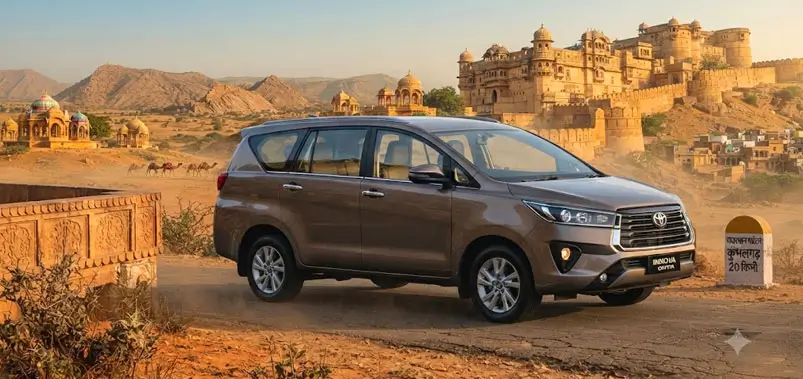
Your private vehicle is your sanctuary. You are not navigating public transport, haggling with auto-rickshaw drivers, or finding your way through unfamiliar streets. Your dedicated private chauffeur - vetted, experienced, and familiar with every route - is with you throughout the journey.
Your guide is your interpreter. Every cultural misunderstanding, every ambiguous situation, every moment where you are uncertain - your expert Golden Triangle Tours private guide is there to navigate it instantly. This removes the vast majority of situations that cause discomfort for independent travelers.
Your hotels are among the safest buildings in India. The Oberoi, Taj, and Leela properties - and all the luxury hotels we work with - maintain security standards equal to or exceeding the finest hotels in New York or Los Angeles. You will not feel unsafe inside these properties for a single moment.
Practical Safety Notes:
For female American travelers: India is safe on a private luxury tour. Solo female guests travel with us regularly - including the reviews on our website from American women traveling alone. Your private vehicle, guide, and vetted hotel properties create a consistently secure experience. We discuss specific safety considerations with every solo female guest during planning.
Vaccinations: The CDC recommends American travelers to India consider the following vaccinations - consult your physician or a travel medicine clinic at least 4 to 6 weeks before departure:
Traveler's Diarrhea: This is the most common health issue for American visitors to India and is largely avoidable with simple precautions. At luxury hotels, food is prepared to international safety standards. Our guidance: stick to cooked foods, avoid raw salads at street stalls, and drink only bottled water (including for brushing teeth outside of luxury hotel bathrooms).
Travel Insurance: We strongly recommend comprehensive travel insurance for all American guests visiting India. Look for coverage that includes: trip cancellation, medical evacuation, emergency hospitalization, and baggage loss. Several US providers offer strong India-specific travel insurance products.
What to Expect in Each City
Delhi - India's Living History
Delhi is one of the world's oldest continuously inhabited cities - and it shows, in the best possible way. Your Golden Triangle Tours experience in Delhi will include:
Old Delhi: The labyrinthine lanes of Chandni Chowk, the colossal Jama Masjid (India's largest mosque), the spice markets of Khari Baoli, and a rickshaw ride through streets unchanged in their essential character for centuries. Old Delhi is loud, fragrant, chaotic, and magnificent. Your private guide translates it all.
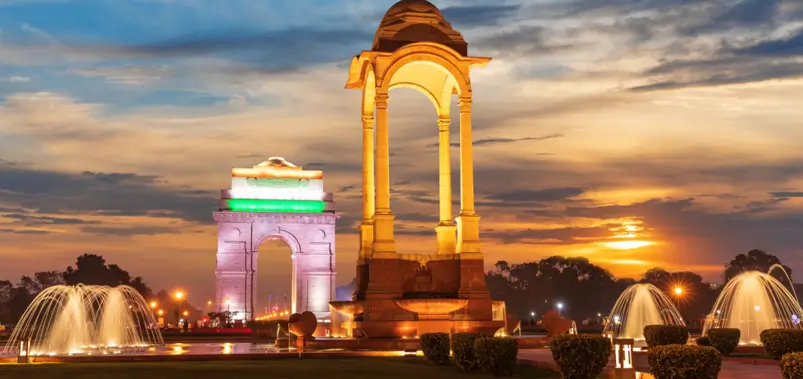
New Delhi: Humayun's Tomb - the architectural precursor to the Taj Mahal, and a UNESCO World Heritage Site - the towering Qutub Minar, the solemn India Gate, and the stately government boulevards of Lutyens' Delhi, designed by British architect Edwin Lutyens in the early twentieth century.
For American travelers specifically: The contrast between Old Delhi and New Delhi is one of the most vivid expressions of India's layered history. Your guide will contextualize these layers - Mughal, colonial, post-independence modern - in a way that makes the city deeply readable rather than overwhelming.
Agra - The Taj Mahal and Beyond
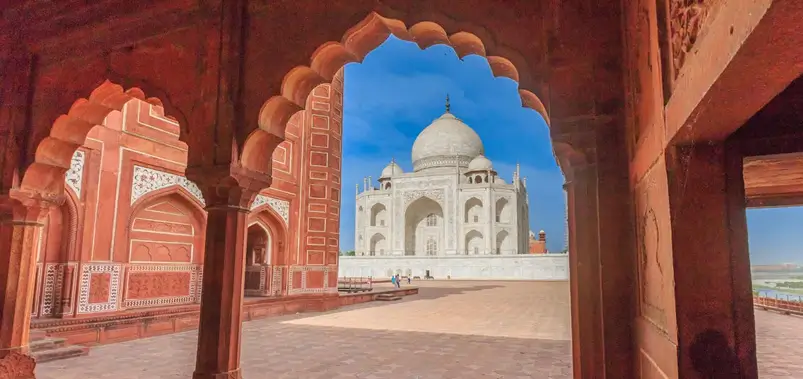
Agra is, for most American travelers, the emotional centerpiece of the Golden Triangle Tour. The Taj Mahal exceeds expectations - which is extraordinary given how impossibly high those expectations are. Beyond the Taj:
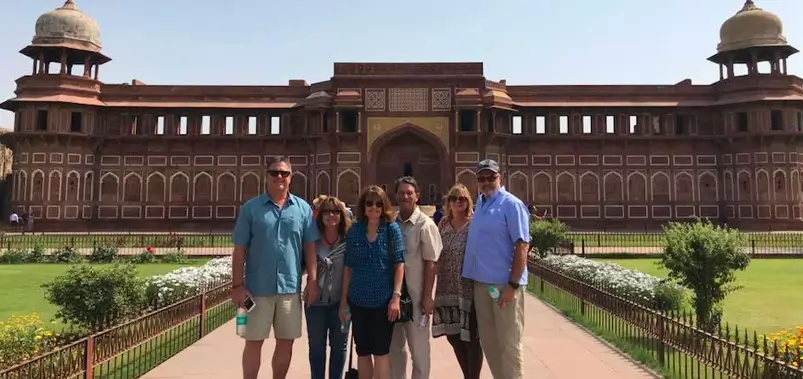
Agra Fort: A UNESCO World Heritage Site and former seat of Mughal power, the Agra Fort is where Shah Jahan spent his final years imprisoned by his son Aurangzeb, with a distant view of the Taj Mahal he built for his wife. This story, told in situ, is deeply moving.
Fatehpur Sikri: Just 40 kilometers from Agra, this perfectly preserved Mughal ghost city was built by Emperor Akbar the Great in 1571 and abandoned just 14 years later when the water supply failed. Walking through its extraordinary red sandstone courts and palace complexes - largely empty and remarkably intact - is like stepping directly into the sixteenth century.
Jaipur - The Pink City of Rajasthan
Jaipur is where the Golden Triangle reveals its third and perhaps most visually spectacular dimension. The city's old quarter is painted in shades of terracotta and rose - the traditional color of Rajput hospitality - earning it the title of the Pink City.
Amber Fort: Rising above the city on a hilltop, Amber Fort is a masterpiece of Rajput military architecture with Mughal decorative influences. The Sheesh Mahal (Hall of Mirrors) inside - a chamber inlaid with thousands of pieces of mirror and glass - is one of the most extraordinary interiors in India.
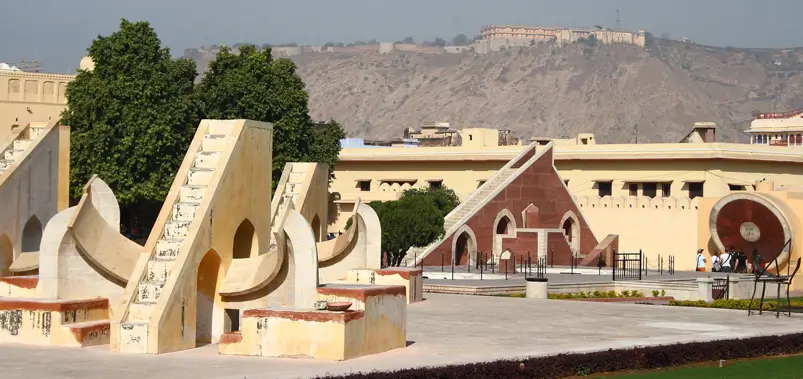
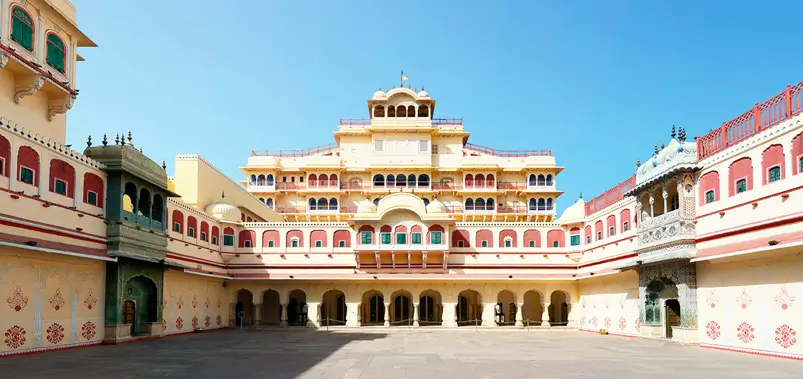
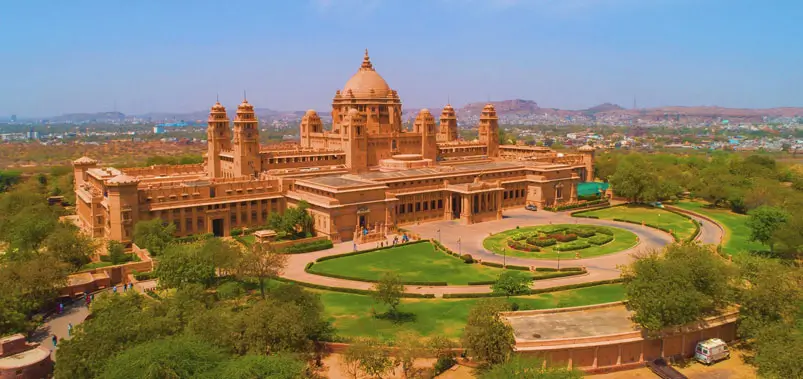
City Palace and Jantar Mantar: The City Palace remains a partial residence of the Jaipur royal family and houses a museum of extraordinary royal artifacts. Adjacent, the Jantar Mantar - an eighteenth-century astronomical observatory - contains the world's largest sundial, accurate to within two seconds.
Bazaars of Jaipur: The city is renowned for gemstones, block-printed textiles, blue pottery, and silver jewelry. Your Golden Triangle Tours guide will take you to trusted artisans and workshops - not tourist traps - where you can observe craftsmanship that has been practiced for generations.
A few cultural notes that will make your experience smoother and more respectful:
Dress modestly at religious sites. Both men and women should cover shoulders and knees when visiting temples, mosques, and gurudwaras. Lightweight linen or cotton scarves are ideal - your guide will advise at each site.
Remove footwear at religious sites. This is non-negotiable and universal. Socks are fine.
The right hand rule. In traditional Indian settings, use your right hand for eating, receiving gifts, and handing items to others. The left hand is considered unclean in traditional culture.
Bargaining is expected in markets. In bazaars and independent shops, the first quoted price is typically a starting point. Gentle bargaining is part of the shopping experience and is not rude - it is respectful participation in local commerce.
Photography etiquette. Always ask before photographing people, particularly women and religious figures. Most people are happy to be photographed - especially if you show them the result on your screen. Your guide will navigate this naturally.
The Best Time for American Travelers to Visit
October through March is the ideal window for American travelers visiting the Golden Triangle. This aligns with Indian peak season for good reason:
For American school-year travelers: The winter break window (late December to early January) is extremely popular but also the most crowded period at major monuments. Book everything - hotels, guides, monument entry - well in advance. We recommend a minimum of 6 months advance booking for December travel.
May 2026 travel (current month): This is summer season in India. Temperatures in Delhi and Agra can reach 100°F to 110°F (38°C to 43°C) in the afternoon. We recommend scheduling all outdoor sightseeing before 11:00 AM, retreating to your luxury hotel during peak afternoon hours, and resuming in the evening. The upside: significantly fewer crowds and often lower hotel rates.
At Golden Triangle Tours, we are not a booking platform or an algorithm. When you contact us, you reach Nand Singh Rathore - our founder - directly. He has accompanied American travelers through India for over two decades. He has visited the United States. He understands what American travelers value: directness, reliability, transparency, and an experience that justifies every dollar spent.
Our private tours for American guests include:
India will change you. Not dramatically, not in a way that requires a spiritual crisis - but in the way that only genuine encounters with an ancient, living civilization can. The Golden Triangle is where that encounter begins.
For American travelers in 2026, there has never been a better moment. India's luxury infrastructure is world-class, its tourism ecosystem is mature and well-organized, and the experience available to a private traveler with the right guide and the right hotels is genuinely extraordinary.
Come with curiosity. Come prepared. And come with Golden Triangle Tours - because the difference between a great trip and a life-changing one is almost always the quality of the people who guide you through it.
We promise you a holiday where everything is taken care of from the moment you land. Trusted drivers waiting for you, handpicked hotels that fit your style, personalized itineraries designed just for your family, and a dedicated team on call 24/7. All you need to do is relax, explore, and create unforgettable memories, while we take care of every detail behind the scenes.
The CDC recommends Hepatitis A, Typhoid, and ensuring routine vaccinations are current. Consult a travel medicine clinic at least 4 to 6 weeks before departure. Golden Triangle Tours provides a health checklist to every guest as part of pre-trip planning.
Yes. US citizens require a visa to enter India. The most convenient option is the India e-Tourist Visa (eTV), applied for entirely online at the official Indian government portal. Processing typically takes 72 hours, but we recommend applying at least two weeks before travel. Golden Triangle Tours provides full visa guidance to every American guest.
We recommend a minimum of 7 nights / 8 days for American first-time visitors - allowing 2 nights in Delhi, 2 nights in Agra, and 3 nights in Jaipur. This pacing allows genuine absorption of each city without rushing. Extensions to Varanasi, Ranthambore, or Udaipur add 2 to 4 additional nights depending on interests.
Yes - particularly on a luxury private Golden Triangle Tour with an experienced operator. Your private vehicle, expert guide, vetted hotels, and 24/7 support create a consistently secure environment. Millions of American tourists visit India safely every year. Golden Triangle Tours has an unblemished safety record across more than two decades of operation
For nonstop service, Air India from New York JFK, Chicago, or San Francisco is the most direct option. For premium cabin quality, many American travelers prefer Qatar Airways (via Doha) or Emirates (via Dubai) for their outstanding business class products. We recommend booking at least 3 to 4 months in advance for peak season travel.
Pricing varies based on hotel choices, duration, and extensions. A 7-night luxury private Golden Triangle Tour for two travelers staying at five-star properties (including Oberoi Amarvilas in Agra) typically ranges from $4,000 to $8,000 USD per person, excluding international flights. Golden Triangle Tours provides transparent, detailed quotations with no hidden fees.
Strongly recommended. Look for coverage that includes medical evacuation, emergency hospitalization, trip cancellation, and baggage loss. Several US-based providers offer excellent India-specific policies. Golden Triangle Tours can recommend specific providers based on your itinerary.
Yes - Visa and Mastercard are widely accepted at luxury hotels, upscale restaurants, and established shops throughout the Golden Triangle. Notify your bank before travel to prevent cards being flagged for international use. ATMs are available at all hotels for cash needs.
Tipping norms in India are lower than American expectations. A good guideline: 500–1,000 INR per day for your driver and 1,000–2,000 INR per day for your guide. Golden Triangle Tours provides a detailed tipping guide tailored to your specific itinerary.
Absolutely. The Golden Triangle is one of India's most family-friendly circuits - the distances are manageable, the hotels are world-class, and the monuments are endlessly engaging for curious young travelers. Our private tours are fully customizable around children's energy levels and interests. Many of our most enthusiastic reviews come from American families.
English is widely spoken across Delhi, Agra, and Jaipur - particularly in luxury hotels, tourist sites, and established restaurants. All Golden Triangle Tours guides are fluent English speakers, many educated in English-medium institutions. American travelers very rarely encounter communication difficulties on our private tours.
For peak season travel (October to March), we recommend booking at least 4 to 6 months in advance - particularly for Oberoi Amarvilas in Agra and Rambagh Palace in Jaipur, which sell out well ahead of the season. For May 2026 travel, bookings should be confirmed immediately. Contact Golden Triangle Tours today and we will begin planning your itinerary within 24 hours.