Packing for India is the moment when even the most experienced travelers pause.
India is simultaneously one of the most culturally specific and climatically variable destinations on earth. The rules are different here - what you wear to a mosque, what you wear to a palace hotel dinner, what you wear on a rickshaw through Old Delhi - are three completely different answers. Add the reality of temperatures ranging from 50°F on a January morning in Jaipur to 110°F on a May afternoon in Agra, and the packing question becomes genuinely complex.
But here is the good news: with the right framework, packing for a luxury Golden Triangle Tour is entirely manageable. And the framework - once understood - makes the whole thing logical rather than overwhelming.
At Golden Triangle Tours, we send every guest a pre-trip packing briefing tailored to their travel dates and specific itinerary. This guide is the comprehensive version of that briefing - everything we know, organized clearly, for international travelers planning their luxury private Golden Triangle Tour in 2026.
Get Ready for a Comfortable Golden Triangle Adventure
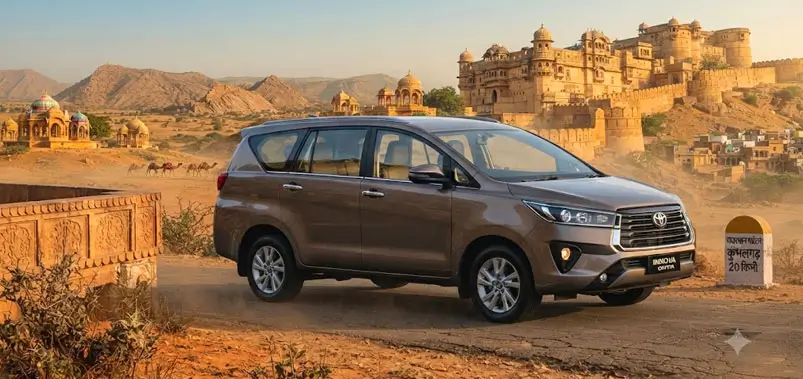
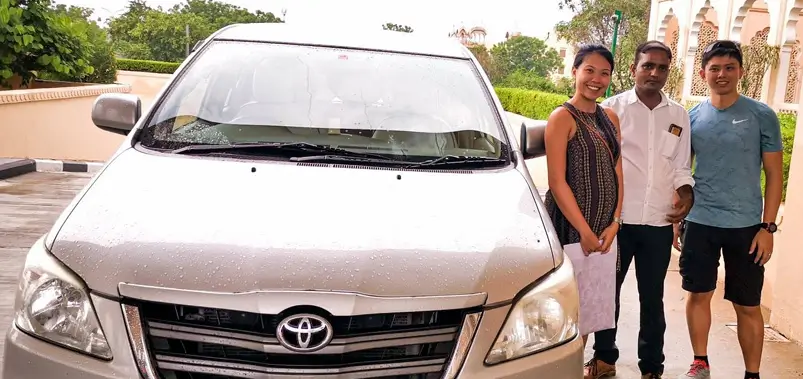
Once you've packed your bags, let us take care of the rest. Explore Delhi, Agra, and Jaipur with a private chauffeur, comfortable vehicle, and a personalized itinerary designed to make your Golden Triangle journey smooth, convenient, and truly memorable.
The Golden Framework: Four Contexts, Four Wardrobes
The key to packing well for the Golden Triangle is understanding that your trip exists across four distinct contexts, each with its own dress requirements:
Context 1 - Religious and Heritage Sites Temples, mosques, gurudwaras, and many palaces require covered shoulders and knees for both men and women. Footwear must be removed at all religious sites.
Context 2 - Active Sightseeing Long walks at Amber Fort, the Taj Mahal complex, Old Delhi bazaars - comfortable, breathable clothing that handles heat, dust, and uneven stone surfaces.
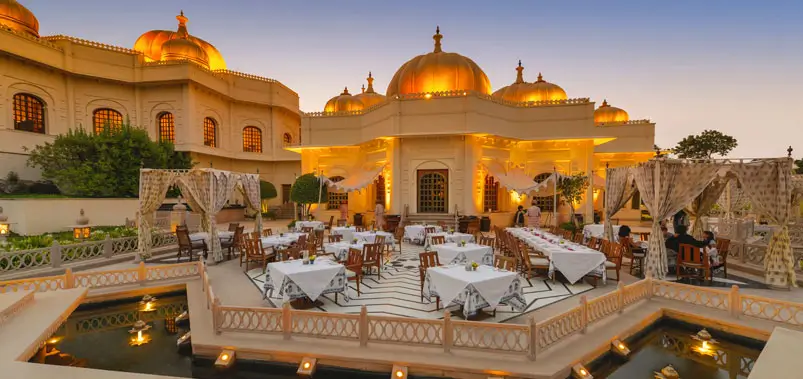
Context 3 - Luxury Hotel Evenings Dinner at Suvarna Mahal at Rambagh Palace, cocktails at the Leela Palace bar, a private terrace dinner at Oberoi Amarvilas - smart casual to formal, depending on the restaurant and occasion.
Context 4 - Private Transfers and Leisure The private car journeys between cities, hotel pool time, spa days, leisurely mornings in your suite - comfortable, casual, and relaxed.
Everything you pack should serve at least two of these contexts. The most useful items in your suitcase are the ones that transition effortlessly between active sightseeing and a smart hotel dinner.
Season-by-Season Packing Guide
The Golden Triangle covers a significant climatic range across the year. Your packing list depends substantially on when you travel.
October and November - Early Peak Season
Temperature range: 65°F to 88°F (18°C to 31°C) days, 55°F to 70°F (13°C to 21°C) evenings
What to expect: Warm days, pleasant evenings, occasional post-monsoon humidity in early October. Diwali falls in this window - evenings can be spectacular, with fireworks and festival lighting transforming Jaipur and Delhi.
Key packing priorities:
December and January - Peak Season
Temperature range: 55°F to 75°F (13°C to 24°C) days, 40°F to 55°F (4°C to 13°C) evenings
What to expect: The coolest and most comfortable sightseeing weather of the year - genuinely cold early mornings and evenings, warm afternoons. Morning fog is common in Delhi and Agra in January, which creates extraordinary atmospheric conditions at the Taj Mahal but can occasionally delay travel.
Key packing priorities:
February and March - Late Peak Season
Temperature range: 65°F to 88°F (18°C to 31°C), warming progressively
What to expect: The most reliably pleasant weather of the year. Days are warm and clear, evenings comfortable without being cold. Holi (the Festival of Colors) falls in February or March - if your visit coincides with Holi, plan for an unforgettable festival experience and pack at least one set of clothing you don't mind being covered in color.
Key packing priorities:
April and May - Shoulder to Summer Season
Temperature range: 90°F to 110°F (32°C to 43°C), with May being the hottest month
What to expect (May 2026 travelers specifically): Hot. Genuinely, seriously hot in the afternoons - particularly in Agra and Delhi. All outdoor sightseeing must be completed by 11:00 AM. Afternoons are hotel pool and spa time. Evenings are beautiful - warm, clear, and with dramatically reduced crowds at every monument.
Key packing priorities:
July, August, September - Monsoon Season
Temperature range: 75°F to 95°F (24°C to 35°C), high humidity, regular rainfall
What to expect: Rain - sometimes gentle, sometimes dramatic. The landscape turns lush and deeply green. Crowds essentially disappear. The Taj Mahal in monsoon mist is hauntingly beautiful. Hotel rates are at annual lows.
Key packing priorities:
The Master Packing List: Clothing
For Women
Tops (5 to 7 pieces):
Bottoms (4 to 5 pieces):
Dresses (1 to 2 pieces):
Outerwear:
For Men
Shirts (5 to 7 pieces):
Bottoms (3 to 4 pieces):
Outerwear:
The Master Packing List: Shoes
Shoe selection is one of the most important - and most frequently under-thought - packing decisions for the Golden Triangle.
The Non-Negotiables:
Comfortable walking shoes (1 pair) - your most important item You will be on your feet for several hours at a time at Amber Fort, Old Delhi, and the Taj Mahal complex. The surfaces are stone, cobblestone, uneven ancient paving, and marble. Your shoes must be genuinely comfortable - broken-in before travel, not new. Walking sandals (such as Birkenstocks or similar quality walking sandals) work excellently in warm seasons and slip on and off easily at religious sites.
Smart casual shoes (1 pair) For palace hotel evenings, restaurant dinners, and any occasion where your walking shoes are too casual. For women: a block-heeled sandal or flat leather shoe - something comfortable enough to walk hotel corridors but smart enough for Suvarna Mahal. For men: a leather loafer or clean leather shoe.
Sandals or flip-flops (1 pair) For hotel pool time, beach leisure (if extending to Goa or Kerala), and casual downtime. Also useful as the designated "inside the hotel room" shoe that protects your feet and keeps your walking shoes cleaner.
What to avoid:
Sunscreen (from home) Pack high-SPF sunscreen - SPF 50 minimum - from your home country. Quality international brands are available in India at major hotels and pharmacies but are expensive. India's UV index is substantially higher than most travelers expect, even in cooler months.
Insect repellent DEET-based repellent for monsoon season travel. Less critical for peak season (October to March) but useful in garden hotels and outdoor evening experiences.
Hand sanitizer Essential for bazaar visits and any moment between leaving a monument and your next meal. Luxury hotels provide this at every entrance - carry a small personal bottle for the spaces between.
Prescription medications Bring a generous supply - at least 20 percent more than you need for the duration of the trip - in their original, labeled packaging. Importing medications into India for personal use is generally permitted but original packaging smooths any customs queries.
Stomach medication Even on a luxury Golden Triangle Tour where food safety is rigorously managed, international digestive systems sometimes react to new cuisines. Imodium (loperamide), Pepto-Bismol tablets, and oral rehydration salts are worth having. Bring from home - all are available in India but at less convenient moments than you want to be searching for them.
Quality sunglasses Polarized lenses are ideal for Rajasthan's brilliant light - the white marble of the Taj Mahal, the reflective lake surfaces of Udaipur, the desert landscape around Jaisalmer. Bring a good pair from home.
A lightweight day bag or tote For carrying your essentials - water bottle, sunscreen, camera, phone, wallet - during sightseeing. A lightweight canvas tote or small backpack works well. Avoid anything that looks expensive in bazaars.
Universal travel adapter India uses Type C and Type D plugs (round two-pin and round three-pin). Most luxury hotels provide universal adapters in rooms, but carrying your own ensures you are never without charging capability.
Portable power bank Your phone camera will be working overtime at the Taj Mahal, Amber Fort, and throughout the Jaipur bazaars. A portable power bank ensures you never miss a photograph because your battery died.
Small personal first aid kit Plasters, antiseptic wipes, pain relief (paracetamol or ibuprofen), antihistamine tablets. All available in India but more convenient to have on hand.
What NOT to Pack - Common Mistakes
Too many formal clothes Palace hotel dining in India is smart casual to moderately formal - not black tie. One smart outfit per person is sufficient for any level of palace hotel dining you will encounter. Every extra formal outfit you pack is space that could be occupied by a beautiful Jaipur purchase.
Revealing clothing Tank tops, short shorts, and sleeveless dresses are not appropriate for religious sites and create unnecessary attention in traditional bazaar areas. This is not a moral judgment - it is a practical one. Modest clothing makes every sightseeing experience easier, cooler (counterintuitively, loose long clothing is more comfortable in heat than exposed skin in direct sun), and more culturally respectful.
Heavy jeans and denim Jeans are heavy, slow to dry, hot in summer, and difficult to slip on and off at religious sites. Lightweight chinos or linen trousers serve every function jeans would serve - better.
Too many shoes Three pairs maximum for most itineraries. More than three pairs is unnecessary weight.
Expensive jewelry Leave your finest jewelry at home. Beautiful, inexpensive Jaipur jewelry - silver, semi-precious stones, traditional Rajasthani designs - is among the finest shopping available on the Golden Triangle. Your purchases there will serve the jewelry function of your trip far better than anything you could bring.
Travel Smart with a Customized Golden Triangle Tour
Whether you're visiting in summer, winter, or the monsoon season, our tailor-made Golden Triangle tours ensure a comfortable and enjoyable experience. Travel in a private chauffeur-driven car, stay at carefully selected hotels, and explore India's most iconic destinations with complete peace of mind.
Jaipur's bazaars are extraordinary - and most guests buy more than they anticipated. Pashminas, block-printed textiles, blue pottery, silver jewelry, miniature paintings, and handmade leather goods are all genuine, high-quality, and significantly less expensive than equivalent quality at home.
Packing strategy: Leave approximately 30 to 40 percent of your luggage capacity empty on departure - or pack a lightweight, foldable duffel bag inside your main suitcase. This gives you carrying capacity for Jaipur purchases without requiring an additional checked bag on the flight home.
At Golden Triangle Tours, our guides take guests to vetted artisan workshops and established shops - not tourist traps. Every recommendation is based on quality and fair pricing. We never earn commissions on purchases - our recommendation is always independent and honest.
Before you leave for India, confirm the following:
✅ India e-Tourist Visa - confirmed and printed ✅ Passport validity - minimum 6 months beyond travel dates ✅ Travel insurance - purchased and documents saved on phone ✅ Bank cards - international travel notifications set, PIN confirmed ✅ Prescription medications - adequate supply in original packaging ✅ Sunscreen SPF 50+ - packed from home ✅ Comfortable walking shoes - broken-in and tested ✅ Golden Triangle Tours WhatsApp number saved - +91-8955000999 ✅ Hotel confirmation documents - printed or saved offline ✅ Emergency contact for your country's India embassy - saved on phone ✅ Portable power bank - fully charged
The single best packing advice we can offer for a luxury Golden Triangle Tour is this: pack less than you think you need, and leave room for what India gives you.
The finest thing in your suitcase when you return home will not be something you brought from America or Europe. It will be the pashmina you bought in Jaipur's bazaar, the silver earrings from a workshop in the old city, the block-printed table runner that now lives on your dining table and brings back the smell of Rajasthan every time you look at it.
India has extraordinary things waiting for you. Leave room for them.
We promise you a holiday where everything is taken care of from the moment you land. Trusted drivers waiting for you, handpicked hotels that fit your style, personalized itineraries designed just for your family, and a dedicated team on call 24/7. All you need to do is relax, explore, and create unforgettable memories, while we take care of every detail behind the scenes.
At mosques (including the Jama Masjid in Delhi and the mosque at Fatehpur Sikri), women are typically required to cover their heads with a scarf. At Hindu temples and Sikh gurudwaras, head covering may be requested for both men and women. At Taj Mahal (technically a mausoleum rather than an active mosque), head covering is not required. Your Golden Triangle Tours guide will advise you at each site - we always brief guests in advance.
Shorts are acceptable at your hotel, in private vehicles, and at non-religious outdoor sites. They are not appropriate for mosques, temples, or gurudwaras, and are not recommended for bazaar visits where modest clothing creates a more comfortable experience. For men, lightweight linen or chino trousers are more practical and versatile than shorts for the majority of the trip.
Most palace hotel restaurants - including Suvarna Mahal at Rambagh Palace and the Bellevue at Oberoi Amarvilas - are smart casual. For men: collared shirt and trousers (no shorts, no flip-flops). For women: a dress, skirt, or smart trousers with a blouse. Neither venue is black-tie. A well-cut linen shirt for men or a lightweight silk dress for women is entirely appropriate for the finest restaurants on the Golden Triangle.
Linen and cotton are the gold standard - both breathe exceptionally well, look good after light ironing (or don't require ironing at all in looser styles), and dry quickly. For active sightseeing in May and June specifically, moisture-wicking technical fabrics (such as those used in travel-specific clothing brands) can outperform even linen in terms of comfort during high-heat activity.
Yes - enthusiastically. Jaipur's bazaars offer extraordinary quality kurtas and salwar kameez (traditional long tunic with trousers) in beautiful fabrics and colors, starting from very modest prices. These garments are ideal for the Golden Triangle climate - loose, breathable, culturally respectful, and genuinely beautiful. Many guests buy one on the first day in Jaipur and wear it for the remainder of the trip. Your Golden Triangle Tours guide will take you to the best shops.
For smartphone photographers: your current flagship phone is excellent - the Taj Mahal, Amber Fort, and Jaipur's bazaars are among the most photogenic subjects on earth and photograph magnificently on any modern smartphone. For dedicated camera users: a mirrorless camera with a versatile zoom lens (24-105mm equivalent) covers the vast majority of Golden Triangle photography opportunities. A wide-angle lens is useful for interiors (Sheesh Mahal, Jama Masjid). A telephoto is useful for wildlife at Ranthambore. Bring a good camera bag with a rain cover for monsoon travelers. All Golden Triangle Tours guides understand photography priorities and position you optimally at every site.
Yes - all luxury hotels on the Golden Triangle (Leela Palace, Oberoi Amarvilas, Rambagh Palace, and equivalents) offer same-day or overnight laundry and dry-cleaning service. Prices are reasonable by international luxury hotel standards. For a 7 to 10-day trip, plan to use laundry service once or twice rather than packing for every day - this significantly reduces the weight and volume of your luggage.
Keep your passport and primary credit card in your hotel room safe - not on your person during sightseeing. Carry a photocopy of your passport and a secondary card. Distribute your cash across two separate locations (wallet and a concealed pocket or money belt) in bazaars and busy areas. Your private vehicle is a secure base - documents and valuables can be left with your driver during monument visits.
The Taj Mahal security screening is thorough. Prohibited items include: food and drinks (except water), tobacco products, camera tripods (must be declared), power banks (in some periods - check current rules), and any sharp objects. Bags larger than approximately 12x8 inches may require checking at a locker near the gate. Your Golden Triangle Tours guide briefs you specifically on current Taj Mahal security requirements before your visit.
A money belt (worn under clothing) provides useful security in crowded bazaar environments - particularly Chandni Chowk in Old Delhi. On a luxury private Golden Triangle Tour, the risk of petty theft is minimal - you are in a private vehicle, accompanied by a guide, and not navigating crowded public transport. A money belt is a sensible precaution rather than a necessity on our private tours.
For domestic flights within India (Delhi to Jaipur, Jaipur to Varanasi, etc.) on carriers such as IndiGo, Air India, or Vistara, the standard checked baggage allowance is 15 to 25 kilograms depending on fare class and airline. Carry-on is typically 7 kilograms. International business class travelers often have enhanced allowances. Golden Triangle Tours confirms current baggage allowances for any domestic flights included in your itinerary.
Comfortable, broken-in walking shoes. More than any other item, your footwear determines the quality of your sightseeing experience. The stone surfaces of Amber Fort, the marble pathways of the Taj Mahal, the cobblestones of Old Delhi - all demand shoes that are both comfortable and easy to remove. Everything else on this packing list is important. This one is non-negotiable.