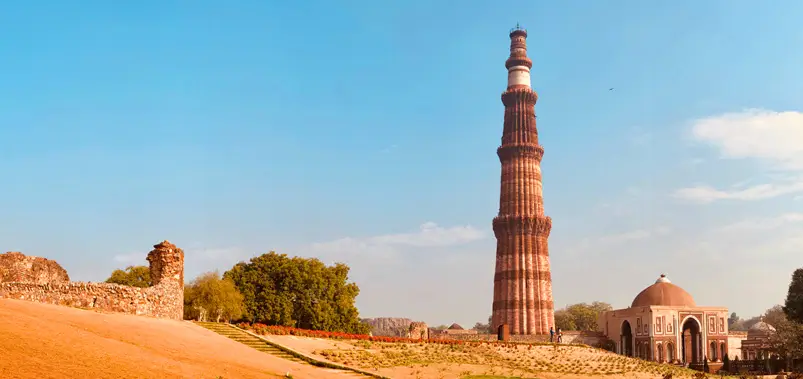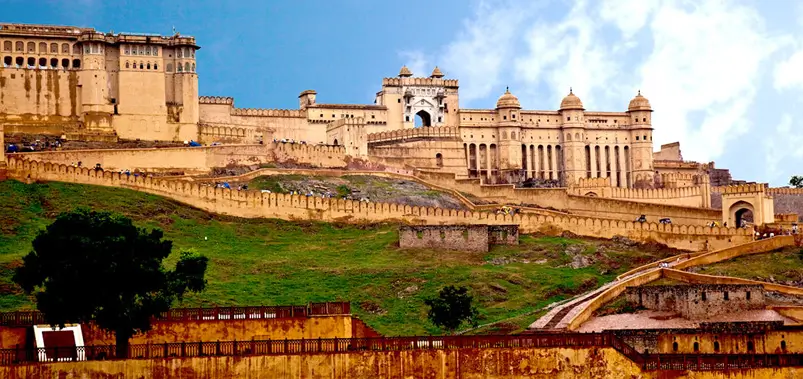
There is a moment, just after the main gate of Amer Fort opens in the early morning, when the light hits the sandstone walls at a low angle and the first courtyard is almost entirely silent. No tour groups. No noise. Just you, the stone, and four centuries of Rajput history.
Most tourists never experience that moment. They arrive at ten in the morning with everyone else, shuffle through corridors packed with visitors, and leave feeling vaguely underwhelmed.
This guide exists to make sure that does not happen to you.
Amer Fort - also written as Amber Fort is one of the most magnificent monuments in India. It is a UNESCO World Heritage Site, a masterpiece of Rajput and Mughal architecture, and the single most visited attraction in Jaipur. With the right timing and a little preparation, it is also one of the most rewarding places you will visit anywhere in the world.
Here is everything you need to know.
Amer Fort Jaipur sits on the Aravalli hills, 11 kilometres north of Jaipur city centre, overlooking the still waters of Maota Lake. The fort was commissioned by Raja Man Singh I in 1592 and expanded significantly by Mirza Raja Jai Singh I and later rulers of the Kachwaha Rajput dynasty.
Before Jaipur was founded in 1727, Amer was the capital of the kingdom. The fort therefore served not merely as a military structure but as a fully functioning royal residence with audience halls, private palaces, women's quarters, temples, and elaborate water systems designed to cool the interiors during Rajasthan's brutal summers.
What makes Amer Fort architecturally distinctive is the seamless blending of two great traditions. The Kachwaha rulers were close allies of the Mughal emperors, and this political relationship is written directly into the stonework arched Mughal gateways open into classically Rajput courtyards, and the decorative details move fluently between the two worlds.
The fort was built primarily from red sandstone and white marble, and the combination glows warmly in morning and evening light in a way that midday visitors rarely see.
Combine the beauty of Amer Fort with Delhi and Agra on a private Golden Triangle Tour. Travel comfortably with a private driver and explore India's most iconic landmarks at your own pace.
Amer Fort opens at 8:00 AM. Tour buses from Jaipur hotels typically depart between 9:00 and 10:00 AM, which means the fort fills rapidly from mid morning onwards and remains crowded until early afternoon.
If you arrive between 8:00 and 8:45 AM, you will have the most extraordinary sections of the fort almost entirely to yourself.
The Sheesh Mahal the famous Mirror Palace is one of the most breathtaking rooms in all of India. When fifty tourists are packed inside it simultaneously, it is impressive. When you are there alone or with just two or three others in the early morning light, it is genuinely unforgettable.
Practical arrangement: Ask your hotel to arrange transport departing no later than 7:30 AM. If you have booked a private car and driver in Jaipur, confirm the early start the evening before. The drive from the city centre takes approximately 25 to 30 minutes.
Avoid weekends if your schedule allows. Saturday and Sunday bring significantly larger domestic tourist crowds. Weekday mornings particularly Tuesday through Thursday are the quietest.
Pricing information for Amer Fort varies across websites because fees have been updated over the years. The most current confirmed figures are as follows:
|
Visitor Type |
Entry Fee |
| Foreign Tourists | ₹1000 per person |
| Foreign Students | ₹500 per person |
| Indian Nationals | ₹200 per person |
| Indian Students | ₹100 per person |
| Children under 7 | Free |
Composite Ticket - Best Value for Foreign Visitors: A Jaipur composite ticket costs approximately ₹1,000 for foreign visitors and covers entry to Amer Fort, Jantar Mantar, Hawa Mahal, Albert Hall Museum, and Nahargarh Fort. If you plan to visit more than two of these attractions, the composite ticket saves money and time at the ticket queue.

The evening light and sound show at Amer Fort is genuinely worth attending the fort illuminated at night against the dark Aravalli hills is a completely different experience from the daytime visit, and the narration provides historical context that enriches everything you saw during the day.
Tickets can be purchased at the fort entrance or booked online through the Rajasthan government portal. During peak season (October to February), buying online in advance avoids queues.
Amer Fort is divided into four main courtyards, each with its own character and highlights. Understanding this structure before you arrive helps you move through the fort purposefully rather than wandering.

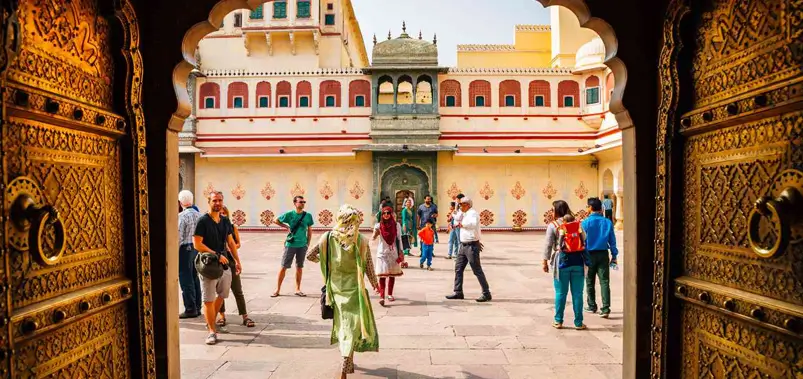
This is the entrance courtyard where soldiers once paraded and royal processions assembled. It is large, open, and paved in stone. The Sila Devi Temple is located here a working temple dedicated to the goddess Sila Devi, patroness of the Kachwaha rulers. Early morning, you may find locals performing puja here, which is a remarkable thing to witness before the tourist crowds arrive.
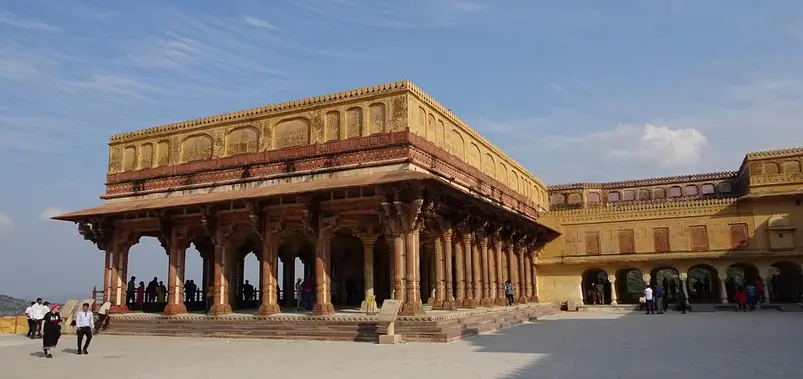
The Hall of Public Audience is where the Maharaja held court and received petitions from the general public. The colonnaded hall is elegant and spacious, and the views across the courtyard give a strong sense of the scale and organisation of royal governance. The Ganesh Pol the elaborately painted gateway that leads to the private royal quarters is on the far side of this courtyard and is one of the most photographed elements of the entire fort.
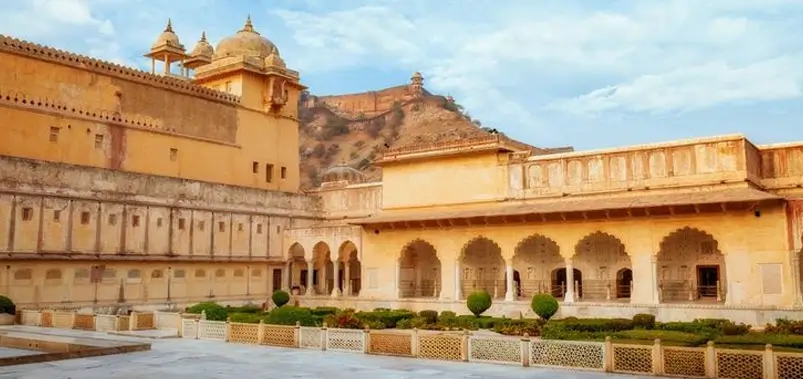
This is the heart of Amer Fort and contains its two most celebrated spaces.
Sheesh Mahal (Mirror Palace): Built by Mirza Raja Jai Singh I in the 17th century, the Sheesh Mahal is the undisputed highlight of the entire fort. Thousands of tiny convex mirrors imported from Belgium and Persia are embedded into the walls and ceiling in intricate floral and geometric patterns. The extraordinary feature of the design is that a single candle flame, placed anywhere in the room, causes the entire ceiling to shimmer as though filled with stars.
In early morning light, when sunlight rather than candlelight enters the chamber, the effect is different again softer, warmer, and genuinely magical. This is why the timing of your visit matters so much.
Sukh Niwas (Palace of Pleasure): Immediately adjacent to the Sheesh Mahal, the Sukh Niwas is equally fascinating for a different reason. The Rajput architects designed a sophisticated passive cooling system using water channels that ran through perforated sandalwood screens. Cool air moved through the water soaked screens and circulated through the palace a remarkably effective solution to Rajasthan's heat, centuries before air conditioning existed.
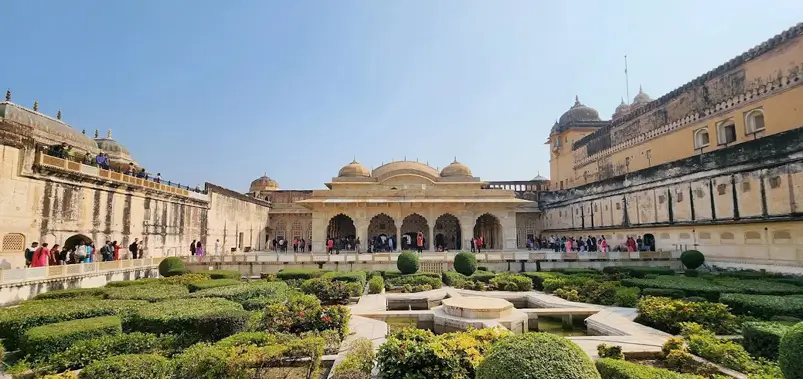
The Zenana Mahal was the private residence of the Maharaja's wives and female relatives. The architecture here is more intimate in scale, and the corridors and chambers give a vivid sense of daily life in the royal household. The Maharaja had separate entrances to each wife's apartments so that his visits could not be observed by the others a detail that visitors invariably find memorable.
By Private Car and Driver: The most comfortable and recommended option for foreign tourists visiting Amer Fort is a private car with a driver. The drive from Jaipur city centre takes 25 to 30 minutes via NH-48. Your driver can drop you at the base of the fort and wait while you explore. If you are travelling on a Golden Triangle tour that includes Jaipur, your car and driver will handle this transfer as part of the itinerary.
For personalised travel arrangements including private car hire in Jaipur, detailed itinerary planning, or a custom Golden Triangle tour, feel free to get in touch we are happy to help plan your visit around your schedule and interests.
By Auto Rickshaw: Available from Jaipur city centre. Always agree on the price before getting in. A one way journey should cost approximately ₹150 to ₹250 depending on your starting point.
By Public Bus: Bus number 5 runs from Chandpole to Amer. Inexpensive but slower, and schedules can be unpredictable.
By Jeep from the Fort Base: A shared jeep service operates from the car park at the base of the fort up to the entrance gate, saving a steep uphill walk. Cost is approximately ₹50 to ₹80 per person.
Many visitors ask about the elephant ride at Amer Fort. Traditionally, tourists could ride elephants up the ramp to the fort entrance one of the most iconic images associated with Jaipur.
The honest answer in 2025 is this: elephant rides at Amer Fort have faced ongoing legal scrutiny and animal welfare concerns. Court discussions have recommended phasing them out, and ethical tourism advocates strongly discourage riding elephants anywhere in India due to the training methods required to make elephants compliant with riders.
If you are drawn to an elephant experience near Jaipur, the responsible choice is to visit a sanctuary that prioritises feeding, bathing, and walking beside elephants rather than riding them facilities that allow genuine interaction without causing distress to the animal. There is one privately registered, Animal Welfare Board of India certified elephant sanctuary near Amer that is widely regarded as the most ethical option in the region. A quick search for certified ethical elephant sanctuary Jaipur will take you there.
Jeep rides are available as an alternative to reach the fort entrance and are entirely problem free.
Want to visit Amer Fort without crowds and discover hidden viewpoints, secret passages, and the best photo spots? Book a private Jaipur sightseeing tour with an experienced local guide and enjoy a hassle free experience.
Amer Fort involves a significant amount of walking, climbing, and standing on uneven stone surfaces. Comfortable, flat, closed shoes are essential sandals are not suitable. The fort can become very hot from mid morning onwards between April and September, so light, breathable clothing is advisable.
Carry a water bottle. There are small stalls selling water inside but prices are higher than in the city.
A hat or scarf for sun protection is useful. The open courtyards offer very little shade during peak hours.
Photography is permitted throughout the fort. The Sheesh Mahal is best photographed in early morning light. A small torch or phone light held in the room creates a remarkable mirror effect worth capturing.
Amer Fort sits in an area rich with other significant attractions, all within a short distance:
Jaigarh Fort - Connected to Amer Fort by a secret underground tunnel (though the tunnel is not open to visitors, the connection is historically significant). Jaigarh houses the Jaivana cannon the largest cannon on wheels in the world. The drive takes about 10 minutes and the views over Jaipur from the ramparts are exceptional.
Panna Meena Ka Kund - A stunning 16th-century stepwell located just minutes from the fort entrance, largely unknown to mainstream tourists. The geometric precision of its descending stone steps is extraordinary and photographs beautifully in morning light. One of the genuine hidden gems near Amer Fort.
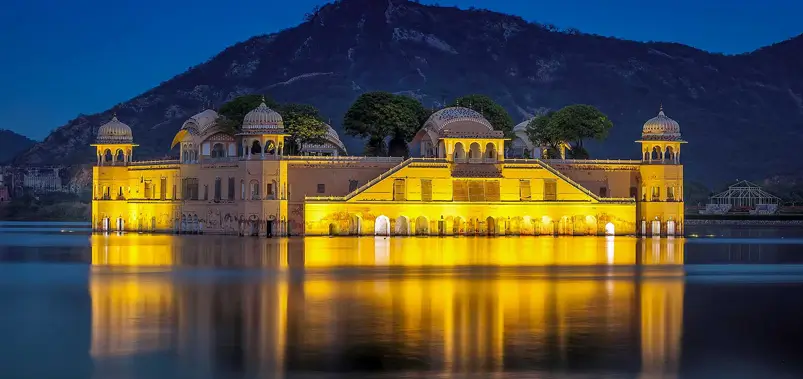
Jal Mahal - The Water Palace sits in the middle of Man Sagar Lake on the road between Jaipur city and Amer. It is best seen from the lakeside rather than entered (public access to the palace itself is restricted), but the reflection of the palace in the still water at dawn or dusk is one of Jaipur's most beautiful sights.
Nahargarh Fort - Sits on the ridge above Jaipur and offers panoramic views of the entire city. Best visited in the late afternoon for sunset.
Suggested half day itinerary: 8:00 AM - Amer Fort (arrive at opening) 11:00 AM - Panna Meena Ka Kund 12:00 PM - Lunch near Amer village 1:30 PM - Jaigarh Fort 3:30 PM - Return to Jaipur / Jal Mahal en route
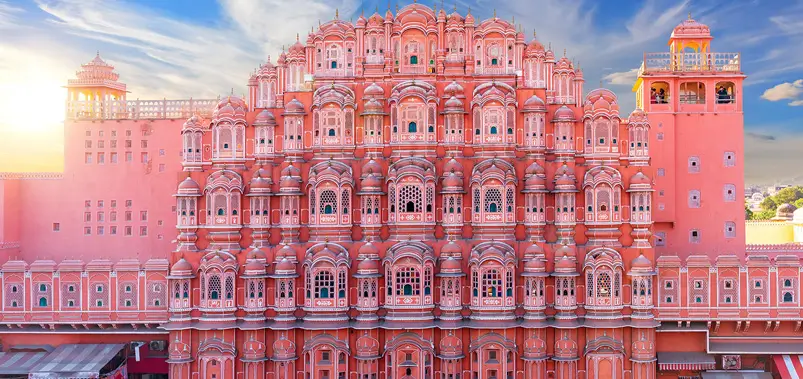
Amer Fort is best experienced as part of a wider Jaipur itinerary that allows you time to explore the Walled City, Hawa Mahal, City Palace, and Jantar Mantar without rushing. Most visitors find that two full days in Jaipur is the minimum to see the main sites at a comfortable pace.
If you are travelling from Delhi or Agra as part of a Golden Triangle tours, Jaipur is typically the third city on the circuit. A well planned private itinerary ensures your Amer Fort visit is scheduled for early morning before you explore the rest of the city.
For customised tour packages, private car hire, guided city walks, or any information about planning your time in Jaipur, we are always happy to assist. Contact us directly and we will put together an itinerary that works for your schedule, group size, and interests.
We promise you a holiday where everything is taken care of from the moment you land. Trusted drivers waiting for you, handpicked hotels that fit your style, personalized itineraries designed just for your family, and a dedicated team on call 24/7. All you need to do is relax, explore, and create unforgettable memories, while we take care of every detail behind the scenes.
Yes. A well-planned day can comfortably include Amer Fort in the morning, Panna Meena Ka Kund stepwell, Jaigarh Fort in the afternoon, and a drive past Jal Mahal on the return to the city. The evening Light and Sound Show can be added if energy allows. A private car and driver makes this combination straightforward.
Yes. Amer Fort is connected to Jaigarh Fort by a secret underground tunnel, historically used for emergency escape during warfare. The tunnel is not open to public access, but both forts can be visited on the same day and are just 10 minutes apart by road.
October to March is the best period for visiting Amer Fort. The weather is pleasant, the light is beautiful for photography, and the Jaipur festival calendar is active. April to June is very hot. July to September brings monsoon humidity. December and January evenings can be cool, so carry a light layer.
Yes. The Light and Sound Show at Amer Fort runs every evening. The English show begins at 7:30 PM and costs ₹200 per person. The Hindi show begins at 8:00 PM and costs ₹100. The show narrates the fort's history dramatically and the illuminated fort at night is a spectacular sight.
The Sheesh Mahal (Mirror Palace) inside Amer Fort is one of the most celebrated rooms in India. Its walls and ceilings are covered with thousands of tiny convex mirrors imported from Belgium and Persia, arranged in intricate floral and geometric patterns. A single candle flame causes the entire ceiling to appear filled with stars. It was built in the 17th century by Mirza Raja Jai Singh I.
This is a question many responsible travellers ask. Elephant rides at Amer Fort have faced significant animal welfare criticism and ongoing legal scrutiny. Ethical tourism advocates recommend choosing a certified elephant sanctuary near Jaipur that offers feeding and bathing experiences rather than rides.
The most comfortable option is a private car and driver, which takes approximately 25 to 30 minutes. Auto-rickshaws are available from the city centre and cost roughly ₹150 to ₹250 one way. Public bus number 5 runs from Chandpole to Amer. Shared jeeps operate from the fort car park up to the entrance gate.
Yes, photography is permitted throughout Amer Fort including inside the Sheesh Mahal. There is no additional photography fee. Tripods may require special permission. Drone photography is not permitted without prior authorisation.
Not strictly necessary, but strongly recommended. The historical and architectural detail inside Amer Fort is rich and complex, and a licensed guide transforms a visually impressive walk into a genuinely meaningful experience. Official licensed guides are available at the fort entrance at fixed government rates.
A thorough visit - covering all four courtyards, the Sheesh Mahal, Ganesh Pol, Sukh Niwas, and Zenana - takes approximately 2.5 to 3.5 hours. If you add a guided tour, allow 3.5 to 4 hours. Factor in travel time from the city (25 to 30 minutes each way).
Yes, completely. Amer Fort and Amber Fort refer to the same monument. Locals typically say Amer (the name of the town), while international travel guides often use Amber. Both spellings and pronunciations are widely used and understood.
Amer Fort is open daily from 8:00 AM to 6:00 PM, with last entry at 5:30 PM. The evening Light and Sound Show runs from 6:30 PM to 9:00 PM.
The current entry fee for foreign tourists at Amer Fort is ₹1000 per person. Foreign students pay ₹500. A composite ticket covering five Jaipur monuments costs approximately ₹1,000 for foreigners and represents good value if you plan to visit multiple sites.
Arrive at 8:00 AM when the fort opens. The first 45 to 60 minutes are significantly quieter than any other time of day. Weekday mornings between Tuesday and Thursday are the least crowded overall. The period from April to June is hotter but also sees fewer foreign tourists.