For travelers driving from Delhi to Agra, one of the most rewarding ways to transform a simple transfer into a memorable travel experience is by including a stop in Mathura and Vrindavan. These neighboring towns are among the most sacred destinations in India and attract millions of visitors every year, including pilgrims, cultural travelers, photographers, historians, and international tourists interested in understanding India's spiritual traditions.
Many foreign travelers know Agra because of the Taj Mahal and Delhi because of its monuments, markets, and historical landmarks. Yet relatively few arrive with a clear understanding of Mathura and Vrindavan. This is unfortunate because these destinations provide a completely different perspective on India.
Mathura is traditionally recognized as the birthplace of Lord Krishna, one of the most important figures in Hinduism. Vrindavan, located only a short distance away, is closely associated with Krishna's childhood and youth. Together, these destinations form one of the most significant spiritual regions in the country.
Unlike Delhi and Agra, where monuments dominate the visitor experience, Mathura and Vrindavan are living religious centers. Temples are active, rituals occur daily, devotional music fills the streets, and pilgrims arrive from every corner of India. Visitors therefore encounter not only historical sites but also traditions that continue to shape the lives of millions of people.
For travelers following a Golden Triangle Tour, these towns provide a fascinating contrast to the imperial architecture of Delhi and Agra. The experience becomes less about kings and empires and more about faith, community, culture, and spirituality.
The best part is that Mathura and Vrindavan can easily be incorporated into a Delhi to Agra road trip. With careful planning, visitors can explore key attractions, enjoy local cuisine, and still reach Agra comfortably by evening.
Whether you are religious or simply curious about Indian culture, a day tour through Mathura and Vrindavan often becomes one of the most memorable parts of the journey.
Many visitors initially assume that Mathura and Vrindavan are destinations only for religious pilgrims. While spirituality certainly defines both towns, the experience extends far beyond religion.
One of the biggest attractions for foreign travelers is authenticity. Unlike heavily commercialized tourist destinations, these towns remain deeply connected to local traditions. Daily life revolves around temples, rituals, festivals, and community activities that have continued for generations.
Visitors often find the atmosphere fascinating. Temple bells ring throughout the day, devotional songs can be heard in the streets, and pilgrims arrive carrying offerings and prayers. Even travelers with no religious background frequently describe the environment as moving and memorable.
Another reason to visit is cultural understanding. Travelers who spend time in Mathura and Vrindavan often gain insights into Indian society that cannot be obtained from monuments alone. Religion plays a major role in the lives of many Indians, and these towns provide an opportunity to observe that reality respectfully and directly.
Photography is another major attraction. Colorful temples, traditional clothing, religious ceremonies, flower markets, and street scenes create exceptional opportunities for visual storytelling.
Food also contributes to the appeal. The region is known for vegetarian cuisine, milk based sweets, and traditional dishes associated with pilgrimage culture. Sampling local specialties often becomes an important part of the experience.
Perhaps most importantly, these towns offer emotional depth. While many destinations impress visitors visually, Mathura and Vrindavan often create memories because of the atmosphere they generate. The combination of devotion, music, architecture, and community life produces an experience unlike anywhere else on the Delhi–Agra route.
For travelers interested in understanding India beyond its famous monuments, a stop here is highly recommended.
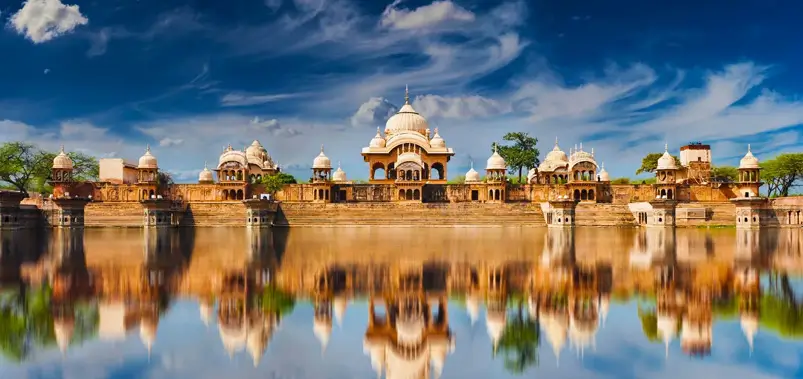
Mathura occupies a unique place in Indian religious history. According to Hindu tradition, it is the birthplace of Lord Krishna, making it one of the country's most important pilgrimage destinations.
The city's spiritual significance attracts millions of visitors annually. Pilgrims come to pray, celebrate festivals, and visit sacred locations connected to Krishna's life. Yet Mathura also appeals to historians, cultural travelers, and visitors interested in architecture and local traditions.
The most important attraction is Shri Krishna Janmabhoomi, the temple complex associated with Krishna's birthplace. Security procedures are typically strict, and visitors should be prepared for screening processes before entering.
Inside the complex, the atmosphere reflects the deep emotional connection many worshippers feel toward Krishna. Visitors often notice the intensity of devotion, especially during prayer periods and festival celebrations.
Beyond the temple itself, Mathura contains numerous smaller shrines, religious institutions, and historical sites. Walking through the city reveals layers of cultural and spiritual history that extend back centuries.
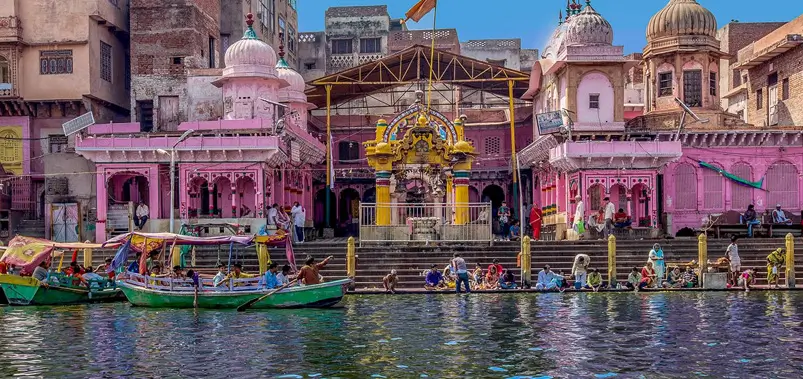
The ghats along the Yamuna River are another important feature. These riverfront steps serve as gathering places for religious activities, ceremonies, and community life. Early morning and evening visits often provide particularly memorable experiences.
Mathura's markets also deserve attention. Shops sell religious items, artwork, sweets, textiles, and souvenirs connected to Krishna traditions. Even visitors with no intention of shopping often enjoy observing the activity and atmosphere.
For many travelers, Mathura serves as an introduction to the broader cultural landscape that continues into neighboring Vrindavan.
.webp)
Among all attractions in Mathura, none receives more attention than Shri Krishna Janmabhoomi.
This temple complex marks the location traditionally believed to be the birthplace of Lord Krishna. For millions of Hindus, it represents one of the most sacred places in the world.
Visitors immediately notice the significance of the site. Pilgrims arrive from across India, often after long journeys, carrying flowers, offerings, and prayers. The emotional atmosphere can be powerful, particularly during major festivals and special religious occasions.
Security measures are stricter than at many tourist attractions. Bags, cameras, electronic devices, and certain personal items may be restricted in specific areas. Travelers should verify current regulations before visiting and allow extra time for entry procedures.
Inside the complex, visitors encounter temples, prayer spaces, religious displays, and areas associated with Krishna's life story. Guides are available, although many travelers prefer exploring quietly and observing the atmosphere.
The site is not primarily designed for tourism. It remains an active religious destination where worship is the central purpose. Visitors who approach respectfully generally find the experience far more meaningful.
One of the most interesting aspects is observing the diversity of pilgrims. Families, elderly devotees, young students, monks, and international visitors all gather in the same space, united by shared interest in Krishna traditions.
Even travelers who are not religious often appreciate the opportunity to witness such an important aspect of Indian culture firsthand.
The complex therefore functions not only as a sacred site but also as a window into traditions that continue to influence millions of people today.
.webp)
After exploring the temple complex, many visitors continue toward the Yamuna River, where the ghats provide a very different but equally important experience.
Ghats are stepped riverfront areas used for religious ceremonies, gatherings, prayer, and community activities. In Mathura, they play a central role in the spiritual life of the city.
The riverfront atmosphere changes throughout the day. Mornings often feel peaceful, with pilgrims performing rituals and local residents beginning daily activities. During evenings, devotional ceremonies create a more dramatic environment filled with music, lamps, chanting, and prayer.
Many travelers find the ghats particularly rewarding because they reveal everyday religious life rather than formal temple architecture. Watching people interact with the river provides insight into traditions that have existed for centuries.
Photography opportunities are excellent, although visitors should always remain respectful when documenting religious activities.
Boat rides are sometimes available depending on conditions and local regulations. These excursions offer different perspectives on the riverfront and surrounding temples.
The ghats also provide moments of calm that contrast with the energy of nearby markets and pilgrimage areas. Travelers often appreciate the opportunity to slow down and simply observe the rhythms of local life.
For visitors interested in culture, spirituality, and photography, the Yamuna River ghats represent one of the most rewarding parts of a Mathura visit.
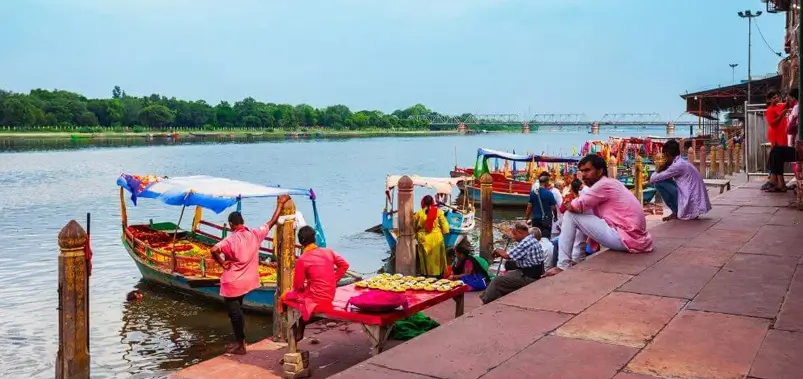
While Mathura is known as the birthplace of Lord Krishna, many travelers find that Vrindavan leaves an even stronger impression. Located approximately 15 kilometers from Mathura, this sacred town is associated with Krishna's childhood and youth and is considered one of the most important pilgrimage destinations in India.
The atmosphere in Vrindavan feels noticeably different from most cities. Temples dominate the landscape, devotional music drifts through the streets, and pilgrims can be seen throughout the day participating in religious activities. The town attracts visitors from across India as well as international devotees who come to experience its spiritual environment.
Foreign travelers are often surprised by how welcoming Vrindavan can feel. Although deeply rooted in tradition, the town receives a large number of international visitors every year. Many temples provide information in English, and several spiritual organizations have active international communities.
One of the most appealing aspects of Vrindavan is that spirituality is woven into everyday life. Visitors do not need to search for cultural experiences because they are visible everywhere. Flower sellers prepare offerings outside temples, devotional singers gather in public spaces, and pilgrims move between sacred sites throughout the day.
The architecture also deserves attention. Traditional temples stand alongside modern religious complexes, creating a fascinating blend of old and new. Some structures emphasize intricate carvings and historical significance, while others focus on grand scale and visual impact.
Many travelers arrive expecting to spend only a short time in Vrindavan and end up staying much longer than planned. The town encourages a slower pace. Rather than rushing from attraction to attraction, visitors often find themselves lingering in temple courtyards, observing ceremonies, or simply enjoying the atmosphere.
For travelers seeking a deeper understanding of India's spiritual traditions, Vrindavan offers one of the most rewarding experiences available between Delhi and Agra.
.webp)
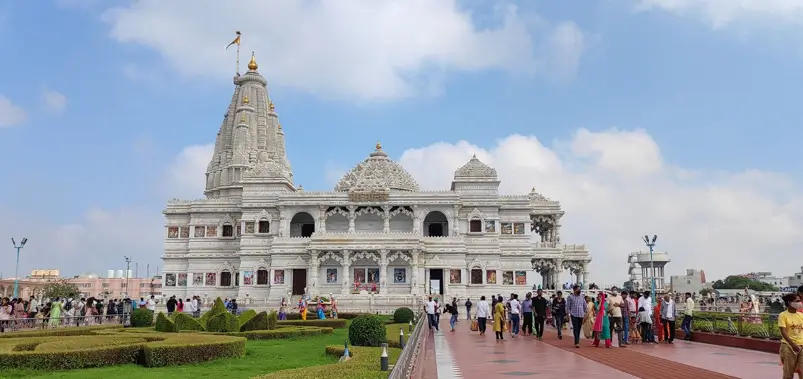
Among all attractions in Vrindavan, none is more popular with international visitors than Prem Mandir.
Constructed using white marble and designed on a monumental scale, the temple is visually stunning both during the day and after sunset. Many travelers consider it one of the most beautiful religious structures in North India.
The architecture immediately captures attention. Intricate carvings cover large portions of the temple, depicting scenes associated with Krishna's life and various religious themes. The level of craftsmanship is remarkable, and visitors often spend significant time examining the details.
The temple grounds are spacious and well maintained, making them comfortable to explore even during busy periods. Gardens, pathways, fountains, and decorative displays contribute to a welcoming atmosphere that appeals to both pilgrims and tourists.
One of the most memorable experiences occurs during the evening when lighting effects illuminate the temple. The white marble reflects changing colors, creating a striking visual spectacle that attracts photographers and visitors from around the world.
Unlike some older religious sites where navigation can be challenging for first time visitors, Prem Mandir is relatively easy to explore. Information is readily available, and the layout is intuitive.
Families, senior travelers, and first time visitors often appreciate the temple because it combines spiritual significance with accessibility. Even travelers who are not particularly religious frequently describe Prem Mandir as one of the highlights of their visit.
For photographers, the temple offers endless opportunities. Daytime images emphasize architectural details, while evening visits showcase dramatic lighting and reflections.
Many experienced guides recommend scheduling a visit close to sunset in order to experience both the daytime architecture and the illuminated evening atmosphere.
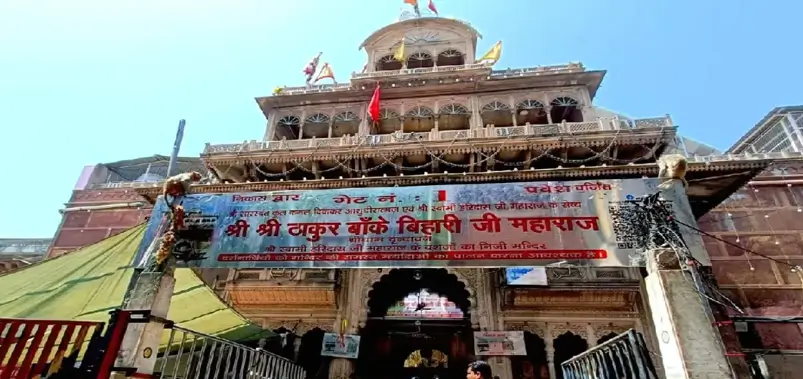
While Prem Mandir impresses visitors through architecture, Banke Bihari Temple is famous for its energy, devotion, and emotional atmosphere.
This temple is among the most important Krishna temples in India and attracts enormous numbers of pilgrims throughout the year. Unlike some modern temple complexes, Banke Bihari feels intensely traditional.
The experience begins before entering the temple itself. Streets surrounding the complex are filled with flower vendors, sweet shops, pilgrims, and religious merchandise. The area is constantly active and provides an immediate sense of the temple's importance.
Inside, the atmosphere becomes even more intense. Devotees gather in large numbers to catch glimpses of the deity, and prayer sessions often create an environment filled with enthusiasm and devotion.
Visitors should be prepared for crowds, especially during weekends, festivals, and holiday periods. Patience is essential, but many travelers consider the experience worthwhile because it provides insight into living religious traditions rather than simply architectural heritage.
Photography restrictions may apply in certain areas, so visitors should always respect local rules and instructions.
One reason Banke Bihari Temple remains so memorable is the emotional connection evident among worshippers. Observing this devotion often leaves a strong impression on visitors regardless of their own religious background.
The temple demonstrates that Vrindavan is not merely a historical destination. It remains a vibrant center of spiritual life where traditions continue to flourish.
For travelers interested in culture, religion, and human experiences, Banke Bihari Temple is often one of the most powerful stops in the region.
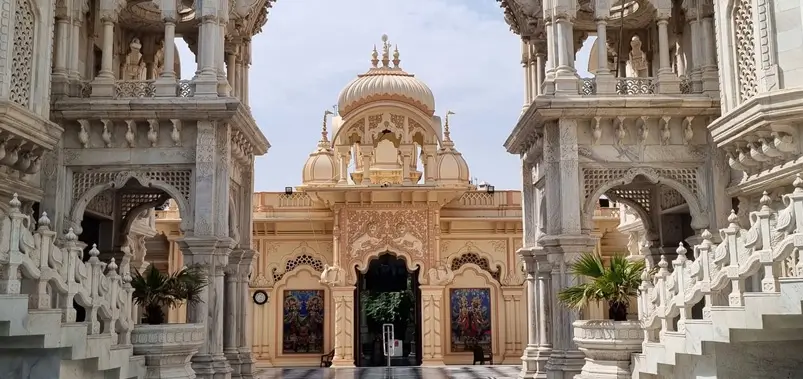
Many foreign visitors feel particularly comfortable at the ISKCON Temple, often called the Krishna Balaram Temple.
Founded by the International Society for Krishna Consciousness, the temple attracts visitors from around the world and serves as an important center for spiritual education, cultural exchange, and devotional practice.
One of the first things visitors notice is the international community. Devotees from Europe, North America, South America, Africa, Asia, and Australia can often be seen participating in activities alongside Indian worshippers.
The atmosphere differs somewhat from traditional pilgrimage temples. Educational programs, cultural presentations, and English language resources make the temple especially accessible for international travelers.
Architecturally, the complex is elegant and peaceful. Clean courtyards, devotional music, and organized facilities create an environment where visitors can comfortably spend several hours.
Many travelers attend devotional singing sessions known as kirtans, which often become memorable highlights of their visit. Even visitors unfamiliar with the tradition frequently find the music uplifting and engaging.
The temple also includes bookshops, restaurants, gardens, and spaces for reflection. These additional facilities make it easy for visitors to learn more about Krishna traditions and the broader philosophy associated with the movement.
For travelers seeking cultural understanding rather than purely sightseeing, the ISKCON Temple provides one of the most accessible introductions available.
Many international visitors who initially stop out of curiosity end up spending much longer than expected because of the welcoming atmosphere and educational opportunities.
.webp)
Food is an important part of any visit to this region.
Because both Mathura and Vrindavan have strong religious traditions, vegetarian cuisine dominates the local food scene. Travelers often discover that the quality and variety of vegetarian dishes exceed expectations.
Mathura is especially famous for milk based sweets. Traditional dairy products have been associated with Krishna stories for centuries, and local confectioners continue producing specialties that attract visitors from across India.
Popular items include:
Visitors frequently purchase sweets as gifts or souvenirs before continuing toward Agra.
In addition to desserts, travelers can enjoy:
Many restaurants in the area specialize in simple but flavorful vegetarian meals that reflect local traditions.
Food hygiene standards vary, so international travelers generally benefit from choosing busy and reputable establishments with strong local reputations.
The combination of traditional cuisine and religious culture makes dining an important part of the overall experience.
Travelers wishing to combine these destinations efficiently can follow a structured itinerary.
Depart Delhi early in the morning, ideally around 6:00 AM. Early departures reduce traffic delays and maximize sightseeing time.
Arrive in Mathura and begin with Shri Krishna Janmabhoomi. Allow sufficient time for security procedures and exploration of the temple complex.
Afterward, visit the Yamuna River ghats and spend time observing local life and religious activities.
Continue to Vrindavan before lunch. Explore Prem Mandir, followed by lunch at a reputable local restaurant.
During the afternoon, visit Banke Bihari Temple and the ISKCON Temple. Depending on interests, additional temples can also be included.
If timing permits, remain at Prem Mandir until sunset to experience the evening illumination.
Depart for Agra afterward and arrive comfortably by evening.
This itinerary balances spirituality, culture, architecture, photography, and local food while remaining practical for travelers continuing their Golden Triangle journey.
Costs vary depending on travel style.
Budget travelers using shared transportation and simple dining may spend relatively little.
Most international visitors prefer private transportation, which offers flexibility and convenience. Typical expenses include:
The overall experience remains relatively affordable compared with many international cultural excursions while offering significant cultural value.
We promise you a holiday where everything is taken care of from the moment you land. Trusted drivers waiting for you, handpicked hotels that fit your style, personalized itineraries designed just for your family, and a dedicated team on call 24/7. All you need to do is relax, explore, and create unforgettable memories, while we take care of every detail behind the scenes.
The town combines religious significance, active devotional traditions, beautiful temples, cultural richness, and a unique atmosphere that many visitors find deeply memorable regardless of their personal beliefs.
Most travelers benefit from at least three to four hours. Those interested in spirituality, photography, or cultural exploration may wish to stay longer.
Mathura peda, rabri, lassi, traditional vegetarian thalis, and regional sweets are among the most popular local specialties.
Shri Krishna Janmabhoomi in Mathura is generally considered the most important religious site. In Vrindavan, Prem Mandir, Banke Bihari Temple, and the ISKCON Temple are all highly recommended.
Photography rules vary by location. Outdoor areas usually permit photography, while some temple interiors may restrict cameras and mobile devices.
Yes. International visitors are common, particularly in Vrindavan and at the ISKCON Temple. Most major attractions are accustomed to receiving foreign guests.
Modest clothing is recommended. Shoulders and knees should generally be covered, and comfortable footwear is advisable because shoes must often be removed before entering temple areas.
No. While the destinations are deeply spiritual, many visitors come primarily for culture, history, architecture, photography, and cultural understanding.
Absolutely. Many travelers discover that Mathura and Vrindavan become among the most memorable parts of their journey because they offer cultural and spiritual experiences that differ significantly from Delhi and Agra.
Yes. The towns are located very close to each other and are commonly explored together. Most visitors can comfortably experience major attractions in both locations within a single day before continuing to Agra.