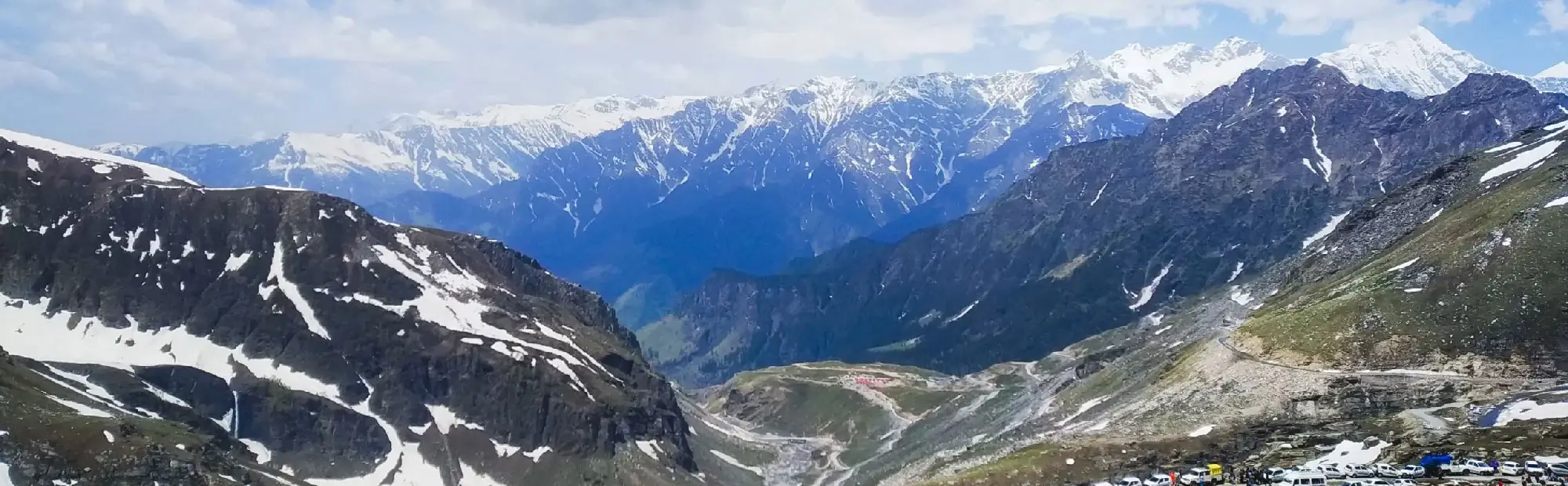
Manali is one of North India’s most iconic Himalayan destinations, located in the Kullu Valley of Himachal Pradesh. Surrounded by snow-capped peaks, pine forests, flowing rivers, and alpine meadows, Manali combines natural beauty with adventure activities and mountain culture.
For international travellers, Manali represents a classic Himalayan escape without extreme altitude challenges. It offers accessible mountain scenery, comfortable infrastructure, and a balance between relaxation and outdoor adventure.
Unlike Shimla’s colonial charm, Manali feels more alpine and nature-focused. The Beas River flows through the valley, apple orchards dot the hillsides, and distant peaks dominate the skyline.
Manali works well as a 2–3 day extension after Shimla or can be visited directly from Delhi via road or flight connections to nearby airports.

Solang Valley, Rohtang Pass, Hadimba Temple, Old Manali, Beas River

March – June & September – November
Clear skies and pleasant mountain climate.

2–3 Days
Allows sightseeing and light adventure activities.

English, Hindi
English widely spoken in hotels and cafés.
Manali sits at approximately 2,050 meters (6,700 feet) above sea level. The surrounding Dhauladhar and Pir Panjal ranges create a dramatic alpine environment.
During spring and summer, the valley is lush and green. In winter, snow transforms the landscape into a white mountain retreat. The changing seasons provide distinct visual experiences.
The town itself is divided into New Manali (more commercial) and Old Manali, known for its quieter lanes, traditional wooden houses, and relaxed cafés.
Solang Valley is one of Manali’s most popular outdoor destinations. Located about 30 minutes from town, it offers panoramic mountain views and seasonal adventure activities.
During winter, visitors can experience snow play and limited skiing opportunities. In warmer months, paragliding and ziplining attract adventure enthusiasts.
While Manali is not as extreme as Leh Ladakh, it offers accessible adventure options suitable for most travellers.
Rohtang Pass, located at approximately 3,978 meters (13,000 feet), connects the Kullu Valley to the Lahaul region. The drive to Rohtang provides breathtaking views of glaciers and high-altitude terrain.
Due to environmental regulations, access may require permits and depends on seasonal weather conditions. The pass is generally open from late spring to early autumn.
For many foreign travellers, visiting Rohtang provides their first experience of true Himalayan altitude without venturing into more remote regions.
The Hadimba Temple, built in the 16th century, is one of Manali’s most distinctive landmarks. Constructed in traditional wooden Himalayan style, it stands within a cedar forest.
The temple architecture reflects regional craftsmanship, with intricately carved wooden doors and layered pagoda-style roofing.
Nearby villages in the Kullu Valley maintain traditional Himachali culture, including wool weaving and local festivals.
Old Manali offers a quieter atmosphere compared to the busier central market area. The narrow lanes are lined with small guesthouses, bakeries, and international cafés.
This area attracts long-term travellers and backpackers. Despite its relaxed vibe, it remains safe and welcoming for international visitors.
Walking along the Beas River in the evening provides peaceful mountain scenery away from the town center.
In addition to paragliding and snow experiences, Manali offers:
The activities are generally moderate and suitable for travellers without technical experience.
Manali’s appeal changes across seasons:
Manali offers a wide range of accommodation, from boutique mountain resorts to mid-range hotels and luxury properties with valley views.
Luxury travellers can opt for hillside retreats featuring private balconies, fireplaces, and curated dining experiences.
Due to terrain, some hotels require uphill walking. Selecting centrally located accommodation may improve convenience.
Even during summer, evenings can be cool. Warm layers are recommended year-round.
Winter temperatures can drop below freezing, especially during snowfall.
Advance booking is recommended during peak season.
Manali is accessible from North India transport hubs.

Nearest airport: Kullu–Bhuntar Airport

Road connections from Delhi and Chandigarh

Nearest railway station: Chandigarh
We promise you a holiday where everything is taken care of from the moment you land. Trusted drivers waiting for you, handpicked hotels that fit your style, personalized itineraries designed just for your family, and a dedicated team on call 24/7. All you need to do is relax, explore, and create unforgettable memories, while we take care of every detail behind the scenes.
Manali is known for mountain scenery and adventure activities.
Two to three days are recommended.
Yes, especially for light outdoor activities.
Yes, during winter months.
No, it is seasonal and weather dependent.
Moderate altitude, comfortable for most travellers.
March to June and September to November.
Yes, particularly in tourist areas.
Yes, it is a common mountain circuit.
It can be busy during peak summer season.
Layered clothing and comfortable walking shoes.
No, it is a Himalayan extension.