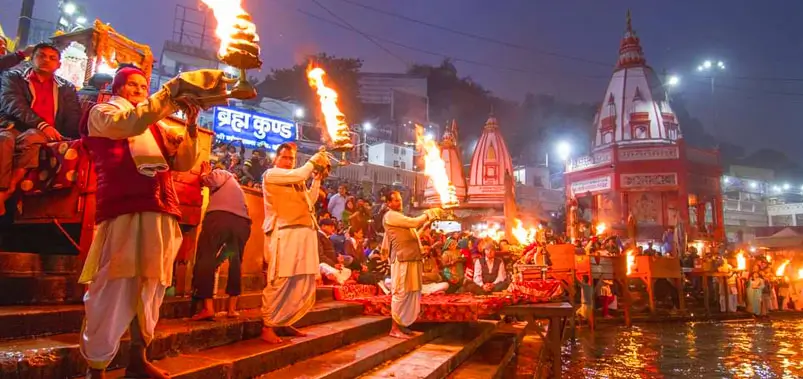
Few religious ceremonies in North India place a visitor as close to everyday Hindu devotion as the Haridwar Ganga Aarti at Har Ki Pauri. Every evening, priests perform prayers beside the Ganges while bells ring, Sanskrit chants carry across the river, and hundreds or sometimes thousands of worshippers gather along the ghats. As daylight fades, lamps are raised toward the river and small flower offerings begin floating downstream.
For an international traveler, particularly someone visiting India from the United States, Haridwar requires a different approach from India's palace cities and major archaeological destinations. There is no reserved theater seat waiting at a fixed show time. Streets around the river can become heavily congested, vehicles cannot reach every part of the ghat area, security and crowd control arrangements vary, and the Haridwar Ganga Aarti timing changes according to sunset and season.
That uncertainty is manageable when the visit is arranged correctly.
The central ceremony takes place at Har Ki Pauri, the most important ghat in Haridwar and the location most travelers mean when they refer to the Haridwar evening Aarti. The ceremony itself is free to witness from public areas. Travelers primarily spend money on transportation, guides, optional offerings, donations, and any privately arranged services.
The most useful rule is to arrive substantially earlier than the advertised ceremony time. A traveler who reaches Har Ki Pauri while the priests are already beginning the ritual may technically see the Aarti but miss the opportunity to secure a good position. During busy periods, the difference between arriving 15 minutes early and arriving 60 to 90 minutes early can completely change the experience.
Haridwar is also highly seasonal. Winter brings cooler temperatures and an earlier sunset. Summer brings heat and a later ceremony. Religious festivals, weekends, school vacations, and pilgrimage periods can transform an already busy riverfront into an enormous gathering.
For a premium traveler, comfort comes from preparation: a private vehicle, realistic departure time, minimal belongings, a knowledgeable local guide when needed, and a hotel selected for convenience rather than simply for its star rating.
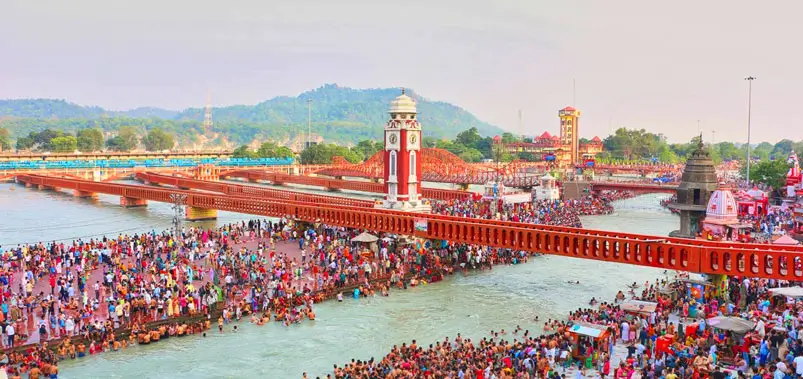
The Ganga Aarti in Haridwar is performed every day, with the principal evening ceremony taking place around sunset at Har Ki Pauri. Because sunset changes through the year, there is no single evening time that should be treated as permanently correct.
As a practical seasonal guide, visitors may encounter evening Aarti starting around 5:00 PM to 6:00 PM during the cooler winter period, while in the warmer months it can move toward approximately 6:30 PM to 7:00 PM or later, depending on sunset and the schedule being followed locally.
Travelers should confirm the exact Har Ki Pauri Ganga Aarti time on the day of their visit.
Hotels, private guides, drivers, and reputable local operators can normally assist with current timing. This same day confirmation is especially important when the entire afternoon itinerary is being arranged around the ceremony.
Haridwar also has a morning Aarti. The morning Ganga Aarti at Har Ki Pauri is held around sunrise and offers a quieter alternative for visitors who want to see the riverfront in a more contemplative atmosphere. Depending on the season, this may mean being at the ghat around approximately 5:00 AM to 6:30 AM. Exact timing again varies with sunrise.
For most first time foreign visitors, the evening ceremony is the priority because it has the stronger visual atmosphere. The combination of sunset, lamps, crowds, chanting, priests, and flower offerings creates the scene most commonly associated with Haridwar.
However, arriving only at the official starting time is a mistake.
On a regular weekday outside a major pilgrimage period, reaching the Har Ki Pauri area approximately 60 minutes before the Aarti is sensible. Travelers who care about photography or want a better position should consider 60 to 90 minutes.
During weekends, major Hindu festivals, holiday periods, or exceptionally busy pilgrimage dates, considerably more time may be necessary.
The immediate riverfront can fill quickly. Roads around central Haridwar also become congested, and your vehicle may need to stop some distance from the actual ghat. Walking and security procedures must therefore be included in the schedule.
If the ceremony is expected at approximately 6:30 PM, a traveler staying outside the immediate Har Ki Pauri area should not assume that leaving the hotel at 6:00 PM is sufficient. Depending on hotel location and traffic, leaving around 4:30 PM to 5:00 PM may produce a much more comfortable experience.
This extra time is not wasted.
Har Ki Pauri becomes increasingly active before the ceremony. Pilgrims bathe in the Ganges, families purchase flowers and lamps, priests prepare for prayers, temple bells sound around the area, and the changing light gives travelers an opportunity to understand the setting before the main ritual begins.
The formal Aarti commonly lasts around 30 to 45 minutes, although the overall experience is longer.
The sequence involves prayers, chanting, bells, and large oil lamps offered toward the Ganges. The exact form and duration can vary, particularly during special religious occasions.
After the ceremony, thousands of people may leave the area at roughly the same time. Premium travelers should therefore avoid scheduling an important train, flight, or long distance road transfer immediately afterward.
A relaxed dinner and overnight stay are much more sensible.
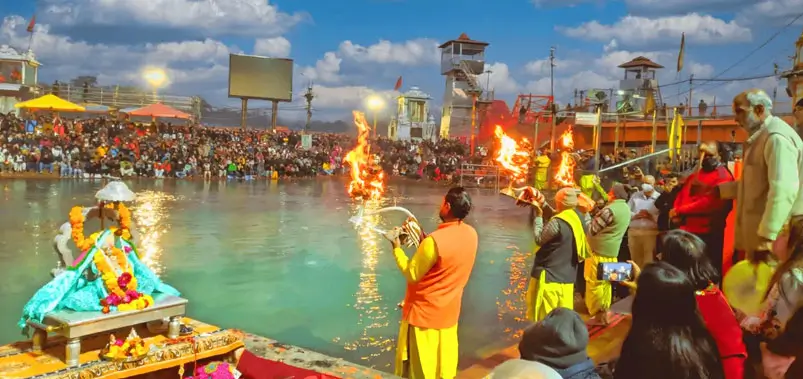
The best place to watch Haridwar Ganga Aarti depends on whether the traveler prioritizes proximity, photography, atmosphere, personal space, or ease of exit.
Har Ki Pauri consists of riverfront steps and viewing areas on both sides of sections of the river channel. The main Aarti activity takes place around the principal Brahma Kund area, and positions with a direct view of the priests naturally become the most desirable.
Sitting relatively close to the ceremony creates the strongest sense of participation. You hear the chanting and bells more clearly, see the expressions of worshippers, smell the incense, and watch the lamps being raised only a short distance away.
The disadvantage is crowd density.
Travelers uncomfortable with tight crowds should not insist on getting as close as possible merely because that sounds like the “best” seat. A slightly more distant position with an unobstructed view can provide a considerably better experience.
Positions across the river can be excellent for photography because they allow visitors to see the ceremony as a complete scene rather than only watching one priest from close range. The lamps, river, priests, devotees, temples, and surrounding lights can fit into a wider composition.
Your guide should assess the current crowd before selecting a location.
There is no permanent luxury lounge equivalent to what an American visitor might expect at a ticketed event. Seating arrangements and access procedures can change. Claims of guaranteed “VIP seating” should therefore be treated carefully unless the exact arrangement has been explained.
Some local priests, organizations, hotels, or operators may facilitate seating or access arrangements, often associated with donations or service charges. These should not be confused with an official universal admission ticket.
Travelers may encounter people offering assistance, religious services, flowers, lamps, or special rituals. Paying for these is optional unless a specific service has been requested and agreed upon.
If someone approaches you with a religious service you do not want, a polite refusal is sufficient.
International visitors should also avoid allowing strangers to pressure them into large donations. Giving is a personal decision. If you wish to donate, ask your guide or hotel about recognized channels.
The small flower and lamp offerings commonly floated on the river are inexpensive by international standards. Prices vary by size, decoration, and seller, but travelers might commonly encounter simple offerings in the range of roughly INR 50 to INR 200, with larger arrangements costing more.
Confirm the price before accepting one.
Visitors should also consider where they will leave from after the ceremony. A location that offers an extraordinary close up view but traps you behind a huge departing crowd may not be ideal for an older traveler.
For senior guests or anyone with mobility limitations, tell the tour operator before arriving. Har Ki Pauri involves walking, steps, crowds, uneven surfaces, and limited vehicle access.
A private guide cannot remove those realities, but an experienced guide can choose a more practical approach, help find an appropriate viewing position, and coordinate with the driver afterward.
.webp)
There is generally no standard entry ticket for Har Ki Pauri and no ordinary admission charge to watch the evening Aarti from public viewing areas.
That does not mean visitors should arrive as though they are entering a casual public park.
Har Ki Pauri is an active sacred site. People come here to pray, bathe in the Ganges, perform ceremonies for family members, make offerings, and participate in traditions that are deeply personal.
International travelers are welcome, but respectful behavior is important.
Wear modest clothing. Shoulders and knees should ideally be covered, particularly if the day also includes temple visits. Lightweight trousers, long skirts, comfortable shirts, or similarly modest travel clothing work well.
Footwear needs consideration because shoes may need to be removed in certain religious areas. Expensive or difficult to remove footwear is unnecessary.
Carry as little as possible.
A small crossbody bag containing a phone, wallet, hotel card, essential medication, tissues, and perhaps a small water bottle is more practical than a large backpack. Security procedures can vary, and heavy luggage has no place at a crowded religious ghat.
Keep valuables secure.
Haridwar is visited safely by enormous numbers of people, but any dense gathering deserves ordinary precautions. Do not keep a wallet or expensive phone loosely in an open pocket.
Photography is generally possible around outdoor riverfront areas, but sensitivity matters.
Avoid treating people engaged in private prayer, bathing, mourning, or family rituals as photographic subjects without permission. A visually compelling scene does not automatically make intrusive photography appropriate.
During the Aarti, phone photography is common. Avoid blocking other people's view by holding equipment high for extended periods.
Professional camera users should travel light. A fast lens or moderate zoom is far more practical than a large collection of equipment in a dense crowd.
The Ganges itself requires caution.
The current at Har Ki Pauri can be extremely strong. Chains are installed along sections of the bathing area for pilgrims to hold while entering the water. International visitors should never underestimate the river simply because other people appear comfortable bathing.
A traveler does not need to enter the river to appreciate Haridwar.
If you want to touch the Ganges as part of the visit, do so from a safe location and follow local guidance. Do not step onto wet, slippery surfaces merely for a photograph.
Swimming independently is not advisable.
Families traveling with children should keep them close at all times near the water. Crowd density and strong currents create a combination that deserves serious attention.
Visitors with limited mobility should also be careful on wet steps.
Summer creates an additional concern: heat. Temperatures can become uncomfortable before the evening ceremony. Hydrate throughout the day, avoid excessive midday sightseeing, and allow a hotel break before traveling to Har Ki Pauri.
Winter is easier for daytime walking, but evenings beside the river can become chilly. Bring a jacket or warm layer.
Monsoon conditions can change access around the river. High water levels may alter how certain areas are used, and authorities may introduce restrictions for safety.
Follow all local instructions immediately.
.webp)
Haridwar is located in Uttarakhand and is commonly reached from Delhi, Rishikesh, or Dehradun.
For international travelers combining Haridwar with a longer North India itinerary, a private car from Delhi to Haridwar is one of the simplest arrangements. Road distance is approximately 220 kilometers, although the exact figure depends on the starting point in Delhi.
Driving time should generally be considered around five to six hours, with additional time possible because of Delhi traffic, highway congestion, meal stops, religious traffic, and the final approach into Haridwar.
A premium private vehicle gives travelers greater control over departure time and rest stops.
For a comfortable one way private transfer from Delhi, pricing varies according to vehicle type and operator. A standard sedan might fall around INR 7,000 to INR 12,000, while a larger premium SUV or higher category vehicle can range approximately INR 12,000 to INR 20,000 or more. Luxury vehicles and specialized chauffeur services can cost substantially more.
Tolls, parking, taxes, interstate charges, driver allowances, and overnight costs should be confirmed when requesting a quotation.
Rail is another strong option.
Haridwar has direct train connections with Delhi and other Indian cities. Premium train classes can provide an efficient alternative to driving, particularly when road traffic is expected to be heavy.
Travelers flying may use Dehradun's Jolly Grant Airport, which is within road transfer distance of both Haridwar and Rishikesh. Transfer time varies with traffic and exact destination.
Haridwar and Rishikesh are close enough to combine comfortably.
The distance from Haridwar to Rishikesh is roughly 20 to 25 kilometers, with driving often taking approximately 45 minutes to an hour depending on traffic.
This creates an excellent two destination extension.
Haridwar provides the intensely devotional atmosphere of Har Ki Pauri, while Rishikesh offers ashrams, yoga, riverfront walks, Himalayan foothill scenery, and its own evening Aarti ceremonies.
Travelers should not assume the Haridwar Ganga Aarti and Rishikesh Ganga Aarti are interchangeable.
Haridwar's Har Ki Pauri ceremony is generally larger, more intensely pilgrimage oriented, and surrounded by a denser devotional crowd. Rishikesh ceremonies, particularly those associated with established ashrams, can feel more intimate and structured.
Seeing both can be worthwhile.
A luxury itinerary might include one night in Haridwar followed by two or three nights at a high end resort in or around Rishikesh. Travelers who prefer resort comfort can also stay near Rishikesh and make a private excursion to Haridwar.
For guests incorporating the region into a broader India trip, Golden Triangle Tours can arrange Haridwar as an extension to Delhi, Agra, and Jaipur, with a private chauffeur driven vehicle and onward routing according to the larger itinerary.
A successful Haridwar private tour should not begin with an overloaded sightseeing list.
If staying overnight, begin the morning at a comfortable pace. Visit important temples or selected religious sites according to personal interest, but remember that temple access may involve stairs, queues, shoe removal, and crowds.
Return to the hotel during the hottest part of the afternoon when traveling in warmer months.
Have lunch early enough that the evening does not feel rushed.
Approximately two hours before the confirmed Aarti time, begin preparing to leave for Har Ki Pauri. The actual departure time should depend on hotel location.
Carry only essentials.
Your driver should take you as close as current traffic restrictions allow. From there, continue on foot with your guide if one has been arranged.
Reach the riverfront approximately 60 to 90 minutes before the ceremony.
Use the first few minutes to orient yourself rather than immediately taking photographs. Find the safest and most comfortable viewing position. If traveling with older family members, prioritize seating and accessibility over proximity.
Purchase a flower lamp only if you genuinely want to participate.
Watch the river change as sunset approaches.
During the ceremony, remain in your position rather than continually moving through the crowd searching for a marginally better angle. The atmosphere becomes more meaningful when the visitor actually watches rather than viewing the entire ritual through a phone screen.
After the Aarti, do not rush against the crowd.
Allow the initial surge of spectators to begin moving away, then walk toward the agreed meeting location with your guide or travel companions.
Your private driver should already know the pickup point.
Return to the hotel for dinner rather than scheduling another major attraction.
This schedule sounds simple because it is supposed to be simple. Haridwar becomes unnecessarily stressful when travelers attempt to combine a long road transfer, several temples, shopping, Har Ki Pauri, the evening Aarti, and onward travel all within the same compressed day.
For travelers arriving from Delhi, one overnight stay in Haridwar is the practical minimum if the evening ceremony is important. Two nights allow considerably more flexibility.
Adding Haridwar to a Golden Triangle Tour of Delhi, Agra and Jaipur changes the character of the journey.
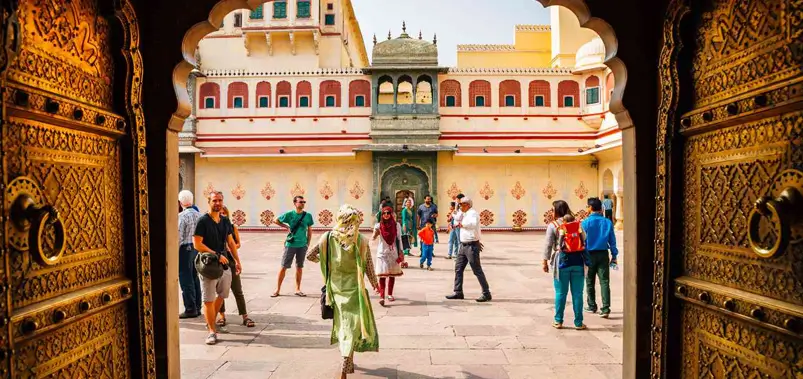
Delhi, Agra, and Jaipur are dominated by imperial history, Mughal architecture, Rajput forts, palaces, museums, markets, and major UNESCO recognized monuments. Haridwar introduces a living pilgrimage tradition centered on the Ganges.
That contrast is precisely what makes the extension valuable.
A traveler can spend one morning inside the Taj Mahal complex and, several days later, sit beside the Ganges surrounded by pilgrims preparing for evening prayer. Both are quintessentially Indian experiences, but they represent very different dimensions of the country.
The most logical routing generally places Haridwar before or after the core Golden Triangle depending on international flights and other destinations.
For example, travelers may begin in Delhi, continue to Haridwar and Rishikesh, return toward Delhi, and then proceed to Agra and Jaipur. Another itinerary may complete Delhi, Agra, and Jaipur first and finish with a quieter Himalayan foothill stay.
For American travelers who have approximately two weeks in India, the combination can work particularly well because it provides architectural history, luxury hotels, private sightseeing, spiritual culture, and a change in landscape without requiring constant domestic flights.
A private Golden Triangle with Haridwar and Rishikesh tour should nevertheless remain spacious.
The purpose of premium travel is not simply to fit more destinations into the same number of days. It is to improve how each destination is experienced.
That means allowing sufficient driving time, choosing quality hotels, using a reliable private vehicle, scheduling Har Ki Pauri around the actual ceremony rather than around hotel check-in, and leaving enough flexibility for traffic and crowds.
The evening Aarti itself costs nothing to witness, yet it can become one of the most memorable moments of an expensive India journey.
No special effects are required. The Ganges, the bells, the lamps, the priests, and the people gathered beside the river provide the entire setting.
For travelers accustomed to highly managed attractions, the most important thing to remember is that Har Ki Pauri Ganga Aarti is a religious ritual before it is a tourist attraction. Arrive early, respect the people around you, remain cautious beside the river, and allow the ceremony to unfold at its own pace.
We promise you a holiday where everything is taken care of from the moment you land. Trusted drivers waiting for you, handpicked hotels that fit your style, personalized itineraries designed just for your family, and a dedicated team on call 24/7. All you need to do is relax, explore, and create unforgettable memories, while we take care of every detail behind the scenes.
Yes. Haridwar works particularly well as an extension to a private Golden Triangle Tour. Travelers can combine Delhi, Agra, and Jaipur with Haridwar and Rishikesh using private road transfers, trains, or a combination of transportation according to the itinerary.
Haridwar is approximately 220 kilometers from Delhi, depending on the starting location. A private road transfer commonly requires around five to six hours, with additional time possible because of traffic and stops.
Yes. The cities are only about 20 to 25 kilometers apart, making a Haridwar and Rishikesh private tour easy to arrange. Staying several nights in the region provides a more comfortable experience than rushing both destinations in a single day.
Yes, large numbers of international visitors attend Har Ki Pauri. Travelers should nevertheless protect valuables, follow crowd-control instructions, remain extremely cautious near the strong river current, and avoid carrying unnecessary bags.
The main evening ritual generally lasts approximately 30 to 45 minutes, although special religious occasions can result in different durations.
A position with a clear view of the main priests near Brahma Kund provides the closest experience. Positions across the river can offer excellent wider views and may be preferable for photography.
Arriving approximately 60 to 90 minutes before the ceremony is recommended for most international travelers. Busy weekends and major religious periods may require an even earlier arrival.
Ordinary public access to witness the ceremony is generally free. Visitors may separately spend money on transportation, guides, flower offerings, religious services, or voluntary donations.
The principal Ganga Aarti in Haridwar takes place at Har Ki Pauri, particularly around the sacred Brahma Kund section of the riverfront.
The Haridwar Ganga Aarti timing changes with sunset and season. Evening ceremonies may take place around 5:00 PM to 6:00 PM in cooler months and approximately 6:30 PM to 7:00 PM or later in warmer periods. Confirm the exact daily time locally before visiting.