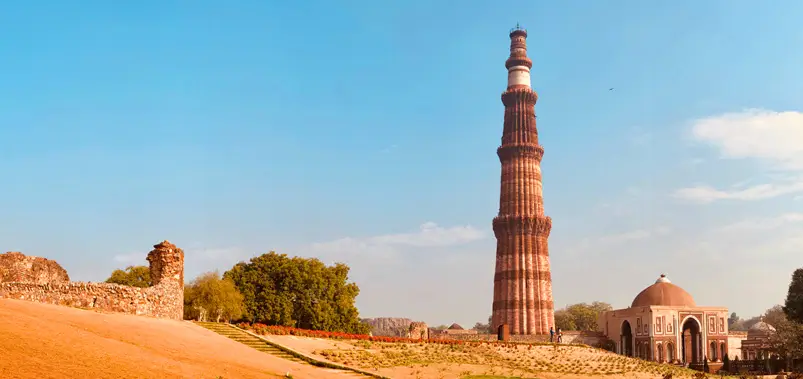
Ask first time visitors to Delhi about their sightseeing plans and you will usually hear the same answers. The Red Fort, India Gate, Qutub Minar, Jama Masjid, Humayun's Tomb, and perhaps a trip through Old Delhi.
Very few mention Lodhi Garden.
Yet among Delhi residents, diplomats, photographers, historians, joggers, birdwatchers, and long term travelers, Lodhi Garden is often considered one of the city's most enjoyable places.
Unlike Delhi's grand monuments that attract thousands of tourists every day, Lodhi Garden offers something different. It combines historical architecture, landscaped gardens, ancient tombs, shaded pathways, local life, and peaceful green spaces within the heart of one of the world's busiest capitals.
For foreign visitors, the garden often provides a welcome contrast to Delhi's intensity. After navigating crowded markets, busy roads, and major tourist attractions, spending a few hours in a calm environment can feel surprisingly refreshing.
What makes Lodhi Garden unique is that it is not a formal archaeological site where visitors simply walk around monuments. It functions as a living public space. Early in the morning, local residents jog beneath centuries old tombs. Families enjoy picnics on weekends. Photographers search for the perfect light. Birdwatchers observe migratory species. Yoga groups practice beneath historic trees.
The result is an attraction that reveals a different side of Delhi.
Rather than focusing on emperors and political power alone, Lodhi Garden shows how historical heritage continues to coexist with everyday life.
Many experienced travelers eventually rank Lodhi Garden among their favorite places in Delhi—not because it is the largest or most famous attraction, but because it provides one of the most authentic urban experiences available in the city.
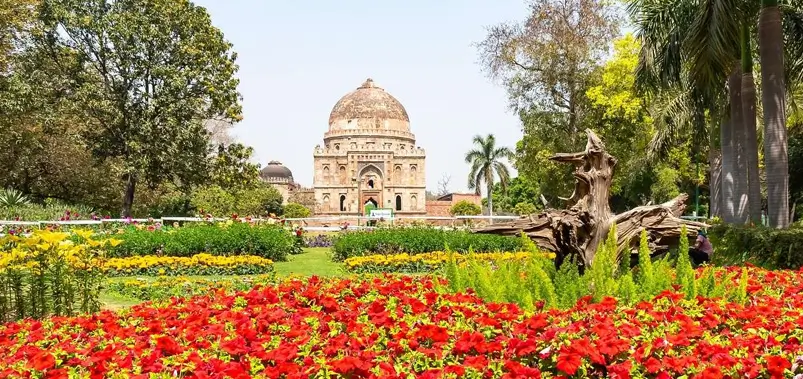
Lodhi Garden occupies approximately 90 acres in one of Delhi's most prestigious neighborhoods.
Located between Khan Market and Safdarjung's Tomb, the garden is easily accessible from most major tourist areas.
Approximate distances:
The location alone makes it convenient, but convenience is not the reason people love it.
What makes Lodhi Garden special is the combination of nature and history.
Most parks offer greenery but little cultural significance.
Most monuments offer history but limited opportunities to relax.
Lodhi Garden successfully combines both.
Visitors can walk beneath trees that are decades old while exploring structures built more than 500 years ago.
The atmosphere changes throughout the day.
Early mornings belong to joggers, birdwatchers, and photographers.
Afternoons are quieter and ideal for relaxed exploration.
Evenings bring families, students, and residents seeking relief from Delhi's traffic and noise.
Because the garden serves both locals and tourists, it provides a more authentic experience than many attractions designed primarily for sightseeing.
Foreign visitors frequently appreciate this authenticity because it allows them to observe everyday life rather than exclusively tourist activity.
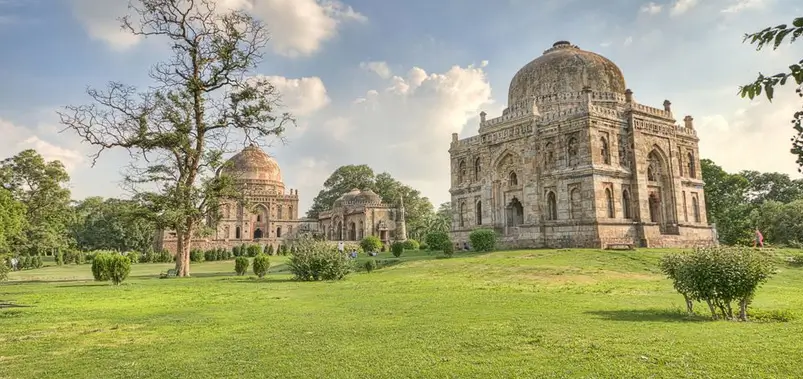
To understand Lodhi Garden, it helps to understand the period that gave it its name.
The Lodhi Dynasty ruled parts of North India during the fifteenth and early sixteenth centuries, before the arrival of the Mughal Empire.
Although the Mughals eventually overshadowed them historically, the Lodhi rulers left behind significant architectural achievements.
Several important tombs from this era survive within the garden today.
Originally, these monuments stood within villages and open countryside beyond Delhi's urban core. Over time, the city expanded around them.
The modern garden was developed during the British period. Landscaped grounds were created around the historical structures, transforming the area into a public space while preserving its heritage.
This decision proved remarkably successful.
Rather than isolating monuments behind walls, planners integrated them into a living landscape. Visitors therefore experience architecture as part of a broader environment rather than as separate objects.
The result feels organic and inviting.
Walking through Lodhi Garden often feels less like visiting a museum and more like discovering history hidden within a beautiful park.
This combination helps explain why the garden remains so beloved by residents and visitors alike.
One reason Lodhi Garden remains popular is its accessibility.
Entry Fee
Free Entry
Unlike many major monuments in Delhi, visitors do not need to purchase tickets.
Opening Hours
Generally:
5:00 AM to 8:00 PM
Timings may vary slightly depending on season and daylight conditions.
Best Time to Visit
For most travelers:
6:00 AM to 9:00 AM
or
4:00 PM to Sunset
provide the most pleasant conditions.
Morning visits offer cooler temperatures, active birdlife, and opportunities to observe local residents using the park.
Evening visits provide attractive lighting and a lively atmosphere.
Time Required
Most visitors spend:
1.5 to 3 hours
exploring the garden comfortably.
Photographers, history enthusiasts, and nature lovers often remain longer.
Because entry is free and the location is central, many travelers visit multiple times during their stay in Delhi.
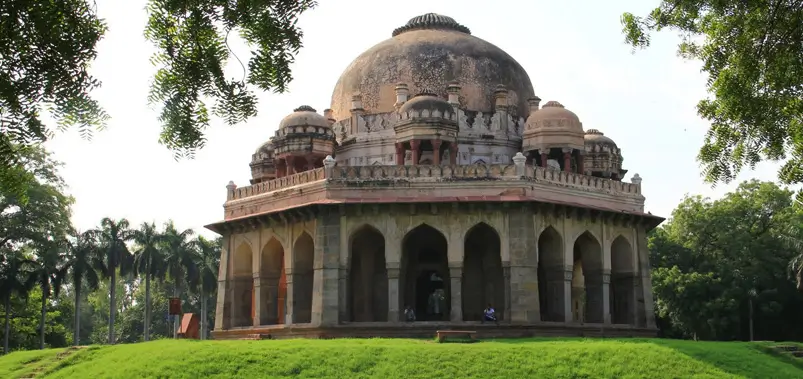
One of the first major historical structures visitors encounter is Mohammed Shah's Tomb.
Built during the fifteenth century, the tomb predates many of the other monuments within the garden and represents an important stage in the evolution of Indo-Islamic architecture.
The structure is particularly recognizable because of its octagonal design.
Visitors often notice decorative details that reflect architectural traditions later refined by the Mughals.
Although smaller than famous monuments such as Humayun's Tomb, Mohammed Shah's Tomb possesses an elegance that many architecture enthusiasts appreciate.
The surrounding greenery enhances the experience.
Unlike monuments surrounded by urban development, the tomb appears integrated into the landscape, creating attractive photographic opportunities.
Early morning light is especially beautiful here.
Photographers often arrive shortly after sunrise because the softer lighting highlights architectural details while avoiding harsh shadows.
The monument also serves as a reminder that Delhi's history extends far beyond the Mughal period.
For travelers interested in understanding the city's deeper historical layers, Mohammed Shah's Tomb is an important starting point.
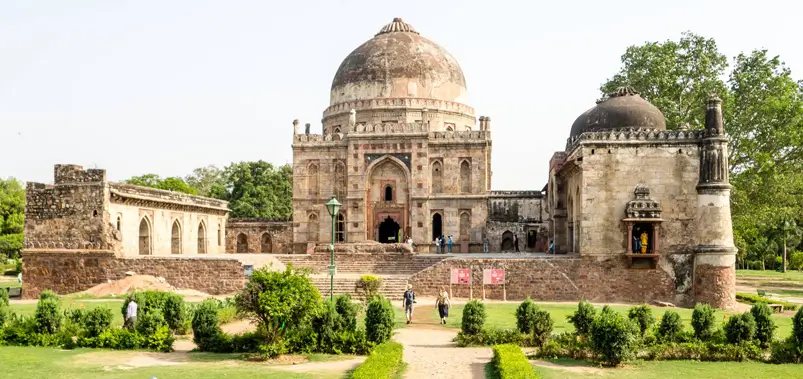
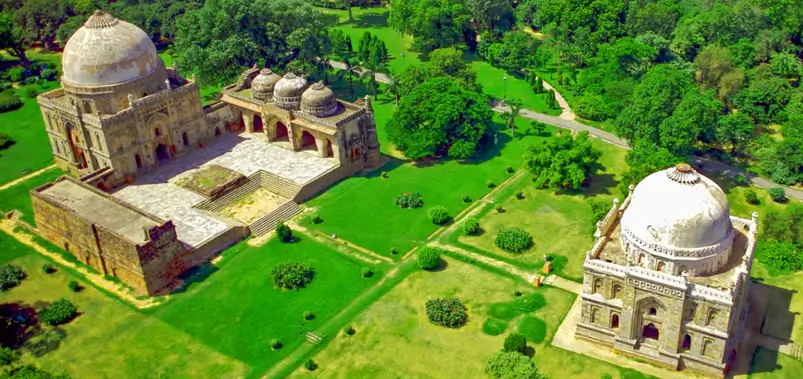
Among all monuments inside Lodhi Garden, Bara Gumbad is arguably the most photographed.
The name literally means "Big Dome," and the structure dominates its surroundings through scale and visual impact.
One of the most intriguing aspects of Bara Gumbad is that historians still debate its original purpose.
Unlike many monuments whose functions are clearly documented, Bara Gumbad continues to inspire discussion.
Visitors often spend time simply admiring the building's proportions.
The combination of massive stone walls, elegant arches, and the prominent dome creates a striking silhouette visible from various points throughout the garden.
Adjacent structures include a mosque and additional architectural elements that together form one of the most impressive historical ensembles in the park.
Many travelers consider Bara Gumbad the visual centerpiece of Lodhi Garden.
The structure demonstrates how architectural sophistication existed in Delhi even before the height of the Mughal Empire.
For photographers, history enthusiasts, and casual visitors alike, Bara Gumbad remains one of the highlights of any visit.
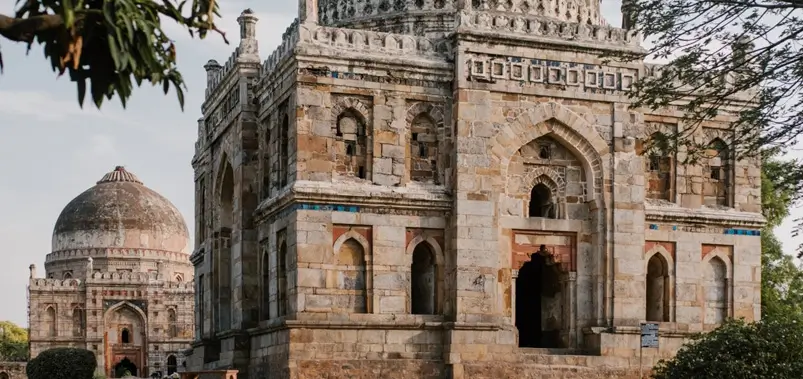
Directly opposite Bara Gumbad stands another fascinating structure known as Shish Gumbad.
Although it may not receive the same attention as some of Delhi's more famous monuments, many visitors find Shish Gumbad one of the most interesting buildings in Lodhi Garden.
The name translates roughly as "Glass Dome," referring to decorative glazed tiles that once covered portions of the structure. While much of the original decoration has disappeared over the centuries, traces remain, allowing visitors to imagine how striking the building must have looked when it was first constructed.
Historians are not entirely certain who is buried inside the tomb, which adds an element of mystery to the site. Various theories exist, but definitive evidence remains limited.
Architecturally, Shish Gumbad complements Bara Gumbad beautifully. The two structures create one of the most photogenic areas in the garden and illustrate the architectural style that characterized the late Sultanate period.
Visitors often sit on nearby lawns and admire the monument from a distance. The surrounding greenery softens the stone architecture and creates an atmosphere that feels both historical and peaceful.
Photographers particularly appreciate early morning conditions when soft sunlight illuminates the facade without large crowds appearing in the frame.
Many travelers who initially visit Lodhi Garden for a short walk end up spending considerable time around Shish Gumbad simply because the setting is so pleasant.
The structure reminds visitors that some of Delhi's most rewarding historical experiences occur away from the city's famous tourist routes.
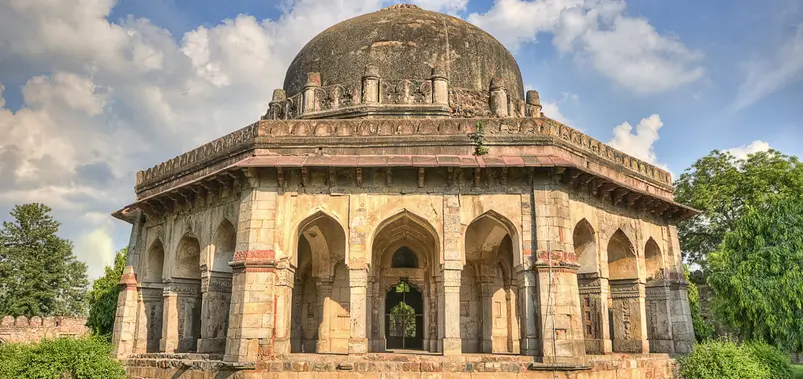
Among all the monuments within the garden, Sikandar Lodhi's Tomb is arguably the most historically significant.
Sikandar Lodhi was one of the most important rulers of the Lodhi Dynasty, and his tomb occupies a central position within the park.
Built in the early sixteenth century, the monument demonstrates architectural ideas that later influenced Mughal tomb design. Historians often view it as an important transitional structure linking earlier Sultanate architecture with developments that would follow under the Mughal Empire.
The tomb sits within a walled enclosure, creating a distinct atmosphere compared with the more open settings surrounding some of the other monuments.
Walking through the gardens toward the structure feels almost ceremonial. Trees, pathways, and open lawns gradually reveal the tomb, creating a strong visual impact upon arrival.
The surrounding area is particularly attractive during the early morning when local residents exercise nearby and birds move through the trees.
Visitors interested in architecture frequently notice the symmetry and balance of the design. Although less elaborate than later Mughal masterpieces, the tomb possesses a refined elegance that rewards careful observation.
For many historians and architecture enthusiasts, Sikandar Lodhi's Tomb is the most important structure in Lodhi Garden because it helps explain how Delhi's architectural traditions evolved over time.
Even travelers with limited interest in history often appreciate the peaceful atmosphere that surrounds the monument.
One of the reasons Lodhi Garden remains so enjoyable is that it can be explored at a relaxed pace.
Unlike large archaeological complexes that require extensive walking under direct sunlight, the garden's pathways are shaded and comfortable.
A practical route begins near the main entrance and moves gradually through the major monuments.
Visitors often start with Mohammed Shah's Tomb before continuing toward Bara Gumbad and Shish Gumbad. From there, pathways lead naturally toward Sikandar Lodhi's Tomb and several quieter areas of the park.
The journey is not merely about reaching monuments. Much of the pleasure comes from walking through landscaped gardens, observing local life, and enjoying the contrast between architecture and nature.
Travelers frequently encounter:
This mix contributes significantly to the atmosphere.
Unlike attractions dominated entirely by tourists, Lodhi Garden feels like a shared public space where visitors become part of daily life in Delhi.
Most people require between ninety minutes and three hours to complete a satisfying visit.
Those interested in photography, birdwatching, or architecture often stay considerably longer.
The key is not rushing. Lodhi Garden rewards slow exploration and observation far more than rapid sightseeing.
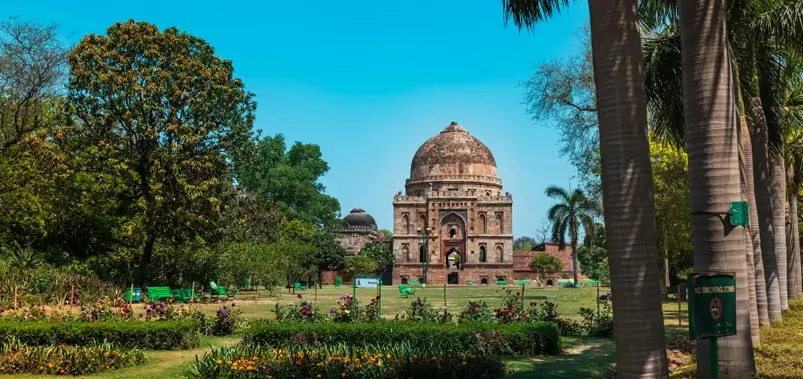
Many first time visitors are surprised by the amount of wildlife present within Lodhi Garden.
Despite being located in the heart of a major city, the park supports a remarkable variety of birds and small animals.
Birdwatchers regularly observe:
Early morning is generally the best time for birdwatching because activity levels are highest and temperatures are more comfortable.
The combination of mature trees, water features, open lawns, and quiet corners creates diverse habitats that attract different species throughout the year.
Even travelers with little interest in birdwatching often enjoy seeing colorful parakeets flying between historic monuments.
The natural environment also contributes significantly to the garden's appeal. Delhi can feel overwhelming at times because of its traffic, population density, and constant activity. Lodhi Garden provides an opportunity to experience a quieter side of the city.
Many visitors find that spending a few hours surrounded by trees and birds improves their overall experience of Delhi.
The park demonstrates that the city contains much more than monuments and markets.
For photographers, Lodhi Garden offers some of the most rewarding opportunities in Delhi.
Unlike heavily crowded attractions where finding clean compositions can be difficult, the garden provides space, flexibility, and a variety of subjects.
Best Time for Photography
The most attractive light generally occurs:
6:00 AM – 8:30 AM
and
One hour before sunset
During these periods, soft sunlight enhances architectural details and creates warm tones across the landscape.
Architectural Photography
The major monuments provide excellent opportunities for:
Portrait Photography
Many photographers use Lodhi Garden for portraits because the combination of heritage architecture and greenery creates attractive backgrounds.
Nature Photography
Birds, flowers, trees, and seasonal changes provide additional photographic possibilities.
One reason photographers love the garden is diversity. It is possible to create architectural, portrait, landscape, and wildlife images within a relatively compact area.
The result is a location that remains interesting even after multiple visits.
A visit to Lodhi Garden pairs naturally with a trip to Khan Market, one of Delhi's most famous shopping and dining districts.
Located only a short distance from the garden, Khan Market attracts diplomats, professionals, travelers, and local residents seeking high quality restaurants, cafés, and boutique shops.
Many visitors follow a simple pattern:
Popular café and dining options change over time, but the area consistently offers excellent choices for breakfast, lunch, coffee, and international cuisine.
The proximity of Khan Market increases Lodhi Garden's appeal because visitors can easily combine relaxation, culture, food, and shopping within a single outing.
Travelers who spend several days in Delhi often return to the area repeatedly because it feels comfortable, walkable, and enjoyable.
A common question among visitors is whether Lodhi Garden is better in the morning or evening.
The answer depends on personal interests.
Sunrise Visit
Best for:
Morning visitors experience the garden at its most peaceful.
Sunset Visit
Best for:
The evening atmosphere feels more energetic and lively.
If possible, many experienced travelers recommend visiting twice. The garden feels noticeably different depending on the time of day.
Both experiences are rewarding in their own way.

We promise you a holiday where everything is taken care of from the moment you land. Trusted drivers waiting for you, handpicked hotels that fit your style, personalized itineraries designed just for your family, and a dedicated team on call 24/7. All you need to do is relax, explore, and create unforgettable memories, while we take care of every detail behind the scenes.
Because it offers a richer and more authentic experience than many better-known attractions. The combination of historical monuments, green landscapes, wildlife, and everyday local life creates one of the most enjoyable environments in Delhi.
Yes. Pathways are relatively easy to navigate, and the relaxed environment appeals to visitors of all ages.
Early morning and late afternoon provide the most pleasant weather and best lighting conditions.
Yes. Lodhi Garden is one of the best photography locations in Delhi.
Yes. The garden is widely regarded as one of Delhi's safest public spaces and attracts visitors throughout the day.
Sikandar Lodhi's Tomb is generally considered the most historically significant structure.
Most visitors spend between one and three hours exploring the garden comfortably.
The garden is generally open from approximately 5:00 AM until 8:00 PM, although timings may vary slightly.
No. Entry to Lodhi Garden is free.
Absolutely. It provides a unique combination of history, architecture, nature, and local culture that differs significantly from Delhi's major tourist attractions.