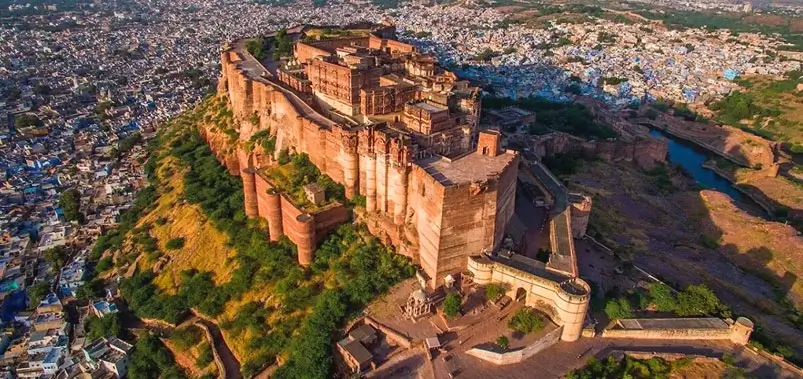
Mehrangarh Fort does not simply dominate the Jodhpur skyline; it defines it. Rising dramatically above the old city from a rocky hill, the fortress is visible from rooftops, hotels, streets, restaurants, and viewpoints across Jodhpur. For international travelers moving through Rajasthan, Mehrangarh Fort Jodhpur is one of the monuments that deserves several hours rather than a rushed photo stop. Its massive defensive walls are only the beginning. Inside them are royal apartments, courtyards, galleries, weapons, textiles, paintings, palanquins, ceremonial objects, and some of the finest elevated views over Jodhpur's famous blue neighborhoods.
The fort is also one of Rajasthan's easier major monuments to visit intelligently because the museum is professionally managed by the Mehrangarh Museum Trust. According to the Trust, the museum preserves important collections relating to the artistic and cultural history of Marwar, including seventeenth, eighteenth, and nineteenth century paintings, arms and armor, textiles, furniture, and decorative arts. The present museum incorporates seven principal period rooms and six major galleries.
For an American traveler accustomed to museum visits with clearly marked galleries and audio interpretation, Mehrangarh can feel considerably more organized than some other historic complexes in India. At the same time, this remains a vast hilltop fort with ramps, stone paving, stairs, uneven surfaces, strong sunlight, and substantial walking. The difference between arriving at 9:00 AM and arriving around noon during hot weather can completely change the quality of the visit.
The current official opening hours are 9:00 AM to 5:00 PM every day, with ticket sales closing at 5:00 PM. The official museum admission for an international visitor is ₹800, while the international student concession is ₹500. A one way elevator ride costs ₹50. The standard international admission already includes the museum's audio guide, making it unnecessary for foreign visitors to purchase the regular audio guide ticket separately.
Those numbers are useful, but they are not enough to prepare someone properly for Mehrangarh. The more important questions are how early to arrive, whether the elevator is worthwhile, how much time to allocate, which rooms should not be missed, how the visit works for senior travelers, where the best views of the Blue City are located, and how Mehrangarh should fit into a full private day in Jodhpur.
The official Mehrangarh Fort timing for the museum is 9:00 AM to 5:00 PM, and the complex is open every day. The best approach for most international visitors is to arrive close to opening time rather than treating 5:00 PM as an indication that a late afternoon arrival is sufficient. A traveler reaching the ticket counter at 4:00 PM may technically be admitted, but one hour is not enough to appreciate the palace rooms, museum galleries, courtyards, walls, viewpoints, and history properly.
For a first visit, allocate at least two and a half to three hours. Travelers with a serious interest in history, architecture, photography, or museum collections can easily spend three and a half to four hours inside the fort. If the visit also includes a relaxed lunch or café stop, photography from several viewpoints, the museum shop, and nearby Jaswant Thada, the entire outing can comfortably occupy most of a morning.
The official Mehrangarh Fort ticket price for foreign visitors is ₹800 per person. International students can currently receive a concession rate of ₹500 where the applicable conditions and identification requirements are met. Domestic admission is priced differently. Because entrance tariffs can change, travelers arranging a trip months in advance should always confirm the live price through the official source shortly before travel rather than relying on an old screenshot.
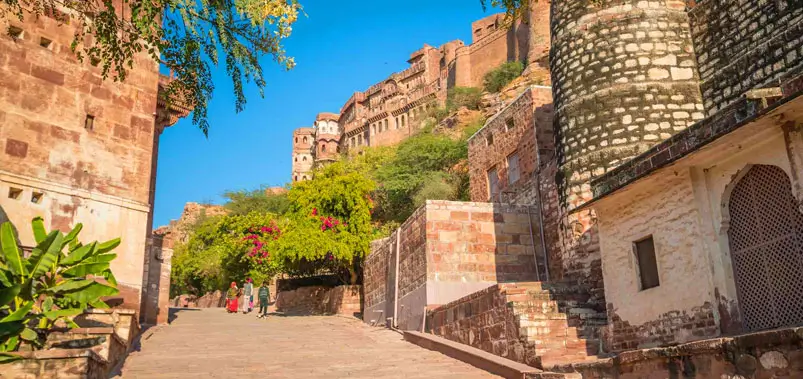
The ₹50 one way elevator deserves special attention because many travelers misunderstand what it does. Mehrangarh is positioned high above Jodhpur, and the route through the fort involves substantial elevation. Taking the elevator can reduce the physical effort required at the beginning of the visit, which can be especially valuable for older visitors, guests with limited stamina, or anyone touring Rajasthan during hotter weather. It does not transform the fort into a completely step free attraction. Visitors should still expect walking, palace thresholds, uneven stone areas, and some staircases.
For most luxury travelers, paying ₹50 for the elevator is an easy decision. Even very fit travelers may find it worthwhile because energy saved on the initial ascent can be used inside the museum, where the actual historic content deserves attention. Guests who specifically want to experience the traditional approach through the fort's defensive gates may prefer to walk, but a private guide can help determine the best route according to mobility and weather.
The official guide rates are also refreshingly clear. At the time of writing, a guide for one to four visitors is ₹500 including GST, while rates rise modestly for larger groups. Foreign admission includes an audio guide, so international travelers have three realistic choices: use the included audio guide, hire a live guide, or visit with a private guide already arranged through the tour company.
For premium American travelers, I would generally favor a knowledgeable private guide over relying entirely on recorded interpretation. Rajasthan's political history is complicated, and palace rooms become far more meaningful when someone can connect the Rathore rulers, Marwar, Mughal alliances, royal customs, architecture, and objects in the galleries into one coherent narrative. A strong guide can also adjust the amount of historical detail to the visitor rather than forcing everyone to follow the same sequence.
Mehrangarh's architecture was not created in a single period. The official Trust notes that palace and defensive construction evolved across roughly five centuries after Rao Jodha established the fort in the mid fifteenth century. Later rulers strengthened, altered, and expanded it, which explains the dramatic transitions between severe military architecture and extraordinarily delicate palace interiors.
That contrast is one of the reasons a fast one hour visit does not work. Mehrangarh needs enough time for the visitor to move from massive stone gates and cannon positions into rooms decorated with mirrors, colored glass, paintings, carved screens, textiles, and gold ornamentation.
The best Mehrangarh Fort tour is not simply a walk to the highest wall for a city photograph. The fort contains one of Rajasthan's significant museum collections, and several rooms provide a much more sophisticated impression of royal Jodhpur than visitors receive from the exterior alone.
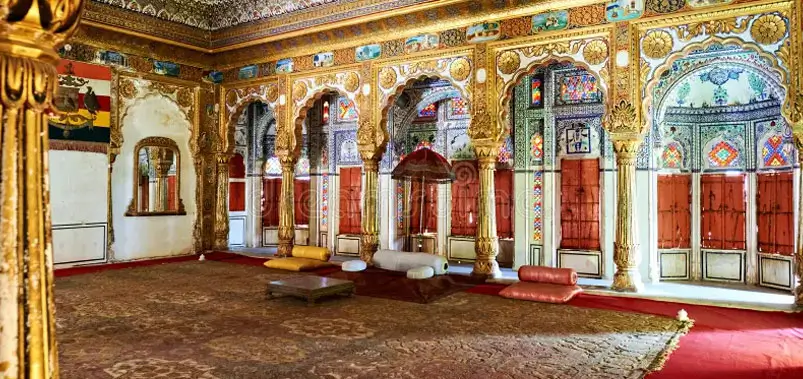
The museum currently incorporates seven period rooms: Sheesh Mahal, Phool Mahal, Takhat Vilas, Sardar Vilas, Jhanki Mahal, Dipak Mahal, and Moti Mahal. It also includes six principal galleries: the Howdah Gallery, Palanquin Gallery, Daulat Khana, Painting Gallery, Textile Gallery, and Arms Gallery.
Moti Mahal, or the Pearl Palace, is one of the rooms that should not be hurried. It functioned as an important royal audience space, and its broad proportions, decorative treatment, and political purpose make it very different from a private royal chamber. A good guide can explain how architecture in Rajput courts controlled visibility, hierarchy, and access rather than serving purely decorative purposes.
Phool Mahal, commonly translated as the Palace of Flowers, is among the most opulent spaces within Mehrangarh. Gold ornamentation and painted surfaces give it a very different character from the enormous stone fortifications outside. This contrast between military severity and interior refinement is central to Mehrangarh's appeal.
Sheesh Mahal, the Mirror Palace, introduces another visual language. Mirror work interiors are encountered in several royal complexes across Rajasthan, but each palace interprets them differently. The room rewards close observation rather than quick photography because small decorative elements are easily missed when visitors concentrate exclusively on wide angle images.
Takhat Vilas belongs to a later phase of palace life and provides a fascinating sense of changing royal taste. It is useful precisely because Mehrangarh is not frozen in one historical moment. Different rulers altered rooms, decorative schemes, furnishings, and functions across generations.
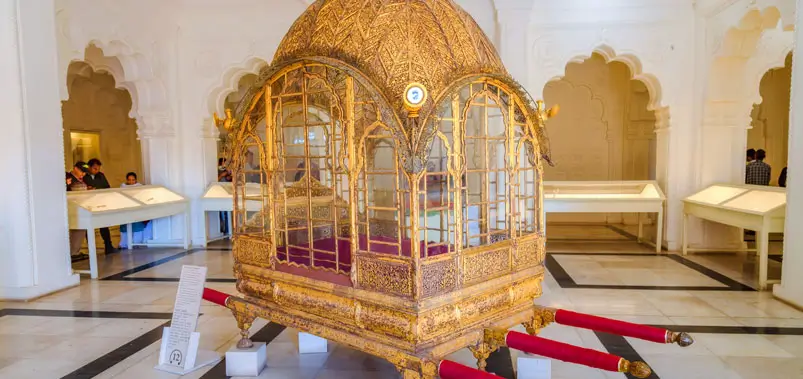
The Palanquin Gallery gives visitors a physical sense of elite transportation before modern vehicles. Palanquins were not simply practical means of movement. Their materials, decoration, structure, privacy, and ceremonial use communicated status. For American visitors, seeing an actual collection can make royal Rajasthan much easier to imagine than reading a paragraph about court travel.
The Howdah Gallery deals with another important form of royal transport. Howdahs were seats mounted on elephants and could be elaborate ceremonial objects. They reveal how royal spectacle was constructed in a world where processions, military appearances, hunting, and public ceremony had political significance.
The Arms Gallery is worthwhile even for visitors who are not especially interested in weapons. Swords, armor, firearms, shields, and related objects provide context for a ruling dynasty whose authority was shaped by military power as much as palace culture.
The Painting Gallery deserves attention because Marwar developed important artistic traditions. Royal portraits, court scenes, religious subjects, landscapes, and manuscript related works communicate aspects of life that surviving architecture alone cannot show.
International visitors frequently underestimate museum galleries in Indian forts because they arrive primarily for architecture. Mehrangarh rewards the opposite approach. Give the interiors almost as much time as the walls.
The palace windows and carved stone screens are also important. From within several sections of the fort, visitors can look over the old city while standing behind delicate architectural screens once associated with controlled royal viewing. The contrast between the massive fort walls and intricate latticework is one of the complex's most striking architectural characteristics.
At the end of the museum sequence, the official museum shop sells books, textiles, jewelry, fragrances, postcards, music, clothing, and products inspired by Mehrangarh's collections. Purchases support the Trust's conservation work.
Travelers genuinely interested in Rajasthan craftsmanship may find the museum shop more comfortable than making an impulsive purchase at an unidentified tourist outlet. Prices are not necessarily designed to compete with street market bargaining, but provenance and institutional context are clearer.
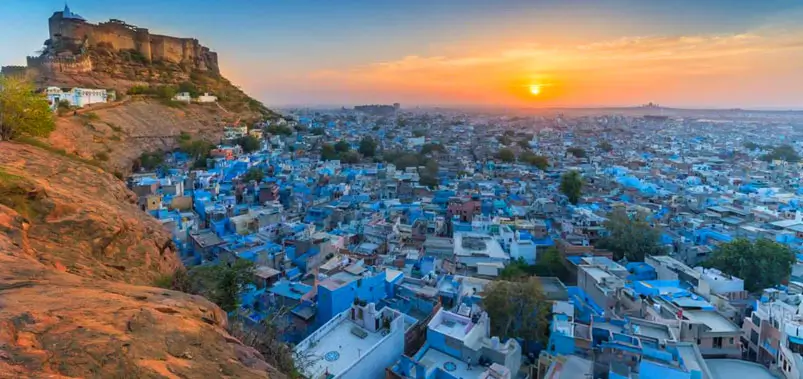
One of the reasons Mehrangarh Fort photography is so rewarding is its position above Jodhpur. From elevated points around the complex, visitors look across densely packed houses stretching away from the fort, including the blue painted sections that created Jodhpur's famous international identity as the Blue City.
The best view is not one perfect balcony that every visitor must locate. Different sections of the fort reveal different perspectives over the city, ramparts, rocky landscape, and distant horizon.
Morning is normally the most comfortable time for a visit. Rajasthan sunlight becomes intense, particularly outside the cooler season. Arriving around 9:00 AM gives photographers softer light and allows travelers to complete much of the outdoor portion before midday heat becomes tiring.
Late afternoon can provide beautiful warmer light, but it introduces a practical problem: the museum closes at 5:00 PM. Visitors who prioritize palace interiors and galleries should therefore not postpone the entire visit until just before sunset.
A better strategy is to visit the museum earlier, then arrange a separate sunset viewpoint elsewhere in Jodhpur.
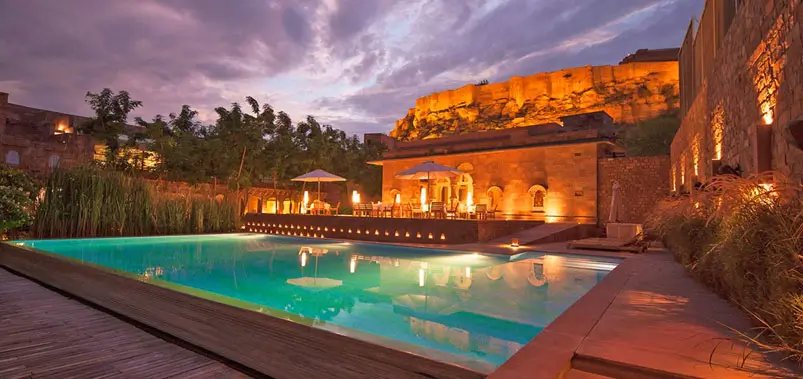
The old city and surrounding rooftops offer excellent fort views after the monument itself closes. Certain high quality hotels and restaurants also provide dramatic perspectives toward illuminated Mehrangarh after dark.
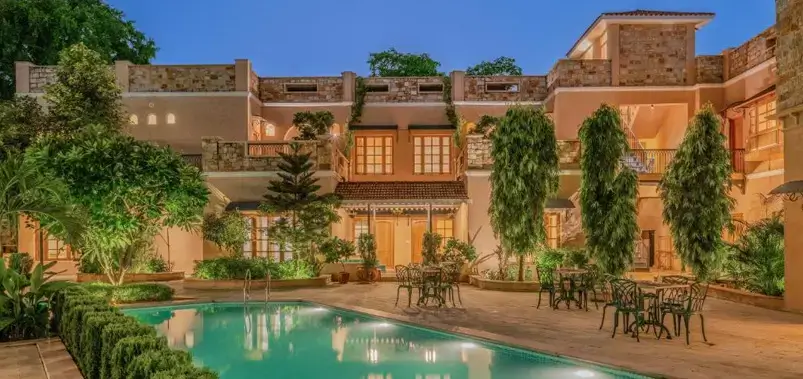
For travelers staying at a property such as RAAS Jodhpur, the relationship with the fort becomes part of the hotel experience because Mehrangarh rises immediately above the old city setting. Travelers staying at Umaid Bhawan Palace receive a completely different sense of Jodhpur, with greater separation from the historic lanes and a much larger palace hotel environment.
Photographers should carry only the equipment they expect to use.
A phone with a strong camera is sufficient for most travelers. Serious photographers may want a wide to moderate zoom for palace interiors, courtyards, architecture, and city views. Large tripods and cumbersome equipment can become inconvenient in narrow passages and museum rooms, and current restrictions should always be checked before carrying professional gear.
Harsh midday sunlight can flatten distant city views, while early morning haze may sometimes soften them. There is no guaranteed perfect photographic condition, but morning generally gives the best combination of light and physical comfort.
The blue color visible from the fort is not evenly distributed across every neighborhood. Visitors expecting the entire city to resemble a uniform blue carpet can be surprised. The most concentrated traditional blue areas lie within older neighborhoods below and around the fort.
That makes a Mehrangarh Fort and Blue City walking tour an excellent combination.
After viewing Jodhpur from above, walking selected old city lanes gives the landscape greater meaning. Houses, markets, shrines, shops, stepwells, food stalls, doorways, and residential streets reveal a city very different from the monumental perspective seen from the fort.
For a premium traveler, however, a guided walk should be intelligently timed. Jodhpur becomes hot and crowded, and some old city streets are narrow enough that cars cannot follow. Comfortable shoes are essential.
Mehrangarh's importance begins with Rao Jodha, the Rathore ruler who established Jodhpur and founded the fort in the fifteenth century. The present monument, however, is the product of centuries rather than one ruler's construction project.
The Mehrangarh Museum Trust explains that the fort and palace complex developed across roughly five centuries, which accounts for the coexistence of military works and palace architecture from different periods. Rao Jodha's foundation was followed by later strengthening, rebuilding, and palace additions under successive rulers.
The location was strategic. A fort positioned high above the surrounding settlement provided enormous defensive advantages as well as a powerful visual statement of authority.
The scale becomes obvious during the approach. Walls rise directly from the rock in a way that can make the fortress appear less like a building placed on the hill and more like an extension of the hill itself.
Mehrangarh also survived periods of warfare, shifting alliances, Mughal influence, and changes within the Rathore dynasty. In the sixteenth century, for example, forces associated with Sher Shah Suri captured the fort for a period before Rathore control was reestablished. Later building campaigns strengthened defenses and expanded the royal complex.
These layers matter because Rajasthan is often presented to foreign visitors as a simplified story of maharajas living in beautiful palaces. Mehrangarh shows the harder political reality behind that image.
These were fortified royal centers.
Walls, gates, cannon positions, steep approaches, defensive turns, and restricted access existed because political power had to be protected.
Inside those defenses, however, royal culture evolved in extraordinary sophistication. Court ceremonies, music, painting, textiles, weaponry, festivals, diplomatic relationships, marriage alliances, and religious life all shaped the palace.
That is why a visit should include both fortifications and museum collections. Seeing only one gives an incomplete impression.
The Mehrangarh Museum Trust itself was established in the early 1970s under Maharaja Gaj Singh to conserve the fort and develop its museum functions. The Trust states that it operates conservation, academic, cultural, and museum programs and has received recognition for heritage conservation work.
For travelers interested in heritage management, this adds another layer to the visit: Mehrangarh is not simply an abandoned fortress opened to ticket holders. It remains an actively managed cultural institution.
A common mistake is visiting Mehrangarh as an isolated attraction. The surrounding area contains several sites that work naturally with the fort and create a much stronger Jodhpur sightseeing itinerary.
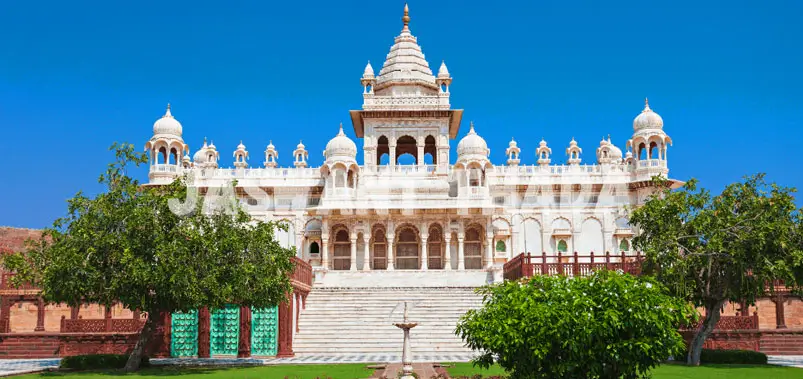
Jaswant Thada is the easiest addition. The marble memorial lies close to Mehrangarh and is managed by the same Trust. Current official opening hours are 9:00 AM to 5:00 PM daily, and international visitor admission is ₹100.
The monument was constructed in memory of Maharaja Jaswant Singh and functions as a royal cenotaph complex. White marble, landscaped grounds, water, portraits, and the comparatively peaceful setting provide a welcome contrast after the darker stone and dense interiors of Mehrangarh.
Allow around 30 to 45 minutes for Jaswant Thada unless photography or architecture is a major interest.
A very comfortable morning can begin at Mehrangarh when it opens, continue to Jaswant Thada around lunchtime, then return to the hotel for a break.
The Rao Jodha Desert Rock Park is another worthwhile addition for travelers interested in landscape, ecology, or walking. The park was created to restore the natural ecology of rocky land around Mehrangarh. According to the Trust, its operating hours vary seasonally, opening earlier during the hotter months.
This is not the place to squeeze into a schedule after several hours of sightseeing during intense afternoon heat. A separate early morning visit can be much more enjoyable.
Chokhelao Bagh, at the foot of the fort, provides yet another quieter element. The restored historic garden reflects eighteenth century garden traditions and is designed around plants associated with Marwar.
Inside and around the fort are also several café and dining options. The Trust currently lists Café Mehran, Palki Café, and Vaara Café, along with evening service at Mehran Terrace. The exact operating schedule varies by venue.
For luxury travelers, an intelligently paced day might therefore look very different from the typical rapid city tour. Start with Mehrangarh, spend enough time inside the museum, visit Jaswant Thada, return to the hotel for lunch and rest, then go back into the old city later for a guided walk, market visit, stepwell, rooftop drink, or dinner with a fort view.
That rhythm is more comfortable than attempting Mehrangarh, Jaswant Thada, Umaid Bhawan Palace, Mandore, old city shopping, multiple markets, and a sunset viewpoint in a single continuous day.
Jodhpur deserves at least two nights, while three nights are preferable for travelers staying at a premium property and wanting the city to feel like part of a vacation rather than an assignment.
.webp)
Mehrangarh is manageable for most travelers, but it is not physically effortless.
The fort contains slopes, stone paving, staircases, thresholds, large courtyards, and significant walking. The available one way elevator helps with the initial elevation but should not be interpreted as complete accessibility.
Travelers with knee problems, limited mobility, heart conditions affecting exertion, or difficulty managing stairs should discuss the route with their private guide before beginning.
Take breaks.
There is no prize for completing the fort quickly.
During warmer periods, the combination of stone surfaces and direct sunlight can become exhausting. Start early, carry water where permitted, use sunscreen, wear sunglasses, and choose breathable clothing.
Comfortable closed walking shoes or supportive sandals are far more appropriate than formal footwear.
Rajasthan's winter period is exceptionally pleasant for sightseeing, but mornings can be cool. Layered clothing works well because temperatures rise as the day progresses.
Foreign travelers should not feel required to dress in traditional clothing to visit the fort. Normal modest resort or city sightseeing clothing is appropriate.
A live guide can substantially improve the experience, especially for first time visitors. The official guide fee for a small group is modest, while travelers on a premium private India itinerary may already have guiding included.
The difference between a good guide and a mediocre one can be significant. A good guide connects architecture, objects, rulers, politics, and stories without overwhelming the visitor. A poor guide simply recites dates.
Travelers working with Golden Triangle Tours can incorporate Jodhpur into a private Rajasthan journey with the fort visit arranged around hotel location, temperature, transportation, and the wider route rather than treating Mehrangarh as a generic two hour stop.
Jodhpur fits naturally after Jaipur when a traveler wants to extend a Golden Triangle Tour into Rajasthan.
Delhi, Agra, and Jaipur provide the classic introductory circuit. Continuing deeper into Rajasthan allows the architecture and history to evolve rather than simply repeating another version of the same city.
Jodhpur brings Mehrangarh Fort, the blue old city, Jaswant Thada, desert edge landscapes, important culinary traditions, heritage hotels, and a stronger sense of Marwar identity.
From Jodhpur, travelers can continue toward Udaipur by private road. This is one of Rajasthan's most rewarding overland sectors because stops can be incorporated depending on the chosen route and available time.
A private chauffeur driven vehicle is particularly useful on this itinerary because luggage remains with the same operational team and travelers avoid repeatedly arranging separate transfers.
For affluent U.S. travelers, the leading Jodhpur hotel is Umaid Bhawan Palace, which offers an entirely different experience from staying inside the old city. It is a true palace property with expansive grounds, exceptional service, and a level of privacy suited to travelers who want the hotel itself to form part of the destination.
Travelers preferring direct access to the historic city may favor a luxury heritage property such as RAAS Jodhpur, where Mehrangarh visually dominates the setting.
The choice affects the sightseeing day.
A traveler staying near the fort can experience old Jodhpur immediately outside the hotel. A guest at Umaid Bhawan enjoys greater resort style separation and relies more heavily on the private car.
Neither is inherently better.
The right choice depends on whether the traveler values immersion or retreat.
Regardless of accommodation, Mehrangarh Fort should be the central historical visit in Jodhpur. Give it the morning, use a private guide, take the elevator if it improves comfort, spend time in the palace rooms rather than only photographing the city, and pair it with Jaswant Thada instead of cramming the day with distant attractions.
Mehrangarh is one of those places where a higher quality itinerary requires doing slightly less.
The fort already provides military architecture, royal apartments, museum collections, panoramic views, craftsmanship, political history, photography, and a direct introduction to Marwar.
It does not need to be rushed merely so another five attractions can be checked off before dinner.
We promise you a holiday where everything is taken care of from the moment you land. Trusted drivers waiting for you, handpicked hotels that fit your style, personalized itineraries designed just for your family, and a dedicated team on call 24/7. All you need to do is relax, explore, and create unforgettable memories, while we take care of every detail behind the scenes.
Yes. Jodhpur is an excellent extension to a private Golden Triangle Tour, particularly when combined with Jaipur and Udaipur in a longer Rajasthan itinerary. A chauffeur-driven road journey allows travelers to experience the region without relying exclusively on domestic flights.
Yes. Mehrangarh provides some of the finest elevated views over Jodhpur's Blue City, particularly across the old neighborhoods surrounding the fort. A guided old-city walk afterward gives a completely different ground-level perspective.
Yes. Jaswant Thada is located close to Mehrangarh and is easy to combine with the same morning excursion. Its current official international admission is ₹100, and it is open from 9:00 AM to 5:00 PM.
The fort requires substantial walking and includes slopes, steps, and uneven stone surfaces. The elevator helps considerably, and a private guide can select a more comfortable route. Travelers with significant mobility limitations should discuss accessibility before visiting.
Arriving close to 9:00 AM is ideal for most travelers. Temperatures are more comfortable, outdoor areas are easier to enjoy, and you have sufficient time to see the museum without rushing before closing.
Allow at least two and a half to three hours for a first visit. Travelers interested in history, architecture, museums, or photography can comfortably spend three to four hours.
Yes. A one-way elevator costs ₹50 according to the current official tariff. It reduces the initial uphill effort but does not eliminate all walking and stairs within the fort.
Yes. The official museum states that the audio guide is included in the international visitor admission fee.
The current official international visitor ticket is ₹800 per person. International students have a concessionary rate of ₹500 where applicable. Ticket prices can change, so confirm them before travel.
The Mehrangarh Museum is open from 9:00 AM to 5:00 PM every day. The official Trust states that ticket sales close at 5:00 PM, but visitors should arrive much earlier to allow sufficient time for the museum and palace complex.