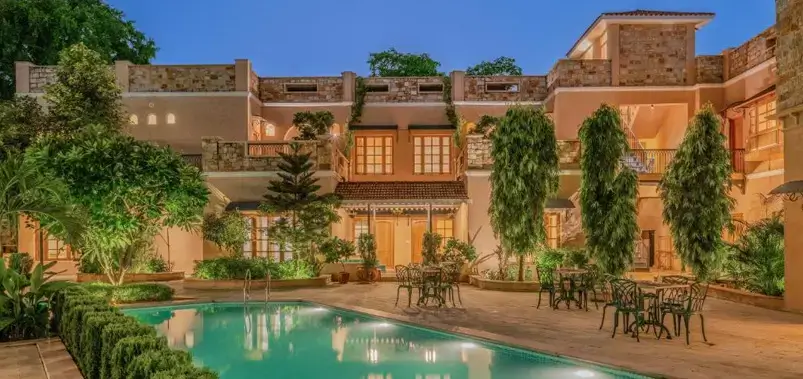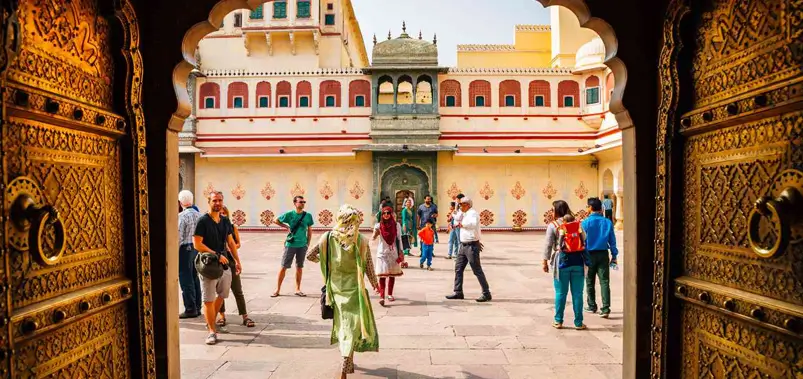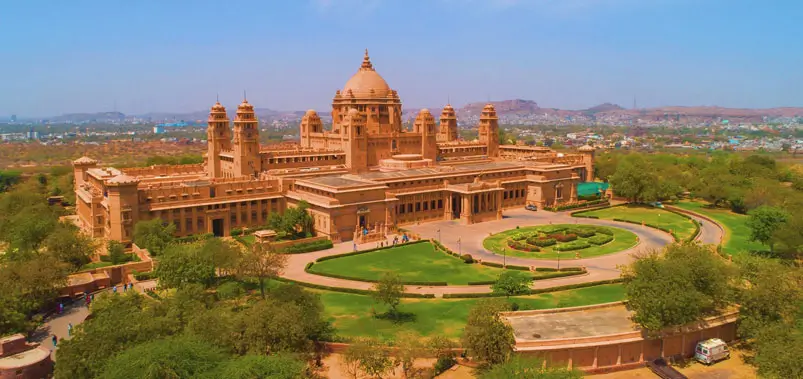
There are luxury hotels built to resemble palaces, and then there is Umaid Bhawan Palace Jodhpur. The distinction matters. This enormous sandstone landmark was created as an actual royal residence, remains partly occupied by Jodhpur's royal family, contains a museum, and operates another section as one of India's most prestigious palace hotels under Taj.
For travelers arriving from the United States, staying here is very different from booking a conventional five star hotel in Jodhpur. The value is not measured only by room size, breakfast quality, thread count, or swimming pool facilities. Guests are paying to spend the night within one of India's great twentieth century royal residences, walk through vast Art Deco interiors, look across manicured palace grounds, receive the high touch service associated with Taj's palace collection, and return after sightseeing to a property that is itself one of Jodhpur's major landmarks.
The hotel currently contains 26 rooms and 45 suites, according to Taj, with accommodation ranging from Palace Rooms to extraordinary royal suites. The estate also offers extensive gardens, an indoor heated swimming pool, an outdoor swimming pool, spa facilities, fitness facilities, concierge services, butler service, multiple restaurants, a bar, and private transfers on request.
This is not an inexpensive stay. Travelers considering Umaid Bhawan Palace room rates should realistically budget toward the highest end of Rajasthan hospitality. Depending on season, demand, room category, taxes, and booking conditions, entry room categories can commonly require a budget of approximately $800 to $1,500 or more per night, while stronger suites may move from roughly $1,500 to $3,000+ per night. The most exceptional royal suites can cost several thousand dollars for a single night. These are sensible premium budgeting figures rather than fixed hotel tariffs because live rates fluctuate continually.
That naturally raises the question that matters most to a serious traveler: is sleeping at Umaid Bhawan worth allocating several thousand dollars of an India vacation budget?
For the right traveler, it can be one of the defining stays of an entire Rajasthan journey. For someone who will leave the hotel immediately after breakfast, remain outside until late evening, and use the property only for sleeping, the same money could be allocated more effectively elsewhere.
The first thing to appreciate about staying at Umaid Bhawan Palace is its scale. The palace occupies a very different physical setting from Jodhpur's dense old city below Mehrangarh Fort. It sits on elevated grounds away from the narrow lanes and tightly packed blue houses that many travelers associate with Jodhpur. The arrival therefore feels deliberately removed from the city's noise.
That separation begins at the entrance and continues through landscaped grounds leading toward the immense sandstone façade. The central dome dominates the building, while the architectural language combines Indian royal references with a strong Art Deco character. India's official tourism portal describes the palace as a fusion of Indian and European architecture and notes that construction extended over more than a decade before the palace became the royal residence.
Once inside, the scale becomes easier to comprehend. High ceilings, broad corridors, marble surfaces, historic furnishings, large ceremonial spaces, Art Deco detailing, and carefully maintained public rooms create an environment far removed from a newly constructed luxury resort.
A particularly important detail is that this is still connected with the royal family rather than functioning solely as a former palace converted entirely into a commercial hotel. Part of the property remains associated with the family residence, another part functions as the hotel, and another section contains the museum. That gives the palace a living residence character that many heritage hotels cannot replicate.
Guests should nevertheless have realistic expectations. Booking a standard Palace Room does not mean receiving unrestricted access to every royal area. Private residential sections remain private, and hotel guests use areas designated for the Taj hotel operation. The experience is exclusive, but it is not an invitation to wander freely through every room of a royal residence.
Service is a major part of what makes the Umaid Bhawan Palace hotel experience different from simply visiting the museum. Taj lists butler service, round the clock in-room dining, concierge support, housekeeping and turndown service, transfers, and extensive guest facilities. The hotel also maintains indoor and outdoor swimming pools and a full spa and fitness offering.
For American luxury travelers, the service level may be one of the strongest reasons to stay. Guests accustomed to leading properties from brands such as Four Seasons, Rosewood, Aman, or Ritz Carlton will recognize the emphasis on personal service, but the palace setting creates a completely different atmosphere.
The gardens also matter. Taj describes approximately 26 acres of landscaped palace grounds. This gives guests space that simply does not exist at an old city heritage hotel. Mornings can begin with a quiet walk rather than immediately entering busy Jodhpur streets. Peacocks are frequently associated with the grounds, and the elevated location creates broad views rather than the tightly framed fort views found inside the old city.
The tradeoff is obvious: Umaid Bhawan Palace is not an old city hotel.
Travelers cannot walk directly from their room into the blue lanes beneath Mehrangarh Fort. A vehicle is needed for most sightseeing. For a premium private journey with a chauffeur driven car, this is not a major operational problem, but it changes the character of the stay.
Someone who wants to step outside after dinner and wander through Clock Tower Market may prefer a heritage hotel within central Jodhpur. Someone who wants quiet grounds, privacy, palace scale facilities, and a strong sense of retreat is more likely to prefer Umaid Bhawan.
This distinction is more useful than asking which Jodhpur hotel is simply “better.”
Room category matters enormously at Taj Umaid Bhawan Palace because the accommodation range is unusually broad.
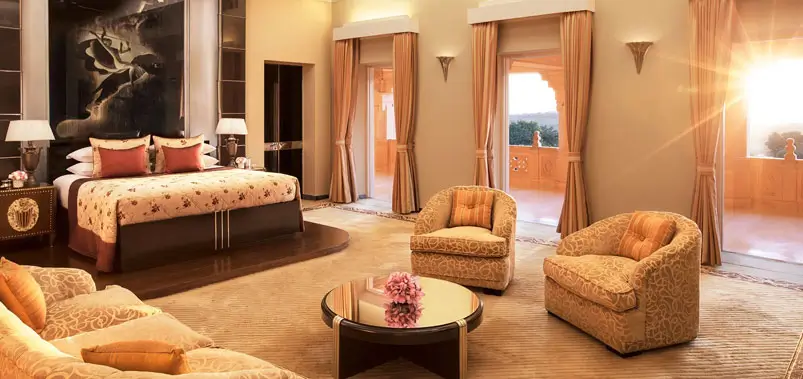
The most accessible category is the Palace Room, which Taj lists at approximately 42 to 48 square meters. These rooms feature Art Deco styling and garden outlooks, with modern luxury amenities integrated into the historic setting. For two travelers, the size is generous enough for a comfortable palace stay without moving immediately into suite pricing.
Travelers should still remember what they are purchasing. At a hotel of this stature, even the entry category carries a substantial premium because access to the palace environment itself is part of the nightly cost.
Guests wanting greater character and space can move into a Historical One Bedroom Suite. Taj states that these accommodations were originally associated with visiting royalty, vary individually in design, and range from approximately 47 to 102 square meters. That variation in size is significant. Two suites carrying the same broad category name may not feel identical, which is one reason premium travelers should discuss preferences at the time of booking rather than treating every room number as interchangeable.
Above this are the Royal One Bedroom Suites, which offer approximately 111 to 120 square meters, with views that can include the palace grounds and distant Mehrangarh Fort. At this point the stay begins to feel much more residential. Separate sitting space, larger bathrooms, and stronger architectural presence make these categories attractive to travelers spending several nights rather than simply passing through Jodhpur.
The Grand Royal One Bedroom Suites extend to approximately 111 to 130 square meters and were historically associated with distinguished palace guests. For affluent travelers who want a meaningful upgrade without entering the extreme pricing of the signature suites, this category can represent one of the more attractive balances between space, heritage, and cost.
Then there are the signature accommodations.
The Maharaja Suite encompasses approximately 422 square meters. Taj describes it as the former personal rooms of Jodhpur's ruler, with a bedroom, sitting area, dining space, long balcony, private spa facilities, steam room, and other residential elements. This is no longer simply a hotel suite in the usual sense; it is a palace apartment.
The Maharani Suite is even larger at approximately 450 square meters. Taj describes it as the palace's largest suite, with extensive private terrace space, living and dining areas, private kitchen facilities, spa elements, and views that include the palace gardens and Mehrangarh Fort. Its pink, black, and chrome design reflects a particularly strong Art Deco identity.
There is also the Mehfil Suite, an approximately 400 square meter accommodation incorporating marble, handcrafted furnishings, embroidered elements, large living and dining areas, and courtyard views.
These suites are aimed at travelers for whom accommodation is a central part of the trip rather than a support service.
Pricing needs to be approached accordingly. The hotel operates with dynamic rates, and there is little value in publishing one supposedly permanent amount. For realistic budgeting, a couple should be comfortable allocating approximately $800 to $1,500+ per night for an entry level palace stay during desirable periods. Stronger suite categories can move into the $1,500 to $3,000+ range, and the highest suites can exceed these figures considerably.
Taxes can materially affect the final bill.
Travelers should compare the total stay cost, not merely the first room rate displayed online. Breakfast inclusion, airport transfers, cancellation conditions, upgrades, taxes, and special benefits can make two apparently similar offers meaningfully different.
Peak travel periods can be especially expensive in Rajasthan. Jodhpur receives strong luxury demand when temperatures are most comfortable, and palace properties also host weddings, private celebrations, and major events that can reduce available room inventory.
Booking the cheapest non-refundable rate months in advance is not necessarily wise for every American traveler. International trips involve flights, visas, connections, health issues, and potential itinerary changes. Flexible cancellation terms can justify a higher rate, particularly when several thousand dollars are tied to a short stay.
For honeymooners or anniversary travelers, tell the hotel or tour operator what is being celebrated. Do not assume that an occasion automatically produces a free suite upgrade, but advance notice allows the property to handle the stay with appropriate attention.
For most luxury travelers, two nights at Umaid Bhawan Palace is the minimum that makes financial sense. Three nights are significantly better.
A one night stay often becomes an expensive exercise in checking in, changing clothes, eating dinner, sleeping, eating breakfast, and checking out. There is barely enough time to use the pool, walk the grounds, enjoy the spa, sit at the bar, have a leisurely dinner, and appreciate the palace.
If budget permits only one ultra luxury hotel during a longer Rajasthan journey, it may be smarter to spend two or three nights here and use excellent but less expensive five star properties elsewhere rather than booking one expensive night in every city.
A traveler paying Umaid Bhawan Palace luxury hotel rates should intentionally protect several hours for the property itself.
Dining is part of that experience.
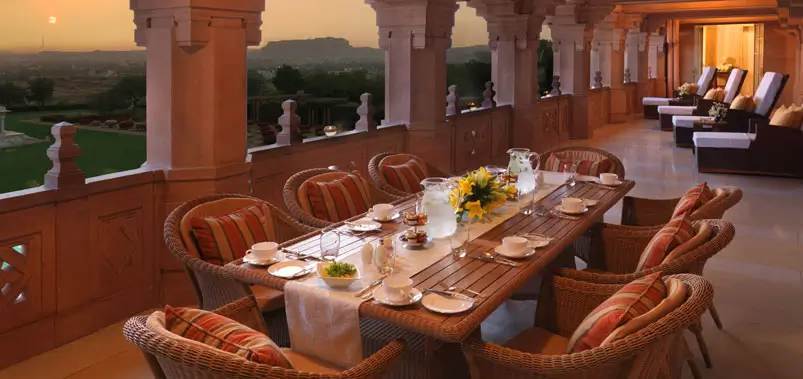
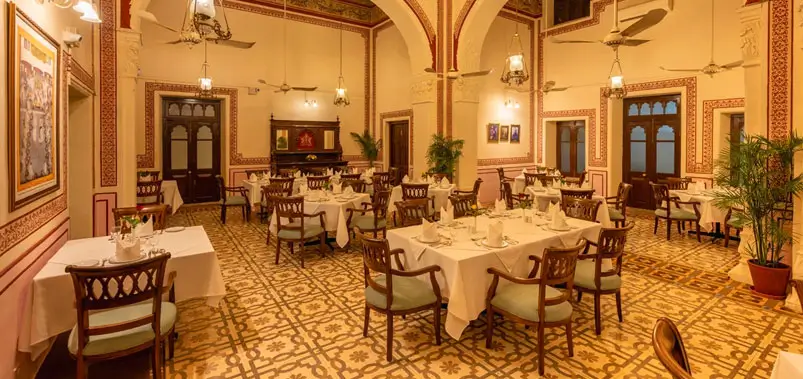
Taj currently lists Risala, Pillars, and Trophy Bar among its dining venues. Risala focuses on Indian cuisine with recipes associated with royal kitchens, while Pillars offers multi cuisine dining on a colonnaded terrace overlooking gardens and the surrounding landscape.
Breakfast should not be rushed before an early departure every morning.
A much stronger itinerary allows at least one leisurely breakfast at the palace. Guests can then leave for Mehrangarh Fort later in the morning or arrange sightseeing on another day.
Dinner at the hotel also has value, particularly after a full sightseeing day. Jodhpur has excellent restaurants outside the palace, and travelers should certainly eat beyond the hotel during a multi night stay, but one evening should be reserved for the palace itself.
The Trophy Bar gives guests another reason to return before dinner rather than remaining outside until late evening. A cocktail or drink within the palace environment is part of what distinguishes the stay from merely sleeping in a luxury room.
The pools deserve actual time as well.
Umaid Bhawan offers both indoor and outdoor swimming facilities, including a heated indoor pool. Taj also operates its wellness facilities at the property with spa treatments and fitness facilities.
For travelers arriving after several fast paced days through Delhi, Agra, and Jaipur, Jodhpur can therefore become a valuable point where the itinerary slows down.
A sensible three night stay might use the first afternoon almost entirely for the hotel. Check in, unpack properly, walk the grounds, use the pool or spa, have drinks, and dine at the palace.
The following morning can be dedicated to Mehrangarh Fort and Jaswant Thada, followed by lunch and a substantial hotel break. Late afternoon can then be used for a Blue City walk, Clock Tower area, shopping, or dinner with a fort view.
Another day can include Umaid Bhawan Palace Museum, selected Jodhpur neighborhoods, specialty shopping, food experiences, or additional historical sites without compressing everything into one marathon sightseeing session.
This is particularly important for older U.S. travelers.
Rajasthan journeys often involve early starts, long road transfers, stairs, forts, heat, uneven paving, and frequent hotel changes. Booking an exceptional palace but refusing to spend time there misses one of the strongest opportunities for recovery within the itinerary.
Families should also evaluate the hotel differently from couples.
The grounds and pools provide children with substantially more space than a compact old city property, but room occupancy rules need to be confirmed carefully. Taj notes that interconnecting rooms are subject to availability. Families requiring guaranteed connecting accommodation should address this early rather than assuming adjoining rooms will automatically be available.
For couples, the most valuable facility may simply be space and quiet. After spending the day inside noisy markets and crowded monuments, returning through the palace gates creates an immediate change in pace.
That contrast is a luxury in itself.
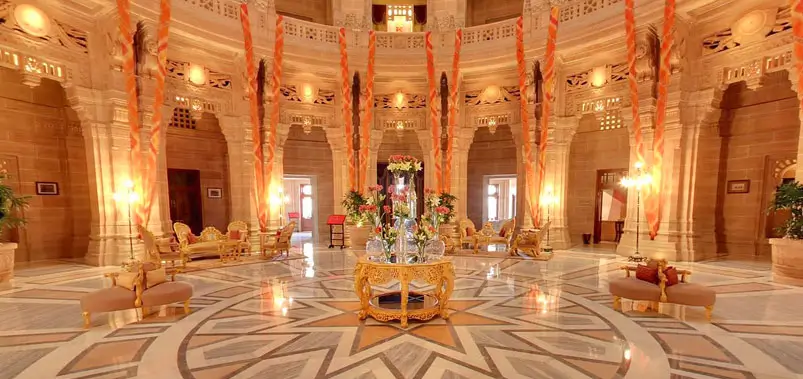
Travelers frequently confuse Umaid Bhawan Palace hotel access with Umaid Bhawan Palace Museum access.
They are not the same.
The palace serves multiple functions. Part is associated with the royal residence, part operates as the Taj hotel, and a section is accessible as a museum. Someone buying a museum ticket is not receiving general access to hotel guest areas, private palace spaces, restaurants, pools, and residential sections.
The museum provides a useful option for travelers who want to see part of the palace without paying to stay overnight.
Current visitor information commonly lists Umaid Bhawan Palace Museum hours around 9:00 AM to 5:00 PM, with a foreign visitor ticket approximately ₹100. Because museum operating hours, ticket tariffs, private events, and access conditions can change, visitors should reconfirm these details locally before traveling specifically for the museum.
The museum contains material associated with the Jodhpur royal family and the palace's history. Vintage vehicles are also associated with the visitor area and are a popular part of the museum experience.
The palace itself was commissioned by the ruler after whom it was named and constructed during a period when the region faced severe economic hardship. Large scale construction provided employment to local people while creating a modern royal residence. Work extended from the late 1920s into the early 1940s, producing a palace that differs architecturally from Jodhpur's medieval Mehrangarh Fort. India's official tourism portal notes that construction took more than fifteen years.
That historical difference is critical.
Mehrangarh represents fortified dynastic power over centuries. Umaid Bhawan represents a much later royal world influenced by modern engineering, European architectural ideas, Art Deco interiors, automobiles, and changing princely lifestyles.
Visiting both creates a far stronger historical picture of Jodhpur than seeing either in isolation.
The Umaid Bhawan Palace Museum generally requires much less time than Mehrangarh. Depending on interest level, approximately 45 minutes to one hour is sufficient for many visitors.
Guests actually staying at the hotel may not need to structure the palace experience around a quick public museum visit. Their hotel stay already provides a much deeper sense of the building's scale and atmosphere, although the museum can still add useful historical context.
A private guide can connect the two Jodhpur palaces effectively: begin with Mehrangarh's medieval foundations, royal courts, weaponry, and palace apartments, then move forward into Umaid Bhawan's twentieth century architecture and lifestyle.
That creates a narrative instead of two unrelated monument stops.
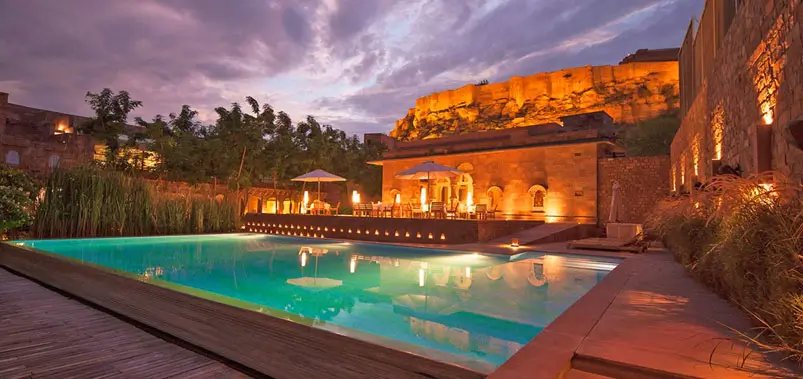
For affluent travelers, one of the most useful comparisons is Umaid Bhawan Palace vs RAAS Jodhpur, because the two properties deliver almost opposite versions of the city.
Umaid Bhawan is about scale, seclusion, palace grounds, formal service, swimming pools, royal architecture, and the feeling of withdrawing from the city.
RAAS is about immersion.
Its old city setting places travelers beneath Mehrangarh Fort, close to the dense urban fabric that gives Jodhpur its visual character. The fort becomes part of the immediate skyline, and guests are better positioned for walking into historic neighborhoods.
Someone staying at RAAS may wake up, look toward Mehrangarh, and feel physically embedded in old Jodhpur.
Someone staying at Umaid Bhawan wakes inside one of India's great palace estates.
Neither experience is superior in every respect.
For a first time U.S. traveler spending only two nights in Jodhpur and prioritizing old city photography, markets, restaurants, and immediate access to historic neighborhoods, the central location can be extremely attractive.
For honeymooners, anniversary guests, luxury collectors, or travelers deliberately seeking India's iconic palace hotels, Umaid Bhawan Palace carries much greater emotional weight.
There is also a significant budget difference.
A high quality old city luxury hotel may cost a fraction of the nightly amount required for Umaid Bhawan. That difference can run into thousands of dollars over several nights.
The question is therefore not whether Umaid Bhawan is expensive. It unquestionably is.
The question is whether the palace stay itself matters enough to the traveler.
If it does, booking a substitute merely to save money may create regret.
If it does not, there is little reason to pay several times the price simply for the status of the address.
One creative option for travelers with enough time is splitting the stay. Spend two nights inside old Jodhpur followed by two nights at Umaid Bhawan, or reverse the order.
This provides both immersion and retreat, although changing hotels within the same city may feel unnecessary for travelers who dislike repacking.
For most visitors, selecting one property and staying three nights is smoother.
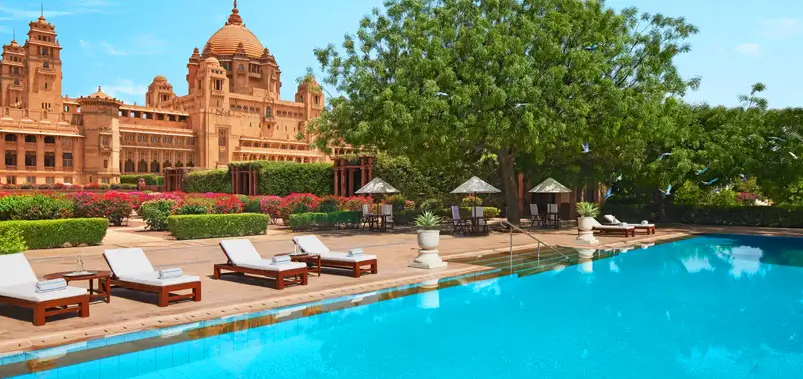
Umaid Bhawan Palace Jodhpur makes the most sense when the rest of the itinerary is designed with equal attention to pace.
Travelers often arrive in Jodhpur after Jaipur and continue onward toward Udaipur. This creates one of Rajasthan's strongest private routes: Jaipur for its forts and palaces, Jodhpur for Mehrangarh and Marwar heritage, and Udaipur for lakes and waterfront palace hotels.
A private chauffeur driven Rajasthan tour is especially effective for this circuit because road travel connects the cities naturally and allows travelers to retain the same vehicle and driver across multiple days.
For American travelers, vehicle quality becomes increasingly important on these longer drives. A slightly higher transportation budget can make a major difference when several hours are spent on the road.
Jodhpur should ideally receive two to three nights, particularly when staying at Umaid Bhawan Palace.
Trying to arrive from Jaipur in the afternoon, visit Mehrangarh immediately, spend one night at the palace, and leave for Udaipur the following morning is financially and physically inefficient.
The palace deserves a slower schedule.
Guests arranging their Rajasthan journey through Golden Triangle Tours can incorporate Jodhpur after the core Delhi, Agra, and Jaipur circuit, with Umaid Bhawan requested specifically as a premium accommodation rather than simply asking for an unspecified five star hotel.
This matters because “five star Jodhpur hotel” and “Umaid Bhawan Palace” represent completely different budget levels.
A properly prepared quotation should therefore identify the hotel by name, room category, meal inclusion, taxes, transfer arrangements, and cancellation conditions.
For travelers who want the strongest royal hotel sequence, Rajasthan can include iconic palace properties in Jaipur, Jodhpur, and Udaipur. This can create an extraordinary trip, but the accommodation bill becomes substantial very quickly.
There is no requirement to stay in the most expensive palace in every city.
One of the smartest luxury strategies is to select one or two truly iconic hotels and use excellent conventional luxury properties elsewhere. This protects the budget for private guides, superior vehicles, domestic flights, additional nights, fine dining, and private cultural experiences.
If Umaid Bhawan Palace is the hotel you have imagined staying in for years, give it enough time to matter. Book a room category you will actually appreciate, leave at least part of one day free for the property, eat at the palace, use the grounds, take advantage of the pool or spa, and avoid treating the stay as a trophy booking squeezed between road transfers.
Sleeping in a real royal palace should feel different from an ordinary hotel night.
At Umaid Bhawan, it can.
We promise you a holiday where everything is taken care of from the moment you land. Trusted drivers waiting for you, handpicked hotels that fit your style, personalized itineraries designed just for your family, and a dedicated team on call 24/7. All you need to do is relax, explore, and create unforgettable memories, while we take care of every detail behind the scenes.
Yes. Jodhpur can be added after Delhi, Agra, and Jaipur as part of a luxury Golden Triangle and Rajasthan tour. The route can then continue toward Udaipur, creating an excellent private journey through some of Rajasthan's most important palace cities.
Both landmarks are in Jodhpur, but Umaid Bhawan is not directly beneath Mehrangarh in the old city. Guests generally use a private car for sightseeing. The physical separation provides greater privacy and resort-style space but less walkable access to historic neighborhoods.
Yes. Taj lists indoor and outdoor swimming pools, including a heated indoor pool, along with spa treatments, fitness facilities, yoga services, and other wellness amenities.
Non-hotel guests can visit the Umaid Bhawan Palace Museum during public opening hours, subject to current access rules. Museum admission does not provide unrestricted entry to hotel, royal residence, or guest-only areas.
Two nights should be considered the minimum, while three nights provide a much better balance between Jodhpur sightseeing and enjoying the palace itself.
It can be worthwhile for travelers who value iconic hotels, royal history, high-touch service, large palace grounds, luxury facilities, and memorable accommodation. It offers weaker value for someone who will spend virtually the entire day sightseeing and use the property only for sleeping.
The Maharaja Suite and Maharani Suite are among the property's most exceptional accommodations. The Maharaja Suite is approximately 422 square meters, while the Maharani Suite is approximately 450 square meters and includes extensive private living space and terrace areas.
Taj currently lists 26 rooms and 45 suites within the hotel operation, making it far more intimate than the enormous exterior of the palace might suggest.
Rates vary substantially by date and category. A realistic premium budget is approximately $800 to $1,500+ per night for palace rooms, with many suites ranging around $1,500 to $3,000+ and the signature royal suites potentially costing several thousand dollars per night.
Yes. Umaid Bhawan Palace is an actual royal residence, not a modern hotel designed to resemble one. The complex includes sections associated with the Jodhpur royal family, the Taj-operated luxury hotel, and a museum open to visitors.