Golden Triangle Tour for Large Groups: Coach, Hotels & Group Package Pricing
14 Sep 2026

Every city has its own identity, but only a few transform completely during a traditional festival. Jaipur is one of those rare destinations. As the first monsoon showers arrive across Rajasthan, the Pink City takes on an entirely different character. Historic streets are decorated with colorful banners, marketplaces become more vibrant than usual, temples welcome thousands of devotees, traditional music fills the air, and one of India's most spectacular royal processions makes its way through the centuries old walled city. This celebration is known as the Teej Festival in Jaipur, a festival that represents devotion, love, prosperity, cultural heritage, and Rajasthan's royal traditions.
Many international visitors first hear about Teej while planning a Golden Triangle Tour, often wondering whether it is simply another local festival or an event worth adjusting an entire itinerary around. After witnessing the celebrations, most travelers quickly understand why Jaipur's Teej Festival has earned international recognition. Unlike modern cultural events created for tourism, Teej remains a living tradition that continues to hold deep religious and emotional significance for local families. Visitors are not watching a staged performance; they are experiencing customs that have been passed from one generation to another for centuries.
The festival also presents a rare opportunity to see Jaipur beyond its magnificent forts and palaces. During ordinary sightseeing, attractions such as Hawa Mahal, City Palace, Jantar Mantar, and the historic bazaars showcase the architectural brilliance of Rajasthan. During Teej, those same streets become the setting for elaborate religious ceremonies, royal traditions, folk performances, beautifully decorated processions, and thousands of residents dressed in colorful traditional attire. The atmosphere cannot be recreated on any other day of the year.
For photographers, Teej offers extraordinary opportunities to capture Rajasthan's vibrant culture. Historians appreciate the continuation of royal customs that date back hundreds of years. Families enjoy the festive atmosphere, while cultural travelers gain a deeper understanding of traditions that continue to shape everyday life in Jaipur. The celebration appeals equally to first time visitors and experienced travelers who have already explored Rajasthan during quieter months.
The importance of the festival extends far beyond entertainment. Every ritual performed during Teej reflects ancient beliefs surrounding nature, family life, marriage, prosperity, and spiritual devotion. The arrival of the monsoon, which brings relief after Rajasthan's intense summer, symbolizes renewal, hope, and abundance. These themes are woven into every aspect of the celebration, from temple prayers and beautifully decorated swings to the magnificent royal procession that attracts visitors from around the world.
Understanding the origins of the festival, the religious beliefs behind its customs, the official celebration dates, and the unique traditions followed in Jaipur helps travelers appreciate far more than the colorful spectacle itself. It transforms the experience from simply watching a procession into understanding why this festival remains one of Rajasthan's most treasured cultural celebrations.
The Teej Festival is one of the most important traditional festivals celebrated across Rajasthan, parts of North India, and Nepal. Although the outward celebration is filled with music, colorful clothing, decorated streets, and festive gatherings, its roots are deeply connected with Hindu mythology and centuries old religious traditions. The festival represents devotion, marital harmony, prosperity, the arrival of the life giving monsoon, and the spiritual reunion of Lord Shiva and Goddess Parvati.
According to Hindu tradition, Goddess Parvati wished to marry Lord Shiva and devoted herself to intense meditation and penance over many lifetimes. Ancient scriptures describe how she remained steadfast despite countless hardships, refusing to abandon her faith or determination. It is believed that after being reborn many times and performing years of unwavering devotion, Lord Shiva finally accepted her as his divine companion. Their union came to symbolize unconditional devotion, patience, commitment, and spiritual strength.
The Teej Festival commemorates this sacred reunion. Married women observe the festival by praying for the long life, happiness, and well-being of their husbands, while unmarried women seek blessings for a loving and harmonious future marriage. Although these traditions remain central to the celebration, modern Teej has also become a broader cultural festival where families gather, communities celebrate together, and visitors experience Rajasthan's living heritage.
Another reason Teej holds such importance is its connection with the monsoon. Rajasthan spends much of the year under hot and dry conditions, making the arrival of seasonal rains an occasion of genuine celebration. The first showers bring relief to farmers, replenish lakes and rivers, refresh gardens, and mark the beginning of a new agricultural cycle. The festival therefore celebrates not only a divine story but also nature's renewal and the hope associated with fresh beginnings.
This relationship between spirituality and nature is reflected throughout the celebration. Women dress in vibrant shades of green to symbolize fertility, prosperity, and the lush landscapes created by the monsoon. Intricate mehndi designs are applied to hands and feet, traditional jewelry is worn with pride, and beautifully decorated swings are suspended from large trees in gardens and temple courtyards. Folk songs celebrating the rains, Lord Shiva, Goddess Parvati, and Rajasthan's cultural traditions are performed throughout the day.
Unlike festivals that remain confined to religious ceremonies, Teej combines faith with public celebration. Families visit temples together, traditional sweets are prepared at home, relatives exchange gifts, and entire neighborhoods participate in community events. In Jaipur, these customs evolve into one of India's grandest public celebrations through the famous royal procession that has become synonymous with the Pink City's cultural identity.
For international visitors, understanding this background changes the way the festival is experienced. The decorated palanquins, musicians, dancers, elephants, camels, and ceremonial guards are not merely part of an impressive parade—they represent centuries of history, devotion, royal patronage, and cultural continuity. Every element seen during the procession reflects traditions that have been carefully preserved and passed from generation to generation, making the Teej Festival in Jaipur one of the most authentic cultural experiences available in Rajasthan today.
.webp)
Many regions of India celebrate Teej, but no city has elevated the festival to the level of grandeur seen in Jaipur. The celebration in Rajasthan's capital is not only a religious occasion but also a royal tradition that reflects the state's rich history, architectural beauty, and cultural identity. Every year, thousands of residents, photographers, historians, and international travelers gather in the Pink City to witness a procession that has become one of the country's most recognizable cultural spectacles.
The origins of Jaipur's famous Teej procession can be traced back to the era of the Rajput rulers, when festivals were closely associated with the royal household. The royal family played an active role in preserving religious customs and supporting public celebrations. Rather than remaining inside palace walls, important festivals became opportunities to strengthen the connection between the rulers and the people of Jaipur.
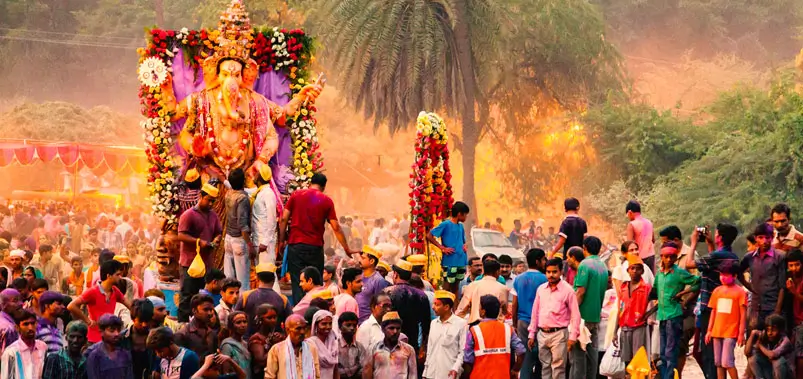
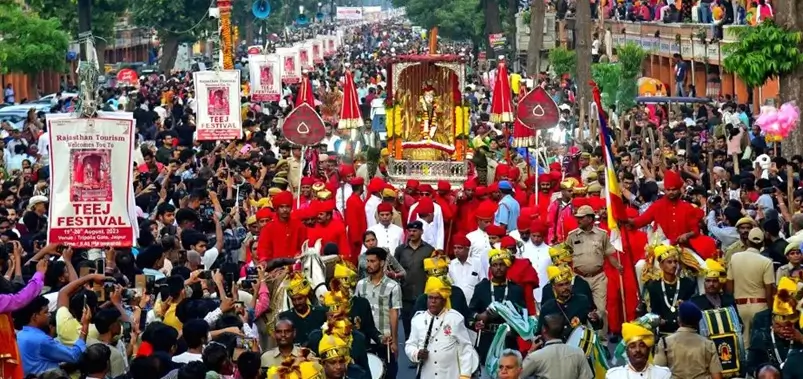
At the heart of the celebration is the beautifully decorated idol of Goddess Teej, a revered form of Goddess Parvati. Traditionally kept within the royal collection for most of the year, the idol is ceremonially brought out only during the festival. This moment carries deep religious significance because it symbolizes the divine blessings of Goddess Parvati being shared with the people. The idol is placed inside an elaborately decorated palanquin and escorted through the historic streets with extraordinary respect and ceremony.
The procession itself is unlike an ordinary parade. Leading the route are ceremonial guards dressed in traditional attire, followed by decorated horses, beautifully ornamented camels, royal bands, folk musicians, dancers, and artists representing different regions of Rajasthan. Traditional instruments such as the dhol, nagada, and shehnai create an atmosphere that immediately transports visitors back to the royal era of Jaipur.
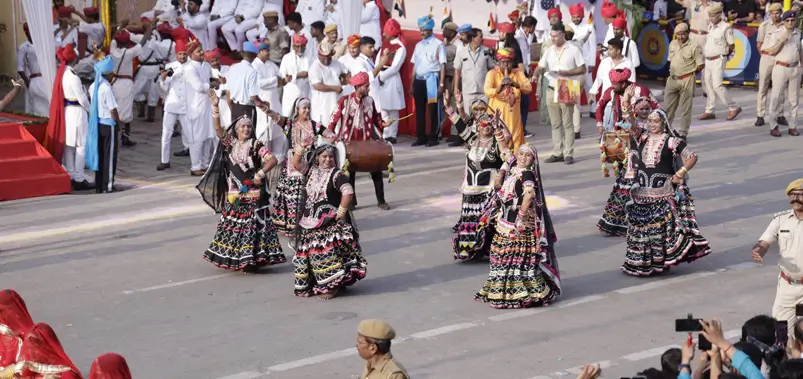
One of the most striking features of the procession is the participation of Rajasthan's traditional folk performers. Kalbelia dancers, Bhavai artists balancing multiple pots, Ghoomar dancers dressed in vibrant costumes, puppet performers, and musicians perform throughout the route, demonstrating artistic traditions that have survived for centuries. These performances are not arranged merely for tourists; they remain an authentic expression of Rajasthan's living cultural heritage.
The architectural setting makes the celebration even more remarkable. As the procession moves through the walled city, it passes beneath the famous pink facades that earned Jaipur its nickname, "The Pink City." Historic gateways, carved balconies, bustling bazaars, and centuries old buildings create a magnificent backdrop that few cultural festivals anywhere in the world can match.
The Rajasthan Government, tourism authorities, local administration, and cultural organizations work together every year to preserve the authenticity of the festival while ensuring the safety of thousands of visitors. Security arrangements, medical assistance, traffic management, public announcements, and tourist information services are carefully organized to allow both residents and international guests to enjoy the celebration comfortably.
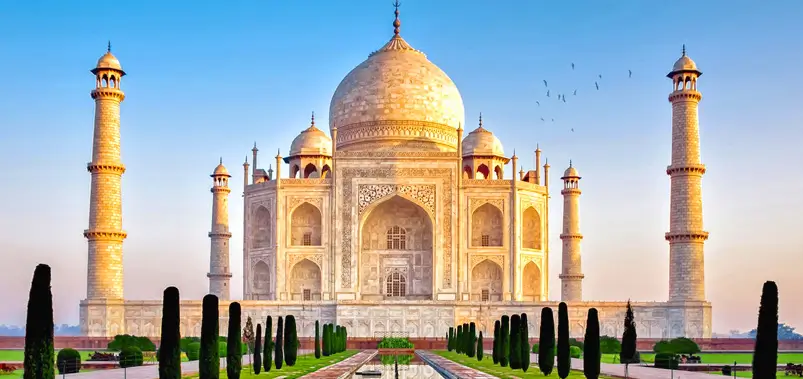
Because of this unique combination of royal history, religious devotion, traditional performing arts, and magnificent architecture, the Teej Festival in Jaipur has become one of the most photographed cultural events in India. For many visitors, witnessing this royal procession becomes just as memorable as visiting the Taj Mahal or Amber Fort, making it a compelling reason to include Jaipur during the festival season in a Golden Triangle Tour.
.webp)
For anyone planning a holiday around the Teej Festival in Jaipur, understanding the official festival schedule is one of the most important aspects of trip planning. Since Teej follows the Hindu lunar calendar rather than the Gregorian calendar, the dates change every year. Travelers should therefore always verify the officially announced festival calendar before confirming international flights and hotel reservations.
For travel planning, the principal Hariyali Teej celebrations will fall during the 2026–27 festival period, traditionally in late July or early August, depending on the lunar calendar. Once the Rajasthan Government announces the official schedule, hotels throughout Jaipur begin receiving a sharp increase in reservations, particularly from travelers interested in photography, cultural tourism, and luxury heritage experiences.
The most anticipated event is the Royal Teej Procession, which generally begins during the late afternoon when temperatures become more comfortable. In most years, visitors can expect ceremonial activities to commence between 4:00 PM and 5:00 PM, although the exact timing may vary according to official arrangements. The celebrations continue well into the evening, often concluding between 8:00 PM and 9:00 PM after the procession completes its traditional route.
The historic route usually includes several of Jaipur's best known landmarks within the old city. Although minor adjustments may occasionally be made for security or traffic management, the procession traditionally passes through:
Visitors should understand that these streets become extremely busy several hours before the procession begins. Reaching the preferred viewing location at least two to three hours early provides the best opportunity to find comfortable standing space, especially for photographers carrying equipment or families traveling with children.
Traffic restrictions are implemented throughout much of the old city on the day of the procession. Private vehicles are generally not permitted close to the main route once security arrangements become active. Travelers staying within or near the walled city often find walking to be the quickest and most convenient option.
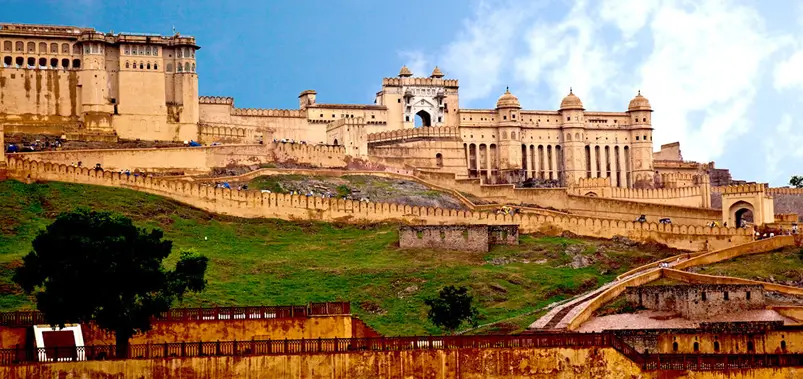
Many experienced visitors choose to spend at least three days in Jaipur during the festival. The first day is devoted to sightseeing at Amber Fort, Panna Meena ka Kund, Jal Mahal, and Nahargarh Fort. The second day focuses on the Teej celebrations and royal procession, while the final day allows time for shopping, photography, museums, and exploring heritage cafés without rushing.
Luxury travelers frequently extend their stay even further because premium heritage hotels organize special cultural evenings, traditional dining experiences, and curated festival themed activities that complement the public celebrations. These additional experiences provide deeper insight into Rajasthan's traditions while offering a more relaxed environment away from the busiest sections of the city.
Careful scheduling therefore makes a significant difference. Rather than attempting to fit the festival into a tightly packed itinerary, allowing extra time ensures that visitors can appreciate both Jaipur's magnificent monuments and one of India's most remarkable cultural celebrations without feeling hurried.
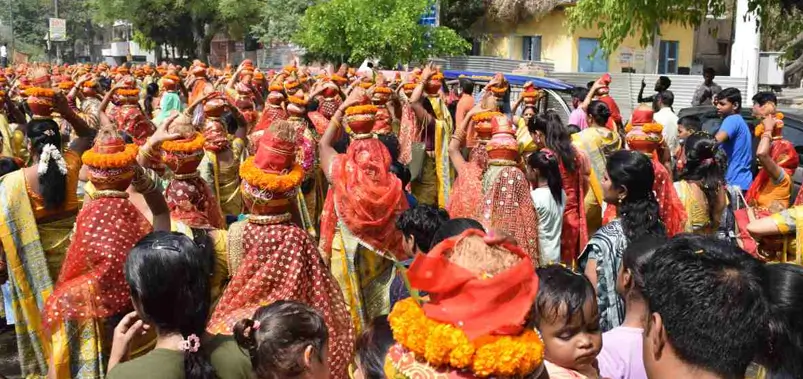
The vibrant procession seen on Jaipur's streets represents only one part of the Teej Festival. Behind the colorful celebrations lies a series of religious customs and family traditions that have been observed for generations. Every ritual carries symbolic meaning, reflecting themes of devotion, gratitude, prosperity, harmony, and the arrival of the life giving monsoon.
One of the most significant traditions is the observance of a sacred fast by many married women. This fast is performed as an expression of devotion while praying for the health, happiness, and long life of their husbands. According to tradition, the practice honors the unwavering dedication shown by Goddess Parvati during her years of penance before her union with Lord Shiva. In many families, women begin preparations the previous evening by participating in prayers and consuming specially prepared meals before the fast begins.
Temple worship forms another essential part of the festival. Throughout Jaipur, temples dedicated to Lord Shiva and Goddess Parvati welcome large numbers of devotees from early morning onwards. Offerings of flowers, fruits, sweets, incense, and sacred water are presented while priests perform traditional rituals accompanied by devotional chants. The atmosphere inside these temples remains peaceful and deeply spiritual, providing a striking contrast to the lively celebrations taking place outside.
Applying intricate mehndi designs to the hands and feet is another cherished custom. Beyond its decorative beauty, mehndi symbolizes joy, prosperity, and good fortune. Families often gather together before the festival so that professional artists or relatives can create elaborate floral and traditional patterns. Bright green clothing, colorful bangles, and traditional jewelry are then worn to complete the festive appearance, with green representing fertility, renewal, and the arrival of the monsoon.
Decorated swings, known locally as jhulas, are another iconic feature of Teej celebrations. Installed beneath large trees, inside gardens, temple courtyards, and heritage properties, these swings are beautifully adorned with flowers and colorful fabrics. Women and young girls gather to sing traditional folk songs while enjoying the swings, celebrating both the beauty of nature and the happiness associated with the rainy season. These gatherings strengthen community bonds and preserve oral traditions that have been passed from one generation to another.
Music and dance remain inseparable from the festival. Traditional Rajasthani folk songs celebrate the reunion of Lord Shiva and Goddess Parvati, the joy of the monsoon, and the beauty of family life. Performances of Ghoomar and other regional dances create an atmosphere of celebration that extends from private homes to public squares throughout Jaipur.
The preparation and sharing of festive food also play an important role. Families prepare traditional sweets and regional delicacies, exchanging them with relatives, neighbors, and friends as a gesture of goodwill. Hospitality is considered an important part of the celebration, and guests are warmly welcomed into homes throughout the festival period.
For visitors, understanding these rituals transforms the experience completely. The royal procession becomes far more meaningful when viewed as the public expression of deeply rooted religious traditions rather than simply a colorful cultural event. Every prayer, song, decoration, procession, and celebration reflects centuries of faith, family values, and cultural continuity, making the Teej Festival in Jaipur one of Rajasthan's most spiritually significant and visually spectacular annual celebrations.
.webp)
Watching the Teej Festival in Jaipur is not limited to standing beside the procession route for a few hours. The celebration spreads across the Pink City, influencing its markets, temples, heritage buildings, cultural venues, hotels, and public spaces. From the moment visitors enter the old city during the festival period, it becomes clear that Jaipur is celebrating something far more significant than an annual event. Every street reflects a sense of anticipation, and every neighborhood contributes to the city's festive atmosphere.
The highlight of the celebration is undoubtedly the Royal Teej Procession. The beautifully decorated idol of Goddess Teej is carried in a traditional palanquin through Jaipur's historic streets, accompanied by ceremonial guards wearing royal uniforms, decorated horses, camels adorned with colorful textiles, folk musicians, traditional dancers, and beautifully decorated chariots. The procession moves at a slow pace, allowing residents and visitors to offer prayers while photographers capture extraordinary images against the backdrop of Jaipur's iconic pink buildings.
Traditional Rajasthani folk performances continue throughout the day. Groups representing different regions of Rajasthan perform Ghoomar, Kalbelia, Bhavai, and other classical folk dances that have been preserved for generations. Musicians perform using traditional instruments including the dhol, nagada, shehnai, algoza, and ravanhatta, creating an authentic cultural atmosphere that echoes through the old city's narrow streets.
For photographers, the festival presents opportunities rarely available elsewhere in India. Women dressed in vibrant green, red, and yellow attire, beautifully decorated elephants and camels, colorful turbans, traditional jewelry, flower covered palanquins, heritage architecture, and dramatic monsoon skies combine to create exceptional compositions. Morning photography at Hawa Mahal, afternoon street photography during the procession, and evening images of illuminated heritage buildings allow visitors to capture Jaipur from multiple perspectives.
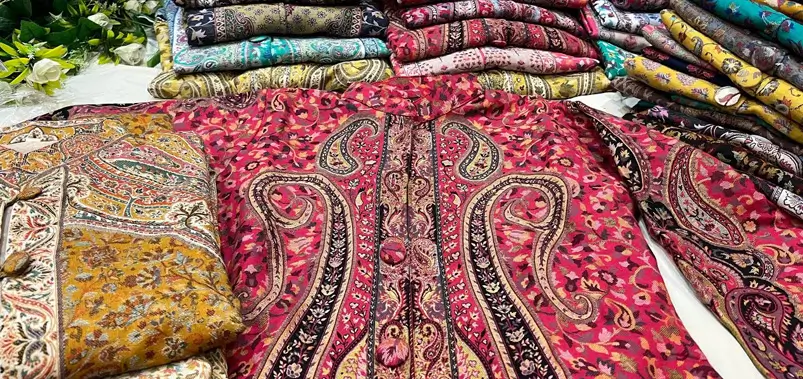
The city's markets become equally fascinating during the festival. Johari Bazaar, Tripolia Bazaar, Bapu Bazaar, and Gangauri Bazaar remain decorated throughout the celebrations, displaying handcrafted jewelry, block printed textiles, lac bangles, embroidered fabrics, traditional footwear, marble handicrafts, blue pottery, and handcrafted souvenirs. Many local artisans demonstrate centuries old techniques that visitors can observe while exploring the markets.
Food is another unforgettable part of the festival experience. Jaipur's restaurants, sweet shops, and heritage hotels prepare traditional festive dishes that are closely associated with Rajasthan's culinary heritage. Visitors can enjoy Dal Baati Churma, Laal Maas, Gatte Ki Sabzi, Ker Sangri, Pyaaz Kachori, Mawa Kachori, Ghewar, Feeni, and a variety of regional sweets prepared especially during the festival season.
Several cultural organizations and heritage hotels also organize evening folk music performances, puppet shows, storytelling sessions, and traditional dance programs. These events provide visitors with an opportunity to experience Rajasthan's artistic traditions in a relaxed environment after the main procession has concluded.
The festival therefore becomes much more than a single event lasting a few hours. It transforms Jaipur into an open-air cultural celebration where history, religion, architecture, food, music, shopping, and community life come together to create one of India's most immersive travel experiences.
For international travelers visiting India for the first time, combining the Teej Festival in Jaipur with a Golden Triangle Tour creates an itinerary that offers both world famous monuments and authentic cultural experiences. Instead of visiting Delhi, Agra, and Jaipur during an ordinary travel period, scheduling the journey around Teej allows visitors to witness Rajasthan at one of its most vibrant moments.
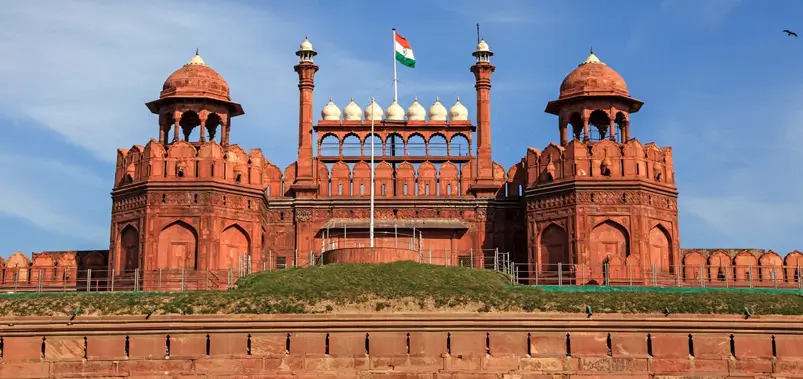
A 5-Day Golden Triangle Tour is suitable for travelers with limited vacation time. Two days are generally spent exploring Delhi's historical attractions such as Red Fort, Qutub Minar, Humayun's Tomb, and India Gate, followed by an overnight stay in Agra to experience sunrise at the Taj Mahal. The remaining days are dedicated to Jaipur, allowing enough time to visit Amber Fort, City Palace, Jantar Mantar, and attend the Teej procession.
A 6-Day Golden Triangle Tour provides greater flexibility and is one of the most popular options for international visitors. Additional time allows travelers to enjoy Jaipur's cultural programs, heritage cafés, artisan workshops, shopping districts, and evening performances without rushing between attractions. This itinerary also provides flexibility in case festival timings change because of official arrangements.
Travelers seeking a more relaxed holiday often choose a 7-Day Luxury Golden Triangle Tour. This itinerary includes premium heritage accommodation, chauffeur driven transportation, private guides, curated dining experiences, and additional cultural activities alongside the festival celebrations. Spending extra nights in Jaipur allows visitors to experience both the city's monuments and its cultural life at a leisurely pace.
Luxury private tours remain the preferred choice during the festival because they offer flexibility when temporary road closures and traffic diversions are introduced. Experienced chauffeurs coordinate arrival times according to official announcements, while local guides recommend the most suitable viewing points and alternative walking routes if certain streets become crowded.
Typical private tour pricing during the festival period varies according to hotel category, travel season, and itinerary length.
|
Tour Category |
Approximate Cost Per Person |
|---|---|
|
Comfort Private Tour |
USD 1,100 – USD 1,600 |
|
Premium 5 Star Tour |
USD 1,800 – USD 2,800 |
|
Luxury Heritage Tour |
USD 3,000 – USD 4,800 |
|
Palace Hotel Experience |
USD 5,000+ |
These indicative prices generally include private transportation, accommodation, professional chauffeur services, sightseeing, and daily breakfast. Customized experiences such as heritage dinners, photography tours, luxury suites, wellness programs, or additional destinations may increase the overall package cost.
Combining the festival with a Private Golden Triangle Tour therefore offers far greater value than arranging a separate Jaipur visit later. Travelers experience India's architectural icons while also participating in one of Rajasthan's most celebrated cultural traditions during the same journey.
Successful festival travel depends on preparation. Although Jaipur is well organized during Teej, visitor numbers increase substantially, making advance planning essential for a comfortable experience.
Hotel reservations should ideally be confirmed several months before arrival, particularly for travelers wishing to stay at luxury heritage properties close to the old city. Premium hotels such as Rambagh Palace, The Oberoi Rajvilas, Fairmont Jaipur, Taj Jai Mahal Palace, and Rajmahal Palace RAAS Jaipur experience particularly strong demand during the festival period.
Because temporary road closures affect sections of the old city, walking often becomes the fastest way to reach the procession route. Comfortable footwear is therefore essential, especially for visitors expecting to spend several hours exploring markets and cultural performances before the procession begins.
Monsoon weather remains generally pleasant but unpredictable. Carrying a lightweight umbrella, waterproof bag for electronic equipment, sunscreen, bottled water, and breathable clothing ensures greater comfort throughout the day. Photography equipment should always be protected against occasional rain showers.
Visitors should also respect the religious significance of the celebration. The procession represents an important spiritual occasion for thousands of local residents. Dressing modestly, remaining patient in crowded areas, avoiding disruption during temple ceremonies, and requesting permission before photographing individuals demonstrate respect for local customs.
Photography enthusiasts should arrive early, carry spare batteries, additional memory cards, and a versatile zoom lens capable of capturing both close-up portraits and wide street scenes. Morning visits to Amber Fort followed by afternoon festival photography often produce the most rewarding collection of images.
Families traveling with children or senior relatives may benefit from selecting premium rooftop restaurants or heritage cafés overlooking sections of the procession route. These venues provide comfortable seating, refreshments, and elevated views while avoiding the densest crowds on street level.
Careful planning transforms the Teej Festival in Jaipur from a simple sightseeing opportunity into a memorable cultural experience that combines history, spirituality, architecture, hospitality, and Rajasthan's living traditions in one unforgettable celebration.
Post Date : 📅 15 Jul 2026
We promise you a holiday where everything is taken care of from the moment you land. Trusted drivers waiting for you, handpicked hotels that fit your style, personalized itineraries designed just for your family, and a dedicated team on call 24/7. All you need to do is relax, explore, and create unforgettable memories, while we take care of every detail behind the scenes.
Absolutely. The combination of royal traditions, colorful attire, heritage architecture, decorated processions, and monsoon light makes it one of India's finest cultural photography events.
Three days generally provide enough time to experience the festival, visit major monuments, explore the markets, and enjoy cultural performances.
Ghewar is considered one of Rajasthan's signature festival sweets and is widely enjoyed during the Teej celebrations.
Yes. Private tours provide greater flexibility when navigating traffic restrictions, adjusting sightseeing schedules, and accessing recommended viewing areas.
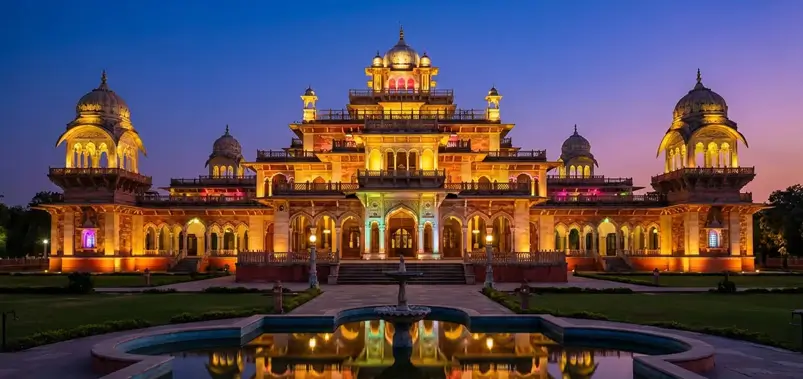
Amber Fort, City Palace, Hawa Mahal, Jantar Mantar, Jal Mahal, Nahargarh Fort, Albert Hall Museum, and Jaipur's historic bazaars complement the festival perfectly.
Arriving two to three hours before the scheduled start provides the best opportunity to secure a comfortable viewing location.
Yes. The festival welcomes visitors from around the world and is considered one of Rajasthan's most accessible cultural celebrations.
The festival celebrates the divine reunion of Lord Shiva and Goddess Parvati while symbolizing devotion, marital harmony, prosperity, and the arrival of the life-giving monsoon.
Jaipur is known for its centuries-old royal procession featuring the idol of Goddess Teej, ceremonial guards, decorated camels and horses, folk artists, and the magnificent setting of the Pink City's historic streets.
The principal celebrations follow the Hindu lunar calendar and will take place during the 2026–27 festival period. Visitors should confirm the officially announced dates before finalizing travel arrangements.