Jim Corbett National Park is India’s oldest national park and one of the country’s most respected wildlife reserves. Located in the foothills of the Himalayas in Uttarakhand, the park offers a different safari experience compared to Rajasthan’s dry forests. Here, rivers, dense sal forests, grasslands, and hilly terrain create a diverse ecological landscape.
Established in 1936 and named after the British-Indian conservationist Jim Corbett, the park became a cornerstone of India’s tiger conservation efforts. Today, it forms part of the larger Corbett Tiger Reserve and plays a critical role in protecting the Bengal tiger.
For international travellers, Jim Corbett offers a wildlife experience that feels greener and more varied than desert reserves like Ranthambore. The presence of the Ramganga River and forested valleys creates a scenic environment where nature dominates the horizon.
Jim Corbett is particularly suitable for travellers combining wildlife with Himalayan foothill landscapes. It is often added to itineraries after Delhi, making it accessible within North India travel routes.

Tiger Safari, Dhikala Zone, Corbett Museum, Ramganga River, Bird Watching

November – June
Peak wildlife visibility during March to May.

2–3 Days
Multiple safaris improve wildlife viewing opportunities.

English, Hindi
English-speaking naturalist guides accompany safaris.
Jim Corbett is divided into multiple safari zones, each offering distinct landscapes. The most famous is the Dhikala Zone, known for its expansive grasslands and strong tiger population. Dhikala provides some of the most scenic safari routes in India, with open meadows framed by forest and river views.
Other zones such as Bijrani, Jhirna, and Dhela also offer rewarding experiences. Because zones operate independently, advance booking is recommended to secure preferred safari areas.
Safaris are conducted in open jeep vehicles with trained drivers and naturalist guides. Morning and afternoon drives allow visitors to experience different wildlife behaviors.
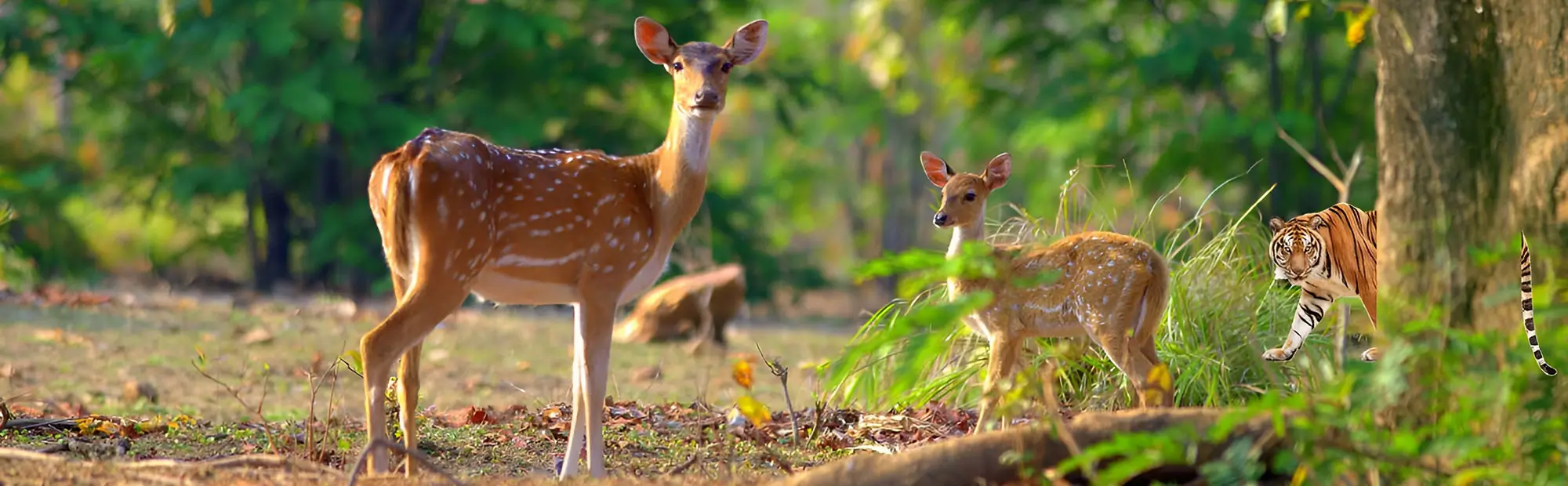
Jim Corbett is not only about tigers. The reserve hosts leopards, Asian elephants, sloth bears, wild boars, and several species of deer including chital and sambar. The Ramganga River supports crocodiles and freshwater fish species.
Bird enthusiasts find Corbett particularly rewarding. With over 600 recorded bird species, it is one of the richest bird habitats in India. Winter months attract migratory birds, adding variety to safari sightings.
The terrain varies significantly from dense forest to open grasslands and riverbanks. This ecological diversity increases the range of species visible during safaris.
One of Jim Corbett’s defining features is its setting near the Himalayan foothills. Unlike the dry plains of Rajasthan, the park feels cooler and greener. Morning mist over grasslands and riverbanks creates atmospheric safari conditions.
The surrounding region offers forested hills, rural villages, and agricultural landscapes. This combination makes Corbett feel less desert-driven and more alpine in character.
Jim Corbett played a vital role in India’s early conservation movement. It was the first park to fall under Project Tiger, India’s national tiger conservation program launched in 1973.
Visitors often appreciate learning about conservation efforts and anti-poaching initiatives. Responsible tourism remains a central theme, with strict entry limits and designated safari routes.
Accommodation around Jim Corbett ranges from mid-range jungle lodges to premium wildlife resorts. Many properties are located along the river or near park gates, offering scenic views and nature-oriented settings.
Luxury lodges provide curated experiences including guided nature walks, birdwatching tours, and local cultural interactions. Even standard hotels maintain comfort levels suitable for international travellers.
Unlike more remote parks, Corbett benefits from relatively good road access and infrastructure, making it easier to reach.
The park is generally open from mid-November to June. During winter (November to February), mornings can be cold and misty. Light jackets are recommended.
Summer (March to May) offers higher wildlife visibility but warmer daytime temperatures. The park closes during the monsoon season due to heavy rainfall.
Planning multiple safaris increases the chance of tiger sightings, as wildlife movement varies daily.
Jim Corbett

Nearest airport: Delhi

Road connections from Delhi

Nearest railway station: Ramnagar

We promise you a holiday where everything is taken care of from the moment you land. Trusted drivers waiting for you, handpicked hotels that fit your style, personalized itineraries designed just for your family, and a dedicated team on call 24/7. All you need to do is relax, explore, and create unforgettable memories, while we take care of every detail behind the scenes.
Yes, it is one of India’s leading tiger reserves.
Two to three safaris improve viewing chances.
Dhikala is considered the most scenic and wildlife-rich.
Yes, safaris operate under strict park regulations.
March to May for higher wildlife visibility.
Yes, though age guidelines may apply.
Yes, it hosts over 600 bird species.
Approximately 5–6 hours by road.
Yes, typically from July to mid-November.
Yes, several premium wildlife resorts operate nearby.
Yes, safari permits should be booked in advance.
Yes, it is often added after Delhi.