Jaipur does not offer luxury experiences. It is a luxury experience - a living, breathing, 300-year-old royal city where the past is not preserved behind museum glass but woven into every street, every palace facade, every workshop and bazaar lane you walk through.
The Pink City - capital of Rajasthan, the third point of India's Golden Triangle - is the most visually spectacular city on the circuit, and the one that most consistently exceeds expectations. Travelers who arrive thinking they understand what Jaipur will be - having seen photographs of Amber Fort and the Hawa Mahal - discover almost immediately that no photograph prepared them for the reality: the scale of the forts, the color of the old city, the smell of sandalwood and rose water in the narrow lanes, the sound of temple bells and camel bells and the particular percussion of a city that has been continuously inhabited for three centuries and shows no signs of slowing down.
But within this extraordinary city, there are experiences that go further - experiences of such rarity, such specificity to Jaipur and Rajasthan, that they are genuinely unavailable anywhere else on earth. At Golden Triangle Tours, we design these experiences for our luxury guests every day.
These are the ten finest.
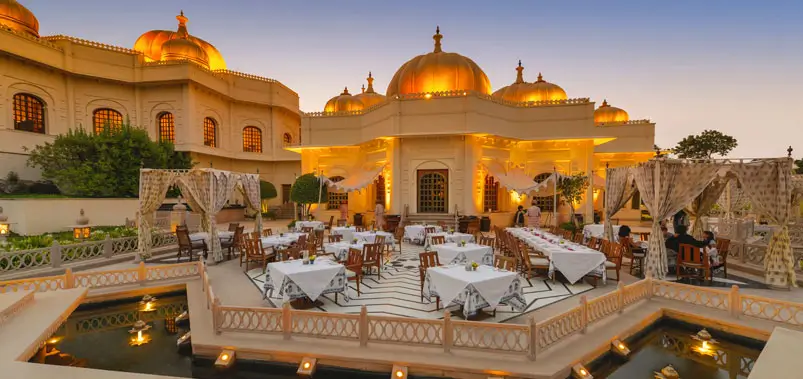
There are luxury restaurants that are beautiful. There are restaurants with outstanding food. There are restaurants with extraordinary service. And then there is Suvarna Mahal - the restaurant at Rambagh Palace - which occupies a category entirely its own.
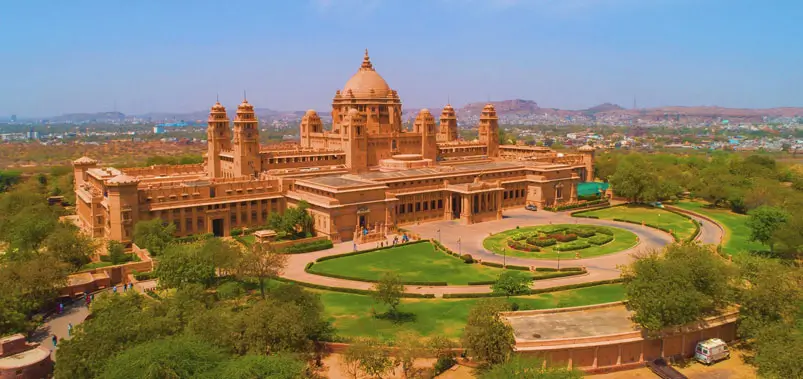
Suvarna Mahal is the former royal ballroom of the Maharaja of Jaipur - a room where the royal court danced, where visiting dignitaries were received, where the Maharani of Jaipur hosted the most glamorous gatherings in twentieth-century Rajasthan. The room itself is an extraordinary achievement of Rajput decorative art: soaring painted ceilings, crystal chandeliers that were imported from France in the early twentieth century, carved marble pillars, and walls lined with royal portraits that watch over every dining guest with the particular authority of ancestors.
The cuisine - contemporary interpretations of royal Rajasthani recipes that were once prepared exclusively for the Maharaja's table - is among the finest in the city. The Laal Maas (fiery Rajasthani mutton curry, a dish historically served only at royal hunts), the Dal Baati Churma (the signature dish of Rajasthan, transformed into an elegant presentation), and the royal dessert selection - including Ghevar (a honeycomb disc of wheat, soaked in sugar syrup and topped with cream) - represent Rajasthani cuisine at its most refined and historically authentic.
At Golden Triangle Tours, we reserve specific tables in Suvarna Mahal for our guests - the tables that face the room's finest painted ceiling panels, the ones that capture the full theatrical scale of the space. This is not simply dinner. It is an audience with Rajasthan's royal past.
Why only in Jaipur: No other city on earth has a restaurant in a nineteenth-century Maharaja's actual ballroom, serving the actual royal cuisine of that Maharaja's household, within 47 acres of the gardens that Maharaja still inhabits.
Jaipur is one of the world's four great gemstone trading centers - alongside Antwerp, Mumbai, and Bangkok - and the city's Johari Bazaar (Jewelers' Market) has been the heart of India's precious stone trade for over three centuries.
What most tourists experience is the surface of this world - the retail shops along the main bazaar lane, the gemstone necklaces displayed in glass cases, the persistent salesmanship of tourist-facing establishments. What Golden Triangle Tours provides is access to the authentic interior of this world: the cutting workshops, the certified gem dealers, the artisans who design and create jewelry using techniques passed down through families across generations.
A private gemstone commission in Jaipur - arranged through our trusted dealer relationships - works as follows:
Your expert guide takes you to a certified, established gemstone house - not a tourist shop - where you are received privately, shown the current inventory of rough and cut stones (emeralds from Colombia, rubies from Myanmar and Tanzania, sapphires from Sri Lanka and Kashmir, unheated spinels from Tajikistan), and given a private explanation of quality grading by a family member who has spent their lifetime in this trade.
You then work with an in-house designer to commission a piece - a ring, a pendant, a pair of earrings - that will be created to your specification and completed during your stay or shipped to your home address. The price, for equivalent quality, is substantially below what you would pay at a New York or London jeweler. The provenance is certified and the quality is genuine.
At Golden Triangle Tours, we earn absolutely no commission on gemstone purchases - our recommendation is entirely based on the trust and quality we have verified over two decades. We accompany every interested guest to this experience personally.
Why only in Jaipur: The combination of source-pricing, generational expertise, and the ability to commission handmade work in precious stones is available nowhere else in the world at this quality-to-price ratio.
Amber Fort - the magnificent Kachhwaha Rajput fortress rising on a rocky ridgeline above Maota Lake - receives thousands of visitors daily during peak season. By 9:00 AM, the great forecourt of Diwan-i-Aam (Hall of Public Audience) is filled with tour groups. By 10:00 AM, the famous Sheesh Mahal (Hall of Mirrors) has a queue.
But Amber Fort opens at 8:00 AM - and the first forty-five minutes are extraordinary.
At Golden Triangle Tours, we schedule Amber Fort visits for 8:00 AM sharp - our private car positioned at the gate, our expert guide's entry organized in advance. In those first forty-five minutes, you walk through some of the most architecturally extraordinary spaces in Rajasthan - the Ganesh Pol (Elephant Gate), the Sheesh Mahal, the Jai Mandir (Temple of Victory), the private Zenana (women's quarters) - with the morning light at its most beautiful and the crowds not yet arrived.
The Sheesh Mahal at 8:15 AM - before any other tour group has arrived - is one of the most astonishing interior experiences in India. The chamber is inlaid with thousands of convex mirror fragments, positioned to reflect and refract a single candle flame into the illusion of a night sky filled with stars. Your guide lights a match. The room fills with light. It is, simply, one of the most beautiful things a human being can experience inside a building.
Why only in Jaipur: Amber Fort's specific combination of Rajput military architecture, Mughal decorative influence, and this particular interior - the Sheesh Mahal - is unique to this building, this city, this royal tradition.
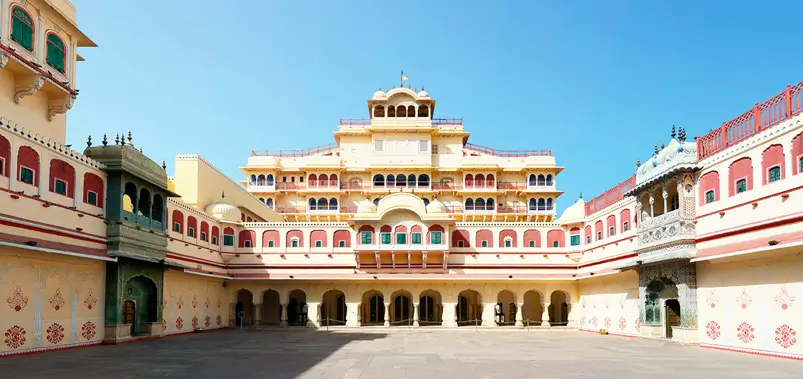
The Kachhwaha Rajput royal family of Jaipur - descendants of the dynasty that built Amber Fort, City Palace, and Jaipur itself - continue to live in a portion of the City Palace and maintain an active cultural and social presence in the city. Through our long-established relationships, Golden Triangle Tours occasionally arranges private meetings with members of the royal family for guests who have a specific interest in the history, culture, or current activities of the Jaipur royal household.
This is not a staged "meet the royal" tourist experience. It is a genuine private conversation - typically arranged over high tea at City Palace or within a private salon of the palace complex - in which you have the opportunity to ask questions and hear perspectives on Rajasthan's history, culture, and present that are available from no other source.
These arrangements are subject to the family's schedule and availability and require advance notice of several weeks. They are arranged for guests who have a genuine interest and respectful curiosity - not as a standard itinerary item but as a rare and deeply enriching experience for the right traveler.
Why only in Jaipur: The Kachhwaha dynasty has ruled Jaipur continuously since 1128 - nearly 900 years. Their perspective on their city, their state, and India's royal history is entirely unique and irreplaceable.
Jaipur's block-printed textiles are among the most recognized luxury goods in India - exported to fashion houses in Paris, London, and New York, used in the finest hotel interiors across the world, collected by textile enthusiasts from every continent.
What most travelers experience is purchasing the finished product from a shop. What Golden Triangle Tours arranges is something entirely different: a private workshop session with a master block-printing artisan in the lanes of the old city, where you watch - and participate in - the creation of a textile from start to finish.
The process is extraordinary: hand-carved wooden blocks (some designs unchanged for 200 years), natural dyes prepared from plant, mineral, and insect sources, handwoven cotton or silk stretched on a padded table. The artisan works with a rhythmic precision that is both meditative and deeply skilled - each stamp perfectly aligned, each color layer precisely registered, the overall design emerging from what appears to be controlled improvisation.
You create a piece under the artisan's guidance - a scarf, a table runner, a length of fabric - that is genuinely yours: unique, handmade, and carrying the direct physical impression of your presence in Jaipur.
Why only in Jaipur: Sanganer and Bagru - villages within Jaipur's extended metropolitan area - are the heartland of India's hand block-printing tradition, a craft that has existed here for over 300 years. The master artisans working in this tradition are found nowhere else in this concentration and quality.
Nahargarh Fort - the "Tiger Fort" on the Aravalli ridgeline above Jaipur - is the least visited of Jaipur's three great fortifications and arguably the most spectacular in terms of views.
From Nahargarh's upper ramparts, the entire Pink City is laid out below you: the geometric grid of the old city streets (planned by the mathematician-king Sawai Jai Singh II in 1727 as one of the world's first planned cities), the rose-washed roofscape, the dome and minarets of the Jama Masjid, the distant silhouette of Amber Fort on the ridge to the northeast, and - on clear days - the flat Rajasthan plains extending to the horizon.
At Golden Triangle Tours, we time Nahargarh visits for the golden hour before sunset - when the entire city below turns a warm amber, the light is long and low, and the photographic conditions are at their annual finest. This is among the finest city panorama views available anywhere in Asia.
The fort itself - largely unconverted from its original military structure, with fewer tourist amenities than Amber or the City Palace - has a raw, authentic character that the more polished major attractions lack. Walking its ramparts in the quiet of late afternoon, with Jaipur spread below and a warm desert breeze coming off the Aravallis, is one of the most quietly extraordinary experiences available on the Golden Triangle.
Why only in Jaipur: This specific view - the world's first planned city, built in 1727, seen from above in golden hour light from the fort that was built simultaneously to protect it - exists nowhere else on earth.
The Jiva Spa at Rambagh Palace is not merely a hotel spa. It is an immersive experience in India's oldest wellness tradition, conducted in a facility of extraordinary beauty within the grounds of a genuine Maharaja's palace.
Jiva Spa's treatment philosophy is rooted in Ayurveda - the ancient Indian medical and wellness system that has been practiced for over 5,000 years and which, in its full classical form, is a deeply sophisticated understanding of the relationship between body, mind, and environment. The spa's therapists are trained in authentic Ayurvedic technique - not the diluted, westernized version offered in European or American spas - using formulations of sesame oil, herbal pastes, and medicinal plant extracts prepared according to classical texts.
The signature Maharaja treatment - a full-body Abhyanga massage using warm medicated oils, followed by a Shirodhara (continuous stream of warm oil poured on the forehead - one of Ayurveda's most deeply relaxing and mentally quieting treatments) and a herbal steam bath - lasts approximately three hours and produces a state of physical and mental relaxation that most guests describe as unlike anything they have experienced in any other spa context.
The Jiva Spa's physical setting - carved sandstone treatment rooms with high ceilings, natural light filtered through latticed windows, the scent of sandalwood and medicinal herbs - creates an atmosphere entirely consistent with the palace it inhabits.
At Golden Triangle Tours, we pre-book Jiva Spa treatments for guests during the planning process - ensuring your preferred time slot is secured and any specific wellness concerns or preferences are communicated in advance.
Why only in Jaipur: An authentic, classical Ayurvedic treatment in a nineteenth-century Maharaja's palace spa, conducted by therapists trained in the tradition of the royal household - this specific combination exists nowhere else in the world.
Polo was not merely a sport in Rajasthan. It was a royal institution - practiced by the Maharajas of Jaipur with a dedication and skill that made the Jaipur Polo Team one of the finest in the world throughout the twentieth century. Sawai Man Singh II - the last Maharaja of Jaipur - was considered one of the greatest polo players of his era, competing internationally and hosting matches at Rambagh Polo Ground that attracted royalty and celebrities from across the globe.
The Rambagh Polo Ground - adjacent to Rambagh Palace - remains one of India's finest polo venues, hosting matches throughout the winter season (October to March). At Golden Triangle Tours, we arrange private polo match attendance for guests whose Jaipur dates coincide with scheduled matches - including courtside seating, a pre-match briefing by a former Jaipur polo player or trainer, champagne or cocktails during the match, and a post-match interaction with players.
For guests with a deeper interest, we also arrange private polo lessons at Rambagh - a morning session with a certified polo instructor, learning the basics of stick and ball work on horseback in the same ground where Maharajas once trained. This experience is available regardless of whether an actual match is scheduled.
Why only in Jaipur: The Jaipur polo tradition - with its specific royal lineage, its extraordinary ground, and the living connection to the Maharaja's sporting legacy - is unique to this city and this dynasty.
Rajasthani miniature painting is one of the great artistic traditions of India - a form of extraordinarily detailed, jewel-bright figurative painting developed in the courts of the Rajput kings from the sixteenth century onward. The finest miniature painters of Jaipur produce works of breathtaking technical complexity: figures no larger than a grain of rice with individually delineated facial features, backgrounds of pure lapis lazuli and malachite ground to powder, gold leaf applied with brushes made from a single squirrel hair.
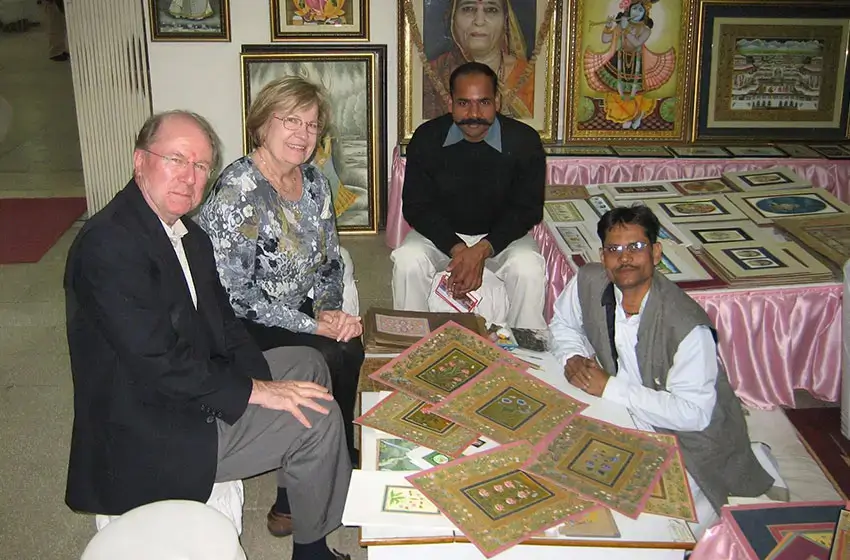
At Golden Triangle Tours, we arrange private studio visits with master miniature painters in Jaipur's old city - artists who have inherited the tradition through family lineage and who continue to work in the original style using natural pigments, hand-ground minerals, and traditional brushes. During your visit, you observe the artist at work (miniature paintings in progress are astonishing to watch - the scale of detail achieved by hand, without optical aids, is almost incomprehensible), discuss the tradition, the iconography, and the artistic choices involved, and commission a work.
A commissioned miniature - painted specifically for you, depicting a subject of your choice (the Taj Mahal, a scene from the Amber Fort, a portrait, a traditional Rajasthani narrative) - takes between one week and several months depending on complexity and is shipped to your home address. It is among the most meaningful and artistically significant souvenirs available anywhere on the Golden Triangle circuit.
Why only in Jaipur: The Jaipur school of miniature painting has its own distinct style - characterized by lyrical line, specific palette, and the influence of both Mughal court painting and traditional Rajput art - that is unique to this city. The living masters of this tradition work here and essentially nowhere else.
The walled old city of Jaipur - the Pink City - is a UNESCO World Heritage Site and one of the most remarkably preserved planned cities in the world. Built in 1727 by Sawai Jai Singh II on a geometric grid plan inspired by ancient Hindu architectural texts, the old city is laid out in nine rectangular blocks (representing the nine divisions of the universe in Vedic cosmology), with each block allocated to a specific trade or community. The city walls, the main bazaar streets, the neighborhood temples, and the extraordinary density of historic havelis and merchant houses have remained substantially intact across nearly 300 years.
At Golden Triangle Tours, we arrange a private heritage walk through the old city at dawn - beginning at 6:00 AM, before the bazaars open, before the tourist activity begins, before the day's noise and energy has assembled.
In the quiet of early morning, the Pink City reveals itself differently. The rose-washed facades are bathed in golden light. The street sweepers work in rhythmic silence. Temple priests perform their morning rituals with the devotion of people who have done exactly this every morning for their entire lives. A vegetable market assembles itself in the lane adjacent to a 200-year-old merchant haveli. A chai wallah (tea vendor) lights his first fire of the morning.
Your guide - a historian with deep personal knowledge of the old city - narrates the urban logic of Jaipur: why each neighborhood is located where it is, which community built which haveli, how the water management system of a 1727 city worked, where the original city walls meet newer construction. The old city becomes readable - a document written in architecture and urban planning that reveals an extraordinary eighteenth-century civilization.
By 8:30 AM, you have walked the finest streets of the Pink City in its most beautiful light, with the knowledge to understand what you are seeing, before the day's crowds have assembled. You return to your palace hotel for breakfast - and the city you walked through is now part of you in a way that no amount of photographs fully captures.
Why only in Jaipur: The world's only surviving eighteenth-century planned city, built on Vedic cosmological principles, with its original community structure substantially intact, seen at dawn before the modern world has fully arrived - this experience exists nowhere else on earth.
Every experience described in this guide requires advance planning - reservations, guide arrangements, artisan appointments, and timing coordination that cannot be assembled on arrival. At Golden Triangle Tours, we incorporate these experiences into your Jaipur itinerary as naturally and seamlessly as the standard monument visits - because they are the standard, for guests who travel with us.
Jaipur deserves three nights minimum on a luxury Golden Triangle Tour - two nights allows the major sights but leaves most of these experiences unclaimed. Three nights allows the Amber Fort sunrise, a full bazaar and artisan day, an evening at Suvarna Mahal, and a dawn heritage walk. Four nights allows everything above and still leaves time for genuine leisure in your palace hotel - which is itself one of the finest experiences Jaipur offers.
Contact Golden Triangle Tours today and describe your Jaipur interests. We will design an itinerary that makes the most of this extraordinary city.
We promise you a holiday where everything is taken care of from the moment you land. Trusted drivers waiting for you, handpicked hotels that fit your style, personalized itineraries designed just for your family, and a dedicated team on call 24/7. All you need to do is relax, explore, and create unforgettable memories, while we take care of every detail behind the scenes.
With careful planning, 5 to 7 of these experiences can be incorporated into a well-designed 3-night stay. The Amber Fort sunrise, Suvarna Mahal dinner, Nahargarh sunset, gemstone consultation, and dawn heritage walk are the five we prioritize for guests with limited time. The block-printing workshop, miniature painting studio, and Jiva Spa treatment add meaningfully to a 4-night stay. The polo experience depends on match scheduling. The royal family meeting requires several weeks of advance notice and schedule alignment.
Yes - Suvarna Mahal accepts reservations from non-resident guests for dinner. However, the best tables and the most seamless experience are available to Rambagh Palace guests, as the hotel naturally prioritizes its own guests for prime seating. For non-resident dinner reservations, Golden Triangle Tours uses our relationship with the property to secure appropriate table placements with sufficient advance booking.
It is possible - but it is not a guaranteed arrangement or a standard tour feature. It requires advance notice of several weeks, genuine interest in the history and culture rather than a "celebrity photo" motivation, and scheduling alignment with the family's availability. Golden Triangle Tours has established relationships that make this arrangement possible in a way that independent travelers cannot access. We discuss this option with guests who express a specific interest during planning.
The cost range is enormous - from $200 to $300 USD for a simple silver setting with a semi-precious stone, to $5,000 to $50,000+ USD for a fine sapphire, emerald, or ruby set in gold with diamond accents. Jaipur's source-pricing advantage is most significant for fine colored stones - emeralds, rubies, and sapphires that would cost 40 to 60 percent more at equivalent quality in New York or London. Golden Triangle Tours recommends guests who are seriously interested in gemstone purchases allocate a minimum of two hours for this experience.
Arrive at 8:00 AM sharp - when the fort opens. The first 45 to 60 minutes offer near-empty conditions across all the major spaces, including the Sheesh Mahal. By 9:30 AM, the first tour groups begin arriving. By 10:30 AM, the fort is busy. Golden Triangle Tours schedules all Amber Fort visits at opening time - this is non-negotiable in our Jaipur itineraries.
Both. The workshop sessions we arrange include demonstration by the master artisan followed by a hands-on session where you try the technique yourself on a piece of fabric. The guide supports the language and technical aspects throughout. Most guests find the hands-on experience the most memorable part - actually producing a piece using centuries-old tools in a workshop that has been operating in the same lane for generations is a fundamentally different experience from watching or purchasing.
Completely. The polo briefing we arrange before the match explains everything you need to understand and enjoy the game - the rules, the positions, the history of Jaipur polo, the specific players on the field. Polo at Rambagh is as much a social and cultural experience as a sporting one - the atmosphere, the setting, and the connection to the Maharaja's sporting legacy are the primary draw. No prior polo knowledge is required or expected.
The finest light falls approximately 45 to 60 minutes before local sunset - when the sun is low enough to cast a warm amber light across the entire city, the shadows are long and dramatic, and the distant ridgelines of the Aravallis are silhouetted against a golden sky. Golden Triangle Tours schedules Nahargarh visits specifically for this window. In May 2026, sunset is approximately 7:15 PM - meaning arrival at the fort by 6:15 PM captures the finest light.
The signature Maharaja treatment (Abhyanga massage + Shirodhara + herbal steam) lasts approximately 3 hours. Shorter individual treatments - a 60-minute Abhyanga massage, a standalone Shirodhara session - are also available. Golden Triangle Tours recommends the full signature treatment for guests who want the complete Ayurvedic experience, and schedules it for the early afternoon window (2:00 to 5:00 PM) when outdoor sightseeing is less comfortable in warmer seasons.
The walk covers approximately 3 to 4 kilometers on flat to gently uneven streets - accessible for most fitness levels. The surfaces are paved but sometimes uneven. The duration is approximately 2 to 2.5 hours, including stops for narration and observation. Comfortable walking shoes that can handle uneven stone are recommended. The 6:00 AM start means the temperature is at its most comfortable of the day - in May 2026, dawn temperatures are approximately 80°F (27°C), which is warm but manageable with light clothing.
Small to medium works (approximately 6×9 inches or smaller) can sometimes be completed within a 3 to 4-day Jaipur stay if the artist is not otherwise engaged. Larger or more complex commissions - detailed palace scenes, multi-figure compositions, full natural pigment works - require 2 to 8 weeks and are shipped to your home address. Golden Triangle Tours handles all shipping arrangements for commissioned works, including appropriate packaging and customs documentation.
Every experience on this list - from the Suvarna Mahal table reservation to the gemstone workshop to the royal family meeting - depends on relationships, timing knowledge, and advance coordination that independent travelers do not have access to. The Amber Fort sunrise requires knowing exactly when to arrive and which guard to speak to. The gemstone commission requires trusting a specific dealer over the many who approach tourists with false quality claims. The miniature painting studio requires knowing which artists are genuine masters and which are producing tourist-grade work. Two decades of operating in Jaipur have given Golden Triangle Tours the relationships and knowledge to deliver each of these experiences authentically. That is what we provide.