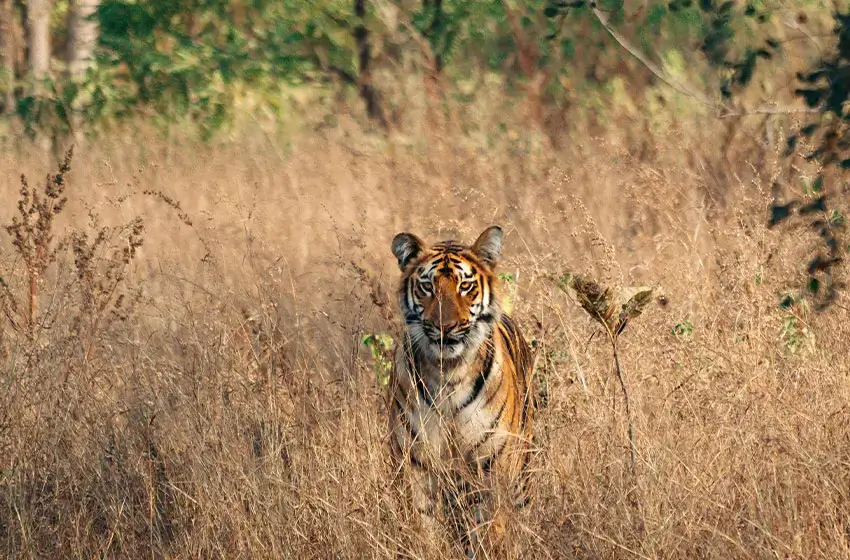
There is a moment - and experienced wildlife travelers will know exactly the one - when a tiger steps out of the jungle onto an open path, stops, and looks directly at you.
Not through you. Not past you. At you. With the complete, unhurried confidence of an animal that has never needed to fear anything in its environment. The eye contact lasts two or three seconds. It feels like much longer. And in those seconds, something shifts in your understanding of what it means to be alive on this planet alongside other creatures of extraordinary power and beauty.
Ranthambore National Park - located in the state of Rajasthan, approximately 130 kilometers southeast of Jaipur - is one of the finest places on earth to have this experience. It is India's most celebrated tiger reserve, famous for the remarkable fact that its tigers are comparatively habituated to vehicles and can be observed in daylight with a frequency that would be considered extraordinary in any other wildlife destination in the world.
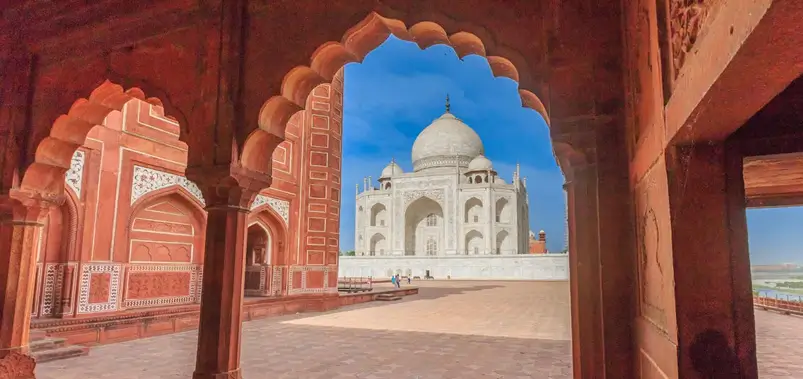
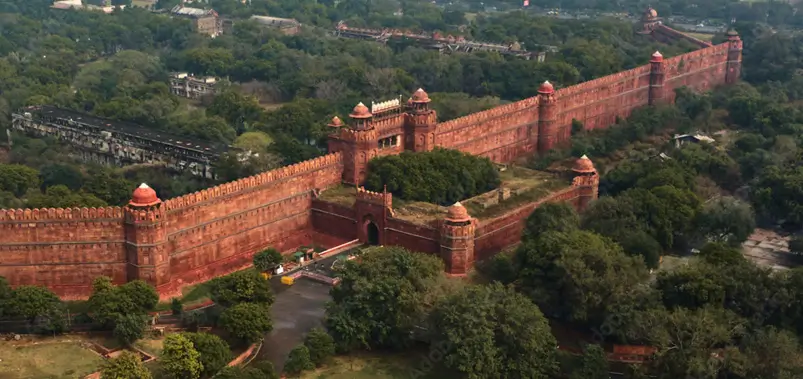
Combined with a luxury Golden Triangle Tour - Delhi, Agra, and Jaipur - a Ranthambore tiger safari creates one of the most complete, most extraordinary private India experiences available to international travelers. Culture and wilderness. Mughal grandeur and Bengal tigers. Palace hotels and luxury jungle lodges. In ten to twelve days, you experience India's most celebrated heritage circuit and its most thrilling wildlife destination in a single, seamlessly organized private journey.
At Golden Triangle Tours, Ranthambore extensions are among our most requested itinerary additions. This is our complete guide.
The Park
Ranthambore National Park covers approximately 1,334 square kilometers of dry deciduous forest, grassland, lakes, and the dramatic rocky outcrops of the Aravalli and Vindhya hill ranges in Rajasthan. At its heart stands the magnificent Ranthambore Fort - a tenth-century Rajput fortress now designated a UNESCO World Heritage Site - rising above the forest on a rocky promontory, its ancient walls inhabited by langur monkeys and overlooked by nesting raptors.
The park was designated a Project Tiger Reserve in 1973 - one of the first nine reserves established under India's landmark conservation program - and today supports a tiger population estimated at 70 to 80 individuals across the core zone and buffer areas. This density, combined with the park's relatively open terrain of lakes and grasslands, makes Ranthambore consistently one of the most reliable tiger-viewing destinations in all of Asia.
The Tigers of Ranthambore
Ranthambore's tigers have a documented history that is known to wildlife researchers and enthusiasts worldwide. Individual tigers - identified by their unique stripe patterns - have been named, tracked, and followed across generations. The most famous, Machali - known as the "Queen of Ranthambore" - was photographed more than any wild tiger in history before her death in 2016 at the remarkable age of 20. Her daughter, granddaughter, and great-grandchildren continue to inhabit the park today.
This generational continuity - combined with the tigers' relative comfort with safari vehicles - means that Ranthambore offers something rare in Indian wildlife tourism: the possibility of watching a tiger behave naturally over an extended period, not simply glimpsing one as it disappears into cover.
Safari Zones and Structure
Ranthambore is divided into 10 safari zones. Zones 1 through 5 constitute the core zone - the primary tiger habitat - and are where Golden Triangle Tours focuses our guests' safari experiences. Zones 6 through 10 cover the buffer area and are used primarily when core zone permits are unavailable.
Zone 3 - centered on the extraordinary Rajbagh Lake and the ghost ruins of the Rajbagh Palace - is widely considered the finest safari zone in the park. The combination of open water, meadow grassland, and ancient ruins creates a photographic setting of extraordinary drama. Tigers are frequently encountered here in the early morning and late afternoon.
Zone 4 - Lahpur and Semli areas - is known for frequent tiger sightings and excellent grassland terrain.
Zone 1 - the Ranthambore Fort area - provides the most dramatic backdrop: tigers photographed against the ancient stone walls of a tenth-century fortress. These images define Ranthambore's global reputation.
Safari Timing and Vehicles
Ranthambore operates two safari sessions daily:
Morning Safari: Departs at sunrise (approximately 6:00 AM to 6:30 AM depending on season) and lasts approximately 3.5 hours. This is the most important safari of the day - tiger activity is highest in the early morning hours, and the light for photography is exceptional.
Afternoon Safari: Departs approximately 2.5 to 3 hours before sunset and lasts until dusk. Tigers become active again as temperatures drop toward evening, and the golden late-afternoon light creates extraordinary photographic conditions.
Safari vehicles come in two formats:
Gypsy (open 6-seater jeep): The preferred option for serious wildlife enthusiasts and photographers. Open sides provide unobstructed 360-degree visibility and the ability to position cameras freely. Closer to ground level, which can enhance the intensity of tiger encounters. Maximum 6 guests per vehicle.
Canter (open 20-seater bus): Less intimate than a Gypsy but provides a slightly elevated view position. Used primarily when Gypsy permits are unavailable. Golden Triangle Tours always secures Gypsy permits for our guests wherever possible - the experience is substantially superior.
Safari Permits - The Critical Booking Detail
Ranthambore safari permits are issued by the Rajasthan Forest Department and are among the most sought-after wildlife tourism permits in India. During peak season (October to March), permits for the core zones - particularly Zones 1 through 5 - can sell out weeks or months in advance.
At Golden Triangle Tours, permit booking is handled entirely by us - this is one of the most practical value-adds of booking your Ranthambore experience through an experienced operator. We track permit release dates, book the moment they become available, and ensure our guests are in the core zones with optimal zone assignments.
Accommodation at Ranthambore has evolved dramatically over the past decade - from functional wildlife lodges to genuinely extraordinary luxury properties that rival the palace hotels of Jaipur in quality of design, service, and culinary experience.
Oberoi Vanyavilas - The Gold Standard
The Oberoi Vanyavilas is, without question, the finest luxury property at Ranthambore - and one of the finest wildlife lodges in Asia. Its 25 luxury tented suites are set within a 20-acre property adjacent to the national park, each tent a private sanctuary of extraordinary elegance: four-poster beds, private verandas, indoor and outdoor sitting areas, and en-suite bathrooms with both indoor and outdoor shower facilities.
The tents are not "camping" in any meaningful sense - they are fully air-conditioned, butler-serviced, luxury accommodations that happen to have canvas roofs. The sound of the jungle at night - insects, nocturnal birds, the distant call of a peacock - creates an atmosphere that a solid-walled hotel room cannot replicate.
Dining at Oberoi Vanyavilas is exceptional - the kitchen produces both Indian and continental cuisine at a standard consistent with the Oberoi brand's finest properties. Dinner under the stars, on the property's private outdoor dining terrace, with the forest edge visible in the moonlight, is one of the most atmospheric dining experiences available in Rajasthan.
The Oberoi Vanyavilas spa offers Ayurvedic treatments and wellness therapies in a beautifully designed facility - ideal for afternoon recovery between morning and evening safaris.
Price range: $700 to $1,400 USD per night, double occupancy (peak season)
Aman-i-Khas - Unmatched Exclusivity
Aman-i-Khas - operated by the globally renowned Aman Resorts group - is the most exclusive accommodation at Ranthambore. Its 10 Mughal-inspired tented pavilions are set on the edge of the national park in a configuration of extraordinary privacy - no two tents overlook each other, and the property's low density ensures that the experience feels genuinely personal and remote.
The design is extraordinary - large canvas pavilions with carved wooden furniture, hand-embroidered textiles, and private outdoor bathtubs under the sky. The service-to-guest ratio at Aman-i-Khas is among the highest of any property in India - with only 10 tents at maximum occupancy, the attention is singular.
Dining at Aman-i-Khas is by candlelight - either in the central dining tent or arranged privately at your tent's outdoor terrace. The cuisine draws from Rajasthani royal recipes and is consistently outstanding.
The Aman-i-Khas camp manager personally assists with safari scheduling and permit arrangements - coordinating directly with the park authorities for optimal zone assignments.
Price range: $1,200 to $2,500 USD per night, double occupancy (peak season)
Sher Bagh - Heritage Luxury
Sher Bagh - the name means "Tiger Garden" - is a heritage luxury tented camp operated by the Sujan Luxury group, recognized as one of India's finest wildlife hospitality brands. Its 12 luxury tents are set in a heritage garden property, designed in the tradition of the great Maharaja hunting camps of the early twentieth century.
The design is deliberately nostalgic - canvas and ropes, hand-stitched textiles, vintage photographs of Ranthambore wildlife, oil lanterns alongside discreet electric lighting. The atmosphere is of a private camp belonging to a particularly cultured, well-traveled Maharaja - and the effect is completely charming.
Sher Bagh's naturalist team is outstanding - their knowledge of Ranthambore's individual tigers, their territories, and their behavioral patterns is encyclopedic. The naturalist briefings before each safari, and the debrief sessions over dinner, are among the most educational wildlife experiences available at the park.
Price range: $600 to $1,100 USD per night, double occupancy (peak season)
At Golden Triangle Tours, we design several configurations for guests combining Ranthambore with the Golden Triangle. The most popular:
Option 1: Ranthambore Between Agra and Jaipur (Most Popular)
Day 1–2: Delhi Day 3–4: Agra (Taj Mahal, Agra Fort, Fatehpur Sikri) Day 5–6: Ranthambore (morning and afternoon safaris) Day 7–9: Jaipur (Amber Fort, City Palace, bazaars) Day 10: Return to Delhi, departure
Why this works: The drive from Agra to Ranthambore takes approximately 3.5 hours - comfortable and direct. From Ranthambore to Jaipur is approximately 3 hours. This routing places Ranthambore as a natural midpoint break between the two major heritage cities, adding a completely different dimension - wilderness, wildlife, jungle atmosphere - that refreshes the energy and perspective for the Jaipur chapter.
Option 2: Ranthambore After Jaipur (Alternative)
Day 1–2: Delhi Day 3–4: Agra Day 5–7: Jaipur Day 8–9: Ranthambore Day 10: Return to Delhi via Ranthambore–Delhi (approximately 4.5 hours), departure
Why this works: This routing makes the wilderness experience the finale of the journey - after the concentrated heritage of the Golden Triangle, the quiet, immersive atmosphere of Ranthambore provides a deeply restorative conclusion to the trip.
Option 3: Ranthambore as Standalone Pre-Tour
Day 1–2: Delhi Day 3–4: Ranthambore Day 5–6: Jaipur (Ranthambore to Jaipur, 3 hours) Day 7–8: Agra Day 9: Return to Delhi, departure
Why this works: Opens with wildlife before the heritage circuit, ensuring the tiger safari energy - which can be uniquely invigorating - carries forward into the Golden Triangle rather than following it.
Golden Triangle Tours discusses all three routing options with every guest and recommends based on your travel priorities, energy preferences, and the specific wildlife viewing conditions at Ranthambore during your travel window.
Tiger Safari Tips: Maximizing Your Ranthambore Experience
Increase Your Chances of Seeing a Tiger
Book multiple safaris. A single safari gives you one opportunity. Two safaris - one morning, one afternoon - give you meaningfully better odds. Three safaris across two days give you the best possible chance of an extraordinary encounter. At Golden Triangle Tours, we recommend a minimum of three safaris (1.5 days at Ranthambore) for guests who prioritize wildlife viewing over a briefer visit.
Prioritize morning safaris. Tiger activity is consistently highest in the early morning hours - the first 90 minutes of a morning safari are statistically the most productive. Never miss the morning session.
Trust your naturalist. The expert naturalists at Oberoi Vanyavilas, Aman-i-Khas, and Sher Bagh have spent years learning Ranthambore's individual tigers - their territories, their habits, their most frequent paths. When your naturalist says "we should go to Zone 3 this morning," there is a reason. Listen.
Scan the shadows. Tigers are extraordinarily well-camouflaged in dappled forest light. Many sightings are first detected not by seeing the whole animal but by noticing an orange stripe in the shadows, a tail flicking behind a bush, or the frozen alarm posture of a spotted deer that has sensed something before you have.
Stay still and quiet. This is the most important behavioral tip in any wildlife sanctuary. Sound travels far in the forest. The vehicle that sits quietly in one location - waiting rather than driving - often sees more than the one that covers more ground noisily.
Photography at Ranthambore
Ranthambore is one of the world's great wildlife photography destinations - and the Gypsy jeep format, with its open sides and low profile, creates ideal conditions for serious photography.
Essential equipment:
For smartphone photographers: Modern flagship smartphones - iPhone Pro, Samsung Galaxy Ultra - produce remarkable wildlife images in good light. In lower light, the telephoto limitations of smartphone lenses become apparent. A binoculars investment (8x42 or 10x42) ensures you can observe tiger behavior even when your phone camera cannot fully capture it.
While the Bengal tiger is the primary draw at Ranthambore, the park is home to a remarkable diversity of wildlife that rewards observation throughout your safari:
Leopard - more elusive than tigers but present throughout the park. Rocky outcrops and the Ranthambore Fort walls are favorite leopard habitats.
Sloth bear - nocturnal but occasionally seen in early morning near fruiting trees and water sources.
Indian crocodile (Mugger) - abundant in the park's lakes, particularly Rajbagh Lake and Padam Lake. Watching massive crocodiles basking on the lakeshores while searching for tiger activity above is one of Ranthambore's unique pleasures.
Sambar deer - India's largest deer species, and the tiger's primary prey at Ranthambore. Their alarm calls - a resonant, carrying bark - are frequently the first indication that a predator is nearby.
Spotted deer (Chital) - present in large herds throughout the grasslands. Their behavior - frozen alertness, stamping, alarm calls - is one of the most reliable tiger indicators in the park.
Indian wild boar, nilgai (blue bull), four-horned antelope, Indian eagle-owl, crested serpent eagle, painted stork - the diversity of wildlife encountered on even a single safari at Ranthambore is remarkable.
October to February (Peak Season): The finest conditions for wildlife viewing - cool temperatures, low vegetation, and tigers frequently seen in open terrain near water sources. Permits are in highest demand. Book at least 3 to 4 months in advance for core zone Gypsy permits.
March and April: Excellent viewing conditions - temperatures rising but vegetation drying out further, concentrating wildlife around water. Tiger sightings remain excellent. Permit competition slightly reduced from peak.
May and June: Extreme heat (temperatures can reach 115°F / 46°C) but paradoxically excellent wildlife viewing - all wildlife concentrates around the few remaining water sources, and tiger sightings near lakes can be extraordinary. The park is open until June 30, after which it closes for the monsoon.
July to September: Ranthambore is closed during monsoon season - the park closes approximately July 1 and reopens October 1 each year. Travel during these months is not possible.
May 2026 travel specifically: The park is open in May and offers excellent viewing conditions at the water bodies. Morning safaris beginning at 5:30 AM and returning by 9:00 AM keep guests out of the worst heat. Afternoon safaris in the golden light of 4:00 to 7:00 PM are particularly beautiful.
The Golden Triangle delivers India's greatest heritage and cultural experiences. Ranthambore delivers India's greatest wildlife experience. Together, they create an itinerary that is complete in a way that neither circuit alone achieves.
The Taj Mahal reveals what human civilization can produce at its most inspired. The Bengal tiger reveals what the natural world produces when left undisturbed. Moving between these two experiences - the white marble monument and the jungle clearing - in a single journey creates a perspective on India that is simply not available on any other itinerary.
At Golden Triangle Tours, our Ranthambore-extended Golden Triangle packages include full safari permit booking, luxury lodge reservations, private vehicle routing between all cities, expert naturalist arrangements, and seamless integration of every element into a single, privately organized journey.
Contact us today to discuss the Ranthambore configuration that best fits your travel dates, group size, and interests.
We promise you a holiday where everything is taken care of from the moment you land. Trusted drivers waiting for you, handpicked hotels that fit your style, personalized itineraries designed just for your family, and a dedicated team on call 24/7. All you need to do is relax, explore, and create unforgettable memories, while we take care of every detail behind the scenes.
Ranthambore has one of the highest tiger sighting rates of any national park in India. With two to three safaris over 1.5 days in the core zones (Zones 1-5), experienced operators estimate a 70 to 85 percent probability of at least one tiger sighting during peak season. No wildlife experience can be guaranteed - tigers are wild animals - but Ranthambore's combination of tiger density, open terrain, and habituated animals makes it the most reliable tiger viewing destination in India.
Peak season (October to March) offers the most comfortable conditions and the most reliable sightings. However, April and May can offer outstanding tiger sightings - particularly near water sources - and May 2026 travelers should not be deterred. The park closes from approximately July 1 to October 1 for monsoon season, so July to September travel is not possible.
Ranthambore is approximately 3.5 hours by private car from Agra - a comfortable journey along reasonably maintained roads passing through rural Rajasthan. Golden Triangle Tours provides private vehicle and driver for this transfer as part of your integrated itinerary. There is no direct train that conveniently connects Agra to Ranthambore - private car is the recommended mode for luxury travelers.
A Gypsy is an open six-seater jeep - the preferred vehicle for wildlife enthusiasts and photographers, offering 360-degree open visibility, a lower and more intimate viewing position, and significantly more flexibility in positioning. A Canter is a 20-seater open bus - less intimate, slightly elevated, and shared with more guests. Golden Triangle Tours always books Gypsy permits for our guests where possible. The experience is substantially superior.
Yes - Ranthambore is one of the most family-friendly wildlife destinations in India. Children (minimum age typically 6 years for Gypsy safaris) are often the most excited participants in tiger sightings, and the broader wildlife - deer herds, crocodiles, colorful birds - entertains even very young visitors throughout each safari session. Golden Triangle Tours designs family safari itineraries with appropriate pacing and lodge accommodations suited to traveling with children.
We cannot guarantee permits - they are government-issued and subject to availability. What we can guarantee is that we book permits the moment they become available for your dates, prioritize core zones (1-5), and have established relationships with the park administration that support optimal zone assignments. Guests booking through Golden Triangle Tours consistently receive better zone allocations than independent bookers.
Oberoi Vanyavilas is the finest luxury property at Ranthambore - the tent quality, service levels, dining, and spa are industry-leading. For guests who prioritize absolute luxury above all else, it is the clear choice. Aman-i-Khas offers comparable luxury with even greater exclusivity (only 10 tents). Sher Bagh offers a heritage character and outstanding naturalist team that many wildlife enthusiasts prefer. All three are exceptional - the right choice depends on your priorities.
Neutral earth tones - khaki, olive, tan, grey, brown. Avoid bright colors and white, which stand out in the jungle environment and can disturb wildlife. Layers are important - morning safaris begin in cool pre-dawn temperatures that warm significantly within the first hour. Closed-toe shoes are recommended. A hat for sun protection and a light scarf for dust (particularly on afternoon safaris along dry tracks) are practical additions.
Mobile coverage in Ranthambore is limited - particularly inside the park. Most luxury lodges offer WiFi in common areas and some tented accommodations, with variable strength. This limited connectivity is, for many guests, one of the most enjoyable aspects of the Ranthambore experience - a genuine digital detox within a journey that combines some of India's most intensely stimulating destinations.
Yes - Ranthambore Fort is accessible from within the national park as part of a safari visit to Zone 1. The fort's ruins - temples, palaces, stepwells, and ramparts - can be explored on foot with your guide in designated areas. This combination of ancient heritage and active wildlife (langur monkeys, deer, and the possibility of leopard or tiger sightings in the fort vicinity) is one of Ranthambore's most distinctive and memorable experiences.
Minimum two safaris (one morning, one afternoon) - this gives you one full day at the park with both peak activity windows covered. For the best possible tiger viewing experience, we recommend three safaris over 1.5 days - two mornings and one afternoon, or one morning and two afternoons. This investment significantly increases your probability of a meaningful tiger encounter and allows you to experience the park in genuinely different light conditions.
Yes - emphatically. Ranthambore offers a fundamentally different wildlife experience from the African savanna. The Bengal tiger is unlike any African predator in its relationship with its environment - more elusive, more mysterious, and for many experienced wildlife travelers, more profoundly moving in an encounter. The setting - ancient Rajput fort ruins, jungle lakes reflecting the fort walls, the sound of peacocks in the forest - is unlike any African park. Guests with extensive African safari experience consistently tell us that Ranthambore exceeded their expectations precisely because it is so different.