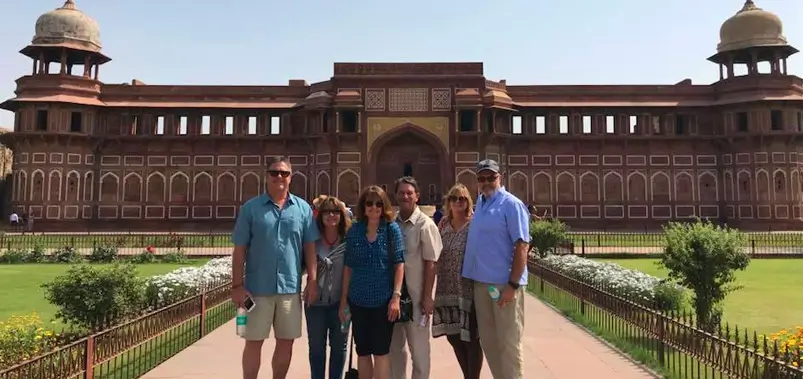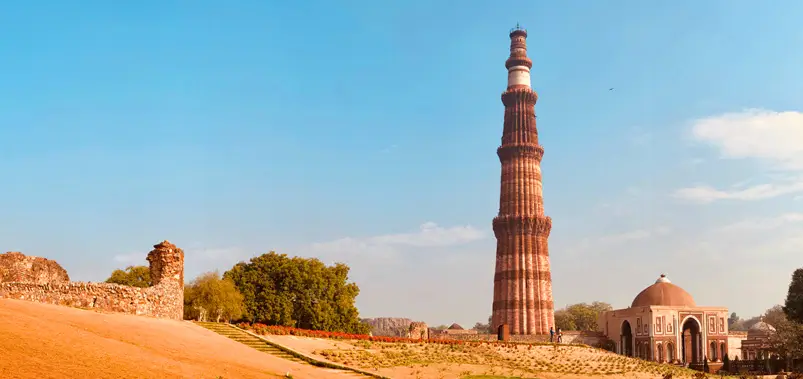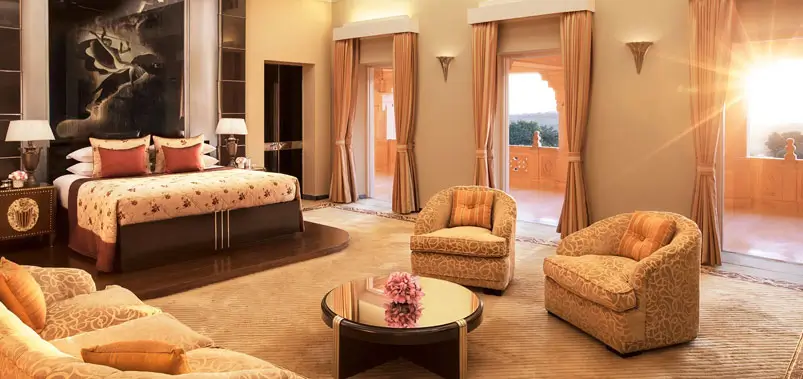
Hotel upgrades can become one of the largest additional expenses on a luxury India tour, especially when travellers are staying at leading palace hotels and internationally recognised resorts. A standard luxury room may already provide exceptional comfort, while moving into a suite can add substantially more space, a separate living area, a terrace, a superior view or a distinctive heritage setting. The important question is not whether suites are better. In most cases, they objectively provide more. The question is whether those additional features will materially improve that particular stay.
This matters on the Golden Triangle because Delhi, Agra and Jaipur serve very different purposes during a journey. Delhi is often the international arrival city, where sleep quality, service and location can matter more than an enormous room. Agra is frequently a shorter stay centred on the Taj Mahal, where paying for the right view can be more meaningful than paying only for additional square footage. Jaipur often receives several nights and offers palace and resort hotels where the accommodation itself becomes part of the holiday.
For a couple spending several thousand dollars on a private Golden Triangle tour, automatically booking the most expensive suite in every destination is not necessarily the strongest use of the accommodation budget. A better approach is to identify where the upgrade changes the experience and where an excellent luxury room already provides everything required.
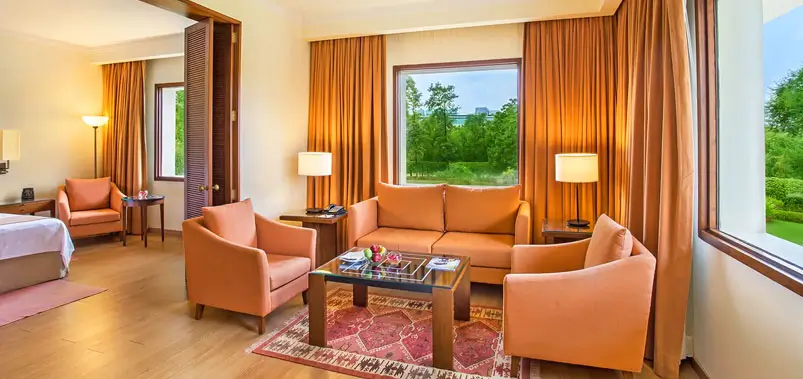
Delhi frequently receives international travellers at the beginning of their India holiday. Depending on the departure city, guests may have spent many hours travelling before reaching their hotel. For someone arriving from London, New York or another long haul origin, the first requirements are usually a comfortable bed, quiet room, excellent bathroom, efficient service and a hotel positioned sensibly for the intended stay.
That makes Delhi different from a resort destination.
A luxury hotel in Delhi for a Golden Triangle tour should first be selected according to quality and location. The city is extensive, and sightseeing can involve considerable driving. Paying significantly more for a suite in a hotel that is poorly positioned for the guest's activities may provide less benefit than choosing the right property with a strong standard room.
The length of the Delhi stay matters. A couple staying three nights and intentionally reserving time at the hotel may appreciate a suite with a separate sitting area. Travellers who need to work during the holiday can also benefit from having living and sleeping spaces separated. One partner can take a call while the other rests without both being confined to the same room.
For an executive traveller, this distinction can be significant. A larger suite may provide a more appropriate setting for private calls or simply make several nights more comfortable. For a couple who leaves after breakfast and returns only for dinner and sleep, however, much of that additional space may remain unused.
Early arrival creates another financial consideration.
Suppose an international flight reaches Delhi early in the morning. The traveller may be tempted to spend heavily on a suite because they want immediate comfort after landing. Yet the real issue may not be room category at all. Standard hotel check-in could be several hours away.
If immediate room access is essential, guaranteeing the room from the previous night may be more valuable than upgrading to a suite but leaving early check-in subject to availability.
For example, paying for an additional night in a high quality luxury room can sometimes produce more practical comfort than spending the same amount on a suite upgrade that the guest cannot enter until later.
Privacy should also be considered independently from room size. A larger room near a busy lift lobby may feel less private than a well positioned standard luxury room. Guests who are sensitive to noise or value discretion should communicate those requirements before arrival.
Families face a different calculation. A single large suite is not automatically better than two connecting rooms. Parents travelling with older children may appreciate separate bathrooms and bedrooms more than a larger shared living room. Connecting or adjacent room arrangements should be requested specifically because they depend on hotel design and availability.
Delhi is therefore often a destination where the best luxury hotel room upgrade is the one that solves a particular requirement. Extra space for work, family accommodation, a longer stay or a meaningful room feature can justify the supplement. Upgrading simply because the word “suite” sounds more luxurious may not.
Confused between a suite and a standard luxury room? Let our experts help you choose the right upgrade and craft your perfect Golden Triangle itinerary.
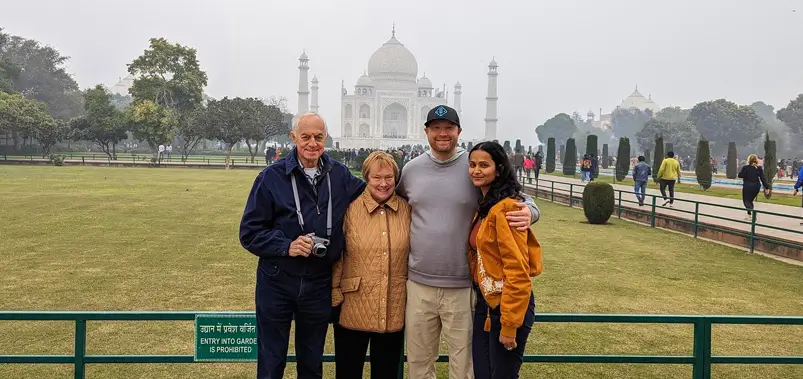
Agra changes the accommodation calculation because one monument dominates the reason most international travellers visit: the Taj Mahal.
Many guests stay only one or two nights. They may arrive from Delhi, visit Agra Fort or another attraction, see the Taj Mahal and continue towards Jaipur. This means there is relatively little time to enjoy an enormous suite.
Yet Agra can still be one of the places where an expensive room upgrade feels most worthwhile.
The reason is the view.
At a property such as The Oberoi Amarvilas, proximity and the relationship with the Taj Mahal are central to the appeal. Travellers considering different room categories should examine exactly what each category provides rather than assuming every room offers an identical experience.
For a couple celebrating an anniversary or honeymoon, waking in Agra with the Taj Mahal forming part of the hotel experience can carry emotional value that has little to do with room size.
This is where a Taj Mahal view hotel room may make more sense than simply booking the largest available suite.
If one room category provides the desired outlook and another expensive upgrade primarily provides additional indoor space, the couple should decide which feature matters more to them. For many first time visitors, the view will have greater impact.
The same principle applies when comparing hotels.
A traveller might obtain a much larger suite at another luxury property for the same price as a smaller premium room at a hotel selected for its Taj Mahal setting. Neither option is inherently better. One provides space; the other provides location and atmosphere.
The itinerary determines which benefit is more valuable.
A one night Agra stay also argues against automatically purchasing the highest room category. Guests may check in during the afternoon, spend time sightseeing, sleep and leave the following morning. Paying several thousand dollars for accommodation that is occupied for relatively few waking hours requires a compelling reason.
A landmark view can provide that reason for some travellers.
Additional square footage alone may not.
Agra also demonstrates why photographs need to be interpreted carefully when booking. Hotel marketing imagery often features signature suites, terraces and exceptional views. The entry level room in the quotation may not be the room shown in the most prominent promotional image.
Travellers booking a luxury Agra hotel package should therefore look at the exact category written in the tour proposal.
If a Taj view is essential, that requirement should be confirmed rather than assumed.
Guests should also consider whether the room will actually be used during the hours when the view matters. A packed itinerary that keeps the couple away from the hotel throughout daylight may reduce the value of an expensive scenic room.
For a slower itinerary, the calculation changes. Arriving early, having a relaxed afternoon, enjoying the hotel and leaving enough time around the Taj visit can make the accommodation a meaningful part of the Agra experience.
That is when premium room selection begins to feel less like an upgrade and more like part of the destination.
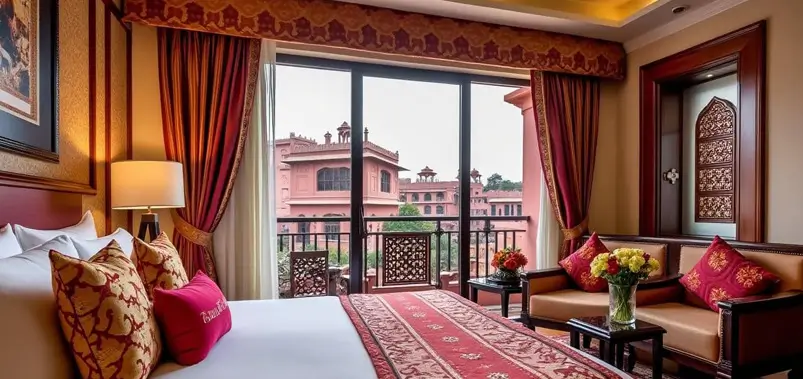
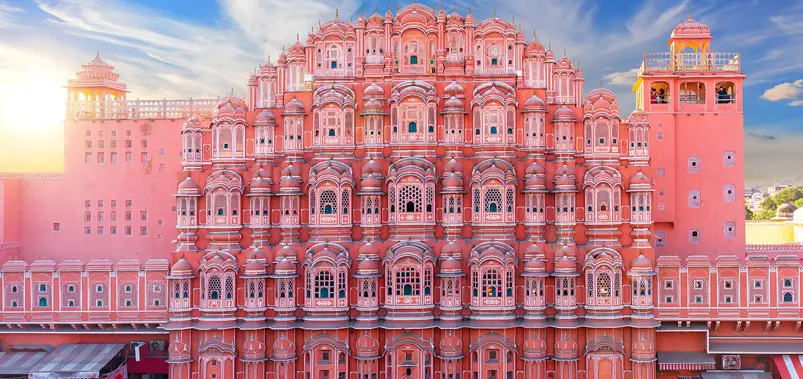
If Delhi is primarily about arrival comfort and Agra is often about the Taj Mahal, Jaipur is where travellers can obtain substantial value from a longer luxury hotel stay.
A well paced Golden Triangle itinerary may give Jaipur three nights or more. That creates time for Amber Fort, City Palace, Jantar Mantar, selected shopping or cultural interests while still leaving part of the stay free.
This makes Jaipur particularly suitable for a luxury suite upgrade in India.
Properties such as Rambagh Palace and The Oberoi Rajvilas are not merely convenient places to sleep between sightseeing days. Their architecture, grounds, restaurants, service and atmosphere can form part of the reason for choosing a luxury Golden Triangle itinerary in the first place.
At a palace property, room category can also influence historical character. Some premium rooms and suites may offer distinctive layouts, decorative details or a greater sense of place. The exact differences vary by property and category, so travellers should inspect the specific accommodation rather than assuming every suite provides the same benefits.
At a resort style property, additional private space can be valuable because guests are more likely to spend time at the hotel. A long breakfast, spa treatment, pool afternoon and dinner on the property mean the room or suite is actually being used.
A three night stay changes the mathematics of an upgrade.
Suppose a couple pays substantially more per night for a suite. Across three nights, the supplement becomes significant, but the guests also have several days in which to enjoy the space. Compare that with paying the same nightly supplement during a single overnight stop where the room is occupied mainly for sleep.
This is why Jaipur is frequently the city where palace hotel suite upgrades deserve the closest consideration.
Privacy can be another reason to upgrade. Certain higher categories may provide more secluded positioning, private outdoor areas or layouts that suit travellers who value time away from public hotel spaces. The exact features should be verified with the chosen property.
Celebrations also strengthen the case.
A honeymoon, major anniversary or milestone birthday may justify allocating more of the hotel budget to Jaipur because there is enough time to enjoy a memorable room and the wider property. A special dinner and spa afternoon can then be arranged around the hotel rather than treating it solely as accommodation.
The mistake is upgrading while keeping an excessively busy sightseeing schedule.
If a couple has paid heavily for three nights in an exceptional suite, leaving every morning at 7:30 and returning after 9:00 in the evening wastes much of the benefit.
Luxury accommodation and daily scheduling must work together.
A traveller who wants to visit every possible Jaipur attraction may obtain greater value from an excellent room in a centrally convenient luxury hotel. A traveller who wants a slower, more indulgent Jaipur stay may find that a palace or resort suite becomes one of the highlights of the entire journey.
Find out where paying extra for a suite truly adds value to your journey. Get expert guidance on booking handpicked 5-star hotels across India.
Room value changes according to who is travelling.
For a couple, a standard luxury room can be more than sufficient, particularly when the hotel provides generous room dimensions, an excellent bathroom and comfortable seating. Upgrading may become worthwhile when there is a private terrace, exceptional view, separate living room or another feature the couple specifically values.
For families, the calculation is more complicated.
A luxury family tour in India may involve parents, children and sometimes grandparents travelling together. One enormous suite is not always the most practical solution.
Two connecting rooms can provide additional bathrooms, more beds and greater privacy. Parents can remain close to younger children without everyone sleeping in one space. Families with teenagers may strongly prefer this arrangement.
A two bedroom suite can be excellent where available, but the price may be considerably higher. The actual layout should be checked because hotel terminology varies.
Adjacent rooms can also work when connecting accommodation is unavailable, but “adjacent” should not be assumed merely because two rooms were booked under the same reservation.
Multi generational families have another requirement: accessibility.
A historic palace may contain stairs, long corridors or rooms located some distance from restaurants and reception. Grandparents who are comfortable sightseeing for several hours may still prefer a room with straightforward access.
The most expensive heritage suite may not be the most convenient room for them.
Solo travellers usually need less physical space, but they may value room positioning and privacy more highly. A premium room with a strong view can provide greater value than an oversized suite.
Business travellers often have the clearest practical reason for additional space. A separate living area allows calls or work to take place without turning the bed into an office. Travellers combining a holiday with business responsibilities may therefore find suite upgrades particularly worthwhile in cities where they are staying for several nights.
The same principle applies to guests travelling with personal staff. Room requirements should be discussed as a complete accommodation arrangement rather than booking the principal traveller's suite first and dealing with everyone else later.
A bespoke luxury India tour should consider who will use each room, not simply how prestigious the room category sounds.
Square footage alone is a poor way to judge a suite.
An additional 300 or 500 square feet sounds impressive, but it has limited value if the traveller never uses it. The strongest upgrades change the way the guest experiences the stay.
A separate living room can be valuable for longer stays. A private terrace can transform breakfast or an evening drink. An exceptional view can connect the room directly to the destination. A heritage suite may offer architectural character that cannot be reproduced in a conventional room.
These are experiential differences.
By comparison, an upgrade that primarily adds unused floor space may have relatively little effect on the holiday.
Travellers should therefore ask what is actually different.
Does the suite provide a separate bedroom and living area? Is there an additional bathroom? Does it have outdoor space? Is the view superior? Does it occupy a more private part of the property? Are there meaningful additional hotel benefits?
The name of the category is not enough.
Hotel room terminology is not standardised internationally. “Junior Suite,” “Executive Suite,” “Luxury Suite” and “Royal Suite” can describe very different products depending on the hotel.
When booking a suite on a Golden Triangle tour, guests should examine the exact category at the exact property.
The number of nights should then be considered.
For a four night resort stay, a large suite can significantly improve comfort. For one night before an early flight, it may contribute very little.
Free time matters as much as nights.
A three night stay containing twelve hour sightseeing days may offer less opportunity to enjoy the suite than a two night stay with a free afternoon.
Travellers should also remember that the hotel's common areas remain available regardless of room category. Guests in a standard luxury room generally still use the restaurants, spa, pool and gardens according to the hotel's policies.
A suite is therefore paying primarily for a better private space and any category specific benefits.
For some travellers, that private space is precisely what luxury means.
For others, luxury means spending the money elsewhere.
One of the most useful comparisons on an India holiday is not standard room versus suite within one property. It is a suite at Hotel A versus a standard or premium room at Hotel B.
The answer can be surprising.
A traveller may obtain a large suite at a good five star hotel for less than an entry level room at one of India's most prestigious palace properties. If space is the priority, the suite may be attractive.
If history, setting, service style and hotel atmosphere matter more, the smaller room at the exceptional property may provide the stronger experience.
This is particularly relevant in Jaipur.
A guest deciding between a suite at a conventional luxury hotel and a standard room at Rambagh Palace is not merely comparing room sizes. They are comparing two different hotel experiences.
Agra creates a similar decision. A large suite elsewhere may compete with a smaller room in a property chosen for its relationship with the Taj Mahal.
On a premium India holiday, hotel selection should generally come before room category escalation.
Choose the property that best fits the desired experience, then decide how much additional value the higher room category provides.
There are exceptions. If the entry level room does not meet a family's space requirements, the room category may determine whether the hotel is suitable at all.
Location can also outweigh both hotel prestige and suite size.
In Delhi, a well positioned luxury hotel can save significant driving time. Spending more for a huge suite in an inconvenient location may reduce rather than improve the trip.
This is why accommodation should never be chosen from price and photographs alone.
The room, hotel, city and daily itinerary all need to make sense together.
Luxury hotel pricing in India varies substantially according to property, season, room category and demand. A room that costs one amount during a quieter period can cost considerably more during high demand dates.
The difference between a standard luxury room and a premium suite can range from a relatively modest supplement to hundreds or even thousands of dollars per night at the highest end of the market.
That difference compounds quickly.
If a couple upgrades for seven nights across Delhi, Agra and Jaipur, even an average additional $500 per night creates $3,500 of extra accommodation spending. At $1,000 per night, the additional cost reaches $7,000.
For some travellers, that is entirely acceptable.
The question is what else the same budget could purchase.
Several thousand dollars could fund additional nights in India, upgrade the overall hotel level, improve the vehicle, add a premium wildlife extension, cover business class flight differences or provide a longer palace stay in the destination where it matters most.
A luxury India trip budget should therefore consider opportunity cost.
Instead of upgrading every room, a couple might keep an excellent luxury room in Delhi, select the most meaningful view category in Agra and spend heavily on a suite for three nights in Jaipur.
Another traveller might do the opposite because they care deeply about the Taj Mahal and only require a short Jaipur stay.
There is no universal allocation.
This is precisely where a tailor made approach becomes useful.
Travellers should also remember that hotel pricing changes. Exact supplements need to be checked for the actual dates rather than relying on old online examples.
Taxes and meal inclusions should be considered when comparing categories. A higher category may occasionally include additional privileges, but those benefits vary by property and rate.
A tour quotation should therefore state the hotel and room category rather than presenting a generic “luxury accommodation” price.
Luxury travellers sometimes feel that choosing the base room means compromising. At genuinely high end hotels, that is often not true.
An entry level room can still be beautifully designed, spacious, serviced to the same overall hotel standard and accompanied by access to the property's principal facilities.
The guest may eat in the same restaurants, use the same pool, book the same spa and walk through the same palace grounds.
For travellers who spend most of the day outside, an excellent room may provide everything required.
This is particularly true during short stays.
If the itinerary arrives in a city at 5:00 p.m. and departs at 8:00 a.m. the following morning, paying a substantial suite premium is difficult to justify unless the room itself offers something exceptionally important to the traveller.
A standard room at a luxury hotel in India can also be the smarter choice when the saved money allows the guest to move into a much better hotel category overall.
Instead of booking suites in several ordinary five star hotels, some travellers may prefer standard rooms in exceptional properties.
The decision should never be driven by status.
A room upgrade is successful when the traveller notices and appreciates the benefit.
If the only difference remembered after the holiday is that the room was technically larger, the money may have been better spent elsewhere.
For many Golden Triangle travellers, Jaipur deserves the strongest consideration for a suite because stays are often longer and palace or resort properties can become part of the destination experience.
Agra deserves consideration when the upgrade provides a particularly meaningful Taj Mahal outlook or another feature connected directly to the reason for visiting.
Delhi deserves an upgrade when additional space solves a real requirement: work, family accommodation, privacy or a longer stay.
That framework is more useful than automatically choosing a suite in every city.
Golden Triangle Tours can structure accommodation according to the individual trip, including selected luxury hotels, palace properties and room categories based on the guest's budget and preferences.
The strongest accommodation strategy may contain several different levels.
A traveller can have a premium room in Delhi, a carefully selected Taj view category in Agra and a suite in Jaipur. Another guest may prefer standard luxury rooms everywhere and use the savings to add Udaipur or extend the journey by several days.
Both can be high end holidays.
Luxury does not require spending the maximum possible amount in every destination. It requires knowing which expenditure materially changes the experience.

We promise you a holiday where everything is taken care of from the moment you land. Trusted drivers waiting for you, handpicked hotels that fit your style, personalized itineraries designed just for your family, and a dedicated team on call 24/7. All you need to do is relax, explore, and create unforgettable memories, while we take care of every detail behind the scenes.
It can be, particularly during longer stays or when the suite provides a meaningful view, separate living space, private outdoor area or distinctive heritage character. Short overnight stays often provide less time to benefit from the upgrade.
Jaipur often deserves strong consideration because travellers commonly stay several nights and may use palace or resort facilities extensively. Agra can also justify an upgrade when the room category provides a particularly desirable Taj Mahal experience.
A luxury suite in Delhi can be useful for longer stays, business travellers, families or guests wanting separate living and sleeping areas. For a sightseeing-heavy short stay, an excellent luxury room may be sufficient.
For many first-time visitors and couples celebrating an important occasion, it can be one of the most meaningful hotel upgrades. The exact view associated with the booked room category should be confirmed rather than assumed from general hotel photographs.
Not always. Two connecting rooms can provide more beds, bathrooms and privacy. A two-bedroom suite may be excellent but can cost considerably more. The actual layout and family requirements should guide the choice.
They can be. The difference between room categories at leading palace hotels may reach hundreds or more per night and can become considerably larger for signature suites during high-demand periods.
That depends on whether you value private space or the wider property experience more. Many luxury travellers prefer an excellent room at an exceptional hotel, while families and long-stay guests may obtain more value from additional suite space.
Generally, guests in standard luxury rooms have access to the property's principal restaurants, spa services, pool and common areas according to hotel policies. Certain room categories may include additional benefits, which should be checked with the property.
Upgrades may be possible if the desired category remains available, but additional costs and booking conditions can apply. Popular suites may sell out well before arrival.
Yes. Golden Triangle Tours can structure accommodation with different room categories across Delhi, Agra and Jaipur, allowing travellers to spend more where an upgrade adds genuine value while retaining excellent luxury rooms in destinations where additional space is less important.