Kochi, historically known as Cochin, is one of South India’s most culturally layered and visually distinctive coastal cities. Located in the state of Kerala along the Arabian Sea, Kochi has been a major trading port for centuries. Arab merchants, Portuguese explorers, Dutch traders, and the British all left their imprint on the city, creating a rare blend of Indian and European influences.
For international travellers, Kochi offers a softer introduction to South India compared to the intensity of North Indian cities. The atmosphere feels coastal, humid, and relaxed. Palm trees line the waterfront, fishing boats dot the horizon, and colonial-era buildings stand alongside traditional Kerala homes.
Unlike Rajasthan’s desert forts or the Himalayan mountain towns, Kochi’s identity is maritime. Its history is tied to spice trade routes, ocean exploration, and cross-cultural exchange. This global legacy makes Kochi particularly appealing to foreign visitors seeking historical depth combined with coastal charm.
Kochi is often the starting point for Kerala itineraries, including backwaters, tea plantations, and beach extensions.

Fort Kochi, Chinese Fishing Nets, Mattancherry Palace, Jew Town & Synagogue, Kathakali Performance

October – March
Pleasant temperatures and lower humidity.

1–2 Days
One overnight stay allows meaningful exploration.

English, Malayalam
English widely spoken in tourist areas.
The heart of Kochi’s tourism lies in Fort Kochi, a historic waterfront neighborhood known for its colonial architecture and slow-paced charm. Walking through Fort Kochi feels different from typical Indian cities. Streets are lined with pastel-colored buildings, European-style churches, art cafés, and boutique galleries.
The influence of Portuguese and Dutch traders is visible in the architecture, particularly in structures such as St. Francis Church, one of the oldest European churches in India.
Unlike crowded metropolitan centers, Fort Kochi is walkable and compact. International visitors often appreciate the absence of chaotic traffic in this part of town.
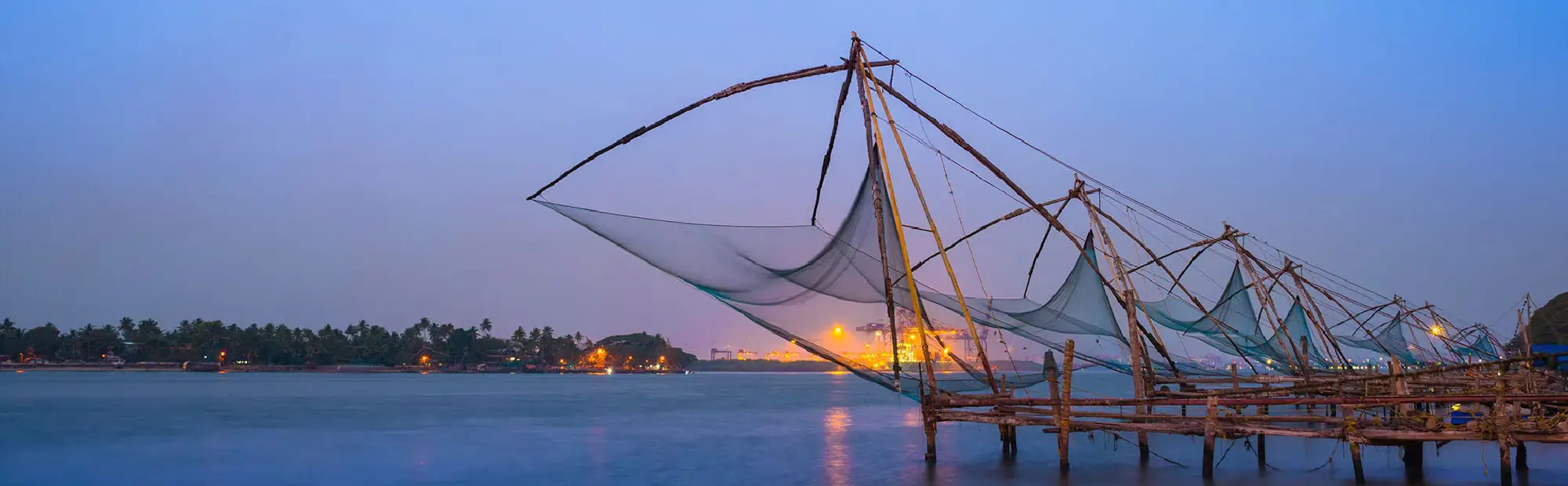
One of Kochi’s most photographed landmarks is the row of Chinese fishing nets that line the shoreline. Introduced centuries ago through trade connections, these large cantilevered fishing structures remain operational today.
Watching local fishermen lower and raise the nets against the sunset creates a distinctly coastal Kerala image. The setting is calm, with the Arabian Sea stretching beyond.
For photographers, early morning and evening light provide the most dramatic views.
The neighborhood of Mattancherry reveals Kochi’s spice-trading heritage. Narrow streets are filled with spice warehouses selling pepper, cardamom, cinnamon, and cloves — commodities that once attracted global merchants.
The Mattancherry Palace, also known as the Dutch Palace, features murals depicting scenes from Hindu epics and Kerala’s royal history.
Nearby, Jew Town and the Paradesi Synagogue highlight Kochi’s Jewish heritage, reflecting centuries of multicultural coexistence.
This mix of Hindu temples, churches, mosques, and synagogues within a small geographic area demonstrates Kochi’s historical openness to diverse communities.
Kochi has evolved into an important cultural hub in Kerala. Contemporary art galleries and cultural centers are scattered throughout Fort Kochi.
One of the most popular cultural experiences is attending a Kathakali performance, a traditional Kerala dance-drama known for elaborate costumes and expressive facial movements. Before the performance, visitors can observe actors applying intricate makeup — a process that itself becomes part of the cultural experience.
Unlike large-scale Bollywood-style entertainment, Kathakali is slow and symbolic, rooted in classical storytelling traditions.
Kochi serves as a gateway to Kerala’s famous backwaters, particularly the Alleppey (Alappuzha) region. While backwater houseboat stays occur outside the city, Kochi is often the arrival and departure point for these journeys.
The coastal environment, combined with nearby lagoons and waterways, gives Kochi a maritime character distinct from inland South Indian cities.
Kerala cuisine is central to the Kochi experience. Seafood dishes such as fish curry, prawn roast, and coconut-based gravies reflect coastal influences.
Meals are often served with rice, appam (fermented rice pancakes), or parotta (layered flatbread). Spices play a prominent role in flavor profiles.
International travellers generally find Kochi’s cuisine accessible, with both traditional and modern restaurants available.
Kochi experiences a tropical climate with high humidity.
The most comfortable travel period is October to March, when temperatures are moderate.
The monsoon season (June to September) brings heavy rainfall, though some travellers appreciate the lush greenery and fewer crowds during this time.
Light cotton clothing is recommended year-round.
Kochi offers diverse accommodation options, from heritage homestays in colonial buildings to luxury waterfront hotels.
Boutique hotels in Fort Kochi provide personalized service and traditional décor.
Because the city is relatively spread out, choosing accommodation in Fort Kochi allows easier access to major attractions.
Kochi’s pace is noticeably slower than metropolitan cities like Mumbai or Delhi. The rhythm is influenced by the sea, fishing schedules, and relaxed café culture.
For foreign travellers, Kochi often feels comfortable and manageable. The international history of trade has made the city accustomed to global visitors.
Unlike destinations focused solely on monuments, Kochi invites exploration through walking, observing daily life, and absorbing coastal ambience.
Kochi is well connected in South India.

Cochin International Airport

Road connections from major Kerala cities

Ernakulam Railway Station
We promise you a holiday where everything is taken care of from the moment you land. Trusted drivers waiting for you, handpicked hotels that fit your style, personalized itineraries designed just for your family, and a dedicated team on call 24/7. All you need to do is relax, explore, and create unforgettable memories, while we take care of every detail behind the scenes.
Kochi is known for colonial heritage, spice trade history, and Chinese fishing nets.
One to two days are sufficient.
Yes, it is considered safe and welcoming.
A historic colonial neighborhood.
Yes, it is a signature Kerala cultural performance.
October to March.
Yes, it is the main gateway.
Yes, especially in tourist areas.
Yes, though they are modest compared to other Kerala beaches.
It is moderate compared to larger Indian cities.
Yes, coastal cuisine features seafood prominently.
No, it is a South India extension.