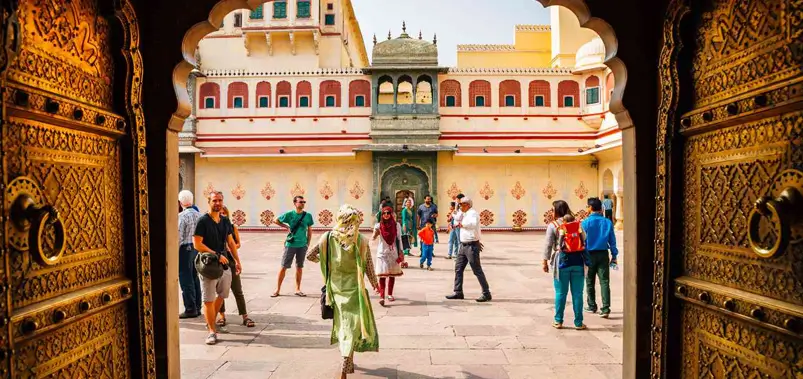
A Golden Triangle Tour for university and student groups works best when it is treated as an academic travel program rather than a cheaper version of a leisure vacation. Delhi, Agra, and Jaipur offer enough history, architecture, urban development, religion, politics, craft traditions, archaeology, conservation, and social context to support programs for history students, architecture departments, business schools, cultural studies programs, international relations groups, photography students, design institutes, and school or university educational tours.
The route is practical because the three cities can be connected by road without relying on a domestic flight for every movement. Delhi provides the strongest academic introduction because students can move between Mughal monuments, colonial planning, modern government districts, museums, markets, religious sites, and contemporary urban neighborhoods. Agra offers the Taj Mahal, Agra Fort, Mughal history, conservation issues, tourism economics, marble craftsmanship, and the relationship between heritage and modern city growth. Jaipur adds Rajput architecture, astronomy, palace culture, urban design, craft industries, textiles, jewelry, museums, and the planned historical city.
For faculty members, university coordinators, and educational travel planners, however, a successful student Golden Triangle tour in India requires far more than selecting three famous cities. Group size affects vehicle type. Student ages affect rooming. International groups need clear arrival support. Universities may require risk assessments, emergency procedures, rooming lists, dietary planning, insurance details, faculty complimentary policies, and documentation regarding transport and hotels. Students need enough structure to learn but enough free time to remain engaged. Faculty need a program that does not collapse because a monument visit takes longer than expected.
The quality of the tour therefore depends on logistics as much as academic content.
A university group of 24 students with two faculty leaders has completely different operational needs from a private couple. It may require a full size air conditioned coach, separate luggage capacity, a dedicated tour manager, multiple local guides, advance group ticket arrangements where available, carefully planned meal stops, and hotels able to place the group on similar floors.
Cost also needs to be approached differently.
Educational tours are often budget sensitive, but the cheapest possible itinerary can create serious problems. Poorly located hotels increase transfer time. Small vehicles force groups to split. Inferior meal planning creates delays. Inadequate guide ratios make it impossible for students to hear interpretation. A five hour road transfer inside an uncomfortable vehicle can affect the entire academic program the next day.
The strongest model is not luxury for the sake of luxury. It is premium educational travel with reliable standards, good hotels, professional transportation, strong English speaking guides, academic context, proper safety support, and realistic pacing.
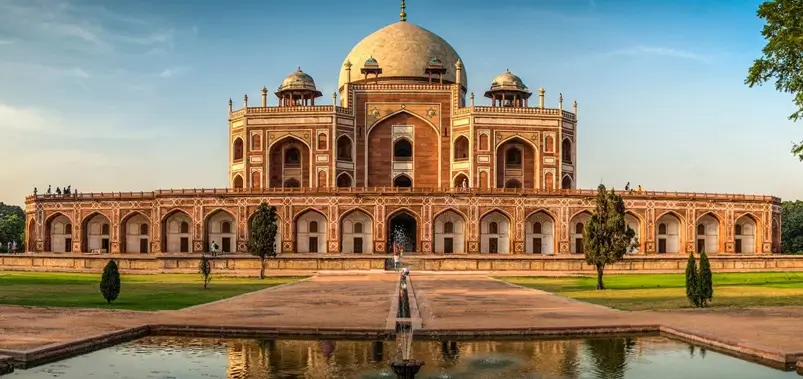
The educational value of the Golden Triangle comes from contrast.
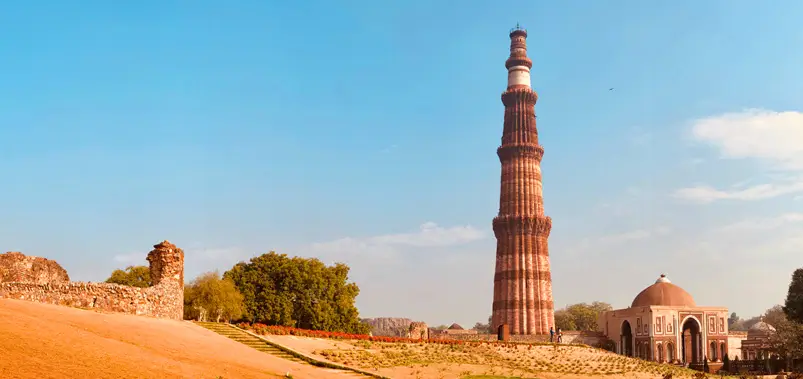
Delhi can support several academic themes within one city. At Humayun's Tomb, students can examine early Mughal garden tomb architecture and architectural ideas that later influenced other imperial monuments. At the Qutub complex, the group can discuss changing political power, early Sultanate architecture, inscriptions, material reuse, and the development of monumental Islamic architecture in North India. Old Delhi offers a different form of study because students move through a living historic city rather than an archaeological site.
A well led student group should not simply walk through Chandni Chowk taking photographs.
The guide can use the area to discuss urban density, religious diversity, market economics, food systems, traditional commerce, pedestrian movement, heritage pressure, and how old urban infrastructure continues functioning within a major modern metropolis.
New Delhi introduces another historical layer.
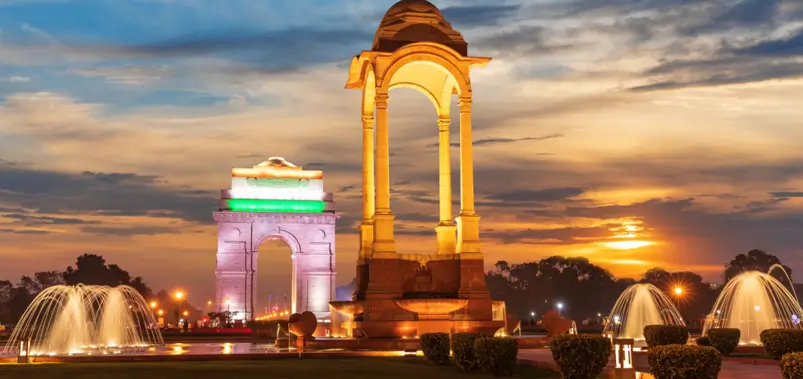
The ceremonial avenue, government buildings, India Gate area, institutional architecture, and planned colonial city can support discussion around imperial planning, nationalism, state symbolism, and the transformation of colonial civic spaces after independence.
Universities focused on political science, international relations, or public administration may also build selected institutional visits into the Delhi portion when permissions and schedules allow.
Museums can be especially useful for history and art students because monuments become much easier to interpret when students first see objects, maps, sculpture, manuscripts, textiles, arms, or archaeological material in a curated setting.
Agra then shifts the academic emphasis toward Mughal architecture and heritage management.
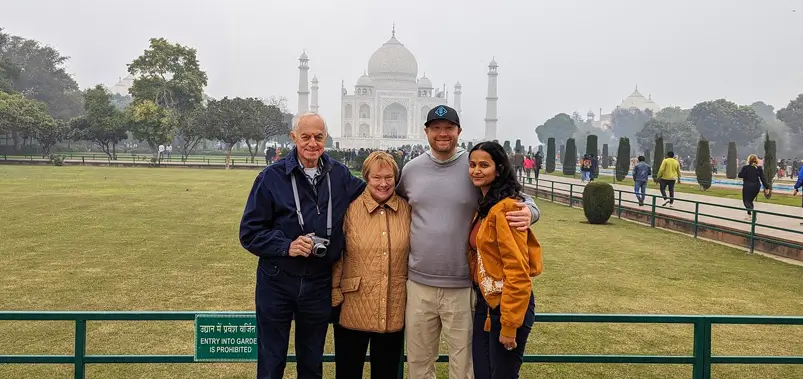
The Taj Mahal provides an obvious case study in architecture, symmetry, landscape design, material craftsmanship, imperial patronage, tourism management, security, conservation, and global heritage branding. A strong educational visit should move beyond the simplified romantic story.
Students can examine the charbagh garden concept, axial planning, white marble, calligraphic decoration, pietra dura work, optical refinement, riverfront setting, mosque and guest pavilion, the raised platform, and the relationship between architecture and political authority.
The monument also offers a practical tourism management case study.
Thousands of visitors move through a highly protected heritage site every day. Vehicle restrictions near the monument, ticket categories, security screening, visitor circulation, photography, conservation, and crowd control all illustrate the challenge of preserving a world famous monument while keeping it accessible.
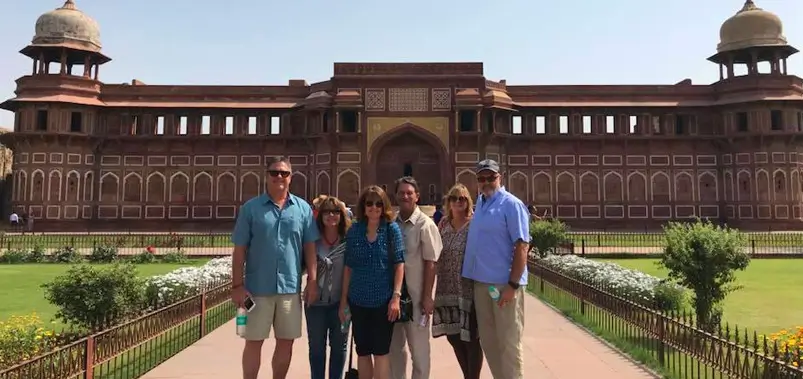
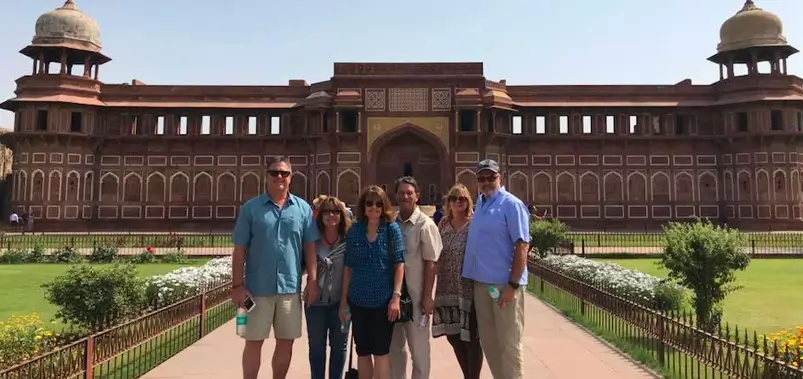
Agra Fort adds another academic layer because it demonstrates how Mughal imperial architecture developed as both military and residential space. Students can compare red sandstone and marble, defensive walls and palace interiors, public and private court areas, and the relationship between Agra Fort and the Taj Mahal across the Yamuna landscape.
Jaipur changes the intellectual framework again.
The historical city is frequently discussed as an early example of planned urban development in India. Students of architecture and urban design can examine street geometry, gates, market planning, neighborhood organization, palace placement, astronomical observation, water systems, and later urban expansion.
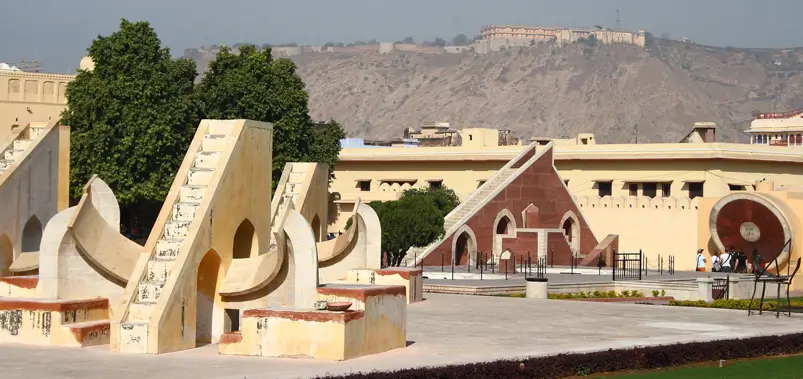
Jantar Mantar is especially valuable for science, mathematics, architecture, and history students because it demonstrates astronomical observation through monumental instruments rather than modern digital technology.
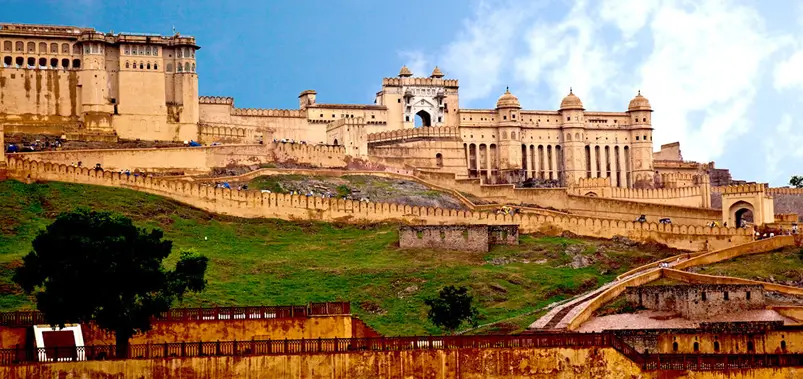
Amber Fort introduces defensive architecture, palace design, courtyards, water management, ceremonial spaces, royal privacy, and the relationship between architecture and hilltop geography.
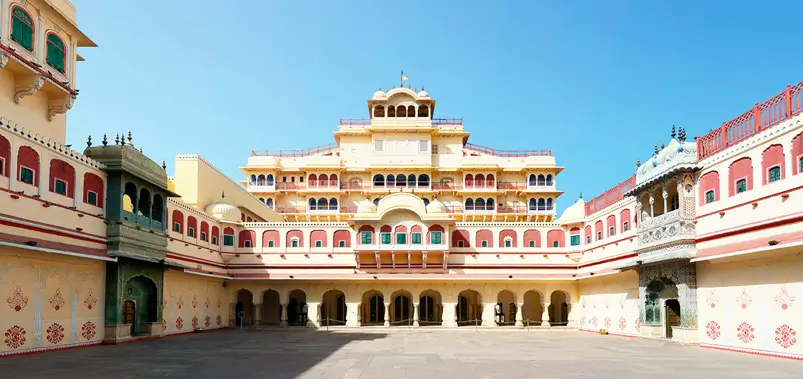
The City Palace adds museum collections, royal history, textiles, weapons, manuscripts, paintings, and continuing connections with Jaipur's former royal household.
A serious educational Golden Triangle itinerary can therefore support academic learning without turning the journey into a lecture tour.
Students still experience India as travelers.
The difference is that each visit has an intellectual purpose.
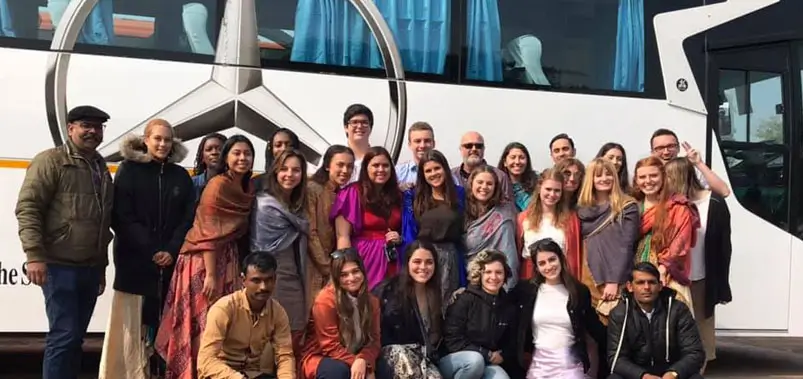
Group logistics should be finalized before the academic program.
For approximately 10 to 16 students, a high quality mini coach may be sufficient depending on luggage volume.
For approximately 18 to 30 travelers, a larger air conditioned coach is usually more comfortable.
Groups of 30 to 45 participants normally require a full size touring coach with proper luggage storage.
A university should never choose the smallest possible vehicle merely because the seating capacity technically matches the number of travelers.
Luggage changes the calculation.
A 30 seat vehicle carrying 27 international students may not actually be comfortable when each student has a full size suitcase, backpack, and personal bag.
Coach quality matters because the group may spend several hours on the road between Delhi, Agra, and Jaipur.
The Delhi to Agra drive generally takes around three to four hours depending on traffic and the exact departure point.
The Agra to Jaipur road journey commonly takes approximately four to five hours, depending on traffic, stops, and the selected route.
Jaipur back to Delhi can require approximately five to six hours, and longer travel should always be anticipated when approaching Delhi during heavy traffic periods.
University planners should therefore request a vehicle with reliable air conditioning, appropriate seat spacing, functional seat belts where available, experienced drivers, clean interiors, and sufficient luggage capacity.
A dedicated tour manager is highly valuable for groups above approximately 15 travelers.
The tour manager handles hotel check-in, coach coordination, student counts, meal timing, guide handovers, schedule changes, and communication with faculty leaders. Without that role, faculty members can end up spending the trip managing room keys and missing students instead of participating in the academic program.
Guide ratio matters too.
A single guide speaking to 40 students in a crowded fort is usually ineffective.
For larger groups, consider splitting into smaller groups with separate licensed guides, particularly at major monuments where acoustics and crowd density make large group interpretation difficult.
Wireless whisper systems can also improve the educational experience when available. Students hear the guide through individual receivers rather than gathering tightly around one person.
This is particularly useful in places such as the Taj Mahal, Amber Fort, and busy parts of Old Delhi.
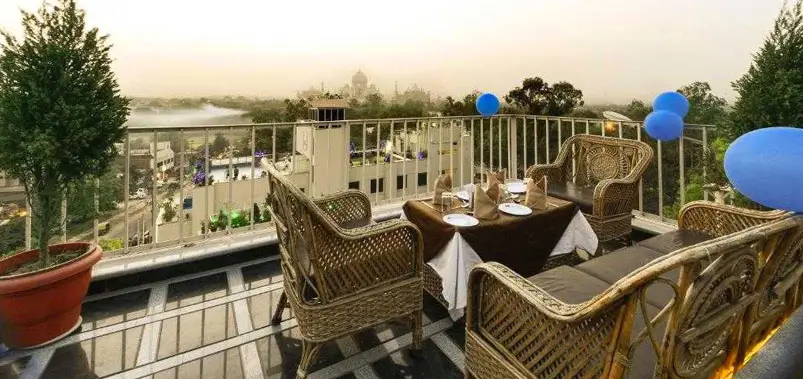
Student travel does not require palace hotels, but it does require dependable hotels.
For most international university groups, good three star, four star, or upper midscale hotels provide the right balance between cost and operational reliability.
The most important factors are cleanliness, safe location, working air conditioning, hot water, breakfast, dependable elevators, group check-in capability, secure luggage handling, and sufficient rooms in the same property.
Location deserves particular attention.
A cheaper hotel located far outside the city can add one or two hours of coach travel every day.
That lost time directly reduces educational value.
In Delhi, university groups should prioritize a hotel with practical access to the planned sightseeing route rather than chasing the lowest possible room rate in a distant suburb.
In Agra, staying reasonably close to the Taj Mahal helps significantly when the group is scheduled for an early monument visit.
In Jaipur, access to the old city and Amber road should be considered when choosing the property.
Twin sharing is the most common arrangement for students.
Faculty members may require single rooms.
Some universities also require gender specific floors or rooming policies.
Rooming lists should be prepared well in advance.
A group of 30 students can easily require 15 twin rooms plus faculty rooms, tour manager accommodation, and perhaps one emergency spare room.
Single supplements should be clearly priced.
Faculty complimentary policies should also be discussed transparently. Some group packages may include one complimentary faculty or tour leader place after a certain number of paying students, but this depends on hotel contracts and group size.
Do not assume every hotel will offer the same ratio.
Breakfast should generally be included.
This makes morning departures considerably easier because students eat inside the hotel instead of dividing into multiple restaurants.
Dinner can be included every night for younger groups, while university students may benefit from selected independent evenings in safe, carefully chosen areas.
The decision should match university policy.
The cost of a Golden Triangle student tour depends on group size, hotel category, number of nights, coach type, guide requirements, monument tickets, meal plan, academic visits, and whether international airfare is included.
For a ground only program covering Delhi, Agra, and Jaipur, an international university group using clean three to four star hotels, private coach transportation, breakfast, guides, and standard sightseeing should generally budget on the higher side rather than using backpacker rates.
For approximately 20 to 30 students, a realistic working figure might begin around $650 to $900 per student for a six to seven night ground package, depending on hotel standard and inclusions.
A more premium educational package with strong four star hotels, several included dinners, licensed guides, a dedicated tour manager, selected academic activities, better coach standards, and additional services may fall around $900 to $1,300+ per student.
Smaller groups normally pay more per person because the vehicle, guides, and tour manager costs are divided among fewer travelers.
A group of only 10 students may therefore spend noticeably more per person than a group of 30.
Five star accommodation can push the package well above $1,500 per student, particularly if single room requirements, premium restaurants, additional cities, domestic flights, or private institutional visits are included.
International airfare should normally be calculated separately because rates vary dramatically according to origin city, travel dates, airline, baggage allowance, and booking lead time.
Universities should request a quotation that clearly separates:
Hotel accommodation.
Coach transportation.
Airport transfers.
Tour manager.
Local guides.
Monument admission.
Meals.
Academic visits.
Tips.
Taxes.
Domestic flights or trains.
Any faculty complimentary arrangements.
This prevents a low headline quotation from becoming more expensive after multiple exclusions are added.
Travel insurance should also be budgeted separately and strongly required according to university policy.
.webp)
A good student itinerary should create a learning progression rather than simply moving from attraction to attraction.
Three nights in Delhi can work well for most groups.
The first day should remain light after international arrival. Airport procedures, jet lag, luggage, and hotel check-in make a full academic schedule unrealistic.
The next day can focus on Old Delhi and Mughal-era history. A guided visit through the Jama Masjid area, selected Chandni Chowk lanes, and a major historic monument provides an introduction to urban density, religious space, market life, and pre-colonial Delhi.
Another Delhi day can focus on New Delhi, Humayun's Tomb, Qutub Minar, museums, institutional areas, or a discipline specific visit.
The group can then travel to Agra.
One overnight stay is technically enough, but two nights in Agra create a stronger academic program.
Arrive in the afternoon, visit Agra Fort, and hold a short faculty discussion or reflection session at the hotel.
The following morning can begin with the Taj Mahal.
The early visit gives students better temperatures and often a more manageable environment than midday.
Afterward, a workshop visit can introduce marble inlay craftsmanship. The educational value depends on selecting a reputable workshop and keeping purchasing entirely optional.
The visit should explain materials, design transfer, cutting, polishing, labor, pricing, and how heritage craft businesses interact with the tourism economy.
The next transfer to Jaipur can include a stop when academically relevant.
Jaipur deserves at least two full nights and preferably three.
Amber Fort can become a case study in landscape, defense, royal space, and water management.
Jantar Mantar supports astronomy and science history.
City Palace provides museum based study.
A carefully chosen textile or block printing workshop can support design, fashion, manufacturing, entrepreneurship, and cultural economy studies.
Students should also have some structured free time in Jaipur.
Young travelers are more engaged when every hour is not controlled.
Faculty can define safe boundaries, return times, and recommended areas while allowing students to eat, shop, photograph, or spend time independently.
The final day can return to Delhi for onward international departure, although a final Delhi overnight is safer when flights depart early or when the road transfer from Jaipur could be affected by traffic.
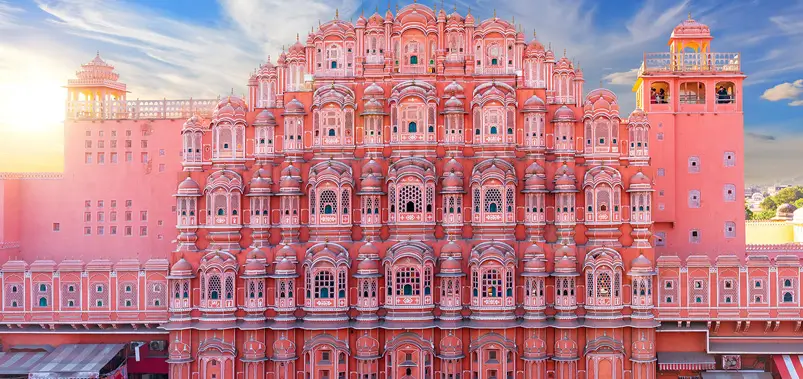
The standard Golden Triangle can be adapted substantially according to the department traveling.
Architecture students may benefit from measured drawing exercises, façade studies, courtyard analysis, conservation discussions, and guided observation of Mughal and Rajput planning.
Design students can spend more time with textiles, block printing, jewelry, marble inlay, decorative arts, museum collections, and traditional craft workshops.
Business school groups can examine family enterprises, hospitality, tourism economics, luxury hotels, craft exports, digital payments, local retail, and small business structures.
History students may need longer interpretation at monuments and more museum time.
Photography groups may require early departures, later returns, carefully selected viewpoints, and fewer monuments per day.
Religious studies students can include important Hindu, Sikh, Islamic, and Jain sites across the three cities, provided visits are handled with cultural sensitivity rather than as purely academic observation.
Urban studies groups can compare Old Delhi, New Delhi, Jaipur's historical grid, modern suburbs, tourism zones, and informal commercial streets.
Environmental programs might connect the route with water systems, air quality, urban expansion, river pollution, heritage conservation, and regional development.
The itinerary should change according to the learning objective.
That is what turns a generic package into a university educational tour of India.
Safety planning should be written before the group departs.
Every student should have the hotel address, tour manager number, faculty contact, and emergency meeting procedure.
The group should use a buddy system during crowded sightseeing.
Faculty leaders should count students before every coach departure.
Students should not be allowed to carry passports unnecessarily during routine sightseeing unless identification is specifically required.
Hotels should provide room safes or a secure alternative.
University coordinators should keep secure copies of passports, visas, insurance policies, emergency contacts, and medical information where permitted by privacy policies.
Dietary information should be collected in advance.
Vegetarian meals are easy to arrange throughout the Golden Triangle.
Vegan, gluten sensitive, severe allergy, halal, and other requirements should be communicated clearly to restaurants and hotels.
Students should drink commercially sealed or properly filtered water provided through the tour.
Street food can be included as a cultural activity only when the operator selects reputable vendors and the university is comfortable with the risk level.
Emergency support is one of the strongest reasons to use a professional local operator.
A student may lose a passport.
Someone may need a doctor.
A coach may develop a mechanical issue.
A flight may be delayed.
A student may become separated from the group.
A professional ground team should be able to coordinate the immediate practical response.
For international student groups, 24 hour emergency contact support is more important than saving a few dollars per participant.
Students should receive a short orientation before the first sightseeing day.
Religious sites may require covered shoulders and knees.
Shoes are removed at many temples and sacred places.
Photography may be restricted.
Students should ask before photographing individuals closely.
Crowded sites are not appropriate for loud behavior.
Public displays of intoxication should never become part of an academic group tour.
Faculty should also prepare students for differences in street environment.
India can feel visually and acoustically intense to first time visitors.
Traffic behavior, bargaining, crowds, religious activity, animals in streets, security procedures, and unsolicited sales approaches may all be unfamiliar.
Students who understand this beforehand adapt much faster.
The goal is not to present India as difficult.
It is to give students enough practical context that normal cultural differences do not become unnecessary stress.
A university group requires more coordination than ordinary leisure travelers.
Hotels need rooming lists.
Coach drivers need faculty timing.
Guides need academic context.
Restaurants need group reservations.
Students need clear meeting points.
Faculty may require attendance checks.
Airport transfers require luggage calculations.
Some institutional visits may require letters well in advance.
A specialist operator such as Golden Triangle Tours can build the Delhi, Agra, and Jaipur route around the academic purpose of the group rather than simply providing a standard sightseeing package.
For an international university, that may include a dedicated tour manager, private coach, selected four star hotels, faculty singles, student twin rooms, monument guiding, educational workshops, academic visits, group meals, bottled water, airport assistance, and a clear emergency contact structure.
The quotation should be transparent.
The itinerary should be realistic.
The learning objective should remain visible throughout the trip.
Students should return home remembering the Taj Mahal, Amber Fort, markets, food, and people they met, but they should also understand more about Mughal architecture, Rajput history, urban development, religion, craft economies, conservation, and contemporary India than they did when they arrived.
That is the difference between a sightseeing trip and an educational Golden Triangle tour.
We promise you a holiday where everything is taken care of from the moment you land. Trusted drivers waiting for you, handpicked hotels that fit your style, personalized itineraries designed just for your family, and a dedicated team on call 24/7. All you need to do is relax, explore, and create unforgettable memories, while we take care of every detail behind the scenes.
Yes. Golden Triangle Tours can structure private educational itineraries around group size, university requirements, academic interests, hotel standard, faculty needs, transport, meals, guides, workshops, and the wider India route rather than forcing every student group into the same package.
Yes. The program can extend beyond the Golden Triangle to Varanasi, Udaipur, Jodhpur, Ranthambore, Amritsar, Khajuraho, or other destinations according to the academic theme and available time.
The route is widely used by international travelers. Professional transportation, reputable hotels, faculty supervision, buddy systems, clear emergency procedures, licensed guides, and a reliable local operator significantly improve group safety and organization.
Yes. Depending on permissions and lead time, programs can include universities, museums, design workshops, craft centers, businesses, NGOs, hospitality institutions, architectural sites, and specialist lectures.
Usually yes for the core Delhi–Agra–Jaipur route. A private coach keeps the group together, simplifies luggage handling, allows flexible stops, and removes the logistics of moving large groups through busy railway stations.
Yes. Faculty and tour leaders can be assigned single rooms, while students typically use twin-sharing accommodation. Single supplements and complimentary faculty policies should be confirmed in the quotation.
Clean three-star, four-star, and upper-midscale hotels generally provide the best balance of safety, comfort, breakfast, group room inventory, and price. Five-star hotels can be arranged for premium academic programs.
Groups of approximately 20 to 30 students often provide the best operational balance. They are large enough to reduce per-person costs while remaining manageable with one full-size coach and appropriate guide support.
A realistic ground-package budget for international university groups is approximately $650 to $1,300+ per student, depending on group size, hotel category, meals, coach type, guides, tour manager, academic activities, and inclusions.
A seven- to nine-night program works well for most educational groups. Shorter trips are possible, but additional nights allow more academic visits, museum time, workshops, and reflection without rushing students between cities.