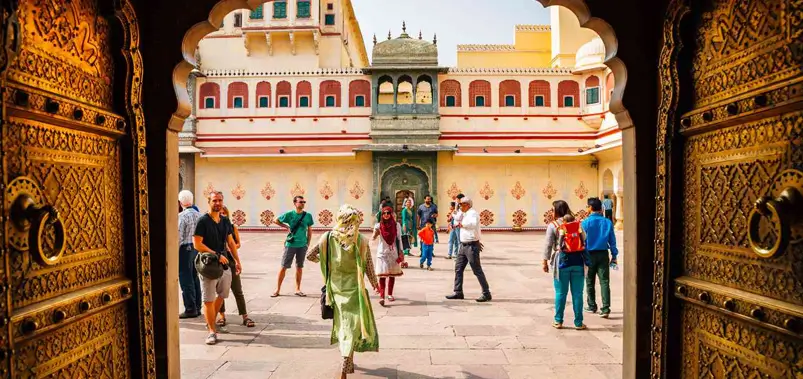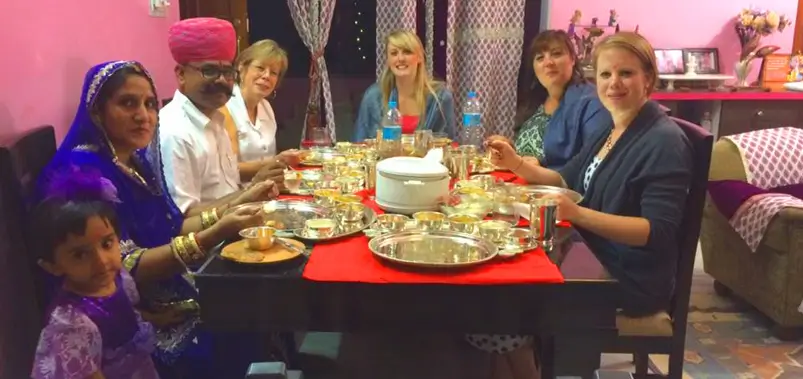
Jaipur is one of those cities that looks beautiful from the outside but reveals something far richer when you step through the right door. The forts, the bazaars, the painted havelis they tell one story. But sitting cross legged on a rooftop with a Rajasthani family, eating dal baati churma cooked on a wood fire, and listening to stories about the city that no guidebook has ever printed that tells another story entirely.
For travelers who want more than monuments, a Jaipur homestay offers exactly that kind of access. You are not a guest at a hotel. You are a guest in someone's life. And in Rajasthan, hospitality is not a policy it is a deeply held value passed down through generations.
This guide is written for travelers who are seriously considering a stay with a local family in Jaipur not as a budget option, but as a deliberate choice to experience the city at its most genuine. Here is everything you need to know before you book, including what the experience is really like, what to look for in a host family, what questions to ask, and what to avoid.
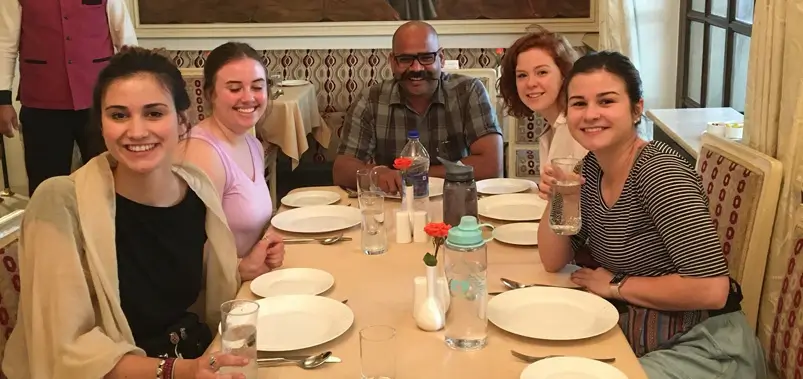
A local family stay in Jaipur is not the same as booking a boutique guesthouse or a heritage hotel that markets itself as "authentic." It means living inside a working household a family home where people cook their own meals, observe their own routines, celebrate their own festivals, and go about their real lives while welcoming you into their space.
In practice, this can take several forms. Some families in Jaipur have converted a portion of their traditional haveli into guest accommodation while continuing to live in the rest of the property. Others offer a spare room in a modern urban home in neighborhoods like Bani Park, Civil Lines, or C-Scheme. A smaller number of families on the outskirts of the city particularly in villages like Kukas or Sanganer offer a more rural version of the same experience.
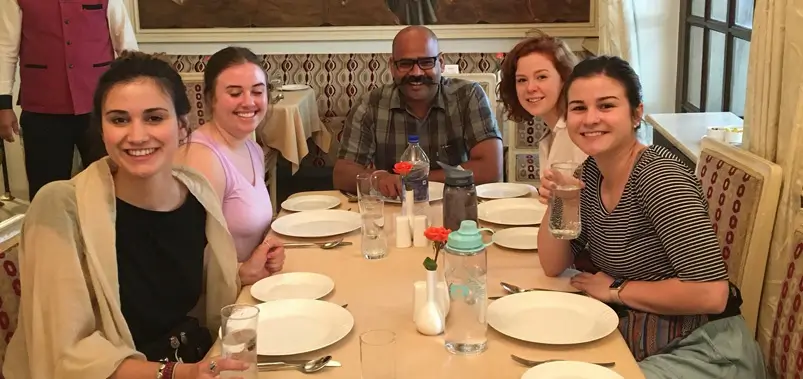
What unites all of these is the element of genuine human connection. Meals are often shared. Conversations happen naturally. You may be invited to join a morning puja, watch a family member practice block printing, or simply sit in the courtyard while the household moves around you. None of this is staged. That is precisely the point.
For travelers accustomed to five star service, the adjustment can be real. Rooms may not have the same finishes as a luxury hotel. Hot water may run on a schedule. The sounds of a real household cooking, prayer, children are part of the experience. But for those who come with the right mindset, these are not inconveniences. They are the experience itself.
The reasons vary, but the most common ones come down to three things: depth of experience, personal connection, and access.
Depth of experience means going beyond the surface of the city. Rajasthan has one of the richest living cultures in India. Textiles, gemstones, music, miniature painting, cuisine, religious tradition all of it is still practiced daily in Jaipur households. Staying with a family puts you inside that culture rather than observing it from a respectful distance.
Personal connection is something that hotels simply cannot manufacture. When a host family takes you to their neighborhood market instead of the tourist bazaar, or cooks you the dish their grandmother made for every wedding in the family, or explains the significance of the tilak on their forehead that is a kind of travel experience that stays with a person for years.
Access is perhaps the most practical reason. A good host family can connect you with artisans, local guides, family run workshops, and parts of the city that are invisible to most visitors. The authentic Jaipur experience that travelers read about in travel memoirs is almost always one that was unlocked by a local relationship, not a tour package.
Arrival and First Impressions
Most host families in Jaipur will greet you with warmth that can feel almost overwhelming at first. Expect chai within the first fifteen minutes. Expect questions where are you from, is this your first time in India, what do you want to see. This is not nosiness. This is how Rajasthani hospitality works. The family wants to know you so they can take care of you properly.
Your room will typically be a private space a bedroom that has been prepared specifically for guests. In older havelis, this might mean a room with thick stone walls, a jharokha window, and a rope bed with a hand stitched quilt. In modern homes, it is likely to be a clean, simply furnished room with an attached bathroom.
Meals and Food
Food is central to a Rajasthani homestay experience. Most families will offer meals as part of the arrangement, and this is where the real cultural exchange happens. Breakfast is typically light parathas or poha with chai. Lunch and dinner follow the rhythms of the household, which in Rajasthan often means dal, sabzi, roti, and rice, with regional specialties appearing on special occasions or when the family wants to treat their guest.
If you have dietary restrictions, communicate them clearly before you arrive. Most families will accommodate vegetarian, vegan, or gluten free requirements without difficulty, though very specific requirements may need advance planning. Rajasthani food is naturally vegetarian in most households, which works in the favor of many international travelers.
Daily Life and Cultural Exchange
The texture of daily life in a Jaipur home is something that is difficult to describe and impossible to replicate in a hotel setting. Mornings begin early, often with prayer or the sound of a pressure cooker. The household has its own schedule, and you are invited to move alongside it rather than around it.
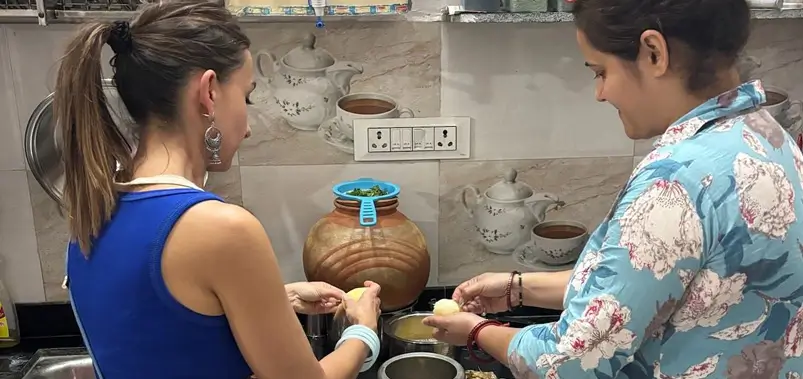
Some families will actively include you in their routines taking you to the local temple, showing you how to tie a safa (turban), or involving you in a cooking lesson. Others will give you space and simply be available when you want to connect. The best host families read their guests well and adjust accordingly.
Evenings in Jaipur tend to be social. Families gather, conversation flows, and if you are lucky, someone picks up an instrument. These unplanned moments are the ones that travelers talk about for the rest of their lives.
This is where most travelers make their mistakes either booking too quickly through an unvetted platform or relying on recommendations that are too vague to be useful. Here is a structured approach that actually works.
Start With Verified Platforms
Several platforms now specialize in connecting travelers with vetted host families. Look for platforms that conduct in person verification of hosts, provide transparent reviews from previous guests, and have a clear process for resolving disputes. Jaipur homestay for foreigners listings on platforms like Airbnb, Homestay.com, and India specific platforms like StayWithLocals can be a starting point, but they require careful filtering.
When browsing listings, prioritize hosts who have been active for at least two years, have a minimum of fifteen to twenty reviews, and whose reviews specifically mention interaction with the family rather than just the room quality. A five-star review that only talks about the bed and the Wi-Fi tells you nothing about the human element of the stay.
Ask the Right Questions Before Booking
Before confirming any local family stay in Jaipur, contact the host directly and ask the following:
How many guests are typically staying at the same time? A family hosting ten guests simultaneously is running a guesthouse, not offering a homestay. The best experiences happen in homes that take one or two traveling parties at a time.
Will you be sharing meals with the family? This is the single most reliable indicator of a genuine homestay versus a room rental dressed up as one.
What does a typical day look like for the family? A host who can answer this question with specificity and warmth is one who actually intends to include you in their life.
What language does the family speak? In Jaipur, most educated families speak functional to fluent English, but it is worth confirming.
Trust Your Instincts During the Initial Exchange
The quality of a host family's communication before you arrive tells you a great deal about the experience you will have. If responses are warm, detailed, and genuinely curious about you as a traveler, that is a very good sign. If they are templated, slow, and focused primarily on payment details, proceed with caution.
Pricing for a best homestay in Jaipur varies considerably depending on the type of accommodation, location, and what is included.
At the entry level, a basic room with breakfast in a middle class Jaipur home runs between 1,500 and 2,500 Indian rupees per night (roughly 18 to 30 USD). Mid range family stays in well maintained homes with all meals, air conditioning, and cultural programming range from 3,000 to 6,000 rupees per night (36 to 72 USD). At the upper end, heritage family havelis that have been partially converted for guests while the family continues to live on the property can command 8,000 to 15,000 rupees per night (95 to 180 USD), and these often represent extraordinary value compared to heritage hotels offering a similar aesthetic without the human element.
For luxury travelers, it is worth noting that some of Jaipur's oldest and most distinguished families those with genuine connections to the city's royal and mercantile history do host guests on a private, referral basis. These arrangements are not listed on any public platform and are typically arranged through high end tour operators or personal introductions. If this level of experience is what you are looking for, a reputable luxury travel specialist with deep Jaipur connections is your best route.

Staying in a private home requires a level of cultural sensitivity that a hotel stay does not. These are not rigid rules they are courtesies that will make your experience significantly richer.
Remove your shoes before entering the main living areas of the home. In most Rajasthani households, this is non-negotiable and deeply meaningful.
Dress modestly, particularly if the family is traditional. This means covered shoulders and knees for women, and avoiding sleeveless shirts for men in more conservative households. Your host family will appreciate the gesture enormously.
Ask before photographing anything inside the home, including the family members. What feels like a charming travel photo to you may feel like an intrusion to them. When in doubt, ask.
Be punctual for meals. Food in a Rajasthani household is prepared with care and effort. Arriving late without notice is considered disrespectful.
Reciprocate with genuine interest. The families who open their homes to travelers are not doing it purely for income. They are curious about the world. Ask about their lives, their city, their traditions. The exchange goes both ways.
Not every listing that calls itself a homestay is one. These are the red flags to watch for.
Avoid any property where the host family does not actually live on the premises. If the "family home" is managed by a caretaker and the family visits occasionally, it is a rental property with a misleading label.
Be cautious of listings with an unusually high number of rooms. Genuine family homestays rarely have more than two or three guest rooms. More than that suggests a commercial operation.
Avoid hosts who are unwilling to communicate directly before booking or who redirect all questions to a booking platform. Genuine host families want to know who is coming to stay with them.
Do not book based on photographs alone. A beautiful room in a genuine family home and a beautiful room in a guesthouse can look identical in photos. The reviews, the communication style, and the specifics of the arrangement are what distinguish one from the other.
Jaipur's climate divides the year quite sharply. The ideal window for a cultural stay in Jaipur is October through March, when temperatures are comfortable and the city's festival calendar is at its fullest. This period includes Diwali, Pushkar Fair (a short drive away), and the Jaipur Literature Festival in late January all of which take on a completely different character when experienced through the lens of a local family rather than from a tourist crowd.
April through June brings serious heat, with temperatures regularly exceeding 40 degrees Celsius. Homestays during this period are not impossible, but they require both physical tolerance and a willingness to adapt to a household that structures its day around the heat.
The monsoon months of July through September transform the city and the surrounding landscape into something lush and dramatic. This is a quieter period for tourism, which means host families have more time and attention for their guests, and prices tend to be lower. For travelers who do not mind occasional rain and humidity, the monsoon offers a genuinely different and often underrated version of the Jaipur experience.
Arrive with no fixed agenda for at least one full day. Leave your itinerary open and let the family guide you. The places they will take you the neighborhood chai shop, the workshop of a family friend who weaves textiles, the evening gathering at the local temple will almost certainly be more memorable than anything on a standard tour.
Learn three words of Hindi or Rajasthani before you arrive. Even a simple "Namaste," "Shukriya" (thank you), or "Bahut achha" (very good) will generate a warmth and openness in your hosts that no amount of politeness in English can match.
Bring a small gift from your home country. It does not need to be expensive. Chocolates, a postcard, a small item that represents where you are from these gestures are remembered.
Be present. The single biggest mistake travelers make in a homestay setting is spending their evenings on a screen. The family is there. The conversation is there. The experience is there. Use it.
We promise you a holiday where everything is taken care of from the moment you land. Trusted drivers waiting for you, handpicked hotels that fit your style, personalized itineraries designed just for your family, and a dedicated team on call 24/7. All you need to do is relax, explore, and create unforgettable memories, while we take care of every detail behind the scenes.
Yes, and this is actually an excellent combination. A private luxury tour of Jaipur's major sites during the day, paired with evenings and meals in a genuine local home, gives you the best of both worlds - professional expertise and access on one hand, human connection and cultural depth on the other.
Good communication resolves most issues before they become conflicts. If something is not working - a room that is too hot, a meal that does not suit you - speak directly and kindly with your host. Rajasthani hosts take their responsibilities seriously and will almost always find a solution. For serious issues, platform-mediated bookings have formal dispute resolution processes.
Payment arrangements vary. Platforms like Airbnb handle payment through the platform. Direct bookings with families are often handled through bank transfer, UPI, or cash on arrival. Always confirm the payment method and what is included before you arrive.
Most homestays in Jaipur now offer Wi-Fi, though the speed may not match what you find in a business hotel. If reliable high-speed internet is important to your trip, confirm this specifically before booking.
Communicate all dietary requirements in detail before you arrive. Most families will accommodate common restrictions without difficulty. For very specific or complex requirements, a brief discussion with the host before booking will clarify what is possible.
Absolutely. Indian families are extraordinarily welcoming toward children, and a Jaipur homestay can be a remarkable educational experience for young travelers. Confirm in advance that the host family is comfortable with children, but most are delighted by them.
Many host families can connect you with trusted local guides, drivers, and artisans. This is one of the most valuable aspects of the homestay arrangement - the recommendations come with genuine personal accountability rather than a commission-driven referral.
Pack modest clothing, a pair of slip-on shoes for easy removal, a small gift from your home country, earplugs if you are a light sleeper, and an open mind. Everything else you need, the family will provide or help you find.
It is not expected, but it is genuinely appreciated. If the family has cooked for you, guided you, or gone out of their way to make your stay memorable, a thoughtful tip or a heartfelt written thank-you note (or both) is entirely appropriate.
Yes. Good host families understand the need for personal space. You will have a private room and typically a private bathroom. The degree of integration into family life is almost always something you can calibrate based on your own comfort and communication with your hosts.
Yes. Jaipur has several families from distinguished backgrounds - including descendants of merchants, nobles, and artists - who host guests in heritage properties while continuing to live there themselves. These arrangements are often arranged privately through luxury travel specialists rather than listed on public platforms.
Two nights is the practical minimum, but three to five nights is where the experience genuinely opens up. It takes a full day to settle into the rhythms of a new household. The second and third days are typically where the most meaningful connections happen.
During peak season (October to February), book at least four to six weeks in advance. Good host families fill up quickly during festival periods. For the shoulder and monsoon seasons, two weeks of lead time is generally sufficient.
Yes, and in Jaipur, this is easier than almost anywhere else in India. The majority of traditional Rajasthani families are vegetarian, and their cooking is among the finest regional cuisine in the country.
No. Most host families in Jaipur who accept international guests speak functional to fluent English. That said, even a few words of Hindi go a long way in building warmth and connection.
Yes, provided you book through a verified platform and do your due diligence on reviews. Jaipur has a strong tradition of hospitality, and many host families specifically welcome solo female travelers. Look for hosts who have positive reviews from other women traveling alone.