Jaipur is one of the safer cities in India for foreign tourists. That sentence is worth saying clearly at the start because a lot of travel safety content creates unnecessary anxiety about destinations that are, in reality, perfectly manageable for any reasonably aware traveller.
At the same time, Jaipur has specific safety considerations that foreign tourists consistently encounter — particular scams that target visitors, situations that can escalate if handled badly, and moments where knowing the right phone number or the right place to go makes an enormous practical difference.
This guide covers all of it. Not to frighten you, but to give you the information you need to handle whatever comes up with confidence and minimal disruption to your trip.
Jaipur receives millions of tourists annually, including large numbers of solo travellers, solo female travellers, elderly visitors, and families with young children. The city has a functioning tourist police infrastructure, a relatively stable law and order situation compared to many large Indian cities, and a general culture of hospitality toward visitors that is genuine rather than merely commercial.
The risks that do exist in Jaipur for foreign tourists are overwhelmingly financial rather than physical. Scams, overcharging, commission based misdirection, and opportunistic fraud are the most common problems reported. Violent crime against tourists is rare. Petty theft — pickpocketing in crowded areas — exists but is not rampant.
Understanding this distinction matters. The alert posture required for Jaipur is primarily about keeping your money and your time, not about physical safety in the way you might need to think about it in some other parts of the world.
Save these numbers in your phone before you need them. Do not wait until you have a problem.
Tourist Helpline (Rajasthan Tourism): 1364 This is the dedicated helpline for tourists in Rajasthan. It operates around the clock and has English speaking operators. This should be your first call for any tourism related problem — scams, overcharging disputes, guidance on where to go for help.
Tourist Police Jaipur: 0141-2744999 The dedicated tourist police unit in Jaipur handles complaints and assistance specifically for visitors. They are generally responsive and experienced in dealing with the kinds of situations foreign tourists encounter.
National Emergency Number: 112 India's unified emergency number connects to police, ambulance, and fire services. This works from any mobile phone including those without a local SIM.
Police: 100 Ambulance: 108 Fire: 101
Women's Helpline: 1090 Specifically for women experiencing harassment, assault, or any safety situation. Available around the clock.
Rajasthan Anti-Corruption Helpline: 1064 Relevant if you encounter a situation involving demands for unofficial payments from anyone in an official position.
Your Country's Embassy or Consulate in India: Look this number up before you travel and save it. In the event of passport loss, serious legal trouble, medical emergency, or anything requiring consular assistance, your embassy is your most important resource. Most major countries maintain embassies in New Delhi with consular assistance lines that operate around the clock.
The Gem and Jewellery Export Scam
This is the most financially damaging scam in Jaipur and the one that catches the most foreign tourists. It typically unfolds over several hours and involves multiple people working together.
The setup begins with a friendly approach — usually near a major monument or your hotel — from someone who speaks excellent English and quickly establishes rapport. The conversation moves toward an offer: you can buy gemstones, jewellery, or textiles in Jaipur at local wholesale prices and resell them in your home country for enormous profit. Your new friend knows exactly the right shop, run by a trusted family. The government certifies the stones. There is paperwork.
At the shop, the goods are convincing, the hospitality is warm, and the paperwork looks official. The purchase is made for several hundred to several thousand dollars. The goods are either never shipped, arrive as worthless imitations, or are refused by customs in your home country for reasons the scammers anticipated.
How to protect yourself: No legitimate wholesale gem or textile business recruits customers through casual street conversations. The export resale model described in these pitches does not work the way it is presented — customs regulations, market realities, and the economics of genuine wholesale make the described scenario impossible. Any combination of a friendly stranger, a wholesale price, and an export resale story is a scam regardless of how convincing any individual element seems.
The Fake Government Office Scam
A person approaches you near a monument, a railway station, or your hotel and introduces themselves as a tourism official, a government guide, or a representative of the tourist information office. They offer assistance with bookings, permits, or information. They lead you to an office that looks official — printed letterheads, uniforms, laminated ID cards — where you are sold overpriced tour packages, unnecessary travel insurance, or fake tickets.
How to protect yourself: The official Rajasthan Tourism office in Jaipur is at the Tourist Reception Centre, Paryatan Bhawan, MI Road. The official tourist helpline is 1364. No legitimate government tourism official will approach you on the street. If anyone claiming government affiliation approaches you proactively, politely decline and verify their claims independently before engaging.
The Driver and Shop Commission Circuit
This is covered in detail in the car hire guide but deserves mention here as a safety and financial issue. Drivers, auto rickshaw operators, and self appointed guides routinely earn thirty to forty percent commission from specific shops for delivering foreign tourists. The tourist is taken to these shops without being told about the commission arrangement and typically pays significantly inflated prices for whatever they buy.
How to protect yourself: Agree explicitly before any journey that you do not want to visit any commission shops. Be firm and specific. If you are taken to a shop against your stated wishes, do not enter. You are never obligated to enter any shop during a hired journey.
The Fake Monk or Holy Man Scam
A person in religious clothing — saffron robes, rudraksha beads — approaches you near a temple or in a tourist area. They offer a blessing, place a thread or mark on your wrist or forehead, and then demand payment — sometimes aggressively — after the fact. Amounts demanded range from Rs. 500 to Rs. 5,000 or more.
How to protect yourself: Genuine priests and religious figures at temples do not approach tourists on the street for business. If someone approaches you offering unsolicited religious services and you have not specifically sought them out, politely decline before any physical contact is made. Once a mark or thread is placed, extracting yourself from the demand for payment becomes more complicated.
The Overpriced Auto-Rickshaw Scam
Auto rickshaw drivers quote dramatically inflated prices to foreign tourists who do not know the going rate. Alternatively, a driver agrees on a price, delivers you to a different location than requested, or adds unexpected charges at the end of the journey.
How to protect yourself: Know approximate rates before you get in. Within the old city area, most auto rickshaw journeys should cost Rs. 50 to Rs. 150. Longer crosstown journeys might run Rs. 150 to Rs. 300. Agree on the price explicitly before the journey begins, confirm the destination is understood, and do not pay until you have arrived at the correct location. Using Ola or Uber eliminates most of this friction by fixing the price upfront through the app.
The Closed Monument Scam
A driver, guide, or stranger tells you that the monument you are heading to is closed today — for a festival, a government function, a special ceremony — and offers to take you to an alternative attraction, which happens to be a shop or a less visited site where they earn a commission or entry fee kickback.
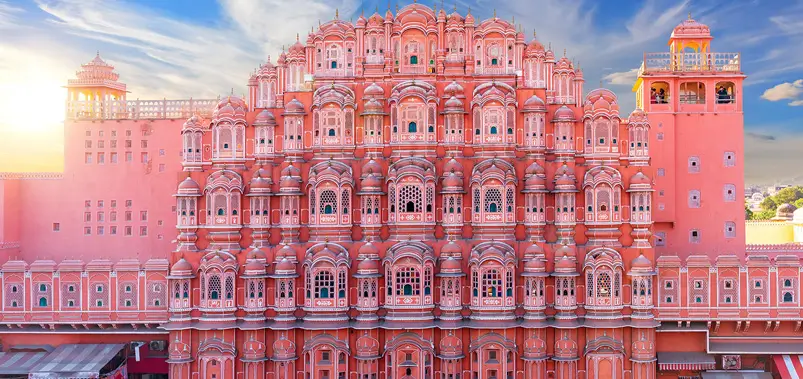
How to protect yourself: Verify monument opening times independently using the Archaeological Survey of India website or by calling the monument directly. Most major Jaipur monuments — Amber Fort, Hawa Mahal, City Palace, Jantar Mantar — are open on virtually all days with very few exceptions. If someone tells you a major monument is closed, verify before changing your plans.
The Counterfeit Currency Scam
When paying for goods or services with large denomination notes, some vendors quickly swap your note for a counterfeit and claim you gave them a fake. Alternatively, change is given with counterfeit notes mixed in.
How to protect yourself: Carry smaller denomination notes for everyday transactions. When paying with a Rs. 500 or Rs. 2,000 note, keep your eyes on the note from the moment you hand it over. If a vendor claims your note is fake, ask to see it immediately — the swap happens quickly and your original note will often be visible. Counting change before leaving a transaction is standard practice.
The Tainted Food or Drink Scam
This is rare but serious enough to mention. A new acquaintance — met at a tourist site, a cafe, or on a train — offers food, drink, or accepts your invitation for tea and uses the opportunity to add something to your drink. Victims report waking up later to find their belongings stolen.
How to protect yourself: Do not accept food or drink from people you have just met in tourist areas, particularly if the situation feels slightly staged or if the person showed unusual interest in befriending you very quickly. This applies equally to men and women. Trust your instincts if something feels wrong.
Generally Safe Areas for Tourists
The old walled city around Johari Bazaar, Bapu Bazaar, Hawa Mahal, and City Palace is heavily trafficked by tourists and locals and is generally safe during daylight hours. The presence of tourist police checkpoints in peak season adds a layer of visible security.
C-Scheme, Bani Park, and Civil Lines — the areas where many upscale hotels and restaurants are located — are among the most straightforward neighbourhoods for foreign tourists to navigate without incident.
The area around MI Road — the main commercial street connecting the old city to newer Jaipur — is busy, well lit, and safe for walking during the day and most of the evening.
Areas and Situations Requiring Extra Awareness
Railway station areas at night attract opportunistic approaches from people offering accommodation and transport services that are not what they appear. Use pre booked transport from the railway station where possible.
Isolated lanes in the old city after dark warrant more awareness than during the day. The old city's lane network is complex and some sections become very quiet after 9 or 10 PM. Stay on main streets after dark if you are not familiar with the area.
Festival crowds — during Holi, Diwali, and major festival processions — create conditions where pickpocketing is more viable simply because of density. Keep bags in front of you, keep valuables minimal, and be conscious of your surroundings in tight crowds.
Solo female travellers visit Jaipur in large numbers and the majority have positive and safe experiences. The following considerations are specific to solo female travel rather than general tourist safety.
Dress modestly in public spaces. Covered shoulders and knees are appropriate for most public areas in Jaipur, particularly the old city, markets, and religious sites. This is not about accommodating harassment — it is about dressing contextually for the environment you are in, in the same way you would dress differently for a beach versus a business meeting.
Use women only transport options where available. The front seats of auto rickshaws are sometimes designated for female passengers. Women only compartments exist on some trains. Ola and Uber have a women's safety feature that allows female passengers to share trip details in real time.
Be aware of photography situations. Some men in tourist areas use camera requests — asking you to take their photo or offering to photograph you — as a pretext for unwanted physical contact. Trust your instincts in these situations.
Book accommodation in advance. Arriving in Jaipur without accommodation booked and relying on touts near the railway station or bus stand to find a hotel is a situation that creates vulnerability. Book ahead and arrive knowing where you are going.
The women's helpline is 1090. This connects to a dedicated response team for women in distress and is available around the clock.
Hospitals Worth Knowing
Sawai Man Singh Hospital (SMS Hospital): The largest government hospital in Jaipur. Located on Sawai Ram Singh Road. For serious emergencies it has the most comprehensive facilities.
Fortis Escorts Hospital: A private hospital in Malviya Nagar with good facilities and English speaking staff. Better suited for foreign tourists who need reliable communication with their medical team.
Mahatma Gandhi Hospital: Another major government facility with emergency services.
Common Health Issues for Foreign Tourists
Traveller's diarrhoea is the most common health issue for foreign visitors to India. Drink only bottled or purified water. Avoid ice in drinks unless you are confident of its source. Be cautious with raw salads and unpeeled fruit from street vendors. Oral rehydration salts are available at any pharmacy and should be in your travel kit.
Heat related illness is a genuine risk from March through June when temperatures in Jaipur regularly exceed 40 degrees Celsius. Stay hydrated, rest during the hottest hours of noon to 3 PM, and recognise the signs of heat exhaustion — dizziness, nausea, excessive sweating followed by absence of sweating — as requiring immediate shade, water, and medical attention if they do not resolve quickly.
Sun exposure at Jaipur's altitude and latitude is more intense than many foreign visitors anticipate. Sunscreen of at least SPF 50, a hat, and regular rehydration are not optional during outdoor sightseeing in most months.
Pharmacies in Jaipur are accessible throughout the city including in the old city area. Most carry standard medications and the staff can advise on common traveller health issues. Prescription medications are often available over the counter at pharmacies in India, though this varies by medication.
If You Are Scammed or Robbed
Do not confront anyone aggressively if you feel physically unsafe. Remove yourself from the immediate situation first.
Go to the nearest Tourist Police checkpoint or call 0141-2744999. Tourist police in Jaipur are specifically trained and motivated to handle tourist complaints because their jurisdiction depends on maintaining a reputation for safety.
File a formal complaint. A written complaint creates a record that helps both your own situation and future tourists. If you paid by card, contact your card issuer immediately to dispute fraudulent charges.
Contact your embassy if the situation involves significant financial loss or legal complexity.
If You Lose Your Passport
Report the loss immediately to the nearest police station and get a written acknowledgement (FIR — First Information Report). This document is required by your embassy to issue an emergency travel document.
Contact your country's embassy or consulate in New Delhi. Most have emergency lines that operate around the clock specifically for passport related situations.
If You Need Medical Help
Call 108 for an ambulance. For non-emergency medical situations, ask your hotel to recommend a nearby doctor or clinic — hotels deal with tourist medical situations regularly and can usually facilitate appropriate care quickly.
Carry your travel insurance documentation with you and know your insurance company's emergency number. Having this information accessible on your phone rather than only in a document in your hotel room means you have it when you actually need it.
Make digital copies of all important documents. Passport, visa, travel insurance, hotel bookings. Email them to yourself so they are accessible from any internet connection even if your phone is lost or stolen.
Share your itinerary with someone at home. A simple daily check in with a person who knows roughly where you are supposed to be is one of the most effective safety habits for any solo traveller.
Keep emergency cash separate from your main wallet. A small amount of cash kept separately from your primary wallet — in a money belt, in your accommodation safe, or in a different bag — gives you options if your wallet is stolen or lost.
Know your hotel address in the local language. If you get separated from your phone or find yourself with a driver who does not speak much English, being able to show your hotel address written in Hindi on a piece of paper is genuinely useful. Ask your hotel to write it for you when you check in.
Trust your instincts more than your politeness. Many tourists, particularly those from cultures with strong norms around politeness and not causing offence, stay in uncomfortable situations longer than they should because they do not want to be rude. In Jaipur's tourist context, your right to say no — to a shop visit, to a photo request, to a conversation that makes you uncomfortable — takes complete priority over social niceties.
We promise you a holiday where everything is taken care of from the moment you land. Trusted drivers waiting for you, handpicked hotels that fit your style, personalized itineraries designed just for your family, and a dedicated team on call 24/7. All you need to do is relax, explore, and create unforgettable memories, while we take care of every detail behind the scenes.
Travel insurance covering medical evacuation, hospitalisation, theft, and trip interruption is strongly recommended for any trip to India. Medical costs at private hospitals in Jaipur are significantly lower than in Western countries but can still be substantial for serious illness or injury. Ensure your policy specifically covers India and check the emergency contact procedure before you travel, not after something goes wrong.
Yes, generally. The tourist police in Jaipur operate under direct accountability to the Rajasthan Tourism Department, which has strong institutional incentives to maintain a reputation for tourist safety. Tourist police complaints are typically handled more seriously and more quickly than general police complaints. Using the tourist helpline 1364 before escalating to general police is recommended for most tourist-specific situations.
Registered vehicles with visible licence plates matching the driver's documents. A driver who confirms the agreed price and itinerary in writing before departure. A driver who does not mention shops, commissions, or detours in the first conversation. A company or individual with verifiable reviews on established platforms. An upfront discussion about the no-commission preference met with agreement rather than resistance.
Holi requires specific preparation. Choose your participation carefully — organised Holi events at heritage hotels are considerably safer than joining street celebrations where the atmosphere can become unpredictable. Leave valuable electronics at your hotel. Wear old clothes you do not mind permanently staining. The women's helpline 1090 is particularly relevant during Holi when incidents of harassment in crowds increase.
Walk away without engaging. Do not make eye contact, do not explain yourself, and do not feel obligated to respond. Most aggressive approaches end quickly when they receive no engagement. If someone physically impedes your movement or follows you persistently, walk toward any uniformed official, police presence, or into a busy shop.
Use ATMs inside banks or in well-lit, busy locations rather than standalone machines in quiet areas. Cover your PIN when entering it. Check for any loose attachments on the card reader before inserting your card — card skimming devices, while not extremely common, do exist. Inform your bank before travelling that you will be using your card in India.
Look for membership in established trade bodies such as the Gem and Jewellery Export Promotion Council. Ask for certified stones with documentation from recognised gem laboratories. Never buy gems through an arrangement initiated by a stranger on the street regardless of how legitimate the subsequent shop appears.
No. Drink only bottled water or water that has been purified through an established filtration system. Ask specifically about water source at restaurants. Most tourist-facing restaurants use purified water for cooking and drinking, but confirming is reasonable and never considered offensive.
Simply refuse to enter. You can say you are not interested in shopping today and ask to continue your agreed itinerary. If the driver becomes difficult, call your hotel or use Ola or Uber to arrange alternative transport. You are never obligated to enter any shop during a hired car journey.
Main streets — MI Road, Johari Bazaar, C-Scheme areas — are generally safe for walking in the evening. Isolated old city lanes after 10 PM warrant more caution. Solo female travellers should use transport rather than walking alone in quiet areas after dark.
The tourist helpline 1364 for general tourist assistance and 0141-2744999 for tourist police. The national emergency number 112 for any serious emergency. Your own country's embassy emergency line for consular situations.
Yes, with appropriate awareness. Jaipur is one of the more manageable Indian cities for solo female travellers. Using reliable transport, dressing contextually, booking accommodation in advance, and trusting your instincts in uncomfortable situations are the primary practical considerations. The women's helpline 1090 is available around the clock.