The best way to understand any city is through its food. And the best way to understand Jaipur's Walled City is through the food you find in its lanes at different times of day.
At 8 in the morning, the kachori vendors are frying the first batch of the day and the smell of hot oil and cumin drifts across Badi Chaupar. At noon, the mithai shops are fully open and the display cases are loaded with sweets glistening with ghee and syrup. At 4 in the afternoon, the chaat carts appear in the bazaar lanes and the evening crowd begins to build. At 9 at night, a single jalebi stall on Chaura Rasta is still frying, and there is a short queue of locals who know that this is the best time to eat it.
Food in the Walled City of Jaipur is not restaurant food in the conventional sense. It is street food, bazaar food, shop food, and occasionally home food that has been sold publicly for so many decades that it has become inseparable from the city's identity. The dishes do not change season to season. The best stalls have been serving the same things in the same way for fifty, eighty, a hundred years.
This guide takes you through the Walled City food scene hour by hour, stall by stall, with honest information on what to order, what to avoid, how much to pay, and how to eat well without unnecessary risk.
Before exploring Jaipur's food scene, it helps to understand the city's unique heritage and culture that shape its culinary traditions.
Read More → Stay With a Local Family in Jaipur
https://www.goldentriangletours.com/blog/stay-with-local-family-in-jaipur
Rajasthani cuisine was shaped by geography more than anything else. The region is arid, water was historically scarce, and fresh vegetables were difficult to grow and preserve. The cuisine responded by developing around techniques that required little water and could produce food that lasted: deep frying, drying, pickling, and the generous application of spices that were both flavourful and functionally preservative.
The result is a food culture built on ghee, lentils, dried beans, whole wheat, dairy, and spice. Fresh vegetables appear but are not central. Meat exists in Rajasthani cuisine but the Walled City's food culture is overwhelmingly vegetarian, shaped by the Jain and Brahmin communities that have been central to its commercial life since the city was founded.
For foreign visitors, this means two things. First, navigating dietary requirements is considerably simpler in the Walled City than in many other parts of India. Second, the food is frequently very rich, very spiced, and occasionally very sweet, in combinations and at intensities that may be unfamiliar. Going slowly, eating small portions of many things rather than large portions of a few, is both the safer and more rewarding approach.
Morning is the most important meal time in the Walled City. The best food of the day is made fresh between 7:30 and 10:30 AM, and several of the most celebrated stalls sell out entirely by noon.
From Hawa Mahal and City Palace to Johari Bazaar and the vibrant food lanes of the Pink City, discover Jaipur with a customized private tour designed for first time international visitors.
.webp)
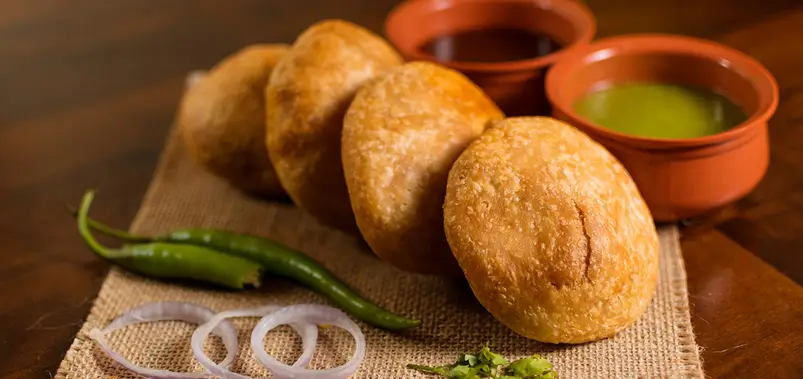
The morning begins, for most Jaipur residents with any connection to the old city, with pyaaz kachori. This is a deep fried whole wheat pastry, roughly the size of a large orange, stuffed with a filling of spiced onions, chilli, dried mango powder, and crushed lentils. It arrives at your table or plate still hot from the fryer, served with a dark tamarind chutney, a bright green coriander and mint chutney, and a small bowl of spiced potato curry called sabzi.
The outside is crisp, golden, and shatters when broken. The inside is soft, dense, and intensely savoury. The combination of the pastry, the filling, and the three chutneys is one of those flavour combinations that takes a moment to understand and then becomes immediately, persistently appealing.
Where to find it in the Walled City: The stalls around Badi Chaupar and in the lanes immediately adjacent to the main square begin frying from around 7:30 AM. Look for the vendor with the largest wok of hot oil and the most activity around them. The stalls near the entrance to Johri Bazaar on the Chaupar side are reliable. Freshness is everything: kachori that has been sitting for more than 20 minutes loses much of its character.
The most celebrated pyaaz kachori in Jaipur overall is at Rawat Mishthan Bhandar near Sindhi Camp, which is just outside the Walled City proper, but the stalls within the old city are very good and have the advantage of being embedded in the bazaar atmosphere that makes the experience complete.
Price: Rs 20 to Rs 40 per piece. Spice level: Medium to high.
Continue Exploring Jaipur's Food Culture: Traditional sweets are only one part of Jaipur's culinary heritage. Explore the must try snacks, breakfasts, and local specialties found throughout the historic Walled City.
Read More → Jaipur's Best Sweets: A First Timer's Guide to Mithai
https://www.goldentriangletours.com/blog/jaipur-best-sweets-first-timer-guide-to-mithai
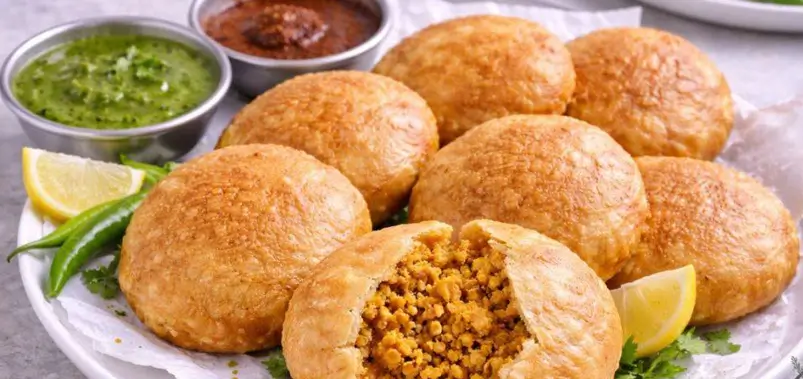
Dal kachori is the older sibling of pyaaz kachori and, according to many local residents, the more traditional version. The filling is made from crushed lentils and spices rather than onions, producing a drier, more intensely spiced interior. The pastry itself is the same.
Several stalls in the Walled City specialise in dal kachori rather than the more commonly found pyaaz version. They are particularly concentrated in the lanes near Chandpole Bazaar on the western edge of the old city.
Price: Rs 15 to Rs 35 per piece. Spice level: Medium.

No kachori experience is complete without a glass of masala chai on the side. The tea stalls of the Walled City begin operating before the food stalls, sometimes as early as 6:00 AM, and the smell of ginger and cardamom simmering in milk is often the first sensory impression of the morning in the old city lanes.
Jaipur chai is made with full fat milk, black tea steeped directly in the milk, sugar, and a heavy hand with spices including ginger, cardamom, and often clove. It is strong, sweet, and warming in a way that makes it the natural accompaniment to the rich, spiced food of the morning.
Where to find it: Any small stall with a gas burner or kerosene stove is a potential option. In the Walled City specifically, look for Gulab Ji Chai Wale near the Johri Bazaar area, which has a loyal local following. The stalls immediately around Badi Chaupar that open the earliest tend to be the most reliable.
How to order: Ask for ek cutting chai (one small glass) or ek full chai (one full cup). Price is Rs 10 to Rs 20.
Continue Exploring Jaipur's Culinary Heritage: While Jaipur's mithai shops are a delight for first time visitors, the city's food culture extends far beyond sweets. From traditional breakfasts to street side chai and local family meals, there is much more to discover.
Read More → Top 10 Street Foods in Jaipur for First Time Foreign Visitors: What to Eat, Where to Go and What to Expect

Samosa is universally known and needs little introduction. The Walled City version is typically larger than the samosas common in Western Indian restaurants, with a thicker, crispier pastry and a filling of spiced potato, peas, and sometimes dried fruit. Served with the same tamarind and coriander chutneys as kachori.
Mirchi bada requires a more specific introduction. It is a large green chilli, stuffed with spiced potato, coated in chickpea flour batter, and deep fried. It is intensely, genuinely, memorably spicy. It is also eaten by many Jaipur residents as a morning food item, which says something about the relationship between this city and chilli heat.
If your spice tolerance is reasonable and you want one food experience that will stay with you from Jaipur, mirchi bada is the candidate. Eat it with yoghurt or lassi nearby. Water will not reduce the heat.
Both are available at kachori stalls throughout the Walled City from early morning.
Price: Rs 15 to Rs 30.
Between 10:00 AM and noon, after the breakfast food rush has settled, is the right time to explore the sweet shops of the Walled City. These are not street stalls but proper establishments with glass display cases, seating areas, and a range that extends well beyond what is available on the street.
LMB on Johri Bazaar has been one of the most beloved institutions in the Walled City since it opened in 1954. It is simultaneously a sweet shop, a snack counter, and a sit down restaurant, operating across multiple levels of a building that has been extended and expanded over seven decades.
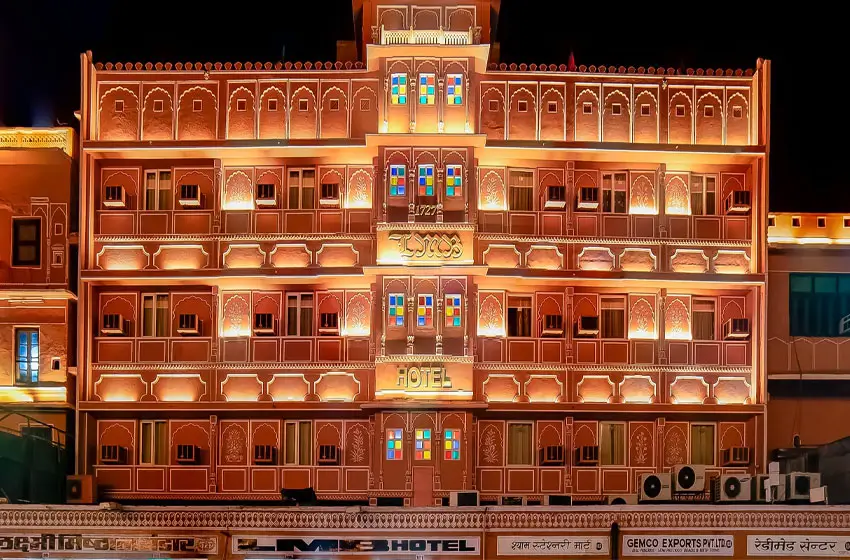
The sweet counter at LMB is one of the finest in Jaipur. It stocks the full range of Rajasthani sweets including ghewar (the large disc shaped sweet made from fried flour batter in a honeycomb structure, soaked in syrup and topped with cream), kalakand (a dense milk based sweet with a grainy texture and the scent of cardamom), sohan halwa (a very dense sweet made from wheat starch, ghee, and sugar), mawa burfi (reduced milk fudge), and seasonal items that vary throughout the year.
The snack counter at the front serves fresh kachori, samosa, and various chaat items. The restaurant upstairs serves a proper Rajasthani thali at lunch, covering the full range of traditional dishes.
For foreign visitors, LMB is one of the most accessible eating experiences in the Walled City because it is clean, has English menus, and the staff are accustomed to explaining dishes to tourists. It is not cheap by local standards but is excellent value by any international comparison.
Location: Johri Bazaar, near Badi Chaupar. Open daily from approximately 8:00 AM to 11:00 PM.
Go beyond the guidebooks and experience Jaipur through its food, markets, and local traditions. From crispy pyaaz kachori and samosas to famous Indian sweets and masala chai, uncover the authentic flavors that make the Pink City unforgettable.
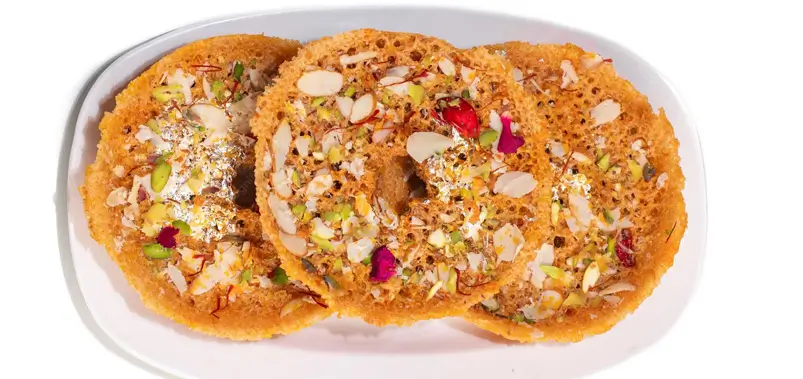
Ghewar deserves specific mention as the most distinctive sweet of Jaipur and the one most foreign visitors have never encountered before. The preparation involves pouring a thin batter of flour, ghee, and water through a narrow opening into a cylindrical mould of very hot oil. The batter sets as it fries in a porous lattice structure that looks like a honeycomb disc. This structure then absorbs the maximum possible quantity of sugar syrup and, in the premium versions, is topped with a thick layer of malai cream, saffron, and crushed pistachio.
The result is simultaneously crunchy, soft, syrupy, creamy, and intensely sweet. It is a very acquired taste for visitors from countries where desserts tend towards the less sweet end of the spectrum.
Ghewar is traditionally associated with the monsoon festival of Teej (July to August), when the city's sweet shops display enormous towers of freshly made ghewars in their windows. It is available year round at LMB and Rawat Mishthan Bhandar.
Lunch in the Walled City is a substantial affair by any standard. The correct lunch experience in the old city is a Rajasthani thali: a round metal platter loaded with multiple small bowls containing different dishes, accompanied by bread and rice, covering the full range of the regional cuisine in a single meal.
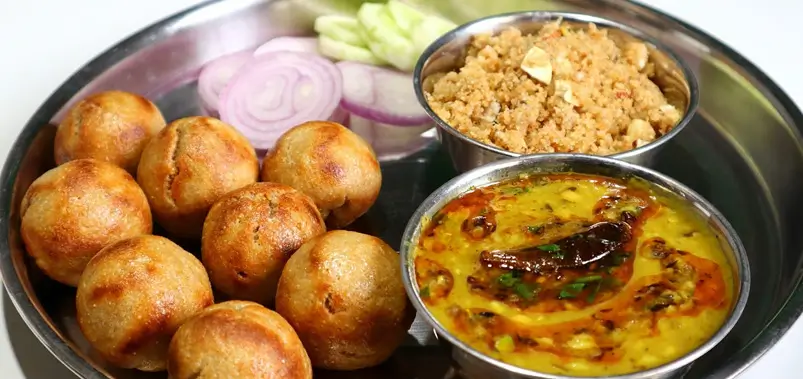
A standard Rajasthani thali at a good establishment in the Walled City will contain some combination of the following:
Dal baati churma: The centrepiece. Baati are dense wheat balls baked until the outside is hard and the inside soft, broken and soaked in quantities of melted ghee. Dal is a thick, richly spiced lentil curry. Churma is the sweet component: crumbled baati mixed with sugar, ghee, and cardamom. The three are eaten together in combinations determined by personal preference.
Gatte ki sabzi: Gram flour dumplings cooked in a yoghurt based curry. This is one of the defining dishes of Rajasthani cooking and the one most worth trying if you have not encountered it before.
Ker sangri: A dry vegetable preparation made from a wild desert bean (sangri) and a small desert berry (ker), both of which are dried and preserved, cooked with spices. The flavour is complex, slightly sour, and unlike anything else in the Indian repertoire. It is an acquired taste that many foreign visitors find more interesting than they expected.
Bajre ki roti: Flatbread made from pearl millet rather than wheat, dark, slightly earthy, and traditional to the region.
Papad: Thin crispy lentil wafers, usually served roasted or fried.
Various seasonal vegetable dishes, pickles, and chutneys.
The thali is a complete meal and is typically served with unlimited refills of individual components at good establishments.
Where to eat it in the Walled City:
LMB Restaurant upstairs serves a reliable and reasonably priced Rajasthani thali in a clean, air conditioned environment. This is the most accessible option for first time visitors.
Handi Restaurant on MI Road, just south of the Walled City, is highly regarded locally for its traditional Rajasthani food and is a good option for visitors who want a more substantial lunch in a proper restaurant setting.
For the most atmospheric experience, Chokhi Dhani on the outskirts of Jaipur serves the Rajasthani thali in a traditional village setting with folk performances, though this is better suited to an evening visit than a midday lunch.
Price for thali: Rs 200 to Rs 500 at a good establishment, depending on the level.
Looking Beyond Food? Traditional drinks like lassi are best enjoyed while exploring the city's historic bazaars, temples, and cultural landmarks.
Discover More → Golden Triangle Tour with Holi Celebration in Jaipur
https://www.goldentriangletours.com/holi-tour-package

Kachori chaat is a variation on the morning kachori that becomes available as a midday snack option in some stalls. A kachori is broken open and topped with curd, tamarind chutney, green chutney, and a scattering of spices and sev (thin crispy noodles made from chickpea flour). The result is simultaneously crunchy, soft, sour, sweet, and spicy in a way that is very specifically a Jaipur combination.
Available at chaat stalls around Badi Chaupar from late morning.
Related Reading: The bustling markets of Jaipur are also home to skilled artisans, family run businesses, and centuries old craft traditions.
Read More → The Artisans of Jaipur
https://www.goldentriangletours.com/blog/the-artisans-of-jaipur-masters-traditions-alive
The afternoon is the time for chaat and cold drinks. After the heat of the midday, the bazaars begin to reopen and the food carts and stalls that specialise in cold, tangy, refreshing food come into their own.
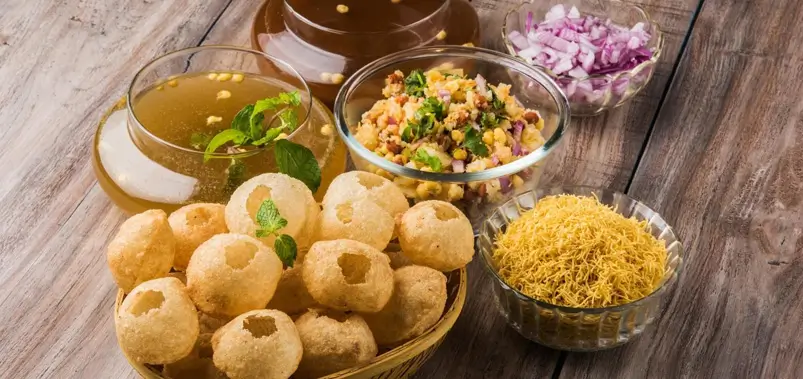
Golgappa is the street food that most clearly illustrates the social dimension of eating in the Walled City. It is not possible to eat it privately or quickly. You stand at the cart, the vendor fills each hollow crispy sphere one at a time and hands it directly to you, and you eat it immediately in a single mouthful before the flavoured water soaks through the shell.
The ritual is communal and unhurried. Other customers stand alongside you, exchanging opinions on the water's spice level, debating which stall in the bazaar makes the best version. This is one of those street food experiences where the eating is almost secondary to the standing and being present in the old city at four in the afternoon.
The flavoured water is made from tamarind, mint, coriander, and a combination of spices producing a flavour that is simultaneously sour, cooling, and complex. The filling inside each sphere is spiced mashed potato or chickpeas.
Where to find it: The stalls on Johri Bazaar and in the lanes around Badi Chaupar begin setting up their golgappa carts from around 3:00 PM and are at their most active between 4:00 and 7:00 PM. Masala Chowk near Albert Hall Museum also has reliable golgappa in a more controlled setting.
Safety note: The water at some stalls is made with tap water. Choose busy, reputable stalls or use the Masala Chowk option for the safest experience.
Price: Rs 20 to Rs 40 for a portion of six.
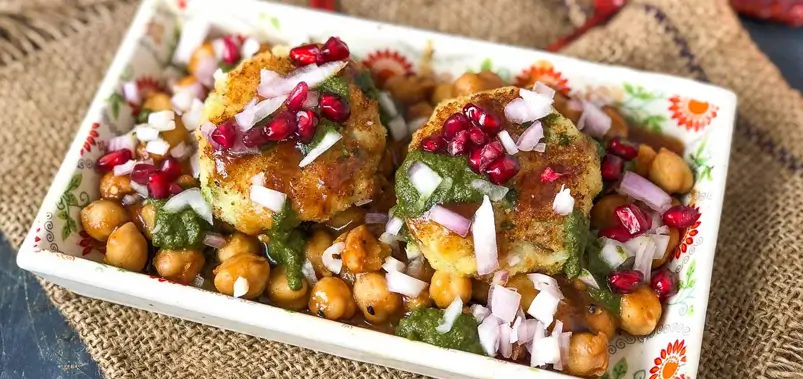
Aloo tikki is a shallow fried potato cake, seasoned with spices, shaped into flat rounds, and cooked on a griddle until the outside is crisp and the inside is soft and yielding. It is served with the standard chutneys and optionally topped with curd, chaat masala, and sev for a more elaborate version.
It is less aggressively spiced than the morning kachoris and is a good option for visitors whose palates have been challenged enough for one day but who want to continue eating.
Available from stalls around the Walled City from mid afternoon.

Kulfi is the Indian frozen dairy dessert, denser and more intensely milky than Western ice cream. In the Walled City, kulfi vendors appear in the afternoons pushing carts with metal containers packed in ice. The kulfi is served on a stick, at room temperature for about thirty seconds before it begins to melt, which means you eat it quickly.
The traditional Walled City flavours are malai (cream), kesar (saffron), and pista (pistachio). A version served in a glass with rose syrup, vermicelli noodles, and milk is called kulfi falooda and is available at the stalls on Bapu Bazaar.
The evening brings the most atmospheric food experience available in the entire Walled City. The bazaars are fully lit, the evening crowd is at its peak, the smell of frying and spice is concentrated by the narrow lanes, and the food is, if anything, better than it was in the morning.
Discover hidden food gems, traditional sweet shops, bustling bazaars, and authentic Rajasthani street food on a guided walk through Jaipur's historic Walled City. Experience local flavors while exploring the city's rich culture and heritage.
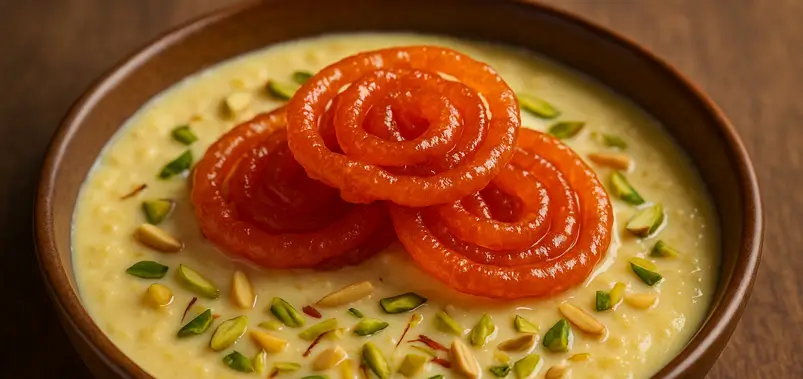
Jalebi eaten hot from the fryer at an evening stall in the Walled City is one of those food experiences that is difficult to describe adequately and easy to remember permanently.
The preparation is simple in description and demanding in practice: a fermented batter is piped in tight spirals directly into very hot oil and fried until crispy, then immediately submerged in warm sugar syrup. The result is a tangled coil of fried batter that is crunchy on the outside and saturated with syrup on the inside.
The key word is immediately. Jalebi eaten within two minutes of leaving the fryer is a completely different experience from jalebi that has been sitting in syrup for an hour. The timing of your visit to the stall matters enormously.
Rabri is the traditional accompaniment: a thick, reduced milk preparation flavoured with cardamom and saffron, slightly grainy in texture, sweet but not excessively so. The contrast of hot, crispy, intensely sweet jalebi and cool, creamy, mild rabri is one of the classic flavour pairings in Rajasthani food.
Where to go: Samrat Restaurant on Chaura Rasta is one of the most celebrated jalebi institutions in Jaipur. The evening hours between 7:00 and 9:00 PM are when the jalebi is freshest and the queue is most convivial. Chaura Rasta is a short walk from Johri Bazaar through the heart of the old city.
Price: Jalebi by weight, approximately Rs 30 to Rs 60 per 100 grams. Rabri Rs 30 to Rs 50 per portion.
Experience Rajasthan Beyond the Plate: Food is only one part of Rajasthan's rich heritage. Palace cities, historic forts, and local traditions offer a deeper connection to the region.
Explore Tours → Delhi Jaipur Agra with Rajasthan Tour
https://www.goldentriangletours.com/delhi-jaipur-agra-with-rajasthan-tour
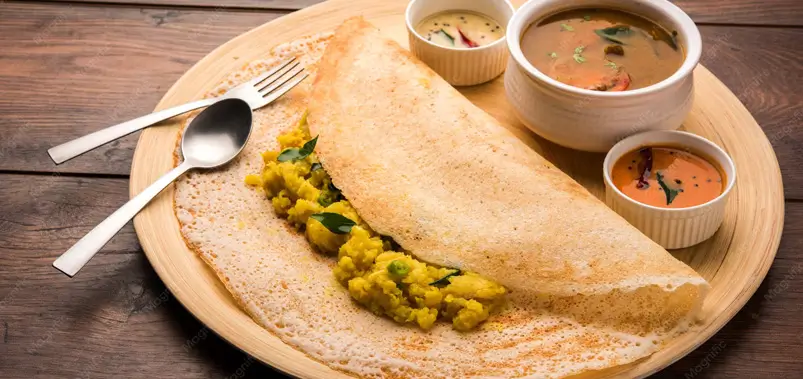
One of the small surprises of the Walled City food scene is the presence of excellent South Indian food alongside the Rajasthani staples. Several stalls and small restaurants around Johri Bazaar and the lanes near City Palace serve very good masala dosa, idli, and vada from the late afternoon onwards.
This is not as incongruous as it might seem. Jaipur has always been a trading city, and the communities that came to trade brought their food traditions with them. South Indian tiffin has been available in the Walled City for decades and is genuinely good rather than a poor imitation.
For foreign visitors who find their palates needing relief from the intensity of Rajasthani spice, a plain or masala dosa in the evening is a reasonable and satisfying option.
Several restaurants in and immediately around the Walled City offer rooftop dining with views across the old city, the Hawa Mahal, and the illuminated fort in the distance. These are not street food experiences but proper restaurant meals, typically serving a mix of Rajasthani and North Indian food with some Continental options.
Wind View Cafe near Hawa Mahal is one of the most popular options for the view rather than the food, which is decent rather than exceptional. Arrive before sunset for the best light. The view of Hawa Mahal from the rooftop terrace at dusk, when the pink sandstone shifts colour with the changing light, is genuinely worth the price of a meal.
For visitors who want a rooftop dinner as part of their Walled City evening, discuss the options with our team when planning your Jaipur itinerary and we can recommend the right venue for your interests and budget.
This route covers the principal food experiences of the Walled City in a logical sequence and can be completed in a full day or adapted to a half day focused on morning or evening food.
8:00 AM: Badi Chaupar. Begin with cutting chai at a small stall on the square. Then pyaaz kachori from the nearest active frying stall.
9:00 AM: Johri Bazaar. Walk south along the main market street. The Lassiwala on MI Road is a 10 minute walk south of the old city boundary. Go before 11:00 AM to be certain of getting the original version.
10:30 AM: LMB. Stop at Laxmi Misthan Bhandar for sweets. This is the right time to try ghewar, kalakand, or mawa burfi in the sweet counter downstairs before the lunch crowd arrives.
12:30 PM: Rajasthani Thali. Return to LMB for lunch upstairs, or walk to Handi Restaurant on MI Road for a proper sit down thali.
3:00 PM: Tripolia Bazaar and Chaura Rasta. Walk the lane connecting the two chaupars. Stop at any active chaat stall for aloo tikki. This is also the right time to explore the lanes of the old city that are not primarily commercial.
4:30 PM: Golgappa. The carts on Johri Bazaar and around Badi Chaupar are at their most active in the late afternoon. This is the most sociable eating experience in the Walled City.
6:00 PM: Govind Dev Ji Temple for evening aarti. Not food, but the experience of the evening aarti at the temple within the City Palace complex is one of the most atmospheric things available in the Walled City at any time of day and is worth scheduling as a break between the afternoon snacks and the evening jalebi.
7:30 PM: Chaura Rasta. Samrat for jalebi with rabri. Eat standing. Accept refills only if the jalebi is going directly from fryer to syrup to your hand.
9:00 PM: Masala Chai. End the evening with a final chai at one of the stalls that stays open late in the lanes around Johri Bazaar. By this hour the bazaar crowds have thinned and the old city is quieter and more intimate than at any other time of day.
Choose busy stalls. The single most reliable guide to food safety and quality in the Walled City is the presence of a queue of local customers. High turnover means fresh food cooked continuously.
Eat food cooked in front of you. Kachori, jalebi, mirchi bada, golgappa, and most other Walled City street foods are prepared continuously and are best and safest when eaten immediately after cooking. Avoid pr cooked items sitting in open containers.
Carry cash. Street stalls and most older mithai shops in the Walled City operate on cash only. Carry small denomination notes.
Drink only bottled water. Do not drink tap water or ice from street stalls.
Start with less. The food of the Walled City is rich, oily, and spiced beyond what most foreign visitors are accustomed to. Eating small portions of many dishes is more rewarding than eating large portions of a few.
The mornings are non-negotiable. If you visit the Walled City only once and only for food, make it a morning visit. The kachori, the chai, the mithai, and the early atmosphere of the old city before the crowds arrive are the best version of everything.
For a private guided food walk through the Walled City as part of your Jaipur visit, our team can arrange this alongside your sightseeing itinerary. Contact us directly and we will plan a food experience built around your interests and dietary preferences
Explore Jaipur and Beyond
If Jaipur's culinary traditions have inspired your visit, consider extending your journey through India's most iconic destinations with a customized Golden Triangle or Rajasthan tour.
View Tour Packages → Luxury Golden Triangle Tour Packages
https://www.goldentriangletours.com/tour-packages
We promise you a holiday where everything is taken care of from the moment you land. Trusted drivers waiting for you, handpicked hotels that fit your style, personalized itineraries designed just for your family, and a dedicated team on call 24/7. All you need to do is relax, explore, and create unforgettable memories, while we take care of every detail behind the scenes.
If you have time for only four food experiences in the Walled City, make them: pyaaz kachori fresh from the fryer in the morning at a Badi Chaupar stall, lassi at the original Lassiwala on MI Road (go before 11:00 AM), a Rajasthani thali at LMB for lunch covering dal baati churma and gatte ki sabzi, and jalebi with rabri at Samrat on Chaura Rasta in the evening. These four experiences cover the morning, midday, and evening food culture of the old city and give a genuine sense of what Jaipur tastes like.
Yes, and for first-time visitors a guided food walk is one of the best investments of time in Jaipur. A good guide knows which stalls are reliable, can explain the cultural and historical context of each dish, will navigate the narrow lanes efficiently, can translate at stalls with no English display, and will sequence the eating sensibly so you are not overwhelmed early in the morning. Contact our team directly to arrange a private food walk as part of your Jaipur visit.
Ker sangri is a dry vegetable preparation made from ker (a small desert berry) and sangri (a desert bean), both dried and preserved in the traditional Rajasthani manner. It is sour, slightly chewy, and flavoured with a complex spice mixture. It is included in the Rajasthani thali because it represents the cuisine's historical ingenuity: a region with very little fresh produce developed recipes around preserved ingredients that could be stored through long dry seasons. It is an acquired taste that rewards patience.
Street food in the Walled City is very affordable. A morning of kachori and chai will cost Rs 60 to Rs 100 per person. A sit-down Rajasthani thali at LMB costs Rs 250 to Rs 400. An afternoon of golgappa and aloo tikki costs Rs 50 to Rs 80. An evening of jalebi with rabri at Samrat costs Rs 60 to Rs 100. A full day of eating across all meal times in the Walled City should cost Rs 500 to Rs 800 per person in total.
Yes. Lassi (yoghurt drink), jalebi (fried sweet), ghewar (fried sweet), mawa kachori (sweet pastry), kalakand (milk sweet), and kulfi (frozen dairy dessert) are all entirely non-spicy. The Rajasthani thali at LMB can be requested with milder dal and sabzi, and the staff are generally understanding of requests to reduce chilli. South Indian options including dosa and idli available in the evening from stalls near Johri Bazaar are also mild.
Early morning between 8:00 and 11:00 AM is the most important time for food in the Walled City. Kachori, samosa, and mirchi bada are at their freshest, the Lassiwala is still serving, and LMB's sweet counter is fully stocked. The late afternoon and evening between 4:00 and 9:00 PM is the second-best period, with golgappa carts active and the jalebi stalls at their best after 7:00 PM. Midday is the least rewarding time for street food.
Gatte ki sabzi is gram flour dumplings cooked in a tangy yoghurt-based curry. It is one of the most distinctive dishes of Rajasthani cuisine and a regular component of the thali. For foreign visitors it is worth trying because it is genuinely unique to this region, moderately spiced rather than very hot, and gives a clear sense of the dairy-based cooking that is central to Rajasthani food. It is available as part of the thali at LMB and at any proper Rajasthani restaurant in or near the Walled City.
Golgappa (also called pani puri) consists of small hollow crispy spheres filled with spiced potato or chickpea and flavoured water, eaten one at a time in a single mouthful. It is one of the most enjoyable street food experiences in the Walled City. The safety concern is the water used at some stalls, which may be tap water. Choose busy, well-established stalls on Johri Bazaar, or use Masala Chowk near Albert Hall Museum for the most reliable version.
Samrat Restaurant on Chaura Rasta is the most celebrated jalebi establishment in the Walled City. The evening hours between 7:00 and 9:00 PM are the best time to go, when the jalebi is made in continuous fresh batches and eaten immediately. Ask for jalebi with rabri, which is the correct traditional pairing. Jalebi at its best in Jaipur is crunchy on the outside, saturated with syrup on the inside, and eaten within two minutes of leaving the fryer.
Ghewar is a large disc-shaped sweet unique to Rajasthan, made from a fried flour batter set in a porous honeycomb structure, soaked in sugar syrup, and topped with thick cream, saffron, and pistachios. It is traditionally associated with the monsoon festival of Teej but is available year-round at LMB on Johri Bazaar and at other specialist sweet shops in the Walled City. It is very sweet by most international standards and is best tried in a small portion first.
LMB (Laxmi Misthan Bhandar) on Johri Bazaar has been one of the most celebrated food establishments in Jaipur's Walled City since 1954. It operates as a sweet shop, a snack counter, and a sit-down restaurant. It is famous for its ghewar, kalakand, and other Rajasthani sweets, as well as for its Rajasthani thali at lunch. It is one of the most accessible eating experiences in the Walled City for foreign visitors as it has English menus and staff accustomed to explaining dishes.
A Rajasthani thali is a complete traditional meal served on a round metal platter with multiple small bowls containing different dishes. A typical thali includes dal baati churma, gatte ki sabzi, ker sangri, bajre ki roti, papad, pickle, and sweet items. The best place in the Walled City for a sit-down thali is LMB Restaurant on Johri Bazaar, which serves a clean, well-prepared version in an air-conditioned environment.
Yes, with sensible precautions. Choose stalls with high turnover and a visible queue of local customers. Eat food that is cooked fresh in front of you. Drink only bottled water. Avoid pre-cooked items sitting in open trays. For visitors who are cautious about food safety, LMB on Johri Bazaar and Masala Chowk near Albert Hall Museum are the cleanest and most reliable options in and near the Walled City.
Pyaaz kachori is the most iconic food of the Walled City, a deep-fried pastry stuffed with spiced onions and lentils served with tamarind chutney and potato curry. It is available from stalls around Badi Chaupar from early morning and is the food most closely associated with Jaipur's old city food culture. The stalls on and around Johri Bazaar are the most reliable within the Walled City.