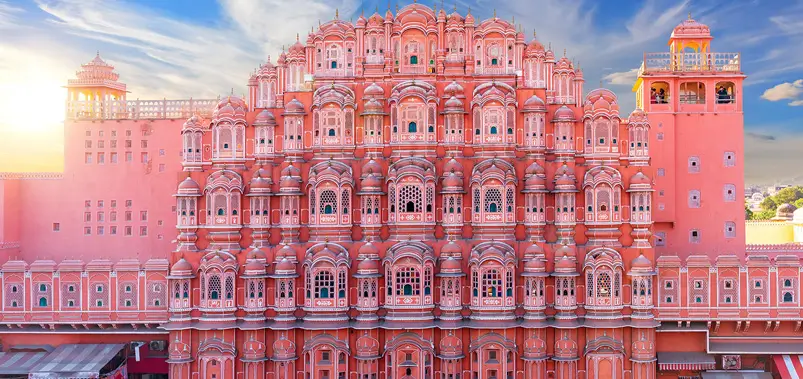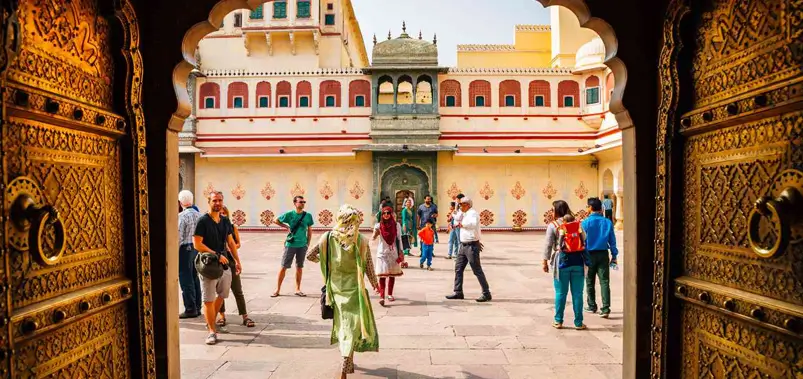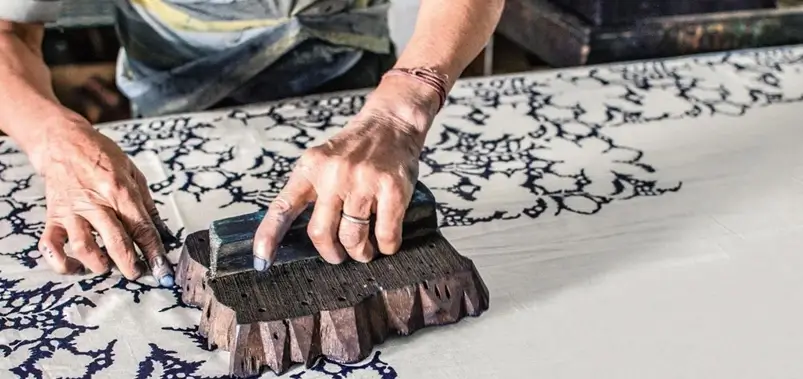
Jaipur is famous for its forts and palaces. Every tourist itinerary mentions Amber Fort, Hawa Mahal, City Palace. These are worth visiting. But there is another Jaipur that most visitors walk straight past — the Jaipur of the craftsperson's workshop, the dyer's courtyard, the gem cutter's basement, the printer's wooden block landing on fabric with a sound like a quiet heartbeat.
This is the city that actually built those palaces. The artisans of Jaipur have been making extraordinary things by hand for centuries, and many of them are still doing it today, in the same lanes, using the same techniques, producing work that ends up in museums and private collections around the world.
This guide introduces eight master craftspeople and the traditions they carry. Not every name here is internationally famous. Some work from small workshops in lanes that do not appear on tourist maps. All of them are worth finding.
.webp)
Tradition: Blue Pottery of Jaipur
Jaipur's blue pottery is one of the most distinctive craft traditions in all of India, and one of the most unusual. It is not made from clay in the conventional sense. The base material is a dough made from quartz stone powder, powdered glass, Multani mitti (fuller's earth), borax, and gum. There is no clay involved. The resulting ceramic is fired only once, at a lower temperature than conventional pottery, and the characteristic blue and white or multi coloured glaze is applied using natural mineral colours before firing.
The tradition arrived in Jaipur from Persia via Delhi during the Mughal period, adopted and developed by local artisans under royal patronage. For a period in the mid twentieth century it nearly died out entirely — demand collapsed, workshops closed, and the knowledge became concentrated in just a handful of families. It was revived significantly in the 1960s through the efforts of artist Kripal Singh Shekhawat, who is credited with saving the craft from extinction.
Today, genuine Jaipur blue pottery workshops exist primarily in the areas of Amer Road and the lanes around Nehru Bazaar. A master potter can be identified by the smoothness of their throwing technique — the material behaves differently from clay and requires a distinct muscle memory — and by the precision of their hand painted geometric and floral designs.
What to look for when buying: Genuine blue pottery has a slightly translucent quality when held up to light. The base is not perfectly white but has a slight cream or grey tone. The designs on authentic pieces are hand painted, not printed, and small irregularities in the brushwork are a sign of authenticity, not a flaw. Mass produced imitations use clay bases with printed designs and feel noticeably heavier.
Where to find it: The Kripal Kumbh workshop on Amer Road is considered one of the most authentic remaining centres of the craft. Several government run craft emporiums also stock genuine pieces, though prices there reflect institutional overhead.
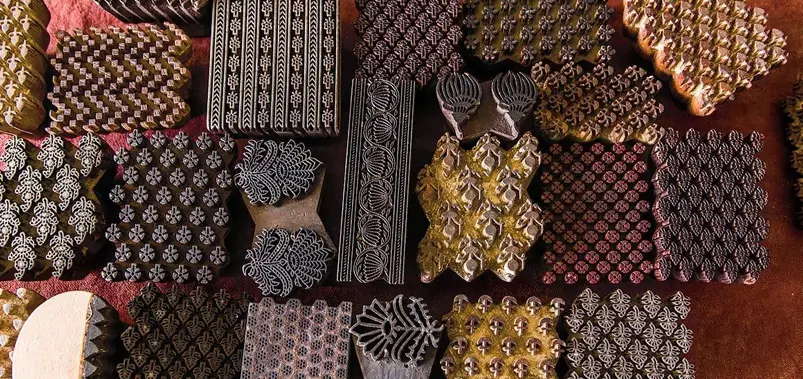
Tradition: Sanganeri and Bagru Hand Block Printing
Within a thirty kilometre radius of Jaipur sit two towns whose names are known to textile collectors worldwide. Sanganer, to the south, produces the delicate, intricate floral block prints on a white ground that became associated with Rajasthan globally. Bagru, to the west, produces deeper, earthier prints using natural dyes and a more robust aesthetic rooted in the indigo and dabu resist print tradition.
The wooden blocks used in hand block printing are themselves a craft. Carved from seasoned teak or sheesham wood by specialist block carvers, each block takes days or weeks to produce depending on its intricacy. A single metre of fabric might require four or five different blocks applied in careful sequence, each colour registered precisely against the last. The printer works on a padded table called a patta, loading the block from a colour tray and landing it on the fabric with a firm, even press. The sound — a clean, wooden thud — is one of the sounds of Jaipur that you do not forget.
Natural dye block printing, which uses colours derived from plants, minerals, and insects rather than synthetic chemicals, is rarer and more expensive. Indigo, madder, turmeric, pomegranate rind, iron, and alum are the primary natural dye sources. A naturally dyed, hand block printed piece of fabric takes days to produce from start to finish and wears and ages in a way that synthetic alternatives never do.
What to look for when buying: Genuine hand block printing has slight irregularities in registration between colours — no two repeats are exactly identical. The back of the fabric shows dye penetration on authentic natural dye pieces. If the print looks too perfect and uniform, it was likely screen printed or digitally printed and marketed as handmade.
Where to find it: Sanganer town itself is worth visiting to see printing workshops in operation. In Jaipur city, the area around Bapu Bazaar and the craft shops on MI Road carry hand block printed fabric, though quality varies enormously between vendors.
Tradition: Gemstone Cutting and Polishing
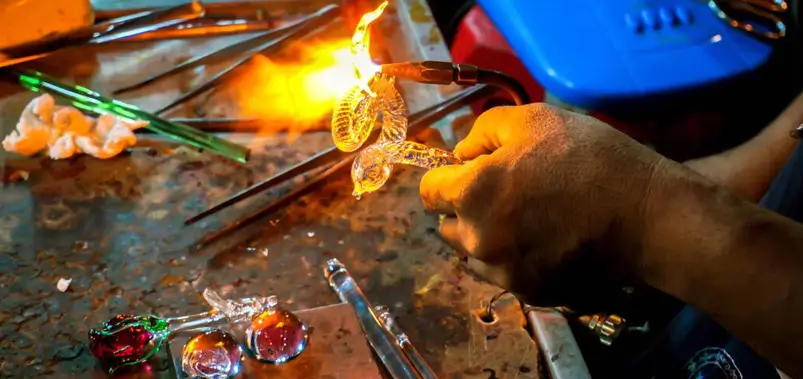
Jaipur is the gemstone capital of the world for coloured stones. This is not marketing language — it is a statement that the global gem trade largely accepts. More coloured gemstones pass through Jaipur for cutting, polishing, trading, and setting than through any other single city on earth. Emeralds from Colombia, rubies from Burma, sapphires from Sri Lanka, tanzanite from Tanzania — they arrive in Jaipur rough and leave as finished stones.
The gem cutters who do this work, called karigars, work in basement workshops and small rooms in the gem district around Johri Bazaar and Haldion ka Rasta. The tools are simple by modern standards — small lathes, grinding wheels, copper discs charged with abrasive compounds — but the skill is entirely in the hands and eyes of the cutter. The cutting of a fine coloured stone requires understanding its crystalline structure, its inclusions, its optical properties, and its potential for brilliance. A skilled cutter can take a rough stone with apparent flaws and orient the cut to minimise them while maximising the colour depth and light return. A poor cut on a fine stone destroys most of its value.
The Jaipur cutting style, particularly for emeralds, is distinctive enough that gem dealers worldwide can identify it at a glance. The characteristic step cut with slightly softened corners — sometimes called the Jaipur cut — balances the deep green of fine emeralds against the risk of inclusions that most Colombian emeralds carry.
What foreign tourists should know: Visiting the gem district as a curious observer rather than a buyer opens doors that a transactional approach closes. Most senior karigars are willing to show their work to genuinely interested visitors. The act of watching a rough, unpromising looking pebble become a finished gem over thirty minutes of careful grinding is one of the most quietly extraordinary things available to a visitor in Jaipur.
Tradition: Rajput and Mughal Miniature Painting
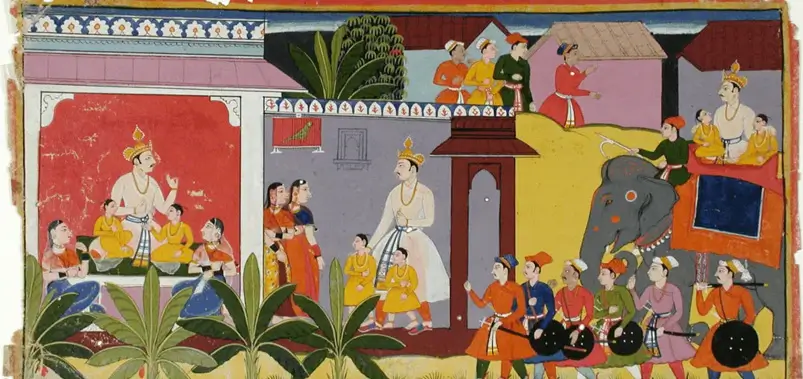
Miniature painting in the Rajasthani tradition is a form of storytelling as much as visual art. The scenes depicted — gods and goddesses, royal hunts, love stories from the Ramayana and Mahabharata, portraits of maharajas and their courts — were originally produced for manuscript illustration and royal documentation. Over centuries, they developed into an independent art form with its own rules of composition, colour, and perspective that differ fundamentally from European conventions.
The colours used in traditional Rajasthani miniature painting were originally derived from minerals, plants, and organic sources. Lapis lazuli ground to a powder for blue. Saffron for yellow. Lamp black for deep outlines. Gold leaf for jewellery and architectural details. Some painters in Jaipur still use these traditional colours; others work with high quality modern pigments. The difference affects the luminosity and longevity of the work significantly.
The brushwork in a fine miniature is almost incomprehensibly precise. Background details — individual leaves, fabric patterns, architectural ornament — are rendered with brushes made from as few as two or three squirrel hairs. The finest details, particularly facial features, are done essentially freehand at a scale that requires magnification to fully appreciate.
What makes a master: The quality of a Jaipur miniature painter is most visible in faces and hands. These are the most technically demanding elements, and the difference between a trained miniaturist and an amateur producing tourist pieces is immediately apparent in the life and expression of the figures. Look at the eyes particularly — a master painter brings a specific alertness to depicted eyes that lesser work lacks.
Where to find genuine miniature painters: The areas around Tripolia Bazaar and the lanes behind City Palace have the highest concentration of genuine miniature painting studios. Many painters are happy to demonstrate their technique to interested visitors. Be aware that a significant amount of what is sold as miniature painting in tourist shops is mass produced reproduction work, sometimes photographically printed onto aged paper and passed off as handmade.
Tradition: Lac Jewellery and Bangles
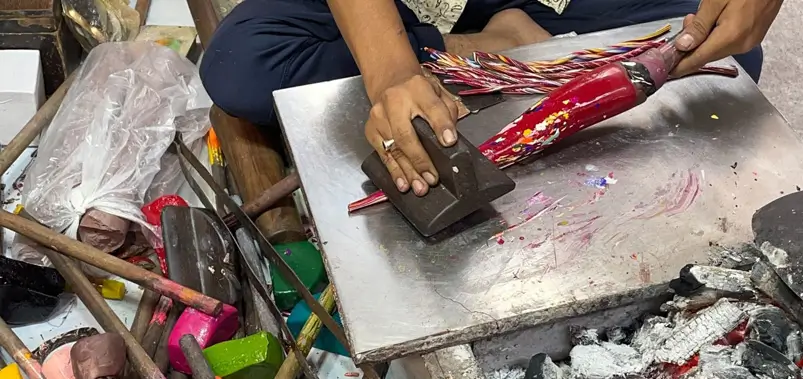
Lac is a natural resin secreted by the lac insect, harvested from host trees in forest regions of Rajasthan and other parts of India. When processed and combined with pigments and other materials, it becomes a mouldable, thermoplastic substance that can be worked by hand while warm and hardens to a glossy, jewel like finish when cooled. Lac jewellery — particularly bangles — has been made in Jaipur for centuries, and the Maniharon ka Rasta (Street of Bangle Makers) in the old city is one of the most concentrated artisan zones in the city.
The bangle making process is deeply physical and tactile. A stick of lac is heated over a small flame until it softens, then rolled and shaped by hand. For decorated pieces, coloured lac in contrasting shades is applied in strips or dots while the base bangle is still warm, then worked in and smoothed. Precious or semi-precious stones — uncut diamonds, glass, mirror work, or coloured cabochons — are set into the warm lac before it hardens. The whole process for a single decorated bangle takes fifteen to twenty minutes in experienced hands.
Maniharon ka Rasta is worth visiting simply as a street level experience. The workshops open directly onto the lane, and at any given time a dozen craftspeople can be seen working simultaneously, with the small flames of their heating tools and the smell of warm lac creating an atmosphere that feels completely unchanged from any century in the past three hundred years.
What to look for: Genuine lac bangles feel slightly warm to the touch compared to glass or plastic. They are also slightly lighter. The best quality bangles have clean edges, precisely set stones, and a high gloss finish that comes from being polished by hand rather than machine.
Tradition: Meenakari Enamel Work on Metal
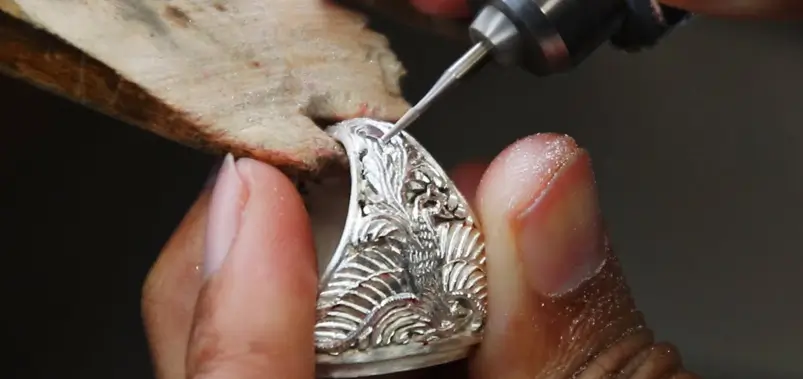
Meenakari is the art of fusing coloured enamel onto metal — traditionally gold or silver — using a process that involves applying powdered glass pigments to recessed areas of engraved metal and firing the piece in a kiln until the glass melts and bonds with the surface. The result is jewellery and decorative objects of extraordinary colour intensity, with reds, greens, blues, and whites that remain vivid for centuries when properly made.
The craft arrived in Jaipur from Lahore in the sixteenth century, brought by craftspeople invited to the court of Raja Man Singh I. Jaipur became the centre of Indian meenakari, and the work produced here — particularly on gold with deep red and green enamels — is considered the finest in the country. The reason Jaipur excels is partly the quality of its artisans and partly a quirk of its water, which affects the adhesion of enamel to metal in ways that craftspeople in other cities have historically struggled to replicate.
A master meenakari artist begins with an engraved metal base prepared by a specialist engraver. The enamel work is applied colour by colour — each colour requires a separate firing, and the sequence matters because different colours fire at different temperatures. A single complex piece may go into the kiln twelve or fifteen times. The polishing that follows is done with progressively finer abrasives until the surface reveals the full depth and luminosity of the enamel beneath.
What foreign tourists should know: Genuine gold based meenakari is expensive and rare. Most of what is sold in tourist markets is silver based or base metal work with meenakari applied — still a legitimate and beautiful craft, but different from the gold standard. The Johri Bazaar area has the highest concentration of genuine meenakari jewellers, including several families who have been working in this tradition for five or more generations.
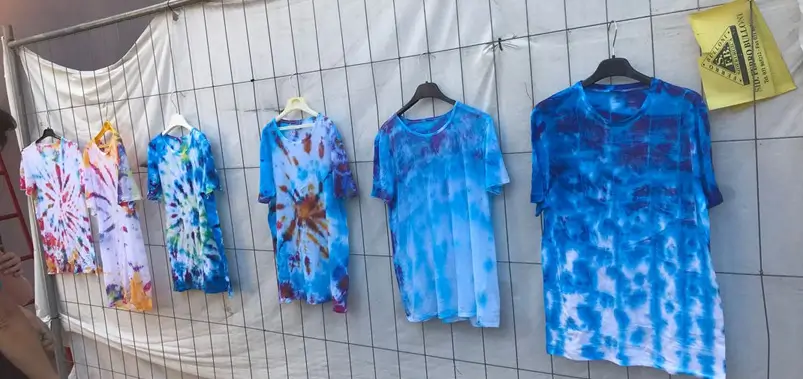
Tradition: Bandhani and Leheriya
Rajasthan has two distinct tie dye traditions, and Jaipur is a centre for both. Bandhani involves tying thousands of tiny points of fabric with thread before dyeing, creating a pattern of small dots or circles in the undyed ground colour against the dyed field. A single Bandhani dupatta may have ten thousand individual tied points, each placed by hand. The tying takes days. The dyeing takes minutes. The untying reveals the pattern all at once — a moment that experienced craftspeople say never loses its satisfaction regardless of how many times they have done it.
Leheriya is a diagonal stripe pattern achieved by rolling the fabric into a long tube along the diagonal and then tying it at intervals before dyeing. The resulting stripes, when the fabric is unrolled, run diagonally across the cloth in a wave pattern — leheriya means wave in Rajasthani. Multiple dyeings create multi coloured stripe combinations. The technique is associated with Jaipur and with festival dress — leheriya fabrics in yellow and orange are ubiquitous during Gangaur and Teej, the major women's festivals of Rajasthan.
The craftspeople who do this work — predominantly women in home based settings — work at extraordinary speed. Watching an experienced bandhani worker tie points is a lesson in the efficiency of trained hands. The fingers move in a rhythm that appears almost automatic, picking up fabric, wrapping thread, tying off, moving to the next point, barely looking at what they are doing.
Where to find genuine work: The areas around Bapu Bazaar and the fabric lanes of Johari Bazaar carry both bandhani and leheriya. Quality varies enormously. Genuine hand tied bandhani has slight irregularity in the spacing of dots — machine alternatives are perfectly uniform. Hold a piece up to light: real bandhani shows the tied points as slightly raised or dimpled in the fabric.
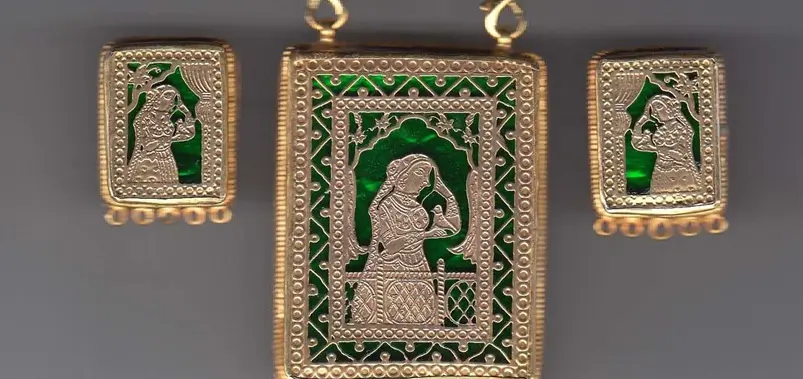
Tradition: Thewa — Gold Work on Glass
Thewa is the most rare and perhaps the most technically demanding of Jaipur's craft traditions, though it originated not in Jaipur itself but in Pratapgarh, a small town in southern Rajasthan. It has become associated with Rajasthan's luxury craft heritage and several Thewa families now have showrooms in Jaipur.
The process involves creating an intricate design in 23 karat gold sheet — typically scenes from mythology, royal hunts, or floral patterns — by cutting and working the gold with extremely fine tools. This gold latticework, as fine as lace, is then fused onto a piece of coloured glass — traditionally green, blue, or red — using heat. The glass becomes the background against which the gold design is visible, and the combination of deep colour and precious metal creates an effect unlike any other jewellery tradition.
A single Thewa piece — a pendant, a brooch, an earring — can take one craftsperson an entire week to produce. The cutting of the gold lattice requires tools with points finer than a sewing needle and a steadiness of hand that takes years to develop. The fusing process is irreversible; a mistake at that stage destroys the entire piece.
Thewa pieces are among the most collectible of all Rajasthani crafts, and genuine antique Thewa work — pieces from the eighteenth and nineteenth centuries — appears occasionally in international auction houses at significant prices. Contemporary Thewa from the established Pratapgarh families is equally technically accomplished if not antique.
What foreign tourists should know: Thewa is not widely available in general tourist markets. Seek out specialist Rajasthani craft shops or government run emporiums that specifically stock it. The price of genuine Thewa reflects the labour intensity of the work. Anything priced as a casual souvenir is not genuine Thewa.
A few principles apply across all of these traditions when you visit as a foreign tourist.
Genuine interest is always welcome. Craftspeople who spend their lives doing extraordinarily skilled work appreciate visitors who show real curiosity about the process rather than simply looking for the cheapest price. Asking how something is made, how long it takes, and how the craftsperson learned their skill costs nothing and opens doors.
Buying is not obligatory but it is meaningful. When you buy directly from an artisan's workshop rather than through a middleman, the majority of the money reaches the person who made the object. This matters in traditions where craft income supports entire families and where the economic viability of continuing the work depends on whether enough people value it.
Do not photograph without asking. Most workshops are happy to be photographed, but asking first is simply respectful. Some operations have proprietary designs or processes they prefer not to share openly.
Bargaining at artisan workshops is different from bargaining in tourist markets. Mass produced tourist goods have enormous price flexibility built in. A craftsperson selling their own hand made work at a fair price has less room to reduce it. Aggressive bargaining in an artisan's personal workshop is both less productive and less appropriate than in a general market setting.
We promise you a holiday where everything is taken care of from the moment you land. Trusted drivers waiting for you, handpicked hotels that fit your style, personalized itineraries designed just for your family, and a dedicated team on call 24/7. All you need to do is relax, explore, and create unforgettable memories, while we take care of every detail behind the scenes.
Yes. Many artisan workshops accept commissions, particularly for block-printed fabric, miniature paintings with specific subjects, meenakari jewellery with custom designs, and blue pottery with specific colour requirements. Commissions typically require a deposit, a lead time of days to weeks depending on complexity, and either shipping arrangement or collection on a return visit. This is one of the most meaningful ways to engage with Jaipur's craft traditions as a visitor.
Some are under significant pressure. Blue pottery nearly disappeared once already and requires ongoing support to survive. Thewa, with its extreme technical demands and lengthy training period, has a very small number of practicing masters. Lac bangle making faces competition from cheaper machine-made alternatives. Buying genuine artisan work directly from workshops is the most direct way a visitor can contribute to keeping these traditions economically viable.
Sanganeri printing uses fine, intricate floral designs on a white or off-white base cloth, typically with red and black as primary colours. Bagru printing uses a resist-paste technique called dabu to create designs that resist dye, producing patterns on a coloured ground, often with indigo blue and earthy red tones. Bagru work is typically bolder and more graphic; Sanganeri work is more delicate and detailed.
Genuine Jaipur blue pottery is fragile and not suitable for dishwashers or microwave use. It is primarily decorative. The firing temperature is lower than conventional ceramic, which gives it its distinctive quality but also makes it more susceptible to thermal shock. Hand wash gently and avoid sudden temperature changes.
Yes. Block printing workshops, miniature painting introductions, and blue pottery throwing sessions are all available for tourists through various operators in Jaipur. Most run for two to four hours and produce a piece you take home. Quality of instruction varies — ask specifically for workshops run by practicing artisans rather than tourism-focused demonstrations.
This varies enormously by craft. A genuine hand block-printed cotton dupatta from a good Sanganer workshop might cost Rs. 500 to Rs. 2,000. A piece of quality blue pottery might cost Rs. 300 to Rs. 3,000. Fine meenakari jewellery on silver starts at Rs. 3,000 and rises with complexity and metal quality. Thewa pieces start at Rs. 5,000 for small contemporary work. Miniature paintings on genuine wasli paper by a trained artist start at Rs. 3,000 to Rs. 5,000 for small pieces.
Yes. Several heritage tourism operators in Jaipur offer craft-focused tours that visit working workshops rather than retail showrooms. These are worth booking specifically because they provide access and context that independent visiting rarely achieves. Ask your hotel or check with the Jaipur tourism office for certified operators.
Government craft emporiums, while not the cheapest option, stock certified genuine work and are a useful reference point for quality and fair pricing. The Rajasthan Small Industries Corporation and Rajasthali emporiums are reliable. Beyond that, asking your hotel for specific artisan workshop recommendations rather than market tours tends to yield more authentic results.
Check the back of the fabric — genuine block printing shows dye penetration through to the reverse. Look at the repeat pattern — hand block printing has slight registration variation between repeats. Check the edges of the printed motifs — genuine block printing has a soft, slightly absorbed edge rather than a sharp printed line.
Buying from established, certified gem dealers in the Johri Bazaar area is generally reliable. Buying from anyone who approaches you on the street, recommends a "special wholesale" shop, or operates from a temporary-looking setup carries significant risk. Certification from reputable gem laboratories adds a layer of protection for significant purchases.
Yes, in most cases. Many workshops operate with open fronts onto the street and welcome observers. Closed workshops can often be accessed by simply knocking and expressing genuine interest. Having a phrase of Hindi courtesy goes a long way even if communication continues in English.
Maniharon ka Rasta for lac bangles, Johari Bazaar and Haldion ka Rasta for gem cutters and meenakari, the lanes around Tripolia Bazaar for miniature painters, Sanganer town for block printing, and Amer Road for blue pottery workshops. Each of these areas rewards slow, exploratory walking rather than targeted destination-visiting.