There are festivals in India that are designed with tourists in mind. Gangaur is not one of them. It is a deeply personal, community rooted celebration that has been observed in Rajasthan for centuries — long before tourism existed, and long before anyone thought to photograph it for the internet.
And yet, for a foreign visitor who happens to be in Jaipur during the right weeks in March, Gangaur Festival offers one of the most authentic and visually extraordinary experiences the city has to offer. Grand royal processions, women in traditional dress, decorated elephants, folk musicians, clay idols on ornate palanquins, the smell of incense and festival food filling the narrow lanes of the old city — it is a lot to take in.
This guide will explain what Gangaur actually is, what happens during the festival in Jaipur specifically, where to position yourself for the best experience, and how to be a respectful and aware visitor in a space that is not primarily built for you.
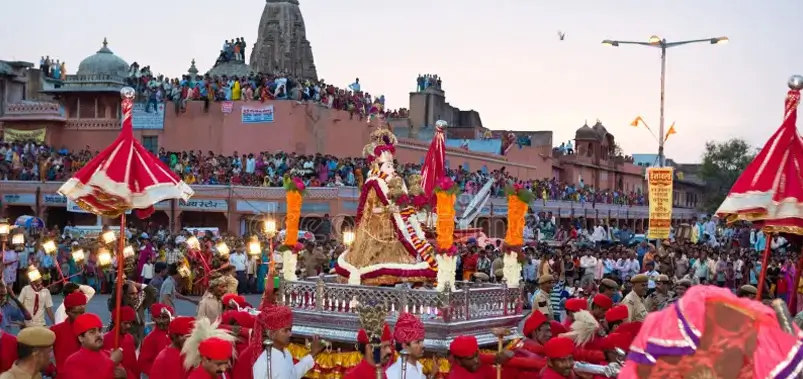
To understand Gangaur, you need to understand what it means to the women who celebrate it. This is not a general city festival or a public spectacle. It is, at its core, a women's religious observance dedicated to Goddess Gauri — another name for Goddess Parvati — and her union with Lord Shiva.
Married women pray for their husband's wellbeing, while unmarried girls seek divine blessings for a suitable match. The festival also marks the arrival of spring and agricultural prosperity in Rajasthan. Unstumbled
Women worship clay idols of Gan and Gauri in their homes. This worship starts from the first day of the Chaitra month and culminates on the 18th day with the Gangaur festival proper, observed with great religious fervour. Utsav
The name itself comes from the two deities at the centre of the celebration. Gan refers to Lord Shiva (also known as Isar in Rajasthani tradition), and Gaur refers to Goddess Gauri. Together, they represent the ideal of marital devotion and love — which is why this festival holds particular significance for women across Rajasthan.
For a foreign tourist visiting Jaipur, understanding this context changes how you experience the festival completely. You are not watching a performance. You are witnessing something that women in this city have participated in, generation after generation, because it matters deeply to them.
According to the Hindu calendar, Gangaur is celebrated on the third day of the Shukla Paksha of the Chaitra month. In the Gregorian calendar, this typically falls in late March or early April, immediately following Holi. Rajasthantourtrip
The Gangaur Festival 2026 is celebrated from 4th March 2026 to 21st March 2026. jaipurlove
The festival spans 18 days in total, but as a visitor, the most important dates to know are the final two to three days. The final three days witness the most elaborate and visually spectacular events, making them ideal for visitors seeking the full Gangaur experience. The timing also coincides with pleasant weather in Rajasthan, as the harsh summer heat has not yet set in, making it an ideal time for outdoor celebrations and tourism. Visittotravel
If you are planning a trip specifically around Gangaur, arrive in Jaipur at least two to three days before the final day of the festival. This gives you time to absorb the building atmosphere, explore the fair, and position yourself well for the grand procession.
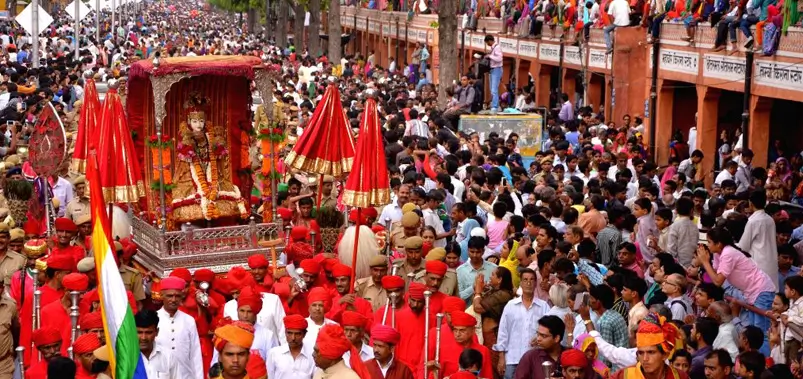
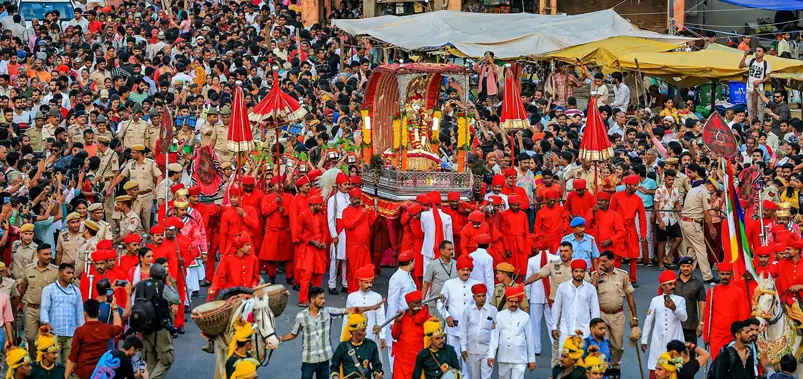
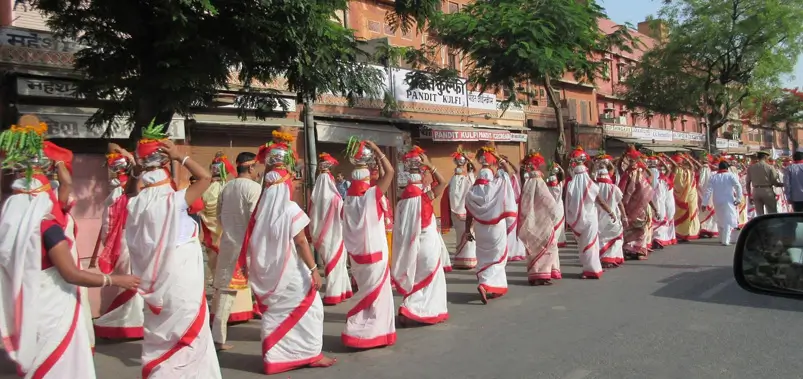
The absolute centrepiece of Gangaur in Jaipur for any visitor is the royal procession — locally called Gangaur ki Sawari, or the Ride of Gangaur. It happens on the final day of the festival and is unlike almost anything else you will see in India.
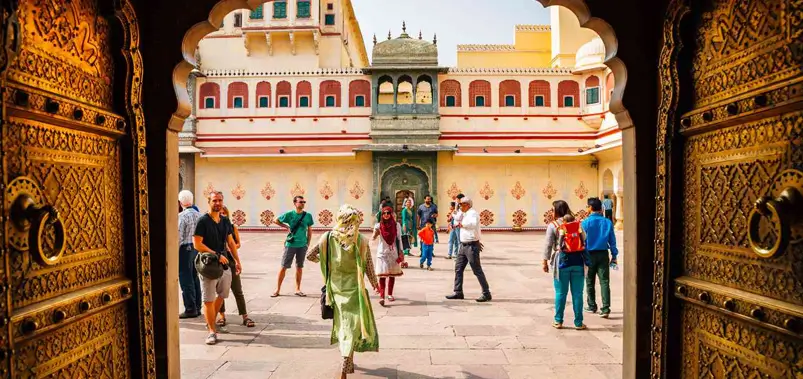
The procession starts from Zenana Deodhi of City Palace, where the royal family members worship Shiv and Parvati. It then travels through Tripolia Bazaar, Choti Chaupar, and Gangauri Bazaar before ending near Talkatora Lake. jaipurlove
The idols of Isar and Gauri are placed on elaborately decorated elephants, camels, and chariots. The procession moves through Tripolia Bazaar to Talkatora, accompanied by musicians and dancers. Local artists and craftsmen also showcase their works, including handmade idols, jewellery, and traditional attire, celebrating Rajasthan's rich artistic legacy. HARISHYAM ARTS
The procession includes decorated elephants, horses, and camels along with highly talented folk dancers showing Rajasthani culture through their performances. Various artists and musical bands create an outstanding aura throughout the procession. Travejar
No tickets are charged for this event. The procession is free to witness. It moves through public streets, and spectators line the pavements and rooftops for the entire route. Adotrip
The procession typically begins in the late afternoon and moves slowly through the old city. The pace is unhurried. There is folk music, there are pauses for ritual, and there is a quality of collective devotion to the event that no amount of tourist photography fully captures.
Location makes an enormous difference when watching the Gangaur procession in Jaipur. Here is what experienced visitors recommend.
Tripolia Bazaar is widely considered the best stretch for viewing the procession. The best spots to see and photograph the vibrant celebration are in Tripolia Bazaar of the walled city. Sitting arrangements are made on the roof of the verandah of the market. If you can get rooftop access here — through a shopkeeper, a cafe, or a prior arrangement with a nearby hotel — you will have an elevated, unobstructed view of the entire procession passing below. jaipurlove
City Palace area is where the procession begins, and arriving here early gives you the chance to see the idols being brought out and the initial formation of the parade before it gets too crowded.
Gangauri Bazaar is the stretch of the old city named directly after the festival, and it is typically the most decorated section of the route. If you want to be in the middle of the crowd rather than above it, this is where the atmosphere is most intense.
Talkatora Lake, where the procession ends, is where the evening immersion rituals happen. The evening visarjan (immersion) rituals at Talkatora Lake draw thousands who gather under the stars. This is a more intimate and emotionally resonant moment than the procession itself — quieter, more personal, and often more moving for visitors who witness it. HARISHYAM ARTS
Arrive early. The procession starts in the afternoon but crowds begin forming hours before. A good viewing spot is worth the wait.
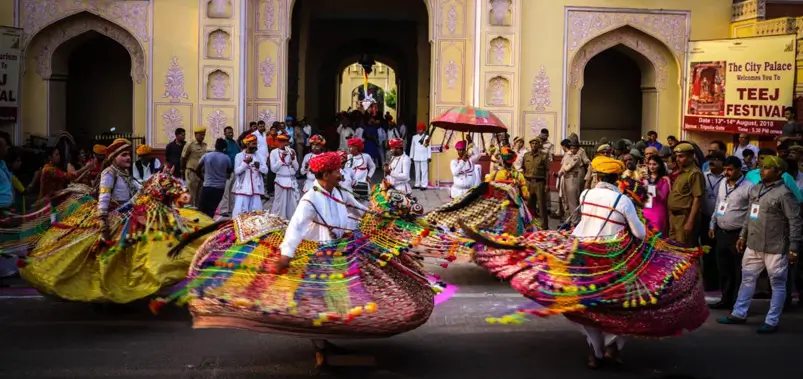
Even if you are not in Jaipur for the final procession, the days leading up to it are worth experiencing. During the 18 day period, the city comes alive with a vibrant fair offering a wide array of souvenirs, exquisite artworks, and engaging activities. Rajasthantourtrip
During Gangaur, many local artisans in Jaipur conduct short workshops where visitors can participate in traditional craft making. This is a good way to support local families and take home a handmade item you created. The India
The markets around the old city take on a particular energy during this period. Textile vendors display leheriya fabrics — the distinctive tie dye pattern associated with Rajasthani festivals — in bright yellows, oranges, and pinks. Jewellery stalls do brisk business. Street food vendors set up near every major intersection.
Ghewar, the iconic Rajasthani festival sweet, appears in every sweetshop during Gangaur. Ghewar is a disc shaped, honey soaked delicacy made of flour and ghee. Other festive foods include Puri Halwa served as prasad, Gune (flour ornaments offered to the goddess), Mathri, and Malpua. Sweetshops in Jaipur stock fresh Ghewar throughout the festival period. If you try only one thing during Gangaur, try fresh Ghewar from one of the established sweet shops in the old city. It is nothing like anything you will have eaten before. StayVista
One of the most distinctive aspects of Gangaur Festival for foreign visitors is observing the role of women in the celebration. This is not a spectator festival for the women of Jaipur — they are the participants, the organisers, and the reason the entire thing happens.
Women start preparing for the festival by making clay idols of Gauri and Shiva. They apply mehndi (henna) on their hands, symbolising beauty and prosperity. Unstumbled
In Shekhawati and Marwar regions, women decorate their palms and feet with intricate mehndi designs and exchange handwoven baskets filled with sweets and gifts, symbolising sisterhood and communal bonding. AstroBhava
During the festival days, you will see women in their finest traditional dress — deep reds, bright oranges, mirror-work blouses, heavy silver jewellery — walking to temples, carrying offerings, and singing festival songs. The Rajasthani folk song most associated with Gangaur is "Poojan do Gangaur, bhanwar mhane khelan do Gangaur," which can be heard drifting through the streets from early morning.
If you are a woman travelling to Jaipur during Gangaur, you may find local women happy to show you elements of the festival up close — the clay idols, the mehndi, the ritual offerings. This kind of informal cultural exchange is entirely possible if you approach it with genuine curiosity and respect. Men should observe these spaces with appropriate distance and without pushing for access.
Gangaur is an active religious observance, not a cultural performance staged for tourism. Here is how to navigate it well as a foreign visitor.
Dress modestly. Try not to wear revealing or short dresses while visiting temples or during the royal procession. Light, full coverage clothing is both culturally appropriate and practically sensible given the outdoor crowds and heat. For women, a dupatta or light scarf carried with you is always useful. Travejar
Ask before photographing individuals. The women you will see during Gangaur are not there to be photographed by tourists. Many are happy to be photographed, but some are not. A smile, a questioning look, and genuine warmth go a long way. Do not photograph anyone who has indicated reluctance or turned away.
Do not push to the front of crowds. The procession attracts enormous numbers of local people for whom this is a deeply meaningful event. Your desire for a better camera angle does not take priority over their participation in their own festival.
Observe temple spaces with care. Some inner sanctums of temples will be restricted to non-Hindus during active ritual. Respect these boundaries without needing an explanation.
Do not touch the idols or ritual objects. The clay idols of Gauri and Isar are sacred objects, not props or decorations.
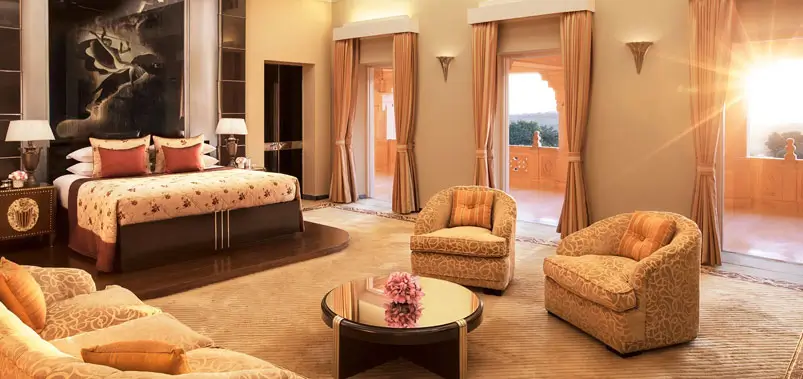
Book accommodation early. Hotels and accommodations in Jaipur typically see high demand during Gangaur, so advance booking is highly recommended. Heritage havelis and hotels in the old city or Bani Park area are particularly sought after because of their proximity to the procession route. Visittotravel
Use public or shared transport on the final day. Skip personal cars during the festival — traffic peaks significantly. Use RTDC buses, auto rickshaws, or e-rickshaws for getting around during processions. The old city streets are essentially closed to through traffic when the procession is moving. HARISHYAM ARTS
Carry water and sun protection. The festival falls at the tail end of winter, and while March in Jaipur is generally pleasant, afternoon temperatures can reach 30 to 35 degrees Celsius. Crowds and direct sunlight make it feel warmer.
Arrive at viewing spots at least two hours early. The procession draws massive crowds, and the best spots along Tripolia Bazaar fill up well in advance.
Carry small denomination cash. You will want to buy food, festival items, and possibly workshop entry during the fair. Many smaller vendors do not accept cards or apps.
Be patient. The procession moves slowly. There are ritual pauses, musical moments, and extended stops. This is not a race — it is a celebration. Bring that mindset with you.
One detail that makes the Gangaur celebration in Jaipur distinctive from other cities is the continued participation of the royal family. In Jaipur, the royal family participates by displaying centuries-old idols and organising a ceremonial parade with horses and elephants. AstroBhava
The procession starts from Zenana Deodhi of City Palace, where the royal family members worship Shiv and Parvati. This is the inner women's court of the palace complex, and the idols kept here are historical artefacts that have been part of the Gangaur tradition in Jaipur's royal household for generations. jaipurlove
The involvement of the former royal family in a public religious festival is unusual by modern standards, and it is part of what gives the Jaipur Gangaur its particular grandeur. You are not just watching a community festival — you are watching a tradition that connects this city's present to its royal past in a very direct, unbroken line.
We promise you a holiday where everything is taken care of from the moment you land. Trusted drivers waiting for you, handpicked hotels that fit your style, personalized itineraries designed just for your family, and a dedicated team on call 24/7. All you need to do is relax, explore, and create unforgettable memories, while we take care of every detail behind the scenes.
Both cities offer magnificent celebrations. Jaipur's version is distinguished by its royal heritage, the scale of the procession, and the involvement of the former royal family. Udaipur's Gangaur ends with a floating procession on Lake Pichola, which offers extraordinary visual beauty. If you can only choose one, Jaipur's procession is considered the grander spectacle, while Udaipur's has a more intimate and scenic quality.
There are no official photography restrictions for the public procession. However, personal judgment and sensitivity matter greatly. Always ask before photographing individuals, particularly women in ritual contexts. Do not photograph inside temple sanctums without explicit permission.
Yes, significantly. The old city streets are effectively closed during the procession. Plan to walk or use small vehicles like e-rickshaws and auto-rickshaws on the final festival day. Do not attempt to navigate the walled city by car during procession hours.
Dress modestly and comfortably. Covered shoulders and knees are appropriate for both men and women. Wearing something colourful is a natural fit with the festival atmosphere. Comfortable walking shoes are essential given the distances involved in following the procession route.
Tripolia Bazaar rooftops offer the best elevated view of the procession. Ground level on Gangauri Bazaar puts you in the middle of the crowd atmosphere. City Palace area is best for seeing the procession's beginning. Talkatora Lake is where the emotional, quieter conclusion of the festival happens.
You can observe and respectfully engage with the public elements of the festival. Some artisan workshops during the fair period welcome all visitors. Private household rituals are not open to outsiders unless you have been personally invited by a family, which is unlikely but not impossible for long-term visitors.
Yes. Gangaur is one of the better festival experiences in Jaipur for solo female travellers. The festival is women-centred, the streets are full of families, and the general atmosphere is celebratory rather than intimidating. Standard city safety precautions apply, particularly in dense crowds.
Ghewar is the traditional Rajasthani sweet most closely associated with Gangaur. It is a disc-shaped fried delicacy made from flour and ghee, soaked in sugar syrup and often topped with rabdi (thickened cream) or dry fruits. It is available throughout the festival season in every major sweet shop in Jaipur and is absolutely worth trying.
The procession begins at Zanani Deodhi inside City Palace and travels through Tripolia Bazaar, Chhoti Chaupar, Gangauri Bazaar, and Chaugan Stadium before ending at Talkatora Lake. The entire route passes through the heart of the walled old city.
Arrive two to three days before the final day of the festival. This allows you to experience the fair atmosphere, witness daily rituals, and position yourself well for the grand procession without the extreme last-minute rush.
Yes. The procession and fair are free to attend. There are no entry tickets required. Some workshops or special cultural programmes organised during the festival period may have nominal charges.
Gangaur falls in March or April according to the Hindu lunar calendar, on the third day of Shukla Paksha in the month of Chaitra. The festival spans 18 days, with the grand procession on the final day. In 2026, the festival runs from approximately 4th March to 21st March. Always verify the exact final day date against the current year's Hindu calendar as it shifts annually.