Varanasi is one of the oldest continuously inhabited cities in the world and widely regarded as the spiritual heart of India. Situated along the banks of the sacred Ganges River in Uttar Pradesh, the city has drawn pilgrims, scholars, ascetics, and travellers for more than 3,000 years.
Unlike the royal cities of Rajasthan or the wildlife reserves of Central India, Varanasi is not defined by monuments alone. It is defined by ritual, devotion, and daily life unfolding along the river’s edge. For international travellers, Varanasi offers one of the most intense and transformative cultural experiences in India.
Often included as an extension after the Golden Triangle, Varanasi provides a deeper understanding of Hindu philosophy, life-cycle rituals, and spiritual traditions. The city is not polished or staged — it is authentic, layered, and deeply symbolic.
Varanasi can feel overwhelming at first glance, but with structured guidance, it becomes one of the most meaningful destinations in India.

Dashashwamedh Ghat, Ganga Aarti Ceremony, Kashi Vishwanath Temple, Sarnath Boat Ride on the Ganges

October – March
Cooler temperatures make walking along the ghats comfortable.

2 Days
Two days allow sunrise boat rides and temple visits.

English, Hindi
Professional English-speaking guides are available.
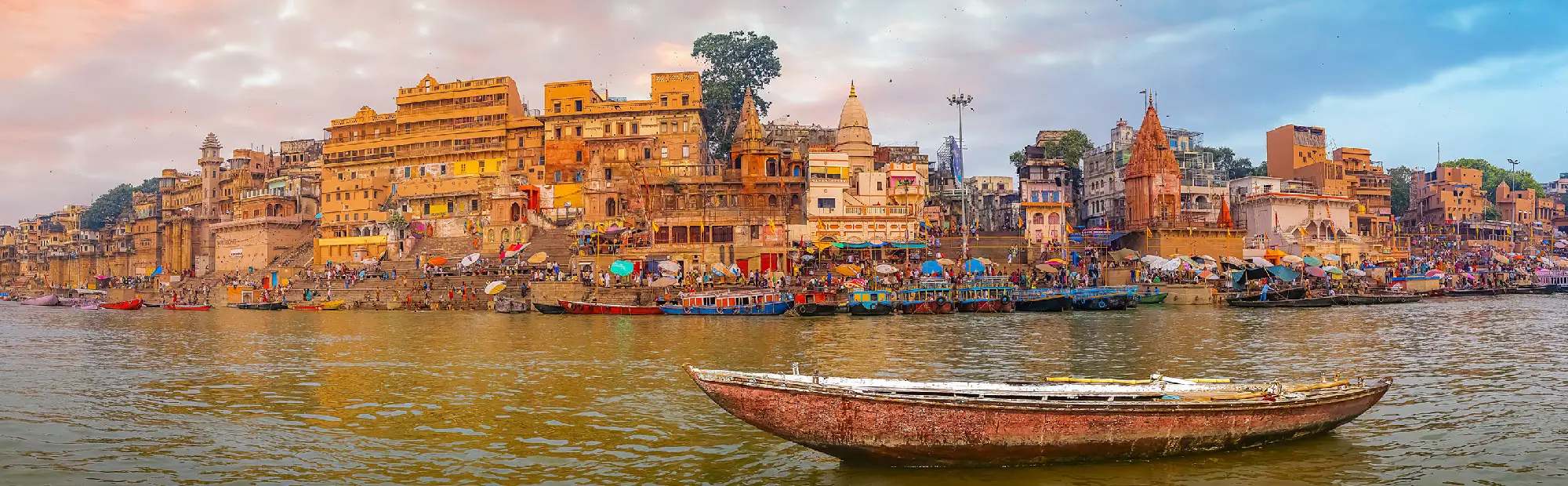
The defining feature of Varanasi is its network of over 80 ghats — stone steps descending to the Ganges River. Each ghat has its own historical and spiritual significance. Some are dedicated to bathing rituals, others to meditation, and a few to cremation ceremonies.
The most active and iconic is Dashashwamedh Ghat, where priests perform the nightly Ganga Aarti — a synchronized ritual involving fire lamps, chanting, and devotional music. This ceremony attracts both pilgrims and international visitors seeking to witness India’s living spiritual traditions.
A sunrise boat ride along the river is considered essential. As the first light touches the ghats, pilgrims bathe in the sacred water, priests conduct prayers, and the city awakens slowly. The early morning atmosphere is calm and reflective compared to the busier evening hours.
Visitors should approach cremation ghats respectfully. Photography is strictly prohibited in those areas, and guides provide context to help travellers understand the religious significance.
The Kashi Vishwanath Temple, dedicated to Lord Shiva, is one of Hinduism’s most sacred temples. Security procedures are strict, and non-Hindus may have restricted access to certain inner sanctums. However, the surrounding area offers a glimpse into the temple’s spiritual importance.
The temple corridor, recently redeveloped, improves accessibility while preserving the sacred atmosphere. Visiting with a knowledgeable guide enhances understanding of rituals and symbolism.
Located approximately 30 minutes from Varanasi, Sarnath holds immense significance in Buddhist history. It is the site where Lord Buddha delivered his first sermon after attaining enlightenment.
Sarnath features ancient stupas, monastic ruins, and a museum displaying Ashokan pillars and artifacts. For travellers interested in India’s spiritual diversity, Sarnath adds a peaceful and historically rich contrast to Varanasi’s intense riverfront.
Varanasi is not only about temples and ceremonies; it is about philosophy and continuity. The city represents the Hindu belief in life, death, and rebirth. Many elderly pilgrims choose to spend their final days here, believing liberation (moksha) is attainable in Varanasi.
The narrow lanes behind the ghats reveal a dense network of markets, silk workshops, sweet shops, and small shrines. Varanasi is also famous for Banarasi silk sarees, woven with intricate patterns and often used in weddings.
Despite its sacred identity, Varanasi is also a university city with intellectual traditions. Classical Indian music, Sanskrit studies, and yoga philosophy remain active parts of local culture.
For many international travellers, Varanasi becomes the most memorable part of their India journey. It challenges expectations and offers direct exposure to religious life and public ritual.
The experience may feel intense, but structured exploration allows visitors to observe respectfully and safely. Private guides help navigate narrow lanes and explain cultural context.
Varanasi rewards patience and openness. It is less about ticking landmarks off a list and more about witnessing daily spiritual expression.
Varanasi offers a range of accommodations — from riverside heritage properties to modern boutique hotels. Some hotels provide rooftop terraces overlooking the Ganges, offering quiet reflection away from busy ghats.
Luxury travellers can opt for curated experiences, including guided walks, classical music performances, and private boat rides.
Due to narrow lanes near the river, larger vehicles cannot reach all ghats directly. Short walking distances are usually required.
Varanasi experiences hot summers (April–June) and cooler winters (November–February). Winter mornings can be misty along the river.
The most comfortable travel period is October to March. Major Hindu festivals, such as Dev Deepawali, attract larger crowds but offer extraordinary visual experiences.
Varanasi is well connected within North India.

Lal Bahadur Shastri International Airport

Road connections from major Uttar Pradesh cities

Direct trains from Delhi and other major cities
We promise you a holiday where everything is taken care of from the moment you land. Trusted drivers waiting for you, handpicked hotels that fit your style, personalized itineraries designed just for your family, and a dedicated team on call 24/7. All you need to do is relax, explore, and create unforgettable memories, while we take care of every detail behind the scenes.
Varanasi is one of Hinduism’s holiest cities and a center of spiritual practice.
Yes, especially with guided support and organized transport.
Two days allow meaningful exploration.
A nightly river ceremony with fire rituals and chanting.
Yes, sunrise and sunset boat rides are common.
No, photography is strictly prohibited there.
A Buddhist pilgrimage site near Varanasi.
It can feel intense but becomes manageable with structured planning.
October to March offers pleasant weather.
Yes, professional guides are widely available.
Yes, curated cultural experiences are available.
Yes, it is a popular spiritual extension.