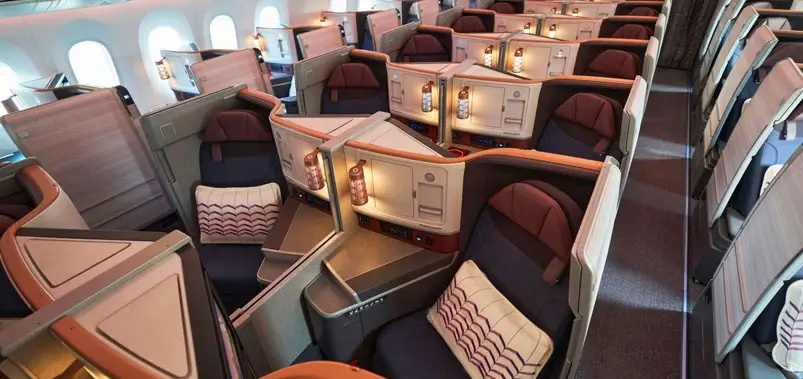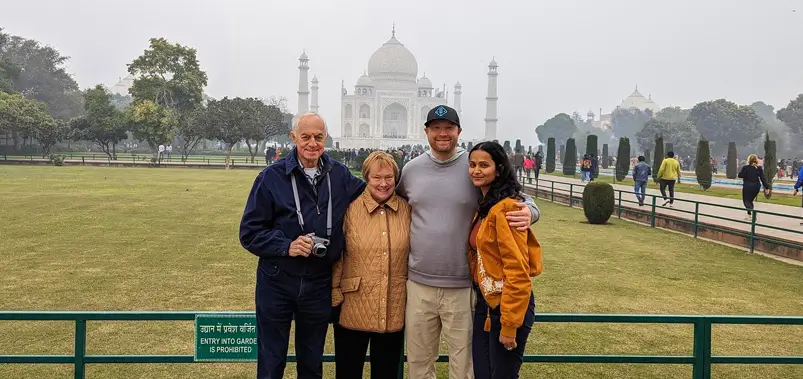
A $10,000 budget for two people can fund a highly comfortable private luxury India vacation, but the quality of the trip depends much more on how the money is distributed than on attaching the word “luxury” to every reservation. India offers an unusually wide range of premium accommodation, from excellent five-star city hotels to internationally known palace properties and suites that can cost a substantial portion of the entire budget in a single night. The same variation applies to private vehicles, guides, dining and special experiences.
For this discussion, the most useful way to look at $10,000 is as a ground budget for two travellers in India rather than a figure that must also absorb long-haul international business-class flights. International airfare varies enormously according to origin, dates, airline and cabin. Two business-class tickets from the United States or United Kingdom can consume a major part of $10,000 before the travellers have even reached India. Keeping international flights separate makes it possible to see what this level of spending can realistically provide after arrival.
With sensible choices, $10,000 for two can support approximately eight to ten nights of high-quality private travel around Delhi, Agra and Jaipur, potentially with an additional destination or selected premium hotel upgrades. The trip can include a dedicated chauffeur-driven vehicle for the road sectors, private local guides, quality five-star hotels, airport transfers and a well-paced itinerary. Travellers who want landmark palace hotels can incorporate them selectively rather than assuming every night needs to be booked at the highest available category.
The important point is that $10,000 luxury India travel should feel substantially different from a standard sightseeing package. The difference should be visible in the quality of accommodation, privacy of transportation, pacing of the itinerary, expertise of the guides and reliability of the arrangements. It should not simply be a conventional package with a higher price.
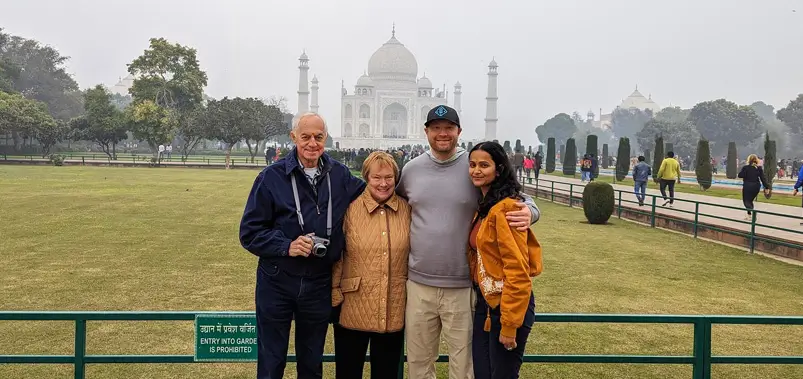
Before comparing hotels or choosing suites, travellers need to define what sits inside the $10,000 figure. Without that definition, budget discussions become misleading because one traveller may be thinking only about hotels and private ground services while another expects the same amount to include international airfare, domestic flights, meals, monument tickets, spa treatments, shopping and gratuities.
For a $10,000 India trip for two, a useful premium structure is to treat the amount as covering the main land arrangements: accommodation, private chauffeur-driven transportation, airport transfers, professional guides, agreed sightseeing services and selected experiences. Domestic flights can also be incorporated if the route requires them, although adding several flight sectors naturally reduces the amount available for hotels and other upgrades.
International flights are better considered separately, particularly for travellers purchasing premium economy or business class. The difference between economy and business-class airfare can be several thousand dollars per person on long-haul routes. If two business-class tickets have to come out of the same $10,000 total, the actual India portion may need to operate at a very different accommodation level.
Personal shopping should also remain separate. Jaipur jewellery, textiles, carpets, art and other purchases can range from inexpensive souvenirs to extremely substantial private expenditure. Including shopping in a tour budget makes the figure almost impossible to standardise.
The same applies to high-end dining and alcohol. Breakfast may be included with the hotel, while lunch and dinner remain flexible. A couple eating at excellent independent restaurants will have a very different food budget from guests ordering premium wine and elaborate dinners every evening at palace hotels.
Spa expenditure can also be treated independently unless wellness is one of the principal reasons for travelling. A few treatments can be added without changing the structure of the holiday, while a serious wellness programme may require several nights at a specialist property and deserves its own allocation.
Travel insurance, visas and personal expenses should normally be treated separately as well. They are important costs, but they do not improve the quality of the itinerary in the same way that an additional hotel night or a stronger room category does.
Once those boundaries are established, the $10,000 becomes much easier to use intelligently.
Explore a tailor-made $10,000 itinerary for two featuring 5-star heritage hotels, private chauffeured cars, and exclusive VIP tours. Let our experts craft your dream journey.
Travellers sometimes assume that spending $10,000 means they should stretch the journey to as many nights as possible. That approach can reduce the overall standard of the holiday. If the objective is a genuinely premium private trip, approximately eight to ten nights can be a particularly useful range for two people, depending on dates and hotel choices.
A 10-day luxury India itinerary can begin with three nights in Delhi, continue to Agra for one night, provide three nights in Jaipur and use the remaining nights for either additional relaxation or another carefully selected destination.
The exact allocation can change according to international flight timings. A traveller arriving late in Delhi should not count the first evening as a meaningful sightseeing day. Likewise, a guest departing on an early flight may require a final Delhi night primarily for logistical convenience.
Three nights in Delhi can provide a comfortable beginning. The first day can remain deliberately light after the international flight, while the following days can divide Old Delhi and New Delhi sightseeing without creating a twelve-hour programme.
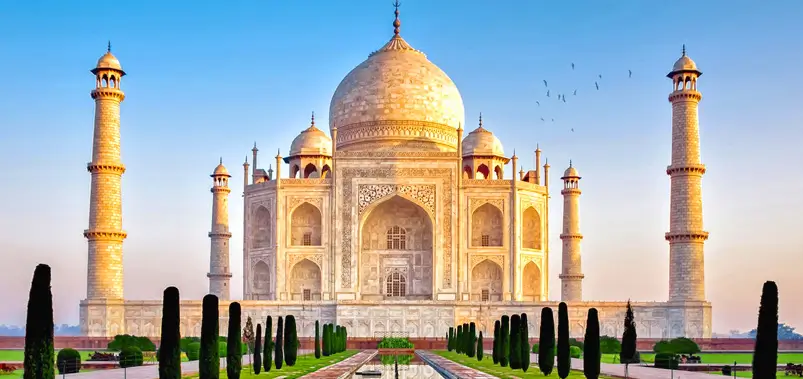
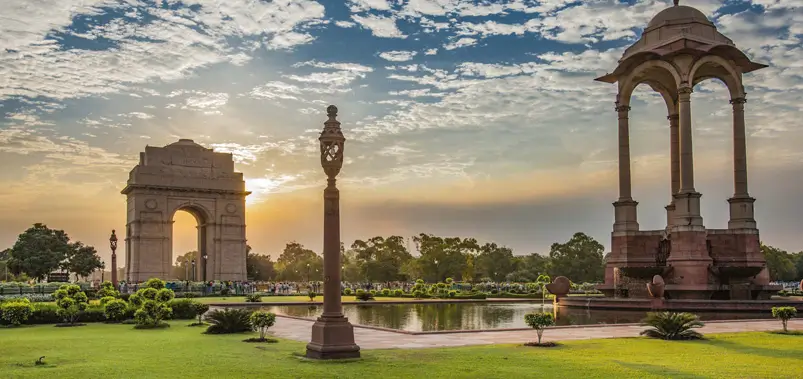
One night in Agra can work when properly scheduled. The city is close enough to Delhi for a comfortable private road transfer, and the stay can include Agra Fort and the Taj Mahal without requiring the traveller to return to Delhi on the same day.
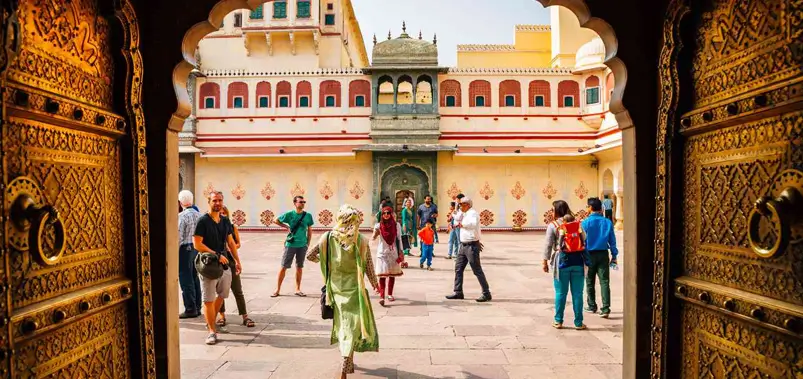
Jaipur benefits from three nights because the city contains substantial sightseeing and some of the strongest luxury hotel options on the Golden Triangle. Guests can visit Amber Fort, City Palace and Jantar Mantar while still preserving time to enjoy their hotel.
The remaining nights can be used in several ways. A couple may simply slow the entire route by adding another Delhi or Jaipur night. They may add Ranthambore when wildlife is a priority, although safari availability and transfer logistics need careful attention. Another possibility is extending into Rajasthan, provided the additional destination does not create a rushed sequence.
At this budget, adding cities simply to make the itinerary appear larger is rarely necessary. A premium holiday with four hotels in ten nights will generally feel more settled than a route involving seven hotels and constant transfers.
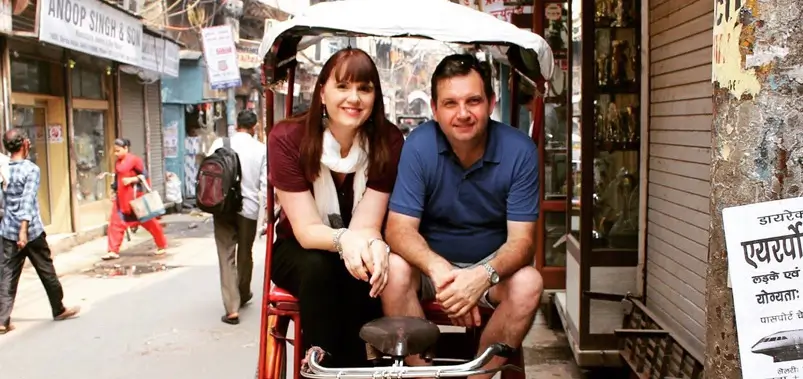
Delhi offers a wide range of premium hotels, which makes it one of the easiest cities in which to control accommodation spending without giving up comfort. Travellers can choose a highly regarded five-star property with excellent rooms, dining and service without automatically selecting the most expensive suite available.
For a luxury Delhi stay for couples, the first priority should be the property itself. Location, room comfort, sound insulation, breakfast, service and convenient access to the intended sightseeing can be more important than raw room size.
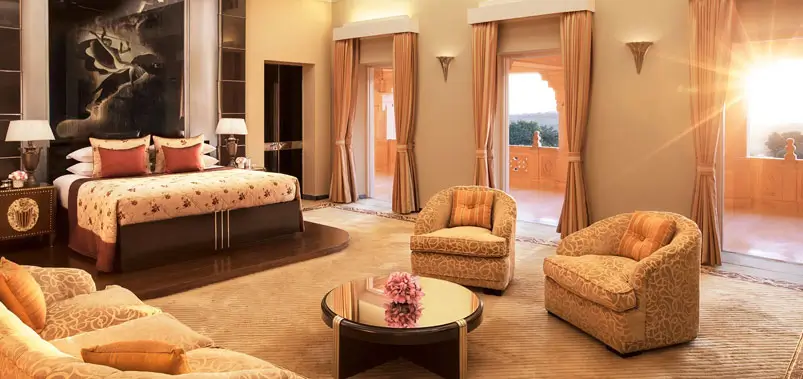
A couple staying three nights may not need a suite if they expect to spend much of the day outside. A well-appointed luxury room can provide more than enough space while leaving several hundred or even thousands of dollars available for upgrades elsewhere.
This is particularly important when the international arrival is early.
Imagine a couple lands in Delhi around sunrise after a long flight. They may be tempted to spend heavily on a suite because they expect to reach the hotel exhausted. Yet the larger issue is whether the room is available when they arrive.
If immediate occupancy is important, paying for the previous night to guarantee access can provide more practical value than buying a much larger room that is not available until standard check-in time.
Delhi is also where a good private chauffeur arrangement begins to demonstrate its value. Airport pickup should be coordinated with the confirmed flight, followed by private transportation for sightseeing according to the itinerary. Guests should not need to arrange separate taxis each time they leave the hotel.
A personal guide can then be used for the major sightseeing. Humayun's Tomb, Qutub Minar and selected areas of Old Delhi become substantially more meaningful when the traveller understands their historical context rather than simply moving between monuments.
A private guided Delhi tour also allows the day to respond to energy levels. If the travellers are tired after lunch, the afternoon can be shortened. If they become particularly interested in one historical site, more time can be spent there.
That flexibility is one of the places where the $10,000 budget should produce a visible improvement in the holiday.
Wondering how far a luxury budget goes for two? Let our travel experts design a seamless, high-end private tour tailored to your exact style and preferences.
Agra presents a different budget decision because the stay is usually shorter and the Taj Mahal dominates the destination. Spending heavily on additional room size may therefore be less useful than spending strategically on the location or view.
For couples who consider the Taj Mahal one of the principal reasons for travelling to India, a property such as The Oberoi Amarvilas can become one of the trip's major accommodation upgrades. The exact room category should be checked carefully because travellers should never assume that every category provides precisely the same view or room features.
Within a $10,000 Golden Triangle tour for two, spending more in Agra can make sense when the upgrade materially changes the Taj Mahal experience.
The couple might arrive from Delhi, check into the hotel, visit Agra Fort with a private guide and then have enough time to enjoy the property rather than immediately continuing to another city.
The Taj Mahal visit can be scheduled according to the season, opening arrangements and traveller preference. It is normally closed to general visitors on Fridays, so the route needs to account for that before hotels are confirmed.
Some travellers prefer an early visit because of the atmosphere and light. Others dislike very early starts and would enjoy the monument more after adequate sleep. Private travel makes it possible to choose according to the guest rather than assuming every luxury traveller wants the same sunrise programme.
The financial calculation is straightforward. If a premium Agra hotel upgrade costs several hundred dollars more than an alternative, the couple should ask whether the difference provides something they will genuinely remember. A distinctive Taj Mahal outlook may satisfy that test.
Paying the same amount merely to increase room size for one night may not.
This approach allows the luxury India vacation budget to concentrate money where the experience changes rather than distributing upgrades evenly across every city.
Jaipur is frequently the best place to allocate substantial accommodation spending because the stay is longer and the hotels themselves can become part of the holiday.
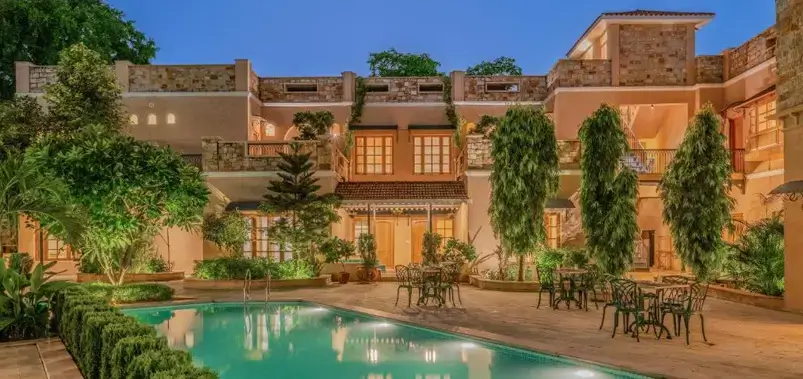
Rambagh Palace and The Oberoi Rajvilas represent two very different forms of high-end Jaipur accommodation. One provides a celebrated palace setting, while the other offers a resort environment with extensive grounds and a strong sense of retreat from the city.
Either can consume a meaningful portion of a $10,000 private India holiday, particularly when premium room categories are selected.
That does not automatically make the expense excessive.
If a couple stays three nights and deliberately reserves time to enjoy the hotel, a premium Jaipur property can provide far greater value than an expensive one-night suite elsewhere.
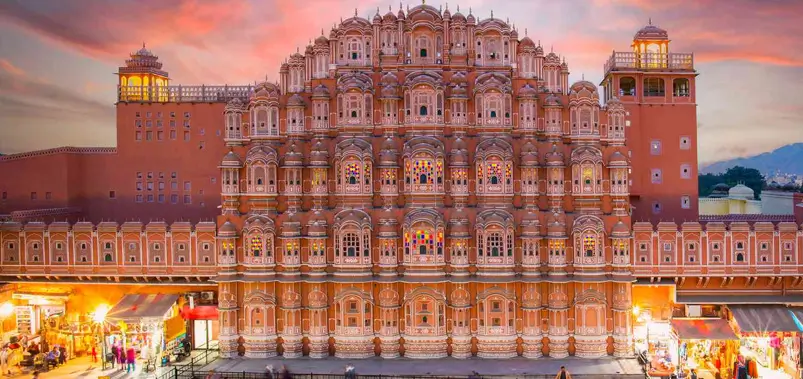
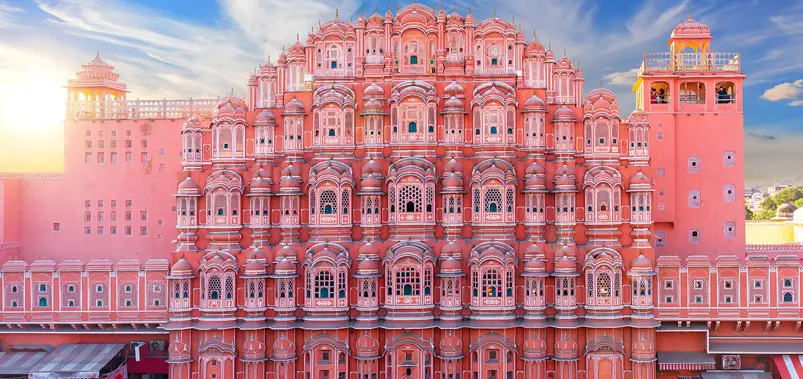
The sightseeing schedule needs to support that decision. Amber Fort can occupy a substantial part of one morning. City Palace and Jantar Mantar can be arranged according to the couple's interests, while Hawa Mahal and selected market or craft areas can be incorporated without making every day excessively long.
One afternoon can then remain free.
That free afternoon is financially relevant. Guests paying a premium for a resort or palace need time to use the pool, spa, gardens, restaurants and private room. Otherwise, they are effectively paying for facilities they never experience.
Jaipur is also an excellent place for an anniversary or birthday dinner. Rather than including expensive dinners throughout the entire trip, a couple can choose one or two evenings where dining itself becomes an occasion.
Travellers interested in jewellery or textiles can also reserve private shopping time, although purchases should remain outside the $10,000 tour budget unless a specific overall spending limit is being used.
A luxury Jaipur private tour should therefore feel balanced between sightseeing and the hotel. The city is one of the places where reducing the number of daily activities can actually increase the value of the money being spent.
The Golden Triangle is particularly suited to private road travel. Delhi, Agra and Jaipur connect logically, and a dedicated chauffeur eliminates the need for repeated station transfers, taxis or short domestic flights.
For a couple with a $10,000 ground budget, transportation should therefore be selected for comfort rather than simply finding the lowest possible rate.
A private chauffeur Golden Triangle tour may involve many hours in the vehicle over the full itinerary. The car is used for airport transfers, city sightseeing and long intercity sectors. Air-conditioning, cleanliness, luggage capacity and professional driving are therefore important parts of the holiday.
Two travellers with standard luggage may be comfortable in a quality sedan. A couple arriving with several large suitcases may prefer a larger vehicle because luggage space can matter more than advertised passenger capacity.
The chauffeur's role should also be understood correctly. A professional driver handles transportation and road logistics. A specialist sightseeing guide provides historical and cultural interpretation. The same person should not automatically be expected to perform both functions at an expert level.
Fuel, tolls, parking, interstate charges and driver allowances should be clearly addressed in the quotation. A premium private tour should not repeatedly surprise guests with minor road expenses that they assumed were included.
The chauffeur also provides flexibility that is difficult to assign a dollar value to. If guests want to leave Jaipur an hour later, stop for a comfort break or return to the hotel because they are tired, private transport makes those changes much easier.
Spending appropriately on the vehicle is therefore not simply a transportation expense.
It protects the comfort of multiple days.
A $10,000 private holiday does not need more sightseeing simply because the budget is higher. In many cases, improving the quality of the guide creates more value than increasing the number of attractions.
Delhi, Agra and Jaipur all benefit from knowledgeable local guides who can provide context while adjusting the depth and pace of the visit according to the traveller.
A private guided Golden Triangle tour should feel different from following a standard script.
Travellers interested in Mughal history may want extended discussion at Humayun's Tomb, Agra Fort and the Taj Mahal. Someone interested in architecture may spend longer examining construction, decorative work and spatial design. A photography-focused traveller may care more about timing and viewpoints.
The guide should also recognise when the guest has heard enough.
Luxury service does not mean delivering a forty-minute lecture when the traveller wants ten minutes of explanation and time to look around independently.
Specialist language requirements should be arranged in advance. Guests wanting French-, Spanish- or German-speaking guides should communicate that requirement early because availability can vary.
Shopping preferences should also be explicit.
Travellers who want jewellery, textiles or crafts can benefit from well-chosen appointments. Travellers who do not want shopping should be able to spend their time elsewhere.
This is particularly important when evaluating the quality of a premium tour. A high price should not result in more commercial stops disguised as sightseeing.
A good guide improves understanding of the destination.
That can be more valuable than adding another monument merely to make the itinerary appear comprehensive.
For a couple spending $10,000, monument admission is unlikely to be the largest component of the budget, but it should still be handled transparently.
Some private India tour packages include principal entrance fees, while others leave them payable directly. Either structure can work as long as the traveller knows what has been quoted.
Delhi can involve several ticketed monuments. Agra generally includes the Taj Mahal and Agra Fort. Jaipur may include Amber Fort, City Palace, Jantar Mantar and other attractions depending on the programme.
Ticket prices and visitor policies can change, so current official rates should be checked when the booking is being finalised rather than relying on an old article.
The more important financial question is whether premium experiences are being added because the traveller wants them.
A private dinner, specialist food experience, spa programme or carefully arranged cultural activity can be worth the cost. Adding several generic “exclusive experiences” simply because the package needs to sound luxurious can waste money.
The $10,000 budget is large enough to include selected memorable additions, but not so large that spending becomes irrelevant.
Each substantial add-on should answer a simple question: will this materially improve the trip for these particular travellers?
Breakfast is commonly included at luxury hotels, while lunch and dinner can remain open. For many premium travellers, this is preferable to an all-inclusive structure because it preserves freedom.
A couple may want lunch at a local restaurant during sightseeing and dinner at their hotel. The next day they may want only a light lunch and an elaborate evening meal.
A luxury culinary experience in India does not require every meal to be expensive.
In fact, some of the most enjoyable food experiences may be relatively informal, provided hygiene, setting and traveller comfort are considered appropriately.
At the same time, premium hotel restaurants can produce substantial bills, particularly when alcohol or imported wine is involved. Guests who dine exclusively at leading palace hotels should reserve a larger personal food budget.
One sensible approach is to keep ordinary lunches and dinners flexible while deliberately arranging two or three premium meals during the holiday.
A special Jaipur dinner may be more memorable than seven expensive dinners selected merely because the hotel is luxurious.
Dietary requirements should be communicated before arrival, especially severe allergies. Vegetarian requirements are generally straightforward in India, but serious allergies require precise communication rather than assumptions.
Food expenditure is another reason why the $10,000 figure should be defined at the beginning. If every premium dinner and bottle of wine must fit within it, the accommodation allocation needs to reflect that.
A practical budget does not need to divide money evenly across categories. For a premium couple's trip, accommodation will usually receive the largest share.
A broad example could place approximately $4,000 to $5,000 towards accommodation across eight to ten nights, depending heavily on dates and hotel selection. This would allow a combination of excellent luxury hotels and selected premium stays rather than top suites every night.
Approximately $1,500 to $2,000 might be allocated to private chauffeur-driven transportation, airport transfers and associated road services across the Golden Triangle, depending on route, vehicle category and duration.
Private guides, sightseeing arrangements and selected entrance fees or experiences could account for roughly another $800 to $1,200.
A further $1,000 to $1,500 could be preserved for dining, special activities or selected hotel upgrades, depending on what is included in the package.
The remaining amount provides a useful contingency or can support an additional night, domestic connection or more ambitious accommodation category.
These are not fixed prices and should not be treated as a formal quotation. Luxury hotel rates can vary dramatically by date, and vehicle and guide costs depend on the exact itinerary.
The purpose of a $10,000 India vacation budget breakdown is to show that the entire amount should not disappear into hotels.
A beautiful suite means little if transportation is uncomfortable, guides are weak and the itinerary is badly structured.
At the same time, spending heavily on endless activities while using hotels that do not match the traveller's expectations defeats the purpose of a premium holiday.
Balance matters more than any individual line item.
A $10,000 ground budget is substantial, but it is not unlimited. Travellers should have realistic expectations about the upper end of India's luxury market.
It may not fund signature suites at India's most expensive hotels every night while simultaneously covering ten or more nights, premium transportation, private guides, domestic flights, fine dining and extensive private experiences.
It also should not automatically be expected to cover two international business-class tickets in addition to a high-end land programme.
A luxury India vacation for two using The Oberoi Amarvilas, Rambagh Palace, The Oberoi Rajvilas and similarly prestigious properties in high room categories can exceed the budget relatively quickly, particularly during strong-demand periods.
The same applies to a longer itinerary involving numerous domestic flights and several expensive palace stays.
This is where selective luxury becomes useful.
Instead of trying to purchase the highest category everywhere, travellers can choose two or three moments where they want to spend heavily.
Perhaps that means a Taj Mahal view in Agra and three nights at a major Jaipur palace.
Another couple may care less about palace hotels and use the money to extend the trip into Udaipur.
Someone else may keep the Golden Triangle accommodation at a strong five-star level and add Ranthambore with private safari-related arrangements subject to availability and park rules.
A budget becomes restrictive only when every element is required to be at the absolute top of the market.
Two couples can spend exactly $10,000 in India and receive very different experiences.
The first couple might change hotels every night, book oversized suites they barely use, add numerous activities and travel through six cities in nine days. Their itinerary looks impressive on paper, but much of the holiday is spent checking out, driving, flying and repacking luggage.
The second couple might visit only Delhi, Agra and Jaipur over eight or nine nights. They use excellent hotels, upgrade selectively, have a private chauffeur, work with knowledgeable guides and keep several afternoons free.
The second itinerary contains fewer destinations but may provide a substantially more luxurious experience.
This illustrates one of the most important principles of high-end private travel in India: luxury is strongly connected to time.
Having a chauffeur waiting privately is valuable because the guest controls departure times. Having three nights in Jaipur is valuable because the hotel can actually be enjoyed. Having a guide privately is valuable because a fascinating monument can receive extra time while an uninteresting stop can be shortened.
A $10,000 budget should purchase that control.
It should not merely purchase more expensive versions of the same rushed itinerary.
There are circumstances where increasing the budget produces a clear improvement.
Travellers who specifically want suites at landmark hotels may need more. Families requiring multiple rooms will naturally spend more than a couple. A two-week itinerary with palace hotels, domestic flights and several private experiences can also move substantially beyond $10,000.
A $15,000 luxury India tour for two creates greater freedom to use leading hotels across more destinations without having to compromise as heavily on room categories or trip length.
At $20,000 and beyond, the possibilities expand further, particularly for travellers seeking suites, highly prestigious properties, extended Rajasthan routes and premium resort stays.
However, spending more does not automatically improve the itinerary.
A poorly paced $20,000 holiday can still be exhausting.
The additional money should purchase something identifiable: better accommodation, more nights, improved room categories, additional privacy, specialist experiences or more comfortable logistics.
If an operator cannot explain what the higher price is buying, the traveller should ask for a clearer quotation.
A $10,000 budget becomes far more useful when the itinerary is designed around priorities rather than distributing the money mechanically.
Golden Triangle Tours can structure a private Delhi, Agra and Jaipur journey using selected luxury hotels, a chauffeur-driven vehicle, local personal guides and sightseeing according to the agreed programme.
A couple who values hotels can allocate more of the budget to accommodation. Guests who care primarily about history can prioritise stronger private guiding and add another destination. Travellers who want slower days can spend the same amount over fewer cities and use higher-quality resorts.
The hotel strategy can also vary by destination.
Delhi may use an excellent premium room rather than a suite. Agra can receive a carefully chosen Taj Mahal-related upgrade. Jaipur can receive the largest hotel allocation because the couple has three nights to enjoy it.
This type of spending produces a bespoke $10,000 India itinerary rather than a generic package carrying a premium price tag.
The most valuable outcome is not being able to say that every hotel was the most expensive available. It is reaching the end of the holiday without feeling that money was spent on services the travellers did not use.
For two people who value privacy, good hotels, strong guides and a comfortable pace, $10,000 can create a genuinely high-quality India holiday when the budget is directed towards the right parts of the trip.
We promise you a holiday where everything is taken care of from the moment you land. Trusted drivers waiting for you, handpicked hotels that fit your style, personalized itineraries designed just for your family, and a dedicated team on call 24/7. All you need to do is relax, explore, and create unforgettable memories, while we take care of every detail behind the scenes.
Yes. When treated primarily as a ground budget, $10,000 for two in India can provide a high-quality private holiday with luxury hotels, chauffeur-driven transportation, private guides and selected premium upgrades. Exact value depends heavily on dates and hotel choices.
Approximately eight to ten nights can provide a strong premium experience without spreading the budget too thinly. More nights are possible with different hotel choices, while expensive palace hotels and suites can reduce the practical trip length.
Potentially, yes, when such hotels are used selectively. Booking premium properties and high room categories throughout the entire itinerary can push the total above $10,000.
For the type of luxury itinerary described here, international airfare is best treated separately. Two long-haul business-class tickets can consume a substantial portion of a $10,000 total.
Yes. Private chauffeur travel in Delhi, Agra and Jaipur is well suited to the route and can cover airport transfers, intercity road journeys and local transportation according to the confirmed itinerary.
They can be. Professional local guides in Delhi, Agra and Jaipur are a sensible part of a premium private itinerary and can be arranged according to language and sightseeing requirements.
Agra can justify a premium when a meaningful Taj Mahal view is important. Jaipur often justifies greater overall hotel spending because travellers usually stay longer and have more time to enjoy palace or resort facilities.
Yes, depending on trip length, hotel selection and safari availability. Adding Ranthambore requires additional transfers, accommodation and safari arrangements, so the rest of the budget may need adjustment.
They can be, but many luxury travellers prefer breakfast-inclusive hotels and flexible lunch and dinner arrangements. This allows them to choose restaurants according to mood rather than following a fixed meal programme.
Golden Triangle Tours can structure a private itinerary around an agreed budget, dates and hotel preferences. The final price depends on live hotel availability, room categories, route, vehicle selection and included services, so the exact proposal should be confirmed for the actual travel dates.