A luxury holiday in India does not require choosing the most expensive option at every stage of the trip. In fact, indiscriminate spending can produce an itinerary that costs considerably more without becoming noticeably better. The strongest luxury India vacation budgets are usually selective. Travellers spend heavily on the parts of the holiday that materially affect comfort, privacy, access or enjoyment, while avoiding expensive upgrades that provide little benefit for the way they actually travel.
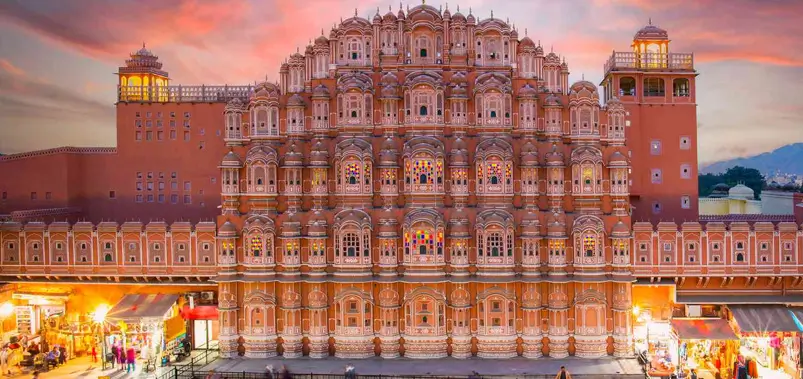
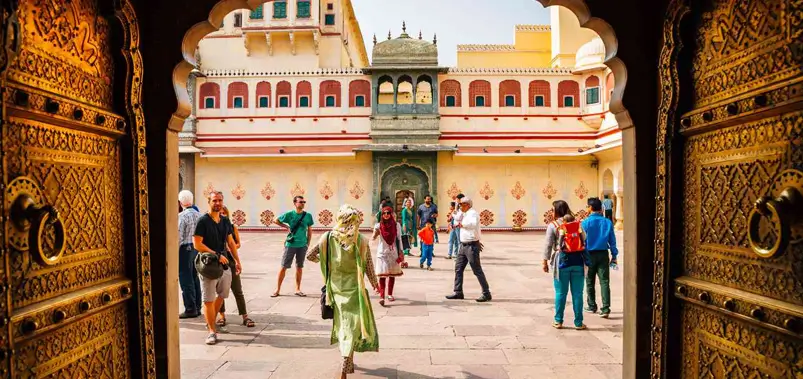
The difference becomes particularly clear on a private Golden Triangle journey. Delhi, Agra and Jaipur serve different purposes, which means the same hotel strategy should not automatically be applied to all three cities. A large suite may be unnecessary during a short, sightseeing-heavy Delhi stay. In Agra, a particular Taj Mahal outlook may matter more than additional floor space. Jaipur can justify substantially greater hotel expenditure when the traveller has several nights to enjoy a palace or resort.
Transportation deserves similar thinking. Saving a small amount by choosing an uncomfortable vehicle can affect several days of the holiday, while spending heavily on a premium vehicle for a short airport transfer may provide little additional value. Professional guides can be worth paying for at historically important sites, while filling the itinerary with unnecessary paid activities simply because they carry a “VIP” label can weaken both the budget and the experience.
For travellers considering a private luxury India tour, the objective should therefore be value rather than price alone. Value at the high end does not mean choosing the cheapest option. It means knowing where an additional $500 or $1,000 will genuinely improve the holiday and where that money would be better retained for another city, another night or a more meaningful upgrade.
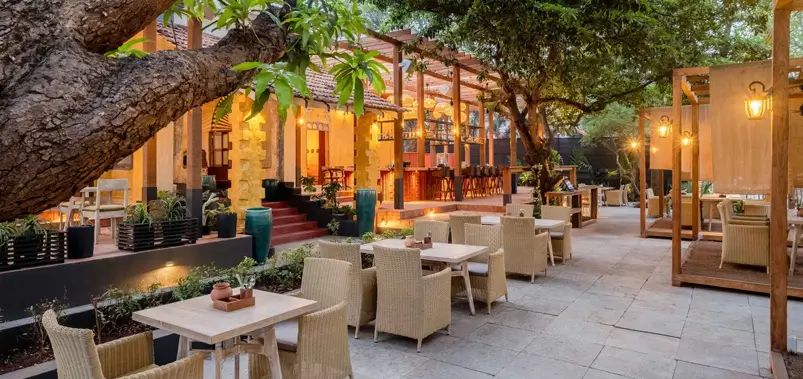
Accommodation is usually one of the largest expenses on a premium India holiday, and it is also where travellers can either spend extremely well or waste a significant amount of money. The key distinction is whether the hotel is simply a comfortable base for sightseeing or whether staying there is an important part of the reason for visiting the destination.
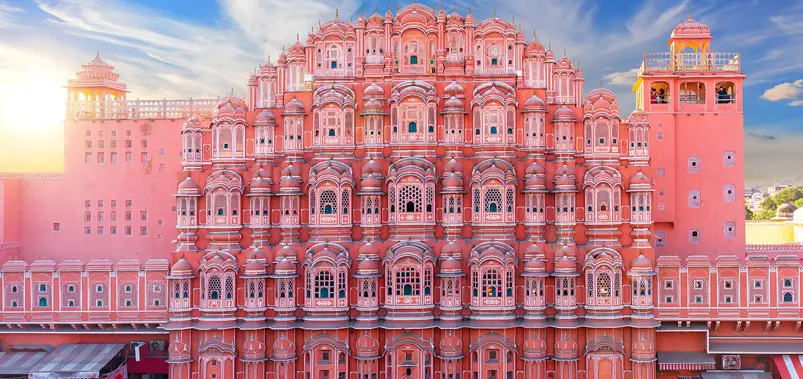
Jaipur is one of the clearest examples. A property such as Rambagh Palace is not merely a room for the night. Travellers selecting a palace stay may be paying for architecture, history, gardens, restaurants, service and the atmosphere of staying within a landmark property. The Oberoi Rajvilas offers a different type of luxury, with a resort environment that can suit guests who want privacy and substantial time away from the city. When the itinerary provides three nights and a free afternoon, paying more for such a property can materially affect the experience.
The calculation changes if the guest is out from early morning until late evening. Paying a premium for a resort and then using it only to sleep means much of the hotel's value is being left unused. A high-quality city hotel may be a more rational choice for travellers who want intensive sightseeing.
Udaipur provides another strong case for hotel spending. Lake settings and distinctive luxury properties can become central to the stay. A traveller deliberately scheduling a slow Udaipur programme may reasonably allocate more of the luxury India hotel budget there than in a city used primarily for transit.
The same principle applies to Jodhpur when a guest specifically wants a major palace-hotel experience. A property such as Umaid Bhawan Palace can become one of the memorable components of a Rajasthan journey, but the itinerary needs enough time for the guest to enjoy what they are paying for.
This does not mean that expensive hotels are always justified. Prestige alone is not sufficient. A property deserves a large portion of the budget when its setting, history, privacy, service or facilities genuinely contribute to the holiday. Travellers should therefore examine the number of nights, expected hotel time and purpose of the destination before approving a substantial accommodation upgrade.
Find out where to splurge on 5-star heritage hotels and where to save without compromising comfort. Let our travel experts craft your dream itinerary.
One of the easiest ways to overspend on a high-end India holiday is automatically upgrading every reservation to a suite. Suites can be exceptional, but additional square footage does not automatically produce additional enjoyment. A traveller who spends ten waking hours sightseeing may receive very little practical value from an enormous living room that remains empty throughout the day.
Delhi is a good example. For a couple staying two or three nights and spending much of the day visiting the city, an excellent room at a strong luxury hotel can be entirely sufficient. The couple still benefits from the hotel's restaurants, spa, pool, service and public spaces while avoiding a suite supplement that could amount to hundreds of dollars per night.
That saving becomes meaningful over a multi-city itinerary. If upgrading costs an additional $500 per night and the traveller avoids unnecessary suite upgrades across six nights, $3,000 remains available for something else. That money could fund additional nights, a more meaningful palace stay, improved international flights or a substantial extension to another destination.
Room upgrades become more valuable when they provide something beyond size. A separate living room can matter to a business traveller who needs to work. A two-bedroom suite can solve a genuine family requirement. A private terrace may transform a resort stay. A particularly desirable view may connect the accommodation directly with the destination.
Travellers should therefore compare the actual features rather than the category names. A luxury hotel room in India may already be spacious and highly comfortable. “Suite” should not be treated as an automatic requirement for a premium holiday.
Families should also compare a suite with connecting rooms. Two connecting rooms can provide more bathrooms, better sleeping arrangements and greater privacy than a large one-bedroom suite. The better option depends on family composition rather than status.
Saving on room size is not the same as downgrading the hotel. In many cases, choosing the right hotel in a sensible room category produces a stronger experience than choosing a less distinctive hotel simply to obtain a larger suite.
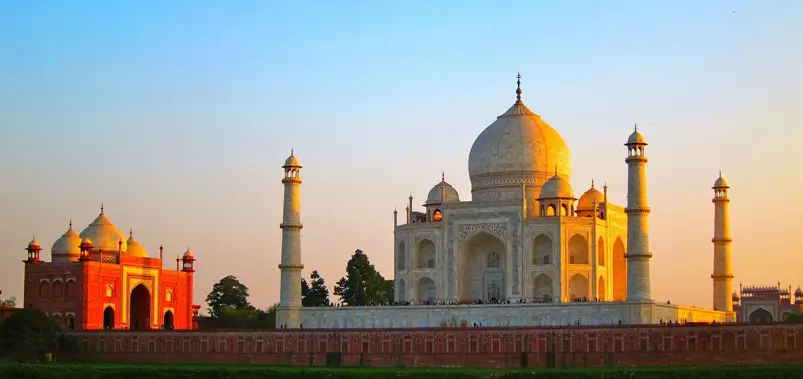
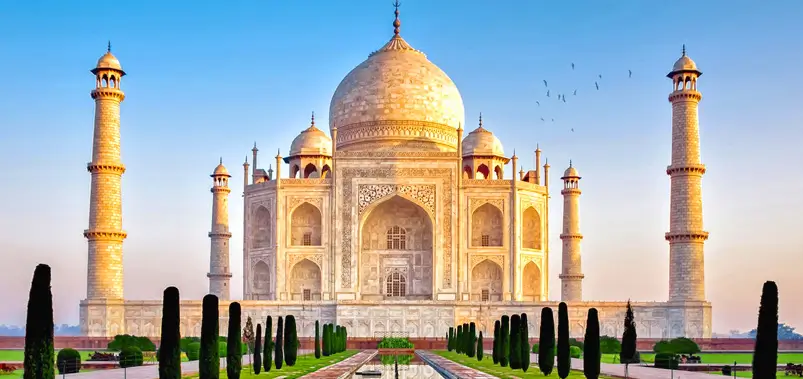
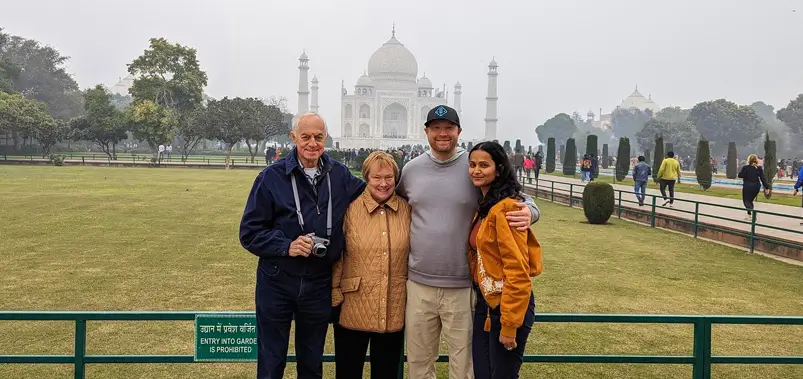
Agra deserves its own spending strategy because most travellers visit primarily for the Taj Mahal. The city is often a one-night stop, which means paying heavily for room size alone can be difficult to justify. A premium associated with the Taj Mahal experience itself can be much more meaningful.
For travellers who have dreamed about seeing the monument for years, accommodation at a property such as The Oberoi Amarvilas may become one of the intentional splurges of the holiday. The exact room category remains important because travellers should confirm what they are purchasing rather than assuming every category provides identical features or outlooks.
A luxury Taj Mahal hotel stay can be particularly valuable for honeymooners, anniversary couples or first-time visitors who want the monument to remain part of the experience beyond the formal sightseeing visit. In such circumstances, spending more for the right room category may create a memory that feels proportionate to the cost.
At the same time, the short length of the Agra stay should prevent automatic escalation into the most expensive suite. If the guest checks in late, leaves for sightseeing, sleeps and departs after breakfast, there may be little opportunity to enjoy extensive indoor space. The additional budget might produce more value elsewhere.
Agra also illustrates the importance of scheduling. A premium hotel becomes more worthwhile when the itinerary gives guests time to use it. Arriving earlier, visiting Agra Fort at a comfortable pace and keeping part of the evening free can provide a better balance than treating the hotel as a brief stop between Delhi and Jaipur.
The Taj Mahal is normally closed to general visitors on Fridays, so the Agra stay should be positioned correctly before any expensive non-refundable hotel booking is made. Spending heavily on accommodation while getting the basic itinerary timing wrong would be a serious planning mistake.
For many premium travellers, Agra is therefore a destination where selective spending makes sense: pay for the feature that matters, avoid paying automatically for everything else.
Get insider tips on where to invest in unforgettable private experiences and where to save on your upcoming Golden Triangle journey.
Transportation is not the most glamorous part of a luxury holiday, but on the Golden Triangle it is one of the services travellers use most frequently. A dedicated private vehicle may handle the international airport arrival, Delhi sightseeing, Delhi-to-Agra transfer, Agra sightseeing, the road journey towards Jaipur and local Jaipur transportation.
That represents many hours inside the vehicle.
Trying to save aggressively on this component can therefore affect a large proportion of the holiday. A private chauffeur in India should be selected according to passenger numbers, luggage, route and expected comfort rather than merely choosing the least expensive car capable of carrying the group.
For two travellers with normal luggage, a quality sedan may provide sufficient comfort. A couple travelling with several large international suitcases may benefit from a larger vehicle. Families should pay particular attention to usable luggage space because the number of passenger seats does not indicate how many large bags the vehicle can comfortably accommodate.
Senior travellers may also appreciate a vehicle that makes entry and exit easier, particularly when several sightseeing stops are involved during the day.
A professional chauffeur contributes more than movement between cities. Consistency matters. The driver becomes familiar with the broad schedule, hotel locations and intercity route. Guests do not need to negotiate with a different taxi provider every morning or manage transportation independently after a long sightseeing day.
Fuel, tolls, parking, interstate charges and driver allowances should be addressed clearly in the quotation. A premium trip should not create repeated confusion over small operational payments.
Travellers do not necessarily need the most extravagant vehicle available. The objective is comfort, space, cleanliness, air-conditioning and professional service. Spending more purely for a luxury badge may add less value than moving from an undersized vehicle into a spacious and practical one.
On a road-intensive Golden Triangle luxury tour, the right private vehicle is an area where sensible expenditure is usually justified.
The opposite principle applies when the vehicle is used only briefly. Not every transfer requires the most expensive transportation category.
If a couple is moving fifteen or twenty minutes between an airport and a nearby hotel, paying a large premium purely for an exotic vehicle may provide very little practical benefit. A clean, spacious, professionally chauffeured premium car can perform the service perfectly well.
This becomes particularly relevant on itineraries involving several domestic flights. Each airport transfer can be upgraded individually, but the cumulative cost may become substantial without materially changing the holiday.
The traveller should consider duration. A premium vehicle used for five hours between cities can significantly improve comfort. A premium vehicle used for twenty minutes provides a much smaller window in which to create value.
Luggage also matters more than badge prestige. A luxury sedan with inadequate boot space can be less useful than a larger vehicle that accommodates the passengers and their suitcases comfortably.
For private airport transfers in India, reliability should usually rank above extravagance. The driver should have the correct flight information, arrive at the appropriate time and understand the destination. After a long international journey, those operational details are more valuable than decorative additions.
Travellers who particularly enjoy luxury automobiles may naturally make a different choice. The point is not that premium cars are unnecessary. It is that transportation expenditure should correspond to the amount of time spent in the vehicle and the practical benefit the upgrade provides.
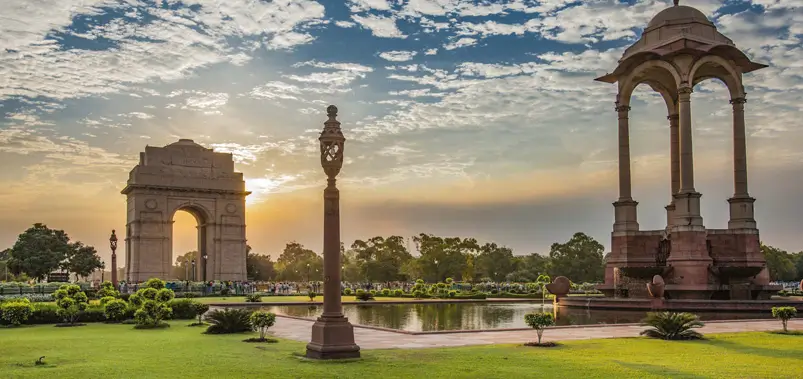
India contains monuments where visual impact alone is extraordinary, but historical context can transform the visit. The Taj Mahal is more meaningful when its Mughal history, architectural composition and symbolism are properly explained. Amber Fort becomes more than a series of beautiful courtyards when the traveller understands how the complex functioned. Humayun's Tomb gains additional significance when placed within the development of Mughal architecture.
For these places, a knowledgeable private tour guide in India can be worth considerably more than adding another paid attraction to the itinerary.
A strong guide should adapt to the guest. Travellers with a deep interest in history may want detailed explanations. Others want concise context followed by time to walk independently. Photographers may care more about light, viewpoints and timing. Families may need a style that keeps different age groups engaged.
Language also matters. Travellers who are more comfortable in French, Spanish, German or another language can request specialist guides where available. Such guides may require advance arrangements, particularly during busy periods.
Paying for a private guide also buys control over pace. A guest can spend longer at one site and shorten another. Questions can be answered directly instead of following a fixed group presentation.
Where travellers should be cautious is paying premium rates for generic escorting that provides little interpretation. The word “private” does not automatically mean expert.
The operator should be able to explain what guide services are included, in which cities and for how long. Chauffeurs and guides should also be understood as separate roles. A professional driver can be extremely helpful, but should not automatically be expected to replace specialist historical guiding inside monuments.
For travellers interested in history, architecture, religion or culture, strong guiding is one of the areas where additional expenditure can materially improve a high-end India holiday.
Luxury itineraries often become unnecessarily expensive and exhausting because travellers feel they must visit every major attraction. More sightseeing does not automatically create better value.
A private tour should allow the itinerary to be edited.
If a couple has little interest in markets, there is no reason to include several market visits. If they are not interested in shopping, commercial showroom stops can be removed. If they have already spent several days studying Mughal architecture and would rather have an afternoon at the hotel, another minor monument does not need to be added merely because time exists.
Removing unwanted activities saves more than entrance fees. It saves chauffeur time, guide time and, most importantly, traveller energy.
A bespoke India itinerary should distinguish between essential experiences and optional ones. For a first-time Golden Triangle visitor, the Taj Mahal and Amber Fort may be priorities. Other attractions should be selected according to personal interest rather than a universal checklist.
This becomes even more important on longer Rajasthan itineraries. After visiting several forts and palaces, some travellers reach a point where another historic building adds relatively little. A food experience, countryside stay or free afternoon may provide greater variety.
High-net-worth travellers sometimes pay for activities they would never have chosen simply because the itinerary describes them as exclusive. The correct question is not whether the activity sounds premium. It is whether the traveller genuinely wants to do it.
Saving money by removing unwanted sightseeing can therefore improve the trip twice: the budget falls and the itinerary becomes more comfortable.
One of the most effective luxury upgrades in India is an additional night.
Adding a night in Jaipur can transform a two-night stay into a much more relaxed three-night experience. Instead of arriving, sightseeing all day and leaving immediately, the traveller can have time for the hotel, shopping, spa or a slower meal.
The same principle applies in Udaipur. An additional night can create the space for a free afternoon beside the lake rather than forcing City Palace, a boat experience, dining and hotel time into one compressed day.
On a slow luxury India tour, nights are often more valuable than activities.
Consider a couple choosing between spending $700 on several additional experiences or using approximately the same amount towards another night at a high-quality hotel. If the itinerary is already busy, the extra night may improve every surrounding day by reducing pressure.
Longer stays also reduce the amount of packing and unpacking. Every hotel change involves checking out, loading luggage, travelling, arriving, completing formalities and becoming familiar with another property.
Even private transfers cannot eliminate that process.
For travellers over 60, families and guests arriving after long international flights, a slower structure can be particularly valuable. A free afternoon should not be viewed as missing India. It can allow the traveller to enjoy India with enough energy to appreciate the next day.
This is one of the areas where premium travel should differ most clearly from a low-cost sightseeing package. A luxury itinerary does not need to justify its price by keeping guests occupied every hour.
A one-night stop creates a poor environment for many expensive room upgrades. Travellers may arrive in the late afternoon, have dinner, sleep and leave the next morning. The room is technically luxurious, but there is little time to use its additional facilities.
This is particularly relevant when comparing a large suite with an excellent standard luxury room.
Suppose a suite costs $800 more for one night. If the traveller will spend only two or three waking hours in the room, that supplement has to deliver something extremely meaningful to justify itself.
A distinctive view may do so. A private terrace used for a special occasion may do so. Extra floor space alone often does not.
The same $800 spent on the third night of a resort stay can create far more value.
This is why luxury hotel upgrades in India should be considered according to both room features and length of stay. Travellers should not upgrade mechanically across the entire itinerary.
The strategy can be different in each city. Delhi may use a premium room. Agra may receive a view-focused upgrade. Jaipur may receive a suite because the couple is staying three nights and has significant hotel time.
That combination can feel more luxurious than suites everywhere because each upgrade has a purpose.
For some travellers, privacy is one of the main reasons for booking at the luxury level. They may be public-facing business owners, senior executives, well-known individuals or simply people who strongly dislike group travel.
Private transport is usually the first worthwhile investment. The traveller controls the vehicle and is not sharing the day with unrelated guests. Departure times can be adjusted and the car becomes a private space between public attractions.
Personal guides provide another layer of privacy. There is no large group gathering around the guide and no need to wait while twenty other travellers finish shopping or taking photographs.
Hotel choice can further support privacy. A resort-style property with extensive grounds may appeal to guests who want more distance from the city. Particular room locations or villa-style accommodation can also be relevant, depending on the property.
A private luxury India tour for affluent travellers can therefore justify higher spending when privacy materially affects comfort.
However, ordinary private tourism services should not be confused with professional security. A chauffeur and guide are not close-protection personnel. Travellers requiring professional security arrangements should communicate that requirement separately so appropriately qualified services can be considered.
Spending for privacy should therefore be precise. Private transfers, individual guiding and appropriate hotels can be valuable. Paying for vague “VIP” terminology without identifiable additional services is not.
Fine dining can be an enjoyable part of a luxury India holiday, but expensive meals do not need to occur three times every day.
A large hotel breakfast followed by an elaborate lunch can leave travellers uncomfortable during afternoon sightseeing, particularly in warm weather. Many guests naturally prefer a lighter midday meal and a more substantial dinner.
This approach can also save a considerable amount over a ten- or fourteen-day holiday without making the trip feel less luxurious.
A luxury dining itinerary in India can concentrate premium expenditure on meals where setting and time allow the experience to be appreciated. An anniversary dinner in Jaipur, a special evening in Udaipur or a high-quality meal at a landmark hotel can be memorable because it has been chosen deliberately.
By contrast, spending heavily on lunch simply because the itinerary happens to pass a five-star hotel may add little.
Travellers should also remember that alcohol can materially increase restaurant bills at luxury properties. Imported wine and premium spirits may cost substantially more than guests expect. Those who enjoy fine wine should include it intentionally within their personal dining budget.
Breakfast is often included with luxury hotel accommodation, making the morning straightforward. Lunch can remain flexible, and dinner can then alternate between selected premium restaurants and relaxed hotel dining.
This strategy allows food expenditure to remain generous without becoming indiscriminate.
The meals travellers remember are often connected to a place or occasion rather than simply being the most expensive.
A couple celebrating an anniversary might reserve one exceptional dinner in Jaipur. Another might choose an evening overlooking a lake in Udaipur. A family could arrange a special meal during the night that matters most to them.
The rest of the trip does not need to imitate that level every evening.
After six or seven hours of sightseeing, some travellers genuinely prefer a quiet meal at the hotel or even room service. Forcing a formal dining reservation into every evening can turn another supposedly luxurious element into an obligation.
For luxury honeymoon travel in India, this is particularly important. Couples need unscheduled time as much as they need romantic arrangements. One carefully selected dinner can feel more personal than a package containing repeated generic “candlelight dinners.”
Special dietary requirements should be communicated clearly before important meals. Severe allergies deserve direct attention rather than assumptions based on general menu descriptions.
Spending more on fewer, stronger dining experiences can therefore improve both the budget and the emotional quality of the holiday.
Not every journey becomes more luxurious when a flight is added.
Delhi to Agra is naturally suited to private road travel. By the time a traveller drives to the airport, checks in, clears security, flies, collects luggage and transfers from the arrival airport, flying may provide little practical advantage even if an appropriate service exists.
Agra to Jaipur is also commonly handled by road, allowing stops to be considered along the way according to the itinerary.
A private Golden Triangle car tour therefore avoids unnecessary airport procedures while giving guests control over comfort stops and departure timing.
Flights become more valuable when distances increase significantly. Connecting Rajasthan with Kerala, travelling to Varanasi from a distant city or moving between North and South India can justify flying because road or rail alternatives may consume too much holiday time.
The decision should be based on door-to-door travel time rather than the published flight duration.
A ninety-minute flight can occupy half a day once all airport processes are included.
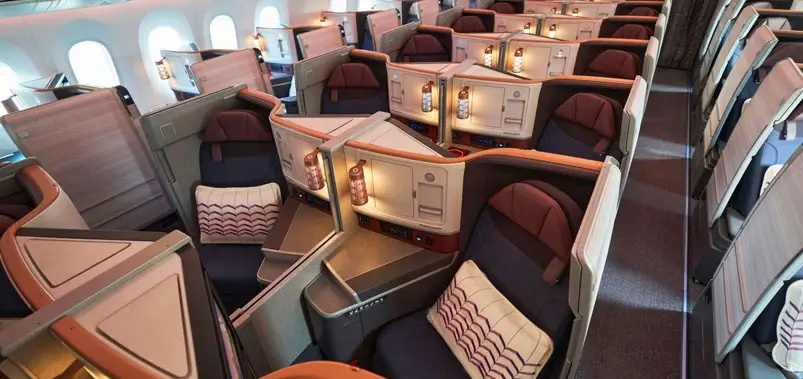
Travellers should also check baggage allowances. Domestic tickets may not provide the same allowance as an international business-class booking, making excess baggage another potential expense.
Using road transport where it makes geographical sense and flights where they genuinely save time is usually more effective than treating air travel as inherently more luxurious.
Although unnecessary flights can waste time, the right flight can be worth paying more for. A direct service at a sensible hour may provide considerably more value than a cheaper connection requiring a long layover.
Suppose a couple is travelling from North India to Kerala. Saving $150 on airfare but adding five hours of connection time is unlikely to be a good trade when the overall holiday already costs many thousands of dollars.
Time has financial value on a premium trip.
A luxury India domestic flight itinerary should therefore consider schedule quality, baggage conditions and airport convenience alongside ticket price.
The same principle applies when connecting to an international departure. A cheap domestic flight with an uncomfortably tight connection can create unnecessary risk. Paying for a better schedule or adding a final overnight stay can protect a far more expensive international ticket.
Business-class domestic upgrades should be evaluated individually. On a short sector, the premium may not materially change the flight itself, but baggage allowance, airport experience or fare flexibility may still matter to some travellers.
The expenditure is justified when it solves a real problem rather than merely adding another premium label.
Certain expenses do not create attractive photographs, yet they can become extremely valuable when something goes wrong.
Suitable travel insurance is one example. A traveller spending $10,000, $20,000 or more on a private holiday should understand the policy's cancellation, interruption, medical and baggage provisions rather than choosing solely according to the lowest premium.
Coverage varies significantly, and travellers with pre-existing medical conditions should pay particular attention to policy terms and disclosure requirements.
Reliable on-tour support in India is another area that should not be dismissed simply because it does not appear as a visible luxury feature.
Flight delays can affect transfers and hotels. A vehicle can encounter a mechanical problem. A guest can become ill. A hotel may misunderstand a confirmed room category. Having a local point of coordination can save substantial time during these situations.
Support does not replace an airline, doctor, insurer, embassy or emergency service. It helps coordinate the travel arrangements surrounding the problem.
A driver-only booking obtained at the lowest possible price may be completely adequate for travellers comfortable managing every other reservation themselves. Guests paying for a comprehensive private tour should expect a broader operational structure.
Saving several hundred dollars is rarely attractive if it means becoming personally responsible for coordinating multiple suppliers during a disruption.
The amount available naturally changes where travellers can afford to splurge, but the principle of selective spending remains the same.
At approximately $10,000 for two in ground arrangements, travellers may concentrate on strong five-star hotels, private transportation, excellent guides and perhaps two or three significant hotel upgrades. Spending the entire amount on prestigious accommodation can leave too little flexibility elsewhere.
At around $15,000, the couple can begin incorporating more landmark hotels, higher room categories or additional nights without making the same level of trade-off. The trip can also extend further into Rajasthan or include another premium destination.
At $25,000 and above, the range expands substantially. Suites, palace hotels, premium resorts and more elaborate private arrangements become easier to combine, although the exact value still depends on dates and duration.
A high-end India vacation cost can rise far beyond these figures for guests choosing signature suites and extensive bespoke services.
Yet a $25,000 trip can still waste money if the traveller upgrades things they do not value.
The budget should always begin with priorities. A hotel enthusiast should spend differently from a history enthusiast. A couple wanting privacy should spend differently from a family whose main requirement is room configuration and vehicle space.
Luxury becomes personal when the budget reflects those differences.
A private itinerary does not need identical hotel categories, identical room levels or the same amount of sightseeing in every destination.
Golden Triangle Tours can structure Delhi, Agra and Jaipur arrangements around the traveller's available budget and preferred level of accommodation, with private transportation and local guides incorporated according to the confirmed itinerary.
A couple might save on a Delhi suite, spend on a meaningful Agra room category and allocate the largest accommodation budget to Jaipur. Another traveller might prefer excellent rooms throughout and spend the difference on Udaipur or several additional nights.
Families may direct more money towards larger vehicles and connecting rooms. Senior travellers may prioritise slower pacing, accessible accommodation and additional nights. Honeymooners may prefer one exceptional hotel and several private dining or wellness experiences.
There is no single correct formula for a bespoke luxury India holiday.
The strongest approach is to spend heavily when an upgrade changes the way the traveller experiences India and save when the additional cost changes little beyond the name printed on the reservation.
A premium holiday should never feel cheap, but it also does not need to feel wasteful. The difference lies in deciding which comforts, hotels and private services will still matter when the traveller remembers the trip years later.
We promise you a holiday where everything is taken care of from the moment you land. Trusted drivers waiting for you, handpicked hotels that fit your style, personalized itineraries designed just for your family, and a dedicated team on call 24/7. All you need to do is relax, explore, and create unforgettable memories, while we take care of every detail behind the scenes.
For many travellers, the strongest areas for additional spending are distinctive hotels where enough time is available to enjoy them, comfortable private transportation for long road sectors and knowledgeable personal guides at historically important destinations.
Travellers can often save by avoiding unnecessary suite upgrades, removing unwanted sightseeing, keeping some meals informal and using excellent private road transportation instead of unnecessary domestic flights.
It can be particularly worthwhile when the itinerary includes several nights and enough free time to enjoy the property. Paying heavily for a palace hotel is less valuable when the guest leaves early every morning and returns late every evening.
For first-time visitors, honeymooners and anniversary travellers, a meaningful Taj Mahal-related room category can be a worthwhile splurge. The exact room and view should be confirmed before booking rather than assumed from hotel photographs.
No. Many high-end hotels provide excellent standard or premium rooms. Suites are most useful when travellers need separate living space, additional family accommodation, private outdoor areas or another distinctive feature.
Yes, particularly on routes such as Delhi, Agra and Jaipur where guests spend many hours travelling by road. Vehicle comfort, luggage space, professional driving and flexible departure times can affect several days of the holiday.
Travellers with strong cultural or historical interests may obtain greater value from an excellent private guide at major sites than from adding several attractions they are not particularly interested in visiting.
Not necessarily. Flights can introduce airport transfers, check-in time, security procedures and baggage restrictions. They are most useful when they save substantial door-to-door travel time.
The total depends heavily on duration, dates and hotels. Ground arrangements for two can exceed $10,000 for a strong private luxury itinerary and can rise to $15,000, $25,000 or substantially more when palace hotels, suites and extensive premium services are selected.
Yes. Golden Triangle Tours can combine different hotel and room categories across a private itinerary, allowing travellers to spend more in destinations where the upgrade has the greatest value while keeping other stays comfortably within the overall budget.