Stand outside Terminal 3 at Delhi airport at midnight and you will see two kinds of foreign visitors. One group is calmly tapping a phone, watching a car icon creep towards pillar 8, with a local SIM already working and the hotel address saved in Google Maps. The other group is arguing about fares with three drivers at once, trying to get the airport Wi-Fi to send an OTP to a phone number from home. The difference is not luck. It is about twenty minutes of setup done before the flight.
India runs on apps more than almost any country you will visit. Cabs, train tickets, metro rides, monument entry, food delivery and even small payments at a tea stall all happen on a phone. Some popular Indian apps work smoothly with a foreign number and card, and some quietly refuse. This guide covers the best apps for foreign tourists in India, what each one actually does, which ones need an Indian number, and what they cost, so you can set your phone up properly before you land.
Uber in India is the easiest ride app for a first time visitor, and it is the one most foreign travellers should install first. You can sign up at home with your own mobile number and add an international Visa or Mastercard, and the fare is charged in rupees and converted by your bank. Uber offers several types of ride: standard cars, larger SUVs (Uber XL, useful if you have big suitcases), Uber Auto for the three wheeled auto rickshaws, and Uber Moto for motorbike taxis. You can switch the payment to cash before requesting a ride if your card is declined, which happens now and then with foreign cards. Keep small notes, because drivers rarely have change for a 500 rupee note.
Ola and Rapido are the two big local competitors. Ola works much like Uber and accepts an international number for the OTP in most cases, though some visitors report problems logging in, so treat it as a backup. Rapido started as a motorbike taxi service and now offers autos and cabs as well. It is often the cheapest option for short trips, but it generally works best with an Indian number and Indian payment methods, so it suits travellers who have bought a local SIM. In Delhi, short auto rides usually cost INR 60 to 150 and a car across the city INR 300 to 700, more at peak hours, and prices can change with demand.
You may read about BluSmart, the all electric cab service that was popular in Delhi and Gurugram. It suspended its rides after its parent company came under a regulatory investigation, and it is not an option for visitors at present, so do not waste time downloading it.
At Delhi airport, all ride apps send you to a designated pickup zone in the car park, and the app shows a pillar number. Allow ten to fifteen minutes to walk there with luggage. If your phone has no data yet, the prepaid taxi counter inside arrivals is a safe fallback.
A few practical habits make ride apps safer. Always match the number plate in the app before you get in, share your live trip with a friend through the app, and ask the driver to confirm your name rather than giving it yourself. Ride apps are excellent for city hops, but they are not designed for long intercity drives. Many drivers decline trips from Delhi to Agra or Agra to Jaipur, because they will return empty, and the car may not suit four or five hours on the highway. For those legs, travellers usually book a private car and driver for the full trip, which can be arranged through our car and coach rental service.
In Jaipur, Uber, Ola and Rapido all work well. In Agra, Uber and Rapido operate, but waits near the Taj Mahal's East Gate can be long at sunrise and sunset, so many visitors simply keep a hired car waiting.
Make your India holiday easier with the right travel apps. Navigate unfamiliar streets, book local transport, translate conversations and stay connected while exploring Delhi, Agra and Jaipur with confidence before departure.
Indian Railways is one of the best ways to move between Delhi, Agra and Jaipur, and the IRCTC foreign tourist quota is set aside for visitors with a foreign passport. You book it on the official IRCTC website, irctc.co.in, by registering with your email and an international mobile number. Verifying a foreign mobile number costs INR 100 plus GST, a one time fee. Once logged in, choose "Foreign Tourist Ticket Booking" under the Services menu, enter each passenger's passport number and pay with an international debit or credit card. The quota covers Executive Class, First AC and Second AC, and carries a service charge of INR 200 plus GST per ticket on top of the fare. Bookings can be made up to 365 days ahead, and berths are confirmed once the normal booking window opens. The IRCTC Rail Connect app uses the same login and is handy for checking your bookings on the move.
For live updates, two apps help. Where is my Train app shows the real position of almost any Indian train and works even without mobile data, using cell tower signals, which is useful in rural Rajasthan. ixigo Trains shows PNR status, platform numbers, delays and coach positions, so you know where to stand on the platform before a two minute halt. For the Delhi to Agra run, the Gatimaan Express and Shatabdi Express are the trains most visitors use.
For flights, MakeMyTrip, Cleartrip and ixigo compare domestic fares, and the airline apps of IndiGo, Air India, Air India Express and Akasa Air handle check in and boarding passes. Book directly with the airline if you can, as changes are easier. Domestic fares from Delhi to Varanasi or Udaipur usually run INR 4,000 to 9,000 one way, more close to festivals.
Inside Delhi, the metro is clean, cheap and air conditioned, and Delhi Metro QR tickets remove the need to queue for tokens. The official DMRC app, Momentum 2.0 Delhi Sarthi, lets you choose your start and end stations, see the fare and pay by card or UPI to receive a QR code on your phone. It also has a wallet that you can top up with a minimum of INR 150 and use for several QR tickets. You can also book a QR ticket by sending "Hi" on WhatsApp to the DMRC number +91 96508 55800, for up to six passengers at once, and QR tickets are sold inside the Uber and Google Maps apps too. Fares currently run from INR 11 to INR 64 (roughly USD 0.15 to 0.75), and the Airport Express line costs a little more. Scan the QR code at the gate on the way in and again on the way out.
India's payment habits surprise visitors more than anything else. A tea seller, a temple shoe stand and a rickshaw driver will all show a printed QR code and expect you to pay by UPI, the national instant payment system. Most Indians never touch cash for small payments. The problem is that UPI is linked to Indian bank accounts and Indian phone numbers, which tourists do not have.
UPI for foreign tourists has improved, but it is still not fully open. The National Payments Corporation of India runs a prepaid wallet system called UPI One World, issued through authorised apps. The UPI One World wallet is loaded with an international Visa or Mastercard and then used to scan any UPI QR code. The most widely mentioned app is CheqUPI. Current limits are up to INR 25,000 per load and INR 50,000 per month (about USD 285 and USD 570), and unused balance is refunded to the card when you leave, subject to foreign exchange rules. Registration involves uploading your passport and visa and a selfie check. Access has been rolled out in stages: recent reports say the easiest place to enrol is a kiosk at Delhi's Indira Gandhi International Airport, some apps ask for an Indian mobile number, and a few large hotels help guests sign up. Rules and providers keep changing, so check the NPCI website or ask your hotel shortly before you travel.
Paytm and PhonePe are household names in India, but full UPI on these apps needs an Indian bank account. Visitors of Indian origin with an NRE or NRO account can use UPI through their Indian bank's app, and some banks now allow overseas mobile numbers from countries such as the UK, USA, Canada and Australia, but this does not help a regular tourist.
Cards are widely accepted where foreign visitors spend most of their money. Hotels, good restaurants, malls, airline counters, larger shops and monuments with card machines take Visa and Mastercard, often by tap. American Express is accepted less often. Small shops, street food stalls, autos and village markets mostly want cash or UPI. A card with no foreign transaction fee, such as one from Wise or Revolut, saves money on every payment.
For cash, use ATMs inside banks or hotels. Indian ATMs usually allow INR 10,000 per withdrawal, and many charge a fee of around INR 200 to 250 to foreign cards on top of your home bank's fee, so withdraw larger amounts less often. Carry a mix of 100, 200 and 500 rupee notes. Keep INR 2,000 to 3,000 in small notes for tips, toilets, shoe stands and bottled water, and keep the rest in the hotel safe.
A simple approach works for most travellers: card for hotels and restaurants, a ride app with a card attached, a UPI One World wallet if you can register for one, and a small cash float for everything else.
Explore India with practical digital tools at your fingertips. Find your way around, communicate across language barriers and organise transport, meals and bookings for a smoother Golden Triangle holiday across India.
Offline Google Maps India coverage is excellent, and Google Maps is the single most useful app you will open each day. Before you fly, download offline maps for Delhi, Agra and Jaipur so you can still see your location in a car park with no signal or inside the thick walls of Agra Fort. Save your hotels, restaurants and the Taj Mahal's East and West Gates as starred places. In Delhi, Google Maps shows metro routes, live train times and even sells metro QR tickets. Street addresses in Indian cities can be vague, so share your hotel's map pin with drivers rather than reading out an address.
Google Translate offline Hindi is the second essential. Download the Hindi language pack inside the app so translation works without data. The camera mode reads Hindi signs, menus and notices on screen, which is surprisingly useful at railway stations and in old city markets. Conversation mode lets you speak in English and play back the Hindi to a driver or shopkeeper. Most people in hotels and tourist areas speak good English, but translation helps with drivers, small shops and rural stops.
For food delivery, Zomato and Swiggy dominate. Both list thousands of restaurants in Delhi and Jaipur, with menus, photos and delivery times of thirty to forty five minutes. Zomato is also a good restaurant review app even if you never order, with photos of real menus and prices. Both apps usually require an Indian number for the login OTP, and foreign cards are sometimes declined, so they work best once you have a local SIM, with cash on delivery as a backup. Swiggy Instamart and Blinkit deliver groceries, toiletries and medicines from pharmacies in about fifteen minutes in big cities, which helps if you forget sunscreen or need rehydration salts.
ASI monument tickets online save time at the Taj Mahal, Agra Fort, Red Fort, Qutub Minar and Humayun's Tomb. For Agra, the official sites tajmahal.gov.in and asiagracircle.in sell tickets. The Taj Mahal costs INR 1,100 for foreign visitors, plus INR 200 for entry to the main mausoleum, about USD 15 in total, and it is closed on Fridays. The Archaeological Survey of India has also put its tickets on the government ONDC network, so you can book through apps such as Highway Delite and Abhee by Mondee, or through a WhatsApp service by sending "Hi" to +91 84228 89057. Foreign visitors receive INR 50 off when booking online. Rajasthan's state run monuments, such as Amber Fort, Nahargarh Fort and the Jantar Mantar in Jaipur, use the Rajasthan government's own ticketing, and composite tickets are sold at the gate. Prices can change, so check on the day.
The 112 India app is the government's emergency app, run under the Ministry of Home Affairs. It has an SOS button that alerts the emergency response centre with your location, and it connects to police, ambulance and fire services through the single number 112. Install it, give it location permission and add a trusted contact. For tourist help, the Incredible India tourist helpline is 1800111363 (or 1363), with support in English and several foreign languages. In Rajasthan and Uttar Pradesh, dial 108 for an ambulance.
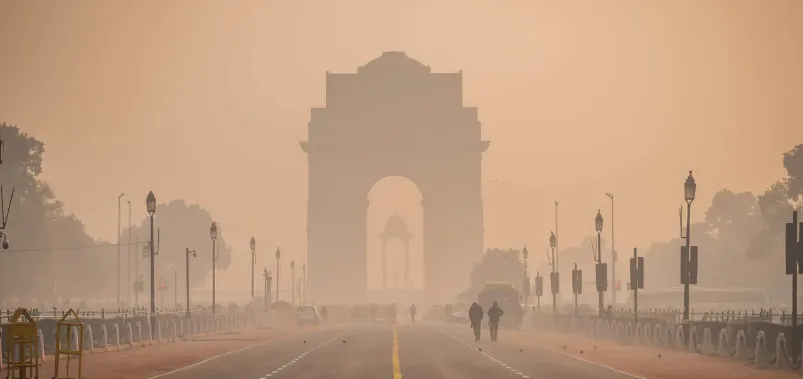
Weather in North India swings from cold, foggy winter mornings to summer days above 45°C. The India Meteorological Department's Mausam app gives official forecasts and warnings, including fog alerts that delay trains and flights in December and January. An air quality app for India matters too, especially in Delhi from late October to February, when the AQI can stay above 300 for days. IQAir AirVisual is easy to read, and the government's SAMEER app shows official readings from the Central Pollution Control Board. Asthma sufferers should check the AQI each morning and keep a mask in the day bag.
Now the phone itself. Without a working connection, none of these apps help. An eSIM for India is the fastest option: you buy it online, install it at home and it connects as you land. Airalo's India packages cost about USD 4.50 for 1 GB over 7 days, USD 16 for 5 GB over 30 days and USD 26 for 10 GB over 30 days, and Holafly sells unlimited data from about USD 19 for five days. These are data only, so you get no Indian number for OTPs, calls or apps such as Swiggy and Rapido.
A tourist SIM card in India solves that. Airtel has a counter in the international arrivals hall at Delhi Terminal 3, where you show your passport and visa, provide a hotel address and get a photo taken. Activation usually takes from fifteen minutes to a few hours. A standard Airtel or Jio prepaid pack with 1.5 GB a day for 28 days costs around INR 300 to 400, but airport counters often charge more with the SIM fee included, so budget INR 500 to 1,000 (about USD 6 to 12). Jio SIMs are sold in city stores rather than at the airport. Airtel can also issue an eSIM at the counter after the same identity check. Prices change often, so check airtel.in or jio.com before you fly.
Many travellers on our Golden Triangle tours use both: a travel eSIM for data on arrival, then an Airtel SIM on day one for a local number. Download everything before you leave home, test logins on hotel Wi-Fi on your first evening, and keep your phone charged with a small power bank.

We promise you a holiday where everything is taken care of from the moment you land. Trusted drivers waiting for you, handpicked hotels that fit your style, personalized itineraries designed just for your family, and a dedicated team on call 24/7. All you need to do is relax, explore, and create unforgettable memories, while we take care of every detail behind the scenes.
Yes. You can sign up at home with your own number and add an international Visa or Mastercard, and fares are charged in rupees. If a card is declined, switch to cash in the app before booking and carry small notes.
Yes, through the UPI One World prepaid wallet offered by authorised apps such as CheqUPI. You load it with an international card, up to INR 25,000 per load and INR 50,000 per month. Availability is still being rolled out, so check current rules before you travel.
No. BluSmart suspended its cab services after its parent company came under a regulatory investigation, and it is not available for visitors at present. Use Uber, Ola or Rapido instead.
Register on irctc.co.in with an international mobile number, pay the one time INR 100 plus GST verification fee, then use Foreign Tourist Ticket Booking under the Services menu. You pay with an international card and add a service charge of INR 200 plus GST per ticket.
The official Momentum 2.0 Delhi Sarthi app sells QR tickets you scan at the gates. You can also book through WhatsApp at +91 96508 55800, or in Uber and Google Maps. Fares run from INR 11 to INR 64.
They work best with an Indian SIM, since login usually needs an Indian number for the OTP. Foreign cards are sometimes declined, so choose cash on delivery if needed. Zomato is also useful for reading menus and prices before visiting a restaurant.
An eSIM from Airalo or Holafly gives you data the moment you land, from about USD 4.50, but no Indian number. A local Airtel SIM from the Delhi airport counter gives you a number for OTPs and costs roughly INR 500 to 1,000. Many travellers use both.
Yes. Use tajmahal.gov.in or asiagracircle.in, or ONDC apps such as Highway Delite and Abhee by Mondee. Foreign visitors pay INR 1,100 plus INR 200 for the main mausoleum, with INR 50 off online, and the Taj is closed on Fridays.
Yes, once you download the Hindi language pack inside the app. Camera mode reads Hindi signs and menus, and conversation mode speaks your English sentences aloud in Hindi. Download the pack on Wi-Fi before you fly.
Install 112 India, the official emergency app, which has an SOS button that shares your location with emergency services. Also save the tourist helpline 1800111363 and the ambulance number 108 for Rajasthan and Uttar Pradesh.