Booking a high-end private trip to India often involves paying a meaningful deposit months before arrival. For a couple booking premium hotels, private transportation, personal guides and a multi-city itinerary, the total cost can easily reach several thousand dollars and can move substantially higher when palace hotels, suites and longer Rajasthan routes are involved. The proposal therefore deserves much more scrutiny than simply checking the final price and confirming that Delhi, Agra and Jaipur appear in the itinerary.
A professional luxury India tour proposal should tell the traveller what is actually being purchased. Hotel names matter, but room categories matter too. “Private transportation” sounds reassuring, but the proposal should make it reasonably clear what type of vehicle is intended and whether major road costs are included. “Guided sightseeing” needs to identify where guides are provided. Entrance fees, meals, domestic flights, safari arrangements, taxes and payment conditions should not remain hidden behind vague package language.
The most serious warning signs are often not dramatic. They appear as missing details. A hotel is described only as “five-star.” A suite is promised without a category. A tour is described as all-inclusive while important admissions are excluded. A large deposit is requested before the cancellation terms have been supplied. A company advertises extraordinary VIP access to a protected monument without explaining exactly what that access means.
Luxury travellers should not assume that a more expensive proposal is automatically safer or better. They should compare the substance behind the price.
Before paying a deposit for a private India tour, the traveller should be able to understand the route, accommodation, transportation, guide arrangements, principal inclusions, important exclusions, payment schedule and cancellation conditions. If those fundamentals are difficult to identify, the proposal needs clarification before money changes hands.
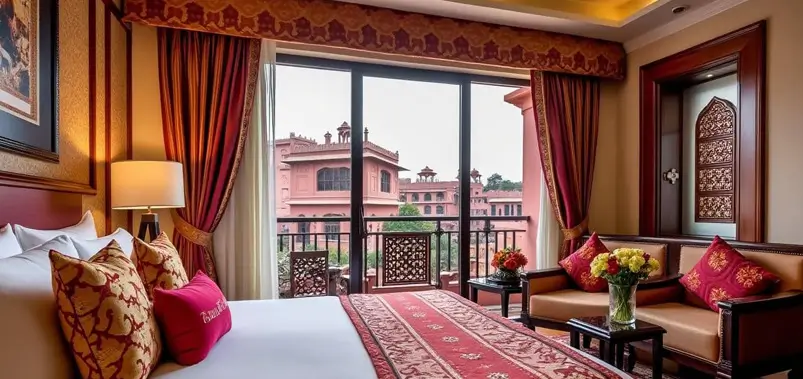
One of the clearest warning signs is a proposal that repeatedly promises “luxury five-star hotels” without identifying the properties.
Five-star is not a sufficient description for a premium India holiday. Delhi alone has numerous luxury hotels with very different locations, room styles, service environments and rates. Jaipur includes city hotels, palace properties and resort-style accommodation. Agra offers everything from mainstream international hotels to premium properties where the Taj Mahal setting forms a major part of the experience.
A traveller cannot properly assess a luxury India tour package without knowing where they are expected to sleep.
A proposal should ideally identify the intended hotel in each destination. If the reservation has not yet been confirmed, that should also be clear. The traveller should understand whether the price is based on a particular hotel subject to availability or whether the operator intends to select from a broad category later.
The phrase “or similar” deserves particular attention.
It is not automatically a problem. Hotels can sell out, and proposals sometimes need an alternative when availability changes before payment. The problem arises when “or similar” gives the supplier unlimited discretion to substitute a substantially different property after the traveller has committed.
A couple choosing Rambagh Palace in Jaipur is not simply choosing a five-star bed. They may be selecting that property because the palace setting is central to the holiday. Substituting a conventional luxury city hotel at the same nominal star level would not necessarily provide an equivalent experience.
The same applies in Agra. A guest considering The Oberoi Amarvilas may be doing so specifically because of its relationship with the Taj Mahal. A generic five-star substitution cannot automatically be considered equivalent merely because both hotels are luxurious.
Before paying, travellers should therefore know the hotel basis on which the quotation has been calculated.
Avoid booking traps. Speak with our luxury travel experts to audit your itinerary and ensure transparent pricing before paying any deposit.
Hotel names are only the beginning. At the luxury level, the room category can change both the experience and the price substantially.
A proposal may advertise an exceptional property in large type while pricing the lowest room category. There is nothing inherently wrong with booking the entry-level room at a great hotel, but the traveller should know that this is what has been quoted.
This becomes particularly important when words such as “Taj view,” “palace room,” “suite,” “lake view,” “villa” or “club room” are used.
A luxury India hotel booking should distinguish marketing language from the hotel's actual category name whenever possible. If the traveller expects a particular view or feature, that expectation should be tied to the confirmed room category rather than a general description of the property.
Agra is an obvious example. Travellers may choose a premium hotel because they want the Taj Mahal to remain part of their accommodation experience. The exact category should therefore be checked rather than assuming that every room has precisely the same outlook.
Udaipur presents similar considerations. A hotel located beside or on a lake can contain categories with different views and configurations. Jaipur palace hotels may offer several room and suite types at significantly different rates.
The difference can be thousands of dollars over a multi-night stay.
A proposal that says only “three nights at a luxury palace hotel” does not provide enough information for a high-value booking.
The traveller should also confirm occupancy. A quoted room may be based on double occupancy, while families may require extra beds, connecting rooms or additional rooms. Those details can materially alter the price.
When a room category is important, it should be visible before the deposit is paid.

Travellers naturally compare prices, and there is nothing wrong with looking for value. Problems arise when one proposal is dramatically cheaper than several others while apparently offering exactly the same prestigious hotels and private services.
Luxury hotels do not become inexpensive simply because they are included in a tour package.
Rates vary according to dates, room categories, demand, meal basis, taxes and contractual arrangements, so two operators do not need to quote identical amounts. However, an unusually low luxury India tour cost deserves investigation.
The traveller should check whether all proposals use the same hotels. They should check the room categories. They should check the number of nights and meal basis. Taxes may be included in one quotation and excluded from another.
Entrance fees may also explain part of the difference. A proposal that leaves monument admissions payable locally will naturally look cheaper than one that includes the agreed sightseeing admissions.
Transportation can create another difference. One company may quote a larger premium vehicle while another uses a standard sedan. One may include all relevant tolls, parking and driver allowances while another leaves certain expenses outside the package.
Guide services can also differ. “Sightseeing” does not necessarily mean a professional private guide is included.
A dramatically lower quotation may therefore represent a genuinely different product.
Travellers should compare line by line before deciding that one company is simply offering the same luxury holiday for less money.
“Private tour” is one of the most important phrases in luxury travel, but it can be interpreted too broadly if the proposal is not specific.
A private Golden Triangle tour should make clear which elements are private.
Is the airport transfer private? Is the Delhi sightseeing vehicle reserved only for the travelling party? Is the Delhi-to-Agra road transfer private? Are local guides private? Are any activities shared with other guests?
The answer does not need to be identical for every service. Certain experiences naturally operate on a shared basis unless a private option has been specifically arranged. The problem is not that a shared element exists. The problem is discovering it only after paying for a trip that was presented as completely private.
The vehicle arrangement deserves particular attention.
Two guests may be quoted a private sedan. A family may require a larger vehicle. A group carrying substantial luggage may need something different again.
The word private does not automatically mean luxury either.
A vehicle can be privately reserved but still be too small or basic for the traveller's expectations. A proposal aimed at high-end clients should therefore provide enough detail to understand the transportation standard.
The same principle applies to guiding. A personal local guide in Delhi is different from a group sightseeing guide. If the proposal says “private guide,” the traveller should know whether that guide is dedicated to their party during the stated sightseeing.
Clear definitions prevent disappointment.
Unsure about hidden fees in your tour quote? Get an expert review of your proposal and secure a seamless, 5-star customized journey.
Drivers and sightseeing guides perform different functions on a private India journey.
A professional chauffeur is responsible primarily for transportation. The driver handles road travel, hotel transfers and agreed local movements. On a Golden Triangle route, the chauffeur may remain with the guests across Delhi, Agra and Jaipur depending on the package.
A professional guide provides historical, architectural and cultural interpretation at the destination.
A private chauffeur and guide India tour can use both services effectively, but the proposal should not blur the distinction.
This matters because a traveller may read “English-speaking driver” and assume that detailed monument guiding is included. An English-speaking chauffeur may communicate very well and provide useful practical assistance, but that does not automatically mean the person is serving as a specialist historical guide.
At the Taj Mahal, Agra Fort, Amber Fort, City Palace or major Delhi monuments, many travellers benefit from a knowledgeable local guide.
The proposal should therefore state where guides are included.
Does the package provide a guide in Delhi? Is there a separate guide in Agra? Is Jaipur privately guided? Are guides available in a requested language?
Specialist language requirements deserve additional attention. Travellers requesting French, Spanish, German or another language should have that requirement confirmed rather than relying on a general statement that multilingual guides are available.
A clear proposal does not need excessive operational detail, but it should tell the traveller whether they are paying for a chauffeur, guides or both.
The phrase all-inclusive can create a false sense of certainty because different companies use it in different ways.
For one operator, all-inclusive private India tour may mean hotels, breakfast, transportation, guides and entrance fees. For another, it may refer only to hotels and transportation. Neither interpretation should be assumed from the phrase alone.
The written inclusion section matters more than the headline.
Travellers should look for accommodation, meal basis, private vehicle, airport transfers, guide services, monument admissions, applicable road costs and taxes.
Domestic flights and train tickets should be identified separately when the route includes them.
Meals need precision too.
“Meals included” could mean breakfast only, breakfast and dinner, or full board. Beverages may be excluded. Alcohol is commonly treated separately and can be expensive at luxury hotels.
Special experiences should also be named.
If the itinerary mentions a boat ride, food experience, cultural performance, safari or spa treatment, the traveller should know whether it is included in the package price or merely suggested as an optional activity.
The same applies to gratuities. Tips are often excluded from tour prices, and that is not inherently problematic. The important point is that the guest knows this before travelling.
A luxury proposal becomes trustworthy through specificity.
The larger the deposit, the less acceptable vague inclusion language becomes.
A proposal can state that sightseeing is included while leaving entrance tickets payable separately.
That distinction can surprise travellers because they reasonably assume that a sightseeing package includes access to the attractions listed in the itinerary.
Before paying for a Golden Triangle tour with entrance fees, travellers should check whether admissions to the principal monuments are included.
Delhi may involve several ticketed attractions. Agra typically includes important monuments such as the Taj Mahal and Agra Fort. Jaipur can involve Amber Fort, City Palace, Jantar Mantar and other ticketed sites depending on the programme.
Entrance prices and visitor policies can change, so the quotation should be based on the arrangements applicable to the travel dates rather than old figures copied from a previous season.
The Taj Mahal deserves particular attention because different ticket components or visitor categories can apply. The itinerary should also account for the fact that the monument is normally closed to general visitors on Fridays.
A proposal placing the Taj Mahal on a Friday without addressing that closure is a serious sign that the itinerary has not been checked carefully.
Travellers do not necessarily need every admission prepaid. Some guests are perfectly comfortable paying directly.
The red flag is ambiguity.
If entrance fees are excluded, the proposal should say so clearly.
Domestic flights can be essential when a private India itinerary extends beyond the Golden Triangle. Routes involving Varanasi, Kerala or other distant regions may rely on air travel to avoid losing entire days to ground transportation.
A proposal that simply states “flight included” is not always enough.
The traveller should understand the intended route and whether the ticket has actually been issued or is merely included as an estimated cost.
Airline schedules and fares can change before ticketing. The proposal should therefore distinguish confirmed flight arrangements from provisional ones.
Baggage is another important issue.
International travellers arriving in premium economy or business class may carry more checked baggage than their domestic fare permits. The allowance applicable to the internal ticket should be reviewed before the traveller reaches the airport.
A luxury India tour with domestic flights should also consider flight timing.
A cheap flight in the middle of the day can consume most of the useful day once hotel checkout, airport transfer, security, boarding, baggage collection and the next transfer are considered.
A more expensive direct flight at a better time may provide considerably greater value.
Travellers should also examine connections to long-haul international departures. A proposal that places a domestic arrival extremely close to an expensive international departure deserves careful scrutiny.
Premium travel should contain reasonable logistical margins rather than depending on every flight operating perfectly.
Wildlife is one of the areas where unrealistic promises should immediately raise questions.
No responsible operator can guarantee a tiger sighting in Ranthambore National Park. Tigers are wild animals, and sightings depend on numerous factors outside the control of the tour company.
A Ranthambore luxury safari tour can provide accommodation, transfers and safari arrangements subject to park rules, permits, availability and operational conditions. It cannot legitimately promise that a tiger will appear.
Travellers should therefore be cautious of proposals using guaranteed wildlife sightings as a sales technique.
Safari details also matter.
The proposal should state the number of intended drives and the type of arrangement being quoted where applicable. The traveller should understand whether the safari is private or shared, subject to the actual permitted arrangements.
Permit availability can be important, particularly when travel dates are fixed. A proposal should not treat the safari as an ordinary sightseeing visit that can always be arranged at the last minute.
The lodge or resort should also be identified just as clearly as hotels elsewhere in the itinerary.
Ranthambore usually requires enough time to justify the transfer. A proposal that inserts one rushed safari between two long road journeys may technically include wildlife, but it may not produce a good holiday.
The traveller should evaluate both the promise and the pacing.
High-end travellers are frequently attracted by privacy and exclusive experiences, which makes extraordinary access claims powerful marketing tools.
They also deserve careful examination.
If a proposal promises “private Taj Mahal access,” “VIP monument entry,” “exclusive palace access” or similar privileges, the traveller should ask exactly what has been arranged.
A VIP India tour package can legitimately include private transportation, personal guides, premium hotels, special dining and privately organised experiences where such arrangements are available.
That does not mean a tour operator can ignore the rules governing protected monuments.
The Taj Mahal remains a public monument operating under official visitor arrangements. A private guide does not turn the monument into a privately accessible site.
The same caution applies elsewhere.
A hotel may legitimately organise a private experience on its own grounds. A palace property may provide an experience available specifically to its guests. A private dinner can genuinely be private.
These are different from claiming unrestricted special access to a public heritage site.
Travellers should ask what the words VIP and exclusive mean in operational terms.
A professional company should be able to explain the service without relying on exaggerated language.
Some proposals attempt to demonstrate value by placing as many attractions as possible into each day.
The result can be physically unrealistic.
A day containing several major Delhi monuments, an extensive Old Delhi programme, long shopping visits and an elaborate evening activity may look impressive in a document but feel exhausting on the ground.
The same problem occurs when a long road transfer is followed immediately by several hours of sightseeing.
A luxury India itinerary should account for traffic, walking, meals, hotel check-in and ordinary human energy.
Travel time should not be treated as invisible.
Driving between Delhi and Agra takes time even when using an expressway. Agra to Jaipur is another substantial road sector. Rajasthan contains even longer transfers.
A proposal should not schedule a guest as though every drive occurs under perfect conditions and every monument can be completed in thirty minutes.
Well-paced itineraries also need free time.
A traveller paying for a premium resort or palace hotel should have some opportunity to use it. If every day begins early and ends late, the hotel becomes an expensive bedroom.
An overloaded itinerary is not a sign that the company is providing more value.
It may be a sign that the proposal has been designed to sell rather than to operate comfortably.
Luxury travel should reduce unnecessary friction, yet some proposals change hotels almost every night.
Each change requires packing, checkout, luggage handling, transportation, arrival formalities and unpacking again.
Even when every hotel is excellent, repeated movement becomes tiring.
A slow-paced luxury India tour should therefore use one-night stays selectively.
Agra can work as a one-night destination because of its position within the Golden Triangle. Other cities may deserve longer stays, particularly when the traveller is paying heavily for accommodation.
Three nights in Jaipur can be far more rewarding than two nights when the property itself is important. Udaipur also benefits from additional time for travellers who want the lake setting and hotel to form part of the experience.
Jodhpur generally deserves enough time for Mehrangarh Fort and the selected accommodation rather than being treated purely as a stop between Jaipur and Udaipur.
Travellers should count the number of hotel changes before paying the deposit.
A fourteen-night itinerary involving nine or ten hotels may not provide the relaxed luxury experience suggested by the proposal.
Fewer hotels do not mean seeing less.
They can mean experiencing more.
A tour may advertise itself around famous palace hotels while using those properties for only one night and placing the majority of the trip in much less expensive accommodation.
That is not necessarily dishonest if the itinerary states it clearly. The problem arises when the marketing creates a different impression from the actual hotel schedule.
Travellers should read the accommodation table night by night.
If the proposal advertises a luxury palace hotel tour of India, how many nights are actually spent in palace hotels? Which properties are being used? What categories have been quoted?
The value of a palace stay also depends on timing.
Arriving at a property at 7:00 p.m. and leaving at 8:00 the following morning provides very little opportunity to experience it. The room may be beautiful, but the traveller misses much of what justified the premium.
A three-night stay at a major Jaipur or Udaipur property can provide far more value because the guest has time for the gardens, spa, pool, restaurants and unstructured hours.
The hotel schedule should therefore be assessed together with the sightseeing schedule.
Luxury accommodation and luxury pacing need to support each other.
Taxes are not an exciting part of travel, but they can materially change the final amount.
A quotation that appears cheaper may simply be showing a pre-tax figure while another proposal displays the complete payable amount.
Travellers comparing a private India tour quotation should therefore identify whether applicable taxes are included in the displayed total.
The same principle applies to hotel charges, transportation and other services where relevant.
The proposal should also explain whether the quoted price is per person, per couple or for the complete travelling party.
“Price from $5,000” is not enough information for a serious comparison if the basis is unclear.
Currency deserves attention as well.
If the package is quoted in US dollars, pounds sterling, euros or Indian rupees, the traveller should understand which currency will actually be charged and whether exchange-rate movements can affect the outstanding balance.
A professional quotation does not need to become a financial contract filled with unnecessary terminology.
It does need to make the payable basis understandable.
A deposit request should never be viewed in isolation from the cancellation conditions.
Luxury hotels may require advance payments, particularly for premium room categories, peak dates or special periods. Domestic flights can have fare-specific cancellation rules. Wildlife arrangements may have separate conditions.
There can therefore be legitimate reasons for requesting a meaningful deposit.
The red flag is asking for substantial payment without telling the traveller what happens if the trip is cancelled.
Before paying a luxury India tour deposit, the traveller should receive written cancellation terms.
Those terms should explain how cancellation charges are determined and whether particular services are subject to separate supplier conditions.
The traveller should also understand the balance schedule.
When is the remaining amount due? Is the payment date linked to arrival? Are certain services non-refundable once issued?
If the itinerary is being booked many months in advance, these questions become even more important.
Travel insurance should also be considered independently. Cancellation terms from the tour operator and coverage from an insurance provider are separate matters. Travellers should not assume that one automatically replaces the other.
A company willing to accept a large payment should be willing to explain the conditions attached to that payment.
Hotel and flight availability can genuinely change. A particular suite can sell out. A domestic airfare can increase. Safari permits can become unavailable.
Urgency can therefore sometimes be real.
However, repeated pressure to transfer a substantial deposit immediately without giving the traveller reasonable time to read the itinerary and payment conditions deserves caution.
A bespoke India tour booking often contains many components. The traveller needs time to check hotel names, room categories, route, inclusions, exclusions and cancellation terms.
If availability is genuinely time-sensitive, the operator should be able to explain what is at risk.
For example, a specific palace suite may be available at the time of quotation but cannot be held indefinitely. That is a concrete explanation.
“Pay today or the entire trip will disappear” is much less useful unless supported by specific circumstances.
Travellers should also be cautious when a company repeatedly changes the price during the sales conversation without explaining why.
Changes can occur when hotels or flights are altered. They should be traceable to something in the itinerary.
Pressure should never replace clarity.
A traveller may spend weeks communicating with a tour company and then receive payment instructions. This is one of the points where careful verification matters most.
If bank details suddenly change, the traveller should verify the change using a trusted contact method rather than relying solely on the new message.
This principle is useful for any high-value international travel payment.
Email accounts can be compromised, messages can be imitated and payment details can be mistyped. A short independent verification can prevent a serious financial problem.
The traveller should also check who is receiving the payment.
If the tour is being booked with a company, but the requested beneficiary appears unrelated and no explanation is provided, clarification is appropriate before transferring money.
A private India tour payment should create a clear record. The traveller should retain the quotation, invoice, payment confirmation and subsequent booking documents.
The exact payment method will vary according to company arrangements, customer location and amount. What matters is that the recipient and instructions are understood before funds are sent.
Paying a deposit should lead to a defined next stage rather than silence.
The traveller should understand which reservations will be confirmed, when updated documentation will be provided and when the remaining balance is due.
For a tailor-made India tour booking, some services may be confirmed immediately while others remain subject to availability until payment or ticketing is completed.
The company should communicate these distinctions.
If a requested hotel is no longer available, the traveller should be informed rather than quietly moved to another property. If a domestic flight schedule changes, the effect on transfers and hotels should be addressed.
Pre-arrival documentation should eventually provide enough information for the traveller to understand the operating itinerary.
This may include hotel details, important flight information, transfer arrangements and relevant contact information according to the company's procedures.
Luxury service should not end once the payment has been collected.
The period between deposit and arrival is part of the booking experience.
Many premium operators advertise round-the-clock support. Travellers should understand what that support actually covers.
A genuine 24/7 India tour support service should provide a way to obtain assistance when a meaningful travel problem occurs during the trip.
That might involve a delayed flight affecting the airport transfer, a vehicle issue, confusion at a hotel or another disruption requiring local coordination.
The tour operator is not a replacement for emergency services, doctors, airlines, insurance companies or embassies. Support should therefore be described realistically.
In an immediate emergency in India, 112 is the national emergency number.
For travel-related operational problems, the traveller should know how to reach the company or designated local contact.
A proposal that advertises 24/7 support but provides no explanation of how guests receive assistance deserves a question before booking.
The traveller does not necessarily need the personal mobile number of every employee months before arrival. They do need confidence that a workable contact process exists during the trip.
Bespoke itineraries often change during the booking process. Travellers may decide to add a night, upgrade a room, remove a city or change an internal flight.
Changes naturally affect the price when the underlying services change.
The important issue is whether the traveller understands how amendments are handled after reservations have been confirmed.
A custom India tour proposal should not create the impression that every future change is free if hotels, flights or other suppliers impose costs.
Likewise, travellers should not assume that a private itinerary can always be completely redesigned shortly before arrival without financial consequences.
Hotel cancellation periods, airfare rules and supplier conditions become increasingly important as the trip approaches.
Before paying a substantial deposit, travellers should understand the broad amendment process, especially if their dates or international flights are not completely settled.
This is particularly relevant to complex routes involving multiple domestic flights or expensive palace hotels.
Flexibility is valuable.
Undefined flexibility can become expensive.
A $12,000 proposal and an $18,000 proposal cannot be meaningfully compared from the total alone.
The second may be overpriced, or it may contain substantially better hotels, superior room categories, more nights, entrance fees, stronger transportation and additional private services.
The first may be excellent value, or it may exclude several thousand dollars of costs that the traveller will encounter later.
A proper India tour quote comparison begins with the itinerary duration.
Are both proposals for the same number of nights?
Next come the hotels. Are they the same properties? Are the room categories identical? Is breakfast included in both?
Transportation should then be compared. Is the same vehicle category being used? Are airport transfers private? Are intercity road sectors included?
Guide services should be checked city by city.
Entrance fees, domestic flights, meals and special experiences should then be compared.
Taxes and payment terms belong in the comparison as well.
Once these items are aligned, the price difference becomes much easier to understand.
Travellers should resist comparing a highly detailed proposal with a vague one as though both products are identical.
The more expensive quote may actually contain more value.
The cheaper one may still be the better choice.
The decision should come after the differences have been identified.
Travellers spending significant money should not feel embarrassed about asking questions.
Which room category has been quoted?
Are monument fees included?
What vehicle will be used?
Is the guide private?
What happens if the hotel is unavailable?
What is the cancellation policy?
When is the balance due?
These are ordinary booking questions.
A professional luxury India tour operator should be able to answer them without treating reasonable scrutiny as distrust.
Not every answer will necessarily be what the traveller hopes to hear. A requested hotel may be unavailable. A particular room category may cost considerably more. A cancellation condition may be strict because the hotel itself requires advance payment.
Clear bad news is still better than vague reassurance.
Travellers should be more concerned when straightforward questions repeatedly receive unrelated answers or sales language instead of facts.
The proposal should become clearer as the conversation progresses.
If it becomes more confusing, the traveller should resolve those issues before paying.
Travellers considering Golden Triangle Tours should apply the same careful review they would use for any private tour company.
The itinerary should identify the intended hotels and relevant room categories. Transportation arrangements should match the number of passengers and luggage. Private guide services should be clear. Important inclusions and exclusions should be stated.
If Delhi, Agra and Jaipur are being combined with Rajasthan, Ranthambore, Varanasi or Kerala, the proposal should account for the actual transfers and flight sectors required.
The pace should also make sense.
A premium itinerary should not rely on constant early departures and one-night stays simply to increase the number of destinations.
The traveller should understand the deposit and balance conditions before paying, along with the applicable cancellation terms supplied for the booking.
For high-value private travel, transparency is itself part of the luxury service.
A beautiful itinerary is important. Beautiful hotels are important. A comfortable chauffeur-driven vehicle and knowledgeable guides are important.
But before any of those services begin, the traveller needs confidence that the written proposal accurately represents what will be delivered.
The best time to resolve uncertainty is before the deposit, not after arriving in India.
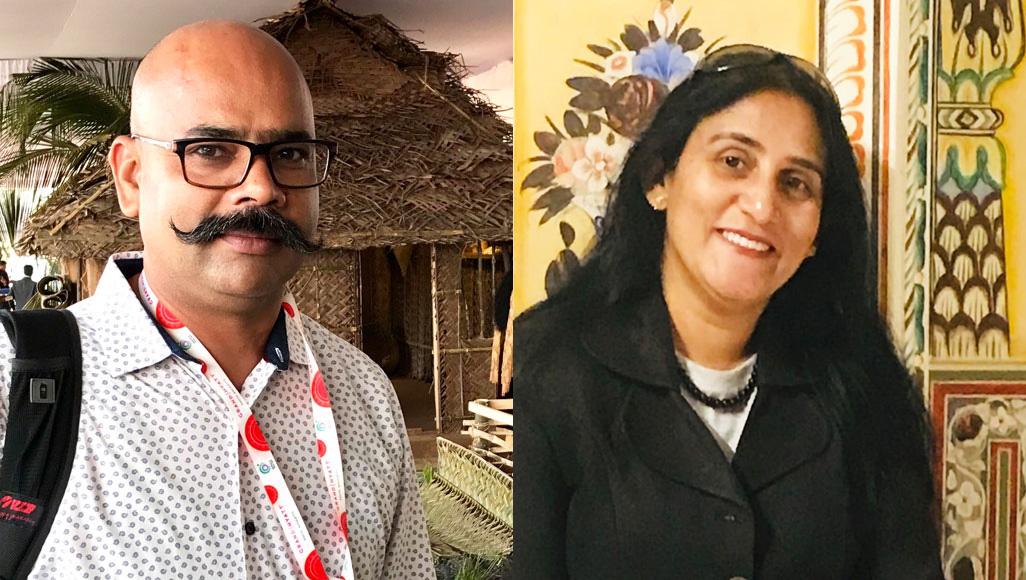
We promise you a holiday where everything is taken care of from the moment you land. Trusted drivers waiting for you, handpicked hotels that fit your style, personalized itineraries designed just for your family, and a dedicated team on call 24/7. All you need to do is relax, explore, and create unforgettable memories, while we take care of every detail behind the scenes.
A detailed proposal should identify the itinerary, intended hotels, relevant room categories, transportation, guide arrangements, important inclusions and exclusions, payment schedule and applicable cancellation terms. Additional details should be included when domestic flights, safaris or specialist experiences form part of the trip.
No. For a premium booking, the actual hotel name and room category are much more useful. Five-star properties can differ significantly in location, character, service and price.
They may be included or excluded depending on the package. The important point is that the proposal states the arrangement clearly so the traveller knows what will need to be paid separately.
No. Luxury hotels, flights and other suppliers can require advance payment. The concern is paying a substantial deposit without receiving clear written payment and cancellation conditions.
No responsible operator should guarantee a wild tiger sighting. Safari arrangements can be organised subject to park rules and availability, but wildlife sightings depend on nature.
It generally refers to travel arrangements reserved for the individual party, but travellers should confirm exactly which services are private. Transportation, guides and activities should each be checked rather than assumed.
Not automatically, but the substitution policy should be understood. If a particular palace or resort is an important reason for booking, travellers should seek clarity about what would happen if that property becomes unavailable.
Compare duration, hotels, room categories, meal basis, vehicle, guides, entrance fees, domestic travel, experiences, taxes, exclusions, payment terms and cancellation conditions before comparing the final totals.
Unexpected changes in payment instructions should be independently verified with the company through a trusted contact method before money is sent.
Review the hotels, room categories, itinerary pace, private transportation, guide services, inclusions, exclusions, payment schedule and cancellation conditions. For any operator, the written proposal should be clear enough that you understand what the deposit is securing.