Some travellers dislike group tours for reasons that have nothing to do with the destinations themselves. They do not want to wait in a hotel lobby while twenty people assemble for an early departure. They do not want lunch at a restaurant selected because it can seat a coach group quickly. They do not want to leave a monument they find fascinating because the group has been given forty minutes, and they certainly do not want unwanted shopping stops occupying an afternoon they could have spent at their hotel.
India does not require that style of travel.
A private India tour can provide the organisational advantages that make an escorted holiday convenient while removing many of the restrictions associated with travelling in a group. Hotels, airport transfers, intercity transportation and guides can all be arranged in advance, but the vehicle is reserved for the travelling party and sightseeing can be organised around their interests rather than the average preferences of a larger group.
This distinction is particularly valuable on the Golden Triangle. Delhi, Agra and Jaipur contain enough history and major attractions to justify professional guiding, while their road connections make private chauffeur travel practical. A couple can therefore receive substantial local support without joining a bus tour. Families can control meal and rest times. Senior travellers can move more slowly. Experienced travellers can skip elementary sightseeing they have already done and spend more time on specialist interests.
For travellers who value independence but do not want to manage every hotel, driver and guide themselves, a private luxury India tour occupies an important middle ground. The trip can be professionally organised without feeling institutional, and the guest can retain control over how each day actually unfolds.
The difference between private and group travel should begin with the structure of the itinerary rather than the number of passengers.
A traditional escorted group itinerary needs to work for multiple unrelated travellers. Departure times have to be fixed because everyone must move together. Hotels need enough rooms for the entire group. Restaurants must be able to accommodate everyone at roughly the same time. Guides need to address the group collectively, and sightseeing has to progress at a pace that keeps the overall programme functioning.
None of these characteristics are inherently poor. Some travellers enjoy the social element and appreciate having a predetermined schedule. They may prefer knowing exactly when the coach leaves, where lunch will take place and which attractions will be visited.
Travellers who dislike groups usually object to the loss of control.
A fully private India tour changes that relationship. If two people are travelling, the car is for those two people. The sightseeing guide works with them rather than addressing thirty guests simultaneously. If breakfast takes longer than expected, the morning departure can often be adjusted when monument timings and confirmed reservations permit. If the travellers have no interest in one of the proposed attractions, it can be removed before the itinerary is finalised.
The private format also allows the route to reflect the guests' travel style. One couple may want a historically intensive Golden Triangle with expert guiding and long monument visits. Another may want the Taj Mahal and Amber Fort but would rather spend their remaining time at excellent hotels, restaurants and selected shops.
A family might require three rooms, a larger vehicle and shorter sightseeing periods. A couple in their seventies may want exactly the same major monuments as younger guests but spread across more days.
The route does not need to be designed around an imaginary average traveller.
That is the fundamental distinction. Private travel should not merely reproduce a standard group itinerary inside a smaller vehicle. It should use the absence of a group to create a more personal schedule.
Enjoy complete privacy with a customized itinerary, private luxury transfers, and handpicked 5-star stays. Let our experts craft your crowd-free tour today.
Some independent travellers avoid organised tours because they associate them with rigid timetables. They then book every element separately and discover that they have created another problem: they are personally responsible for coordinating airport transfers, hotels, guides, intercity cars and sightseeing in a country they may be visiting for the first time.
A private organised tour of India can remove much of that administrative burden without requiring the traveller to join a group.
The hotel reservations can be confirmed before arrival. The airport transfer can be arranged around the actual flight. A private chauffeur can handle the road sectors. Local guides can be scheduled in cities where professional interpretation adds value. Domestic flights or trains can be incorporated when the route requires them.
The guest still knows where they are staying and how they are travelling, but they do not have to search for transportation every morning.
This becomes particularly valuable after a long international flight. A traveller arriving in Delhi does not necessarily want to negotiate with taxis, locate a meeting point or determine which transport option makes sense while tired and carrying luggage. A pre-arranged private transfer allows the arrival to remain simple.
The same principle applies to the Delhi–Agra–Jaipur route. Instead of checking out, travelling to a station, managing luggage, reaching another station and arranging onward transportation, a private vehicle can collect the guests from one hotel and deliver them to the next.
The convenience does not require the day to become rigid.
If the guests want to leave at 9:30 rather than 8:30 and no fixed reservation prevents it, that can often be accommodated. Comfort stops can be taken when needed. Lunch can reflect the travellers' preferences rather than the requirements of a large group.
This combination of organisation and personal control is one of the main reasons private travel appeals to people who normally describe themselves as independent travellers.
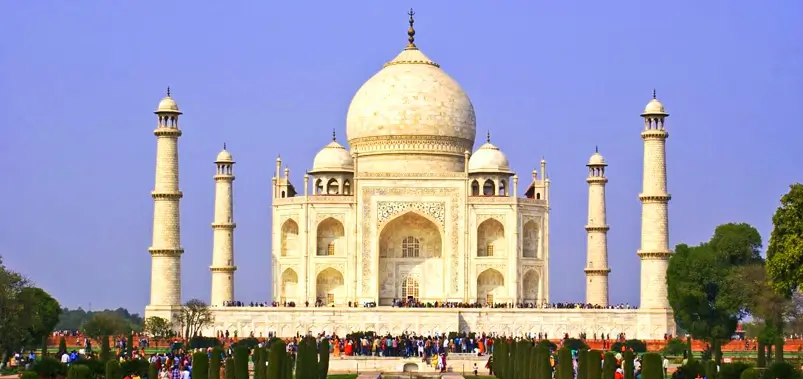
Delhi, Agra and Jaipur are particularly suitable for a private chauffeur-driven Golden Triangle tour because the cities form a logical road route. The same vehicle can support airport transfers, local transportation and intercity journeys, depending on the agreed arrangements.
For travellers who dislike group tours, having a dedicated vehicle immediately changes the atmosphere of the trip. There is no need to wait for other passengers to return to the coach. There is no competition for seats and no repeated loading and unloading of dozens of suitcases.
The vehicle should be selected according to actual requirements. Two passengers with moderate luggage may be perfectly comfortable in a quality sedan. Two passengers carrying several large international suitcases may prefer a larger vehicle. Families need to consider luggage space as carefully as seating capacity.
Vehicle comfort becomes more important because road sectors can last several hours. The Delhi-to-Agra journey is not merely a short city transfer, and the onward road towards Jaipur requires additional time. Cleanliness, air-conditioning, interior space and professional driving therefore matter.
A chauffeur also provides continuity. Guests are not introducing themselves to a new taxi driver at every destination. The driver already understands the broad itinerary and road route.
That continuity should not be confused with professional guiding. A chauffeur's primary role is transportation. Detailed historical interpretation at the Taj Mahal, Amber Fort or major Delhi monuments is better handled by appropriately knowledgeable guides.
The distinction is useful because it allows each service to do what it does best.
For travellers accustomed to independent road trips, the arrangement can feel surprisingly liberating. They retain much of the freedom associated with having their own car while removing the need to drive through unfamiliar cities and road conditions.
No crowds, no fixed schedules. Get bespoke itineraries, dedicated chauffeurs, and exclusive access tailored to your pace. Start planning your private journey now.
One of the greatest frustrations for travellers who dislike organised groups is the sightseeing format. A guide speaks to everyone simultaneously, often through an audio device, while the group moves according to predetermined timings. Someone fascinated by architecture receives the same explanation as someone who wants only photographs.
A private guide in India can operate very differently.
At Humayun's Tomb, a traveller interested in Mughal architecture can spend time discussing design and historical context before continuing to Agra. At the Taj Mahal, the guide can concentrate on the aspects that genuinely interest the guest rather than delivering the same depth of information on every subject.
Amber Fort can be treated similarly. Some travellers want military and political history. Others are interested in decorative architecture, royal life or photography. Private guiding gives the conversation room to follow those interests.
It also allows silence.
A good private guide does not need to speak continuously simply because the guest has paid for guiding. Travellers can receive the necessary context and then have time to look, photograph and absorb the place independently.
This is particularly valuable for experienced travellers. People who have visited many countries may not need lengthy explanations of basic travel etiquette or generic introductions. They may prefer direct, detailed answers to specific questions.
Families benefit for another reason. A guide can adjust explanations for children rather than expecting younger travellers to remain interested in an adult historical lecture. Senior guests can move more slowly without feeling they are delaying a large group.
Language requirements can also be considered. English-speaking guides are widely relevant to international travellers, while other language requirements should be requested in advance and confirmed according to availability.
Private guiding therefore changes sightseeing from a presentation into a conversation.
Fixed departure times are one of the defining characteristics of group travel. The coach leaves at 7:30 because it must leave at 7:30. Whether an individual guest slept badly, wants a longer breakfast or has already visited one of the day's attractions is largely irrelevant.
Private travel provides much more control, although it is important to understand that flexibility is not unlimited.
Monuments have opening hours. Domestic flights have fixed departure times. Wildlife safaris operate according to specific procedures. Pre-booked experiences may require punctual arrival. Hotel checkout policies still apply.
Within those constraints, however, a flexible private India itinerary can respond to the traveller.
If a couple prefers breakfast at leisure, many sightseeing days can begin later. If photography is important, an earlier departure may be deliberately chosen on a particular morning. If an older traveller feels tired after a full day in Delhi, the following morning can potentially begin more gently.
This is particularly valuable over a two-week holiday. Travellers often feel energetic during the first several days and then discover that repeated early mornings begin to affect their enjoyment.
A private itinerary can build variety into departure times rather than assuming every day needs to start before breakfast has been properly enjoyed.
The same applies in the evening. Travellers do not need to attend a scheduled group dinner every night. After a long sightseeing day, they may prefer their hotel restaurant or room service. On another evening, they may want a carefully selected restaurant and a later return.
The schedule exists to support the holiday.
The traveller should not feel as though the holiday exists to support the schedule.
Group itineraries need predictable sightseeing durations because dozens of individual preferences cannot be accommodated simultaneously. Private travel allows priorities to become far more personal.
Imagine a traveller with a strong interest in Mughal architecture. Humayun's Tomb may become one of the most rewarding sites in Delhi, and they may want significantly more time there than a standard itinerary allocates.
Another traveller may be fascinated by Jantar Mantar in Jaipur once a guide explains the astronomical instruments. There is no reason to hurry simply because the original programme allowed forty-five minutes.
The opposite is equally important.
A guest may arrive at a proposed attraction and realise it does not interest them. If there is no fixed reservation or operational reason to remain, the visit can often be shortened or removed.
This freedom makes a bespoke India sightseeing tour feel substantially less tiring.
The number of attractions no longer becomes the measure of value. Quality replaces quantity.
For photographers, this can be particularly important. Good photographs often require patience rather than constant movement. Architecture enthusiasts may want time to study details. Travellers interested in religion may want to sit quietly rather than leave immediately after a guide finishes speaking.
A private itinerary can also adapt after the first few days. If guests discover that they particularly enjoy markets, later market time can receive more attention. If they realise they dislike intensive shopping, those visits can be removed.
The holiday evolves around the traveller rather than forcing the traveller to complete a programme designed months earlier for people they have never met.
Shopping is one of the most sensitive issues for travellers who dislike conventional tours. India has exceptional jewellery, textiles, carpets, crafts and decorative arts, and serious shopping can be one of the most enjoyable parts of a trip for people who are genuinely interested.
The problem is compulsory shopping.
A traveller who has no intention of buying a carpet should not lose an hour of Jaipur sightseeing because a showroom visit has been treated as an unavoidable part of the day. Someone uninterested in gemstones should not feel pressured into a jewellery demonstration.
A private Jaipur tour without compulsory shopping should make the traveller's preferences clear before the sightseeing programme begins.
Guests who do want to shop can take the opposite approach. Instead of brief generic stops, they can reserve meaningful time for the categories that interest them. Someone purchasing fine jewellery may want a serious appointment. A textile enthusiast may want enough time to compare quality rather than being rushed through several stores.
Private travel makes both approaches possible.
This is also important for trust. Travellers should understand whether shopping visits are being suggested because they fit their stated interests or because they are part of a routine commercial programme.
High-end travellers frequently value their time more than a small difference in price. An unwanted one-hour stop is not harmless merely because it is technically free.
The itinerary should treat time as a premium resource.
Food is another area where private travel feels noticeably different. Group tours often need restaurants capable of seating everyone, serving quickly and providing menus suitable for a wide range of guests. Those requirements can narrow the choices.
A couple travelling privately has much more flexibility.
They may want a long lunch after a substantial morning at Amber Fort. The following day they may prefer a light meal because they have dinner reservations at their hotel. Another afternoon they may simply want coffee and something small before continuing.
A private culinary itinerary in India does not require every meal to become a formal food experience. It simply allows the traveller to eat according to appetite and interest.
Dietary preferences can also be handled more personally. Vegetarian travellers generally find substantial choice in India, while vegan requirements, food allergies and other restrictions should be communicated clearly. Serious allergies require particular care and should never be treated casually.
Luxury hotel dining can be incorporated when the setting matters. A special dinner in Jaipur or Udaipur may deserve advance arrangements, particularly for an anniversary or birthday.
Other evenings can remain open.
This freedom is especially useful after long sightseeing days. Travellers who are tired should be able to eat quietly at the hotel rather than travelling across the city because a group dinner is included.
The result is not less organised.
It is organised around two people rather than twenty.
Large groups need hotels that can accommodate many rooms on the same dates and handle coaches, luggage and group operations efficiently. A private couple or family has access to a much broader range of accommodation.
That can include large international luxury hotels, palace properties, boutique accommodation and resorts that may not suit conventional group operations.
A private luxury hotel tour of India can therefore select each property according to what the guest wants from that particular city.
In Delhi, location and arrival comfort may dominate the decision. Travellers arriving after a long-haul flight may want a quiet room, excellent breakfast, spa and straightforward access to the sightseeing route.
In Agra, the relationship with the Taj Mahal may become more important than hotel size. A couple may decide to spend more for a particular experience or view.
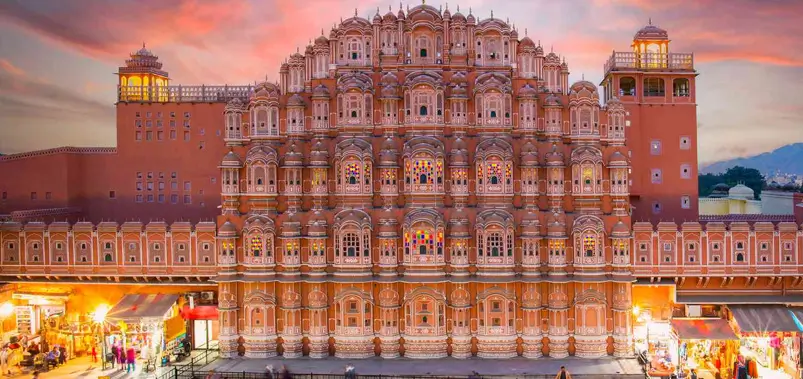
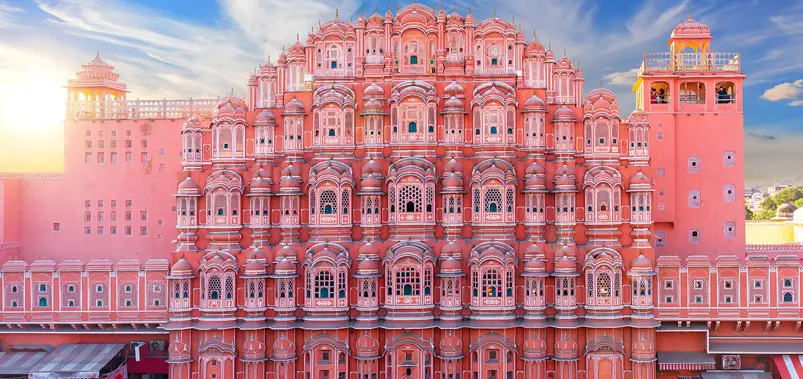
Jaipur creates another possibility. Properties such as Rambagh Palace or The Oberoi Rajvilas can become part of the holiday rather than simply accommodation. A three-night stay allows enough time to enjoy the hotel while still seeing Amber Fort, City Palace and Jantar Mantar.
Udaipur can take this idea further, with luxury properties selected specifically for their lake setting or resort environment.
Room categories can also be chosen individually. A couple does not need a suite in every city simply because they are booking a luxury tour. They may prefer an excellent room in Delhi, a special category in Agra and a suite during a longer Jaipur stay.
That flexibility is difficult to reproduce in a standard group allocation where consistency and room inventory are major operational concerns.
Some travellers worry that avoiding group travel means spending the entire holiday cut off from local life. That does not need to happen.
Privacy refers to control over transportation, guiding and scheduling. It does not mean remaining inside the hotel or avoiding interaction.
A private India tour for couples can actually create more natural engagement because the travellers are not constantly surrounded by a coach group.
A couple walking with one guide through a historic neighbourhood can ask questions as they arise. They can stop for longer when something catches their attention. A restaurant meal is experienced as two independent travellers rather than as part of a large pre-arranged table.
The same applies to markets, heritage areas and selected cultural experiences.
A private chauffeur provides a controlled base between these experiences without separating the guest from the destination.
Travellers can also choose how social they want the holiday to be. Some couples enjoy speaking with guides and hotel staff throughout the trip. Others value long periods where nobody is accompanying them.
A private itinerary can provide both.
This balance is particularly attractive to experienced travellers who do not need constant supervision but appreciate expert assistance at the places where it adds value.
Solo travellers sometimes join group tours because arranging transportation and sightseeing independently feels complicated. A private format offers another option.
A private India tour for solo travelers can include airport assistance, a dedicated chauffeur and personal guides while allowing the traveller to maintain independence.
This can be particularly valuable for someone visiting India for the first time. The guest does not need to navigate every road transfer or locate a new driver in each city, yet they are not required to spend meals and sightseeing days with strangers.
Hotel selection can reflect solo preferences as well. Some travellers want a lively central property where restaurants and public areas provide atmosphere. Others prioritise privacy and quiet.
A private guide can make major sightseeing more comfortable because the solo traveller has someone available for historical interpretation and practical local context without being attached to a group for the entire day.
Pricing naturally differs because accommodation and vehicle costs are not divided between two travellers. A solo private tour can therefore have a higher per-person cost than the same arrangements shared by a couple.
For travellers who value independence, that premium may be worthwhile because it buys both logistical support and control over personal time.
Group departures can be difficult for families because children rarely operate according to the same timetable every day. A poor night's sleep, late breakfast or simple lack of interest can disrupt a rigid programme.
A private family tour of India gives parents considerably more control.
Sightseeing can be shortened when necessary. A pool afternoon can replace another monument. Lunch can happen when the children are hungry rather than when the coach reaches the scheduled restaurant.
Guides can also adjust how they communicate. A long chronological explanation of Mughal history may fascinate adults and lose a child within minutes. A private guide can make the visit more interactive and concentrate on visual or narrative elements that hold younger attention.
Vehicle choice should reflect the whole family. Several passengers plus several suitcases can require considerably more space than a standard sedan. Child-related seating requirements should be discussed in advance where applicable rather than left until arrival.
Hotel arrangements deserve the same care. Connecting rooms can be much more practical than booking two unrelated rooms and hoping they are nearby. Families travelling with grandparents may need several rooms with different accessibility considerations.
The itinerary can still include the major sights. The Taj Mahal, Amber Fort and Delhi's principal monuments remain entirely possible.
The difference is that the family does not need to organise every hour around strangers.
Travellers over 60 often dislike groups for a specific reason: they do not want to be hurried, but they also do not want to feel responsible for making everyone else wait.
Private travel removes that social pressure.
A private India tour for seniors can allow additional walking time at forts and palaces, longer comfort breaks and later starts where operating hours and temperatures permit.
The number of sights does not necessarily need to be reduced dramatically. The same important attractions can be spread across more days.
Vehicle comfort becomes particularly important because getting in and out repeatedly can be tiring. Hotel location, lift access and room positioning can also matter. Historic properties may have unusual layouts, so mobility requirements should be communicated before confirmation.
Lunch can be a proper break rather than a short interruption between attractions.
If the guest becomes tired after the morning programme, the afternoon can often be shortened. There is no coach full of people whose sightseeing depends on the individual continuing.
This makes private travel valuable even for highly active senior guests. The benefit is not that they require assistance at every stage. It is that the pace remains theirs.
Repeat visitors often obtain less value from standard group itineraries because they may already have seen the headline attractions.
Someone returning to Delhi may not need another broad city introduction. They may want a specialist architectural visit, food-focused day or simply a comfortable transfer before continuing elsewhere.
A traveller returning to Jaipur may have already visited Amber Fort and City Palace. Their second trip could concentrate on textiles, jewellery, photography or a longer palace-hotel stay.
A custom India tour for repeat visitors can remove duplicated sightseeing entirely.
This is particularly useful when the traveller is returning with a partner who has never visited India. The itinerary can balance first-time landmarks with experiences that remain interesting for the repeat visitor.
Private guiding also allows conversations to begin at a more advanced level. The guest does not need the same introductory explanation delivered to an entire first-time group.
This can make the second or third India trip feel genuinely different instead of being a slightly modified version of the first.
Travellers who hate groups often value independence, and a good private itinerary should preserve it.
There is no need to have a guide beside the guest from breakfast until bedtime every day. Professional guiding is most valuable where interpretation adds something substantial.
The Taj Mahal, Agra Fort, Amber Fort, City Palace and major Delhi sites are obvious examples. A free afternoon at a resort does not require a guide. Neither does every restaurant meal or hotel evening.
A private guided India holiday can therefore combine guided and unguided time.
The chauffeur can provide transportation when required, while the local guide joins for the relevant sightseeing period. After the guided programme, the guests can return to the hotel or continue with personal time according to the agreed arrangements.
This structure prevents private travel from becoming intrusive.
Luxury travellers often want help available without having someone constantly present. They value professional service but also value privacy.
The distinction should be discussed before the itinerary is finalised so the traveller understands exactly where guides are included and where time remains independent.
Travellers should not interpret flexibility as the ability to change every reservation without consequences.
Hotels have cancellation policies. Domestic flights operate at fixed times. Train tickets have conditions. Wildlife safaris can require permits and defined entry periods. Certain experiences may need advance payment.
The Taj Mahal also has fixed operating arrangements and is normally closed to general visitors on Fridays.
A tailor-made private India tour therefore contains both flexible and fixed components.
The daily sightseeing sequence may often be adjustable. Departure times can frequently move within reason. Optional attractions can sometimes be removed. Lunch can be extended.
Changing the next hotel, flight or safari at the last moment is different.
Private travel works best when the major logistics are arranged carefully before arrival and the flexible portions remain flexible during the holiday.
This provides freedom without creating operational uncertainty.
A group tour can distribute the cost of a coach, guide and other services across many travellers. A private couple cannot divide those costs among thirty passengers.
For that reason, a private India tour cost for two can be higher per person than a comparable group programme.
The difference should buy identifiable benefits.
The vehicle is reserved for the travelling party. Guides work privately. Hotel selection is not restricted by the needs of a large group. Departure times can be more flexible. The itinerary can be modified according to interests, and the route can use different hotel categories in different cities.
At the luxury end, accommodation becomes the largest variable. A couple using excellent five-star hotels and private services may spend several hundred dollars per person per day depending on the itinerary and dates.
Using landmark palace hotels, suites and premium resorts can move the daily cost substantially higher.
A private holiday for two can exceed $10,000 in ground arrangements when high-quality accommodation and comprehensive private services are used. A longer journey using prestigious palace hotels can reach $15,000, $25,000 or considerably more.
These figures are broad indicators rather than fixed package rates because hotel pricing changes with dates, demand and room category.
The important question is whether the price difference is buying the type of independence the traveller actually values.
The benefits of private travel become even more noticeable on a longer itinerary.
After Delhi, Agra and Jaipur, travellers can continue into Rajasthan without joining a fixed coach route. Jodhpur can be added for Mehrangarh Fort and a distinctive palace experience. Udaipur can provide a slower lakeside stay. Ranthambore can be incorporated for travellers with a genuine wildlife interest, subject to safari availability and park operations.
Varanasi can be added using appropriate flight arrangements when the traveller wants a very different cultural and spiritual experience.
A private Rajasthan and Golden Triangle tour can therefore change according to the number of available nights.
A ten-day guest does not need the same route as someone travelling for three weeks.
This sounds obvious, yet fixed group departures frequently require the traveller to select from predetermined lengths and routes. Private travel can begin with the available dates and build outward from there.
The same applies when combining North and South India. Kerala can follow the Golden Triangle for travellers who want backwaters, tropical landscapes and a slower resort experience after the historical intensity of Delhi, Agra and Jaipur.
The route serves the traveller rather than the departure calendar.
People who dislike groups often dislike being told what to do every hour just as much as they dislike travelling with strangers.
A private itinerary should therefore contain genuine free time.
This does not mean writing “leisure” between two compulsory activities and calling it flexible. It means periods where no guide, restaurant reservation or sightseeing visit is waiting.
A luxury India tour with free time can include an entire afternoon in Jaipur, a slow morning in Udaipur or an evening in Delhi with no formal arrangements beyond having the chauffeur available according to the agreed service.
Guests can use that time however they want.
They might book a spa treatment, return to a shop, sit beside the pool, work, sleep or change dinner plans.
The longer the trip, the more valuable these periods become. On a fourteen-day journey, constant organised activity can begin to feel like work even when every activity is individually attractive.
Free time also allows spontaneous discoveries to survive. A traveller may hear about a restaurant from someone at the hotel or decide that they want to return to a neighbourhood they saw the previous day.
A completely full itinerary leaves no room for those decisions.
Travellers who dislike group tours usually do not dislike organisation. They dislike losing control of their time.
That distinction is important.
Golden Triangle Tours can structure private Delhi, Agra and Jaipur travel with pre-arranged hotels, a private chauffeur, personal local guides and agreed sightseeing while keeping the journey focused on the travelling party rather than unrelated guests.
The same private structure can continue into Rajasthan and other parts of India according to the available duration.
A couple can decide that hotel quality is more important than seeing additional cities. A family can prioritise connecting rooms and pool time. Senior travellers can use longer stays and fewer early departures. Repeat visitors can remove the attractions they have already seen.
The result should still be organised. Airport transfers should be clear. Hotels should be confirmed. The chauffeur arrangement should be defined. Guide services should be stated. Important reservations should be made in advance.
What disappears is the unnecessary rigidity.
For travellers who have spent years avoiding escorted holidays because they dislike coach schedules, compulsory group meals and sightseeing by committee, a bespoke private India tour provides a very different way to see the country. It keeps professional logistics in the background while giving control of the actual holiday back to the people travelling.
We promise you a holiday where everything is taken care of from the moment you land. Trusted drivers waiting for you, handpicked hotels that fit your style, personalized itineraries designed just for your family, and a dedicated team on call 24/7. All you need to do is relax, explore, and create unforgettable memories, while we take care of every detail behind the scenes.
A private India tour is arranged for the individual traveller, couple, family or private party rather than unrelated guests travelling together. Transportation and guiding can be private, and the daily schedule generally provides greater flexibility within monument, hotel and reservation requirements.
A dedicated chauffeur can commonly handle the Delhi, Agra and Jaipur road route, depending on the confirmed package. This provides continuity and avoids arranging a different vehicle for every transfer.
No. Private guides can be used where professional interpretation adds value, while other parts of the holiday can remain independent. The exact guide services should be stated in the itinerary before booking.
Often yes. Many private sightseeing days can be adjusted according to the traveller's preferred pace, although monument opening hours, weather, flights and pre-booked activities may limit flexibility on particular days.
Yes. Travellers who do not want shopping should make that preference clear. Guests who are genuinely interested in jewellery, textiles or crafts can instead reserve appropriate time for those interests.
Yes. A private India tour for couples provides personal transportation and guiding without requiring the couple to spend their holiday with an unrelated group. It is particularly suitable for honeymoons, anniversaries and travellers who value privacy.
Yes. Families can use more flexible sightseeing and meal schedules, while senior travellers can benefit from slower pacing, suitable vehicles, longer hotel stays and additional breaks.
They can cost more per person because transportation and guiding are not shared among a large number of travellers. The final difference depends heavily on hotels, room categories, trip length and the level of private services.
Yes. Free mornings, afternoons or entire days can be built into a tailor-made India itinerary, particularly for travellers staying at luxury resorts or taking longer journeys.
Yes. Golden Triangle Tours can arrange private transportation, personal local guides, selected hotels and a customised sightseeing programme for travellers who want organised support without travelling as part of a conventional tour group.