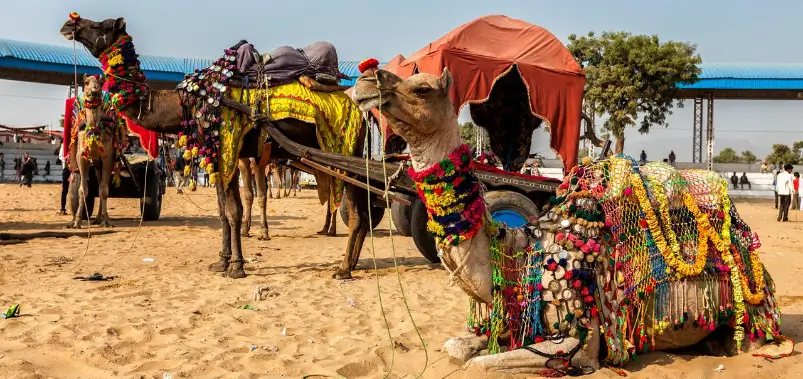
Dust hangs gold over the sand at six in the morning, a herder in a scarlet turban leads twenty camels past your tent, and somewhere a loudspeaker is announcing the next race. That is the Pushkar Camel Fair at its best, and it only happens for about a week each year in a small lakeside town 15 km from Ajmer in Rajasthan. This season the fair runs from around 17 to 24 November, with some listings carrying it to the 25th, and it reaches its spiritual peak on Kartik Purnima, the full moon night of 24 November.
Most foreign visitors get one shot at it, so timing and logistics matter more than for almost any other event in India. Arrive on the wrong day and you see either empty sand or a crowd so thick you cannot lift your camera. Book late and the good tents are gone. This guide covers which days suit you, what happens in each phase, where to sleep near the fairground, how to get there from Jaipur, and how to come home with photographs you are proud of.
The fair has two personalities, and the right one for you depends on why you are coming. The first few days, roughly 17 to 20 November this season, belong to the herders. Families from the Thar Desert walk their camels, horses and cattle in over many days and set up on the dunes west of town. This is the real livestock market, and for photographers it is the richest part of the week. Thousands of animals are being washed, decorated, shaved into patterns and bargained over. Men sit around small fires drinking sweet tea at dawn, women in mirrored skirts cook flatbread on open stoves, and you can wander between camps with very few other tourists around. If you want character portraits and the raw atmosphere of a working market, these Pushkar fair trading days are the ones to target.
The catch is that the formal programme has barely started. There are few organised competitions, the stage at the fairground is quiet, and some visitors who arrive early feel nothing is happening. Something is happening, it simply does not have a timetable.
From roughly 20 to 23 November the Rajasthan Tourism and Animal Husbandry departments run the cultural programme at the fairground. Races, decoration contests and comic events fill the afternoons, folk musicians and dancers perform in the evenings, and hot air balloons rise over the dunes at sunrise. The herds start thinning as deals close and families head home, so by the final days there are noticeably fewer animals on the sand.
Then comes Kartik Purnima on 24 November. Hindu pilgrims believe a dip in Pushkar Lake on this full moon washes away sins, and the town fills to bursting. The ghats are packed from well before dawn, the lanes around the Brahma Temple move at shuffling pace, and lamps are floated on the water at dusk. It is moving to witness, but it is a religious festival first, and the livestock side is mostly over.
Our practical advice for most travellers is a three night stay that straddles the change: arrive around 19 November, catch the last full trading mornings, enjoy two days of competitions, and either leave the morning of the 23rd or stay for the full moon if crowds do not bother you. Photographers chasing portraits should lean earlier. Travellers who care most about the religious side should make sure they are in town on the 24th.
One more point on best days to visit Pushkar fair: weekends bring large numbers of domestic visitors from Jaipur and Ajmer, so a Tuesday to Thursday window feels calmer. Dates for individual events are only published by Rajasthan Tourism close to the fair and can shift, so treat any day by day schedule you see online as a guide, not a promise.
Discover Rajasthan’s vibrant camel fair with a personalized travel experience, comfortable stays and memorable cultural moments.
In the trading phase, the action is spread across the dunes rather than in one arena. Walk out after sunrise and you will see buyers checking camel teeth, haggling with raised voices, then sealing a sale with a handshake and a wad of notes. Camels wear beaded necklaces, silver anklets and elaborate patterns clipped into their fur, partly for pride and partly to catch a buyer's eye. Horse traders show off the Marwari breed with its distinctive inward curling ears, often making the horses dance to drums. Late in the afternoon the light softens, the dust rises, and herders gather for tea. It is slow, real, and wonderful for anyone who enjoys watching people at work.
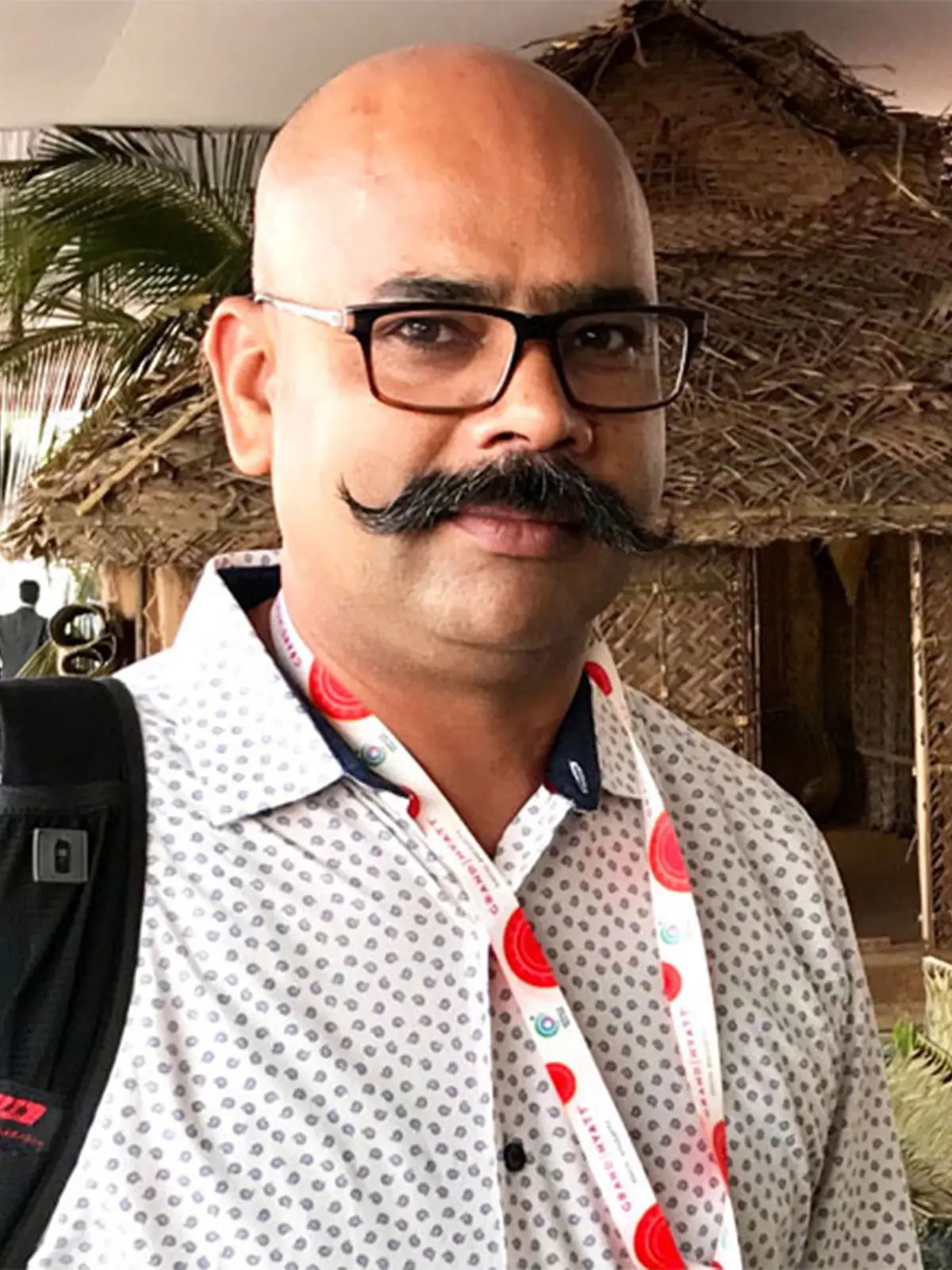
Once the official programme begins, the fairground becomes the centre. Over the years the line up has included camel races, camel decoration contests, horse dancing, tug of war, a turban tying contest for foreign visitors and a pot breaking game. Two events draw the biggest crowds of foreigners. The longest moustache competition, run by the Tourism Department, brings men from across Rajasthan who have spent decades growing and waxing moustaches that sometimes stretch past their shoulders. Contestants twirl, measure and pose, and the winners become instant celebrities with every camera on the ground.
The other favourite is the foreigners vs locals cricket match. Foreign tourists are invited to form a team against a side of local men, usually around eight players each, and the result is closer to a comedy show than a sports fixture. At a recent fair the visiting team made 34 runs and the locals chased it down for two wickets. If you play even a little cricket, sign up at the tourist information desk on the fairground. It is the easiest way to make friends for the rest of the week.
Evenings bring folk performances on the main stage: Kalbelia dancers in swirling black skirts, Manganiyar singers, puppet shows and fire acts. Seating is on the ground or on simple benches, and the best spots fill an hour early.
On Kartik Purnima the focus moves from the dunes to the lake. Pushkar Lake is surrounded by around 52 ghats, the stepped bathing platforms, and pilgrims arrive from 3am onward to bathe at sunrise. Brahma Ghat and Varaha Ghat are among the busiest. In the evening, the ghats glow with small floating lamps and the sound of bells carries across the water.
The Brahma Temple in Pushkar is the other spiritual magnet. It is one of the very few temples in India dedicated to Brahma, the creator god, and its red spire sits at the top of a short lane of stalls. Expect long queues during the fair. You must remove your shoes, leather items are not welcome, and photography inside the sanctum is not allowed, so leave your camera with your driver or at a locker.
For a view over everything, take the cable car up to the Savitri Temple on the hill south of town at sunrise. It saves an hour of steep climbing and shows the lake, the town and the fair camps all in one frame.
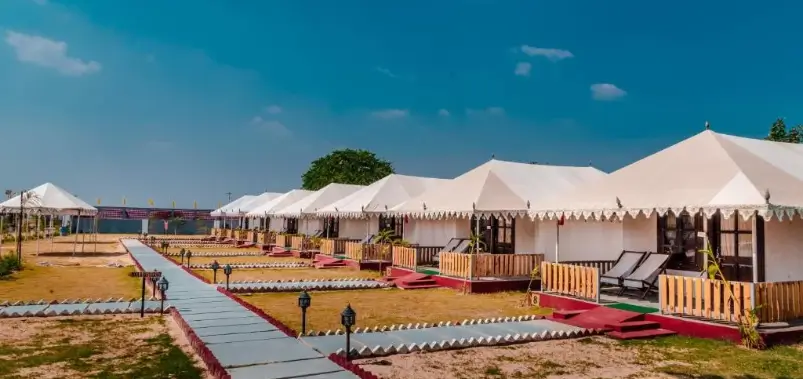
Accommodation is the single biggest headache of the fair, and the biggest cost. Pushkar has a few thousand rooms in normal times, and during fair week demand from India and abroad swamps them. The answer for most foreign visitors is a Pushkar luxury tent camp, a temporary or semi permanent camp of large furnished tents with proper beds, private bathrooms with running hot water, electricity and a dining tent serving set menus. Some camps sit right on the edge of the fairground, which means you can be out with the herders before sunrise and back for breakfast before the heat builds.
Well known options include Orchard Tents at the edge of town, the Royal Desert Camp, the Royal Tents, and the camps run by Pushkar Resorts. Rajasthan Tourism has also historically set up its own tourist village of tents close to the fairground. Each camp sets its fair week rates separately, and they climb sharply. Expect roughly these per night figures for a double tent with meals, leaning to the higher side:
Prices can change and many camps add a minimum stay of two or three nights over Kartik Purnima.
If you prefer solid walls and a swimming pool, the Pushkar resorts during the fair are a strong alternative. The Westin Pushkar Resort and Spa sits a short drive outside town among farmland with views of the Aravalli hills, and Ananta Spa and Resort is set in a quiet valley a few kilometres away. Pushkar Bagh and Aaram Bagh are smaller garden properties popular with tour groups. During fair week, the better resort rooms tend to run from around INR 15,000 to well above INR 30,000 a night, often two to three times their usual rate. The trade off is distance: you will need a car to reach the fairground and the lake, and traffic near town can be slow on peak days.
Inside the old town there are many simple guesthouses and heritage havelis overlooking the lake, such as Hotel Pushkar Palace on the lakeshore. They put you close to the ghats for Kartik Purnima but noise, bells and loudspeakers run late and start early.
Timing your booking matters more than which property you choose. Good camps and lakeside rooms for the full moon nights are often sold out by late summer, and international operators reserve blocks of tents a year ahead. Aim to book by July or August if you can. In September you will still find space, but with fewer choices. In October you are mostly taking what is left. Always confirm in writing whether meals, taxes and transfers are included, ask how far the camp is from the fairground on foot, and check what heating is provided, because desert nights in late November drop to around 10 to 12 degrees Celsius.
Pushkar has no airport and no railway station of its own, so every route ends with a short drive. The nearest major airport is Jaipur International Airport, which has frequent domestic connections and a handful of direct flights from the Gulf. Most foreign visitors fly into Delhi and connect, or combine Pushkar with the classic Delhi, Agra and Jaipur circuit.
The Jaipur to Pushkar distance is about 145 to 150 km, almost all of it on a good four lane highway via Kishangarh and the Ajmer bypass. In a private car the drive usually takes about two and a half to three hours, with a tea stop. On the busiest days around the full moon, the last few kilometres into Pushkar can add another hour, as police divert traffic and vehicles queue at the entry points. A car with driver for a one way transfer from Jaipur during the fair typically costs INR 4,500 to 7,000 for a sedan and more for an SUV, and prices rise in fair week.
By train, the gateway is Ajmer Junction, about 14 to 15 km from Pushkar. The Ajmer Shatabdi leaves New Delhi early in the morning and reaches Ajmer around lunchtime, taking about six and a half hours and stopping at Jaipur on the way. From Jaipur, several daily trains reach Ajmer in roughly two hours. A train to Ajmer for Pushkar is a relaxed, scenic option, and air conditioned chair car seats on the Shatabdi are comfortable and inexpensive. Book on the Indian Railways IRCTC website, where foreign tourists can register with a passport, or through a local agent. Seats sell out quickly in fair week, so reserve as soon as the booking window opens, about 60 days ahead.
From Ajmer station the road to Pushkar climbs over Nag Pahar, the Snake Mountain, a winding 30 minute drive. Prepaid taxis and app cabs wait outside the station, but during the fair demand is high and prices jump, so agree the fare before you get in or arrange a pickup through your camp.
Driving straight from Delhi is possible. The roughly 400 km road trip takes seven to eight hours with stops, best started around 5am to avoid Delhi traffic. Many travellers break it with a night in Jaipur, which turns a tiring drive into two easy halves and lets you see Amber Fort on the way.
A few practical notes. Vehicles are often stopped at police barricades on the edge of town on peak days, especially 23 and 24 November, so your driver may drop you at the nearest permitted point and you will walk the final stretch. Keep a small daypack for these moments rather than dragging large suitcases through sand and crowds. If you are combining Pushkar with Jodhpur or Udaipur, both are within a day's drive, about three and a half and five hours respectively.
For a ready made route that fits the fair into a wider trip, the Golden Triangle tour with fairs and festivals links Delhi, Agra and Jaipur with Pushkar in one itinerary, and the Pushkar destination page has more on the town itself. Golden Triangle Tours can arrange a private car with driver and a local guide for the fair days if you prefer someone else to handle the timing and the barricades.
Capture the colours, traditions and rural charm of Pushkar with a thoughtfully planned visit at the right time.
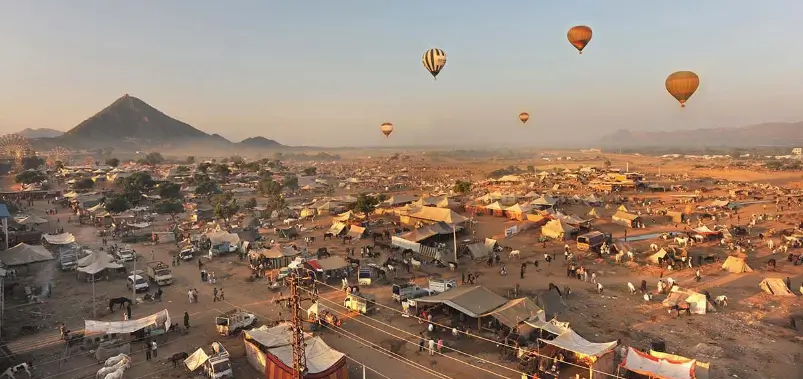
Pushkar is one of the most photographed events in Asia, and the competition for clean frames is real. The secret is time of day. The two windows that matter are the hour after sunrise and the hour before sunset, when the low sun turns the dust into a glowing haze and side light picks out every wrinkle and bead. Golden hour on the Pushkar dunes is when herders are most active too, leading camels to water in the morning and gathering around fires in the evening. By 10am the light turns hard and flat, the sand glares, and most serious photographers head back for breakfast.
A hot air balloon ride over Pushkar is the most memorable way to see the camps from above. Balloons usually take off around dawn during the main fair days, with flights lasting roughly an hour depending on wind. Operators such as Sky Waltz have flown here for many seasons. Expect to pay about INR 14,000 to 20,000 per person (around USD 165 to 235), and note that slots during the fair are limited and often sold out by early November. Flights depend on the weather and can be cancelled on the morning itself.
On lenses, a moderate zoom such as 24 to 70mm handles most scenes, from wide camp shots to close portraits. A 70 to 200mm lets you catch candid expressions across the sand without hovering, and is useful for races. A fast prime around 35mm or 50mm is lovely for low light portraits by firelight. Pack a blower and lens cloths and change lenses inside a bag or with your back to the wind, because fine sand gets everywhere. A rain cover or even a shower cap keeps dust off the camera on breezy afternoons.
Now the part many visitors get wrong: people. The herders are not models, and they deserve the same courtesy you would want. Asking permission to photograph takes only a smile, a raised camera and a nod. Most men say yes, especially if you show them the picture afterwards. Women, especially from conservative herding families, may say no, and that answer should be respected. Some people will ask for money after a photo. A small tip of INR 50 to 100 is reasonable for a posed portrait, but agree first. Professional looking subjects in perfect costume near the main gate often expect payment.
At the lake, the rules are firm. Photographing or filming people bathing on the ghats is not allowed, and local priests and volunteers will stop you, sometimes sharply. Remove your shoes before stepping onto any ghat, keep cameras away from bathers, and photograph the lake from a rooftop restaurant or from the hill instead. Pushkar has also become known for men posing as priests who offer flowers and then demand large donations for a blessing on the ghats. Politely decline the flowers before they are placed in your hand.
Drones need permission from local authorities in India and are usually banned over crowds and religious sites, so leave yours at home for the fair.
Pushkar is generally safe for foreign visitors, including women travelling with a companion or a guide, but the fair concentrates hundreds of thousands of people into a small town, and that brings ordinary crowd risks. Pickpockets work the busiest lanes and the main ghats around the full moon. Carry your phone in a front pocket or a zipped bag worn across your body, leave your passport in the camp safe with a photocopy in your bag, and agree a meeting point with your group in case you get separated. India's single emergency number is 112, which connects to police, fire and ambulance.
Animals deserve respect as well. Camels kick, horses spook at drums, and a herd moving through a lane will not stop for you. Give them space, never stand directly behind one, and keep an eye on children. Dust is constant on the dunes, so a light cotton scarf or a simple face mask helps, and anyone with asthma should bring their inhaler.
On what to wear at Pushkar fair, think modest and layered. Days in late November are usually warm, around 26 to 29 degrees Celsius, while nights and early mornings can drop to about 10 to 12 degrees. Loose cotton trousers or long skirts, shirts that cover the shoulders, and a warm fleece or jacket for dawn and evening work well. Pushkar is a holy town, so very short shorts and revealing tops draw stares and occasionally comment. Closed shoes are best for the dunes, where dung and thorns hide in the sand, and slip on sandals are useful for the ghats and temples where you must go barefoot. A wide brimmed hat and sunscreen matter more than people expect.
Food and drink follow religious rules. Meat, eggs and alcohol are not allowed in Pushkar town, and most restaurants serve vegetarian food only. Some camps outside the municipal limits offer alcohol, so ask if it matters to you. Stick to bottled or filtered water, choose busy stalls where food is cooked fresh in front of you, and go easy on street snacks for the first day.
Money needs a little thought. Cash at Pushkar camel fair remains essential, because many traders, tea stalls, tips and small shops do not take cards. ATMs in town do exist but tend to run dry or develop long queues during fair week, so withdraw enough in Jaipur or Ajmer before you arrive. INR 15,000 to 25,000 per person for a three day stay is a sensible float for meals outside the camp, tips, small purchases and local transport, assuming your accommodation is prepaid. Keep notes in small denominations, as change is always short. Larger shops selling silver jewellery, textiles and leather goods often accept cards, but may add a surcharge.
When buying souvenirs, haggling is expected, and starting at around half the first price is normal. Silver and gemstones carry a real risk of misleading claims, so buy only what you love at a price you are happy to lose.
We promise you a holiday where everything is taken care of from the moment you land. Trusted drivers waiting for you, handpicked hotels that fit your style, personalized itineraries designed just for your family, and a dedicated team on call 24/7. All you need to do is relax, explore, and create unforgettable memories, while we take care of every detail behind the scenes.
The fair runs from around 17 to 24 November this season, with some programmes extending to the 25th. Kartik Purnima, the most important religious day, falls on 24 November. Rajasthan Tourism publishes the detailed event schedule shortly before the fair begins.
The early days, roughly 17 to 20 November, have the most animals and the most active trading. By the final two or three days many herders have sold their stock and left. Photographers should aim to be on the dunes at sunrise during this early window.
These events are part of the cultural programme run by Rajasthan Tourism, usually in the middle and later days of the fair. Exact dates are confirmed only when the official schedule is released. Ask at the tourist information desk on the fairground on arrival.
Expect roughly INR 15,000 to 35,000 per night for a good double tent with meals, and INR 35,000 to 55,000 or more for top category tents. Rates are highest around Kartik Purnima and often come with a minimum stay. Prices can change, so confirm inclusions in writing.
Book by July or August for the best choice of camps and lakeside rooms. Good tents for the full moon nights often sell out by September. Late bookers can still find space but with fewer options and higher prices.
Pushkar is about 145 to 150 km from Jaipur, a drive of around two and a half to three hours by private car. You can also take a train from Jaipur to Ajmer in about two hours, then drive 30 minutes over the hill to Pushkar. Allow extra time on peak days due to police barricades.
Balloon flights usually cost around INR 14,000 to 20,000 per person, about USD 165 to 235. Flights take off around dawn and last roughly an hour, depending on wind. Book early, as slots are limited and weather can cause last minute cancellations.
You can photograph the lake and temples from rooftops and the hills, but filming or photographing people bathing on the ghats is not allowed. You must remove your shoes on the ghats. Photography is also not permitted inside the Brahma Temple sanctum.
Meat, eggs and alcohol are not allowed within Pushkar town, and most restaurants are vegetarian. Some camps and resorts outside the town limits serve drinks. Check with your accommodation before you arrive.
Yes, carry plenty of cash, ideally INR 15,000 to 25,000 per person for a three day stay, in small notes. Many traders, stalls and tips are cash only. Town ATMs often run out during fair week, so withdraw money in Jaipur or Ajmer first.