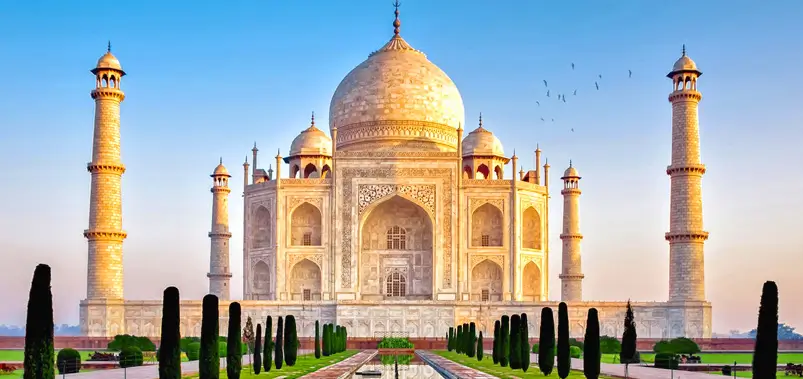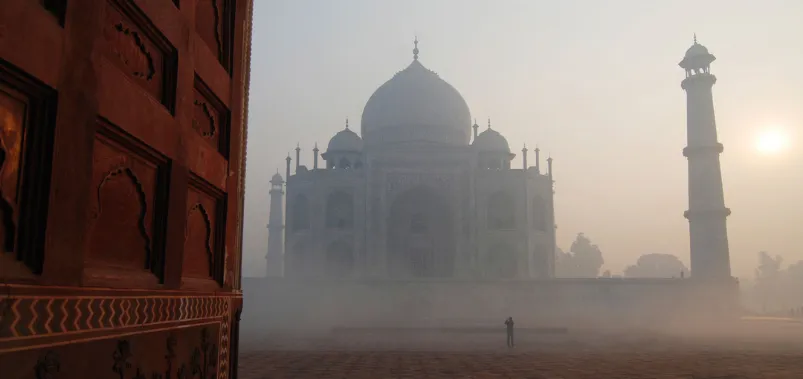
At 6am on a January morning in Agra, a family from Toronto stands on the marble platform of the Taj Mahal, cameras ready. In front of them is a wall of white. They can see the reflecting pool for about 30 metres, then nothing. Their guide smiles and tells them to wait. By 10am the sun burns through, the dome appears out of the haze like a slow photograph developing, and the same family takes the best pictures of their trip. Two hours later they are back on the expressway to Delhi, where their evening flight is running 90 minutes late because the morning's fog backed up the airport.
That is winter fog in North India in a nutshell. It is predictable, it is mostly a morning problem, and it is entirely manageable if you build your trip around it rather than against it. This guide covers when the fog arrives, why it forms, how it affects flights at Delhi airport, trains to Agra and the drive along the Yamuna Expressway, and how to schedule your Taj Mahal visit so you actually see the building.
The fog season across the northern plains usually starts in mid December, peaks from the last week of December to the third week of January, and fades through early February. India's aviation regulator, the DGCA, sets an official fog window each winter that runs from 10 December to 10 February, and airlines and railways schedule their winter operations around those dates. Not every day in that window is foggy. A typical January might bring a run of four or five very foggy mornings, then a clear spell, then another run. The worst stretch tends to fall around the New Year and the first half of January.
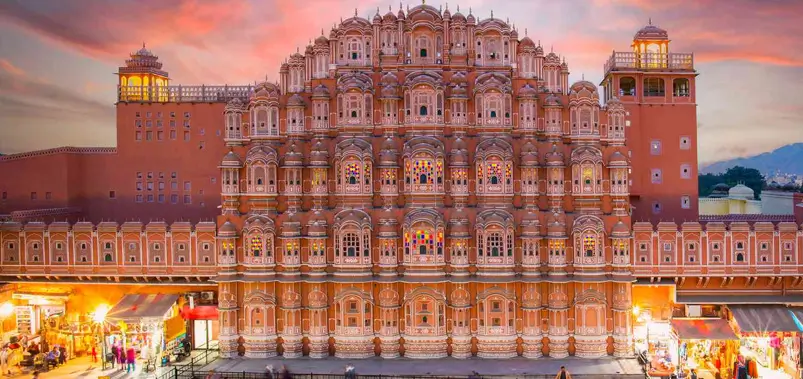
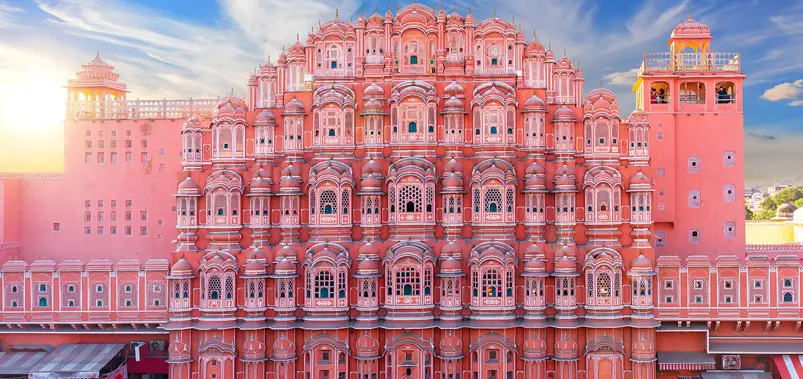
The fog belongs to the Indo-Gangetic plains, the huge flat basin running from Punjab through Haryana, Delhi, Uttar Pradesh and Bihar. Delhi, Agra, Mathura, Lucknow and Varanasi all sit inside it. Jaipur sits on the edge of it and gets fog less often, though it does see some foggy mornings during cold spells.
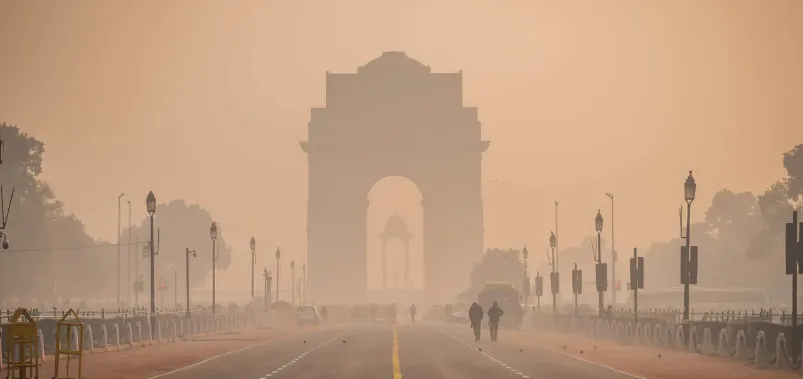
The type of fog is called radiation fog. On clear, calm winter nights the ground loses heat quickly. The air just above it cools to the point where its moisture condenses into tiny droplets, and with little or no wind to stir things up, a layer of fog settles near the surface. The plains have plenty of moisture from irrigated wheat fields, rivers and canals, and the cold air from western disturbances that pass over the Himalayas adds to it. Pollution particles in the air give water droplets something to cling to, which makes the fog thicker and slower to lift after sunrise. That is why the fog in Delhi often looks grey and smoky rather than pure white.
The India Meteorological Department grades fog by visibility. Dense fog means visibility between 50 and 200 metres. Very dense fog means less than 50 metres, and on those mornings you genuinely cannot see the car in front of you on an open road. The IMD issues colour-coded alerts on its website and on its Mausam app, and Indian news channels repeat them in the evening weather reports. A yellow or orange alert for the next morning is your signal to slow down your schedule.
The pattern within a day matters most for travellers. Fog usually starts forming late at night, thickens before dawn, and is at its worst between about 2am and 9am. On most days it starts thinning by 10am or 11am, and by early afternoon you can have clear sunshine with temperatures of 18°C to 21°C. On the worst days, a grey haze hangs around until midday and the sun never fully breaks through. Evenings can bring fog back quickly once the sun sets. If you remember one thing, make it this: in late December and January, treat the hours before 10am as unreliable for anything with a fixed departure time, and treat the afternoon as your safe window.
Don't let unexpected fog disrupt your India holiday. Explore Delhi, Agra and Jaipur with flexible sightseeing schedules, private transport and thoughtfully planned travel arrangements.
Indira Gandhi International Airport in Delhi is one of the best-equipped airports in India for fog. It has runways fitted with an instrument landing system certified for CAT IIIB operations, which allows suitably equipped aircraft to land with runway visibility down to 50 metres. In practice, a CAT IIIB landing is largely automatic: the aircraft follows radio guidance down to the runway, and the pilots take over after touchdown.
The catch is that three things all have to be certified at the same time: the runway, the aircraft and the pilots. Many narrow-body aircraft used on domestic routes have higher visibility minimums than the runway itself, and only crews trained in low visibility operations can fly them in. Before each fog window, airlines roster CAT III trained pilots and position certified aircraft on Delhi routes. Air India, for example, runs a scheme called Fog Care that offers free rescheduling or a full refund without penalty on flights likely to be hit by fog. IndiGo, Akasa and others send fog alerts by text message and email.
When visibility drops, the airport switches to low visibility procedures. Aircraft need more spacing on approach and on the ground, so the number of movements per hour falls sharply. One hour of thick fog can take two to three hours to clear from the schedule, because the backlog spills into the rest of the morning. Take-offs need more visibility than landings in some cases, so departure queues build up even when arrivals are still coming in. If visibility falls below 50 metres, operations can stop altogether until it improves.
Here is how that usually plays out for a foreign traveller. Delhi flight delays in fog cluster in the early morning, roughly 5am to 11am. Domestic departures from Delhi to Varanasi, Udaipur, Jaipur, Lucknow and other northern cities are often the first to slip, because the destination airports are foggy too and many have less advanced landing systems. Varanasi and Lucknow in particular can be fogged in for most of the morning. Delays of one to three hours are common on bad days, cancellations happen on the worst ones, and a few flights each season are diverted to cities like Jaipur, Ahmedabad or Lucknow and then fly back to Delhi hours later.
Long-haul international arrivals from Europe and North America usually come in between midnight and early morning, right in the fog window. The airlines on those routes, such as British Airways, Air Canada, Lufthansa, Air India and Virgin Atlantic, generally use wide-body aircraft and trained crews, so most land on time. But a small number are held in the air or diverted on the worst mornings. Evening departures from Delhi back to Europe and North America are usually the least affected, though they can be hit if the inbound aircraft was delayed earlier in the day.
Practical points. Track your flight on the airline app and on the Delhi airport website from the night before. Do not book a domestic connection in north India for the early morning after an overnight long-haul arrival; give yourself at least four or five hours, or better, a night in Delhi. Book separate domestic tickets only if you can absorb a missed connection. And if you have a choice of domestic flights, pick one leaving after 1pm.
Train travel between Delhi and Agra is quick and comfortable in normal weather, and it is the route most travellers consider if they are not driving. There are three fast trains worth knowing about. Times below are taken from current railway timetables and can change, so check them on the Indian Railways or IRCTC website before you book.
On a clear morning these trains do the trip in under two hours. In fog it is a different story. Train drivers on the northern routes use GPS-based fog safety devices that warn them of upcoming signals, stations and level crossings, and in thick fog they must slow down to a speed at which they can stop safely. Signalling rules in fog also allow fewer trains between stations. The result is that a 100 minute run can stretch to three or four hours on a very foggy morning, even on premium trains.
There is a useful pattern here. Trains that start in Delhi, like the morning Shatabdi and the Gatimaan, usually leave on time or close to it, because they begin their run at the station you are boarding. They then lose time along the way. Trains coming the other direction, especially those that started hundreds of kilometres away the night before, can arrive in Delhi or Agra many hours late, because they have been crawling through fog all night. So the Gatimaan Express fog delays you read about on review sites often refer to the return run, which picks up delays from further south.
Indian Railways also cancels or cuts the frequency of some long-distance trains across the northern plains between December and February because of expected fog. Most of these are overnight express trains between Delhi and eastern or northern cities, not the main Delhi to Agra day trains. Still, it is worth checking the running status on the National Train Enquiry System website or an app such as Where is My Train on the morning of travel.
Our honest advice is this. In late December and January, a morning train from Delhi to Agra is fine if your day has slack in it, for example if you intend to visit the Taj Mahal in the afternoon. It is a poor choice if you are trying to catch sunrise at the Taj, because sunrise arrives at around 7am and the train cannot get you there in time. Avoid evening trains back to Delhi on the day of an international departure. The afternoon Vande Bharat is often the most reliable choice in fog season, since by 2:40pm the morning fog has long gone.
Winter fog can change travel plans across North India. Enjoy flexible itineraries, comfortable private transfers and expert local assistance for a smoother Golden Triangle holiday.
Most foreign visitors on a private tour travel between Delhi and Agra by road on the Yamuna Expressway, a six-lane toll road of about 165 kilometres between Greater Noida and Agra. In good weather the full drive from central Delhi to an Agra hotel takes around three and a half to four hours, including city traffic at both ends.
Fog changes the expressway completely. It runs through flat farmland with almost no lighting outside the toll plazas, and very dense fog can drop visibility to 20 or 30 metres. Serious multi-vehicle pile-ups have happened on foggy winter mornings in past seasons, usually when a fast car meets a slow truck it could not see. Because of this, the local authorities in Gautam Buddh Nagar district cut the Yamuna Expressway speed limit every winter. Under the most recent order, from 15 December to 15 February the limit is reduced from 100 km/h to 75 km/h for light vehicles such as cars, and from 80 km/h to 60 km/h for heavy vehicles. Speed cameras enforce the limit and fines are issued electronically. On a foggy morning, a sensible driver will go much slower than 75 km/h anyway.
What should you expect if you are being driven? A good driver will check the forecast the night before and suggest leaving later. If you are booked to leave Delhi at 6am in January, do not be surprised if your driver proposes 9am instead. Take that advice. Leaving after the fog lifts usually means you reach Agra only an hour or two later than scheduled, and the drive is far safer and less tense. If you do drive in fog, your driver should use fog lamps and hazard lights when stopped, keep a long gap from the vehicle ahead, and avoid overtaking trucks. You can help by not pressing for speed.
There are also some simple comfort points. The expressway has a few food plazas and fuel stations, roughly every 50 kilometres, with clean toilets, coffee and snacks. Carry water, a warm layer and a charged phone. Cars on long routes are usually heated, but the windows mist up in fog and drivers sometimes open them a crack to keep the glass clear, so a shawl or light jacket in the car helps.
If you are arranging your own trip, a reliable car and an experienced driver matter more in January than in any other month. You can book a private car with a driver who knows the route in fog through our car and coach rental service. The same logic applies to the Agra to Jaipur leg on the national highway, which is a single road with more local traffic, tractors and slow trucks than the expressway, and which also sees fog in the early hours, especially around Bharatpur.
The Taj Mahal opens 30 minutes before sunrise and closes 30 minutes before sunset, every day except Friday. A foreigner ticket costs INR 1,100 (about USD 13), with an extra INR 200 to enter the main mausoleum, and there is a small discount for booking online. Ticket counters open an hour before sunrise. These prices are set by the Archaeological Survey of India and can change.
The classic advice is to go at sunrise, and from October to mid December or from mid February to March it is good advice. In late December and January, it is a gamble. On a foggy morning you may arrive at 6:45am, walk through the great gate and see only a pale outline of the dome, or nothing at all. Some visitors love the soft, ghostly look and get unusual photos. Many are disappointed. A Taj Mahal sunrise visit in fog is fine if you have more than one chance, but it is the wrong choice if this is your only slot.
The better approach in fog season is a late morning or afternoon visit. Fog usually thins between 9am and 11am, and from around noon to 4pm the light is clear, warm and good for photographs. Crowds are heavier than at dawn, but they are manageable midweek. If you stay two nights in Agra, you can keep both options open: try sunrise on the first morning, and if it is fogged out, come back the next afternoon. You will also see the Taj from across the river at Mehtab Bagh, which is best at sunset and rarely affected by fog at that hour. Our Agra destination guide covers the other monuments worth fitting into those spare hours.
A few fog season travel tips that make the biggest difference:
Now, what to wear. Northern India in January is colder than many people expect. Delhi and Agra mornings often sit around 5°C to 8°C, and a cold spell can push them to 3°C or 4°C, while afternoons warm up to 18°C to 21°C. Hotel rooms and older monuments are not always well heated. Pack a warm down or fleece jacket, a scarf, gloves for early mornings, thermal base layers, and comfortable closed shoes. You will need to remove your shoes or wear shoe covers at the Taj Mahal mausoleum, and the marble is very cold underfoot at 7am, so thick socks are a quiet blessing. By lunchtime you will be in a sweater or long-sleeved shirt, so layers are the answer.

We promise you a holiday where everything is taken care of from the moment you land. Trusted drivers waiting for you, handpicked hotels that fit your style, personalized itineraries designed just for your family, and a dedicated team on call 24/7. All you need to do is relax, explore, and create unforgettable memories, while we take care of every detail behind the scenes.
Dense fog is most common from the last week of December to the third week of January. Within a day it is worst between about 2am and 9am and usually lifts by late morning. The official fog window for flights runs from 10 December to 10 February.
Most long-haul flights land on time because they use aircraft and crews certified for CAT IIIB landings. On the worst mornings a few are held or diverted to other cities. Domestic flights to and from northern cities are more likely to be delayed.
It is an instrument landing system that lets certified aircraft with trained pilots land in very low visibility, down to 50 metres for CAT IIIB. The runway, aircraft and crew must all be certified. If visibility drops below that, operations can pause.
On very foggy mornings, trains such as the Gatimaan Express and Shatabdi can take three to four hours instead of under two. Trains starting in Delhi usually leave on time and lose time on the way. Check the running status on the railway enquiry website on the morning of travel.
It is safe with a careful driver and a later start. From 15 December to 15 February the speed limit for cars is cut to 75 km/h and to 60 km/h for heavy vehicles. Leaving after 9am usually avoids the worst fog.
Only if you have a second chance, because fog can hide the building completely at dawn. A late morning or afternoon visit is more reliable in late December and January. Staying two nights in Agra lets you try both.
The foreigner entry ticket is INR 1,100, about USD 13, with an extra INR 200 for the main mausoleum. Booking online gives a small discount. The monument is closed every Friday.
Jaipur sees fog less often than Delhi and Agra, though cold spells can bring foggy mornings. The drive between Agra and Jaipur can be foggy around Bharatpur in the early hours. Afternoons in Jaipur are usually clear and sunny.
Keep at least one full day in Delhi before your international flight home. Avoid same-day connections between long-haul arrivals and domestic flights or trains. Schedule long drives and train trips for late morning or afternoon.
Bring a warm jacket, scarf, gloves, thermal layers and closed shoes. Mornings can be 3°C to 8°C while afternoons reach around 20°C. Thick socks help on cold marble floors at monuments.