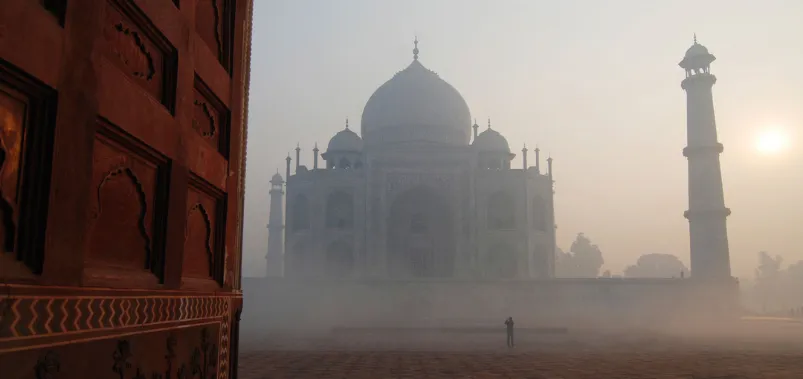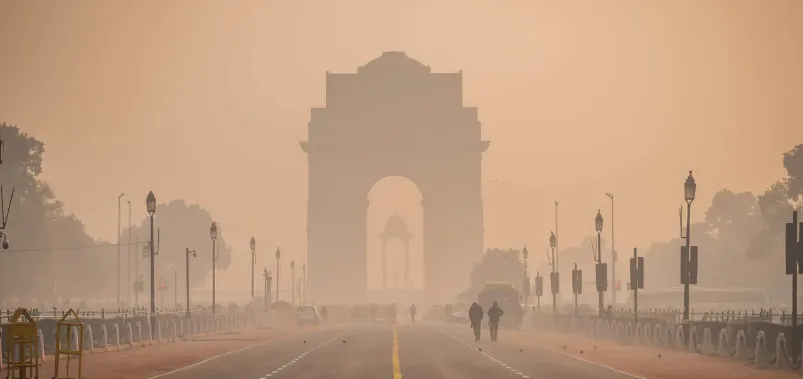
Many travellers land in Delhi between October and January because the weather is pleasant, the light is soft and Rajasthan is at its best. The catch is the air. On a calm December morning the sky over India Gate can look milky white, the sun appears as a pale disc, and your phone app may show a number that sounds alarming. None of this means you should cancel a trip, but it does mean you should arrive informed rather than surprised.
This guide sets out, calmly and with real figures, why Delhi air quality in winter drops, what the readings actually mean, which apps give reliable numbers, how the government's emergency rules affect visitors, and how to shape a route so that you spend your best hours in cleaner air. Fog and its effect on flights and trains is a separate subject that we cover in another article, so here we stay with the air itself and with practical steps you can take from the day you book.
Delhi sits on the flat Indo-Gangetic plain, with no sea breeze and no mountains close enough to push air through the city. For much of the year, heat and wind carry pollution upwards and away. From late October the pattern changes, and several causes stack on top of each other at the same time.
The first is weather. As nights grow colder, a layer of cool air settles close to the ground with warmer air sitting above it like a lid. This temperature inversion traps smoke, dust and vehicle exhaust in a shallow band where people breathe. Wind speeds also fall in early winter, often to just a few kilometres an hour, so whatever the city produces in the evening is still hanging over it the next morning. Meteorologists describe this as a low mixing height, and it is the single biggest reason why the same traffic produces far worse air in December than in March.
The second cause is seasonal burning. After the rice harvest in Punjab and Haryana, some farmers burn leftover straw to clear fields quickly for the wheat crop. Stubble burning usually runs from mid October to late November, and on days when north westerly winds blow towards Delhi, the smoke adds to the local haze. Its share changes sharply from day to day. Analysis by the Centre for Research on Energy and Clean Air found that it made up only about 7 per cent of Delhi's fine particle pollution on average last November, with a peak share of around 20 per cent, which shows that local sources matter more than many people assume.
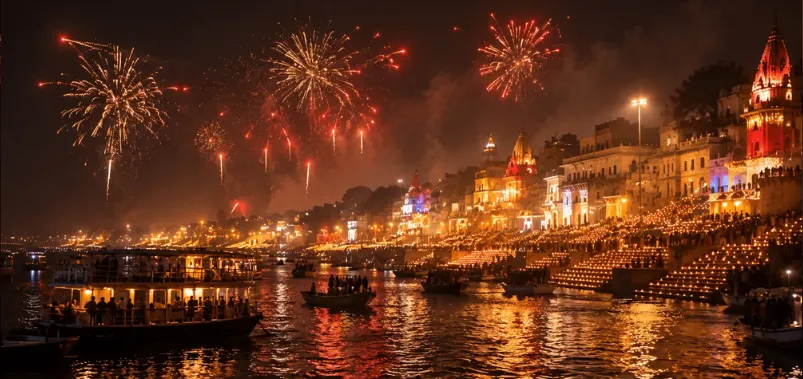
The third is Diwali. Fireworks are restricted in Delhi, yet readings almost always jump on the night of the festival and the morning after, when smoke meets still, cold air. This season Diwali falls on 8 November, so if your dates touch that week, expect one or two heavy days and arrange indoor time accordingly.
Underneath these seasonal spikes sit the year round sources: road traffic, construction dust, industry around the wider capital region, diesel generators, and the burning of rubbish and wood for warmth on winter nights. Studies by the Centre for Science and Environment suggest vehicles account for roughly half of the particle pollution that Delhi produces itself during winter.
The result is a predictable curve. October usually starts in the moderate or poor range, November is typically the worst month, December stays heavy, and January brings some relief whenever western disturbances deliver rain or stronger winds. By late February the air is noticeably clearer. Knowing this curve is useful, because it lets you place your Delhi days where the odds are better rather than leaving them to chance.
Don't let winter pollution planning overwhelm your holiday. Discover Delhi, Agra and Jaipur with personalised itineraries, comfortable transport and local assistance tailored to your travel preferences.
India's Central Pollution Control Board publishes a National Air Quality Index that combines up to eight pollutants, although in winter the figure is almost always driven by fine particles called PM2.5. Before you look at any number, it helps to know the AQI categories used on Indian government platforms:
In practice, a typical Delhi AQI in November sits in the Very Poor band, somewhere in the 300s, with several days crossing 400 during still, foggy spells. Last November the city went through a run of more than three weeks with readings above 300, and through most of December it recorded no days below 200 at all. Mid afternoon readings are usually lower than the 24 hour average, and a single windy or rainy day can bring the number down to the 200s within hours. By late January and February, Moderate days become far more common.
One point catches many visitors out. International apps often use the United States AQI scale rather than the Indian one, so the same air can produce a different number depending on where you look. Compare like with like, and pay more attention to the trend over a few days than to one figure.
These are the air quality apps worth installing before you fly:
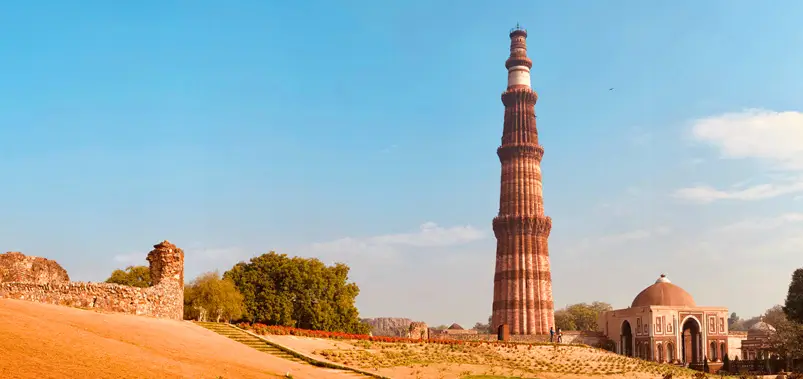
Official feeds can occasionally go quiet; last November the Sameer app briefly stopped updating during a heavy smog spell. Keeping two apps means you always have a reading. A sensible habit is to check the forecast the evening before each Delhi day, then look again at breakfast. If tomorrow looks heavy, that is the day for museums and long lunches; if the wind picks up, push outdoor sights such as Humayun's Tomb or Qutub Minar to the front of the list.
Remember also that readings vary across the city. Stations near major roads, such as Anand Vihar or ITO, often show the highest numbers, while leafy areas around Lodhi Road and the central ministries tend to read a little lower. The broad picture for the day, however, is shared across the whole city, so the citywide figure remains the most useful guide.
When air quality worsens, the Commission for Air Quality Management switches on a staged set of emergency measures across Delhi and the wider National Capital Region, known by its initials as GRAP. The stages are triggered by AQI forecasts from the national weather and research institutes, so restrictions can begin a day or two before the worst air actually arrives. GRAP restrictions are announced in the evening and generally take effect the next morning.
The thresholds are straightforward:
Stage I and Stage II mostly affect residents and businesses. Dust control is tightened on roads and building sites, diesel generators face limits, and restaurants and roadside eateries are told to stop burning coal and firewood in their clay ovens. You may notice anti smog guns spraying water mist along main roads and water tankers wetting dusty verges. Metro frequency is usually increased, and parking charges may rise to discourage private cars. As a visitor you will barely feel any of this.
Stage III is where tourists start to notice changes. Most construction and demolition stops, and older private cars, specifically BS-III petrol and BS-IV diesel four wheelers, are not allowed on Delhi roads. This rarely affects visitors, because reputable tour companies and car rental firms run modern BS-VI vehicles, but it is worth asking your driver or transport company to confirm. Primary schools often move to hybrid classes, and offices may stagger hours or work at reduced strength, which can make morning traffic slightly lighter.
Stage IV adds a ban on most goods trucks entering the city, wider limits on diesel vehicles, and further school and office changes. Monuments, museums, hotels, restaurants, shops and the Metro all keep running at every stage. GRAP does not close the Red Fort or the Qutub Minar, and it does not stop you travelling to Agra or Jaipur. Interstate tourist vehicles with an All India Tourist Permit are excluded from the bus entry rule, and modern cars face no restriction at all.
The practical effect for a traveller is mostly informational. If you hear that Stage III or IV has been switched on, read it as a signal about the air rather than a barrier to sightseeing. That is the moment to wear a good mask outdoors, move outdoor visits to the early afternoon, shorten walking tours through Old Delhi, and keep the hotel purifier running. It is also worth checking whether any outdoor events you booked, such as an evening concert or a cycling tour, have been moved or cancelled, since organisers sometimes reschedule during Severe spells.
One more point: stages are lifted as quickly as they are imposed. After a day of good wind, the commission can step down from Stage III to Stage II overnight. Restrictions on any given day therefore depend on forecasts, which is one more reason to check your apps every evening rather than relying on what you read before departure.
Winter air quality can affect your Delhi experience. Plan ahead with flexible sightseeing, practical travel guidance and comfortable private transfers for a more considered North India holiday.
Most healthy adults on a short trip feel winter pollution as irritation rather than illness: a scratchy throat, watering eyes, a mild cough or a headache by evening. Certain travellers need to take it more seriously. People with asthma or chronic lung disease, those with heart conditions, pregnant women, young children and older travellers are all more sensitive to fine particles. If anyone in your group falls into these categories, please speak to your own doctor or a travel clinic four to six weeks before departure. They can review your medicines, suggest whether you should carry a reliever inhaler or a spare course of treatment, and advise on how many days in Delhi make sense for you. Travelling with asthma in India in winter is entirely possible, but it deserves a personal medical opinion rather than general advice from a blog.
The single most useful item you can pack is a proper respirator. N95 masks (the US standard) and FFP2 masks (the European standard) filter at least 94 to 95 per cent of fine particles when they fit well. KN95 masks are similar on paper but vary more in quality. Surgical masks and cloth masks do very little against PM2.5. Fit matters more than brand: the mask should seal around the nose and chin, with no gaps at the sides, and men with full beards will find a good seal difficult. Bring a supply from home, around one mask for every one or two days outdoors, because pharmacies in Delhi stock them but quality is mixed. Replace a mask when it becomes damp, damaged or harder to breathe through. Masks sized for children exist but are hard to fit on small faces, so for young children the better approach is to limit time outdoors on heavy days.
Indoors is where you can really reduce your exposure. Several luxury hotels in New Delhi have invested heavily in filtration. The Oberoi, New Delhi has smart air filters in every guest room and displays live PM2.5 readings at its entrance, and the Taj Palace, New Delhi has shown in room AQI readings in the 50s on days when the city outside was near 400. Other upscale hotels such as ITC Maurya and The Leela Palace New Delhi are well equipped, and most five star properties can place a portable unit in your room. Hotel air purifiers are worth requesting at the time of booking, not on arrival, because units can run short in November. Ask whether the purifier has a HEPA filter, keep windows closed, and leave it running on a high setting while you are out so the room is clean when you return.
Other small steps help too. Drink plenty of water, carry saline eye drops and a small throat soothing lozenge, and avoid running or brisk exercise outdoors on Very Poor days; most good hotels have an indoor gym and pool. In the car, keep windows up and set the air conditioning to recirculate. If anyone develops chest tightness, wheezing beyond their usual pattern or shortness of breath, seek medical help; large private hospitals in Delhi such as Max, Fortis, Apollo and Medanta have English speaking emergency departments open around the clock.
The easiest way to reduce exposure is simply to spend fewer days in the capital during the smog season. Many travellers book three or four nights in Delhi out of habit. Between November and January, two nights is usually enough to see the highlights: one full day for Old Delhi, Humayun's Tomb and Qutub Minar, and a lighter arrival or departure day. If your flights allow, arrive late in the evening, sightsee the next day and move on, then return only on the night before an international departure.
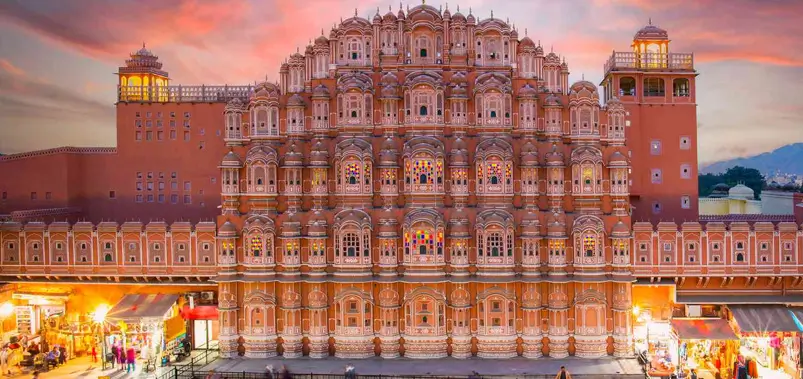
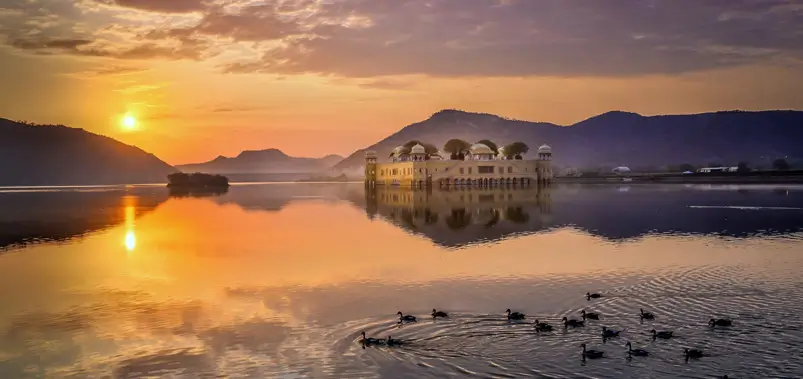
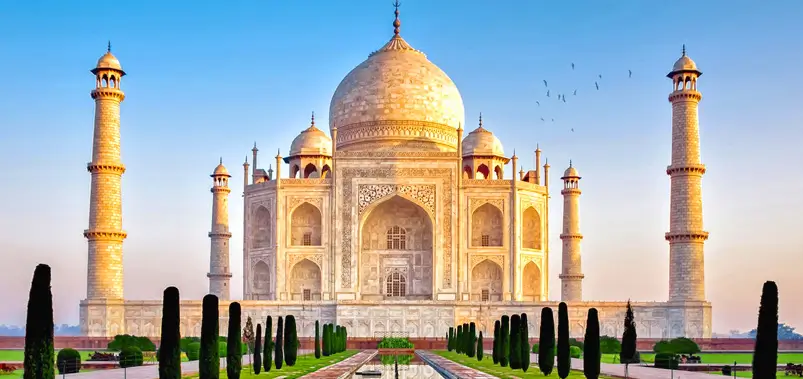
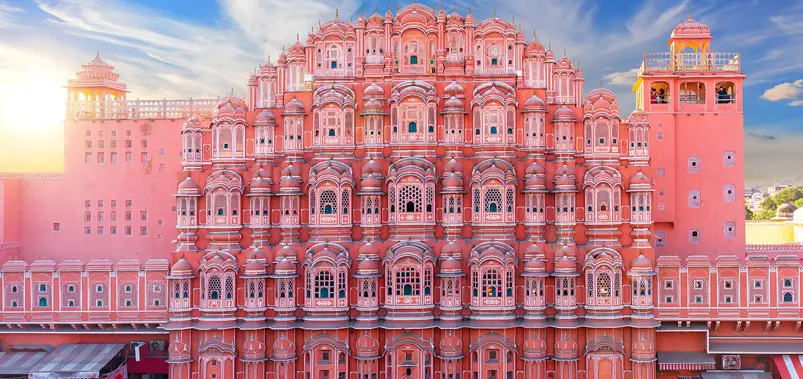
That extra time is far better spent further south and west. Air in Jaipur is usually Moderate in winter, with occasional Poor days, and the peaks are far lower than Delhi's. Cities deeper in Rajasthan, such as Udaipur, Jodhpur and Jaisalmer, generally enjoy clearer skies again, with dry desert air and more wind. Agra sits on the same plain as Delhi and can have heavy days in November and December, so a single night there, timed for the Taj Mahal at sunrise or mid morning, is the sensible choice. Shifting nights from the capital to the air quality in Jaipur and the wider state is the most effective change most travellers can make, and it costs nothing extra. You can read more about the city's sights and timing on our Delhi destination page.
Timing within the day matters almost as much as the number of days. Pollution tends to be at its worst late at night and in the early morning, when the inversion layer is lowest, and it eases from late morning as the sun warms the ground and lifts the trapped air. The best time of day for sightseeing in Delhi in winter is therefore roughly 11am to 4pm. Save early morning walks and sunrise photography for Rajasthan, and treat Delhi evenings as time for a good dinner rather than a long stroll.
On heavy days, lean on indoor attractions in Delhi. The National Museum on Janpath has superb galleries of sculpture, miniature paintings and Harappan finds, and is closed on Mondays. The National Crafts Museum near Pragati Maidan, the Pradhanmantri Sangrahalaya at Teen Murti and the National Gallery of Modern Art are all mostly indoors. The Akshardham complex has indoor exhibitions, also closed on Mondays. A long lunch at a hotel restaurant, a cookery class, or shopping in air conditioned spaces such as the better stores in Khan Market or the state government emporia on Baba Kharak Singh Marg can fill an afternoon comfortably.
A good driver and guide will reshuffle the day based on the morning reading without fuss, and Golden Triangle Tours can arrange a private car and guide who adapt each Delhi day to the conditions. Finally, think about the season edges. Late October and the second half of January to February usually bring better air than November and December, so if your dates are flexible, shifting them by a few weeks can make a noticeable difference.

We promise you a holiday where everything is taken care of from the moment you land. Trusted drivers waiting for you, handpicked hotels that fit your style, personalized itineraries designed just for your family, and a dedicated team on call 24/7. All you need to do is relax, explore, and create unforgettable memories, while we take care of every detail behind the scenes.
For most healthy adults on a short visit, yes, provided you limit time outdoors on Very Poor days, wear a well fitted N95 or FFP2 mask outside and sleep in a room with a purifier. Travellers with lung or heart conditions, pregnant women, young children and older visitors should ask their own doctor before travelling.
In November and December the daily AQI usually sits in the 300s, the Very Poor band, with spells above 400 during still, foggy weather. Afternoon readings are often lower, and windy or rainy days can drop the figure to the 200s.
November is typically the worst month, combining stubble smoke, the Diwali spike and the first strong temperature inversions. December remains heavy, while late January and February usually show clear improvement.
Use the official Sameer app from the Central Pollution Control Board for Indian AQI readings, and SAFAR-Air for short forecasts. IQAir AirVisual and AQI India are useful backups, but remember IQAir uses the US scale, so its numbers differ.
No. Monuments, museums, hotels, restaurants and the Metro stay open at every stage. Stage III and IV mainly limit construction, older private cars and goods trucks, and modern tour vehicles are not affected.
Well fitted N95 or FFP2 respirators filter at least 94 to 95 per cent of fine particles. Surgical and cloth masks give very little protection, so bring a supply of proper respirators from home.
Many luxury hotels do. The Oberoi, New Delhi has filters in every room and the Taj Palace has reported in room readings in the 50s on heavy days, while most five star hotels can supply a portable purifier if you request one when booking.
Usually, yes. Jaipur is generally Moderate in winter with lower peaks than Delhi, and Udaipur, Jodhpur and Jaisalmer tend to be clearer still, which is why many travellers spend more nights in Rajasthan.
Roughly 11am to 4pm, when the sun lifts the trapped layer of air and readings are at their lowest. Early mornings and late evenings are usually the worst times to be outside.
Two nights is enough for most travellers between November and January: one full sightseeing day plus an arrival or departure. Moving the extra days to Jaipur, Udaipur or Jodhpur gives you cleaner air at no extra cost.