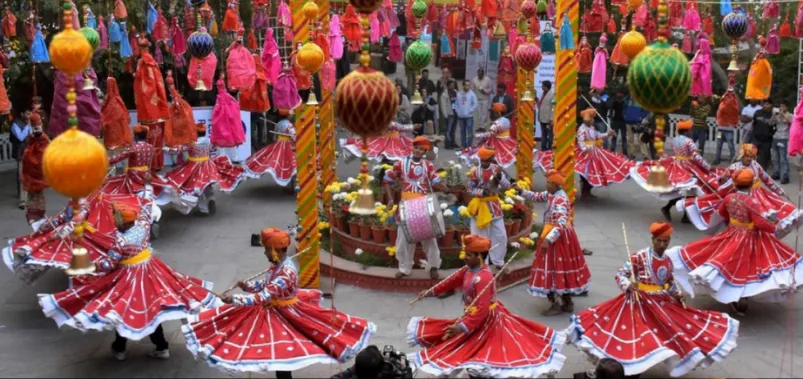
On a cold January morning in Jaipur, a queue of people in woollen shawls and trainers forms outside a hotel gate on a busy main road. Some are students with tote bags, some are retired teachers from Melbourne, and some are novelists who have just stepped off a long flight. By ten o'clock they are all sitting on lawns and in tents, listening to a Nobel laureate argue with a historian about who gets to tell a country's story. This is the Jaipur Literature Festival, and for five days each winter it turns a corner of the Pink City into the busiest reading room on earth.
The festival reaches its 20th edition this season, running from 14 to 18 January at Hotel Clarks Amer. It is free to attend for most sessions, open to anyone who registers, and easy to fold into a classic India trip. Below you will find the dates, venue, passes, speakers, hotels, weather and sightseeing advice a first-time foreign visitor actually needs, written with the practical gaps that the official website tends to skip.
The JLF 20th edition dates are Thursday 14 January to Monday 18 January. That puts two weekdays at the start, a full weekend in the middle and a quieter Monday at the end. If you can only come for part of it, Thursday and Friday are the comfortable days. Local families, college students and day visitors from Delhi arrive in large numbers on Saturday and Sunday, and the most popular sessions on those days can be standing room only by mid-morning.
For most of its life the festival was held at Diggi Palace, a heritage property inside the walled city with courtyards, painted walls and lawns that were charming but cramped. A few editions ago it moved to Hotel Clarks Amer on Jawaharlal Nehru Marg, opposite Fortis Escorts Hospital in the south of the city near Malviya Nagar. The new venue has more space, more stages and better access by car, though old regulars still miss the narrow lanes of the old site. For a foreign visitor the practical gain is real: wider walkways, cleaner toilets, better seating and a location only about 10 to 15 minutes by road from Jaipur International Airport. The trade-off is that you are around 10 kilometres from the City Palace and the old markets, so you will need a car or taxi to reach the main sights.
The theme for this anniversary year is "20 Years of Ideas. Stories. Conversations." In plain terms, the organisers are looking back at two decades since Namita Gokhale and William Dalrymple started the event with a small gathering in a single hall, and looking forward to what writing, translation and public debate will look like next. Expect sessions on Indian languages and translation, history and empire, climate, economics, memoir, science and politics, alongside fiction and poetry. In recent editions the festival has run around 300 sessions with roughly 500 speakers, and the programme for this edition is expected to be on a similar scale.
The first list of speakers was released in early October. Names confirmed in that list include the Nobel laureates Esther Duflo and Olga Tokarczuk, along with Dame Meera Syal, the BBC correspondent Lyse Doucet, the critic James Wood, the novelists Isabella Hammad, Avni Doshi, Tahmima Anam and Omar El Akkad, the mathematician Marcus du Sautoy, the palaeontologist Steve Brusatte, the Booker winner Geetanjali Shree, the author Sudha Murty and the former Chief Election Commissioner S.Y. Quraishi. More names usually arrive in two further lists before Christmas, and the full day-by-day festival programme tends to appear on the official website a few weeks before opening day.
One small but useful tip from people who come every year: download the official app or bookmark the programme page as soon as it goes live, then mark three or four sessions per day that you absolutely want. Sessions run in parallel across several venues on the grounds, and the biggest names fill the main front lawn fast. If a session matters to you, arrive at least 30 minutes early and stay in your seat through the session before it.
Explore Jaipur's magnificent forts, royal palaces and vibrant markets between festival sessions. Enjoy a personalised city experience that combines literature, heritage, culture and unforgettable discoveries.
The good news first: general entry is very cheap and in most years has been effectively free to walk in once registered. You must register online through the official site before you come, and you will receive a QR code to show at the gate. Recent third-party listings mention a small general registration fee starting at around INR 200 (about USD 2.50) for a day, with discounted student entry for the full five days at around INR 100. Fees can change for the anniversary year, so treat these as a guide and check the registration page when it opens.
General registration lets you into the daytime talks, readings and debates on all the stages, the bookshop and the food and craft stalls. It does not reserve you a seat. That is where the paid tier comes in.
A Friend of the Festival pass, which the festival used to call a delegate package, is designed largely for overseas visitors who want comfort and a little privacy. Based on published figures from recent editions, a one-day pass has started at around INR 13,500 (roughly USD 160), and a full five-day pass has cost in the region of INR 55,000 to 60,000 (about USD 630 to 700). The anniversary edition may be priced higher, so budget at the top of that range. A Friend pass usually includes:
In recent editions, Friends have also been able to book two special evenings for an extra charge: a Heritage Evening at Amber Fort and a closing Writers' Ball. Taken together these have cost roughly USD 75 extra. Both sell out, and the Amber Fort evening is one of the few chances to see the fort lit up after dark with music, candles and dinner in a courtyard, so book them at the same time as your pass.
Some hotels and tour operators sell packages that combine a Friend pass with accommodation and a hotel shuttle. If you are arriving on a long-haul flight and do not want to deal with taxis, this is often worth it. Parking at Clarks Amer is very limited for anyone who is not a pass holder, and app-based taxis surge sharply at closing time.
There is also Jaipur BookMark, the publishing industry conclave that runs alongside the festival for the first few days. It is a business event for publishers, editors, literary agents, translators and booksellers, with rights tables, panels on the book trade and networking. Delegate registration for BookMark is separate from festival registration and has started at around INR 1,500 in recent years. If you work in books, it is one of the most efficient ways to meet South Asian publishers in a single place. If you do not, you can ignore it and simply enjoy the main stages.
Most days follow the same rhythm. Gates open early, and a short morning music set usually starts the day at around 9am, with classical or folk musicians playing on the front lawn while people find seats with paper cups of tea. The first talks begin at around 10am, and sessions then run back to back until roughly 6pm, each lasting about 45 to 60 minutes. There is little dead time, so you will be choosing between parallel sessions every hour.
The talks themselves come in several formats. Big-name conversations, where a well-known author is interviewed by a journalist or fellow writer, take place on the main lawn and draw thousands. Panel debates cover history, politics, the economy, science and the environment. Smaller halls host poetry, translation and regional-language sessions, many of them in English with Hindi, Urdu, Rajasthani and other Indian-language writers. Every session ends with a short question round from the audience, and the queue for the microphone forms quickly, so stand up early if you want to ask.
After each session, the author usually goes straight to the signing area next to the festival bookshop. The bookshop is run by a large chain, stocks every speaker's titles and takes cards, though the payment queue at peak hours can take 20 minutes. If you want a signed copy of a book by a headline speaker, buy it the morning before the talk, not after.
Food on site is mainly casual stalls serving north Indian snacks, Rajasthani dishes, sandwiches, coffee and sweets. Prices are moderate, often INR 150 to 400 for a plate of food, and most stalls accept UPI payments and cards, though carrying some cash is still sensible. Lunch hour between 1pm and 2pm is the busiest, so eat a little earlier or later.
Evenings belong to music. The Jaipur Music Stage runs in the evenings with a separate ticket, recently priced from around INR 499 per night (about USD 6), and it has featured Indian classical fusion, folk bands from Rajasthan, Sufi singers, jazz and international acts. It is lively, crowded and loud in the best way. Dress warmly, because once the sun goes down, an open-air lawn in Jaipur gets cold surprisingly fast.
A few things catch first-timers out. Security checks at the gate can take 20 to 40 minutes at peak times, and large bags may be refused. Bring a small backpack, a refillable water bottle, a power bank, and a thin cushion or folded shawl, because some seating is on the ground or on hard chairs. Phone signal can drop when tens of thousands of people are in one place, so agree a meeting point with friends in advance. And do not try to see everything. The people who enjoy the festival most pick a few sessions they care about, then let the rest of the day happen around them, which is often when the best conversations start.
Visiting Jaipur from overseas? Arrange comfortable accommodation, airport transfers and private sightseeing before arrival. Enjoy the festival and discover Rajasthan with thoughtfully planned travel arrangements.
January is peak season in Jaipur, and festival week adds pressure on top. Hotels near the venue fill up months ahead, and rates during the five festival nights are often far higher than in November or February. Book as early as you can, ideally by October or early November.
The most convenient option is to stay at Hotel Clarks Amer itself. In festival week, rooms are scarce and expect around INR 15,000 to 25,000 (about USD 180 to 300) a night, if you can find one at all. The Jaipur Marriott Hotel on Ashram Marg, near Jawahar Circle, is a short drive away and a favourite with overseas Friends; budget roughly INR 18,000 to 30,000 a night in festival week. Hyatt Place Jaipur Malviya Nagar near Apex Circle is a sensible mid-range choice within about 10 minutes of the venue at around INR 9,000 to 14,000 a night. The LaLiT Jaipur on Jagatpura Road and Hotel Royal Orchid on Tonk Road are other options in the same part of town. These figures lean to the higher side for festival nights and can change quickly as dates approach.
If you would rather wake up in a palace than near a hospital and a shopping mall, stay in central Jaipur and travel in each day. Rambagh Palace, ITC Rajputana and the heritage hotels around C-Scheme and Civil Lines are about 15 to 25 minutes from Clarks Amer by car outside rush hour, and heritage mansion hotels near the old city are around 30 to 40 minutes away. In that case a private car with a driver for the day saves a lot of waiting around at the gate.
Now the weather. Jaipur weather in January is dry, sunny and pleasant in the afternoon, with average highs of around 22°C (72°F). Mornings and nights are a different story. Average lows sit around 7°C to 8°C (about 45°F), and in a cold spell the city can dip close to 4°C or 5°C before sunrise. Cold-wave alerts around Makar Sankranti are not unusual. Rain is rare, with only about one wet day in the month on average, but a passing western disturbance can bring a grey, drizzly day.
What this means in practice is layers. Sit on the lawn at 10am in a jacket, take it off at 1pm in the sun, and put it back on with a scarf and a warm hat by 5pm. Many visitors buy a soft wool shawl at the festival stalls on day one and wear it for the rest of the trip. Comfortable closed shoes are better than sandals, because you will walk several kilometres a day between stages. Indoor halls are not heated, so do not leave your warm layer in the car. Sunscreen and sunglasses still help in the middle of the day, when the light is strong and clear.
The opening day of the festival, 14 January, is also Makar Sankranti, which marks the sun's move into Capricorn and is celebrated in Jaipur as the city's kite festival. From dawn, rooftops across the old city fill with families flying paper kites, music plays from speakers, and the sky over the walled city is dotted with hundreds of colours. People shout "cut" when one kite slices another's string. At dusk, many families release paper lanterns and set off fireworks. For a foreign visitor this is one of the best days of the year to be in Jaipur, and the ideal way to see it is from a rooftop in the old city. Several rooftop cafés and heritage hotels inside the walls host kite-flying gatherings, and some tour operators arrange family rooftop visits. Note that traffic in the old city is heavy that day and many shops close early, so book your car well in advance and avoid tight timing between the rooftops and the festival venue.
A realistic approach is to spend the morning of 14 January on a rooftop, head to Clarks Amer after lunch, then use the following days for the festival. If kites appeal more than books, you could also spend two festival days and use the rest for sightseeing. This is exactly the kind of combination covered in our Golden Triangle tours with fairs and festivals.
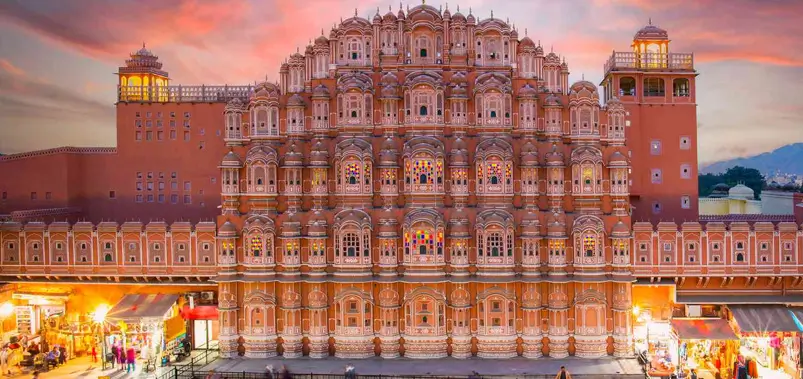
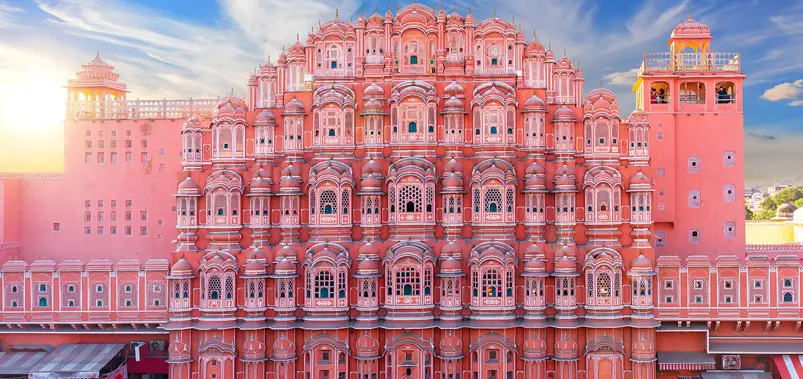
For sightseeing, Jaipur rewards two full days at least. Amber Fort is best in the early morning, ideally arriving by 8am before the tour buses, with a foreigner ticket of around INR 500 (about USD 6). The City Palace, Jantar Mantar and Hawa Mahal are close together in the old city and can be combined in a single afternoon, and a composite ticket for foreigners covers several monuments at around INR 1,000. The quieter step wells, the gardens at Sisodia Rani Bagh and the craft workshops in Sanganer, just south of the festival venue, round things out. Our Jaipur destination guide has more ideas for filling your days.
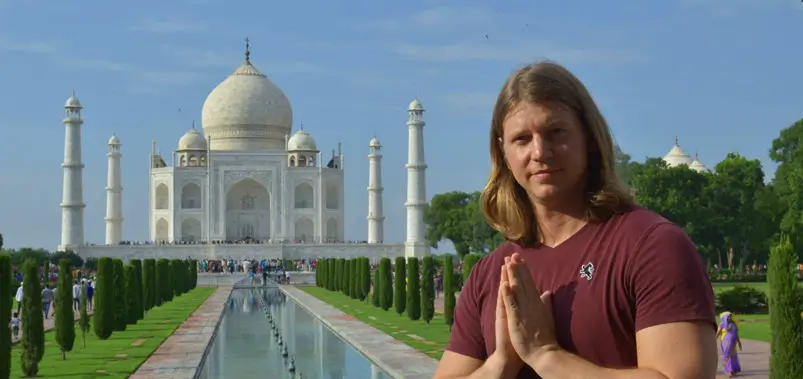
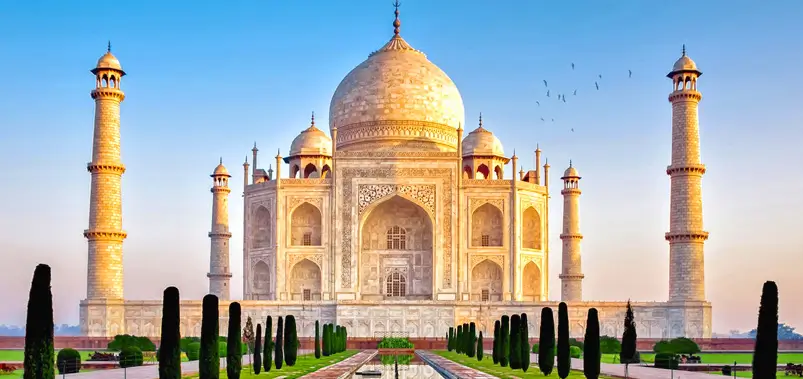
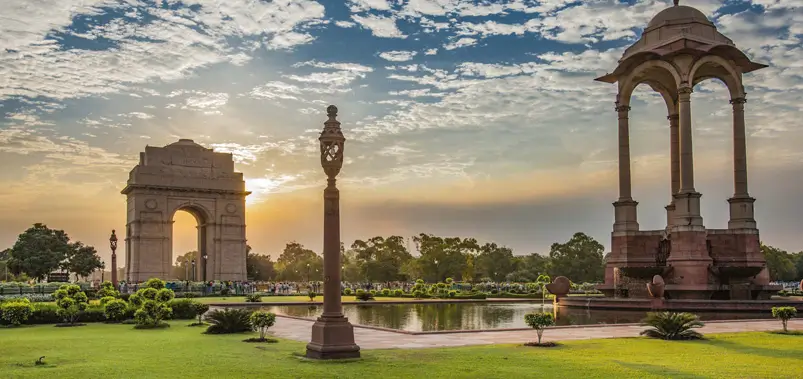
Most foreign visitors fold the festival into a Golden Triangle itinerary of Delhi, Agra and Jaipur. Delhi to Jaipur is around 280 kilometres and five to six hours by road, or under five hours on the faster trains. Jaipur to Agra is about 240 kilometres, usually around five hours with a stop at Fatehpur Sikri on the way. One sensible order is to arrive in Delhi a few days before the festival, spend two days there, drive to Jaipur by 13 January, attend the festival, then finish in Agra and return to Delhi for your flight home. That way you avoid driving on the busy festival weekend, and you see the Taj Mahal at the end of the trip when you are fully over jet lag.
A word on timing. Delhi and Agra can see dense morning fog in mid January, which sometimes delays flights and trains. Leave a buffer day before your international departure and do not schedule a sunrise Taj Mahal visit on the same day as a long drive. If you would like the whole route organised around your festival days, Golden Triangle Tours can arrange a private car with a driver and a licensed guide so the logistics stay out of your way.
We promise you a holiday where everything is taken care of from the moment you land. Trusted drivers waiting for you, handpicked hotels that fit your style, personalized itineraries designed just for your family, and a dedicated team on call 24/7. All you need to do is relax, explore, and create unforgettable memories, while we take care of every detail behind the scenes.
The 20th edition runs from Thursday 14 January to Monday 18 January at Hotel Clarks Amer, Jaipur. Sessions run daily from around 10am to 6pm, with music in the evenings. Weekdays are less crowded than the weekend.
No. The festival left Diggi Palace a few editions ago and now runs at Hotel Clarks Amer on Jawaharlal Nehru Marg, near Malviya Nagar in south Jaipur. The venue is about 10 to 15 minutes by road from Jaipur International Airport and roughly 10 kilometres from the old city.
General entry is open to everyone after online registration, with a small fee in recent years of around INR 200 a day. Foreigners pay the same as Indian visitors for general entry. Paid Friend of the Festival passes are optional and add reserved seating, a lounge and evening events.
In recent editions a one-day pass has started at around INR 13,500 (about USD 160) and a five-day pass has cost roughly INR 55,000 to 60,000 (about USD 630 to 700). Prices for the anniversary edition may be higher. The Amber Fort Heritage Evening and the Writers' Ball have been sold separately at around USD 75 for both.
The first list includes Esther Duflo, Olga Tokarczuk, Meera Syal, Lyse Doucet, James Wood, Isabella Hammad, Marcus du Sautoy, Geetanjali Shree, Sudha Murty and many others. Further lists usually follow before the end of December. The full timetable appears on the official website a few weeks before the festival.
Most sessions are in English, which makes the festival very accessible for foreign visitors. Some sessions are in Hindi, Urdu, Rajasthani and other Indian languages, and these are marked in the programme. Poetry sessions often mix languages.
Afternoons are usually sunny at around 20°C to 23°C, but mornings and evenings fall to around 5°C to 8°C. Bring a warm jacket, a scarf and closed shoes, and dress in layers. The evening music stage is outdoors and gets cold after sunset.
Yes. Makar Sankranti falls on 14 January, the festival's opening day, and the old city rooftops fill with kite flyers from dawn to dusk. Spend that morning on a rooftop in the walled city and head to the festival in the afternoon or the next day.
Two or three days is enough for most foreign visitors to enjoy the talks without fatigue. Thursday and Friday offer the easiest seating. Use the remaining days for Amber Fort, the City Palace and the rest of Jaipur.
Stay nearby and walk or take a short taxi, or book a private car with a driver if you stay in central Jaipur. App-based taxis and autorickshaws are available but surge in price at closing time. Parking at the venue is very limited for general visitors.