Most people buy travel insurance in about four minutes, late at night, a week before they fly. They tick the cheapest box, save the PDF and forget about it until something goes wrong in a hotel room in Agra at two in the morning. That is the moment the small print starts to matter. Travel insurance for India is not complicated, but it does need a little more thought than a short city break in Europe, because the distances are longer, private hospitals bill in advance, and the winter fog in Delhi can scramble flight schedules for days.
This guide works as a checklist rather than a sales pitch. We do not recommend any particular insurer. Instead, we explain what a good policy should include for a Delhi, Agra and Jaipur itinerary, which cover amounts are sensible, where travellers actually end up when they need a doctor, and how to make a claim without losing your temper. One small note on language: in this guide we say "policy", because that is the legal document you are buying, and the policy wording is what the claims team will read, not the brochure.
Start with the number that matters most: the medical limit. Healthcare in India's private hospitals is good and far cheaper than in the United States, but it is not cheap, and a serious case can run for weeks. For medical cover for India, look for a limit of at least USD 500,000 if you are buying a US-style travel medical policy. UK policies usually quote higher headline figures, and many standard worldwide policies offer GBP 5 million or GBP 10 million in medical expenses. Anything below GBP 2 million or USD 250,000 is thin for a long-haul trip, and a policy with only USD 50,000 of medical cover is really a holiday cancellation product with a little first aid attached.
Next, check emergency medical evacuation as a separate line. This pays for moving you to a better-equipped hospital, for example from Agra to a large hospital in Delhi or Gurugram, or from a wildlife lodge back to Jaipur. The US State Department estimates that an air ambulance back to the United States can cost anywhere from USD 20,000 to USD 200,000 depending on the patient's condition and the distance. A medically escorted flight from Delhi to London or New York with a doctor, a nurse and stretcher seats on a scheduled airline also costs many thousands. Aim for evacuation cover of at least USD 250,000, and USD 500,000 or more if you are older or have a heart or lung condition.
Repatriation cover is the related clause that gets you home once you are stable but cannot fly alone, and it should also cover the return of remains in the worst case. Read who decides the timing. Most insurers say their own medical team, in discussion with the treating doctor, decides when and how you travel. That is normal, but it means you should call the assistance line before booking any flight yourself, otherwise the cost may not be paid back.
Things to tick on the medical page of the schedule:
Remember that your home health cover rarely follows you here. The UK GHIC card does not work in India, and US Medicare generally does not pay for treatment outside the United States. Some private health insurers at home include limited overseas emergency cover, but it is often capped and almost never includes evacuation. A quick email to your own health insurer asking "Am I covered for inpatient care and medical evacuation in India?" will save a lot of guessing.
Finally, think about the length of your trip. Many travellers add Ranthambore, Udaipur or Varanasi to the classic circuit, and each extra day in a remote area makes evacuation cover more valuable, because the nearest large hospital may be a three or four hour drive away.
Knowing where you would go helps you judge whether the policy limits are realistic. In Delhi, the large private hospitals that international visitors are most often taken to include Indraprastha Apollo Hospital at Sarita Vihar, Max Super Speciality Hospital at Saket, Fortis Escorts Heart Institute at Okhla, Sir Ganga Ram Hospital in Rajinder Nagar and Medanta in Gurugram, which is handy for hotels near the airport. Most of these have international patient desks that deal directly with foreign insurers and can arrange interpreters. These private hospitals in Delhi are where serious cases from Agra are often transferred, because the drive along the Yamuna Expressway takes about three hours.
In Jaipur, travellers are usually taken to Fortis Escorts Hospital or Eternal Hospital, both in Malviya Nagar, or to Narayana Multispeciality Hospital and Manipal Hospital. The Sawai Man Singh Hospital, known to everyone as SMS, is the city's main government hospital. It is very experienced with trauma and is often the first stop after a road accident, but it is crowded, and most foreign travellers are moved to a private hospital once stable. In Agra, Pushpanjali Hospital and the Ujala Cygnus Rainbow Hospital are the private options hotels tend to suggest, with S. N. Medical College as the government teaching hospital.
So what does treatment actually cost? Prices vary widely, change often and are usually higher for walk-in foreign patients, so treat these as rough figures leaning to the higher side:
A published inpatient tariff from one Delhi hospital chain lists a single room at a little over INR 15,000 per day and an ICU bed at over INR 21,000 per day, and those numbers exclude surgeons, drugs and scans. Add a heart attack, a stroke or a serious road injury and bills climb into many hundreds of thousands of rupees within a week.
Here is the practical point. Private hospitals in India normally ask for a deposit at admission. A typical scene: a traveller from Manchester arrives at an emergency desk in Jaipur with a high fever, and the cashier asks for INR 50,000 before a room is allotted. If your insurer has already sent a guarantee of payment, that request disappears. If not, you pay by card and claim later. Carry a credit card with a decent limit for this reason alone, and know where your policy number is without having to search your inbox.
Medical cover protects your health. The next section of the policy protects your money. Trip cancellation cover pays back non-refundable costs if you have to cancel before you leave for an insured reason, such as illness, a death in the family, jury service or redundancy. Private tours of India are usually paid in stages, with hotels, guides and internal flights booked well ahead, so set the cancellation limit at or above the total cost of your trip, including international flights. A couple paying GBP 9,000 for flights and a two-week private tour should not have a policy with GBP 3,000 of cancellation cover.
Trip interruption, sometimes called curtailment, pays for the unused part of your trip and extra travel costs if you must come home early. Read whether it pays for the whole unused portion or only a pro-rata amount, and whether it covers a relative's illness at home.
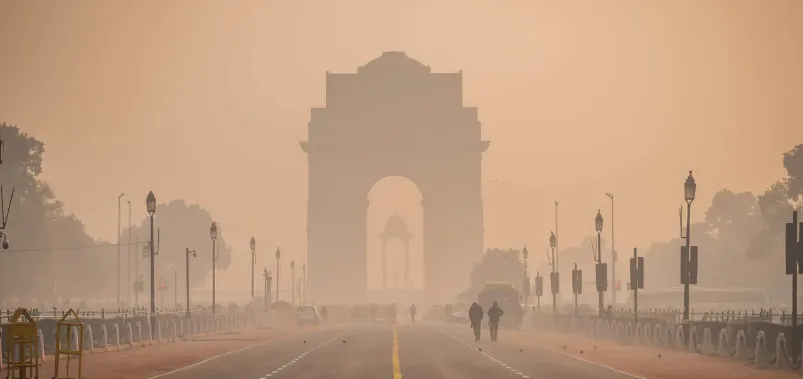
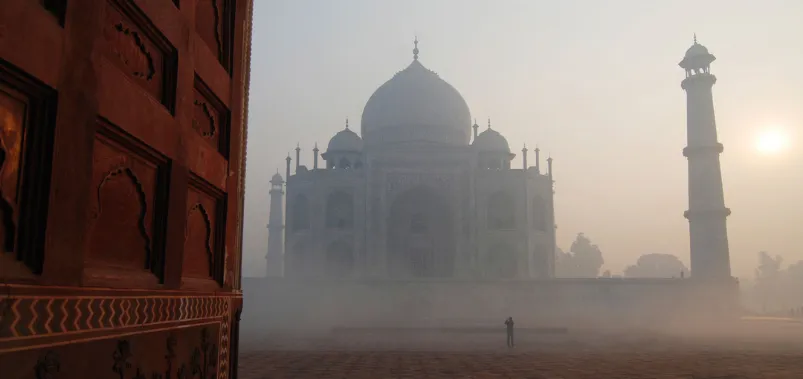
Winter fog deserves its own paragraph. From roughly mid-December to early February, dense morning fog across north India regularly causes delays, diversions and cancellations at Delhi's Indira Gandhi International Airport. Some winter mornings see well over a hundred flights cancelled or held. Pilots and aircraft need special low-visibility certification, and not every flight has it. If you land in Delhi at dawn in January, a three-hour hold or a diversion to Jaipur or Lucknow is not unusual. Trains on the Delhi to Agra line also run late in thick fog.
This is where travel delay cover helps. Check three details:
A useful habit for winter travel is to leave a full day between arriving in Delhi and any internal flight or fixed booking such as a sunrise visit to the Taj Mahal. Fog is a known event, so insurers will pay for the delay but may argue that a tight connection was your own risk.
Lost, stolen or delayed luggage is the most common small claim. For a lost baggage claim, the policy will want a Property Irregularity Report from the airline desk before you leave the arrivals hall at Delhi, so do not walk out without one. Check the single item limit, which is often only GBP 250 to 500 or USD 500. If you are bringing an expensive camera, laptop or jewellery, list them separately or check whether your home contents insurance covers them abroad. Delayed baggage cover usually pays for essentials such as clothes and toiletries after 12 hours; keep every receipt.
For theft in a market or on a train, report it at the nearest police station within 24 hours and ask for a written report, sometimes called a First Information Report. Without that piece of paper most claims are refused. Your tour guide or hotel can help with the visit.
Every policy has a list of things it will not pay for, and this is where many travellers get caught. On a Golden Triangle tour the usual suspects are a hot air balloon over Jaipur, a jeep safari in Ranthambore, an elephant or camel ride, a zip line at a fort, cycling through old Delhi lanes or a quad bike in the dunes near Jaisalmer.
Most standard policies cover a list of gentle activities, and many include camel or elephant rides as long as they are run by a licensed operator. Hot air balloon cover is less predictable. Some insurers include it as a passenger on a commercial flight; others treat any air sport as excluded or as an add-on. Wildlife safaris in a vehicle with a registered guide are usually covered, but walking safaris, getting out of the vehicle against park rules, or self-driven trips may not be. Read the activity list, search the policy document for the words "balloon", "safari" and "riding", and if anything is unclear, email the insurer and keep the reply. Those adventure activity exclusions are normally listed in a table at the back of the wording.
Road travel matters too. Most claims involving road accidents are paid without fuss when you are a passenger with a licensed driver, as you would be on a private tour. They become harder if you were driving a scooter without a valid motorcycle licence, or if you were not wearing a helmet. The policy wording will usually say so plainly.
Alcohol is the other big exclusion. A fall on hotel stairs after several cocktails can turn a valid claim into a refused one if the medical report notes intoxication. Insurers do not expect a dry holiday, but they do read the notes.
Pre-existing medical conditions are the single most common reason for a claim being refused. You must declare any condition you have been treated for, prescribed medicine for, or referred to a specialist for, usually in the last two to five years. That includes high blood pressure, diabetes, asthma, heart problems, past cancers and sometimes anxiety or depression. Declaring may raise the premium, but failing to declare can cancel cover for everything, not just the related condition. If your doctor has changed your medicine or ordered tests since you bought the policy, call the insurer and update the declaration before you travel.
Older travellers should check the age bands. Premiums rise sharply after about 70, and some policies limit trip length or medical cover for travellers over 75. Specialist insurers for older travellers exist in most markets and are worth comparing.
Finally, check the government travel advice clause. If your government advises against travel to an area and you go anyway, cover may lapse. The classic Golden Triangle route is not normally affected, but it is worth a look before adding any border region.
When you are admitted to hospital in India there are two ways the bill can be settled. Cashless hospitalisation means the hospital deals directly with your insurer's assistance company. You call the 24-hour line, give your policy number, the hospital's international desk sends the medical report, and the insurer sends a guarantee of payment. You may pay only the excess and anything not covered. Large hospitals in Delhi, Gurugram and Jaipur do this daily, but it can take a few hours, and in a smaller town it may not be possible at all.
The other route is a reimbursement claim. You pay the hospital yourself, collect every document, and claim when you get home. This is common for outpatient visits, pharmacy bills and small emergencies. It works well, provided you keep the paperwork.
For any medical event, call the assistance line as soon as you safely can. Most policies require you to notify them of any admission or any treatment above a set amount, often USD 500 or GBP 500. Late notice is a common reason for reduced payouts.
Documents to keep in a single folder, paper and phone copies:
To claim, most insurers now use an online form. Fill it in within the deadline in your policy, often 30 days after you return, upload clear scans, and keep copies of everything you send. If a claim is partly refused, ask for the reason in writing and quote the exact clause back to them. UK travellers can take an unresolved complaint to the Financial Ombudsman Service; most other countries have a similar insurance ombudsman or regulator.
Your tour operator also plays a part. On a private tour, Golden Triangle trip insurance claims are easier to manage when someone local can drive you to the right hospital, speak to the front desk and help with reports. If you are booking one of our Golden Triangle tours, share your policy number and assistance line with us before arrival so your driver and guide have them on hand. A small task, and in an emergency it saves real time.
One last tip from experience: read your policy wording once, from start to finish, with a cup of tea, before you fly. It takes about forty minutes. It is the only document that decides whether a claim is paid, and travellers who have read it make calmer decisions at three in the morning in a hospital corridor.
We promise you a holiday where everything is taken care of from the moment you land. Trusted drivers waiting for you, handpicked hotels that fit your style, personalized itineraries designed just for your family, and a dedicated team on call 24/7. All you need to do is relax, explore, and create unforgettable memories, while we take care of every detail behind the scenes.
India does not currently require proof of travel insurance for a tourist e-visa. It is still strongly advised, because private hospitals expect payment upfront and evacuation costs can be very high. Some tour operators also ask for policy details before arrival.
Look for at least USD 500,000 or GBP 5 million in medical expenses, with separate emergency evacuation cover of USD 250,000 or more. Older travellers or those with heart or lung conditions should go higher. Cheap policies with USD 50,000 of medical cover are not enough for long-haul travel.
No. The UK GHIC card is not valid in India, and US Medicare generally does not pay for care outside the United States. You need a separate travel insurance policy.
In Delhi, common choices include Indraprastha Apollo, Max Saket, Fortis Escorts and Medanta in Gurugram. In Jaipur, Fortis Escorts and Eternal Hospital in Malviya Nagar are often used, and in Agra, Pushpanjali and Ujala Cygnus Rainbow Hospital. Serious cases from Agra are frequently moved to Delhi.
Many policies pay travel delay benefits after a set number of hours, often 6 to 12, and some cover missed connections. Fog is a known winter risk, so leave a buffer day between your arrival and any onward flight. Keep the airline's delay letter for your claim.
It depends on the insurer. Some include balloon flights as a passenger with a licensed commercial operator, others exclude all air activities or sell them as an add-on. Check the activity list in your policy wording and get any confirmation in writing.
Jeep safaris in national parks with a registered guide are usually covered, and many policies include camel and elephant rides with licensed operators. Walking safaris or leaving the vehicle against park rules may not be covered. Read the activity table before you travel.
The insurer can refuse any related claim and, in many cases, cancel the policy entirely. Declare every condition you have been treated or medicated for in the period the insurer asks about. A higher premium is far cheaper than an unpaid hospital bill.
With cashless treatment, the hospital bills your insurer directly after the assistance company issues a guarantee of payment. With reimbursement, you pay first and claim back later with receipts and reports. Large private hospitals in Delhi and Jaipur handle cashless cases daily.
You need a written police report from the station nearest to where the theft happened, ideally within 24 hours. Add receipts or bank statements for the stolen items and photos if you have them. Your guide or hotel can help you visit the police station.