How to Choose the Best India Tour Company: 15 Questions to Ask Before You Book
16 Sep 2026

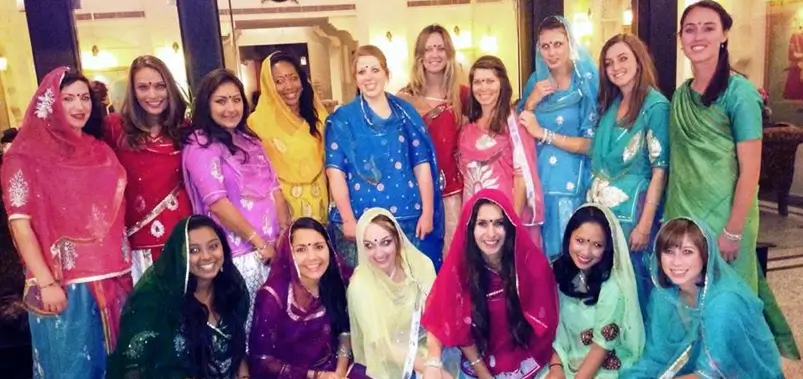
Jaipur's temples are not museum pieces. They are living, active places of worship, visited daily by locals for prayer, ritual, and reflection, and stepping into one as a tourist means stepping into someone else's sacred space. Getting what to wear when visiting temples in Jaipur right is less about following a rigid rulebook and more about understanding the underlying principle: modesty as a sign of respect.
The good news for travellers is that North Indian temple etiquette, including in Jaipur, is generally more relaxed than some of the stricter regional traditions found in parts of South India. There is rarely a single, universally enforced dress code, but there are clear, consistent expectations that, once understood, are easy to meet without needing to buy a special wardrobe or feel anxious before every temple visit.
This guide covers exactly what to wear, what to avoid, footwear considerations, and the small etiquette details that make a real difference to how comfortable, and how welcome, your temple visits in Jaipur will feel.
If there is one rule that applies almost universally across temple dress code Jaipur expectations, it is this: shoulders and knees should be covered, for both men and women.
This does not mean formal or restrictive clothing. A simple t-shirt or shirt with sleeves, paired with trousers, a long skirt, or a maxi dress that falls below the knee, satisfies this expectation comfortably in most temples. The goal is modesty, not formality, loose, breathable clothing that covers these areas works just as well as anything more elaborate.
For women specifically, avoiding anything tight, sheer, or low cut is part of the same principle. A loose kurta or tunic over leggings or trousers is a reliable, comfortable choice that works for temple visits as well as general sightseeing throughout the day, meaning you do not need to plan separate outfits depending on whether a temple is on the itinerary.
For men, knee length shorts are generally acceptable in more relaxed settings, but full length trousers are the safer default for any temple visit, particularly at more significant or actively used temples.
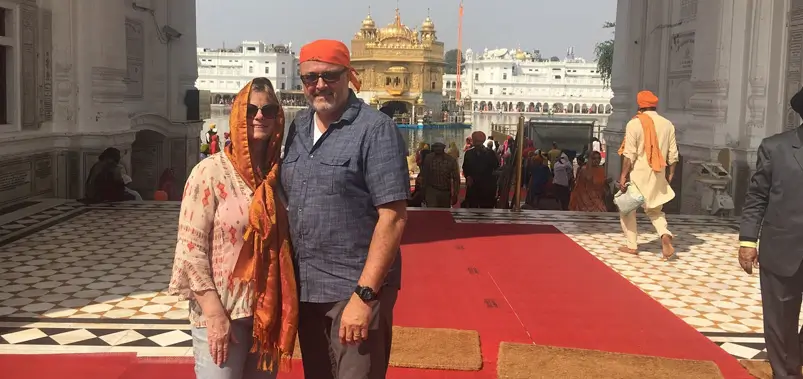
If there is one item worth packing specifically with what to wear in Indian temples in mind, it is a lightweight scarf or dupatta. This single piece of fabric solves multiple problems at once: it can cover shoulders if your top is sleeveless, it can be used as a head covering where required, and it doubles as sun protection during the rest of the day.
Many temples in Jaipur do not strictly require head covering for visitors of any gender, but some do, particularly during specific ceremonies or in certain inner sanctums, and having a scarf on hand means you are never caught without an option. Locals frequently cover their heads as a gesture of respect even where it is not strictly enforced, and doing the same, simply by draping a scarf loosely, is an easy way to show the same consideration.
Some temples also offer free cloth or wrap rentals near the entrance for visitors who arrive underdressed, but relying on this is less convenient than simply carrying your own scarf, particularly during busier periods when rental items may be in short supply.
Shoes come off before entering a Hindu temple in Jaipur, as is standard across India, and this is one of the most practical considerations for temple visit attire India travellers often overlook until they are standing at the entrance.
Footwear that is easy to slip on and off, sandals, slip on shoes, or juttis (traditional Indian slip ons), makes this process far smoother than lace up shoes or boots, especially at busier temples where there may be a queue at the entrance.
The temple floor itself, often marble, can become uncomfortably hot underfoot during the afternoon, particularly in warmer months. Locals sometimes wear a clean pair of socks for this reason, which is entirely acceptable and a practical solution worth keeping in mind, particularly for midday temple visits.
A small bag for carrying your shoes, or simply leaving them at a designated shoe storage area near the entrance, which most temples provide, is the standard approach. Larger bags may need to be left at the entrance entirely at some temples, so a smaller cross body bag or pouch is more practical than a large daypack for temple visits specifically.
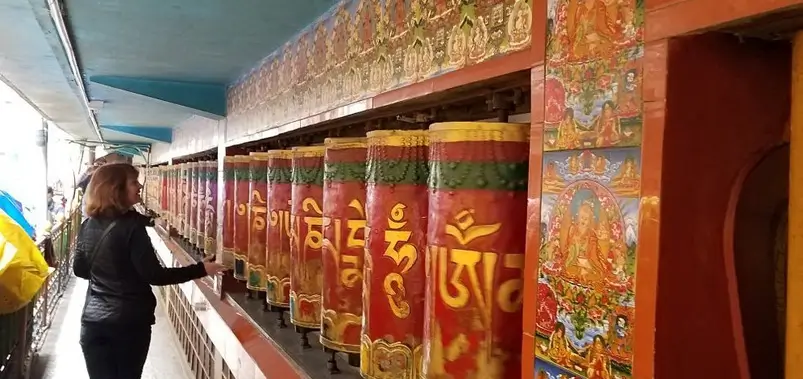
Jaipur's climate plays a real role in modest clothing Jaipur temples decisions, particularly during the hotter months from April through June, when temperatures can be intense.
Lightweight, breathable fabrics, cotton, linen, or lightweight chanderi silk, are the practical choice, allowing modest coverage without becoming uncomfortably hot. Loose fitting kurtis paired with palazzos or long skirts work well for women, offering coverage, comfort, and ease of movement, useful given that temple visits often involve sitting on the floor, bending, or climbing steps.
During the cooler months, October through February, a kurta with trousers or jeans, layered with a shawl or light jacket, provides both warmth and the modesty appropriate for temple visits, with the added benefit that the same shawl doubles as a head covering if needed.
Heavy jewellery is generally best avoided for temple visits, both for practical reasons (temples often involve some degree of crowding and movement) and because simpler attire is more in keeping with the contemplative nature of the space.
This is a detail that catches many travellers by surprise: some temples, particularly those associated with Jain traditions, which are well represented in Rajasthan, prohibit leather items entirely, including belts, wallets, and bags, due to the religious reverence for cows and the broader principle of non-violence central to Jain belief.
If your itinerary includes a Jain temple, it is worth checking in advance whether leather items need to be left outside or with a driver, and planning accordingly, a simple fabric bag or pouch as a backup avoids any last minute scrambling at the entrance.
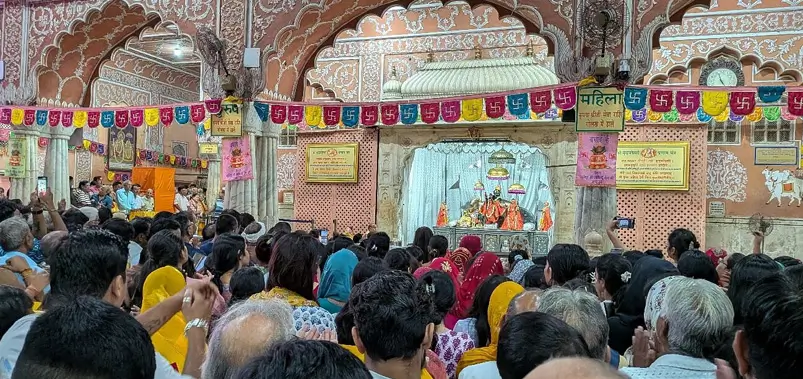
While Jaipur's temples are visually striking, and the urge to photograph their architecture, frescoes, and ceremonies is understandable, photography rules vary considerably between temples and even between different areas within the same temple complex.
Some temples welcome photography of their exterior architecture and courtyards but restrict it within inner sanctums or during active ceremonies. Others restrict photography throughout. Looking for posted signs, or simply observing what other visitors are doing, is the easiest way to gauge what is appropriate at any given temple, and when in doubt, asking a temple staff member or your guide before raising a camera is always the respectful approach.
For most travellers, a single outfit formula covers the vast majority of temple visits in Jaipur without requiring separate "temple clothes." A loose kurta or long sleeved top that covers the shoulders, paired with trousers, palazzos, or a long skirt that falls below the knee, slip on footwear, and a scarf or dupatta carried in your bag, covers nearly every situation you are likely to encounter.
This combination also happens to be comfortable for general sightseeing throughout Jaipur, walking through bazaars, visiting forts, and spending time outdoors, which means dressing appropriately for temples does not require packing anything separate from what works well for the rest of your day.
Post Date : 📅 16 Jun 2026

We promise you a holiday where everything is taken care of from the moment you land. Trusted drivers waiting for you, handpicked hotels that fit your style, personalized itineraries designed just for your family, and a dedicated team on call 24/7. All you need to do is relax, explore, and create unforgettable memories, while we take care of every detail behind the scenes.
Some temples offer free cloth or wrap rentals for visitors who need additional coverage, though this can be inconsistent, and carrying your own scarf is more reliable.
Heavy jewellery is generally best avoided for temple visits, both for practical comfort and to keep with the contemplative atmosphere of the space.
Lightweight, breathable fabrics such as cotton, linen, or lightweight chanderi silk offer modest coverage without being uncomfortable in warm weather.
This varies by temple and by area within a temple. Look for posted signage, observe other visitors, or ask staff before photographing, particularly inside inner sanctums or during ceremonies.
No. Some temples, particularly Jain temples, prohibit leather items such as belts, wallets, and bags due to religious principles regarding non-violence.
Wearing clean socks is acceptable and practical, particularly during hot weather when marble temple floors can become uncomfortably warm underfoot.
Smaller bags are generally fine, though some temples may ask visitors to leave larger bags at the entrance. A small cross-body bag is more practical for temple visits.
Sleeveless tops are best avoided or covered with a scarf, as bare shoulders are one of the most commonly flagged issues at temple entrances.
Yes, short-sleeved shirts are generally acceptable for men, as long as they are paired with full-length or knee-length trousers.
Politely comply. Many temples offer free cloth wraps for visitors who arrive underdressed, though carrying your own scarf avoids any inconvenience.
Yes. Jain temples in particular often have additional restrictions, including prohibitions on leather items, and some temples may enforce stricter rules during specific festivals or ceremonies.
Yes. A loose top or kurta that covers the shoulders, paired with leggings or trousers that cover the legs, is a comfortable and widely acceptable option for temple visits.
Yes. Shoes are removed before entering Hindu temples in Jaipur, and most temples provide a designated area for shoe storage near the entrance.
Knee-length shorts are acceptable at some more relaxed temples, but full-length trousers or long skirts are the safer choice, particularly at more significant or actively used temples.
Not always, but some temples do require it, particularly during certain ceremonies. Carrying a scarf or dupatta means you are prepared either way.