Golden Triangle Tour for Large Groups: Coach, Hotels & Group Package Pricing
14 Sep 2026

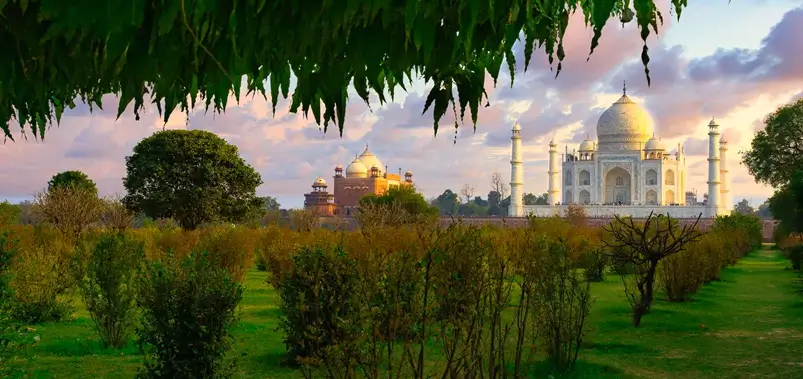
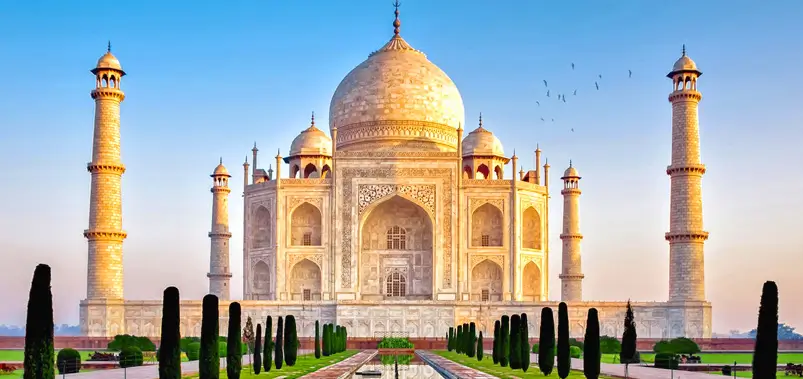
Every visitor dreams of seeing the Taj Mahal from its famous front gardens, but relatively few cross the Yamuna River to experience one of Agra's most peaceful viewpoints. While the Taj Mahal itself attracts thousands of visitors every day, Mehtab Bagh offers an entirely different atmosphere. Instead of walking through crowded pathways and waiting for photographs, visitors find open green gardens, uninterrupted river views, and a panoramic perspective of the white marble monument that many travellers never experience.
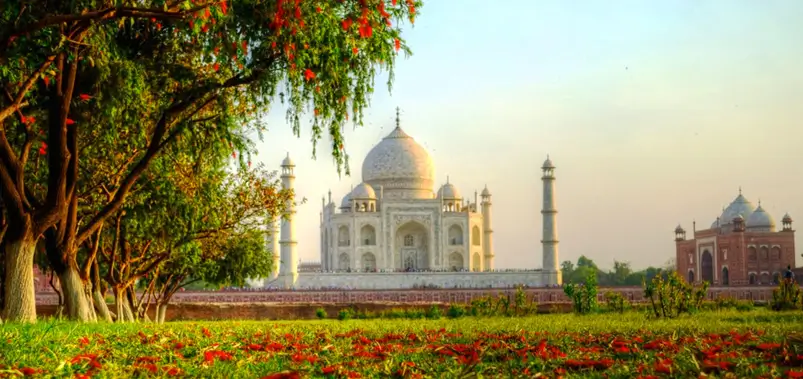
Located directly opposite the Taj Mahal on the northern bank of the Yamuna River, Mehtab Bagh was originally designed as part of the Mughal garden system. Historians believe Emperor Shah Jahan intended this riverside garden to complement the Taj Mahal, creating perfect visual symmetry across the river. Today, the garden remains one of the finest places to admire the monument, especially during the late afternoon when changing sunlight transforms the marble into shades of ivory, gold, and soft pink before sunset.
For photographers, honeymoon couples, luxury travellers, and anyone seeking a quieter experience, Mehtab Bagh offers advantages that the main monument cannot always provide. Since entry numbers remain significantly lower than the Taj Mahal itself, visitors enjoy far more space to appreciate the architecture without constantly moving around large tour groups.
Many experienced photographers schedule two separate visits during their stay in Agra—one at sunrise inside the Taj Mahal and another at sunset from Mehtab Bagh. This combination provides two completely different perspectives of India's most famous landmark while avoiding the busiest visitor periods.
Unlike many attractions that simply serve as viewpoints, Mehtab Bagh is an important historical monument in its own right. Walking through its carefully restored gardens reveals the sophisticated landscape design of the Mughal Empire, where rivers, gardens, and architecture combined to create perfectly balanced scenery. The alignment between Mehtab Bagh and the Taj Mahal remains so precise that visitors standing at the central platform can photograph the monument almost perfectly framed across the Yamuna River.
Whether you are travelling on a luxury Golden Triangle Tour, enjoying a private holiday through North India, or spending a night in Agra, including Mehtab Bagh in your itinerary provides a more complete understanding of the Taj Mahal's architectural setting.
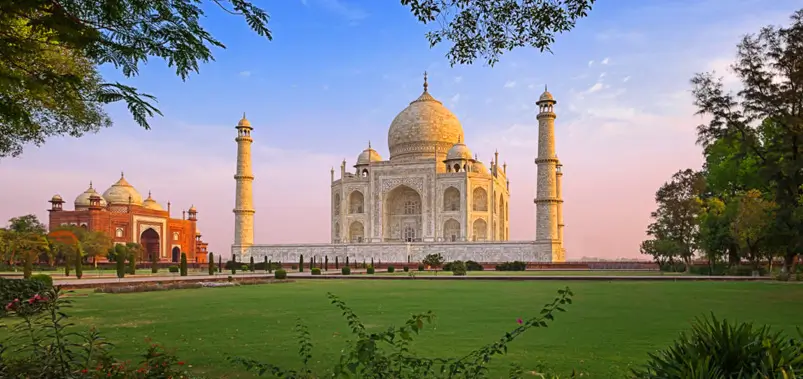
Most visitors leave the Taj Mahal shortly after completing their morning tour, believing they have already seen the monument from every important angle. In reality, the riverside perspective from Mehtab Bagh reveals an entirely different character of the monument.
Unlike the crowded central gardens inside the Taj Mahal complex, Mehtab Bagh offers wide open spaces where visitors can enjoy uninterrupted views across the Yamuna River. The absence of large marble structures between the garden and the monument allows photographers to capture the complete silhouette of the Taj Mahal without surrounding buildings dominating the composition.
The most magical period begins approximately 90 minutes before sunset. During this time, the changing angle of sunlight gradually softens the brilliant white marble. Depending on weather conditions, the monument often reflects warm golden tones before shifting toward pale orange and gentle pink as the sun approaches the horizon. On clear evenings, these subtle colour changes create some of the finest landscape photographs available anywhere in Agra.
The peaceful atmosphere is another major advantage. While thousands of visitors continue exploring the Taj Mahal grounds, only a fraction choose to visit Mehtab Bagh. Families can walk comfortably through the landscaped gardens, couples can enjoy quiet moments overlooking the river, and photographers have enough room to position tripods in permitted areas outside restricted zones without constantly adjusting around heavy crowds.
The garden also provides one of the best opportunities to appreciate the symmetry that defines Mughal architecture. Standing on the central viewing platform reveals how precisely the Taj Mahal aligns with the garden across the Yamuna River. This perspective helps visitors understand that the Taj Mahal was never intended to exist as an isolated building but as part of a much larger architectural vision.
Unlike sunrise photography, which requires extremely early departures, sunset visits are easier for most international travellers. Visitors can spend the morning exploring Agra Fort, enjoy lunch at one of Agra's luxury restaurants, relax at their hotel during the warmest part of the day, and then arrive at Mehtab Bagh in the late afternoon for a completely different experience.
Weather conditions also influence the quality of sunset views. Between October and March, clear skies often produce the finest visibility, while summer evenings occasionally create dramatic orange sunsets through light atmospheric haze. During the monsoon season, changing cloud formations sometimes provide spectacular reflections across the river, creating unique photographic opportunities that differ from the clearer winter landscape.
Professional photographers frequently recommend arriving at least one hour before sunset rather than arriving exactly at sunset. This allows enough time to walk through the gardens, choose the best camera position, observe how the light changes across the marble surface, and capture multiple stages of the evening without feeling rushed.
Visitors should also remember that the Yamuna River itself contributes to the beauty of the landscape. Depending on seasonal water levels, reflections of the Taj Mahal occasionally appear across the river, adding another visual element rarely experienced inside the main monument complex.
The combination of open gardens, peaceful surroundings, changing evening light, and uninterrupted architectural views explains why many experienced travellers consider Mehtab Bagh the finest location for appreciating the Taj Mahal from outside its famous marble walls.
One of the advantages of visiting Mehtab Bagh is its simple entry process. Unlike the Taj Mahal, where visitors often spend considerable time passing through security and waiting in queues, Mehtab Bagh generally remains much quieter throughout the day.
The garden usually opens at 6:00 AM and closes at 6:00 PM, although operating hours may vary slightly depending on seasonal daylight and Archaeological Survey of India regulations. Since sunset changes throughout the year, visitors should avoid arriving too late in the evening. Reaching the entrance at least 60–90 minutes before sunset provides enough time to explore the gardens comfortably before closing.
Current entry charges are approximately:
| Visitor Category | Ticket Price |
| Indian Citizens | ₹30–₹35 |
| Foreign Tourists | ₹300 |
Children within the applicable government age limits may qualify for free or discounted entry according to current regulations.
Tickets are available at the entrance counter, and waiting times are usually minimal compared with the Taj Mahal. Even during the peak tourist season, visitors often complete the ticket purchase and security check within 10–15 minutes.
The average visit lasts between 45 minutes and 1.5 hours, although photography enthusiasts frequently stay longer, particularly during the changing light before sunset.
For visitors travelling by private vehicle, parking is available near the entrance area. Those staying at hotels near the Taj Mahal can usually reach Mehtab Bagh within 10–20 minutes by car, depending on local traffic conditions.
Approximate travel distances:
| Starting Point | Distance | Driving Time |
| Taj Mahal East Gate | 7 km | 20–25 minutes |
| Agra Fort | 6 km | 15–20 minutes |
| Agra Cantt Railway Station | 9 km | 25–30 minutes |
| Fatehabad Road Hotels | 6–8 km | 20–25 minutes |
Unlike the Taj Mahal, where large crowds often influence your experience, Mehtab Bagh offers a much more relaxed schedule. Visitors can walk slowly through the landscaped gardens, spend time observing the monument from different viewpoints, and enjoy one of Agra's most peaceful settings without constantly competing for space.
The best months for photography are generally between October and March, when cooler temperatures and clearer skies provide excellent visibility. However, every season offers a different atmosphere, making Mehtab Bagh worth visiting regardless of the time of year.
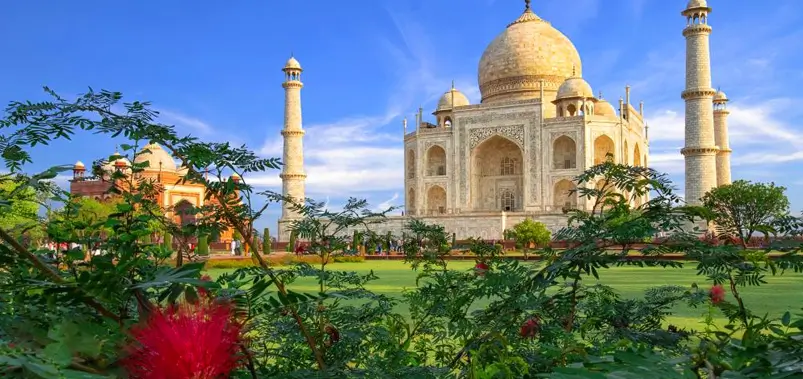
Many visitors think of Mehtab Bagh as simply a garden with a beautiful view of the Taj Mahal, but its history is far more significant. It was never designed as an afterthought or a public park. Instead, it formed an important part of the Mughal Empire's carefully planned landscape, where architecture, rivers, and gardens were combined to create perfect visual balance.
The name Mehtab Bagh translates to "Moonlight Garden." Built on the northern bank of the Yamuna River, the garden was laid out in the traditional Charbagh style, a Persian inspired four part garden design that became one of the defining features of Mughal architecture. Water channels, symmetrical pathways, flowering plants, fruit trees, and shaded walkways were all arranged according to geometric principles that symbolised harmony and paradise.
When Emperor Shah Jahan commissioned the construction of the Taj Mahal in memory of his wife Mumtaz Mahal, the surrounding landscape received almost as much attention as the monument itself. The Yamuna River was not viewed as a barrier but as an essential part of the overall composition. From Mehtab Bagh, the Taj Mahal appears perfectly aligned with the garden's central axis, demonstrating the extraordinary planning that characterised Mughal architecture.
For many years, historians debated whether Shah Jahan intended to build a second mausoleum made from black marble on the opposite side of the river. This popular story became known as the "Black Taj Mahal" legend. According to the tale, the emperor planned to construct an identical black marble monument for himself, connected to the white Taj Mahal by a bridge across the Yamuna.
Modern archaeological excavations, however, have found no convincing evidence that such a monument was ever under construction. Instead, excavations carried out by the Archaeological Survey of India (ASI) revealed restored garden layouts, water channels, fountains, boundary walls, and pathways that confirmed Mehtab Bagh's role as a riverside pleasure garden rather than the foundation of another mausoleum.
These discoveries also helped restore the original alignment of the garden. Today, visitors walking through the central pathway experience nearly the same carefully planned perspective that Mughal architects intended centuries ago.
Unlike many historic gardens that have lost their original character through urban development, Mehtab Bagh still retains much of its peaceful atmosphere. Carefully maintained lawns, flowering plants, and mature trees provide shade while preserving uninterrupted views across the river. During spring and winter, seasonal flowers add colour to the landscape without distracting from the monument itself.
The garden is also home to a variety of birds, including parrots, kingfishers, mynas, and peacocks that occasionally appear during quieter hours. Birdwatchers often combine wildlife photography with landscape photography, creating images that feature both the Taj Mahal and the natural beauty of the Yamuna floodplain.
Walking through Mehtab Bagh gives visitors a better understanding of how the Taj Mahal was intended to be experienced—not merely as an isolated building, but as the centrepiece of a carefully designed riverside landscape.
For photographers, Mehtab Bagh offers something that the Taj Mahal itself often cannot: space, flexibility, and uninterrupted compositions. Since visitor numbers remain much lower, photographers have time to experiment with different angles rather than waiting for crowded viewpoints to clear.
The most popular location is the central viewing platform, positioned directly opposite the Taj Mahal. Standing here creates a perfectly symmetrical composition with the monument reflected across the riverbed. Whether using a smartphone or a professional camera, this viewpoint produces the classic postcard image that has made Mehtab Bagh famous among photographers worldwide.
Arriving about 90 minutes before sunset provides enough time to photograph the monument under changing light conditions. During this period, the marble gradually changes appearance as the sun lowers in the western sky.
A typical photography timeline looks like this:
| Time Before Sunset | Lighting Conditions | Best For |
| 90 Minutes | Bright, balanced light | Wide landscape photography |
| 60 Minutes | Warm golden light | Portrait photography |
| 30 Minutes | Soft orange tones | Romantic couple photographs |
| Final 10 Minutes | Gentle pastel colours | Silhouettes and artistic compositions |
Visitors carrying DSLR or mirrorless cameras should consider bringing lenses in the 24–70 mm or 70–200 mm range. A wider lens captures the complete landscape, while a telephoto lens highlights the intricate marble details visible across the river.
Smartphone users can also achieve impressive results by enabling HDR mode during sunset. Since the contrast between the bright sky and the white marble increases during the evening, HDR helps preserve detail throughout the image.
One advantage of Mehtab Bagh is the freedom to compose photographs without constantly avoiding large crowds. Families can take group photographs without people walking through the frame every few seconds, while couples have more privacy for engagement, anniversary, or honeymoon photographs.
Professional pre-wedding shoots are also occasionally conducted here with the required permissions. The combination of green gardens, flowering plants, the Yamuna River, and the Taj Mahal creates one of the most elegant backdrops available anywhere in Agra.
Beyond the central platform, several lesser known viewpoints deserve attention:
The pathway closer to the Yamuna River offers lower viewing angles that emphasise the full height of the Taj Mahal against the open sky. During winter mornings and evenings, light mist over the river can produce dramatic atmospheric photographs.
Tree lined walkways frame the monument naturally. These compositions feel more intimate than the standard postcard view and are particularly suitable for travel portraits.
Between approximately November and February, seasonal flowers bloom throughout sections of the garden, adding vibrant foreground colours to landscape photographs without overwhelming the white marble background.
As the sun approaches the horizon behind visitors, soft evening light illuminates the Taj Mahal from the front. This creates balanced exposure and subtle colour transitions that many photographers consider superior to the stronger overhead light experienced during midday.
Photography remains enjoyable even after sunset colours begin fading. The changing shades of blue during twilight often create elegant images where the white marble appears almost luminous against the evening sky.
Visitors should remember that weather conditions greatly influence sunset photography. While completely clear skies are beautiful, partly cloudy evenings often produce more dramatic colours because clouds reflect warm orange and pink light across the landscape.
For photographers spending more than one day in Agra, many professionals recommend visiting Mehtab Bagh twice—once in the afternoon to understand the layout and once specifically for sunset photography. This approach allows ample time to identify preferred camera positions before the best light begins.
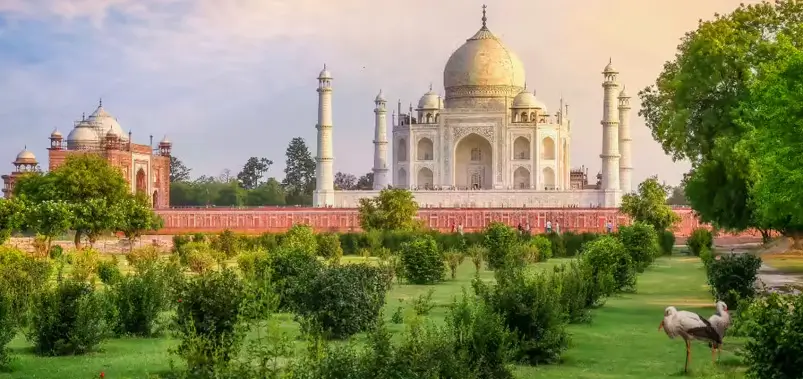
One of the greatest advantages of Mehtab Bagh is its location. Rather than making it a standalone excursion, most visitors include it as part of a full day of sightseeing in Agra.
A well-balanced itinerary often looks like this:
| Time | Suggested Activity |
| Sunrise | Visit the Taj Mahal |
| Mid Morning | Breakfast at your hotel |
| Late Morning | Explore Agra Fort |
| Afternoon | Lunch and relaxation |
| Late Afternoon | Visit Mehtab Bagh |
| Sunset | Photography overlooking the Taj Mahal |
This schedule avoids the hottest hours of the day, reduces unnecessary travel across the city, and allows visitors to experience the Taj Mahal from two completely different perspectives.
Luxury travellers frequently combine the evening visit with dinner at one of Agra's premium restaurants offering rooftop views of the illuminated city. After watching the sunset from Mehtab Bagh, returning to a luxury hotel completes a relaxed day without rushing between attractions.
Unlike many viewpoints that require only a brief stop, Mehtab Bagh rewards visitors who slow down. Sitting quietly beneath the trees, watching birds fly across the Yamuna, and observing the marble monument gradually change colour provides a peaceful conclusion to a day spent exploring one of India's most celebrated destinations.
One of the reasons Mehtab Bagh appeals to international visitors is its relaxed environment. Unlike the Taj Mahal, where thousands of people pass through security every day, the garden offers a slower pace and requires far less effort to explore. Even during the busiest travel months, visitors rarely feel overwhelmed by crowds.
The entrance area has a ticket counter, security checkpoint, and parking facilities. Since visitor numbers are relatively low compared to the Taj Mahal, queues are generally short, allowing most people to enter within a few minutes.
The pathways inside the garden are wide, level, and easy to navigate. Elderly travelers and families with young children usually find Mehtab Bagh much easier to explore than larger historical complexes. Benches placed throughout the gardens provide opportunities to rest while enjoying uninterrupted views of the Taj Mahal.
Basic visitor facilities generally include:
| Facility | Availability |
| Parking | ✔ Available near entrance |
| Restrooms | ✔ Available |
| Drinking Water | ✔ Limited availability |
| Seating Areas | ✔ Throughout the gardens |
| Wheelchair Friendly Paths | ✔ Mostly accessible |
| Security Screening | ✔ At entrance |
Visitors with reduced mobility should still wear comfortable footwear because some sections include gravel pathways, although the main walking routes remain smooth and well maintained.
Unlike commercial tourist parks, Mehtab Bagh has intentionally remained simple. There are no large restaurants, shopping complexes, or entertainment areas inside the garden. This helps preserve the peaceful atmosphere and ensures that the focus remains on the historic landscape and its remarkable view of the Taj Mahal.
If you plan to spend more than an hour here, it is a good idea to carry drinking water, particularly during warmer months. Food is generally not available inside the garden, so having lunch before your visit is recommended.
Luxury travelers often include Mehtab Bagh as part of a carefully planned Agra itinerary rather than treating it as an optional stop. The garden provides a calm contrast to the busy atmosphere surrounding the Taj Mahal and allows visitors to appreciate the monument without feeling rushed.
A typical premium itinerary might begin with a sunrise visit to the Taj Mahal, followed by breakfast at the hotel, sightseeing at Agra Fort, an afternoon spa treatment or relaxation period, and finally an evening drive to Mehtab Bagh before sunset.
Guests staying at luxury properties such as The Oberoi Amarvilas, ITC Mughal, Taj Hotel & Convention Centre Agra, Courtyard by Marriott Agra, or Trident Agra can comfortably include Mehtab Bagh without spending excessive time travelling across the city.
Many private tour operators also arrange flexible departure times so guests arrive just before the best evening light rather than following fixed group schedules. This flexibility allows photographers to remain longer if weather conditions create exceptional sunset colours.
If you are celebrating a honeymoon, anniversary, or special occasion, consider hiring a professional photographer for the evening session. Since visitor numbers are much lower than at the Taj Mahal, photographs often feel more natural and relaxed.
Another recommendation for luxury travelers is to avoid squeezing Mehtab Bagh into a same day return trip from Delhi. Spending at least one night in Agra allows enough time to enjoy both the Taj Mahal at sunrise and Mehtab Bagh at sunset without feeling exhausted after long road journeys.
Although visiting Mehtab Bagh is straightforward, a few common mistakes can reduce the overall experience.
One of the biggest mistakes is arriving only a few minutes before sunset. Many visitors assume the sunset itself is the attraction, but the changing light begins much earlier. Arriving 60 to 90 minutes before sunset provides enough time to walk through the gardens, explore different viewpoints, and watch the marble gradually change colour.
Another mistake is expecting the garden to offer a close up view of the Taj Mahal. Mehtab Bagh provides a panoramic perspective from across the Yamuna River rather than detailed architectural access. Visitors wanting to admire marble craftsmanship should still visit the Taj Mahal itself.
Many travelers also overlook weather conditions. During the monsoon season, cloud cover may hide the sunset, while winter mornings occasionally bring mist across the river. Checking the local weather forecast before visiting helps set realistic expectations.
Photography enthusiasts sometimes carry excessive equipment. Since the garden involves a fair amount of walking, bringing only essential lenses and accessories usually results in a more enjoyable experience.
Visitors should also remember that the garden closes in the evening. Security staff begin requesting guests to leave shortly before closing time, so arriving too late significantly shortens the visit.
Finally, some tourists skip Mehtab Bagh altogether because they believe it offers "just another view" of the Taj Mahal. In reality, it provides one of the few locations where visitors can appreciate the monument as part of its original riverside setting. The peaceful environment, lower visitor numbers, and uninterrupted scenery make it one of Agra's most rewarding attractions.
Post Date : 📅 24 Jul 2026

We promise you a holiday where everything is taken care of from the moment you land. Trusted drivers waiting for you, handpicked hotels that fit your style, personalized itineraries designed just for your family, and a dedicated team on call 24/7. All you need to do is relax, explore, and create unforgettable memories, while we take care of every detail behind the scenes.
Most private Golden Triangle Tours can include Mehtab Bagh upon request, especially for travelers interested in photography, quieter viewpoints, and sunset experiences.
Yes. Many visitors combine Agra Fort, the Taj Mahal, and Mehtab Bagh in a full-day sightseeing itinerary.
Professional photographers may be available, and many private photographers include Mehtab Bagh in pre-booked Agra photography sessions.
Yes. Wide pathways, open gardens, and a peaceful atmosphere make it an excellent destination for families, couples, and senior travelers.
Compared with the Taj Mahal, Mehtab Bagh is much quieter and offers a far more relaxed sightseeing experience.
Yes. The garden provides one of the best panoramic views of the complete monument across the Yamuna River.
Most visitors spend 45 minutes to 1.5 hours, while photographers may stay longer during sunset.
The approximate ticket price is ₹30–₹35 for Indian citizens and ₹300 for foreign tourists.
The ideal time is 60–90 minutes before sunset, when the changing light creates beautiful colours on the white marble.
Yes. It offers a completely different perspective of the Taj Mahal across the Yamuna River and is especially popular for sunset photography.