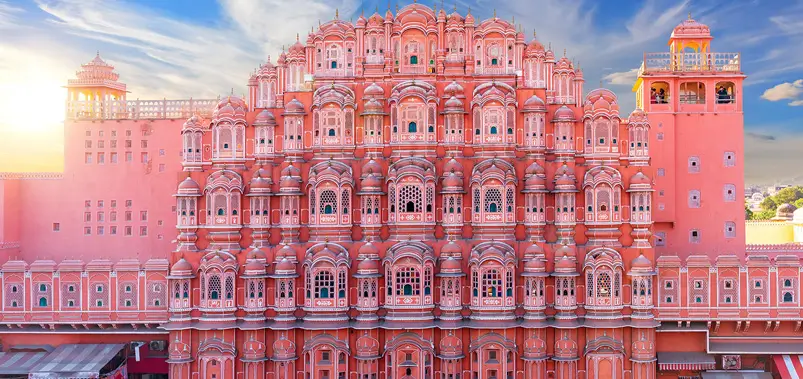
Every serious photographer who comes to Jaipur faces the same problem within the first twenty four hours. The images they came to make the ones they saw in their mind before the trip began already exist. Thousands of versions of them already exist, made by thousands of photographers who stood in the same spot, at the same hour, pointed their lens in the same direction. The Hawa Mahal at golden hour. The view from Nahargarh Fort at sunset. The blue pottery workshop with light falling on a craftsman's hands. Beautiful images, every one of them. And utterly familiar.
The photographers whose work from Jaipur actually stops you in a scroll are not standing in those places. They are in a dying cloth market in the old city at seven in the morning when the light comes through a gap between buildings and falls on a stack of hand blocked fabric in a color that has no name. They are in a rooftop temple in a neighborhood that no tourist map identifies, watching a woman feed pigeons against a sky the color of old brass. They are in a stepwell that has been dry for forty years, finding geometry in the descent of stone steps that most people in the city have forgotten is there.
This guide is for those photographers. It covers photography spots in Jaipur that are genuinely underused some completely unknown to tourist visitors, some simply overlooked because they sit next to something more famous that absorbs all the attention. It also covers the practical information timing, light direction, access, and local sensitivity that makes the difference between a good image and a great one.
The surface of Jaipur is already extraordinary by any objective measure. The pink city photography opportunity that consistent wash of terracotta pink across the old city's architecture, the carved facades, the jharokha windows, the painted havelis is genuinely unlike anything available in any other city in the world. The light in Jaipur, particularly in the cooler months from October through February, has a quality that photographers describe as almost Mediterranean in its clarity and warmth.
But the visual richness that makes Jaipur so rewarding for photography is not concentrated at the major monuments. It is distributed through the entire fabric of the city in its lanes, its markets, its workshops, its temples, its rooftops, and its daily rhythms. The Jaipur old city photography that resonates most deeply almost always comes from time spent inside this fabric rather than at its famous edges.
The city also rewards patience in a way that few other destinations do. Jaipur moves at a pace that allows a photographer to wait to find a composition and stay with it, watching the light change and the scene shift, letting the city move through the frame rather than chasing the city through the frame. This is a different approach from the sprint and shoot method that works in busier, faster cities, and it produces images of a fundamentally different character.
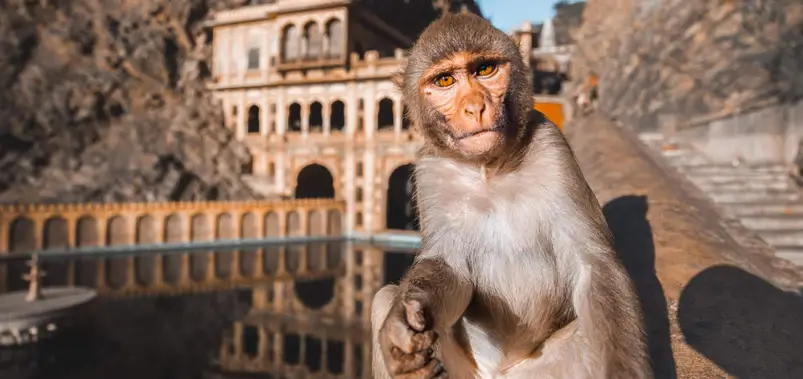
Galta Ji - The Monkey Temple Beyond the Tourist Crowd
Most visitors to Galta Ji - the ancient temple complex set inside a natural gorge in the Aravalli hills east of Jaipur arrive at the main entrance, photograph the painted facades and the sacred kunds (water tanks), and leave within forty five minutes. The photographers who make the most compelling images from Galta Ji do something different.
They climb.
The hillside above the main temple complex contains a series of smaller temples, shrines, and natural rock formations that are almost entirely unvisited. The climb takes twenty to thirty minutes and requires some scrambling over uneven terrain, but the views from above looking back down into the gorge with the temple rooftops below and the city spreading out beyond are among the most compelling architectural photography Jaipur perspectives available anywhere in the region.
The monkeys that give the temple its informal name are present throughout the complex and provide extraordinary behavioral photography opportunities. The best light for monkey photography here is early morning, when the low sun creates dramatic rim lighting on the animals' fur and the mist in the gorge has not yet burned off.
Arrive before 7:00 AM for the best light and the smallest crowds. The temple is active and sacred dress modestly, remove shoes where indicated, and ask permission before photographing close up portraits of priests or devotees.
Chandpole Bazaar at First Light
Chandpole Bazaar is one of the old city's main arterial markets and one of the least photographed of Jaipur's major commercial streets. This is partly because it lacks the picturesque carved facades of Johari Bazaar and partly because it deals in materials marble, stone, construction supplies, raw textiles that do not read as obviously photogenic.
At first light, between 5:30 and 7:00 AM, it is something else entirely. The market begins its working day before the sun is fully up, and the combination of artificial shop lighting, the blue pre dawn sky, and the specific quality of the earliest sunlight on the street's stone surfaces creates a photographic environment of unusual tonal richness. Vendors setting up their stalls, the first customers of the morning, workers moving heavy loads through streets that are not yet congested the Jaipur street photography available here in this window is genuinely distinctive.
The street also connects to a series of lanes on its northern side that lead into purely residential neighborhoods areas where daily life happens with no tourist presence whatsoever. These lanes are among the most rewarding offbeat Jaipur photography locations in the city, producing images that have the visual texture of documentary work rather than travel photography.
The Textile Printers of Sanganer
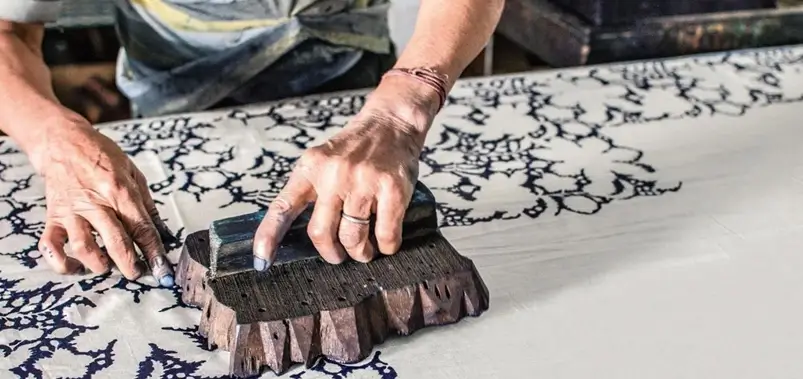
Sanganer, the town immediately south of Jaipur that has been the center of Rajasthan's block printing and hand papermaking industry for centuries, is known among textile enthusiasts but almost entirely overlooked by photographers. This is a significant oversight.
The block printing workshops of Sanganer offer Jaipur photography guide worthy material in virtually every frame the carved wooden printing blocks themselves are beautiful objects, the repetitive geometry of the printing process creates visual patterns that reward close up work, and the workshops themselves have the quality of places that have been doing the same thing in the same way for a very long time. That quality of deep continuity reads in photographs in a way that is difficult to manufacture.
The river that runs through Sanganer the Amanishah Nallah is where printers bring their freshly printed fabric to rinse and dry, and in the early morning, the combination of vivid colors spread across the riverbanks, the workers bent over the water, and the light on the wet fabric creates one of the most visually extraordinary scenes available within easy reach of Jaipur. This specific scene, photographed at the right time of year and the right time of day, produces images that are among the most compelling textile documentary photographs made anywhere in India.
Hire a guide with genuine relationships in Sanganer before visiting. The workshops are private businesses, and access to work in progress rather than the sanitized demonstration rooms set up for tourist visitors requires a personal introduction.
Isar Lat - The Swargasuli Tower
Isar Lat, also known as Swargasuli or the "stairway to heaven," is a seven story minaret like tower in the old city built by Maharaja Ishwari Singh in the mid eighteenth century to commemorate a military victory. It stands in a busy intersection of the old city and is visible from a considerable distance, yet it receives almost no tourist visitors.
The tower is climbable a narrow internal staircase winds to the top and the view from its upper level is one of the finest best photo spots Jaipur offers for capturing the geometry of the old city grid from above. Unlike the standard city views from Nahargarh Fort or the elevated sections of Amer, the view from Isar Lat is intimate rather than panoramic you are inside the city rather than above it, and the relationship between the streets, the rooftops, and the sky reads differently at this height and proximity.
The tower's external surface also rewards close examination and close up photography. The carved stone details, the weathering patterns, and the layers of lime wash that have accumulated over centuries create a surface texture that is genuinely extraordinary in certain light conditions particularly the low raking light of very early morning or late afternoon.
Access to the tower is through the surrounding market area. A local guide who knows the custodian can facilitate entry, which is not always straightforward for independent visitors.
The Dyers of Ramganj Bazaar
Ramganj Bazaar in the old city is a working class market neighborhood that sees very few tourist visitors. The specific lane of fabric dyers within Ramganj is one of the most visually intense hidden photography locations Jaipur has.
The dyeing process involves large vats of color, fabric being wrung and hung and stretched in improbable configurations across every available surface, and the specific kind of controlled chaos that comes from a labor intensive industrial process operating in a densely packed urban space. The colors involved deep indigos, saturated crimsons, turmeric yellows, and the complex browns of natural dye mixtures are extraordinary against the relatively neutral stone surfaces of the surrounding buildings.
The best photography time here is midmorning, between 9:00 and 11:00 AM, when the dyeing work is in full production and the sun is high enough to illuminate the interior spaces without creating the extreme contrast that makes this kind of work difficult to expose correctly. A wide lens for environmental context and a longer lens for detail work both earn their place in a bag here.
Go with a guide who knows the area and the workers personally. Ramganj is a neighborhood that rewards respectful engagement and suffers from tourist intrusion that ignores the humanity of the people working there. Approach it as documentary photography of real people doing real work, not as a backdrop for stylized travel imagery.
Panna Meena Ka Kund - The Stepwell at the Right Hour
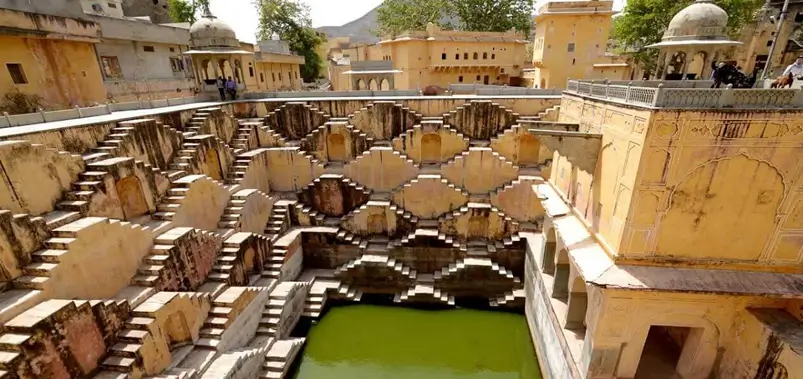
Panna Meena Ka Kund is not unknown it appears in travel articles and photography guides often enough that it has a presence in the general consciousness of Jaipur's photographic locations. But it is almost always photographed from the same position, at the same time of day, producing the same image: the stepped descent from above, symmetrical, noon light, no people.
What makes Panna Meena Ka Kund one of Jaipur's most rewarding hidden photography locations Jaipur has to offer is not the location itself but the timing and approach that most visitors miss.
At sunrise, when the low light enters the stepwell from the east, the geometry of the steps creates a shadow pattern of extraordinary complexity alternating planes of light and dark that shift visibly as the sun rises, creating a continuously changing photographic subject for approximately forty minutes before the light becomes too high and flat to sustain the effect.
At this hour, the stepwell is typically empty or nearly so. The sound of the city has not yet built to its daytime level. The combination of the geometric perfection of the architecture, the quality of the light, and the silence of the space is available for a very specific window that most visitors miss because they arrive after breakfast.
The second overlooked approach is to photograph the stepwell from within descending to the water level (which is usually dry) and shooting upward through the stepped layers toward the sky. This reversal of the conventional view produces an entirely different image that reads as architectural rather than documentary.
The Lac Bangle Makers of Haldiyon Ka Rasta
Haldiyon Ka Rasta - the street of the lac bangle makers is in the heart of the old city and is known to visitors who shop for traditional jewelry. It is not known, to the same degree, as a pink city photography destination of genuine depth.
The lac bangle workshops are family operations that have been producing these specific objects in this specific way for generations. The production process involves heating lac (a natural resin), shaping it around a rod, pressing glass pieces and mirror work into the surface while it is still malleable, and cooling the finished bangle before it goes into the display racks of the adjacent shops.
The visual material available in these workshops the hands of the craftswomen, the color of molten lac, the geometric precision of the mirror inlay work, the rows of finished bangles in their organized color gradations is exceptional for close up and detail photography. The human element of multigenerational craft work being performed with the same tools and materials that the craftswomen's grandmothers used is equally powerful for portrait and documentary work.
Visit in the morning when the workshops are at their most active. Ask your guide to make introductions before you begin photographing these are private workspaces and the people in them deserve the courtesy of being asked.
The View From Moti Dungri Hill
Moti Dungri is a private temple on a hillock in the newer part of Jaipur, surrounded by the Moti Dungri Fort that was converted into a private residence by the Jaipur royal family. While the fort itself is not publicly accessible, the hill and its surrounding area offer a vantage point for sunrise photography Jaipur that is almost completely overlooked.
The view from the road that circles Moti Dungri hill looks westward across the open ground toward the Aravalli foothills. In the early morning, before the city's haze builds, this view includes layers of hills receding into the distance with the city spread across the middle ground a composition that reads as landscape rather than urban photography and provides a significant visual contrast to the tight, close in work available in the old city.
The hill area is also a roosting and morning congregation point for a significant population of peacocks India's national bird and early morning visits occasionally produce wildlife photography opportunities of unexpected quality amid an urban environment.
Abhaneri - An Hour From Jaipur, Worth Every Minute
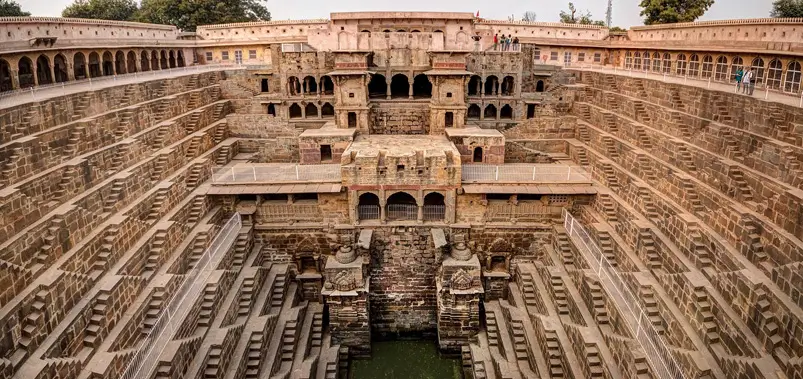
Abhaneri is not technically within Jaipur, but it is close enough approximately ninety minutes by road to be included in any serious Jaipur photography guide for travelers who are willing to make an early departure.
The Chand Baori stepwell at Abhaneri is one of the largest and most geometrically perfect stepwells in India, and unlike most of Jaipur's own stepwells, it still holds water at the bottom for much of the year. The combination of the stepwell's extraordinary geometry 3,500 narrow steps arranged in perfectly symmetrical patterns descending thirteen stories with the quality of early morning light before the tour buses arrive produces what many photographers who have worked extensively in Rajasthan consider the single finest architectural photography location in the region.
Depart Jaipur by 5:00 AM to arrive at Abhaneri before sunrise. The first forty minutes of light at the stepwell when the low sun creates dramatic shadows in the stepped geometry and the air is still cool enough that a slight mist sometimes sits in the lower levels is one of those photographic windows that rewards the early wakeup unconditionally.
Best time to photograph Jaipur varies by what you are trying to make.
October through February offers the clearest light and the most comfortable shooting conditions. The air is relatively dust free after the monsoon, the sky is a deep blue that provides genuine contrast with the city's pink and ochre tones, and the lower sun angles throughout the day create longer shadows and more dramatic architectural relief than the summer months. This is the best overall season for architectural and landscape photography.
The monsoon months of July through September transform the visual character of the city in ways that no other season can replicate. The sky becomes dramatic deep grey and purple storm clouds against the ochre of the old city walls, the green that appears in every crack and crevice after the rains, the wet stone surfaces that reflect light in unexpected ways. Monsoon Jaipur is genuinely underrepresented in travel photography, and photographers willing to work in the heat and occasional rain will find material that is entirely absent from the October to February archive.
March and early April offer a brief window of very beautiful light before the heat builds the flowers associated with spring are present, the city has not yet begun to lose its color to the bleaching effect of summer sun, and the early mornings are still cool enough to work comfortably before 9:00 AM.
Summer May and June is genuinely difficult for photography. The heat limits effective outdoor working hours to the period between 5:00 and 8:00 AM, and the atmospheric haze that builds rapidly through the morning flattens distant subjects and reduces contrast significantly. The compensating factor is that major tourist sites are largely empty, which gives photographers who can tolerate the conditions unimpeded access to spaces that are crowded for most of the year.
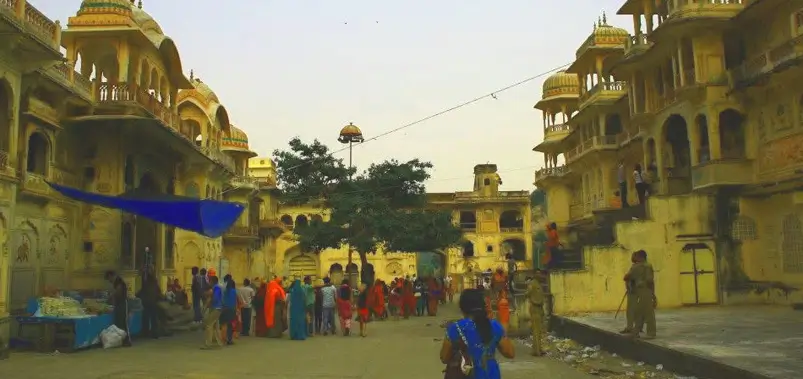
Jaipur street photography is among the richest available in India, but it requires a framework of both practical skill and ethical clarity that is worth making explicit.
The people of Jaipur's old city are not a backdrop. They are people living their lives in a city that has become a significant tourist destination, and the fatigue with being photographed that develops in heavily visited cities is real and understandable. A photographer who approaches street subjects as if they are props in their own visual story will find doors closed sometimes literally and will make images that reflect that extraction rather than any genuine human exchange.
The approach that produces both better images and more ethical encounters is one of genuine engagement. Spend time in a place before raising your camera. Make eye contact, acknowledge people, accept what is offered chai, conversation, a moment of curiosity. The photographs that emerge from this kind of presence are qualitatively different from those made by a photographer who moved quickly through the same space, shooting from the hip and moving on before anyone could object.
On the practical side, a 35mm or 50mm equivalent focal length is the most effective for Jaipur street photography close enough to include human presence meaningfully, not so long that it feels surveillance like. Work in the first two hours of daylight whenever possible. Carry your camera openly attempting to conceal it creates more suspicion than displaying it openly.
Learn the phrase "Kya main aapki photo le sakta hun?" "May I take your photograph?" It will be met with far more warmth than you expect, and the images made after asking are almost always better than those made without.
A Jaipur photography tour structured around the locations in this guide requires two things that standard tourist itineraries do not always accommodate: very early starts and genuine flexibility.
The most productive photography hours in Jaipur are 5:30 to 9:00 AM and 4:30 to 7:00 PM. A standard tourist itinerary that begins after breakfast and returns to the hotel before dinner misses both windows almost entirely. Restructuring your days around these light windows with the middle of the day reserved for rest, editing, or indoor experiences is the single most significant change you can make to the quality of your photographic output.
Through Golden Triangle Tours, a photography specific itinerary can be built around your particular interests documentary, architectural, street, wildlife, or craft focused work with a guide who has genuine relationships in the locations and communities that produce the best work. A knowledgeable photography guide does not simply take you to the right places. They facilitate the access and the human introductions that make the difference between a technically competent travel photograph and an image with genuine depth.
The dust in Jaipur is real and pervasive, particularly in the old city and during the drier months. Weather sealed camera bodies and lenses are a meaningful investment in this environment, not a luxury. Change lenses as infrequently as possible and do so in a sheltered location rather than in open streets or markets.
For architectural photography Jaipur work the stepwells, the havelis, the interior courtyards a wide angle lens in the 16-24mm range is essential. The spaces are often tight and the full geometry of the architecture requires a wider field of view than a standard lens provides.
For Jaipur street photography and craft workshop work, a 35mm or 50mm equivalent produces the most natural looking results and allows the closest working distance without creating the distortion that wider lenses introduce in portrait work.
A neutral density filter is useful for the stepwells and courtyards where the extreme contrast between direct sunlight and deep shadow exceeds what most digital sensors can capture in a single exposure. A circular polarizer is worth carrying for the monsoon season and for any work involving wet stone surfaces or water.
Carry more storage than you think you need and back up every evening without exception. The volume of compelling material available in Jaipur's locations generates significantly more images than most photographers expect before they arrive.
We promise you a holiday where everything is taken care of from the moment you land. Trusted drivers waiting for you, handpicked hotels that fit your style, personalized itineraries designed just for your family, and a dedicated team on call 24/7. All you need to do is relax, explore, and create unforgettable memories, while we take care of every detail behind the scenes.
A minimum of three full days for a photography-focused visit, structured around the early morning and late afternoon light windows. Five days allows you to cover the locations in this guide with adequate time at each, including the Abhaneri day trip. More time than that is never wasted in a city with Jaipur's visual depth, particularly for photographers who work slowly and thoughtfully.
The pink of Jaipur's buildings is at its most saturated and visually compelling in the early morning and late afternoon light, when the warm tones of the sun amplify the warmth of the building color. Noon light bleaches and flattens the color significantly. A circular polarizer can increase color saturation and reduce glare from polished stone surfaces. Shooting slightly into the sun in the late afternoon creates a quality of backlight on the pink facades that is particularly compelling.
Yes. Structured photography tours of varying quality operate in Jaipur. The most valuable are those led by photographers who have worked extensively in the city and who have genuine access to locations and communities beyond the standard tourist circuit. Through Golden Triangle Tours, photography-focused itineraries can be built around your specific interests and skill level.
A wide angle in the 16-24mm range for architectural interiors and stepwells. A standard range - 35mm to 50mm - for street photography and craft documentation. A short telephoto in the 85-135mm range for portraits and for compressing the visual layers of the city's rooftops and skyline. If you are traveling with a zoom, a 24-70mm covers most situations with the addition of a wider prime for interior architectural work.
Yes, though the Blue Pottery photography is more widely done than most of the locations in this guide. The best Blue Pottery photography work goes beyond the finished product and focuses on the production process - the application of the white base, the painting of the geometric patterns, the glazing and firing. Seek out a working atelier rather than a display showroom for the more interesting photographic material.
Haldiyon Ka Rasta runs off Johari Bazaar in the old city. The lac bangle workshops are located along the lane and are identifiable by the display of bangles in every color in their front sections. The workshops behind the display areas are where the production happens. Entering them to photograph requires asking permission - approach the senior person visible in the workshop, explain your interest, and ask if you may spend time photographing the work.
Photography inside Amer Fort is permitted for personal use. Tripod use may require an additional permission in certain areas. Photography of the Sheesh Mahal interior is one of the most sought-after shots inside the fort - ask the attendants in that section about the specific rules applicable at the time of your visit.
Yes. Drone operations in India require a Remote Pilot License and prior airspace approval from the Directorate General of Civil Aviation. Flying a drone without proper authorization in Jaipur - particularly near the old city, the palace complex, or the major forts - carries significant legal and regulatory risk. If aerial photography is part of your plan, arrange all necessary permits well in advance through a registered drone operator.
With the right introduction, yes. Some of Jaipur's established workshop owners are accustomed to hosting photographers and are proud to have their craft documented. Cold approaches without an introduction are less likely to succeed. A guide with relationships in the gem and textile communities can facilitate access that would be unavailable independently.
October through February for clarity of light and comfortable working conditions. July through September for dramatic skies and atmospheric transformation. March and early April for a brief window of spring light and flowering. Each season offers genuinely different photographic material.
Yes. Street photography of public spaces is legal in India. Photography of individuals without consent is a more nuanced question - there is no law requiring consent for street photography in public spaces, but ethical practice and practical effectiveness both favor asking whenever the subject is clearly identifiable. Photography inside private businesses, workshops, and religious spaces requires permission regardless of legal considerations.
The broad locations are findable independently. The specific workshops, the rooftop access points, the personal introductions that allow you to photograph inside private spaces - these require local relationships that a knowledgeable guide provides. For purely architectural and street work, you can work independently. For craft documentation, portrait work inside private businesses, and access to locations that are not publicly marked, a guide is essential.
5:00 AM is the target wakeup time for first light photography in the cooler months. This gives you time to travel to your location and be set up before the sun appears above the horizon. The first forty-five minutes of sunlight on most days in Jaipur are among the most photographically productive of the entire day.
Photography rules vary significantly between temples. Govind Dev Ji Temple prohibits photography in the inner sanctum and during aarti. Other temples have different policies. Always ask before raising your camera inside a temple, and respect the answer regardless of what you observe other visitors doing.
The cloth dyers of Ramganj Bazaar in the early morning is the most consistently underrated photography location in the city for serious photographers. The visual material - color, craft, human activity - is extraordinary, and the near-complete absence of tourist presence gives images from this location a documentary authenticity that is very difficult to achieve at more widely visited sites.