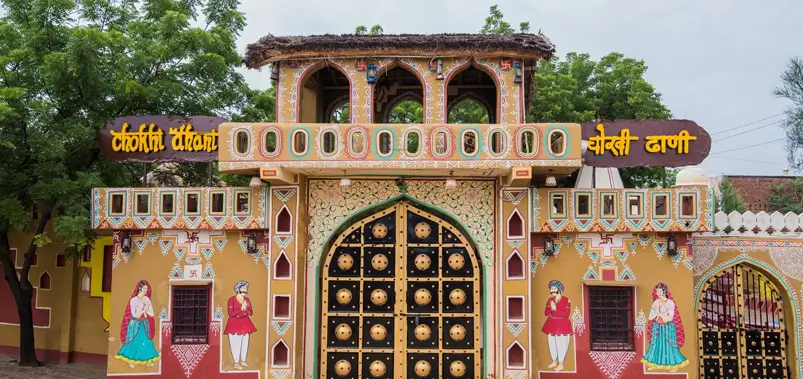
Every city that receives a significant volume of international tourism eventually develops a version of itself designed for visitors who want cultural immersion without the friction that genuine cultural immersion involves. In Jaipur, that version is Chokhi Dhani.
This is not a criticism. It is simply an accurate description of what Chokhi Dhani is and what it is designed to do. It is a sprawling, purpose built ethnic village resort on the outskirts of Jaipur that packages Rajasthani folk culture the music, the food, the dance, the crafts, the village aesthetic into an accessible, comfortable, and commercially polished evening experience. It does this extremely well, and for many travelers it represents a genuinely enjoyable introduction to Rajasthani culture.
The question is not whether Chokhi Dhani Jaipur is worth visiting. For most international visitors, it is. The question is what to expect, which parts of the experience justify the time and the entry fee, and which parts you can comfortably skip without missing anything essential. This guide answers all three.
It also tells you honestly that if you have access to genuine Rajasthani cultural experiences through a trusted local connection a family dinner, a folk music session in a private haveli, a village visit outside the tourist circuit those experiences are in a different category entirely. Chokhi Dhani is a good evening. Those experiences are the ones people talk about twenty years later.
Both things can be true.
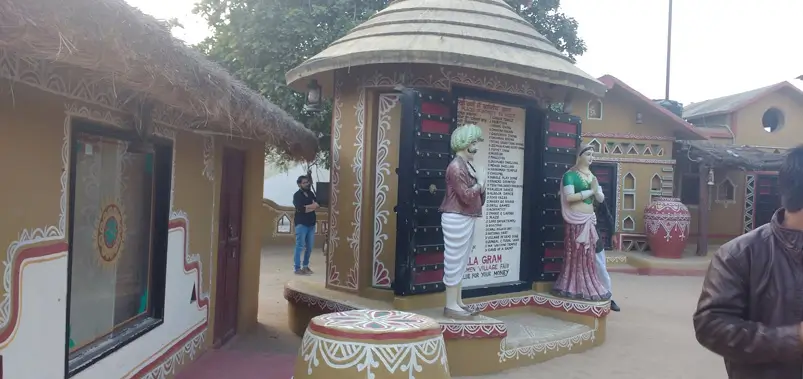
Chokhi Dhani translates roughly from Rajasthani as "fine village" or "good hamlet," and the name gives you the concept directly. The property covers approximately ten acres on the Tonk Road, approximately twenty kilometers south of central Jaipur, and is designed to replicate the aesthetic and atmosphere of a traditional Rajasthani village on a large, commercially managed scale.
The property contains multiple zones folk performance areas, craft demonstration spaces, a large dining hall, smaller food stalls serving regional specialties, camel and elephant ride areas, a section dedicated to children's activities, and a separate premium zone for visitors who pay a higher entry tier. The whole complex operates as an immersive theme environment in which the physical design, the costumes of the staff, the food, and the entertainment are all oriented toward a coherent Rajasthani village aesthetic.
It operates every evening except during certain festival periods, and it draws a mixed audience of international tourists, domestic tourists from outside Rajasthan, and Jaipur residents particularly families celebrating occasions in the private dining spaces.
Understanding what it is a very well produced cultural theme environment helps you approach it with the right expectations and get genuine value from it.
Timings
Chokhi Dhani timings follow a consistent evening schedule. The property typically opens at 5:00 PM and closes at 11:00 PM. Gates open for entry from 5:00 PM onward, and the folk performances begin shortly after opening and continue through the evening in rotating slots across different performance areas.
The dinner service runs from approximately 7:00 PM to 10:30 PM, with the traditional thali served continuously through this window. Arriving between 5:00 PM and 5:30 PM gives you the best experience time to walk the property before the dinner crowds build, catch the early performance slots, and find good positions for the main folk dance shows before the space fills.
The property is closed on certain dates during major festivals when the management hosts private events. Confirm availability for your specific travel date when booking.
Entry Fee and Pricing Tiers
Chokhi Dhani entry fee operates across two or three pricing tiers depending on the current season and management policy. The standard entry package includes access to the property, all folk performances, and the traditional Rajasthani thali dinner. Premium tiers include access to upgraded dining areas, priority seating at performances, and in some cases welcome drinks and additional experiences.
Standard adult entry with dinner typically runs between 900 and 1,200 Indian rupees per person (approximately 11 to 14 USD). Premium tiers range from 1,500 to 2,500 rupees depending on the specific package (approximately 18 to 30 USD). Children's pricing is lower and varies by age.
Confirm current pricing directly with the property or through your tour operator before booking, as prices are reviewed periodically and change with the season.
Book in advance during peak tourist season October through February particularly if you are visiting on a weekend or during a festival period. Walk in entry is generally available but the property can reach capacity on busy evenings, and pre booking guarantees your access and your dinner reservation.
The Welcome
Guests at Chokhi Dhani Jaipur are welcomed at the entrance with a traditional Rajasthani greeting a tilak applied to the forehead, a garland of flowers, and in many cases a brief welcoming ritual. This is genuine in its warmth even if it is commercially motivated, and accepting it in the spirit in which it is offered sets the tone for a pleasant evening.
The entrance area gives you your first impression of the property's aesthetic commitment. The architecture, the lighting, the costumes of the staff, and the immediate sounds of folk music from somewhere inside the complex are all carefully orchestrated. It is theatrical, but the theatricality is executed with real attention to detail.
Navigating the Property
The property is large enough that navigating it without a sense of the layout wastes time. On arrival, pick up the property map and the evening's performance schedule both are available at the entrance.
Identify the two or three performances you most want to see and note their timing and location. The Chokhi Dhani performances run on a rotating schedule across multiple stages, and the most popular shows particularly the Kalbelia snake charmer dance and the fire dance draw significant crowds. Arriving at the performance area five to ten minutes early secures a good viewing position.
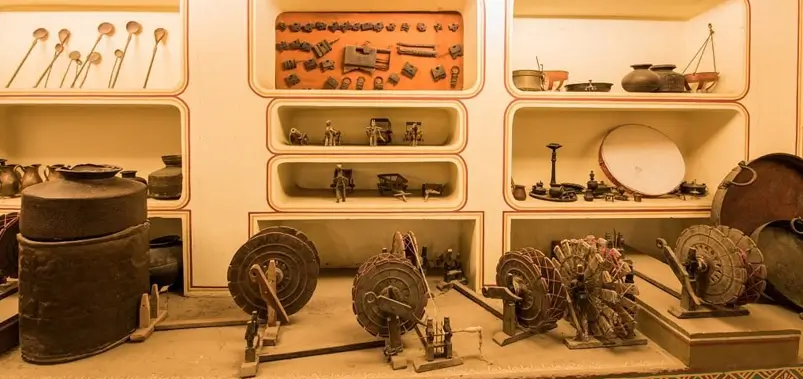
Between scheduled performances, walk the craft demonstration areas. The property has working demonstrations of block printing, pottery, and other traditional crafts that are genuinely interesting rather than merely decorative. Watching a craftsman work even in a theme environment connects you to a tradition in a way that a finished product in a shop window does not.
Kalbelia Dance
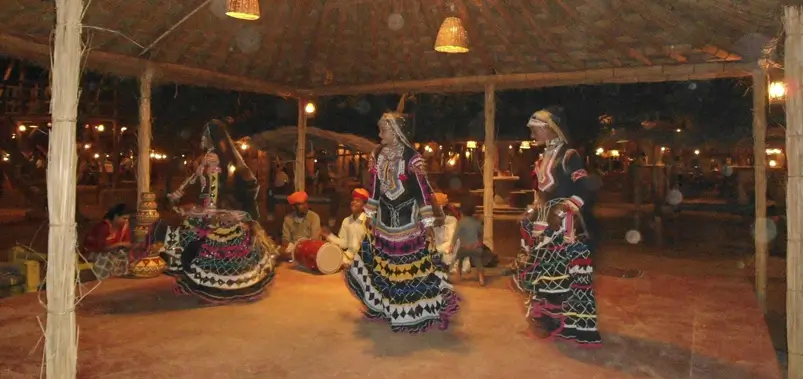
The Kalbelia dance is the performance that most visitors remember longest and the one most worth prioritizing. The Kalbelia are a traditionally nomadic community of Rajasthan whose women developed a distinctive style of dance that UNESCO recognized on its Intangible Cultural Heritage list in 2010. The dance is sinuous, technically demanding, and visually extraordinary the black skirts of the dancers fan outward during spinning movements in a way that genuinely resembles the movement of a cobra, which is the community's traditional connection.
The Kalbelia dancers at Chokhi Dhani are typically skilled performers from families within the tradition, not simply trained entertainers. The quality of the performance is genuinely high, and the music that accompanies it played on the been (a wind instrument traditionally associated with snake charming) and dholak drums adds a sonic dimension to the experience that is equally worth attending to.
Position yourself close to the performance area for this one. The intricacy of the footwork and the detail of the costume are lost from a distance.
Rajasthani Folk Music
The Jaipur cultural evening at Chokhi Dhani includes multiple folk music performances scattered across the property throughout the evening. The quality varies between groups, but the best performances typically the sessions featuring Manganiyar or Langa musicians, the hereditary musician communities of Rajasthan are genuinely exceptional.
These musicians are not performing music that was composed for a theme park. They are performing a living tradition of devotional and celebratory music that has been transmitted within specific families for centuries. If you encounter a session that sounds musically serious rather than merely ambient, stay for it.
Puppet Show
Rajasthani kathputli the string puppet theater tradition is one of the oldest performing arts in India, and Chokhi Dhani's puppet show gives you a reliable introduction to it. The puppets are elaborately costumed, the manipulation is skilled, and the stories told through the performance draw on folk narratives that carry genuine cultural weight.
This is a particularly good performance for travelers with children, as the visual storytelling is accessible regardless of language. For adult travelers, it is worth seeing for fifteen minutes even if you do not stay for the full show.
Fire Dance
The fire dance is spectacular in the way that fire always is visually arresting, physically impressive, and crowd pleasing. It is performed with genuine skill and is worth watching. It is also the most obviously touristic of the evening's performances, designed primarily for visual impact rather than cultural depth. See it, enjoy it, and then spend the equivalent amount of time with the folk musicians.
What to Skip or Approach With Selective Attention
The acrobatics show is competent but not distinctive similar performances are available at tourist venues across Rajasthan. The magic show, depending on the performer on a given evening, ranges from mildly entertaining to forgettable. The camel and elephant rides are operational but the animals' welfare in a heavily trafficked commercial setting is a legitimate concern that you should weigh according to your own values before participating.
The shopping areas within the property sell Rajasthani crafts and souvenirs at prices that are higher than equivalent quality in Jaipur's actual markets. If shopping is a priority for your Jaipur visit, Johari Bazaar and Bapu Bazaar offer significantly better value and a far more interesting shopping experience.
Chokhi Dhani food is the element of the evening that most directly divides visitor opinion, and the division tends to fall along lines of expectation. Travelers who arrive expecting the finest Rajasthani cuisine they will eat during their trip are frequently disappointed. Travelers who arrive expecting a generous, festive, culturally appropriate meal served in an atmospheric setting tend to be very satisfied.
The Traditional Rajasthani Thali
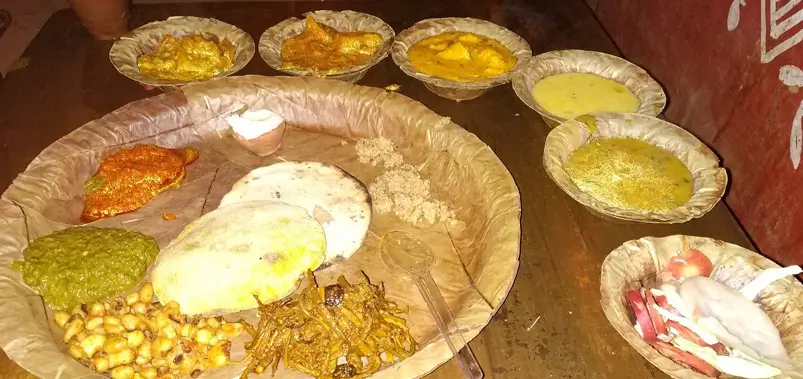
The Rajasthani dinner Jaipur experience at Chokhi Dhani centers on the traditional thali a large silver or bronze platter on which a rotating series of small servings are placed and continuously replenished throughout the meal. The thali service is unlimited, meaning that servers circulate the dining hall offering refills of every component, and the expectation is that you eat generously.
The thali includes dal baati churma the definitive Rajasthani dish of baked wheat balls served with lentil soup and a sweet mixture of crushed baati, ghee, and jaggery along with gatte ki sabzi (chickpea flour dumplings in a spiced yogurt gravy), ker sangri (a desert bean and berry preparation that is specific to Rajasthan and difficult to find outside it), bajre ki roti (millet flatbread), rice, papad, pickle, and a rotating selection of sweets.
The food is cooked for volume and served to hundreds of guests simultaneously, which means it cannot match the depth of flavor and care of a home cooked Rajasthani meal. The dal baati churma in particular which at its best is extraordinary is here competent rather than exceptional. The ker sangri, however, is genuinely good and worth seeking out.
The unlimited thali format means you can eat as much as you want, and the physical generosity of the service servers pressing second and third helpings on guests with genuine Rajasthani hospitality is itself part of the cultural experience.
The Street Food Stalls
The smaller food stalls scattered across the property before the main dining hall opens are in some ways more interesting than the thali itself. Kachori, pyaaz ki kachori, mirchi bada, lassi, and various regional sweets are available from stalls that each focus on a single item prepared with more individual attention than the thali kitchen can provide.
Arriving early enough to spend thirty minutes at the stalls before dinner is a good strategy for what to do at Chokhi Dhani it lets you graze through regional specialties in a relaxed way before the more structured thali service begins.
Drinks
Standard beverages including chai, lassi, and soft drinks are available throughout the property. Alcohol is not served at Chokhi Dhani, which reflects the property's positioning as a family appropriate cultural venue rooted in traditional Rajasthani values. If a pre dinner drink is part of your evening routine, have it at your hotel before you leave.
For Families With Children
Chokhi Dhani Jaipur is genuinely excellent for families with children, and this is probably the category of traveler for whom the experience is most strongly recommended without qualification. The variety of activities performances, craft demonstrations, rides, games, and food keeps children engaged throughout the evening in a way that few other Jaipur experiences can match. The enclosed, well staffed property is safe and manageable for families, and the festive atmosphere appeals to children of virtually all ages.
For Couples
For couples on a romantic trip to Jaipur, Chokhi Dhani is enjoyable but probably not the evening's centerpiece. The property is large, crowded, and communal the atmosphere is festive rather than intimate. Chokhi Dhani works well as a one evening cultural introduction, but a private dinner at a heritage property or a rooftop restaurant in the old city provides a more romantic setting. Consider combining Chokhi Dhani with an earlier, quieter experience rather than making it the whole evening.
For Solo Travelers
Solo travelers find Chokhi Dhani easy to navigate and comfortable to move through alone. The communal dining format means you will likely share a table with other visitors domestic and international which can be a pleasant way to have conversations that do not happen in private dining settings. The performances are equally accessible alone as with a group.
For Luxury Travelers
For travelers accustomed to the highest level of service and culinary sophistication, Chokhi Dhani occupies an interesting position. The experience is well produced and the cultural programming is genuinely worthwhile, but the food, the crowds, and the commercial nature of the environment are all inconsistent with a purely luxury travel sensibility.
The most satisfying approach for luxury travelers is to visit Chokhi Dhani for the cultural performances arriving at 5:00 PM, seeing the Kalbelia dance and the folk music, spending time in the craft areas and then dining elsewhere in Jaipur at a more intimate and culinarily serious venue. This gives you the best of both: the cultural programming, which is genuinely good, without the dining room experience, which is not the strongest part of the evening.
The property is located on Tonk Road, approximately twenty kilometers from central Jaipur. The drive from most hotel areas in the city takes between thirty and fifty minutes depending on traffic.
The most practical transport options are a private car arranged through your hotel or tour operator, or an auto rickshaw for which you negotiate a return fare before departure. The return auto rickshaw should be confirmed at the start of the evening rather than attempting to find one outside the property at 10:00 PM, when availability can be limited.
Uber and Ola both operate in Jaipur and are reliable options for the outward journey. For the return, booking a cab through the app while you are still inside the property roughly twenty minutes before you plan to leave ensures a vehicle is available when you exit.
If you are visiting as part of a Golden Triangle Tours itinerary, transport to and from Chokhi Dhani will be arranged as part of your day's logistics and requires no independent planning.
Chokhi Dhani review opinions among experienced Jaipur travelers tend toward a consistent position: yes, worth visiting once, particularly for first time visitors to Rajasthan who want a structured and accessible introduction to the region's folk culture. No, not the most authentic or memorable evening available in Jaipur, and not a substitute for genuine cultural experiences accessed through local relationships.
The Kalbelia dance is worth the entry fee on its own. The food is generous and culturally appropriate even if it is not exceptional. The property is well maintained, the staff are hospitable, and the overall production quality is high.
What Chokhi Dhani cannot give you is the feeling of being genuinely inside Rajasthani life rather than watching a representation of it from a comfortable distance. That feeling comes from different kinds of experiences a homestay, a private family dinner, a village visit, an evening with a family whose hospitality is offered because they want to share their culture rather than because they have a ticket price to justify.
Both kinds of experience have their place in a well constructed Jaipur itinerary. Chokhi Dhani is a good evening. The others are the ones that stay with you.
We promise you a holiday where everything is taken care of from the moment you land. Trusted drivers waiting for you, handpicked hotels that fit your style, personalized itineraries designed just for your family, and a dedicated team on call 24/7. All you need to do is relax, explore, and create unforgettable memories, while we take care of every detail behind the scenes.
Heritage hotel cultural evenings are typically smaller, more intimate, and more curated - a private performance for hotel guests in a haveli courtyard, for example, rather than a large public event. Chokhi Dhani has scale and variety that a hotel cultural evening cannot match, but the intimacy and personal quality of a heritage hotel performance is something Chokhi Dhani cannot replicate. For travelers staying at a heritage property that offers its own cultural programming, both experiences are worth having if time allows.
Yes, with the exception of certain festival periods when the property hosts private events. The property operates every evening through the year. Summer operations continue despite Jaipur's heat, and the evening timing of the experience makes it reasonably comfortable even in warmer months. Confirm availability for your specific travel date when booking.
The Kalbelia dance is the single performance most worth prioritizing. It is culturally significant, visually extraordinary, and performed at a level of genuine skill that distinguishes it from the evening's other entertainment. The folk music sessions - particularly any featuring Manganiyar or Langa musicians - are a close second.
Yes. Chokhi Dhani works well as an evening addition to a day of sightseeing in Jaipur. Because it begins at 5:00 PM and is located outside the city, it fits naturally after a full day at the major monuments - Amer Fort, City Palace, Jantar Mantar - with time at the hotel to freshen up before the drive to Tonk Road.
They are entirely different experiences and the comparison is only useful in understanding that both have their place. Chokhi Dhani is a polished, comfortable, and well-organized cultural evening with a guaranteed set of experiences in a managed environment. A genuine village visit - particularly one organized through a reputable tour operator with real community connections - is messier, less predictable, and incomparably more authentic. For travelers with only one evening to devote to Rajasthani culture, Chokhi Dhani is a reliable choice. For travelers with more time and a deeper interest in genuine cultural exchange, a village visit outside the tourist circuit is the more significant experience.
Yes. Premium entry tiers offer upgraded dining areas with table service rather than the communal thali hall, priority seating at performances, and in some cases additional experiences such as welcome rituals or specialized craft demonstrations. For travelers who want a more comfortable version of the Chokhi Dhani experience, the premium tier is worth considering.
There is no formal dress code. Comfortable, modest clothing is appropriate - the same standard you would apply to any evening out in Jaipur. Many visitors choose to wear traditional Rajasthani clothing, which the property and its staff receive warmly and which enhances the overall atmosphere of the evening.
Yes. The property is one of the most child-friendly evening experiences in Jaipur. The variety of entertainment, the interactive elements, and the festive atmosphere work very well for children from toddler age upward. The unlimited thali format is also practically convenient for families with children who eat unpredictably.
Plan for three to four hours minimum to do justice to the full experience - performances, craft areas, dinner, and a walk through the property. Arriving at 5:00 PM and leaving at 9:00 or 9:30 PM covers the essential elements comfortably without rushing.
No. Chokhi Dhani does not serve alcohol. The property is positioned as a family-appropriate venue rooted in traditional Rajasthani cultural values, and alcohol is not part of that positioning. Soft drinks, chai, lassi, and non-alcoholic beverages are available throughout the property.
Some pricing tiers allow entry without the dinner thali - check the current options with the property when booking. However, the thali is a central part of the experience, and skipping it removes one of the most culturally significant elements of the evening. If the food itself is not of interest, consider whether the entry fee for performances alone represents value for your specific visit.
The quality and authenticity of performers varies. The Kalbelia dancers and the folk musicians are typically from communities within the relevant traditions. Other performers may be trained entertainers rather than hereditary artists. The best performances of the evening are generally those by the folk musicians and the Kalbelia dancers.
The property is large and involves a significant amount of walking on uneven surfaces that replicate village pathways. Elderly visitors or those with mobility limitations should be aware of this. Golf carts or other mobility assistance may be available - confirm with the property in advance. The dining hall itself is fully accessible.
The traditional Rajasthani thali at Chokhi Dhani is almost entirely vegetarian - consistent with the predominantly vegetarian food culture of Rajasthan. Vegan visitors should confirm specific components with staff on arrival, as some dishes contain ghee or dairy. The property is very well set up to accommodate vegetarian dietary requirements.
Advance booking is strongly recommended during peak season from October through February and on weekends year-round. The property can reach capacity on busy evenings, and pre-booking guarantees your entry and your dinner reservation. Walk-in entry is available but not guaranteed.
Arrive between 5:00 PM and 5:30 PM. This gives you time to walk the property, visit the craft demonstrations, catch the early performances, and find good positions for the main shows before the evening crowd builds. Arriving after 7:00 PM means navigating a significantly denser property with less time for the non-dining portions of the experience.