Golden Triangle Tour for Large Groups: Coach, Hotels & Group Package Pricing
14 Sep 2026

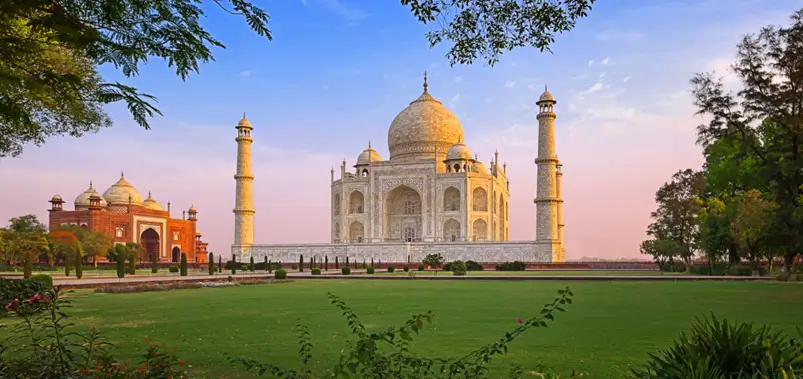
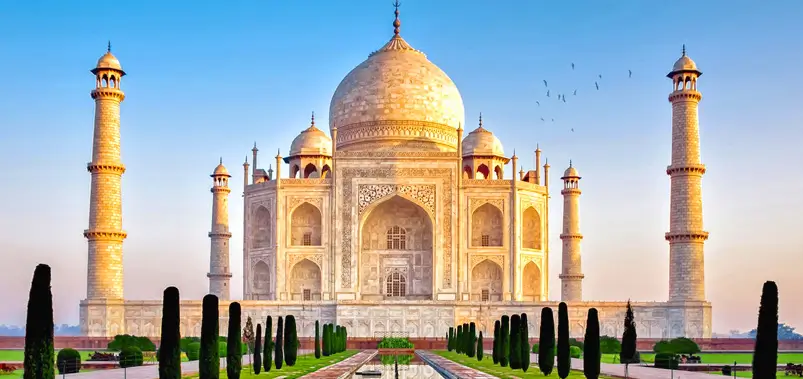
Few landmarks in the world change their appearance as dramatically throughout the day as the Taj Mahal. The monument is carved from translucent white Makrana marble, a material that responds beautifully to changing sunlight. At dawn, it reflects soft shades of silver and pale gold. By midday, it shines brilliantly under the sun, while during the evening it gradually transforms into warm ivory, peach, and subtle pink before sunset.
This remarkable interaction between light and marble is one of the reasons millions of people travel to Agra every year. Yet one question continues to appear in almost every travel forum and itinerary discussion:
There is no universal answer because both experiences offer something completely different. A sunrise visit provides peace, cooler temperatures, shorter queues, and some of the finest photography opportunities available anywhere in India. A sunset visit, on the other hand, offers warmer colours, a more relaxed pace for travellers arriving later in the day, and a romantic atmosphere that many couples find unforgettable.
The decision also depends on your travel style. A photographer may prefer sunrise for perfectly balanced light, while a honeymoon couple might enjoy the golden glow of the evening. Families with children often choose whichever timing fits their itinerary, whereas luxury travellers staying overnight in Agra frequently experience both sunrise inside the Taj Mahal and sunset from Mehtab Bagh.
Another important factor is crowd management. Contrary to what many first time visitors expect, the monument does not remain equally busy throughout the day. Visitor numbers change dramatically between opening time and closing time. Group tours arriving from Delhi and Jaipur usually reach Agra after breakfast, creating long queues during the late morning. Visitors who understand these patterns often enjoy a far more comfortable experience simply by adjusting their arrival time.
Weather also plays a major role. Winter mornings sometimes bring mist that creates an almost dreamlike atmosphere, while summer evenings produce glowing orange skies that beautifully complement the white marble. During the monsoon season, dramatic clouds occasionally create extraordinary photographic conditions just before sunset.
This guide compares Taj Mahal sunrise and sunset visits in detail, including crowd levels, photography, weather, ticket prices, security procedures, travel logistics, and practical recommendations for different types of travellers. By the end, you'll know exactly which experience suits your travel plans—and whether seeing both is worth considering.
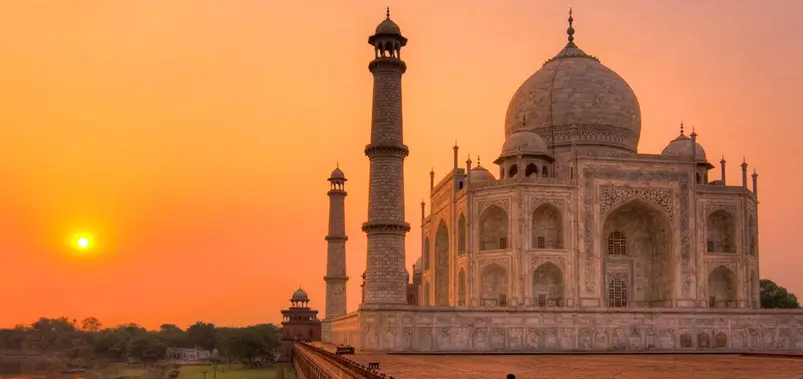
For experienced travellers, photographers, and many professional guides, sunrise remains the most rewarding time to visit the Taj Mahal. The experience begins well before the first rays of sunlight touch the marble dome.
Since the monument opens at sunrise (approximately 5:30 AM to 6:30 AM, depending on the season), visitors who arrive 30–45 minutes before opening are usually among the first to enter after security screening. This early arrival offers a significant advantage because the central gardens remain remarkably quiet before organised tour groups begin arriving later in the morning.
Walking through the grand entrance gate during these first moments of daylight creates an unforgettable first impression. Instead of hearing constant conversations and camera shutters from hundreds of tourists, visitors often enjoy a calm atmosphere where the monument gradually emerges in the soft morning light.
One of the greatest benefits of sunrise is the quality of light itself.
Rather than reflecting harsh white sunlight, the marble displays delicate shades of cream, silver, pale yellow, and light gold. These subtle colour changes last only a short time, making the first hour after opening particularly valuable for photographers.
Reflection pools along the central garden pathway also appear calmer during the early morning, allowing beautifully symmetrical photographs before crowds disturb the water.
Typical crowd levels throughout the morning are:
| Time | Crowd Level | Experience |
| Opening – 7:00 AM | Very Low | Excellent photography, peaceful atmosphere |
| 7:00 – 8:30 AM | Moderate | Comfortable sightseeing |
| 8:30 – 10:30 AM | High | Long queues begin forming |
| After 10:30 AM | Very High | Peak visitor numbers |
Another major advantage is the weather.
During much of the year, temperatures remain pleasantly cool during the first few hours after sunrise. Even in late spring, visitors can comfortably explore the gardens before Agra's afternoon heat becomes intense.
For families travelling with elderly parents or young children, this cooler environment makes walking significantly easier.
Luxury travellers staying overnight in Agra enjoy an additional benefit. Hotels near Taj East Gate Road are only a few minutes from the monument, making it possible to leave the hotel shortly before sunrise without long transfers.
Approximate travel times include:
| Starting Point | Driving Time |
| Taj East Gate Hotels | 5–10 minutes |
| Fatehabad Road Hotels | 10–15 minutes |
| Agra Cantt Railway Station | 15–20 minutes |
One point that surprises many first time visitors is how quickly the atmosphere changes after 8:30 AM.
By this time, buses carrying visitors from Delhi, Jaipur, and nearby cities begin arriving in large numbers. Security queues lengthen, photography becomes more challenging, and popular viewpoints around the central reflecting pool become crowded.
This is why professional photographers often complete the majority of their work before most tourists have even entered the complex.
Winter mornings occasionally bring light fog across the gardens. While some visitors initially worry about reduced visibility, photographers often welcome these conditions because the gradually emerging silhouette of the Taj Mahal creates an atmospheric scene rarely experienced during clear weather.
Sunrise is particularly recommended for:
The only disadvantage is the early wake up time. Travellers arriving in Agra late at night after a long journey may find it difficult to reach the monument before sunrise. For this reason, spending at least one night in Agra is strongly recommended for anyone planning an early morning visit.
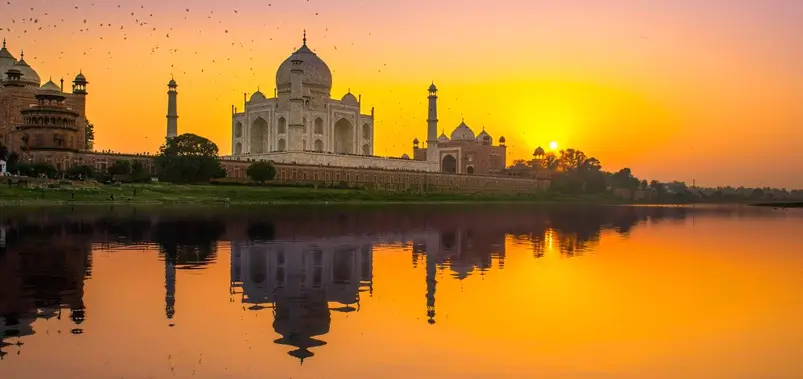
A sunset visit offers a completely different experience.
Instead of beginning the day quietly, visitors arrive during the late afternoon when the marble monument has already changed appearance several times under the changing sunlight.
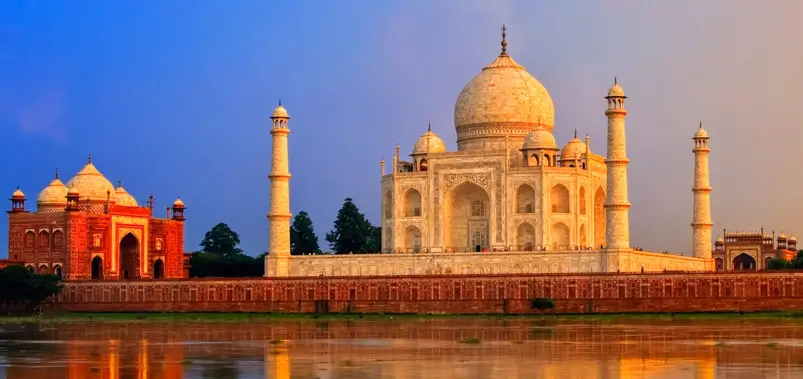
The soft golden light before sunset gives the Taj Mahal a warmer character than the cool tones seen during sunrise. Depending on atmospheric conditions, the marble may appear ivory, cream, pale orange, or even slightly pink as daylight gradually fades.
Many couples choose sunset specifically because of its romantic atmosphere. The gardens become more relaxed as the strongest afternoon heat disappears, making it comfortable to stroll through the pathways and spend time appreciating the architecture without rushing.
Unlike sunrise visitors who often arrive with photography as their primary goal, sunset visitors generally spend more time enjoying the overall ambience of the monument.
Late afternoon also suits travellers arriving from Delhi on the same day. Instead of waking before dawn, they can drive to Agra during the morning, check into their hotel or complete other sightseeing, and reach the Taj Mahal in time for the changing evening light.
However, sunset does not always mean fewer crowds.
Because many day tour visitors also choose the evening for sightseeing, the monument often remains busy until shortly before closing.
Typical crowd levels include:
|
Time |
Crowd Level |
|---|---|
|
3:00–4:30 PM |
Moderate to High |
|
4:30 PM until Sunset |
High |
|
Final 30 Minutes Before Closing |
Moderate |
Although the gardens remain lively, many organised tour groups begin leaving shortly before closing, creating a slightly calmer atmosphere during the final part of the visit.
Another advantage of evening visits is comfort during winter months. Rather than waiting outside in cold morning temperatures, visitors enjoy pleasant afternoon weather while still experiencing beautiful lighting conditions.
For those unable to wake early or travelling on a tighter schedule, sunset provides an excellent alternative without sacrificing the beauty of the monument.
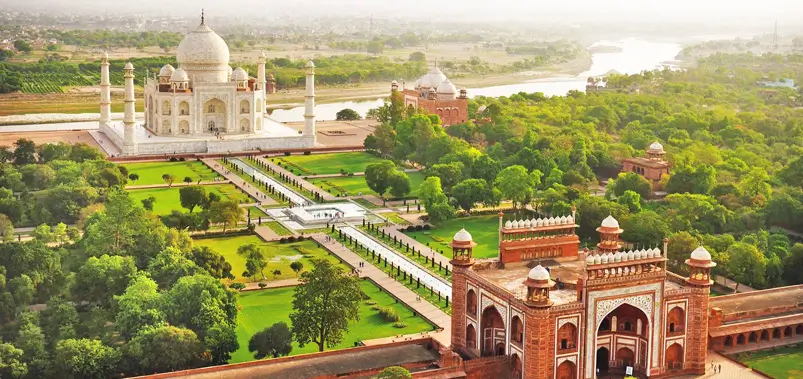
For many travellers, the decision between sunrise and sunset comes down to one question—which time produces the best photographs?
The answer depends on the type of photography you enjoy. Landscape photographers, portrait photographers, travel influencers, and casual smartphone users all have slightly different priorities. While both sunrise and sunset create beautiful images, the lighting conditions are noticeably different.
The first hour after the gates open is widely considered the best time to photograph the Taj Mahal. The sunlight is soft, evenly balanced, and gentle on the white marble. Shadows remain minimal, allowing the intricate carvings and precious stone inlay work to appear more detailed.
The famous reflection pool along the central garden pathway is also at its calmest during the early morning. Since relatively few visitors have entered the complex, the water often remains undisturbed, producing the classic symmetrical reflection that appears in travel magazines.
Portrait photography also benefits from the softer light. Faces are evenly illuminated without the harsh shadows that develop later in the day, making sunrise particularly popular for honeymoon couples and professional travel photography.
Another major advantage is the availability of space. Popular viewpoints remain accessible, allowing photographers to compose images without waiting for large groups to move away.
Sunset photography creates a completely different mood.
Instead of cool morning tones, the marble gradually reflects warmer shades of cream, gold, peach, and light pink. These colours produce romantic images that many couples prefer for anniversary and honeymoon photographs.
However, sunset presents a greater technical challenge. The low sun creates stronger contrast between bright skies and shaded foregrounds. Smartphone cameras usually handle this well using HDR mode, while DSLR and mirrorless camera users often adjust exposure manually for the best results.
One limitation of sunset photography is the larger number of visitors around the central garden. Finding an unobstructed composition requires more patience, particularly near the main reflecting pool.
Professional photographers often recommend moving slightly away from the central pathway. Side gardens, marble platforms, and less crowded walkways frequently provide equally impressive compositions while avoiding heavy visitor traffic.
|
Feature |
Sunrise |
Sunset |
|---|---|---|
|
Light Quality |
Soft and balanced |
Warm and dramatic |
|
Marble Colours |
Silver, ivory, pale gold |
Cream, peach, pink |
|
Reflection Pool |
Usually calm |
Often disturbed by visitors |
|
Crowd Interference |
Low |
Moderate to high |
|
Portrait Photography |
Excellent |
Excellent |
|
Landscape Photography |
Outstanding |
Very Good |
|
Smartphone Photography |
Easy |
Moderate |
|
Professional Photography |
Ideal |
Excellent with planning |
For photographers whose primary objective is obtaining the highest quality images, sunrise generally offers the strongest advantage. Those seeking romantic evening colours, however, often find sunset equally rewarding.
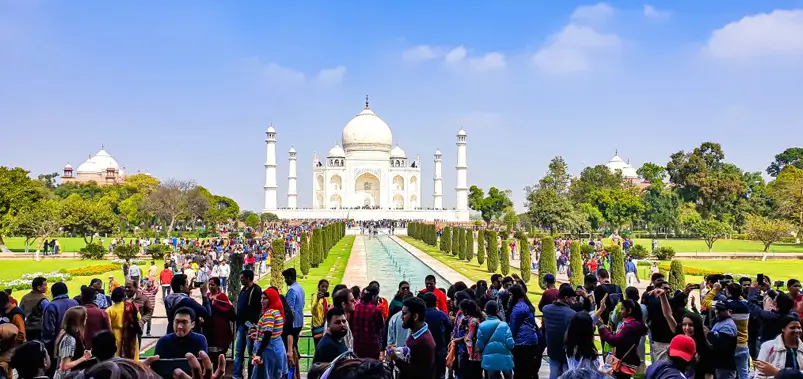
The timing of organised tours has a major influence on crowd levels at the Taj Mahal.
Most visitors arriving from Delhi, Jaipur, or nearby cities begin travelling after breakfast. Because the drive from Delhi via the Yamuna Expressway takes approximately 3.5 to 4 hours, many coach tours reach Agra during the late morning.
This creates the busiest period of the day.
The following table illustrates the general visitor pattern:
|
Time |
Crowd Level |
Queue Length |
|---|---|---|
|
Sunrise – 7:00 AM |
Very Low |
Very Short |
|
7:00 – 8:30 AM |
Moderate |
Short |
|
8:30 – 11:30 AM |
Very High |
Long |
|
11:30 AM – 3:00 PM |
High |
Moderate |
|
3:00 PM – Sunset |
Moderate to High |
Moderate |
|
Final 30 Minutes |
Moderate |
Shorter |
The difference between entering at 6:00 AM and 9:30 AM can easily save 45–90 minutes in waiting time during peak travel months.
Visitors hoping to avoid crowds should also consider weekdays whenever possible. Tuesdays and Wednesdays generally experience lower visitor numbers than weekends and public holidays.
School vacations and major Indian festivals also increase domestic tourism, leading to longer queues regardless of the season.
Agra experiences distinct seasonal weather patterns, and these conditions influence the overall sightseeing experience.
Winter is considered the most comfortable season for visiting the Taj Mahal.
Morning temperatures usually range between 8°C and 18°C, making sunrise visits pleasant for walking and photography. However, occasional fog can partially obscure the monument during the earliest hours.
By late afternoon, temperatures become slightly warmer while remaining comfortable, making sunset equally enjoyable.
Summer brings significantly higher temperatures.
By midday, temperatures often exceed 35°C (95°F) and occasionally approach 45°C (113°F).
During this period, sunrise offers a clear advantage because visitors complete most sightseeing before the strongest heat develops.
Sunset becomes more comfortable than the afternoon but remains considerably warmer than winter evenings.
The monsoon transforms the surrounding landscape with greener gardens and dramatic cloud formations.
While rainfall occasionally interrupts sightseeing, cloudy skies often produce spectacular photography conditions during both sunrise and sunset.
Visitors should carry lightweight rain protection if travelling during this season.
|
Season |
Better at Sunrise |
Better at Sunset |
|---|---|---|
|
Winter |
Cooler, possible fog |
Comfortable temperatures |
|
Summer |
Strongly Recommended |
Warm but pleasant |
|
Monsoon |
Dramatic atmosphere |
Beautiful cloud formations |
Every traveller has different priorities, so the ideal visiting time depends on what you hope to experience.
Sunrise remains the preferred choice.
Lower visitor numbers, softer light, and calmer reflection pools provide ideal working conditions.
Both timings work beautifully.
Sunrise offers privacy and peaceful surroundings, while sunset creates warm romantic colours that many couples love.
Some couples even choose both—sunrise inside the Taj Mahal and sunset at Mehtab Bagh.
Early morning is generally more comfortable.
Lower temperatures reduce fatigue, and shorter queues make the visit easier for younger travellers.
Sunrise provides cooler weather and a calmer environment with fewer crowds.
Visitors who prefer a slower pace often appreciate beginning the day before organised tours arrive.
Guests staying overnight in Agra have the greatest flexibility.
Many private itineraries include:
This combination allows travellers to experience both the cool morning atmosphere and the warm evening colours without rushing.
Whether you choose sunrise or sunset, the ticket price for the Taj Mahal remains the same. The only difference is the time you enter the monument. Understanding the ticket system and selecting the right entry gate before arriving can save valuable time, especially during the busiest travel months.
|
Visitor Category |
Ticket Price |
|---|---|
|
Indian Citizens |
₹50 |
|
Foreign Tourists |
₹1,100 |
|
SAARC & BIMSTEC Citizens |
₹540 |
|
Entry to Main Mausoleum |
Additional ₹200 |
The additional mausoleum ticket allows visitors to enter the central marble chamber containing the beautifully crafted cenotaphs of Shah Jahan and Mumtaz Mahal. Without this ticket, you may still visit the gardens, mosque, guest house, and exterior viewing areas.
Booking tickets online before arriving is highly recommended, particularly during the peak tourist season. Online tickets reduce waiting time at ticket counters and allow visitors to proceed directly toward the security checkpoint.
The Taj Mahal has three official entrances:
For most international visitors, the East Gate is the preferred choice, especially for sunrise visits. Luxury hotels around Taj East Gate Road are located only a few minutes away, and morning queues are often shorter than those at the West Gate.
The West Gate is convenient for visitors arriving from central Agra or Agra Cantt Railway Station, although it generally becomes busier after 8:30 AM because many organised tour buses use this entrance.
The South Gate is the least commonly used by international tourists and usually does not provide the same advantages for early morning sightseeing.
The difference between an unforgettable visit and a stressful one often comes down to simple planning. Many first time visitors unknowingly make avoidable mistakes that lead to long queues, crowded photographs, and unnecessary fatigue.
Many travellers assume arriving at sunrise means reaching the gate exactly when it opens. In reality, you should arrive 30–45 minutes before opening so you are among the first visitors through security.
A same day journey from Delhi takes approximately 3.5–4 hours via the Yamuna Expressway. Most visitors therefore reach Agra during the busiest period of the day.
Staying overnight in Agra allows a far more relaxed sunrise experience.
Security screening becomes slower when visitors carry large backpacks or unnecessary equipment.
Instead, carry only:
Travelling light speeds up security checks considerably.
Checking the weather forecast before your visit can greatly improve the experience.
Understanding seasonal conditions helps set realistic expectations.
Some organised tours allow less than two hours inside the Taj Mahal.
Most visitors benefit from spending 2.5–3.5 hours, giving enough time to appreciate the gardens, architecture, marble inlay work, and photography opportunities without feeling hurried.
If your schedule allows at least one overnight stay in Agra, experiencing both sunrise and sunset provides the most complete appreciation of the Taj Mahal.
Rather than visiting the monument twice, many experienced travellers recommend combining:
This itinerary offers two completely different perspectives while avoiding unnecessary repetition.
A typical luxury itinerary might look like this:
|
Time |
Activity |
|---|---|
|
Previous Evening |
Arrive in Agra |
|
Sunrise |
Visit the Taj Mahal |
|
Morning |
Breakfast |
|
Late Morning |
Explore Agra Fort |
|
Afternoon |
Lunch and hotel relaxation |
|
Evening |
Sunset at Mehtab Bagh |
This schedule avoids the hottest part of the day while allowing visitors to enjoy the monument under two very different lighting conditions.
Those with only a single opportunity to visit should consider their priorities.
Choose sunrise if you value:
Choose sunset if you prefer:
For most international travellers, sunrise remains the better overall experience. The combination of quieter gardens, shorter security queues, comfortable temperatures, and beautiful early morning light creates ideal conditions for appreciating one of the world's greatest monuments.
The peaceful atmosphere during the first hour after opening allows visitors to admire the remarkable symmetry, delicate marble carvings, and perfectly landscaped gardens without constantly competing for space.
That said, sunset offers its own unique charm. The changing colours of the marble, softer evening atmosphere, and relaxed pace create unforgettable memories, particularly for couples and travellers already spending the day in Agra.
If your itinerary includes an overnight stay, there is no need to choose between them. Experiencing the Taj Mahal at sunrise and admiring it again from Mehtab Bagh at sunset provides a balanced and deeply rewarding perspective on this extraordinary UNESCO World Heritage Site.
Post Date : 📅 26 Jul 2026
We promise you a holiday where everything is taken care of from the moment you land. Trusted drivers waiting for you, handpicked hotels that fit your style, personalized itineraries designed just for your family, and a dedicated team on call 24/7. All you need to do is relax, explore, and create unforgettable memories, while we take care of every detail behind the scenes.
For first-time visitors, sunrise provides the most balanced experience, combining peaceful surroundings, beautiful light, comfortable weather, and easier photography, making it the preferred choice for the majority of international travellers.
Yes. Many photographers and experienced travellers prefer watching the sunset from Mehtab Bagh, where panoramic views across the Yamuna River create a completely different perspective of the Taj Mahal.
Most visitors spend 2.5–3.5 hours exploring the monument at a comfortable pace.
Yes. Cooler temperatures and shorter queues make morning visits more comfortable for families.
The East Gate is usually the preferred entrance for international visitors staying in hotels near Taj East Gate Road.
No. Each ticket is valid for a single entry only.
Between October and March, sunrise generally provides pleasant temperatures and comfortable sightseeing conditions, although occasional fog may occur.
Not necessarily. Late afternoon often remains busy because many day-tour visitors arrive after completing other sightseeing.
Aim to reach the entrance 30–45 minutes before sunrise so you are among the first visitors through security.
For most visitors, yes. Sunrise usually offers fewer crowds, cooler weather, shorter queues, and excellent photography conditions.