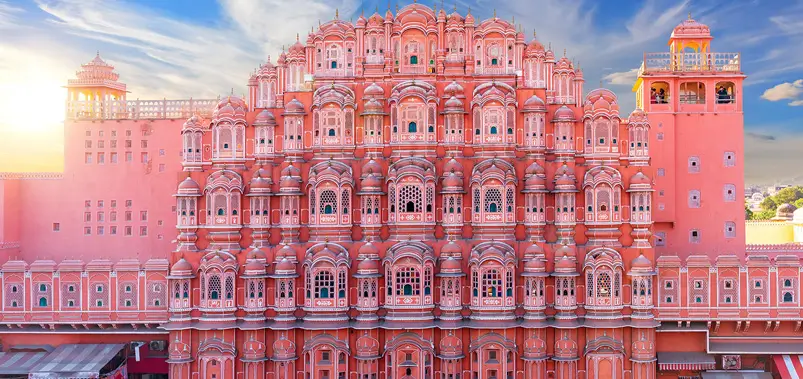
Most visitors to Jaipur see the city at the wrong time of day. They arrive at Amer Fort at ten in the morning, when the sun is already high and harsh and the tour buses have filled every parking space. They see Hawa Mahal at noon, when the light is flat and the shadow play that makes the facade extraordinary has disappeared entirely. They photograph Nahargarh Fort at midday, when the view across the city is washed out by heat haze and the rosy pink of the old city's buildings reads as beige rather than gold.
The Jaipur that photographers and experienced travelers talk about the one that produces the images that stop you in a scroll, the one that stays with you as a physical memory long after the trip is over that Jaipur exists for approximately forty five minutes every morning, beginning at the moment the sun clears the Aravalli hills to the east and ending when the light loses its warmth and angle and becomes simply daytime.
Sunrise in Jaipur is not an aesthetic bonus. It is the primary event. The city was built in terracotta pink specifically because that color absorbs and glows with the warm light of low sun morning and evening light in a way that architects of the eighteenth century understood intuitively even if they never articulated it in the way a photographer would. At sunrise, the logic of Jaipur's color becomes completely clear. At noon, it barely makes sense.
This guide covers the best sunrise spots Jaipur has to offer the well known ones that are worth waking up for regardless of how familiar they might be, and the genuinely obscure ones that most visitors never find. It also covers the practical information timing, access, transport, and what to bring that makes the difference between a chaotic early morning and one of the most productive and beautiful hours of your travel experience.
Witness the Magic of Sunrise in Jaipur
Start your day with breathtaking sunrise views before exploring Jaipur's magnificent forts, royal palaces, scenic viewpoints, and vibrant local markets. Travel in comfort with a private chauffeur and enjoy a personalized sightseeing experience at your own pace.
Before getting into specific locations, it is worth understanding why sunrise places in Jaipur deliver a qualitatively different experience from the same places visited later in the day.
The first reason is light. The sun rises over the Aravalli range to the east of Jaipur, and in the first thirty to forty five minutes after sunrise, the light falls at a very low angle across the city raking across the carved facades of havelis, throwing long shadows from every wall and column, and hitting the pink sandstone of the old city's buildings at an angle that maximizes both color saturation and three dimensional relief. This is the light that architectural photographers specifically travel to capture, and it is available only in this narrow window.
The second reason is atmosphere. Jaipur's morning has a character that its daytime entirely lacks. The old city before 7:00 AM belongs to the people who live there the vegetable vendors setting up their stalls, the women drawing water, the priests performing early puja, the peacocks that roost in the larger trees and descend to the streets at first light. This is not a performance for visitors. It is the actual daily life of the city, and witnessing it in the specific quality of early morning light, in the cool air before the heat builds, in the relative quiet before the traffic reaches its daytime intensity is an experience of genuine depth.
The third reason is crowd absence. Jaipur's major sites at sunrise are largely empty. Amer Fort before 7:00 AM has a fraction of the visitors it will have at 10:00 AM. Nahargarh Fort at dawn may have the entire viewpoint to yourself. Panna Meena Ka Kund at first light is often completely deserted. The monuments look different when they are empty more like themselves, less like tourist attractions.
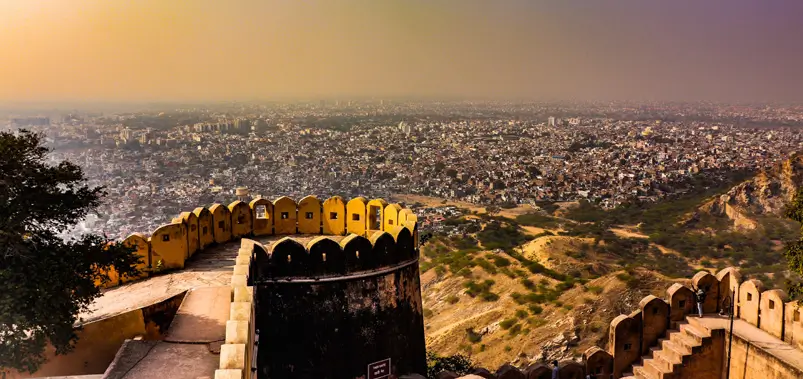
Nahargarh Fort - The Classic for Good Reason
Nahargarh Fort sunrise is the most widely recommended early morning experience in Jaipur, and this recommendation is entirely deserved. Nahargarh sits on the ridge of the Aravalli hills above the old city, and its upper ramparts command a view that encompasses the entire spread of Jaipur from the old walled city with its pink rooftops and temple spires in the foreground, through the newer districts of the city in the middle ground, to the distant hills of the Aravalli range on the horizon.
At sunrise, this view is extraordinary in a way that photographs do not fully communicate. The pink city below catches the first light while the western parts of the urban sprawl are still in shadow, creating a gradient of illumination that moves across the city over the course of twenty to thirty minutes as the sun rises. The light on the fort's own stone walls the same warm sandstone as the city below changes character continuously through this period. There is genuinely no bad frame from the upper ramparts of Nahargarh at sunrise.
Practical details: the drive from central Jaipur to Nahargarh takes approximately twenty to thirty minutes. The road that leads up the hillside from the old city is manageable by auto rickshaw or private car. Arrive at the fort gate by 5:45 AM in winter or 5:15 AM in summer to be in position before the sun appears above the eastern horizon. The fort officially opens at 10:00 AM for ticketed entry, but the road and the rampart area visible from outside the ticketed zone are accessible earlier confirm current access policies with your hotel or tour operator before your visit.
The temperature at Nahargarh at dawn in the winter months is significantly cooler than in the city below. Bring a jacket even if the previous day felt warm. The wind on the ridge can make it feel substantially colder than the thermometer reading suggests.
Amer Fort - Sunrise Before the Crowds Arrive
Amer Fort sunrise is an experience that most visitors to Jaipur miss entirely because the fort's official opening time 8:00 AM is well after the best light has passed. But the area surrounding Amer Fort, including the elevated road above Maota Lake and the hilltop above the fort's Charbagh gardens, is accessible well before the official opening.
The approach road to Amer Fort crosses a ridge that provides a direct view of the fort's main facades illuminated by the rising sun a view that is arguably the most iconic in all of Rajasthan. At sunrise, with the Maota Lake reflecting the early light below and the fort's layered ramparts rising against the sky above, the visual effect is one that travelers specifically come to Jaipur to see and consistently fail to witness at the right hour.
The lake itself at sunrise is worth extended time as well. The combination of the still water, the fort's reflection in it, the flocks of birds that gather at the water's edge in the early morning, and the quality of the light creates a photographic environment of genuine depth. Bring a medium telephoto lens if you have one the bird activity at Maota Lake at first light rewards it.
For travelers who want to be inside the fort itself at sunrise, it is worth contacting your tour operator about early entry arrangements. Some operators with established relationships at the fort can arrange access before the official opening a genuinely significant experience given how different the empty fort feels from the busy attraction it becomes by mid morning.
Panna Meena Ka Kund - Geometry at First Light
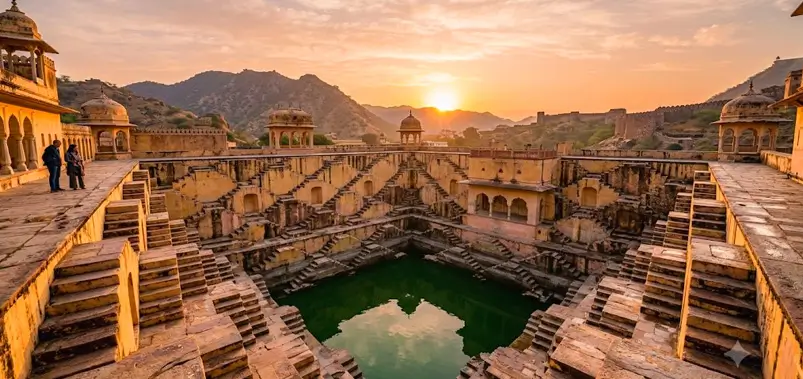
Panna Meena Ka Kund - the ancient stepwell near Amer Fort has been discussed in the photography section of this blog series, but its sunrise experience warrants separate emphasis in this context.
The stepwell is oriented so that the rising sun enters its eastern face at a very low angle in the first thirty to forty five minutes after sunrise. During this window, the stepped geometry of the well creates a shadow pattern of extraordinary complexity alternating planes of light and dark that shift visibly as the sun rises, creating a continuously changing photographic subject. The effect is available for a narrow window each morning and disappears entirely as the sun rises higher.
At sunrise, the stepwell is typically completely empty. This is one of the few major heritage sites in Jaipur where you can genuinely have the space entirely to yourself in the early morning, and the experience of standing in a stepwell that is 500 years old, in complete silence, watching the light move across the geometry of the stone, is one of those travel experiences that does not fit comfortably into a social media caption.
Arrive by 5:30 AM in winter or 5:00 AM in summer to catch the best of the light. The stepwell is located a short distance from the Amer Fort area and is easily combined with an Amer sunrise visit.
Jaigarh Fort - The View Most Visitors Never See
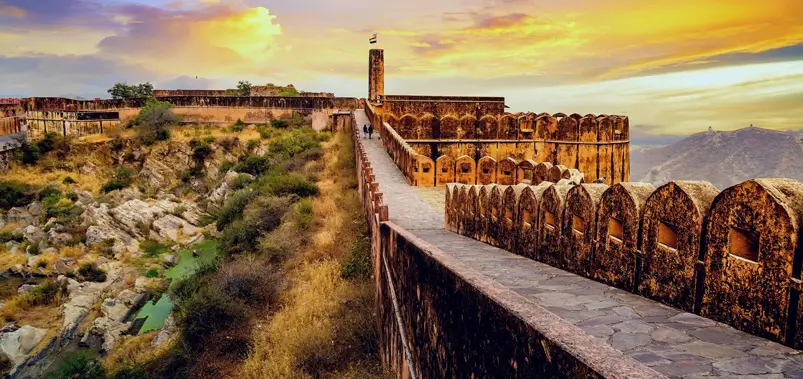
Jaigarh Fort, which sits on the ridge above Amer Fort and is connected to it by an internal passage, offers a sunrise vantage point that most visitors to the Amer area never consider. While Amer Fort's sunrise view looks westward across Maota Lake, Jaigarh's upper ramparts look in multiple directions eastward toward the rising sun and the hills behind it, northward along the Aravalli ridge, and southward toward the city spreading across the plain.
The specific view from Jaigarh's Diya Burj (the lamp tower at the fort's highest point) is one of the finest and least visited sunrise view Jaipur experiences available. The tower is a modest climb from the main fort level and rewards the effort with a 360 degree panoramic view that encompasses more visual information than any other single point in the Amer Jaigarh complex.
The fort is located on the same ridge as Amer and accessible by the same road. Arrive early, allow time for the walk to the Diya Burj, and have the panoramic view to yourself before the first tour groups begin arriving at Amer below.
Hawa Mahal - The View from Behind
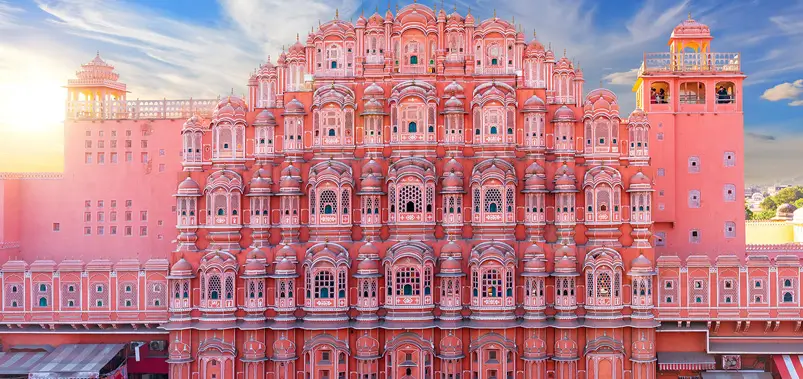
Every visitor to Jaipur photographs Hawa Mahal from the street in front of it. The carved sandstone screen, the honeycomb of small windows through which Rajput women of the royal household once watched street processions without being seen it is one of the most reproduced architectural images in India.
What almost no one does is go inside and experience Hawa Mahal from the inside at sunrise.
The interior of Hawa Mahal faces west toward the rest of the palace complex and, beyond it, toward the old city. At sunrise, looking westward from inside the upper galleries of the building, the light on the old city's rooftops and the palace complex below is extraordinary in the specific way that reflected and diffused light always is softer than direct sunrise light, more complex in color, and illuminating aspects of the architecture that direct light would bleach out.
The small windows the jharokha screens themselves frame the view in a way that is completely different from anything available from the street. You are seeing the old city the way the Rajput women of the palace saw it, through a lattice of carved stone, in a light that falls differently through each aperture as the sun rises.
The building opens at 9:00 AM officially. Early entry arrangements through an established tour operator can make the sunrise from inside accessible confirm this possibility with Golden Triangle Tours when planning your itinerary.
Sisodia Rani Garden - Jaipur's Most Beautiful Dawn Secret
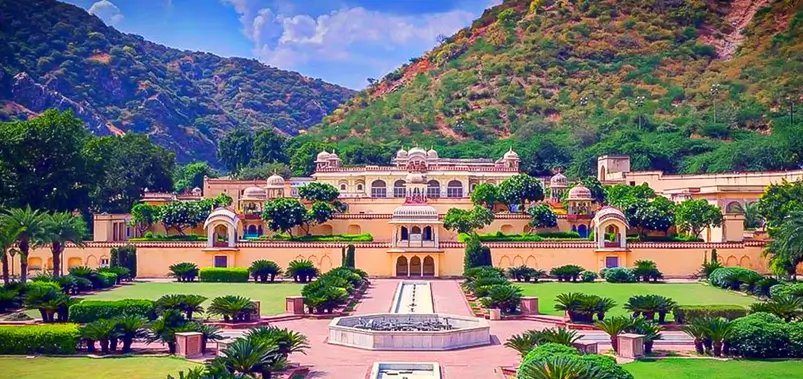
Sisodia Rani Garden - the tiered Mughal style garden built by Maharaja Sawai Jai Singh II for his second queen is one of Jaipur's most beautiful and least visited heritage sites at any time of day. At sunrise it becomes something entirely its own.
The garden is structured in the classic char bagh style four quadrants divided by water channels, with a series of fountains, pavilions, and painted chambers that depict scenes from the Krishna Radha love story. The paintings in the lower pavilions are among the finest examples of Rajput miniature painting applied to architecture that survive in Jaipur.
At sunrise, the quality of light in the garden's tiered spaces filtering through the trees that line the upper terraces, falling across the geometric patterns of the flower beds, catching the water in the fountains when they are running is genuinely extraordinary. The garden is oriented in a way that maximizes the morning light across its full depth, and at the right time of year, the sun rises at an angle that illuminates the painted chambers of the lower pavilions for a brief and beautiful window.
The garden is located on the Agra Road, approximately five kilometers from the old city. It opens before the major monuments check current opening times with your operator. An early morning visit here, before the day's sightseeing begins, provides a quality of peace and beauty that the busier sites cannot offer.
The Old City Rooftops - Dawn From Above the Pink City
The rooftop experience at sunrise in Jaipur's old city is one of the most underrated Jaipur morning views available, and it is one that almost exclusively requires a local connection to access properly.
The old city's rooftops are not a public space they are the upper floors of private homes and businesses, many of which have converted rooftop areas into informal sitting spaces or, in some cases, into guesthouses. The view from a rooftop in the heart of the old city at sunrise looking out over the sea of pink and terracotta rooftops, the temple spires rising above them, the kites already in the air in the early morning light is one of those Jaipur experiences that is completely invisible from the street level and completely unforgettable from above.
The best access to old city rooftop sunrise experiences comes through a homestay in the area a family whose rooftop you can access as a guest or through a local guide with genuine neighborhood relationships. Some of the most remarkable Jaipur dawn photography made in the city in recent years has come from photographers who spent the early morning hours on old city rooftops rather than at the standard viewpoints.
Galta Ji Gorge - Sunrise in the Sacred Valley
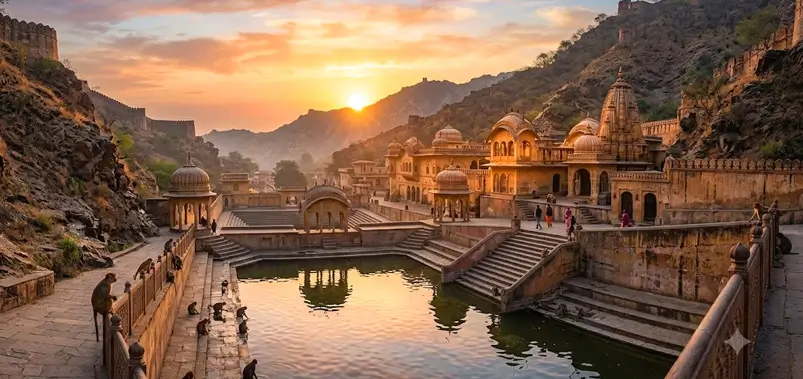
Galta Ji - the ancient temple complex set inside a natural gorge in the Aravalli hills has been mentioned in this blog series for its photography potential, but its sunrise character is worth emphasizing specifically in the context of dawn experiences.
The gorge faces broadly westward, which means that at sunrise the hills to the east of the gorge catch the first light while the gorge interior itself is still in shadow. The effect the illuminated hilltops above, the deep shadow of the gorge below, the first light beginning to catch the upper temple facades before descending gradually to the water tanks at the gorge floor is one of dramatic and beautiful atmospheric progression.
The monkeys that inhabit the temple complex are particularly active at first light, and the combination of animal activity, temple bells from the early puja being performed inside the complex, and the progressive revelation of the gorge's architecture as the light descends creates a multi sensory dawn experience that is unique among Jaipur's hidden sunrise spots.
Arrive by 5:30 AM in winter or 5:00 AM in summer. The road to Galta Ji from the old city takes approximately fifteen to twenty minutes by auto rickshaw. Dress modestly the complex is a functioning pilgrimage site and the standards of respectful dress apply even in the early morning.
Isarlat (Swargasuli) Tower - Sunrise From the City's Hidden Pinnacle
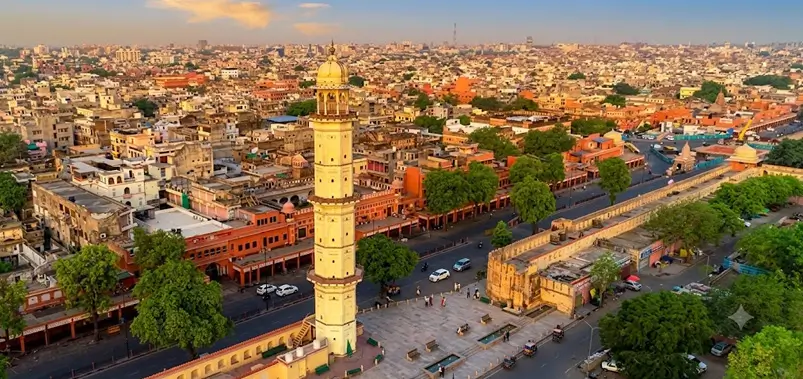
Isarlat - the seven story tower in the heart of the old city that was discussed in the photography spots blog earns a specific mention as a sunrise places in Jaipur destination because its height and central location create a sunrise viewing experience that is fundamentally different from the hillfort vantage points.
From the top of Isarlat at sunrise, you are not above the city looking down at it. You are inside the city, at just enough height to see over the surrounding rooftops, surrounded by the pink and terracotta fabric of the old city in every direction. The low sun at this hour illuminates the facades and rooftops in a direction and angle that changes continuously as it rises, and the perspective from within the city rather than above it creates a quality of visual intimacy that the fort viewpoints cannot replicate.
Access requires local knowledge and a connection to the custodian. Through a knowledgeable guide with genuine old city relationships, this can be arranged. Independent access is not straightforward.
Jal Mahal - The Water Palace at Dawn
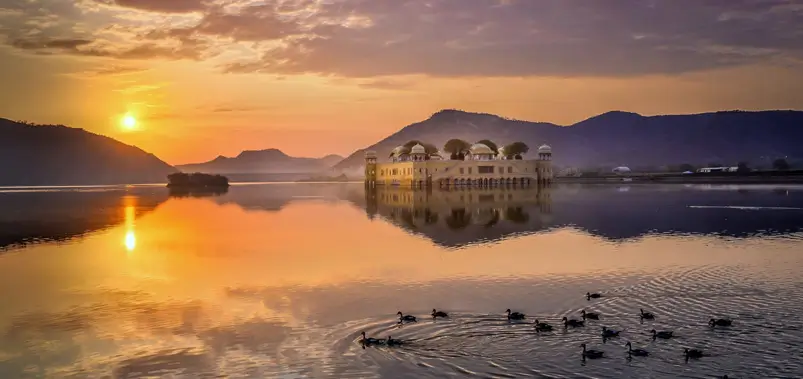
Jal Mahal - the water palace that sits in the middle of Man Sagar Lake on the road between Jaipur and Amer is one of Jaipur's most photographed landmarks, but the experience of watching it at sunrise from the lake's eastern shore is underappreciated.
At first light, the palace floats on still water that has not yet been disturbed by the morning's boat traffic and road noise. The sky in the east is often a gradient from deep blue at the zenith to gold and pink at the horizon, and the palace's reflection in the water creates a symmetrical composition that is genuinely compelling in this light.
Jaipur dawn photography at Jal Mahal is best from the eastern shore of the lake the section of road between the lake and the hillside, away from the main road that runs along the opposite side. This position puts the sunrise behind you and the palace in front of you, lit by the first warm light of the morning.
The area around the lake is also excellent for bird photography at first light. Man Sagar Lake is a significant bird habitat, and the species present at dawn including herons, egrets, kingfishers, and various migratory visitors depending on the season make the early morning visit worthwhile even for travelers whose primary interest is not architecture.
What Time Does the Sun Rise in Jaipur?
Sunrise timing in Jaipur varies significantly through the year. In December and January the heart of the cool season the sun rises at approximately 7:05 to 7:15 AM. In March, sunrise is around 6:30 AM. By June, it has moved to approximately 5:35 AM. Check the specific sunrise time for your travel dates before planning your morning schedule.
Best time to visit Jaipur morning locations means being at your chosen spot fifteen to twenty minutes before the actual sunrise time in position and ready before the light changes, not arriving as it is already changing.
Getting Around Jaipur Before Dawn
Transportation before 6:00 AM in Jaipur requires advance planning. Auto rickshaws are available but less numerous than during the day, and the drivers willing to work at 5:00 AM often know this and price accordingly. Negotiate the fare the evening before if possible - ask your hotel to arrange a specific driver for the early morning pickup rather than attempting to find a rickshaw on the street before dawn.
A private car arranged through your hotel or tour operator is significantly more reliable for pre dawn transportation and worth the modest premium for an experience that depends on precise timing.
For travelers booking through Golden Triangle Tours, sunrise experiences can be built into the daily itinerary with transport arranged as part of the planning eliminating the logistical complexity of early morning travel entirely.
What to Bring for a Sunrise Visit
Layers are essential for winter sunrise visits in Jaipur. The temperature at 5:30 AM in December and January can be genuinely cold 8 to 12 degrees Celsius in the city, cooler on the fort ridges and the warmth builds slowly through the morning. Dress for the coldest point of the experience and shed layers as the sun rises.
A fully charged camera or phone is obvious advice but worth stating sunrise visits generate a volume of images that depletes battery faster than most travelers expect, and there is no convenient charging point on the Nahargarh ramparts.
Carry water. The early morning is dry, particularly in the cool season, and the physical activity of walking to viewpoints in the pre dawn quiet is more dehydrating than it feels in the cool air.
Comfortable walking shoes appropriate for uneven stone surfaces are essential for fort and stepwell visits. The terrain at Nahargarh, Jaigarh, and Panna Meena Ka Kund is not difficult but it is uneven, and navigating it in the low light of pre-dawn with inadequate footwear is both uncomfortable and potentially hazardous.
Sunrise Combinations - How to Structure a Perfect Morning
The proximity of several of Jaipur's best sunrise spots creates the possibility of morning combinations that cover multiple locations in a single early session.
The Amer corridor combination Jal Mahal at first light, then Panna Meena Ka Kund for the sunrise light on the stepwell geometry, then the road above Amer Fort for the fort facade in morning light covers three genuinely distinct experiences within a two kilometer stretch of the Amer Road. This combination works with an arrival at Jal Mahal by 5:45 AM in winter.
The old city combination an early rooftop in the old city for the panoramic view of the pink city waking up, then Isarlat if accessible, then Chandpole Bazaar for street photography as the market comes to life keeps you within the walled city and gives you both the aerial perspective and the street level intimacy of the same neighborhood across a two hour window.
The fort ridge combination Nahargarh at sunrise for the city panorama, then Jaigarh for the Diya Burj view requires a single drive up the same road and gives you the two finest elevated viewpoints in Jaipur within walking distance of each other.
Winter Sunrise (October Through February)
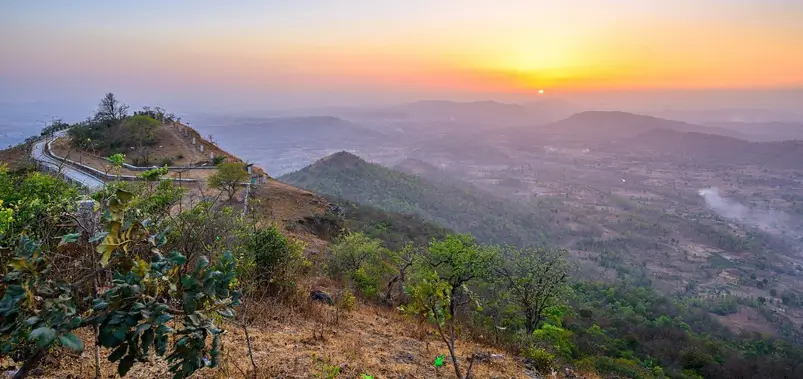
Winter produces the finest overall sunrise in Jaipur conditions. The air is clear, the sky is a deep blue, and the light on the pink city at first sun is the warmest and most saturated of any season. The cool temperatures make early morning physically comfortable rather than requiring discipline to endure.
The only challenge of winter sunrise is the later timing - 7:00 to 7:15 AM in December and January means a later departure than summer, but also a more civilized wakeup time. This is the sunrise season that most international visitors experience, and the conditions justify the recommendation.
Monsoon Sunrise (July Through September)
The Jaipur sunrise tour during the monsoon season is an entirely different visual experience from the cool season. Morning skies in the monsoon are dramatic the clouds that build through the afternoon and evening often break up partially overnight, leaving a sky of mixed cloud and clear patches at dawn that creates extraordinary light conditions.
Monsoon sunrises over Jaipur can produce colors deep purples, saturated oranges, and the specific quality of light that comes through a break in storm clouds that the clear sky sunrises of winter cannot replicate. The trade off is unpredictability: on some mornings the cloud cover is total and the sunrise is invisible. On others, the conditions are the most photographically spectacular of the entire year.
Summer Sunrise (April Through June)
Summer sunrise in Jaipur from approximately 5:35 to 6:00 AM requires the earliest wake up times of the year and rewards them with an almost completely empty city. The major sites have no visitors at 5:30 AM in May. The streets of the old city at first light in summer are as quiet as they ever get. The heat that makes Jaipur challenging by 9:00 AM is entirely absent at dawn, and the early morning is genuinely comfortable.
The light in summer is slightly harsher than winter even at sunrise the sun rises higher and faster in the summer sky but the compensating clarity and the complete absence of crowds make summer sunrise visits worthwhile for photographers and travelers willing to adapt their schedule.
Begin Your Jaipur Adventure with Spectacular Morning Views
Enjoy the peaceful beauty of Jaipur in the early hours before exploring magnificent forts, historic temples, royal palaces, picturesque gardens, and lively local bazaars. With a private chauffeur at your service, every stop is comfortable, flexible, and perfectly planned for an unforgettable day.
The finest Jaipur early morning experiences do not begin and end with the sunrise itself. The two hours following sunrise from approximately 6:30 to 8:30 AM are among the most rewarding in the entire Jaipur day, and structuring your morning to continue into this period rather than returning to the hotel immediately after the sun is up adds enormously to the depth of the experience.
After a Nahargarh sunrise, descend into the old city for chai at a neighborhood stall before the tourist cafes open. After an Amer sunrise, spend time at Panna Meena Ka Kund while the light is still good and the stepwell is still empty. After a Jal Mahal sunrise, walk the lake road as the bird activity builds and the first fishermen appear at the water's edge.
After a rooftop sunrise in the old city, descend to street level and walk through the bazaars as they come to life the vegetable vendors, the flower sellers, the men pushing carts of freshly baked bread through the lanes experiencing the specific morning version of the city that shuts down and transforms by 9:00 AM when the tourist day officially begins.
This is the Jaipur that rewards the early riser in ways that go beyond the photograph. It is the city at its most itself, before it becomes what visitors expect it to be. Those who have experienced it agree, almost without exception, that it was worth every minute of the early alarm.
We promise you a holiday where everything is taken care of from the moment you land. Trusted drivers waiting for you, handpicked hotels that fit your style, personalized itineraries designed just for your family, and a dedicated team on call 24/7. All you need to do is relax, explore, and create unforgettable memories, while we take care of every detail behind the scenes.
The combination of the pink city's specific architectural color, the concentration of heritage viewpoints within a small geographic area, and the quality of the Aravalli light makes sunrise in Jaipur more visually layered than in most comparable Indian cities. Jodhpur's blue city and Udaipur's lake city offer their own dawn experiences of genuine beauty - but Jaipur's scale, its architectural density, and the specific interaction of its terracotta pink buildings with morning light creates a sunrise character that is entirely its own.
Yes, and this is strongly recommended. Golden Triangle Tours builds sunrise visits into Jaipur itineraries as a standard option - with pre-arranged transport, local guide accompaniment, and the flexibility to combine multiple morning experiences within a single early session. Early morning visits do not need to replace daytime sightseeing - they can precede it, adding a two-hour layer of experience before the standard touring day begins.
Yes, with the important qualification that it is special during a very specific and narrow window - the first thirty to forty-five minutes after sunrise when the low light creates the shadow pattern on the stepped geometry. Outside this window, the stepwell is beautiful but no more dramatically lit than at any other time of day. Arriving precisely at sunrise and staying through the first forty-five minutes of light is what makes this experience what it is.
Nahargarh Fort is approximately six to eight kilometers from most central Jaipur hotel areas, with a drive time of twenty to thirty minutes depending on the route and early morning traffic conditions. The road up the hillside to the fort adds another ten minutes to the journey. Plan for forty-five minutes door-to-viewpoint from most central Jaipur locations.
Jal Mahal is the most family-friendly sunrise view Jaipur option - it is accessible, does not require physical exertion, and the bird activity at the lake provides genuine interest for children. The road above Amer Fort is also manageable for families and provides the iconic fort-above-lake view. Fort ridge locations like Nahargarh are best suited to older children and adults who can manage uneven terrain in low light.
Official opening time for Amer Fort is 8:00 AM, which is after the best light has passed in most seasons. Early entry arrangements through an established tour operator with relationships at the fort can sometimes be made. This is worth pursuing if Amer Fort sunrise from inside is a priority - the empty fort in morning light is genuinely extraordinary and entirely different from the busy attraction it becomes by mid-morning.
Yes, for travelers who value atmosphere and experience over the pure visual impact of a panoramic view. The gorge at sunrise has a quality of sacred stillness combined with animal activity and progressive illumination that is unlike any other dawn experience in Jaipur. It is not primarily a photography destination in the way Nahargarh or Panna Meena Ka Kund are - it is an atmospheric and sensory experience of a different order.
Jal Mahal at sunrise is primarily a reflection and bird photography experience. The palace itself is not accessible to visitors - it sits in the middle of the lake - but the lake's eastern shore at first light provides a clear view of the palace in morning light with its reflection in still water. Bird activity at this hour makes the experience compelling for wildlife photographers as well as architecture enthusiasts.
Some heritage hotels and boutique properties in the old city have rooftop areas with views of the sunrise over the pink city. This is a significantly less active experience than visiting a fort or a stepwell at dawn, but it is a genuinely beautiful one from the right property. Ask your hotel specifically about rooftop sunrise access when you check in.
In winter, dress in layers - the pre-dawn temperature can be genuinely cold, particularly on the fort ridges. A jacket over your regular clothing is essential. In summer, light clothing is appropriate as the early morning is already warm. Comfortable walking shoes with grip are recommended for all fort and stepwell visits regardless of season.
Yes. Jaipur is generally safe in the pre-dawn hours. The roads are quiet and the city is peaceful. Use a pre-arranged transport option rather than attempting to find a rickshaw on the street before 5:00 AM - reliability, not safety, is the primary concern at that hour.
Yes, if they are geographically proximate. The Amer corridor - Jal Mahal, Panna Meena Ka Kund, and the Amer Fort road - is the most practical combination, covering three distinct experiences within a small area. Nahargarh and Jaigarh can be combined on the same ridge. Old city rooftop visits and street photography combine naturally as a single morning experience.
For architectural photography with a wide city view, Nahargarh Fort. For geometric and detail photography, Panna Meena Ka Kund at first light. For the most iconic single image - the fort above the lake - the road above Maota Lake facing Amer Fort. For street and documentary work, the old city rooftops and the lanes of the old city itself from approximately 6:00 AM onward.
The road to Nahargarh and the rampart areas visible from outside the ticketed entry zone are accessible before the official 10:00 AM opening time. Early access arrangements for inside the ticketed area can sometimes be made through established tour operators. Confirm the current access situation with your hotel or Golden Triangle Tours before planning your visit.
The sun rises between 5:35 AM in summer and 7:15 AM in winter in Jaipur. Add twenty to thirty minutes of pre-dawn positioning time, plus your travel time from the hotel to your chosen location. In winter, a 5:45 to 6:00 AM departure from your hotel is typically sufficient for fort ridge locations. In summer, departure by 4:45 to 5:00 AM is needed.
Nahargarh Fort is the most consistently rewarding best sunrise spots Jaipur choice for a first-time visitor - the panoramic view, the quality of light on the city below, and the relative accessibility of the location make it the standard recommendation. For travelers who want a less visited alternative, the road above Amer Fort facing Maota Lake produces an equally extraordinary experience with typically fewer people.