The invitation arrives as a heavy card in a velvet box, or more likely these days as a video on your phone with a schedule of five events across three days. You have been invited to an Indian wedding in Rajasthan, perhaps by a colleague, a university friend or the family of someone you met on an earlier trip. Excitement follows quickly, and so do the questions. What on earth is a turmeric ceremony? Can you wear black? How much money goes in the envelope, and why does it end in a one?
Being a foreign guest at an Indian wedding is one of the warmest experiences India offers. Families are genuinely delighted to have friends from abroad, and you will be fed, photographed, pulled onto the dance floor and introduced to dozens of aunts and uncles. This guide walks through the season and dates, each event and what guests do, outfits for every occasion, where to buy or rent clothes in Jaipur and Udaipur with realistic prices, gift money customs, alcohol, food and timings, and how to fold the celebration into a wider tour of Delhi, Agra and Rajasthan.
The main Indian wedding season in Rajasthan runs from November to February, with a second, smaller burst in spring. The weather explains part of this: winter days in Jaipur, Udaipur and Jodhpur are sunny and pleasant, around 22 to 28 degrees Celsius, perfect for outdoor courtyards and lakeside lawns. But the bigger reason is the Hindu calendar. Most Hindu weddings take place on dates and at times chosen by a family priest after studying the couple's birth charts and the positions of the sun, moon and stars. These auspicious windows are not spread evenly through the year.
For the 2026-27 season, widely published Hindu calendars list wedding dates beginning just after Dev Uthani Ekadashi on 20 November, with auspicious dates including 21, 24, 25 and 26 November, then 2 to 6 December and 11 and 12 December. After that comes a pause of about a month, from 13 December to 14 January, when the sun's position is considered unsuitable and very few Hindu weddings take place. The season roars back from 15 January, with many dates through late January and almost every few days in February. Families often book venues a year ahead for the most popular dates, so if a friend tells you the wedding is on a particular Saturday in February, expect half of Rajasthan's hotels to be hosting celebrations on the same night.
What does this mean for you as a guest? First, book flights and rooms as soon as you receive the date. On peak wedding nights, hotel rates in Udaipur and Jaipur can double, and good drivers and guides get booked well in advance. Second, expect traffic. On a big wedding night in Jaipur, groom's processions, brass bands and decorated cars fill the streets from about 8pm, and a 20 minute drive can take an hour. Third, pack for both warmth and cold. December and January evenings in Rajasthan can drop to 5 to 8 degrees Celsius, and many wedding events take place outdoors on open lawns or in palace courtyards. A warm shawl, a smart jacket or a fitted thermal layer under your outfit is essential.
The final point about dates is that the exact ritual time is fixed by the priest and does not move for anyone. If the most important ceremony is set for 2:40am, that is when it will happen, even if dinner started at 9pm. This is completely normal, and nobody expects foreign guests to stay awake for every minute. Families are usually happy for you to attend the parts that matter most to you, provided you say goodbye politely to the hosts before leaving. Muslim, Sikh and Jain weddings in Rajasthan follow their own traditions and timings, so always check the schedule your hosts send.
Make your Rajasthan wedding visit an unforgettable journey with private chauffeur travel, palace stays and personalised sightseeing across Jaipur, Udaipur and beyond. Discover India with comfort, elegance and details thoughtfully arranged.
A traditional Rajasthani Hindu wedding unfolds over two to four days, with a separate event for each ritual. Your invitation will usually list them by their traditional names, so here is what each one involves in plain English and what is expected of you.
The engagement or ring ceremony is often held weeks earlier, but at destination weddings it may be folded into the first evening. The couple exchange rings in front of both families, and guests watch, applaud and join a dinner afterwards. Dress is smart and festive.
The turmeric ceremony is usually a morning or midday event. Family and friends smear a paste of turmeric, sandalwood and rosewater onto the faces, arms and feet of the bride and groom, separately in their own family homes or venues. It is believed to bless the couple and brighten the skin before the wedding. Guests are often invited to apply a little paste, and things can get playful and messy. Wear yellow or a soft pastel, and choose something you don't mind staining, because turmeric stains are stubborn.
The henna ceremony is the henna party, mostly for women, though men are increasingly welcome. Professional artists draw fine, intricate henna designs on the bride's hands and feet, which can take three to five hours. Female guests can queue for a smaller design on one or both palms. Keep the paste on for a few hours and avoid washing it off; the colour darkens to a deep red brown over the next day or two. There is usually music, snacks and plenty of chatter.
The music and dance night is the big party. Both families perform rehearsed dance routines to film songs, cousins tease the couple in skits, and then the floor opens to everyone. If you're asked to join a group dance, say yes; nobody cares about perfect steps.
The groom's procession is the moment most foreign guests remember forever. The groom, dressed in a sherwani and safa turban, rides a decorated white horse, sits in a vintage car or occasionally travels in a carriage, while friends and family dance in front of him through the streets or hotel grounds to a brass band and drummers. Guests join the dancing, and it can last an hour or more. At the bride's venue, her family welcomes the procession and the couple exchange flower garlands on a stage.
The main wedding ceremony takes place under a decorated canopy around a sacred fire. A priest chants in Sanskrit, and the couple walk around the fire several times, traditionally seven, making vows of duty, care and companionship. It can last one to three hours. Guests sit nearby, chat quietly, come and go, and shower the couple with flower petals or rice when invited.
The reception is the most formal event. The couple stand or sit on a stage, and guests queue to congratulate them, pose for photographs and hand over gifts, followed by a large dinner.
Indian weddings are a festival of colour, and the best advice on what to wear to an Indian wedding is simple: go brighter and more sparkly than you think is appropriate. Hosts are genuinely touched when foreign guests wear Indian clothes, and nobody will think you are dressing up in costume. Still, a smart Western outfit in a cheerful colour is perfectly acceptable if Indian clothes feel uncomfortable.
There are a few colour rules. Avoid all white, which is associated with mourning in Hindu tradition. Avoid all black for the main ceremony and reception, as many families still consider it inauspicious for a wedding, although black is often fine and even fashionable at a cocktail or music night. Women should avoid a predominantly red outfit, as red is traditionally the bride's colour, and avoid anything that might outshine the bride. Shoulders and knees should be covered at religious ceremonies, and a light scarf is useful when you are close to the sacred fire or the priest.
For Indian wedding outfits for guests, think about each event separately:
The sari is a single length of fabric, usually around five to six metres, draped over a fitted blouse and underskirt. If you have never worn one, buy a pre-stitched or ready-to-wear sari, or ask your hosts or hotel to arrange a draping helper, often around INR 500 to 1,500 per session. The lehenga, a long flared skirt with a fitted blouse and a long scarf, is easier for first-timers and wonderful for dancing.
For men, the sherwani for wedding guests is a long, knee-length coat worn over fitted trousers, usually reserved for the main ceremony or the groom's close friends. The bandhgala is a shorter, high-collared jacket with Rajasthani roots, smart enough for any evening event. The safa turban is the most Rajasthani touch of all. Many families hand out matching safas to male guests before the procession and have a team on hand to tie them, so ask before buying your own.
Footwear matters more than you expect. You will remove shoes near the sacred fire and in some homes, and you will dance for hours on lawns and marble, so choose comfortable flats, embroidered fabric slip-on shoes or block heels, and skip leather if the family is Jain. Women can add bangles, earrings and a small handbag; men can add a pocket square and a brooch for the turban.
Celebrate Rajasthan's royal charm beyond the wedding festivities. Add handpicked palace hotels, private transfers and curated city experiences to your invitation. Let our team craft a seamless luxury escape around your celebration.
Jaipur is one of the best cities in India to shop for wedding clothes, and arriving two or three days early gives you time for fittings and alterations. Prices below are approximate, lean towards the higher end for good quality and can change with the season and your bargaining skills.
In Jaipur, Johari Bazaar and Bapu Bazaar in the old walled city are lined with shops selling saris, lehengas, fabrics and costume jewellery. MI Road has larger, fixed-price stores and the government-run Rajasthali emporium, which is useful if you prefer marked prices. National ethnic wear chains such as Manyavar, for men, have showrooms in the city and offer ready-made sherwanis, kurtas and bandhgalas in standard sizes. For bangles, Maniharon Ka Rasta near Tripolia Bazaar is the traditional lane of lacquer bangle makers, and you can watch artisans at work.
Realistic budgets for buying, at mid to good quality:
Tailors in Jaipur can usually stitch a blouse or alter a sherwani in two to three days, and faster for an extra charge, though during peak wedding weeks they are very busy, so order on your first day.
Renting is a smart choice for a heavy lehenga or sherwani you will wear only once. Rental boutiques in Jaipur, including stores such as Rashi Creations and national rental brands such as Wrapd with a Jaipur presence, offer outfits for two to three days. Expect to pay around INR 4,000 to 15,000 (about USD 50 to 180) for a lehenga and INR 4,000 to 10,000 for a sherwani, plus a refundable deposit that can equal or exceed the rental fee. Check stains and fastenings before you leave the shop and take photos for your own record. Many travellers find it simplest to rent a lehenga in Jaipur for the main evening and buy a lighter kurta set for daytime events.
Udaipur has a smaller but charming choice. Bada Bazaar and the lanes around the Clock Tower and Hathi Pol have fabric shops, tailors and sari stores, and ready-made ethnic wear chains are found in the newer parts of town. Prices are similar to Jaipur, sometimes a touch higher near the lake. If your wedding is in Udaipur, many guests shop in Jaipur during a Golden Triangle tour beforehand.
The most common wedding present in India is cash in a decorated envelope, and gift money at Indian weddings follows a charming custom. The amount almost always ends in one: INR 501, 1,001, 2,001, 5,001 or 11,001, for example. A round number is considered an ending, while the extra one symbolises a new beginning and continued growth for the couple. Wedding envelopes often come with a small coin attached for exactly this purpose and are sold in every stationery shop and many supermarkets for around INR 20 to 100.
How much should you give? For a colleague or acquaintance, INR 2,001 to 5,001 (about USD 25 to 60) is generous. For a close friend, especially if the family is hosting you, INR 11,001 or more is common, and some foreign guests give the equivalent of what they would spend on a wedding gift at home. Write your name and a short blessing on the envelope, because the family will open hundreds of them later. Hand it to the couple on stage at the reception, or to a parent if the couple is surrounded. Following Indian wedding gift etiquette, use your right hand or both hands.
Physical gifts are welcome too: silverware, a good bottle of perfume, a decorative piece for the home or a fine product from your own country. Avoid leather for Hindu and especially Jain families, avoid black or white wrapping paper, and avoid sharp objects such as knives. Some invitations politely say "no gifts, blessings only", and you should respect that.
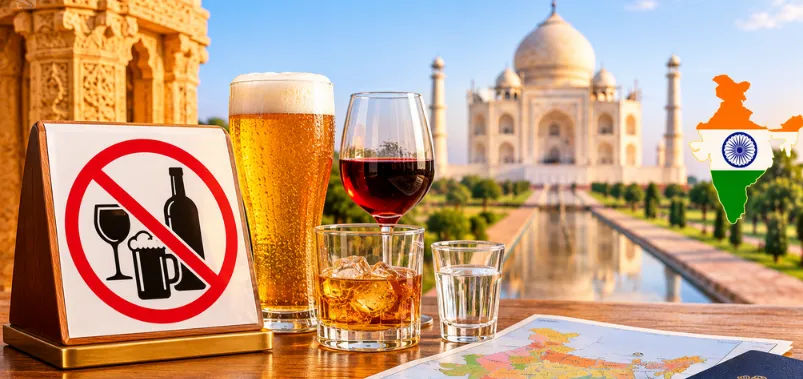
Alcohol depends entirely on the family. Many Rajasthani, Marwari and Jain families hold completely dry weddings, while others serve drinks freely at the music night or a cocktail evening, usually from a separate bar with a temporary licence arranged through the hotel. Follow your hosts' lead, never bring your own bottle to a dry wedding, and stay sober during religious ceremonies and in front of elders.
Timings run late, and everyone knows it. An invitation saying 8pm usually means guests drift in by 9pm, the procession reaches the venue around 10pm or 11pm, and dinner continues past midnight. Eat a snack before you leave the hotel. The food itself is a highlight: long buffets with Rajasthani specialities such as baked wheat dumplings with lentil curry, smoky aubergine, spiced lamb at non-vegetarian weddings, street snack counters, freshly made breads and a dazzling dessert table. Many weddings are fully vegetarian. Pace yourself, because there will be another feast tomorrow.
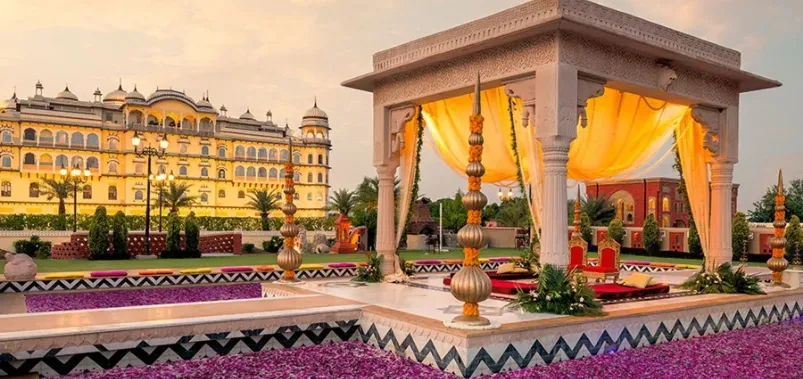
Rajasthan is India's capital of grand weddings, and many celebrations you attend will be held in a former royal residence. In Udaipur, the most sought-after palace wedding venues in Udaipur include the Taj Lake Palace on Lake Pichola, The Oberoi Udaivilas and The Leela Palace Udaipur on the lakeshore, and the City Palace complex, where the Shiv Niwas Palace, Fateh Prakash Palace and the Manek Chowk courtyard host large events. Jagmandir, the island palace in the lake, is used for spectacular evenings with guests arriving by boat.
A destination wedding in Jaipur often takes place at Rambagh Palace, the former residence of the Maharaja of Jaipur, at Jai Mahal Palace with its formal Mughal gardens, at ITC Rajputana, The Leela Palace Jaipur or Fairmont Jaipur, or out at Samode Palace, about an hour north of the city in the Aravalli hills. In Jodhpur, the great favourite is Umaid Bhawan Palace, still partly home to the royal family, and the courtyards and ramparts of Mehrangarh Fort are occasionally used for spectacular private dinners. An Umaid Bhawan Palace wedding is among the most exclusive events in the country, so rooms there are usually reserved for the families, and other guests stay nearby at hotels such as RAAS Jodhpur.
If you are flying all the way to India, it makes sense to add a few days of sightseeing. A wedding and Golden Triangle tour fits together naturally because Delhi is the main international gateway and Jaipur is part of the classic triangle. A relaxed sequence looks like this: arrive in Delhi and spend two nights recovering from jet lag and seeing Old and New Delhi, drive about three to four hours to Agra on the Yamuna Expressway for the Taj Mahal at sunrise (it is closed on Fridays), then continue around four to five hours to Jaipur. If the wedding is in Jaipur, you are already there, with a day or two spare for outfit fittings. If it is in Udaipur, you can fly from Jaipur or Delhi in about one to one and a half hours, or drive about six to seven hours from Jaipur. Jodhpur is about five to six hours by road from Jaipur.
Always build the trip around the wedding dates rather than squeezing the wedding into a sightseeing schedule. Keep the day after the main ceremony free; you will have danced until 2am. If you want to add Jodhpur, Udaipur, Pushkar or the desert, have a look at the Golden Triangle tour with Rajasthan for routing ideas, or the Golden Triangle luxury tours if you prefer palace hotels throughout. A private car with driver makes wedding days much easier, since you can carry outfits, change between events and leave late at night without hunting for a taxi, and Golden Triangle Tours can arrange the car and the sightseeing around your celebration.
We promise you a holiday where everything is taken care of from the moment you land. Trusted drivers waiting for you, handpicked hotels that fit your style, personalized itineraries designed just for your family, and a dedicated team on call 24/7. All you need to do is relax, explore, and create unforgettable memories, while we take care of every detail behind the scenes.
The main season runs from late November to February. In the 2026-27 season, published Hindu calendars list dates from 21 November to 12 December, then a pause until 14 January, with many dates from 15 January through February. Always confirm the exact date with your hosts.
Yes, and hosts are usually delighted when you do. A sari, lehenga or kurta set for women and a kurta, bandhgala or sherwani for men are all welcome. A bright Western outfit is also perfectly acceptable.
Avoid all white, which is linked with mourning, and all black at the main ceremony and reception. Women should avoid mostly red outfits, as red is traditionally worn by the bride. Bright jewel tones, pastels and gold are always safe.
Expect around INR 4,000 to 15,000 (about USD 50 to 180) for two to three days, plus a refundable deposit. Sherwani rentals are usually around INR 4,000 to 10,000. Prices rise during peak wedding weeks, so book early.
INR 2,001 to 5,001 is generous for a colleague or acquaintance, while INR 11,001 or more suits a close friend who is hosting you. Use an amount ending in one and place it in a wedding envelope with your name written on it.
A round number is seen as an ending, while the extra one symbolises a new beginning and continued prosperity for the couple. Many wedding envelopes come with a coin attached for this reason. Amounts like INR 501, 1,001 and 2,001 are the most familiar.
It depends on the family. Many Rajasthani, Marwari and Jain weddings are completely dry, while others serve drinks at the music night or a cocktail party. Follow your hosts' lead and never bring your own alcohol to a dry event.
You don't have to, but you will be warmly encouraged, and it is the most fun part of the celebration. Nobody expects polished steps. Comfortable shoes help, as the procession can last an hour or more.
Very late. Evening events often start an hour after the time on the card, dinner continues past midnight, and the main ceremony may take place at 2am or later if that is the auspicious time. It is fine to leave earlier after thanking your hosts.
Yes, easily. Fly into Delhi, spend time in Delhi and Agra, and continue to Jaipur, which is part of the triangle and a short flight from Udaipur. Keep the day after the main ceremony free for rest.