Taking young children to Delhi, Agra and Jaipur sounds daunting until you are actually there. Indian families travel with babies and grandparents all the time, hotel staff fuss over small guests, and a four-year-old in a sun hat at the Taj Mahal is more likely to be asked for a photograph than glared at. What does need thought is the practical side: car seats, long drives, food, heat, and which monuments suit a stroller and which need a carrier.
This guide works through a Golden Triangle tour with kids by age band: babies under one, toddlers from one to three, children of four to six, and the seven to ten group who can walk all day but get bored fast. It covers the car and the road, food and supplies, monument logistics and ticket rules, the activities children actually enjoy, and the heat, health and hotel questions parents ask most. Prices and rules can change, so confirm the details shortly before you travel.
Child car seats are not standard in Indian cars, and most drivers have never fitted one. The law does say something: under Section 194B of the Motor Vehicles Act, a child under 14 must be secured by a seat belt or a child restraint system, with a fine of INR 1,000. Enforcement is light, and many Indian families still travel with toddlers on laps. Do not copy them. The Delhi to Agra expressway is fast, and the Agra to Jaipur highway has trucks, tractors and the odd cow.
For child car seats in India, the safest answer is to bring your own. Most international airlines carry a car seat and a folding stroller free for a child, often checked at the gate. For babies, a rear-facing infant seat that clips onto its base or installs with a seat belt is easiest. For toddlers and children of four to six, a forward-facing seat with a five-point harness or a high-back booster works well. Seven to ten year olds usually need only a light backless booster, which packs into a suitcase. Many newer cars in India have ISOFIX points, but not all, so ask your operator which car you will get and choose a seat that can also install with a three-point belt. Some companies can supply a seat if asked in advance, but check its condition and the label before you rely on it.
Vehicle choice matters more than people think. For a family of three or four, the Toyota Innova Crysta is the standard choice: high seats, good air conditioning, space for a stroller in the back, and three-point belts in the second row where a car seat belongs. For two families or grandparents along, a Tempo Traveller seats 9 to 12, lets children stand up between stops and swallows luggage; check that the seats you will use have proper belts. You can compare options on our car and coach rental page.
Typical drive times on the Golden Triangle with children, including stops:
With a baby, keep the schedule loose and stop every 90 minutes for a feed and nappy change, and time the longest stretch for a nap. Toddlers do best with an early start after breakfast and a long lunch break. Four to ten year olds cope with longer drives if they have audiobooks, a window seat and something to spot, such as camels on the Jaipur road. Ask your driver to keep a cool box with water and snacks, and keep a change of clothes in the car, not the boot.
Travelling with young children deserves extra care. Enjoy private transport, convenient breaks and flexible sightseeing while discovering Delhi, Agra and Jaipur together at your family's pace.
Food worries top most parents' lists, and the answer is simpler than it seems. Stick to busy hotel restaurants and well-known places, choose freshly cooked hot food, and avoid raw salads, cut fruit you did not see being cut, and ice in drinks from street stalls. Bottled water with an intact seal, or filtered water in good hotels, is fine for drinking and for mixing formula. Use it for brushing teeth too.
Kid-friendly Indian food is easier to find than people expect. Ask for dishes "no chilli, for a child" and kitchens will happily adapt. Children of four to ten usually love buttered flatbread, plain rice with mild lentils, tandoori chicken (ask for it mild), potato and pea curry, scrambled eggs at breakfast, yoghurt and honey, and grilled cottage cheese. Hotel buffets always include toast, pancakes, cereal and pasta, and familiar pizza and burger chains appear in every city and at the expressway stops. Toddlers often take to plain rice and lentils mashed together with a spoonful of yoghurt, which is gentle on small stomachs. Bananas, which you peel yourself, are the perfect car snack.
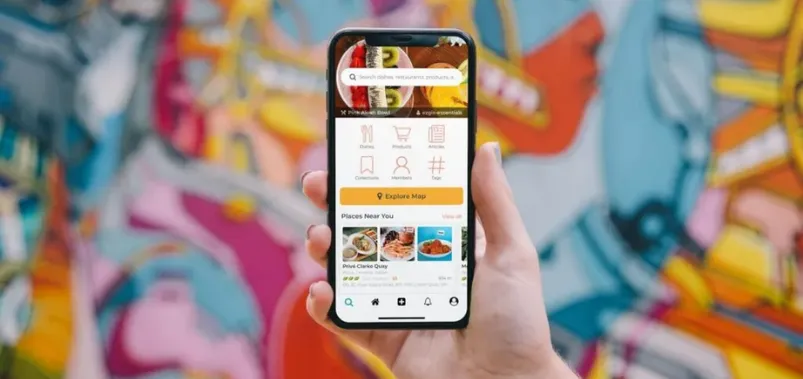
For babies, supplies are easy to buy. Baby food in India includes Nestlé Cerelac cereals in many flavours, sold in every pharmacy and supermarket, plus formula brands such as NAN Pro, Lactogen and Similac. Bring enough of your own formula for the whole trip if your baby is fussy about brands, since recipes differ by country. Nappies in India are widely available: Pampers, Huggies and MamyPoko Pants in all sizes, along with wipes from Himalaya, Johnson's and Mother Sparsh. In Delhi and Jaipur, delivery apps such as Blinkit, Zepto and Swiggy Instamart bring nappies, wipes, formula and snacks to your hotel in 10 to 20 minutes, which is a lifesaver at 9pm. Apollo Pharmacy shops are everywhere for medicines and baby care.
A few habits help. Pack a small bottle of hand sanitiser for every bag and use it before every meal. Carry a pack of oral rehydration salts, sold as Electral in Indian pharmacies, in case of an upset stomach, along with children's paracetamol in the dose your doctor recommends. Bring a sippy cup with a lid, because hotel glasses and children do not mix on a moving car seat. Ask the hotel to sterilise bottles in the kitchen; most luxury properties do this happily.
Breastfeeding mothers will find that a light scarf or shawl is all they need. Many monuments have no dedicated feeding rooms, but a quiet shaded corner, the car with the air conditioning on, or the hotel lobby lounge works well. Indian women feed babies discreetly in public, and no one will mind.
Strollers and Indian monuments have a complicated relationship. Paths are often uneven, with steps, cobbles and thresholds every few metres, and a cheap umbrella stroller will not last. The best kit for babies and toddlers is a soft-structured baby carrier at Indian monuments, used with a sturdy, compact stroller for hotels, airports and paved gardens.
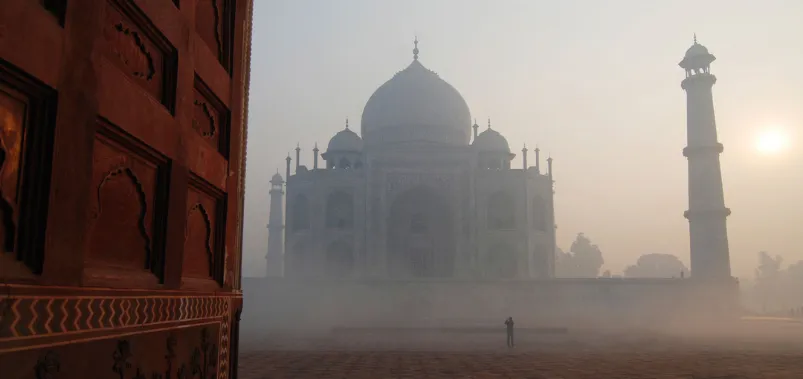
At the Taj Mahal, the official site rules do not mention strollers, and families usually take compact folding strollers through security, which may ask you to fold them for checking. The paved garden paths are fine for wheels, but the main mausoleum is on a raised marble platform reached by stairs, with shoes off or covered, so a carrier is far easier there. Foreign visitors pay INR 1,100 for the Taj Mahal, plus INR 200 for the main mausoleum, and ASI child ticket rules let children below 15 enter free at the Taj and other monuments run by the Archaeological Survey of India, including Agra Fort, the Red Fort, Qutub Minar and Humayun's Tomb. Foreign tickets include shoe covers and a half-litre bottle of water. Food and sweets are not allowed in, so check with the staff about baby milk and keep the visit short. The Taj is closed on Fridays.
Amber Fort in Jaipur is the place to leave the stroller in the car. The ramp up to the main gate is steep and cobbled, and inside there are narrow staircases, high thresholds and polished courtyards. Ask your driver to take you up by jeep rather than walking the ramp in the heat. Foreign visitors pay around INR 500 at Amber Fort and around INR 300 at Jantar Mantar and Hawa Mahal, and a composite ticket of about INR 1,000 covers five Jaipur sites over two days. Young children are often admitted free at Rajasthan state monuments, but check the age rule at the counter.
By age, the practical approach looks like this. With babies, visit monuments at opening time, carry the baby in a carrier facing in, and do one site a morning. Toddlers want to run, so choose places with lawns such as Humayun's Tomb in Delhi or Mehtab Bagh in Agra, and keep visits to an hour. Four to six year olds like a story more than a date; guides who know children turn the Taj Mahal into a love story and Amber Fort into a palace of mirrors and secret passages. Seven to ten year olds enjoy facts and challenges: counting the arches, finding the hidden Persian lettering, or measuring shadows on the giant sundial at Jantar Mantar.
A good guide is worth more than any gadget here. Ask for one who is used to families and will happily cut the commentary short when attention fades.
Let your family experience the best of India's Golden Triangle without an exhausting schedule. Enjoy flexible planning, private transportation and memorable discoveries designed for travellers of every age.
The monuments are the reason you came, but children remember the moments in between. Building one fun activity into each day keeps everyone cheerful, and the Golden Triangle has plenty of choice for kid-friendly activities in Jaipur, Delhi and Agra.
In Jaipur, a morning at Elefantastic elephant sanctuary is a favourite with families. There is no riding; children feed elephants with sugarcane and fruit, walk beside them, paint them with natural colours and watch them bathe, and the visit lasts about three hours, often with a home-cooked vegetarian lunch. Book ahead, as places are limited. Children of four and up get the most from it, though toddlers love watching from a parent's shoulders.
Jantar Mantar, the 18th century observatory in the old city, is a giant outdoor puzzle for seven to ten year olds. The Samrat Yantra, the largest sundial, tells the time to within a few seconds, and kids love watching the shadow creep. Albert Hall Museum has an Egyptian mummy that never fails to impress. In the evening, Chokhi Dhani, a recreated village on the edge of the city, has string puppet shows, camel cart rides, folk dancers and magicians, all in one place, and many heritage hotels in Jaipur put on puppet shows on their lawns before dinner.
If you visit on 14 January, the Makar Sankranti kite festival turns every Jaipur rooftop into a battle of paper kites. Even outside the festival, kite shops in the old city sell kites for very little, and an hour on a hotel roof terrace learning to fly one is pure joy for children of six and up.
In Delhi, the National Rail Museum in Chanakyapuri has old steam engines to climb on and a toy train ride around the grounds; it is closed on Mondays. Lodhi Garden has space for toddlers to run among tombs and ducks, and a cycle rickshaw ride through the lanes of Old Delhi is thrilling for older children, as long as you hold on tight. In Agra, Mehtab Bagh across the river gives a quiet view of the Taj at sunset with lawns to run on, and watching marble inlay craftsmen at work fascinates children who have just seen the Taj up close.
Never underestimate the hotel pool. A long afternoon swim after a morning of sightseeing resets tired children better than anything, and a pool should be high on your hotel checklist from April onwards. Our Golden Triangle tours can be adjusted to leave these afternoon breaks free, and Golden Triangle Tours can arrange a driver and family-friendly guide who keep the pace realistic.
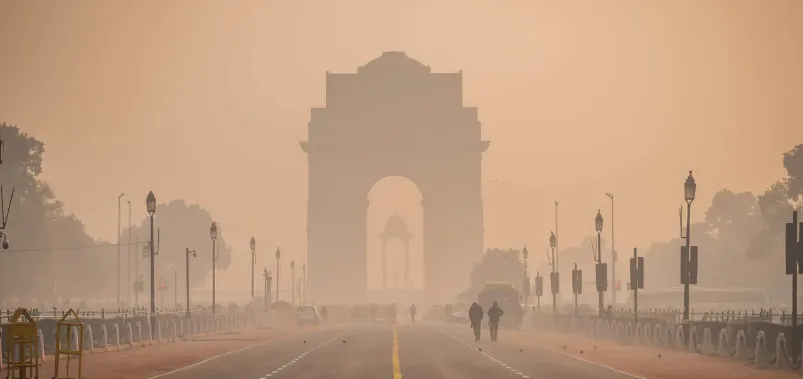
October to March is the best time for a family trip, with warm days around 20 to 30°C and cool mornings. From April to June, temperatures in Delhi, Agra and Jaipur regularly pass 40°C, which is hard on small children. If you travel then, sightsee from sunrise to about 10am, rest through the afternoon, and go out again after 5pm. Light cotton clothes with long sleeves, wide-brimmed hats, high-factor sunscreen and sunglasses help, and children should drink water at every stop even if they say they are not thirsty. From November to January, Delhi's air quality can be poor; check the AQI on your phone and keep outdoor time short on bad days.
For travel health for kids in India, see your family doctor or a travel clinic six to eight weeks before you go. The CDC recommends routine vaccines be up to date and advises hepatitis A for travellers to India, which can be given to babies from six months, and typhoid for children from two years. Babies from six months may be offered an early measles dose before international travel. Malaria risk on the Golden Triangle route is low, but mosquito repellent suitable for children is still wise in the evenings, especially after the monsoon. Keep children away from street dogs and monkeys, which gather at some temples and forts, because rabies is a real risk; any bite or scratch needs medical attention the same day. India's emergency number is 112, and private hospitals such as Indraprastha Apollo in Delhi and Fortis Escorts in Jaipur have paediatric departments.
Choosing the right hotel makes the trip. Family hotels with connecting rooms are the gold standard: parents get privacy and children get their own space, but connecting rooms are limited, so request them in writing when you book and confirm again a week before arrival. Most luxury hotels provide a free cot for babies and extra beds for older children at a set fee. Look for a pool, a lawn and a 24-hour kitchen. In Agra, The Oberoi Amarvilas and ITC Mughal both have large pools and gardens. In Jaipur, Rambagh Palace has wide lawns with peacocks that children love, and many heritage hotels have garden space where children can run safely.
Hotel staff in India are often wonderful with children. It is common for a waiter to bring a small bowl of plain rice before a child even asks, or for the night manager to find a stash of crayons. Ask for anything you need: babysitters, a bottle warmer, a room away from the lift or blackout curtains for daytime naps. With the right car, the right pace and a pool waiting at the end of the day, the Golden Triangle is one of the easiest places in India to travel with young children.
We promise you a holiday where everything is taken care of from the moment you land. Trusted drivers waiting for you, handpicked hotels that fit your style, personalized itineraries designed just for your family, and a dedicated team on call 24/7. All you need to do is relax, explore, and create unforgettable memories, while we take care of every detail behind the scenes.
Indian law requires children under 14 to be secured by a seat belt or child restraint, but car seats are not standard in Indian vehicles. The safest choice is to bring your own seat and confirm that your car has ISOFIX points or three-point belts in the back.
For a family of three or four, a Toyota Innova Crysta gives space, comfort and room for a stroller and car seats. For larger groups or two families, a Tempo Traveller with 9 to 12 seats is more practical.
The drive is about 230 km and takes 3.5 to 4 hours on the Yamuna Expressway. With a baby or toddler, allow an extra half hour for a food plaza stop.
Yes. Children below 15 enter the Taj Mahal and other Archaeological Survey of India monuments free. Adults pay INR 1,100 as foreign visitors, plus INR 200 for the main mausoleum.
The official rules do not mention strollers, and families usually take compact folding ones through security. The main mausoleum is up a flight of stairs, so a baby carrier is easier inside.
Not really. Amber Fort has steep cobbled ramps, narrow stairs and high thresholds, so leave the stroller in the car and use a baby carrier. Take a jeep up to the main gate instead of walking the ramp.
Yes. Pampers, Huggies, MamyPoko Pants, Cerelac and formula brands such as NAN Pro and Similac are sold in pharmacies and supermarkets. In Delhi and Jaipur, Blinkit and Zepto deliver to hotels in minutes.
Choose freshly cooked hot food from busy hotel restaurants, such as rice, mild lentils, buttered flatbread, eggs and mild tandoori chicken. Avoid street food salads and ice, and drink only sealed bottled or filtered water.
Make sure routine vaccines are up to date and ask your doctor about hepatitis A, which can be given from six months, and typhoid, from two years. Book a travel clinic visit six to eight weeks before departure.
October to March is best, with warm days and cool mornings. From April to June temperatures pass 40°C, so sightseeing must be limited to early mornings and evenings.