The shopping on an India trip sneaks up on people. You set out with one suitcase and a promise to "just buy a scarf", and by the time you reach Jaipur there is a sapphire ring in the hotel safe, a bronze lamp that looks two centuries old, three kilos of spices from the old city and a hand-knotted rug being rolled up for shipping. Most of it will travel home without any trouble. A few things will not, and the ones that cause problems are rarely the ones visitors worry about.
This guide covers both sides of the border: what Indian law lets you take out, and what customs in the United States, the United Kingdom, Australia and Canada will let you bring in. It sets out the India customs rules for tourists on antiques, gems, wildlife products, sandalwood and cash, then the food and duty rules at home, with the paperwork that keeps an airport conversation short. Rules and allowances do change, so treat the figures here as a careful starting point and check the official customs website for your own country a week before you fly.
The most serious mistake a visitor can make is buying something that is genuinely old. Under India's Antiquities and Art Treasures Act, any sculpture, painting, coin, carving, piece of jewellery or other object of historical or artistic interest that is more than 100 years old counts as an antiquity. Manuscripts and similar records of scientific, historical or literary value qualify at 75 years. The Act bars the export of antiquities from India by private individuals. Only the central government, or an agency it authorises, can send them abroad, and the export permits are controlled by the Archaeological Survey of India (ASI). A tourist cannot simply apply for permission to take a temple bronze home. Customs at Delhi or Mumbai airport can seize it, and the buyer can face prosecution as well as losing the money.
The trouble is that a great deal of what sells in Jaipur, Agra and Delhi is made to look old. Brass figures are darkened with chemicals, wooden doors are distressed by hand, miniature paintings are painted on aged paper, and coins are cast from old moulds. Shopkeepers in the lanes around Johari Bazaar will happily tell you a piece is "very old, from a palace". If that were true, you could not legally fly home with it. If it is not true, you may still have to prove it at the airport.
That is where the non-antiquity certificate comes in. The ASI runs Experts' Advisory Committees on the export of non-antiquities in its regional circle offices, and these committees examine objects and certify that they are less than 100 years old. The application form asks for a description of each item, its material, dimensions and place of purchase, with clear photographs of about 8 by 6 inches, submitted in duplicate for each category of object. The committee may want to see the object itself. The process takes days, not hours, so it suits a buyer who is in India for a while or a dealer who handles it for you, not someone flying out tomorrow.
In practice, reputable shops that sell antique-style pieces to foreigners often arrange this paperwork themselves or give a written declaration on the invoice that the piece is a modern reproduction. Ask for that line before you pay: the date, a description, the price, and the words "new handicraft, not an antiquity". If a seller refuses to put it in writing, walk away. A useful rule of thumb from local guides is simple: if the price is suspiciously high because the piece is "old", it is either a fake or a legal risk, and neither is worth carrying through customs.
Make your India shopping experience memorable and better informed. Discover beautiful souvenirs, understand documentation requirements and plan your purchases carefully before travelling home with treasured memories.
Jaipur is one of the world's great centres for cutting coloured gemstones, and buying a ruby, emerald or blue sapphire here is a highlight of many trips. There is no Indian limit on taking jewellery out as part of your own personal baggage, and loose stones bought for personal use are treated the same way. What protects you is paperwork, both at the Indian airport and when you land at home.
Every purchase should come with a proper tax invoice showing the shop's name, address and GST number, a description of each item (stone type, carat weight, metal and purity), the price and the tax charged. Keep it with you in your hand luggage, not in the checked bag. For anything valuable, ask for a gemstone lab certificate from an independent laboratory. The Gem Testing Laboratory run by the Gem and Jewellery Export Promotion Council (GJEPC) sits at Rajasthan Chamber Bhawan on MI Road in Jaipur and is one of India's main labs for coloured stones. International names such as IGI and GIA also have a presence in India, and a GIA or IGI report carries weight with insurers and valuers abroad. A certificate from a lab nobody has heard of, printed in the shop's back room, is worth very little.
Jaipur also has a long-running gem scam aimed at tourists, and it is worth knowing how it works. A friendly young man, sometimes claiming to be a student, invites you for tea, then explains that you can make a fortune by carrying stones home and selling them to a partner in your country. You pay thousands of dollars up front and the "partner" never appears. No honest business needs a tourist to smuggle stones for them. Avoid any deal that involves reselling, export quotas or a promise of profit.
At home, jewellery and loose stones count against your duty-free allowance like any other purchase, and they must be declared. If you are wearing your own valuable jewellery on the trip, US travellers can register it with CBP on Form 4457 before they leave, so there is no question later about where it came from. Travellers from other countries should carry old receipts or photographs of their own pieces for the same reason.
Two final practical points. First, insist on paying by card where possible, because the card statement doubles as proof of price. Second, many Jaipur jewellers offer to ship purchases directly to you. That can work well, but a shipped parcel is assessed separately by customs at home, usually without the personal allowance, so you will pay duty and tax on the full value. For a single ring or necklace, carrying it in your hand luggage with the invoice is often cheaper and simpler.
India's Wildlife (Protection) Act makes it a crime to buy, sell or export parts of protected animals and plants, and the penalties include heavy fines and prison. Customs officers at Delhi and Mumbai airports are trained to spot these items, and your home country will almost certainly seize them on arrival too. The list of banned wildlife souvenirs is longer than most people expect.
Ivory is the obvious one, and that includes "antique" ivory, bone carvings passed off as ivory, and inlay boxes with ivory pieces. Shahtoosh shawls, woven from the wool of the endangered Tibetan antelope, are completely banned, however soft and light they feel and however convincing the shopkeeper's story. Tiger and leopard skins, claws and teeth, snake and lizard skin products, mongoose hair paint brushes, turtle shell items and many seashells are all off limits. Reef corals and black coral are protected in India. The red coral used in Jaipur's astrological rings is usually imported Mediterranean coral and is generally sold legally, but ask for an invoice that names the species and origin. Peacock tail feathers are another surprise: their export, and the export of handicrafts made from them, is prohibited, even though you see them everywhere in Rajasthan.
Sandalwood is a separate case. India restricts the export of sandalwood in log, chip, powder and raw form, so do not pack a bag of chips or a raw block from a market stall. Finished sandalwood handicrafts, such as a small carved elephant or a box from a government emporium, are generally fine for personal use when you carry the shop invoice. Red sanders, a different and much rarer timber, is strictly protected and you should not buy it at all. Sandalwood oil in small quantities for personal use rarely causes difficulty, but buy from a reputable shop and keep the bill.
Cash is the other area where travellers get caught out. The Indian currency export limit for foreign visitors comes from Reserve Bank of India rules: a person resident outside India may take up to INR 25,000 in Indian notes out of the country, and only when leaving through an airport. In practice it is wiser to spend or change your rupees before you go, because changing them back abroad is often difficult and the rate is poor. Keep the encashment certificates or receipts that banks and licensed money changers give you, as these let you convert leftover rupees back at an Indian airport.
For foreign currency, you should declare cash above USD 5,000, or a total of all foreign currency including travellers' cheques above USD 10,000, on a Currency Declaration Form when you arrive. When you leave, you can take back foreign currency up to the amount you brought in and declared. Undeclared sums can be seized under India's foreign exchange law, and penalties can run to several times the amount involved.
Discover traditional Indian artistry through handcrafted textiles, miniature paintings, jewellery and regional souvenirs. Explore cultural shopping destinations and experience the craftsmanship behind every meaningful purchase.
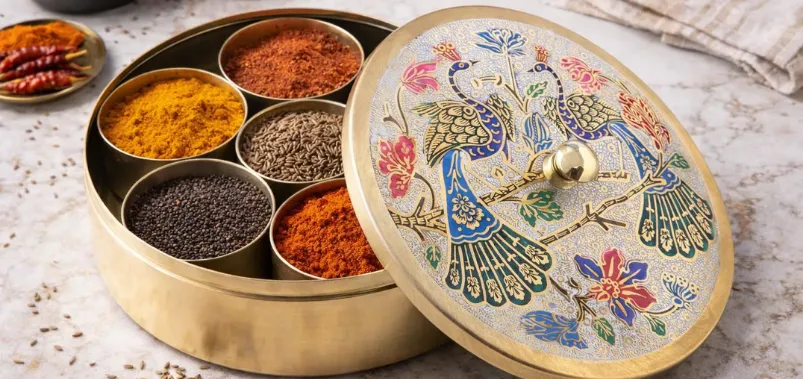
The happy news is that dried spices and packaged tea are among the easiest souvenirs to take home. The rule everywhere is the same: declare all food, even a single packet of spice mix, and you are unlikely to have any trouble. Failing to declare is what leads to fines. Buy from shops that vacuum seal or properly pack the spices, keep them in original labelled packets, and put them in your checked bag so that powders do not cause delays at security.
For the United States, US customs rules for spices are relatively relaxed. Dried, ground or whole spices, packaged tea, sealed sweets without meat, pickles in sealed jars and roasted nuts are generally allowed once declared. Fresh fruit, vegetables, meat and most plant material are not. One specific catch: fresh curry leaves are not allowed into the United States because they can carry a citrus disease, so dried leaves bought in a sealed packet are the safer option. Failing to declare agricultural items can bring a penalty of several hundred dollars on the spot.
The United Kingdom does not let travellers bring meat or dairy products from India, including milk sweets and clarified butter. Dried spices and tea are fine. Many fresh fruits, including mangoes, need a plant health certificate that a tourist cannot realistically obtain, so leave the Alphonso box behind.
Australia runs the strictest biosecurity system of the four. Australia biosecurity rules list seeds (including whole spices), nuts, dried chillies that are not commercially ground, and many dried foods as items that may be restricted, while black and green tea are accepted. Everything must be declared on the incoming passenger card. Officers will inspect your bag, allow what is safe and quietly destroy the rest at no charge. Hiding food is a different matter: travellers can receive an infringement notice of several thousand dollars, and visa holders can have their visa cancelled. Wooden carvings, bamboo items, seeds strung into jewellery and dried flower garlands also need declaring, and wood must be clean and free of bark, soil and insects.
Canada asks travellers to declare all food, plant and animal products. Commercially packaged spices, tea, sweets without meat and dried snacks are normally admitted, while meat and many fresh items face limits or refusal. The Canadian Food Inspection Agency publishes an import tool listing what is allowed from each country.
A Jaipur spice seller's tip that saves a lot of worry: ask for whole spices to be ground and sealed in the shop. Ground spices are rarely an issue anywhere, while whole seeds such as fennel, coriander or cumin sometimes are, particularly in Australia.
Once you know what is legal, the next question is what it will cost to bring in. Duty-free allowances on return differ by country, and they apply per person, so families can usually combine them.
Hand-knotted carpets are where these figures start to matter. A silk or fine wool rug from a Jaipur workshop can easily cost USD 2,000 to 6,000, and most visitors have it shipped. That shipment travels as cargo, so your personal allowance does not cover it and you will pay duty and tax when it arrives, plus any broker or handling fee. Before you leave the shop, get a detailed invoice showing size, material, knot count, price and whether shipping and insurance are included. Ask the seller to sew a labelled tag on the back, photograph the carpet with you and the tag, and keep the courier tracking number. Tariff rates on Indian goods have changed several times recently, especially in the United States, so ask the shipper for a realistic estimate of duty before you agree the price.
Shipping pashmina home follows the same logic. Genuine pashmina from the Changthangi goat is perfectly legal; shahtoosh is not. Look for a Geographical Indication label on Kashmiri pashmina, which shows that the shawl was tested and certified in Srinagar, and keep the invoice that states the material. A blended shawl described as pure pashmina can cause problems with customs valuation as well as disappointment.
Finally, the GST refund for tourists. Indian law includes a provision for refunding GST to foreign tourists on goods they take out of the country, and airport counters have been discussed for years. So far, though, the scheme has not been put into operation, and there are no tax refund desks at Indian airports. Ignore any shop that tells you the tax will be refunded when you leave, and judge the price you pay as final.
Travellers who prefer someone experienced alongside them in the gem markets and carpet workshops often book a private guide, and our Golden Triangle luxury tours include guides who know which Jaipur sellers provide proper invoices and lab reports.

We promise you a holiday where everything is taken care of from the moment you land. Trusted drivers waiting for you, handpicked hotels that fit your style, personalized itineraries designed just for your family, and a dedicated team on call 24/7. All you need to do is relax, explore, and create unforgettable memories, while we take care of every detail behind the scenes.
No. Anything more than 100 years old counts as an antiquity under the Antiquities and Art Treasures Act, and private export is not allowed. If an item only looks old, ask the seller for a written declaration that it is a modern handicraft, or obtain a non-antiquity certificate from the Archaeological Survey of India before you fly.
You apply to the ASI Experts' Advisory Committee on the export of non-antiquities at a regional circle office, with a description of each item, photographs and the purchase details, in duplicate. The committee may want to inspect the object, so allow several days. Many reputable shops arrange this for buyers.
India sets no value limit on jewellery carried as part of your personal baggage. Keep the tax invoice and any lab certificate in your hand luggage, and declare the items in your home country, where they count towards your duty-free allowance.
Ask for a report from an independent lab such as the GJEPC Gem Testing Laboratory in Jaipur, IGI or GIA. Avoid certificates from labs linked to the shop. The report should state the stone type, weight and any treatment.
Reserve Bank of India rules let non-resident visitors take out up to INR 25,000 in Indian notes, and only when leaving through an airport. It is better to spend or change rupees before departure and keep your exchange receipts.
Yes, dried and packaged spices and tea are generally allowed if you declare them. Fresh curry leaves, fresh fruit, meat and soil are not allowed. Always tick the food box on the customs form, as undeclared items can lead to a fine.
Ground, commercially packed spices and black or green tea are usually allowed after inspection, but whole seeds and some dried chillies may be restricted. You must declare all food on the incoming passenger card. Undeclared items can bring a fine of several thousand dollars.
Yes, genuine pashmina is legal and very popular. Shahtoosh shawls, made from the endangered Tibetan antelope, are banned in India and almost every other country. Keep the invoice and look for the Geographical Indication label on Kashmiri pashmina.
Usually yes. Shipped goods are not covered by your personal allowance, so duty, tax and handling fees apply when the carpet arrives. Ask the seller for a detailed invoice and check the likely duty before you buy.
Not at present. The law allows for a tourist refund scheme, but it has not been put into operation and there are no refund counters at Indian airports. Treat any promise of a refund on departure with suspicion.