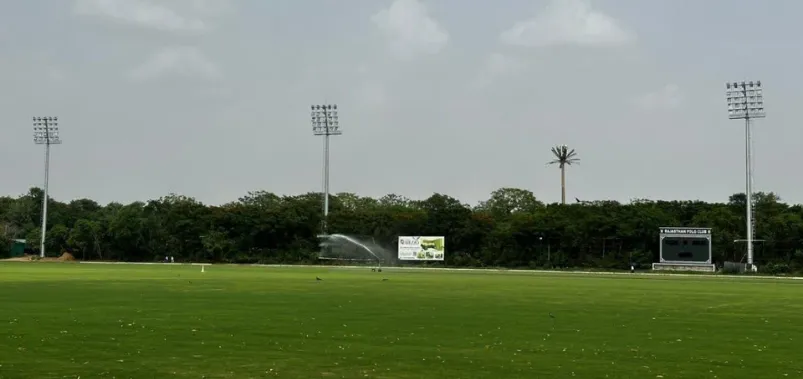
Late on a winter afternoon in Jaipur, the light turns gold over a wide green field on Bhawani Singh Road. Ponies thunder past the boards, a mallet cracks against a white ball, and a ripple of applause comes from the stands where people sip tea in cashmere shawls. This is the Jaipur polo season, and for a few weeks between January and March the city that gave the modern game some of its greatest players fills its calendar with cups, trophies and garden parties.
Most visitors to Jaipur never realise it is happening. They see the City Palace, Amber Fort and the bazaars, then fly on to Agra. Yet watching a match is one of the easiest luxury experiences to add to a winter trip, and it shows a side of the city that guidebooks rarely cover: royal families, army officers, international professionals and well dressed locals all gathered around one field. This guide covers the history, the tournaments, how to get in, how the game works, what to wear, where to stay and how to time it with the Jaipur Literature Festival.
Polo in this part of India is far older than the British clubs that later wrote its rulebook. The Kachhwaha rulers of Amber played a mounted stick and ball game for centuries, and when the court moved to the new city of Jaipur in the 18th century, a polo field sat close to the palace. But the name that every polo fan connects with the city is Maharaja Sawai Man Singh II, the last ruling Maharaja of Jaipur.
Man Singh II was rated a ten goal player, the highest possible handicap in the sport, and in the 1930s his Jaipur team toured England and won the major trophies of the season, against the strongest teams in the country. His wife, Maharani Gayatri Devi, wrote in her memoir that polo in India held the place football held in England, and that crowds at Jaipur matches were so large that police had to clear a path for his car. He later led India to a world title in Deauville in France. He died in England after a fall during a match at Cirencester, still playing the game he loved into his late fifties.
That legacy is the reason polo in Jaipur still feels like a living tradition rather than a museum piece. The Rajasthan Polo Club, which began as the Rajputana Polo Club at the start of the 20th century and later moved its headquarters from Mount Abu to Jaipur, plays on the ground beside Rambagh Palace, the former royal residence that Man Singh II helped turn into one of India's first palace hotels. The current head of the family, Sawai Padmanabh Singh, is himself an international player and has led the Jaipur team in India and abroad, which keeps the royal connection very visible on match days.
The army is the other half of the story. The 61st Cavalry, raised in the early 1950s from the horsed units of the former princely states, is based in Jaipur and is often described as the last serving horse mounted cavalry regiment in the world. Its officers have won a long list of national sporting awards for polo and equestrian events, and army teams remain regular entrants in the Jaipur tournaments.
One small point of confusion is worth clearing up. You may read about the "Jaipur Polo Ground", but that ground is actually in New Delhi, beside the Delhi Race Course, and was gifted to the capital by Man Singh II. It was used mainly by army players from the 61st Cavalry and the President's Bodyguard, and the government sealed and took back the site in June this year. If you want to watch polo on this trip, Jaipur itself, not that Delhi ground, is where you need to be.
Discover Jaipur's prestigious polo heritage with exclusive sporting experiences, luxury palace stays and private chauffeur services. Let us craft a refined Rajasthan getaway around your interests.
The Rajasthan Polo Club runs its main season from roughly January to March, when the mornings are crisp and the afternoons are pleasant, usually somewhere between 20 and 27 degrees Celsius. Summer heat and the monsoon make the grounds unusable for much of the year, which is why top Indian players spend those months competing in England, Argentina and elsewhere. The exact calendar is announced by the club only a few weeks before the first match, so treat any date you read online as provisional until it appears on the club's own channels or in Jaipur newspapers.
Recent seasons have followed a consistent pattern. A typical calendar includes these tournaments, often played in weekly blocks with the final on a weekend:
The season builds in quality as it goes on. January matches are often lower goal and more relaxed, with army and club teams finding their rhythm. February is the peak, when the 8 and 12 goal tournaments bring in foreign professionals from Argentina, England and South Africa, and the big sponsored finals draw the most glamorous crowds. By late March the mood is social and light hearted.
For a luxury traveller, the sweet spot is usually the first three weeks of February. You get the strongest polo, the best chance of a sponsored final with hospitality attached, and comfortable sightseeing weather. Hotels are in high season, so book rooms early, especially if a final falls on a weekend.
Team names give you a quick guide to who is playing. Jaipur, the royal family's team, has dominated recent seasons and regularly reaches finals. Corporate teams such as Jindal Panther, Jindal Bedla and Optiemus Achievers bring in hired professionals, while the army's teams draw on the 61st Cavalry and other units. A Jaipur final against a strong corporate side, with Sawai Padmanabh Singh in the saddle, is the match most locals want to see.
A practical tip from regular spectators: matches usually begin in the afternoon, often around 3pm, and finish before sunset. Ask your hotel concierge for the week's fixtures on the morning you arrive, because start times shift with the number of teams entered and the light.
The good news is that you do not need to be a member or know a royal to watch a polo match in Jaipur. Ordinary league and tournament matches at the Rajasthan Polo Club can usually be watched from the public side of the ground, and Jaipur families often come along with children and picnic rugs. Seating in the members' stand, sponsor tents and the Polo Palladio clubhouse beneath the stands is a different matter. Polo Palladio, opened in recent seasons, is restricted to members with annual social memberships, and the stand areas at finals are usually by invitation or sponsor pass. Rules and access change each year, so check with your hotel before you go.
For finals and the big sponsored cups, the most reliable route in is through a hotel package. The Leela Palace Jaipur, for example, has run a "Polo in the Pink City" package around the Maharaja Sawai Man Singh Polo Cup, combining a two night stay with VIP access to the final, a pre final evening party and match day high tea. Rambagh Palace and Raffles Jaipur, as tournament sponsors, often arrange access or hospitality for in house guests. A well connected travel company can sometimes request passes, but nothing is guaranteed until the club confirms.
Once you are in, the game is easier to follow than it looks. Each team has four players, numbered one to four by position: number one is the main attacker, number four the last line of defence. A match is divided into periods called chukkas, each lasting seven and a half minutes of playing time, and Jaipur matches usually run to four or five chukkas. Players change ponies between chukkas, which is why you will see grooms leading fresh horses along the side of the field. Teams switch ends after every goal, which surprises many first time spectators.
The key safety rule is the "line of the ball". Once a ball is struck, its path creates a right of way, and the player following that line has priority. Most whistles you hear are for crossing that line dangerously.
Chukkas and handicaps are the two terms worth learning before your first match. Every player has a handicap rating from minus two up to ten goals, based on skill. Add up the four players and you get the team handicap. Tournaments are rated by this number, so an 8 goal cup allows teams whose combined handicap is about 8. In handicap tournaments, the weaker team starts with a goal advantage equal to the difference between the two sides, so a team rated 6 playing a team rated 8 starts the match two goals up. Half goals are possible, which is why you might see a final score like seven and a half to seven.
Arrive 20 to 30 minutes early, pick a spot near the centre line where the action is easiest to follow, and keep an eye on the scoreboard by the stands. Your guide or driver can drop you right at the gate on Bhawani Singh Road, just a few minutes' drive from the old city.
Experience the excitement of polo season alongside Jaipur's royal architecture, heritage hotels and exceptional hospitality. Enjoy personalised sightseeing and seamless private travel arrangements.
There is no printed rule book for spectators in Jaipur, but there is a clear unwritten polo dress code. Think smart garden party rather than sports stadium. Men usually wear chinos or linen trousers with a collared shirt, a light blazer or a waistcoat, and comfortable leather loafers or suede boots. Many local men wear a tailored high necked Jodhpuri jacket on final days. Women wear flowing dresses, wide trousers with a silk blouse, or a sari, with a shawl for the evening when temperatures drop fast after sunset. Large sunglasses and a hat are common and practical, because the afternoon sun is strong even in February.
Footwear matters more than you might think. The ground is grass over soft earth, and stiletto heels sink straight in. Block heels, wedges, smart flats or boots are far better. Avoid bright white trousers if you intend to sit on the grass, and leave very casual clothing such as shorts, flip flops and gym wear for another day. At sponsored finals the crowd is noticeably more dressed up, with jewellery, pocket squares and turbans in bright colours.
Halftime brings the most famous piece of polo match etiquette: divot stomping. During the break, spectators walk onto the field and press back the clumps of turf, called divots, that the ponies' hooves have kicked up. It keeps the surface safe for horses and riders, and it is a lovely moment to stretch your legs and chat with other guests. Watch where you step, as the ponies leave more than divots behind, and always clear the field promptly when the umpire signals the next chukka.
A few other points of courtesy apply. Never walk behind the pony lines or approach a horse without asking a groom first; polo ponies are fit, excitable animals. Clap for good play on both sides, not just your favourite team. Keep phones on silent, and avoid flash photography near the field, which can startle the horses. If you are a guest in a sponsor tent, introduce yourself to the host and thank them before you leave.
Then there is the food. Polo high tea in Jaipur is a serious affair. At hospitality tents and hotel packages you can expect finger sandwiches, scones, small savoury pastries, Indian snacks like crisp pastry parcels and spiced potato cakes, cakes and, of course, pots of tea and coffee, with champagne poured at the bigger finals. The Leela Palace Jaipur has hosted a champagne afternoon tea around its cup, and the clubhouse garden at the Rajasthan Polo Club opens for tea after matches for members and their guests.
After the trophy presentation, the evening often moves on to the hotels. The Polo Bar at Rambagh Palace, decorated like a royal tent with old trophies and photographs of the Jaipur team, is the classic place for a post match drink, and on final weekends you may well find yourself sharing it with players still in their boots.
If watching is not enough, you can get closer to the horses. The Rajasthan Polo Club runs the Sawai Man Singh Polo and Riding Academy at the club itself, set up under the guidance of Sawai Padmanabh Singh. It mainly offers monthly courses for local and resident riders, with published fees of around INR 10,000 a month for riding and INR 15,000 a month for polo (roughly USD 120 and USD 180), and it accepts students aged six and above. Short term visitors cannot always join, but it is worth asking whether a single introductory session or a stable visit can be arranged during your stay. Polo riding lessons in Jaipur for complete beginners are also offered by some private stables on the edge of the city, and several luxury hotels can arrange a morning ride through nearby villages and farmland.
The 61st Cavalry is a working army regiment, not a tourist site, so casual visits to its lines are not possible. The easiest way to see its riders is on the polo field itself, where army teams play in the Jaipur tournaments, and in the Republic Day parade in New Delhi on 26 January, where the regiment rides in full ceremonial dress with plumed turbans and lances. Some years the regiment also takes part in horse shows and equestrian events in Jaipur during the winter, so keep an eye on the local papers.
Many travellers ask about elephant polo, having seen old photographs of brightly painted elephants with long mallets. Elephant polo was played in Jaipur for years as a show match, often around the Elephant Festival before Holi and at charity events. It no longer happens, and for good reasons. Animal welfare groups and the Animal Welfare Board of India raised serious concerns about how the elephants were trained and kept, including the use of sharp goads and chaining between events. When a large elephant polo match was scheduled in Jaipur, the district administration cancelled it after the Board pointed out that the animals had not been registered as performing animals and the organisers had not shown valid ownership papers. The state later scaled down the Elephant Festival itself. Today the responsible view is simple: if anyone offers you elephant polo or elephant rides, decline politely.
For a gentler animal encounter, Jaipur has ethical alternatives. Your guide can suggest sanctuaries where you watch elephants bathe and feed without riding them, which is a far better memory to take home.
There are also polo themed experiences inside the hotels. The Polo Bar at Rambagh Palace is lined with Jaipur team memorabilia, and the City Palace museum displays royal portraits and family photographs from the polo era. Ask your guide to point out the polo connections during your City Palace visit; most visitors walk straight past them.
The most fitting base for a polo trip is Rambagh Palace, the Taj property that stands right beside the Rajasthan Polo Club. This was the home of Man Singh II and Gayatri Devi, and you can walk from the palace gardens to the edge of the ground in a few minutes. Rooms are elegant rather than flashy, with marble corridors, peacocks on the lawns and the Polo Bar downstairs. In January and February rates are at their highest, often above INR 50,000 (about USD 600) a night for an entry level room, and much more for historical suites; prices change, so check the latest rates directly.
Other strong options sit close by. The Leela Palace Jaipur, on the northern side of the city towards Amber, runs its own polo package and sponsors one of the main cups. Raffles Jaipur, also a polo sponsor, is a newer palace style hotel on the Amber side of the city. Rajmahal Palace, a smaller former royal residence in the C Scheme area, is a quieter, design led choice, and the Oberoi Rajvilas offers garden villas a short drive outside the centre. All of them can book transfers to the polo ground and advise on dress for finals.
Timing your trip with the Jaipur Literature Festival is the easy way to make a winter week in the city even richer. The festival's 20th edition runs from 14 to 18 January at Hotel Clarks Amer, its new home after many years at Diggi Palace, with the theme "20 Years of Ideas. Stories. Conversations." Early polo matches are often under way by mid to late January, so a week from around 14 to 21 January lets you hear writers in the mornings and catch polo or sightseeing in the afternoons. If the big polo finals matter more to you, aim for early February instead and treat the festival as something for another year.
A practical week might look like this: arrive in Jaipur from Delhi by road or air, spend two mornings on Amber Fort and the old city, keep two afternoons free for polo, and add a day trip to the stepwells and villages outside the city. For a fuller picture of what to see between matches, our Jaipur destination guide covers the main sights, markets and food streets.
Polo also fits neatly into a classic Delhi, Agra and Jaipur route, since Jaipur is usually the last stop. If you would like a private car with driver, a licensed guide and palace hotels arranged around the polo calendar, Golden Triangle Tours can set this up as part of a luxury Jaipur tour, and our Golden Triangle luxury tours show how the route works with Rambagh Palace and other top hotels.
We promise you a holiday where everything is taken care of from the moment you land. Trusted drivers waiting for you, handpicked hotels that fit your style, personalized itineraries designed just for your family, and a dedicated team on call 24/7. All you need to do is relax, explore, and create unforgettable memories, while we take care of every detail behind the scenes.
The main season at the Rajasthan Polo Club usually runs from January to March, with the strongest tournaments in February. The club announces exact dates only a few weeks in advance. Check with your hotel or local newspapers before you finalise travel dates.
Ordinary matches can usually be watched from the public side of the ground without a paid ticket. Seats in the members' stand, sponsor tents and the clubhouse are by membership, invitation or hotel package. Finals have the tightest access, so arrange passes in advance.
Matches are played at the Rajasthan Polo Club ground on Bhawani Singh Road, next to Rambagh Palace. It is about 10 to 15 minutes by car from the old city. The "Jaipur Polo Ground" you may read about is a separate ground in New Delhi.
Each chukka lasts seven and a half minutes of playing time, and Jaipur matches usually have four or five chukkas. With breaks, pony changes and halftime, expect about one and a half to two hours. Matches usually start in the afternoon and end before sunset.
Dress as you would for a smart garden party: linen trousers, collared shirts and blazers for men, and dresses, smart trousers or a sari for women. Wear flat or block heeled shoes, as stilettos sink into the grass. Bring sunglasses, a hat and a warm shawl for the evening.
At halftime, spectators walk onto the field and press back the clumps of turf kicked up by the ponies. It keeps the surface safe for the horses and is a friendly social moment. Leave the field as soon as the umpire signals play is resuming.
Sponsored finals in February, such as the Rajmata Gayatri Devi Memorial Cup and the Maharaja Sawai Man Singh Polo Cup, offer the best mix of top polo and hospitality. Hotel packages linked to these cups often include VIP seating and high tea. Book these well ahead.
The Sawai Man Singh Polo and Riding Academy at the Rajasthan Polo Club offers riding and polo courses, mainly on a monthly basis. Fees have been around INR 10,000 a month for riding and INR 15,000 for polo. Ask in advance whether a short introductory session is possible for visitors.
No. Elephant polo matches in Jaipur were stopped after the Animal Welfare Board of India and animal welfare groups raised concerns about cruelty and unregistered animals. Responsible travellers should avoid any elephant polo or elephant ride offers.
Yes. The festival runs from 14 to 18 January at Hotel Clarks Amer, and early polo matches often begin around mid to late January. Staying a few extra days after the festival gives you a good chance of seeing both.