How to Choose the Best India Tour Company: 15 Questions to Ask Before You Book
16 Sep 2026

Jaipur's forts and palaces tell the story of Rajasthan's royalty, but a short drive beyond the city limits reveals a different story altogether, one of farming families, artisan workshops, centuries old stepwells, and a pace of life that has changed remarkably little over generations. For travellers with an extra day or even just a few spare hours, off-beat villages near Jaipur offer a genuinely rewarding contrast to the city's bustle, without requiring a major detour from a typical Rajasthan itinerary.
This guide covers a selection of villages within easy reach of Jaipur, each offering something distinct, heritage architecture, artisan crafts, natural landscapes, or simply the chance to walk through lanes where daily rural life continues much as it always has. Whether combined into a single day or used to break up a longer Rajasthan route, these village tours near Jaipur provide a window into a side of the state that most itineraries skip entirely.
.webp)
Samode village, located approximately forty kilometres north of Jaipur, is perhaps the best known of the city's nearby rural escapes, anchored by the magnificent Samode Palace, a heritage property now operating as one of Rajasthan's most celebrated luxury hotels.
What makes Samode worth visiting beyond the palace itself is the village surrounding it. Walking through Samode's lanes offers a genuine glimpse of traditional Rajasthani village life, farmers working fields, women drawing water, the unhurried rhythm of rural daily routines, set against a backdrop of traditional architecture that has remained largely unchanged.
For travellers without the budget or inclination for an overnight stay at Samode Palace, a day visit still allows for exploring the palace's stunning frescoed interiors and courtyards (subject to visiting hours and any access arrangements), combined with a walk through the surrounding village, making Samode an efficient single stop that combines heritage grandeur with rural atmosphere.
Many travellers who enjoy Samode's blend of royal architecture and rural charm often seek other heritage experiences beyond Jaipur's city centre. Exploring Rajasthan's lesser-known palaces, havelis, and countryside estates provides a deeper understanding of the region's aristocratic past while avoiding the crowds found at major tourist attractions.
Read More: Best Heritage Boutique Hotels in Jaipur: Havelis Worth Staying In
Already covered in detail for its block printing tradition, Bagru village, around thirty kilometres from Jaipur, deserves its place on this list specifically as a village destination in its own right, not simply as a craft workshop stop.
Beyond the printing workshops themselves, Bagru offers the texture of a working Rajasthani town, narrow lanes, local markets, and the visual spectacle of freshly block printed fabric drying in long colourful stretches across open ground, a scene that feels genuinely photographic without being staged for visitors. For travellers who have already done a dedicated block printing workshop elsewhere, or who simply want a shorter visit, walking through Bagru itself, observing daily life alongside the printing activity that defines the town, offers a worthwhile day trip from Jaipur in its own right.
Bagru offers a fascinating glimpse into Rajasthan's traditional textile industry, but it is only one of several artisan communities surrounding Jaipur. Visitors interested in handmade crafts often combine village visits with opportunities to meet local artisans and learn about techniques that have been passed down through generations.
Read More: Hand Block Printing in Jaipur: Visit a Traditional Chippa Community Workshop
.webp)
Most visitors to Amber Fort, one of Jaipur's most visited attractions, never set foot in the village that shares its name, despite it sitting directly at the fort's base. Amber village offers an often overlooked opportunity, exploring traditional Rajasthani village life within walking distance of one of the region's most iconic monuments.
Wandering through Amber's lanes after, or instead of, the fort visit reveals a working town with its own temples, markets, and residential character, a useful reminder that the fort itself was once the administrative centre of a living settlement, not simply a standalone monument. For travellers who have allocated a half day for Amber Fort, adding even an hour in the village afterward provides meaningful additional context with minimal extra travel.
Exploring Amber village helps visitors understand the community that once supported one of Rajasthan's most important royal capitals. Travellers looking for a deeper experience often discover that the fort itself becomes far more meaningful when viewed alongside the surrounding settlement and local history.
Read More: How to Visit Amer Fort Without Crowds – Timings, Tips & Insider Guide for Foreign Tourists
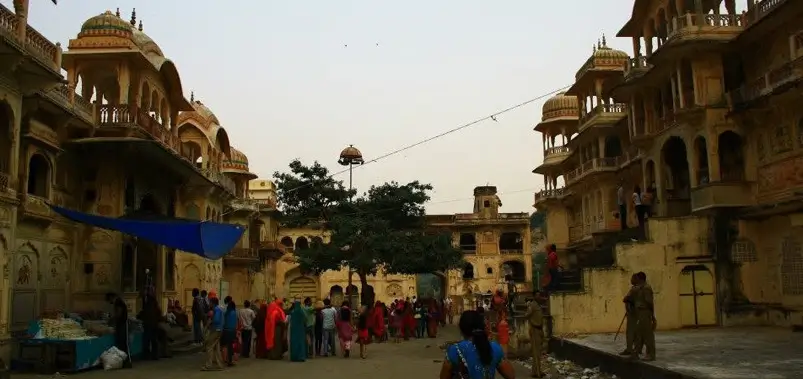
Chomu, located around forty five kilometres from Jaipur, is a smaller, less visited village that retains historical and cultural elements without the crowds associated with more prominent nearby destinations. For travellers specifically seeking offbeat places near Jaipur with minimal tourist infrastructure, Chomu represents a genuinely quieter alternative, a village experienced largely as locals experience it, rather than one shaped significantly around visitor expectations.
This makes Chomu particularly appealing for travellers who have already visited Samode or Amber and are looking for something with an even lower profile, somewhere the experience feels less like "visiting a village" and more like simply being in one.
Travellers who appreciate Chomu's peaceful atmosphere often find themselves seeking other lesser-known corners of Rajasthan that remain largely untouched by mainstream tourism. These destinations offer a chance to experience historic architecture, local traditions, and authentic daily life without the crowds commonly found at the state's most famous attractions. For visitors looking to slow down and explore beyond the usual highlights, these hidden gems can be among the most rewarding experiences near Jaipur.
Bhap Village, approximately forty five kilometres from Jaipur, accessible by taxi, private car, or local bus, offers a genuinely off the beaten path experience for travellers willing to venture slightly further from the well trodden routes.
Beyond the village itself, Bhap is particularly noted for food, travellers are encouraged to try authentic Rajasthani meals here, including bajra roti (millet flatbread), dal, ker sangri (the distinctive desert bean and berry preparation), and sweets like ghevar and malpua. For travellers who have already experienced a cooking class or home dinner in Jaipur itself, sampling these dishes in their original rural context, prepared and eaten the way they traditionally have been for generations, adds an additional dimension to understanding Rajasthani cuisine.
One of the highlights of visiting Rajasthan's villages is experiencing traditional food in its original setting. From millet breads and seasonal vegetables to family recipes rarely found in restaurants, rural cuisine offers a completely different perspective on the state's culinary heritage.
Read More: Local Family Home Dinner Experience in Jaipur: A Genuine Taste of Rajasthani Hospitality
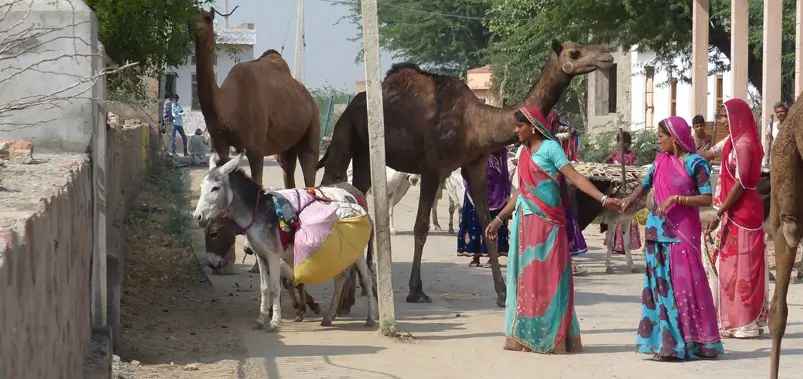
For travellers seeking something visually unlike anything else near Jaipur, Sambhar, home to Rajasthan's largest inland salt lake, spanning over two hundred square kilometres, offers a landscape entirely distinct from the desert forts and rural farmland that define most nearby destinations.
The lake features countless shallow pools where local communities harvest salt through a labour intensive traditional process, creating striking geometric patterns across the landscape, particularly dramatic under the open sky. While Sambhar is more of a landscape and cultural industry destination than a "village" in the traditional sense, it pairs naturally with a broader rural Rajasthan villages day trip for travellers interested in seeing the working economic life of the region alongside its more conventionally picturesque rural scenes.
Travellers exploring Sambhar Salt Lake often look for additional day trips that showcase Rajasthan's diverse landscapes and historic sites. Combining natural scenery with ancient architecture creates a rewarding excursion beyond Jaipur's forts and palaces.
Read More: Chokhi Dhani Jaipur: What to Expect, What to Skip & How to Make the Most of It
Several operators offer structured village tours near Jaipur that combine multiple elements into a single day, visits to villages like Dera, where travellers can interact directly with local families, alongside demonstrations of traditional crafts such as handloom weaving, where artisans create sarees, shawls, and scarves using techniques passed down through generations.
Many of these tours emphasise eco-tourism and traditional sustainable practices specific to Rajasthan's arid environment, including tankas, underground water storage systems that have been used for centuries to manage water scarcity, offering insight into how rural communities have adapted to the region's challenging climate over generations.
Some village tour itineraries also incorporate camel safaris through the rural landscapes surrounding Jaipur, an experience that takes travellers through farms and remote village paths, offering a different vantage point on rural life than walking alone would provide.
Several of Jaipur's most well known day trip destinations pair naturally with village visits, creating efficient combined itineraries.
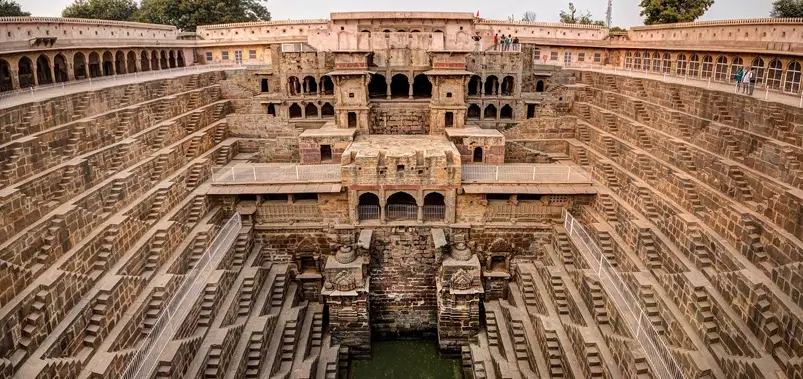
Chand Baori, the famous stepped well in Abhaneri, and the nearby Harshat Mata Temple, are commonly combined with village visits in the surrounding Dausa area, allowing travellers to experience both architectural heritage and rural village life within a single day trip from Jaipur.
For travellers interested in a more curated rural experience without independent planning, organised village tours typically handle transport, introductions to local families and artisans, and any necessary arrangements for craft demonstrations or meals, removing much of the logistical complexity that might otherwise make these offbeat destinations feel inaccessible.
For visitors with limited time, carefully planned day trips can combine rural villages, historic monuments, and local cultural experiences into a single itinerary. These routes allow travellers to see a broader side of Rajasthan without spending long hours on the road.
Read More: Jaipur on Foot: The Best Walking Tour Routes in the Pink City
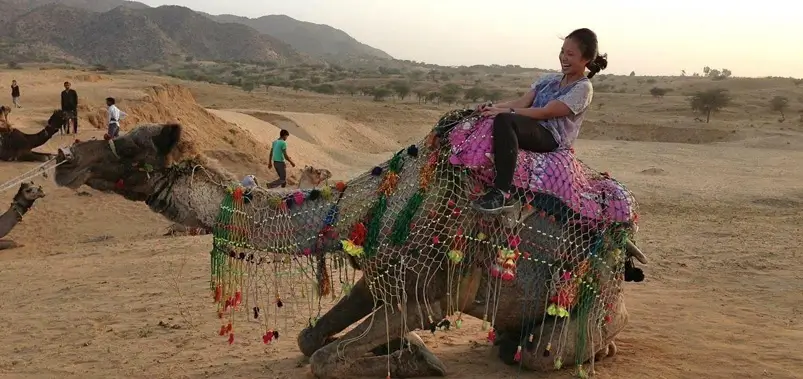
For travellers wondering whether an off-beat villages near Jaipur day trip is worth the time, particularly when balanced against Jaipur's own extensive list of attractions, the value lies primarily in contrast. Jaipur's forts, palaces, and bazaars, however impressive, represent a curated, historical, and to some degree commercial version of Rajasthan. Villages offer something different, an unscripted, ongoing version of daily life that has continued largely unchanged for generations, alongside crafts and traditions that, in many cases, directly informed the very palaces and artworks visitors have been admiring in the city.
For travellers with even a single free day or half day in their Jaipur itinerary, particularly toward the end of a longer Rajasthan trip, a village day trip often provides a grounding, human scale counterpoint to the grandeur of the city's major sights, frequently cited by travellers as among the most memorable parts of their entire visit, precisely because it feels so different from everything that came before it.
Village excursions offer a refreshing contrast to Jaipur's famous monuments, but they are most rewarding when combined with a broader understanding of the city's history and culture. Exploring both the historic centre and surrounding countryside creates a more complete Rajasthan travel experience.
Read More: Walled City of Jaipur: A First-Timer's Complete Guide for Foreign Visitors
Post Date : 📅 17 Jun 2026
We promise you a holiday where everything is taken care of from the moment you land. Trusted drivers waiting for you, handpicked hotels that fit your style, personalized itineraries designed just for your family, and a dedicated team on call 24/7. All you need to do is relax, explore, and create unforgettable memories, while we take care of every detail behind the scenes.
Yes, particularly in Samode, where heritage hotel accommodation is available, and in some villages with homestay options as part of organised eco-tourism initiatives.
Comfortable, modest clothing suitable for walking on uneven rural paths, along with sun protection, is recommended, similar to general sightseeing attire in Jaipur.
Some village tour operators include camel safaris through rural landscapes as part of the experience, offering an additional way to explore the countryside.
Yes, for villages closer to Jaipur, such as Amber village or Bagru, a half-day is generally sufficient, particularly when combined with other nearby attractions.
A tanka is a traditional underground water storage system used for centuries in Rajasthan to manage water scarcity, often highlighted on village tours focused on sustainable rural practices.
Many do, particularly tours to villages like Dera, where visitors can meet local families and observe traditional crafts such as handloom weaving.
Chomu offers a quieter, less tourist-oriented alternative for travellers specifically seeking minimal crowds and a more understated village experience.
Yes. Villages in the Dausa area, for example, are often combined with visits to Chand Baori stepwell and Harshat Mata Temple for a fuller day trip itinerary.
Yes. Several operators offer structured village tours combining visits to multiple villages, craft demonstrations, interactions with local families, and sometimes camel safaris through rural landscapes.
Sambhar is home to Rajasthan's largest inland salt lake, where traditional salt harvesting creates striking geometric patterns across the landscape, offering a visually distinct experience from typical village visits.
Traditional Rajasthani dishes such as bajra roti, dal, ker sangri, and sweets like ghevar and malpua are often highlighted as authentic specialties in villages like Bhap.
Yes. While most visitors focus solely on the fort, the village at its base offers an often-overlooked opportunity to see traditional Rajasthani village life within the same visit.
Yes. Bagru itself offers an interesting glimpse of daily Rajasthani town life, including the visual spectacle of freshly printed fabric drying in open areas, even without booking a formal workshop.
Samode, with its magnificent palace and surrounding traditional village, is widely considered the standout choice for combining heritage architecture with rural village atmosphere.
Most of the villages covered in this guide are within thirty to fifty kilometres of Jaipur, generally reachable within an hour to ninety minutes by road, making them suitable for day trips.